The New Humanitarians Volume I - Kovler Center for Survivors of Torture
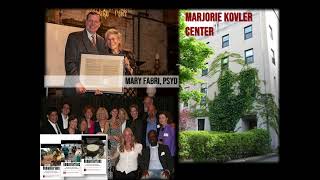
Dr. Chris Stout discusses the Marjorie Kovler Center for Survivors of Torture, founded in 1987 by Peter Kovler. The Center pioneered therapeutic accompaniment and culturally grounded care, moving beyond traditional Western therapy to include urban farming, rooftop beekeeping, and cooking groups for collective healing.
Chapters
Welcome to today's deep dive. We are really thrilled to have you with us because today we are asking a pretty profound, structurally complex question.
We really are.
Yeah. How do you rebuild a human being after the very systems meant to protect them have intentionally torn them apart?
It is a heavy question.
It's a very heavy question, but the answers we found for you today are actually incredibly uplifting. I mean, they challenge almost everything we assume about conventional healing.
They absolutely do.
So our source material today is this comprehensive document titled Caring for Survivors: The Philosophy and Model of Care for the Marjorie Kovler Center. It was authored by Mary Fabry, Marianne Joyce, Mary Black, and Mario Gonzalez.
Right.
And our mission today is to explore how a relatively small center in Chicago completely revolutionized the treatment of severe trauma.
They essentially rewrote the rules of Western medicine.
Exactly. They created this model that relies on community, on apiaries of all things, and basically breaking down all those traditional clinical boundaries.
But before we delve into those clinical innovations, We really need to define the specific nature of the trauma we're talking about here.
Yeah, that's crucial.
Because the text provides a really critical definition of torture that shifts the focus away from just the physical act itself.
Right, it's not just about physical pain.
Not at all. It's essential to understand that, in this context, torture is a deliberate act carried out by individuals acting in official capacities.
So it's state-sponsored.
Exactly. And the ultimate goal isn't necessarily interrogation, It is absolute disempowerment. It's designed to extract confessions, sure, but mostly to punish, intimidate, or discriminate.
To create a specific class of people, right?
Yes. Ultimately creating what the text refers to as a "torturable class of people." These are individuals, and really entire communities, burdened with profound shame.
And they're deliberately silenced by this terror that no one will ever believe their story.
Because the perpetrators are the authorities themselves.
Okay, let's unpack this. Understanding that specific goal, the total dismantling of a person's agency by the state, is just so crucial to understanding why the Marjorie Kovler Center couldn't just use standard psychological treatments.
Yeah, and the therapy just wouldn't cut it.
Right. But to grasp how this center came to be, we really have to look at the environment that incubated it. The setting here is vital. So for you listening, why should you care about Chicago's history in this context?
It really comes down to Chicago's deeply rooted legacy as a sanctuary city, which goes way back, way back. It provided the necessary infrastructure and cultural mindset. You can trace this ethos all the way back to 1890 with Jane Addams, right? Exactly. When activist Jane Addams founded Hull House to support European immigrants. And by the 1970s and '80s, that same sanctuary infrastructure was being tested by a massive, really complex influx of refugees who was arriving at that time. You had people arriving from Southeast Asia following the fallout of the Vietnam War. And concurrently, there was this surge of undocumented Central Americans fleeing intense civil conflicts.
Conflicts that were often US-backed, which adds another layer of complexity.
It absolutely does.
So it sounds like a perfect storm of immense need, and then this existing network of advocates just trying to absorb that shock.
That's a great way to put it. And that environment set the stage for the genesis of the Marjorie Kovler Center in 1987.
And it wasn't some big government project?
No, it wasn't a top-down government initiative at all. It was a serendipitous collision of different minds and grassroots organizations.
Like who?
You had Travelers and Immigrants Aid, legal advocates from the newly formed Midwest Immigrant Rights Center, and dedicated medical professionals from the local hospital systems.
And they were all working separately at first.
Right, working in their separate silos. But they all began to recognize a deeply disturbing pattern. A growing demographic of people arriving in Chicago who weren't just standard refugees displaced by war.
They were targeted survivors of state-sponsored torture.
Exactly.
The source material highlights one particular story that really crystallizes that moment of recognition for me. I'm thinking of Dr. Irene Martinez.
Her story is incredible.
Can you share her background? Because her perspective seems to have been the real catalyst for so much of what followed.
Dr. Martinez's story is essentially the emotional core of the center's founding. She was an Argentine physician and an Amnesty International prisoner of conscience.
Wow.
Yes. She was a survivor of Argentina's Dirty War, which was a period characterized by horrific state terrorism and forced disappearances.
And she ended up in Chicago.
She did. In the 1980s, she was working in the emergency room at Cook County Hospital. While treating patients, particularly Spanish-speaking immigrants from Central America, she began identifying survivors of torture who'd literally never disclosed their trauma to anyone.
And her colleagues were totally baffled by this, right? Like, how could she spot them in a crowded, chaotic ER?
Yes, and her answer was chillingly simple. She said, "They reminded me of me." That intuitive recognition is just so powerful.
She was seeing her own trauma mirrored in her patients.
Precisely. And the text notes a profound turning point for Dr. Martinez herself. When she first arrived in the United States and began collaborating with mental health professionals, she discovered that the intense neurobiological and psychological phenomena she was experiencing actually shared a recognized clinical framework.
PTSD.
Exactly. Discovering that her symptoms had a name, that they were a documented physiological response to extreme trauma, helped her realize she wasn't losing her grip on reality.
And that personal revelation is what drove her to help other survivors.
She knew firsthand that applying a framework to the trauma was a critical first step to reclaiming agency over one's own mind.
And that drive from Dr. Martinez and her colleagues eventually attracted the necessary capital to get the program off the ground financially.
Which is always the hardest part.
Oh, always. In November of 1988, a Chicago philanthropist named Peter Kovler stepped in. He had been reading about a pioneering torture rehabilitation center in Copenhagen.
And he wanted to bring that to Chicago.
Right. So he provided an initial grant of $75,000 to launch this entirely new Chicago model. His single stipulation was that the center be named after his mother, Marjorie.
And thus began a completely pro bono, multidisciplinary model of care.
But opening the doors was obviously only the beginning. They immediately faced a monumental clinical challenge.
Yes, because treating survivors of state-sponsored torture requires dismantling a very specific psychological trap.
Because the perpetrators want the victims to believe no one will believe their story.
Exactly. They systematically design their abuse to convince the victim that speaking out is entirely futile, that the authorities are untouchable and the victim is entirely alone.
So the survivor is left carrying this unjust, isolating burden of silence.
And right as the clinicians were trying to navigate this incredibly delicate psychological unburdening, the landscape shifted beneath them with a massive legal hurdle.
You're referring to the 1996 legislative changes. I want to slow down here because the text emphasizes how drastically this impacted the clinic's day-to-day operations. How exactly did this legislation change the reality on the ground?
Well, to understand the clinical impact, we really have to look at the legal mechanics of the 1996 Illegal Immigration Reform and Immigrant Responsibility Act.
Which is a very long title.
Very long. But from an impartial standpoint, the functional result of this legislation was that it forced heavily expedited asylum applications.
Meaning they had to move fast.
Much faster. Before this, a survivor might have had time to establish a life, build some trust, and slowly unpack their trauma. Under the new law, survivors who had just escaped horrific, life-threatening conditions were suddenly forced to legally prove their torture.
Prove it in an adversarial court setting.
Exactly, before they'd achieved even a baseline of psychological stability.
That sounds like a devastating paradox. You have someone who has been brutally betrayed by authority figures, they are terrified to speak about their experiences, and now a new set of authority figures is demanding they recount every detail of their trauma just to justify their right to exist in the country.
It's the exact recipe for retraumatization. The burden of proof was suddenly placed squarely on the shoulders of the traumatized individual.
So what did the center do?
Because of this legal reality, forensic documentation provided by the center became an absolute necessity for their clients' survival. The therapists and doctors suddenly had to act as forensic investigators.
Documenting the scars?
Meticulously documenting physical and psychological scars for the courts. It became a highly stressful, albeit vital, component of the therapy process.
And if you're a therapist, you realize immediately that the traditional clinical playbook is entirely useless here.
Completely.
You can't just put someone in a sterile, fluorescent-lit office, sit across from them with a clipboard, and expect them to open up when they feel like they're being interrogated all over again.
What's fascinating here is how the center reacted to that. They recognized that maintaining traditional clinical boundaries was actually hindering the healing process.
So they threw the boundaries out.
They completely broke them down. By developing a model they called therapeutic accompaniment.
I love this concept.
It's revolutionary. To build authentic trust with people whose foundational trust in humanity had been shattered, the therapists literally left their desks. They stepped out of the clinic and accompanied survivors into the real world.
Wait, they actually went with them to outside appointments? Because I thought maintaining a strict physical boundary between the clinic and the outside world was like a cardinal rule in traditional psychotherapy.
It absolutely is a traditional taboo. But the Kovler Center clinicians asked themselves one overriding question.
Which was?
Is this therapeutic for the survivor?
Wow.
If the answer was yes, the traditional rules were discarded.
So what did that look like in practice?
Well, a psychotherapist might accompany a survivor of sexual violence to a gynecological exam to provide real-time emotional grounding.
That makes so much sense.
A clinician might go with a client to a daunting dental appointment or even conduct therapy sessions sitting in the client's living room.
Just meeting them where they are.
Exactly. By physically standing beside the survivor in environments where they felt vulnerable, the therapists proved they were allies, not just detached observers.
It's a brilliant shift in perspective. And they applied that same anti-hierarchical philosophy to the therapy room itself. The text details how they reinvented the dynamic by creating what they call the therapeutic partnership, or the triad.
The triad is really a masterclass in restoring agency.
Because instead of the traditional dynamic—the all-knowing doctor treating a passive patient—it became a three-way partnership of equals. Right.
In this model, the therapist brings their expertise in the neurobiology and psychology of severe trauma. However, the survivor is explicitly recognized as the absolute, unquestionable expert on their own lived experience.
Their somatic responses, their cultural context.
Exactly. And the third pillar, the interpreter, is elevated far beyond a mere linguistic tool.
They're not just translating words.
Not at all. The interpreter acts as a cultural broker, navigating the nuanced lexicon of pain that doesn't always translate directly into English, while also serving as a vital advocate in the room.
By distributing power equally among the three, the survivor experiences a tangible sense of empowerment the moment they sit down.
It immediately changes the dynamic.
Here's where it gets really interesting. That requires the Western-trained clinicians to be incredibly humble. They have to be willing to admit that their medical degrees don't hold all the answers. The text highlights a specific case study that really challenged those Western assumptions.
Let's talk about Maria. Maria's story perfectly illustrates the limits of Western cognitive behavioral approaches when dealing with deeply rooted cultural trauma. Who was she? She was a 15-year-old, unaccompanied indigenous minor from Central America, brought to Chicago through the sanctuary movement. Only 15? And her trauma history is staggering. She was orphaned as an infant during widespread political violence. She was taken in by an older woman, an abuela, in her village who cared for many war orphans.
But the violence found them again. Yes.
Maria survived the aerial bombing of her community. She was abducted and raped by soldiers and eventually had to flee an ongoing campaign of harassment, navigating her way to the US entirely alone.
With a history that severe, especially for a teenager, Traditional one-on-one talk therapy must have felt incredibly alienating. How did the center adapt to her needs?
Well, initially, she struggled immensely. The Western model of sitting in a chair and individually analyzing one's internal state just did not resonate with her indigenous background.
It was too individualistic.
Right. Her breakthrough occurred when the clinician stepped back and allowed her to take the lead. Maria drew upon her indigenous belief system to perform a specific ceremony, Calling upon the abuela. Exactly, actively calling upon the spiritual presence of the older woman who had raised her to literally be in the room during her therapy sessions.
She recognized that individualistic therapy wasn't enough; she needed the strength of her lineage in the room with her.
Precisely. And fortified by that felt, collective presence, she was finally able to articulate the multiple layers of her trauma.
And the crucial takeaway for you listening right now is how the staff adapted.
Yes. Maria came from an agrarian village where survival and well-being were entirely collective endeavors. Her reliance on the collective rather than the isolated individual taught the Western clinicians a profound lesson about non-Western resilience. They learned from her. They really did. Because they adapted to her cultural framework rather than forcing her to assimilate into theirs, Maria remained engaged with the center for over 17 years. 17 years! She accessed medical help, English classes, legal assistance, all while continuously teaching the staff about the mechanics of collective responsibility.
That flexibility, the willingness to completely reshape the therapeutic environment based on the survivor's cultural lens, is a running theme throughout this document. Which brings us to a fascinating challenge they faced with the Cambodian women's group. This is a remarkable example. The center was treating women who had survived unimaginable torture and violence under the Khmer Rouge, but they ran into a massive culturally specific obstacle regarding the concept of karma. Right.
From a Western psychological perspective, the obstacle was profound. These women deeply believed that their suffering was a direct result of their own actions in past lives.
They felt responsible for their own trauma.
They felt an immense, paralyzing sense of responsibility, believing they must have committed terrible atrocities previously to warrant such brutal punishment in this life.
That is such a heavy burden.
And because of this overwhelming, cosmically ordained shame, they absolutely refused to verbalize what had happened to them. Traditional talk therapy was completely blocked by this cultural interpretation of guilt.
So how do you treat someone who believes their trauma is deserved? You can't just tell them their entire spiritual worldview is wrong.
You don't. You reframe it from within their worldview. How did they do that? The center consulted a cultural academic who offered a brilliant psychological pivot. He suggested proposing to the women that perhaps in their past lives they hadn't been perpetrators of violence at all.
Okay.
Perhaps they had been incredibly diligent, selfless caregivers who gave everything to their communities. And because they had exhausted themselves giving to others, then the karma of this life dictated that they needed to sit back and allow others to care for them.
Oh, that is so beautiful. It's a masterful reframing. It completely shifted their burden of guilt without violating their spiritual beliefs. Exactly. But even with the guilt lifted, they still couldn't rely on talk therapy. The clinicians received advice from a Buddhist monk who told them to "follow the river as it bends." What did that actually look like in practice?
It meant bypassing the verbal centers of the brain entirely. They utilized sensory somatic processing. The center helped the women use expressive arts to communicate what words could not.
Like the maze they built.
Yes. In one instance, the women designed and constructed a physical, dark, incredibly narrow maze inside a local theater.
And they had people walk through it.
They personally escorted audience members through this claustrophobic space to impart a visceral, sensory understanding of the sheer terror and confusion they had endured in the refugee camps. They also danced, right? They collaborated with a choreographer to create a dance piece titled "Turn her white with stones." Through highly specific movement, they collectively metabolized and reshaped their traumatic memories.
Sharing their testimony with the community without ever speaking a single word. Exactly. That concept of building trust without intense clinical interrogation is mirrored in the Guatemala group as well. The group organized by Mario González, one of the document's authors.
Yes, the group was called CONOEL UNAM, which translates to "All Together." And their approach was very slow, very deliberate. You have to consider the baseline paranoia of people who have survived a political culture defined by intense state surveillance and lethal mistrust. Security was their paramount concern.
So they didn't start with trauma processing.
Not at all. They began meeting quietly in a church basement. They started with shared traditional food, playing music, and allowing their children to play together.
Just being human together.
Over several years, they slowly regulated their nervous systems through community connection. Eventually, they felt safe enough to step out of the basement and into the public eye. And they created that powerful oral history project, 12 Parallel Lives, presented at the Chicago Cultural Center. They reclaimed the narrative that the state had tried to erase.
So what does this all mean? This paints a beautiful picture of psychological healing, but I want to ground this in the physical day-to-day reality of what the center actually became. It grew tremendously. It did. By 2007, the Marjorie Kovler Center was serving 330 people from 53 different countries. They were seeing a major demographic shift towards survivors from African nations like Togo and Cameroon alongside their Latin American clients.
The scale of the need was huge.
And they were accomplishing this with a volunteer base that provided over 9,000 hours of work in a single year, valued at over $320,000. Which is incredible. But the text details that these volunteers weren't just assisting with therapy, they were addressing a very specific secondary trauma called occupational deprivation. Can you elaborate on what that means for a newly arrived survivor?
Occupational deprivation is a critical concept that is often overlooked in standard refugee care.
It's not just about losing a job.
No. When survivors flee their home countries, they don't merely lose their physical houses or their geographic location. They suffer a catastrophic loss of status. Right. They are stripped of their identities as providers, as parents capable of protecting their children, or as respected community leaders.
And then they get here and face massive barriers.
Compounded by long, agonizing waits for legal work authorization and massive language barriers, this deprivation cuts them off from the basic human need for purpose, contribution, and belonging.
It is an insidious, ongoing trauma that occurs long after the physical torture has ended. Exactly. To combat that loss of purpose, the center started implementing programs that seem incredibly far removed from a medical clinic. For instance, they began taking clients out of the city to a rural farm called Angelic Organics. I love this detail. The text mentions a Guatemalan woman who noted that while she had seen many farms in the US, This was the first one that invited her in and allowed her to feel the dirt in her hands, making her feel at home again.
That somatic connection to the earth is incredibly grounding for a traumatized nervous system.
And the success of those rural farm visits sparked a desire to create something permanent within the city.
It led to an urban farming project right in their Chicago neighborhood.
But the most remarkable detail in the text is the evolution of that project. It turned into a fully functioning rooftop apiary. They literally started keeping thousands of honeybees on the roof of a trauma center in Chicago.
They did. And it was spearheaded by a volunteer named Mirsad Spahović. Who was Mirsad? Mirsad had been a dedicated beekeeper for 20 years in his native Bosnia before the war devastated his country. By placing him in charge of the apiary, the center wasn't just producing honey.
They were restoring his identity.
They were restoring Mirsad's identity as an expert, as a provider. They also launched an international cooking group where every other week a different client is given the floor to lead the group.
Teaching everyone else how to prepare a complex traditional meal from their home country.
Exactly. Reclaiming their role as a host and a cultural ambassador.
Think about the mechanics of that for a second. Consider how the focused physical acts of chopping vegetables with a group, feeling the soil of a garden yield a harvest, or the meticulous grounding work of tending a beehive on a city roof.
It bypasses the trauma. It really does.
Those universal rituals bypass the analytical brain. They restore a person's humanity, their dignity, and their sense of self-worth in a way that simply analyzing pain in a sterile room never could.
To synthesize the core thesis of this document, the Marjorie Kobbler Center provides empirical proof that true sustainable empowerment for survivors of severe trauma cannot be prescribed from a top-down medical authority. It can't be forced. It has to be grown organically through shared power. It requires dismantling traditional clinical hierarchies, quite literally breaking down the walls of the clinic, and honoring individuals as the ultimate experts of their own lives. Because torture isolates you? Torture seeks to isolate and destroy the individual by destroying the community. Therefore, the only effective antidote is the radical intentional rebuilding of community.
And healing that way isn't a linear path with a clear endpoint. The source text concludes with a stunning poem written by Mathilde de la Sierra in 2007 for the Center's 20th anniversary. It's titled Tierra Fértil, or Fertile Soil. Yes, and the poem frames healing not as a straight line of medical progress, but as the cycling seasons of a garden. It speaks to using the broken, fallen branches of autumn as fertilizer for the soul.
Enduring the bitter isolation of winter by relying on the warm embrace of the sower.
And waiting patiently for the gentle dew of dawn.
It's a beautiful metaphor for a model of care that relies so heavily on the natural rhythms of human connection rather than rigid clinical timelines. It really is.
And looking at this incredible model of resilience raises a broader question for you to mull over. In our modern, hyper-digital world, we are increasingly isolated. Very isolated. We are constantly searching for a quick fix, a technological hack to erase our anxieties, maximize our productivity or bypass our pain as fast as possible. But if this deeply collective, patient, community-driven model is what works for the most severely traumatized individuals on Earth, what does that say about the rest of us?
It's a profound thought.
Are we all suffering from a mild form of occupational deprivation in our disconnected modern lives? And if so, how do we begin planting our own fertile soil? Something to think about until our next deep dive. Mm-hmm.
More from Dr.

2025 Mercedes-Benz CLE 450 4Matic Cabrio – Owner’s Views After a Year-and-a-Half as a Daily Driver

The Complete Guide to a Successful Everest Base Camp Trek – Post-Trek Debrief

The Complete Guide to a Successful EBC Trek – Post-Trek Debrief: What I Needed (and What I Didn’t)

What Went Wrong Customizing My New 2026 Porsche Carrera T …and what I did about it!

Coming May 1 At the Intersection of High Performance and Fulfillment: A Conversation with Alisa Cohn

From High Performance to Fulfillment: Lessons in Inner Mastery with Jim Murphy

Coming March 19: From High Performance to Fulfillment: Lessons in Inner Mastery with Jim Murphy

The New Humanitarians Volumes I - III:- Inspiration, Innovation, and Blueprints for Visionaries

The New Humanitarians Volumes I - III:- Inspiration, Innovation, and Blueprints for Visionaries

The New Humanitarians Vol I - III: Inspiration, Innovation, and Blueprints for Visionaries - Forward
