The New Humanitarians Volume I - Scojo Foundation
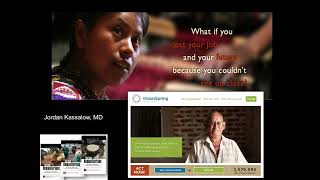
In this conversational deep‑dive, hosts A, B, and occasional C unpack the Scojo Foundation’s report on presbyopia – the age‑related loss of near vision that affects roughly 700 million people living in poverty. The discussion traces the problem’s economic impact, the founders’ aha moment (the 20‑chicken anecdote), and the creation of a market‑based micro‑franchise model called “vision entrepreneurs.” The hosts detail the “business‑in‑a‑bag” kit, a $1.50 landed‑cost supply chain, and the shift from a rental to a risk‑free consignment model that lets low‑income entrepreneurs sell reading glasses profitably while preserving dignity of choice. Case studies (Vijaya Lakshmi in India, Don Felipe in Guatemala, Noel Flores in El Salvador) illustrate how the model restores livelihoods and enables referrals for serious eye conditions, creating an early‑warning health‑screening network that has referred over 80 000 patients. The conversation also covers operational missteps, cultural adaptations (female‑empowerment strategies, husband‑wife teams), bottom‑up product innovation (adding sunglasses), scaling through asset‑light partnerships with NGOs such as PSI, and high‑profile validation (Clinton Global Initiative) and a for‑profit arm (Scojo Vision LLC) that subsidises the charitable work. The hosts conclude that rigorous business discipline can solve certain global‑health challenges more sustainably than pure charity by building lasting market systems.
Chapters
Imagine waking up tomorrow morning, getting ready for work, and suddenly realizing your entire career is just, well, essentially over.
Right. Which is a genuinely terrifying scenario to picture.
Oh, absolutely terrifying. And not because of some a massive macroeconomic crash that wiped out your industry.
Or like AI suddenly taking your job.
Exactly. Not because your specific skills are obsolete, but simply because your eyes are doing exactly what human eyes do when you hit your 40s or 50s.
They lose that ability to focus on things up close.
Right. And for most of you listening, if you started struggling to read your phone screen or a menu at a restaurant, the fix is trivial. You run to the local pharmacy, You spend a few bucks on a pair of basic reading glasses, and you go right back to your life without missing a beat.
Yeah, it's barely an inconvenience.
But if you happen to live in a region without that kind of access, a totally normal, uh, biological inevitability quickly turns into a devastating economic catastrophe.
It really does.
Welcome to today's deep dive. We're unpacking a really fascinating document today. It's a report titled scojofoundation-final.pdf. and our mission for this deep dive is to explore how a radically simple market-based solution is tackling a massive global health crisis.
And one that gets very little attention despite impacting just an enormous portion of the global population.
Yeah, the numbers are wild. So the scale of the problem outlined in the report is staggering.
We are talking about roughly 700 million people living in poverty right now who completely lack access to basic reading glasses.
7 hundred million people.
I mean, that's a massive blind spot in global health. Pun intended, I guess.
Seriously. The specific condition we are focusing on is called presbyopia. It sounds intimidating, but it literally just refers to the natural aging of the eye that makes it difficult to focus on nearby objects. And the source notes that presbyopia actually makes up 36% of all eye care needs globally.
Think about the types of professions most affected by that kind of vision loss. We are talking about tailors, electricians, goldsmiths, weavers.
Anyone doing highly detailed manual labor.
Exactly. Intricate manual labor. If you are doing that kind of work and you are living on less than $4 a day, losing your near vision means losing your livelihood.
Because you just can't do the work.
Right. You can't thread a needle. You can't wire a delicate circuit, and suddenly you can't provide for your family. The economic ripple effect is huge.
That perfectly sets the stage for the origin story of the Skojo Foundation. Which involves a pretty incredible, uh, aha moment.
It really does.
It starts with Dr. Jordan Kasselow. At the time, he was an optometry student participating in these volunteer medical missions in places like Mexico.
Right. The traditional fly-in, fly-out medical camps.
Exactly. And he started noticing a really glaring disconnect in how global eye care was being handled.
These massive, well-funded medical missions were almost exclusively focused on complex surgeries, and advanced eye diseases.
Right. But they were entirely ignoring the most ubiquitous problem of all, which is presbyopia.
Well, the medical establishment has a tendency to look for the most complex, dramatic diseases to cure.
Which makes sense.
It does make sense on one level, sure. But it means they often overlook the obvious structural issues. You had highly trained surgeons flying in to perform cataract operations, which is wonderful. But meanwhile, millions of local workers just needed a basic piece of magnified plastic to get back to work.
And Dr. Kaslow had an interaction that totally threw this into perspective for him. While in Mexico, he met a woman who told him she hadn't been able to read her Bible in years because her vision had deteriorated so much.
And he didn't do surgery on her.
No, he didn't perform any kind of complex medical intervention at all. He just handed her a basic non-prescription pair of drugstore reading glasses, like the kind you'd literally buy at the checkout counter.
Right.
The text notes that the next day, she returned to him, completely overcome with gratitude, and gave him 20 chickens to thank him for reviving her sight.
20 chickens.
20 chickens. Okay, let's unpack this.
What's fascinating here is that this interaction wasn't just a heartwarming anecdote to bring back home. For Dr. Kaslow, those 20 chickens represented a profound realization about market value and distribution.
It showed there was real demand.
Huge demand. It was the catalyst for an entirely different approach to global health, leading to the birth of the SCOJO Foundation, which he co-founded with his business partner, Scott Barry.
Right.
They looked at that massive demand and decided not to build a traditional charity where doctors fly in, hand out free glasses, and leave. Instead, they built a social enterprise rooted in strict business discipline.
Let's really look at the mechanics of that business discipline, because their distribution model is incredibly clever. They created this concept of vision entrepreneurs.
This is the absolute core of their micro-franchise model.
Yeah. Explain how that works.
Well, if you are trying to reach hundreds of millions of people across rural, hard-to-reach areas, you can't rely on sporadic medical missions. You need a permanent distribution channel, right?
Someone who lives there.
Exactly. So the foundation recruits low-income men and women directly from these communities and trains them to become the distributors.
And the document details how they provide these trainees with what they call a business in a bag.
Which is such a great concept.
It really is. It is a branded Scojo backpack that contains literally everything you need to run a microenterprise. The entrepreneur gets 20 to 30 pairs of reading glasses.
And those are broken down across 4 different styles, right?
Yeah, 4 styles and 5 different magnifications. The kit also includes 3 styles of sunglasses, cleaning cloths, protective cases, and all the necessary marketing materials.
So it really is a whole business in a backpack.
Plus, they get the tools needed to conduct basic vision screenings and track their own sales data.
And the supply chain making that backpack possible is a crucial piece of the puzzle here.
Oh, totally.
Because you can't run a profitable micro-franchise if your wholesale costs are too high. Scojo spent a lot of time optimizing this. They source the reading glasses from manufacturers in China to get the best price-to-quality ratio, and they managed to build a pipeline where they can manufacture, transport, and pay the necessary customs duties to get these glasses virtually anywhere in the world for approximately $1.50 per pair.
I always have to stop and think about that number.
It's crazy.
A landed cost of $1.50 for a medical device that can instantly restore someone's ability to work.
Right.
But the critical difference here is that the vision entrepreneurs do not give these glasses away. They sell them.
That is the key differentiator.
Yeah. The report highlights that by selling these glasses at an affordable but profitable markup, the entrepreneurs themselves are earning more than double their previous daily income on a single sale.
If we connect this to the bigger picture, this is where the market-based approach proves its structural advantage over the pure charity model. How so? Historically, traditional NGOs operate on the assumption that you just need to give things away to the poorest populations. But Scojo recognized that giving products away for free can actually create a damaging dynamic of dependency.
Oh, because if the funding dries up—
Exactly. If an NGO runs out of grant money and leaves a region, the supply of glasses immediately stops and the community is stranded again. Furthermore, when you give something away for free, you often devalue the product in the eyes of the consumer. It becomes a handout rather than an asset.
That actually ties into a specific detail from the text that totally upends how we usually think about charitable distribution.
The style choice, right?
Yes. Get this. When customers are given the choice of the 4 different styles of glasses in that backpack, 85% of them choose to buy the second most expensive style offered.
That is such a powerful statistic because it completely dismantles a deeply flawed assumption built into traditional institutional charity.
Right. That poor people don't care about style.
Exactly. There is this unspoken idea that people living in extreme poverty shouldn't or don't care about aesthetics or quality, that they should just be grateful for whatever cheap, utilitarian plastic frame is handed to them.
It's treating them like passive recipients instead of active consumers. By charging for the product, Scojo gives them the dignity of choice. The customer is making a purchasing decision. They want to look good. They want frames that suit their face, and they are more than willing to pay a slight premium for that dignity.
And we have to remember the economic impact of that simple purchase. We aren't just talking about someone wanting to read a novel in their spare time. For the demographics Skoger targets, near vision is the primary tool for economic survival.
Let's bring that impact to life with a case study from the report. The source introduces us to a woman named Vijaya Lakshmi.
Her story is incredible.
It really grounds the whole concept. She is a 53-year-old seamstress living in rural India, specifically in the Tondur district of Andhra Pradesh. To give you an idea of her baseline, 6 years ago, she was running a modest but steady shirtmaking business. She was sewing about 10 shirts a week, which provided her with an income of $8.
$8 a week? And for her household, that wasn't supplemental income—that was her primary livelihood. Right.
Then, presbyopia slowly began to set in. It wasn't an overnight tragedy, just a gradual blurring. But eventually, Vijaya reached a point where she literally could not thread her needle. Oh man. She couldn't perform the intricate, detailed stitching her buyers demanded. She had to start relying on her granddaughter to help her thread the needles, but her granddaughter was at school during the day. So she's just stuck. So Vijaya was essentially grounded, just sitting there in her home, physically unable to do the work she knew how to do. Her output plummeted. The local stores that traditionally bought her shirts had to go to other suppliers, and her business essentially collapsed.
And she couldn't just go to a doctor.
No, because she lived in a rural district, she couldn't afford the time or money to take a day-long trip into the city of Hyderabad just to see an eye doctor.
She was stranded by her own biology. Her skills hadn't diminished, her work ethic hadn't changed, but a minor optical shift pushed her completely out of the economy.
That is, until word reached her about a woman in her own village who had become a Scojo Vision entrepreneur. Vijaya went to her, received a simple, basic vision check right there in the village, and purchased a pair of gold-rimmed reading glasses. The second most expensive ones, I bet. Probably. And the report notes that almost immediately, Vijaya was able to start sewing again. She reclaimed her livelihood, she regained her independence, and she was no longer forced to rely on her family for basic household tasks.
It perfectly illustrates why building out that $1.50 supply chain is so vital. It is a micro-intervention with macro results. But as you read further into the document, you realize Scojo built a secondary function into this model that might be just as important as selling glasses. The referral network. Yes. They essentially created a massive decentralized triage system for the local healthcare infrastructure.
I found that part of their strategy fascinating. How does that triage system actually function on the ground?
You have to remember that the vision entrepreneurs are not doctors. They are local salespeople with basic training. But part of that training involves recognizing when a customer's vision issues cannot be fixed by a simple magnifying lens.
Right, like if it's not just presbyopia.
Exactly. If an entrepreneur conducts a screening and the customer still can't see the chart with the glasses on, or if they notice signs of a more serious medical condition, the entrepreneur is trained to refer that person to a partner clinic or hospital for advanced care.
So they act as a massive filter for the medical system. They pull out all the people who just need reading glasses and only funnel the complex, potentially blinding cases to the actual medical professionals.
Precisely. In many developing regions, health clinics are incredibly overburdened. You don't want an ophthalmologist spending their day diagnosing presbyopia when there are patients with cataracts or glaucoma waiting in line.
That makes total sense.
This referral system massively reduces the burden on local health systems, and the entrepreneurs became highly efficient at this filtering process. The text notes that when Scojo first started, an entrepreneur had to screen about 8 people to make 1 sale. Wow. 8 to 1. Yeah. But as they refined their training and marketing, that screening to sale ratio improved to 3 to 1. Through this decentralized network, Scojo has referred over 80,000 people for advanced eye care.
80,000 referrals is a massive public health achievement. And the report shares a really striking story about what happens on the other end of those referrals. It involves a 40-year-old man named Don Felipe. Oh, the tour guide. Yeah. He worked as a tour guide for a small trekking business in Guatemala. The local partner organization working with Scojo had noticed some very strange behavior from him. Every night, Don Felipe would come into the local restaurant, sit down with old English-language copies of Newsweek magazine, and pretend to read them.
Which is immediately a huge red flag, considering he was a local farmer whose first language was an indigenous Maya dialect called Ixil. He didn't speak or read English.
Right. And the document specifically mentions he was wearing these incredibly thick giant glasses that made him look like a bug. So you have this guy pretending to write a language he doesn't know, wearing massive glasses, and trying to hide his vision loss. Heartbreaking. But the real crisis hit when he was working. He took two tourists out on what was supposed to be an easy day hike. The tourists ended up arriving back in town an hour before he did because Don Felipe had gotten himself completely lost in the woods. Wow. He literally could not see the trails he was supposed to be guiding people on.
His vision impairment had reached a point where it was not just a hindrance, it was an actual danger to his employment. So the local partner organization utilized the SCOJO referral network and sent him to a specialized eye care clinic in Guatemala City called Visualiza.
And what the doctors at Visualiza discovered was pretty tragic, but also incredibly fixable. Don Felipe had congenital cataracts. He'd been born with them.
Born with them and just lived with it for 40 years.
For 40 years, he had lived his entire life seeing the world through a dense, thick cloud. Because he was born into extreme poverty in a rural area, he had never received a childhood eye exam. The doctors informed him that without intervention, he was going to go completely blind in a matter of a few years.
But the intervention required wasn't some experimental million-dollar procedure. It was two relatively minor routine surgeries. One for each eye, and the cost was about $65 per eye.
Think about that. $65 an eye stood between him and total blindness. Oh, wild. Don Felipe receives the surgeries, and the report describes how for the very first time in his 40 years of life, he could actually see the details of his family's faces clearly. He could see the crops he was growing on his farm, and he could finally see the details of the mountains and forests where he'd worked as a guide for years.
That is just incredible.
And when it was time to thank the organizers who arranged the surgery, The text notes he was able to actually look them in the eye and shake their hands, something he had never had the visual acuity to do before.
It is a profound example of the ripple effect. An entrepreneur out in a rural village trying to sell a pair of reading glasses acts as the tripwire that catches a condition leading to blindness and gets it reversed.
And there is another quick but vital example of this referral power in the text. A 64-year-old man named Noel Flores Alvardo in El Salvador.
Right, the man with the makeshift cane.
Yeah, he showed up to one of the Rural Vision screenings leaning heavily on his daughter and using a wooden broomstick as a cane. He was already completely blind in his right eye. The local SCOJO entrepreneur instantly recognized this was way beyond reading classes.
Because of the training. Exactly.
They referred him to a partner clinic, actually arranged his transportation to get there, and the medical staff diagnosed him with glaucoma. Because he was in the system, they provided him with a free consultation and the necessary free medication, which completely halted the disease and prevented him from going blind in his remaining eye.
These medical interventions are phenomenal outcomes, but as we analyze the SCOJO Foundation, it is crucial to understand that building this network was not a smooth, uninterrupted path to success. They made significant operational mistakes along the way.
Here's where it gets really interesting, because the report doesn't shy away from their failures. Scojo definitely did not get the business model right on the first try. They had some major false starts, particularly during their initial launch in El Salvador. Right. The rental model. When they first set up the micro-franchise system there, they decided to charge the women a monthly rental fee for the backpacks and the inventory.
If you look at it from a traditional top-down business perspective, you can see why they structured it that way. The assumption was that the women would take the kits, easily sell the glasses, generate a healthy profit, and then use a portion of that profit to pay off the monthly rental fee for the equipment.
But when you apply that assumption to people actually living in poverty, it completely backfires. The text explains that the women simply couldn't afford the monthly fee. When they inevitably fell behind on payments, fear and embarrassment took over.
So they just avoided the foundation entirely.
Instead of asking for help, They just stopped showing up to the foundation's meetings. A massive amount of inventory was totally lost because it was sitting in the homes of women who were too afraid to return it. The foundation wasn't selling any glasses, they weren't expanding their reach, and the report bluntly states they realized they had accidentally become a group of loan administrators instead of vision advocates.
That is a harsh reality check for any organization. It is incredibly easy for social enterprises to get wedded to their initial paper business plans. But this is where Scojo's business discipline really saved them. They embraced the concept of becoming a learning organization. They looked at the data, accepted the failure of the rental model, and made a massive structural pivot.
They switched the entire system to a consignment model. Under the new rules, the entrepreneurs received the backpack and the glasses at no upfront cost whatsoever. Zero risk. Zero risk. They only repay the foundation for the specific glasses they actually sell. If a woman tries to run the business and it just doesn't work out, or her village simply doesn't have the demand, there is zero financial risk to her. There is no crushing debt hanging over her head. She just returns the unsold kit and Scojo doesn't lose their valuable inventory.
By switching to consignment, they completely removed the barrier to entry for the poorest, most vulnerable entrepreneurs while simultaneously protecting the organization's physical assets. It was a huge win-win. And operational finance wasn't the only area where they had to adapt on the fly. They faced significant cultural hurdles as well, particularly regarding their goals for female empowerment.
Yeah, the document highlights that Scojo had a very specific goal of recruiting women to be their vision entrepreneurs, and the reasoning is backed up by development research. When women earn discretionary income, they tend to invest a much higher percentage of it directly back into their children's health, nutrition, and education compared to men. It creates a stronger community impact.
But when they took this mandate to rural India, they hit a massive cultural wall, right? In those specific communities, it was considered culturally unacceptable for women to travel alone from village to village, which of course is the entire foundation of a traveling sales model.
So they had a huge problem on their hands.
You can have the best social intentions and the most optimized supply chain in the world, but if your distribution model ignores deeply ingrained local cultural realities, it will fail. SCOJO had to adapt. Instead of stubbornly forcing women to travel alone and face social backlash, or abandoning their female empowerment goal entirely, they pivoted their training. What do they do? They started recruiting and training teams. Specifically, they trained husband and wife teams as well as mother and son teams. This allowed the women to travel, conduct the screenings, and run the business safely while remaining entirely respectful of the local norms.
It's all about listening to the ground and adapting to what the market actually needs. And they did that with their physical product line too. The report shares a great anecdote about Dr. Casolo visiting a project site in El Salvador.
The sunglasses story.
Yes, he's observing one of their vision entrepreneurs working, and he notices she is selling sunglasses to her customers. But at that time, Scojo did not manufacture or provide sunglasses in their kits.
She had recognized a gap in her local market, gone out and purchased the sunglasses with her own personal capital to sell alongside the reading glasses.
Exactly. Her customers were working out in the bright sun all day and kept asking for eye protection, so she just filled the market demand herself. Dr. Kaslow saw this happening and had the humility to realize that this local entrepreneur understood the market demands far better than the executive sitting in a boardroom in New York did. Because of her initiative, Scojo officially added sunglasses to their manufacturing pipeline. And included them in all future kits.
That kind of bottom-up innovation is the hallmark of a healthy franchise. But even with a great product, an optimized consignment model, and a responsive feedback loop, Scojo eventually hit another massive bottleneck that plagues almost every successful business. Scaling. Scaling. If your target market is 700 million people, training every single individual entrepreneur yourself requires an unbelievable amount of time, money, and bulky corporate infrastructure.
If you've ever tried to scale a small business, you know exactly the bottleneck they were facing. How do you expand across continents without building a massive, slow-moving corporate empire?
You utilize a franchise partner model. Scojo looked at the landscape of the developing world and realized there were already massive, established organizations operating in these remote rural areas.
So why reinvent the wheel? Exactly.
There were groups already running microfinance loan networks, organizations managing rural health clinics, and companies setting up internet kiosks in villages. So, instead of spending millions of dollars to build their own networks from scratch, Scotiabank decided to partner with the ones that already existed.
They took their business in a bag concept and just plugged it directly into those existing networks. The report notes they partnered with nearly 30 different established organizations. A great example they mention is PSI, or Population Services International, which already had a massive footprint in sub-Saharan Africa.
That's a huge partner.
Massive. By leveraging these partnerships, Scojo was able to rapidly expand their operations across 9 different countries, including India, Bangladesh, Ghana, El Salvador, Guatemala, and Paraguay. That asset-light strategy is how they scaled up to support a network of over 1,000 active entrepreneurs.
It is a masterclass in rapid, sustainable expansion. You bring the specialized product and the training methodology, and you let the partner organizations handle the local logistics and recruitment.
And this incredible blend of social impact and a hard-nosed business strategy definitely did not go unnoticed by the global establishment. The mainstream validation Scojo received is a huge part of this report. By 2007, former President Bill Clinton personally featured the Scojo Foundation at the opening session of the Clinton Global Initiative.
For an organization in the social enterprise space, being highlighted at the Clinton Global Initiative is essentially the equivalent of playing in the Super Bowl. It provides unparalleled visibility to global leaders and massive philanthropic donors.
And President Clinton didn't just mention them in passing on a stage. He went on a massive national media blitz advocating for their model. He praised Scojo on CNBC, MSNBC, NBC's Meet the Press, ABC's This Week, and Fox News. He specifically referred to them as his favorite commitment this year and praised them as a shining model for how we can create entirely new sectors of the economy to solve entrenched social problems. High praise. And I should also mention there was a brilliant financial engine running in the background of all this. The founders created a for-profit arm called Scojo Vision LLC. They sold high-end, fashion-forward reading glasses in luxury department stores in the U.S., and they took 5% of that top-line revenue and donated straight back to the foundation to keep fueling the micro-franchise work.
It represents a totally complete ecosystem.
You have high-end retail consumers in wealthy nations unknowingly subsidizing the creation of base-of-the-pyramid micro-franchises in developing nations. But what does this all mean?
We've covered a tremendous amount of ground today, tracing a path from a woman offering 20 chickens in Mexico all the way to presidential endorsements at the Clinton Global Initiative.
If we distill the entire document down to its core philosophy, the Scojo Foundation proved that applying rigorous business discipline can solve certain social issues far more sustainably than pure charity ever could, because it creates lasting systems, right? It is about fundamentally recognizing that poor populations are viable, discerning consumer markets by creating a sustainable, locally run distribution channel, empowering salespeople with a risk-free consignment model, and giving the end consumer the dignity of choice. You create lasting economic engines rather than just providing temporary relief. It totally shifts the paradigm.
It forces you to stop asking, how do we donate more effectively? And start asking, how do we build better, more inclusive markets. Which brings us to the end of our journey today.
This raises an important question, and it is something for you to mull over long after you finish listening to this deep dive. Scojo managed to build an entire micro-franchise economy and a massive early warning health screening network entirely on the back of a simple $1.50 pair of reading glasses.
It's mind-blowing when you frame it like that.
Think about your own daily routine. What other incredibly cheap, mundane, everyday items are sitting completely ignored on the shelves of our local drugstores right now? Items that might possess the exact same power to unlock massive global economic potential if only someone took the time to build the right business model to distribute them.
It really makes you look at the pharmacy aisle in a completely different way. Thank you for joining us on this deep dive into the Skojo Foundation. Keep questioning your assumptions, keep exploring the mechanics behind the headlines, and keep looking at the world from different perspectives. We will catch you next time.
More from Dr.

2025 Mercedes-Benz CLE 450 4Matic Cabrio – Owner’s Views After a Year-and-a-Half as a Daily Driver

The Complete Guide to a Successful Everest Base Camp Trek – Post-Trek Debrief

The Complete Guide to a Successful EBC Trek – Post-Trek Debrief: What I Needed (and What I Didn’t)

What Went Wrong Customizing My New 2026 Porsche Carrera T …and what I did about it!

Coming May 1 At the Intersection of High Performance and Fulfillment: A Conversation with Alisa Cohn

From High Performance to Fulfillment: Lessons in Inner Mastery with Jim Murphy

Coming March 19: From High Performance to Fulfillment: Lessons in Inner Mastery with Jim Murphy

The New Humanitarians Volumes I - III:- Inspiration, Innovation, and Blueprints for Visionaries

The New Humanitarians Volumes I - III:- Inspiration, Innovation, and Blueprints for Visionaries

The New Humanitarians Vol I - III: Inspiration, Innovation, and Blueprints for Visionaries - Forward
