The New Humanitarians Volume I - Sustainable Sciences Institute
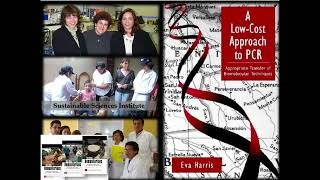
In this conversational deep‑dive, hosts A and B trace the origins and impact of the Sustainable Sciences Institute (SSI), founded by virologist Eva Harris. Beginning with Harris’s 1988 decision to leave a prestigious PhD path and work in war‑torn Nicaragua, the dialogue highlights her encounter with leishmaniasis and the realization that life‑saving molecular tools existed only in the Global North. Harris learns from early PCR pioneer Christian Arrego that the technique’s core chemistry can be performed without expensive equipment, leading her to teach manual PCR in Nicaragua using improvised water‑baths, oil‑capped boiling points, and kitchen‑blender centrifuges. The hosts contrast this “do‑it‑yourself” model with traditional “parachute science,” emphasizing capacity‑building over extraction. After winning a MacArthur Fellowship, Harris formalizes SSI in 1998, structuring it around four pillars: on‑site laboratory workshops, scientific writing workshops, seed‑grant funding, and material aid (rescued equipment). The conversation details concrete outcomes: a rapid dengue‑type‑3 detection in Peru (within a day), a hepatitis‑C research program in Egypt, and a massive pediatric dengue cohort in Managua that overcame a lack of street addresses through low‑cost ICT tools and GPS‑enabled data collection, later scaling to a city‑wide health‑information system (CPAY). The hosts close by arguing that true scientific innovation lies in making knowledge accessible, empowering local researchers, and that future pandemic solutions may emerge from resource‑constrained labs using ingenuity rather than from elite North‑based facilities.
Chapters
Welcome to this deep dive. If you're joining us today, you are looking for a shortcut to being well-informed.
Absolutely.
And we have an incredible story that fits the bill perfectly today.
We really do.
We are jumping into a comprehensive report on the Sustainable Sciences Institute, or SSI. The document we're working from is simply titled Sustainable Sciences Institute Final.pdf, but, uh, the narrative inside is anything but simple.
No, it's quite a ride.
Our mission today is to explore how high-tech, cutting-edge science can be completely demystified. We're going to look at what happens when you take ivory tower knowledge, pull it down to Earth, and adapt it for the real world.
Right, to create life-saving tools exactly where they are needed most.
Exactly. I mean, it's just this incredible story of hacking science for greater good.
It is. And while the framework here is rooted in biology and infectious disease, this really isn't just a story about test tubes and microscopes. It is fundamentally about democratizing knowledge. It challenges how global health research has traditionally been executed, shifting the capability from, you know, well-funded, centralized labs in the Global North directly into the hands of local researchers in the Global South.
So to set the scene, imagine you are a young, brilliant scientist.
Okay.
It's the year 1988. We are talking about Eva Harris.
Yes.
She's a recent Harvard biochemistry grad, and she has this prestigious fellowship mapped out for a PhD in molecular and cell biology at UC Berkeley.
The path is totally set.
Right. The path is set. But she takes a detour. She desperately wants her science to actually matter in the real world.
Yeah. The source notes she was wondering how a bench scientist makes an immediate impact compared to, say, a medical doctor whose skills are instantly useful anywhere.
Which is a profound question for a researcher to ask.
It really is. Most people just go straight into the lab. But she ends up finding a sponsor in a Berkeley-based organization that usually sends computer scientists abroad.
Computer scientists?
Right. But she insists on a longer biology-focused placement instead. And that insistence lands her in Managua, Nicaragua.
The report paints this incredibly vivid picture of her arrival. I mean, imagine you are fresh out of the absolute best, most elite laboratories in Paris, Basel, and Boston.
The top of the top.
And suddenly you are in the capital of Nicaragua. At that time, it was the second poorest country in the hemisphere, and they're in the middle of a war.
Yeah, it's a massive culture shock.
There are wild roosters running around, constant power outages, severe material shortages. She's working at a plasma factory making supplies for soldiers.
And she's feeling completely unprepared.
Totally. Unprepared to train people who have literally been running leading a country during a revolution under near impossible conditions.
And amidst all those material constraints, she is confronted with a very immediate, very severe medical crisis.
Right. This is where the stakes get real.
She encounters a disease called leishmaniasis.
Leishmaniasis.
Yes. It's a devastating parasitic disease spread by infected sandflies. It causes disfiguring skin and mucosal lesions, and it can even lead to the fatal destruction of internal organs. Wow. The situation was particularly urgent because soldiers were fighting in the northern tropical forests where the disease was prevalent, and they were returning to the cities highly infected.
So if a soldier comes back from the forest with these symptoms, what's the standard protocol? Like, can they just be given a broad-spectrum antibiotic to clear it up?
Not at all. Treating leishmaniasis required highly toxic heavy metal therapies to actually kill the parasite.
Heavy metals? That sounds brutal.
It is. Because the treatment itself is so harsh on the human body, Doctors had to know exactly which strain of the parasite a patient had before administering it.
Oh, I see.
Accurate strain identification was absolutely critical. But the protein assays they were using, which are basically chemical tests designed to identify the specific proteins of the parasite, were incredibly cumbersome, expensive, and lengthy.
Which leads to this massive epiphany for Harris. She realizes that despite all her world-class training, There is this massive abundance of research and knowledge in the developed world.
Right.
And virtually none of it is accessible in the developing world, right, where it's actually a matter of life and death.
That is the core knowledge gap right there.
Yeah.
She recognized that the technology to solve these local problems already existed, but it was locked away in the Global North.
Right.
She returned to Berkeley to start her doctoral work, but she set a strict condition for her dissertation advisor.
That was?
She had to be allowed to return to Nicaragua every summer to continue transferring scientific technology.
Okay, let's unpack this. Because she goes back to Berkeley and she asks her Nicaraguan colleagues what they actually want to learn.
And their unanimous response is molecular biology.
Molecular biology. But she knows firsthand that their labs only have running water twice a week.
Twice a week.
And intermittent electricity. So how does that even work? Is it even practical to teach such an advanced discipline under those conditions?
It's a huge practical dilemma. I mean, think about the ethics of it. If someone asks you to teach them a highly technical skill, but you know they lack the basic resources like consistent electricity or running water to actually use that skill, does it make sense to teach them?
Yeah, do you just set them up for frustration?
Exactly. Or do you just assume it's impossible and walk away?
But she doesn't walk away. She meets Dr. Christian Arrego, a scientist involved in the early days of something called PCR, or polymerase chain reaction.
A huge breakthrough.
For those who aren't familiar, think of PCR like a molecular photocopy machine. It takes a specific tiny piece of DNA and multiplies it millions of times until you have enough of it to actually see and analyze using really simple detection methods.
And at the time, this was a brand new invention.
Right.
And the beauty of PCR, as Orrego showed her, is that the underlying principle is relatively straightforward. If you truly understand the science, it doesn't actually doesn't actually require the massive, expensive infrastructure of a modern lab.
It can be performed under rudimentary conditions.
Exactly.
Which brings us to the summer of 1991. Harris heads back to Nicaragua to teach PCR to 20 local scientists. They completely strip away the high-tech gloss.
They had to.
So if they don't have these expensive automated machines called thermocyclers to heat and chill the samples automatically, how on earth are 20 people doing this in a bare-bones room?
They did it entirely by hand.
By hand.
Yes. Instead of buying a thermocycler, they set up different water baths at specific temperatures. They manually moved the samples back and forth between these water baths to simulate the heating and cooling cycles required to amplify the DNA.
That sounds exhausting.
It was incredibly labor-intensive, but completely do-it-yourself.
And the moment they actually pull it off feels like something out of a movie. Right. They are in this lab. The electricity goes in and out, but they managed to manually amplify the Leishmania DNA.
The scientists are literally vying to look through the goggles.
Right. They see these brilliant glowing DNA bands for the very first time.
Mm-hmm.
They had differentiated the strains of the parasite right there on site.
What's fascinating here is the underlying philosophy. Harris realized that if you understand the core principles of an advanced technology, you can deconstruct it and rebuild it anywhere under any conditions.
You don't need the shiny black box.
No, you don't need the shiny black box from a Western supply company if you understand what the box is actually doing. That aha moment proved that high-tech science wasn't magic. It was just biology, and it belonged to them just as much as it belonged to anyone at Harvard or Berkeley.
Here's where it gets really interesting because the source has these incredible anecdotes about how that do-it-yourself spirit sparked an absolute wave of local innovation.
Oh, absolutely.
Tell me about the situation with the Quito water bath.
This is a perfect example of necessity driving brilliant innovation. Harris and her colleague, Josefina Coloma, were teaching a workshop in Quito, Ecuador.
High up in the Andes.
Very high up. They were trying to do the manual PCR amplification, but the water baths seemed broken. They wouldn't get hot enough. Why not? Well, they needed the water to reach 92 to 94 degrees Celsius for the DNA denaturation step.
—which is basically just using high heat to unzip the DNA strands so they can be copied, right? Right.
But then they realized it wasn't the equipment at all. Quito is 9,000 feet above sea level. Oh, the boiling point. Exactly. Water boils at 89 degrees Celsius there. No open water bath in the city was ever going to reach 94 degrees.
So it would just boil away before it got hot enough. How did they solve it?
They added a layer of oil to the top of the water. Oil? Yes. It simulated a closed system, allowed the temperature of the water underneath to rise to 92 degrees without boiling off, and the PCR worked perfectly.
Wait, so they just floated cooking oil on top of the water bath and it fixed a major high-altitude chemistry problem?
Exactly. Just a brilliant low-tech hack. That is amazing. And that ingenuity was happening everywhere. In Bolivia, a scientist named Nathaniel Mamani couldn't afford a microcentrifuge.
A microcentrifuge—that is a standard essential piece of lab equipment that spins samples at incredibly high speeds to separate fluids.
Right. So since he couldn't afford one, he invented one. He built a blender fuse using a standard kitchen blender, an aluminum bowl, and some water tap adapters.
Wait, hold on. A kitchen blender? Like a standard household appliance?
A normal kitchen blender.
How do you even safely spin biological samples in a kitchen appliance without it flying apart?
By carefully adapting the motor and using the aluminum bowl and adapters to stabilize the test tubes.
That is wild.
He also took an old record player and turned the circular rotation into a horizontal turntable shaker to agitate samples in his lab.
If we're talking about demystifying science, building lab equipment out of a record player has to be the ultimate example.
If we connect this to the bigger picture, it stands in stark contrast to what the scientific community calls parachute science. Parachute science. Yes. Historically, Western scientists would parachute into a developing country during an outbreak, extract biological samples from the local population, fly back to their pristine labs in the Global North and publish lucrative papers. Leaving the locals with nothing. The local community received absolutely no benefit, no training, and no infrastructure to fight the disease themselves. Harris's model completely flips that dynamic. It empowers the local scientists to be the authors of their own solutions.
And people started noticing this shift. In 1994, Science magazine published an article about her technology transfer work.
A very prestigious publication. The response was overwhelming.
Hundreds of people from all over the world started writing to her asking for workshops. She actually canceled a prestigious postdoctoral appointment at Stanford because she felt a commitment to these Latin American scientists. She was all in. Then in 1997, she gets a phone call while on her way to a workshop in Bolivia. She won the MacArthur Genius Award.
Which is incredibly significant. The MacArthur Fellowship provides unrestricted funds. Right. It gave her the financial freedom and the public recognition to formalize her vision. In 1998, using that momentum, the Sustainable Sciences Institute, or SSI, was officially born as a nonprofit organization in San Francisco.
And SSI was built to tackle a very specific structural failure in global health. The text refers to it as the 10-90 gap. Yes. Can you explain what that actually means in practice?
The 10-90 gap is a sobering statistic. It refers to the fact that only 5-10% of all global health research funding is directed toward diseases that affect 90% of the world's population.
Wait, 5 to 10% of the funding for 90% of the people? Exactly.
Diseases like dengue, leishmaniasis, and cholera represent a massive burden in the developing world, but they receive a mere fraction of the funding compared to health issues prominent in wealthier nations. That's incredibly skewed. It is. SSI was designed to give local scientists the tools to fight the diseases that were actually ravaging their own communities.
Bypassing that funding disparity, So how does the newly formed SSI actually combat this gap? The text outlines a core scientific capacity-building program with 4 main pillars.
Break those down for us. The first pillar is the laboratory workshops. These were always held on-site in the host country, totally hands-on, and importantly, taught entirely in the local language, so nothing was lost in translation.
Which makes perfect sense.
Mm-hmm. What's the second pillar? Second, and this is crucial, were the writing workshops.
Writing workshops, not lab skills. Right.
In the scientific community, advancement, credibility, and funding rely heavily on publishing in peer-reviewed journals. Developing country scientists often generate incredible, groundbreaking data, but they face massive invisible barriers. Like what? Lack of technical writing guidance, language barriers, and lack of access to the expensive journals themselves. SSI taught them how to navigate the complex manuscript and grant-writing process so their voices could actually be heard on the global stage.
That makes total sense. You could do all the brilliant science in the world, but if you can't get it published, you can't get the funding to continue. Exactly. Pillar 3 is small grants. We are talking about seed money. Sometimes just a few thousand dollars can pay a scientist's salary, buy essential supplies, and fund a basic epidemiological survey.
It's Tiny investment with a massive ripple effect.
And finally, Pillar 4 is material aid. How did that work logistically?
This was essentially rescuing lab equipment. US institutions frequently discard minimally used, highly expensive equipment when they upgrade.
Things like PCR machines, pipetters, centrifuges.
Right. SSI arranged for hundreds of thousands of dollars worth of this perfectly good equipment to be saved from landfills and shipped to laboratories in their partner countries.
Giving many of these labs their very first piece of modern equipment. It changed everything for them. So, what does this all mean? Does this 4-pillar model actually work when a crisis hits? The report details some immediate real-world impacts. What happened in Peru?
In Peru, SSI had just finished training local instructors. Just 2 weeks later, a mysterious outbreak hit Lima.
2 weeks later. Talk about timing.
Right. Because the local group now had the knowledge and the rescue equipment, they collected 90 samples, ran the molecular tests they had just learned, And in a single day, literally that same night, they confirmed it was a first-ever outbreak of Dengue Virus Type 3 in the capital. In a single day. They alerted health authorities the next morning, allowing for immediate, targeted interventions to contain the spread.
That speed of response is incredible for a sudden outbreak. Yeah. But does it scale to something more chronic, like a nationwide epidemic?
It does. In 2002, SSI expanded to Egypt to combat Hepatitis C, Egypt has the highest prevalence of hepatitis C in the world, around 12% nationwide at the time of this report.
And the origin of that 12% prevalence is incredibly tragic. The text notes it's largely the legacy of public health campaigns from the 1960s to the 1980s that were trying to treat a completely different disease.
Yes, a flatworm parasite called schistosomiasis. Right.
The mass injections inadvertently spread hepatitis C across rural populations.
Exactly. So SSI steps in, providing grants and fellowships, specifically empowering young Egyptian scientists to research and fight this massive epidemic from within their own country rather than relying on outside intervention.
It demonstrates the adaptability of the SSI model.
Whether it's a sudden dengue outbreak in Peru or a chronic hepatitis C epidemic in Egypt, the principle is the same: equip the local experts.
And perhaps nowhere is this more deeply realized than back where it all started, in Nicaragua. The report highlights the Pediatric Dengue Cohort Study. A massive undertaking. They are tracking 3,700 children between the ages of 2 and 12 in Managua to study the epidemiology of dengue, paving the way for a potential vaccine. But running a modern, rigorous clinical study in Managua presented a very unique logistical hurdle. Right. Managua has no street addresses.
It's a fascinating challenge for an epidemiologist. If you need to track a specific child's medical history over years, you have to be able to find their house to follow up. Right. But in Managua, directions are given contextually based on landmarks, many of which don't even exist anymore.
The example the text gives is amazing. Someone will tell you their address is from where the Pepsi sign was before the 1972 earthquake, 3 blocks up. Yes. How on earth do you run a multimillion-dollar health study when that is your tracking system?
How did they solve it? They innovated using accessible technology. SSI's team implemented low-cost information and communication technologies, or ICTs. Yep. They equipped field workers with personal data assistance PDAs and GPS devices to literally georeference the exact coordinates of the children's homes They used unique identifiers and barcode scanners on vaccination cards to instantly access medical files.
So they took high-tech logistics and mapped it onto a city with no street names.
They did. And the success of that study led to an even bigger project. SSI's informatics team worked directly with the Nicaraguan Ministry of Health to build a new system called CPAY. CPAY. Yes. It completely overhauled the city's vaccination and prenatal care registry, automating data and allowing for real-time analysis of immunization rates. It went from a pilot program to being adopted by 100% of the health centers in Managua.
That is an unbelievable scale-up.
What started as one woman manually moving tubes between water baths grew into an entire nation upgrading its public health infrastructure using custom-built, locally managed technology.
It brings us back to you listening right now. Now, why does a story from 1988 about water baths and sandflies matter today? Because it proves that true innovation isn't just about inventing shiny new things in a vacuum. No, it's not. It's about making knowledge accessible. It's about recognizing that the people closest to a problem are usually the ones best equipped to solve it, if they're simply given access to the right tools and the right information.
Eva Harris has a profound philosophy about this, drawn directly from her background in biochemistry. Oh, the cell analogy. She views the biological cell as a beautiful system, one that serves as a perfect model for human society. Inside a cell, there is a harmonious feedback loop. Every single element works together for the greater good of the whole, operating with incredible energy conservation. Nothing is wasted. Exactly. She believes human society, and certainly the global scientific community, should operate the exact same way. It shouldn't be about hoarding knowledge in the Global North. It should be a a shared interconnected network working for the health of the entire organism. A harmonious feedback loop. This raises an important question, something for you to mull over after we wrap up today. Right. We've seen that a researcher can modify a kitchen blender to isolate DNA. Right. We've seen local scientists stop a dengue outbreak in 24 hours just because they finally got access to the techniques they needed. Incredible. So what if the cure for the next massive global pandemic doesn't come from a billion-dollar state-of-the-art laboratory, in the Global North, what if it comes from a resourceful, newly empowered scientist in the Global South, using a repurposed household appliance and a profound, intimate understanding of their own community?
That is an incredible thought to end on. Thank you so much for joining us on this deep dive. It's stories like the Sustainable Sciences Institute that remind us how much potential is out there, just waiting to be unlocked. Stay curious, keep questioning how the world works, and we will catch you next time.
More from Dr.

2025 Mercedes-Benz CLE 450 4Matic Cabrio – Owner’s Views After a Year-and-a-Half as a Daily Driver

The Complete Guide to a Successful Everest Base Camp Trek – Post-Trek Debrief

The Complete Guide to a Successful EBC Trek – Post-Trek Debrief: What I Needed (and What I Didn’t)

What Went Wrong Customizing My New 2026 Porsche Carrera T …and what I did about it!

Coming May 1 At the Intersection of High Performance and Fulfillment: A Conversation with Alisa Cohn

From High Performance to Fulfillment: Lessons in Inner Mastery with Jim Murphy

Coming March 19: From High Performance to Fulfillment: Lessons in Inner Mastery with Jim Murphy

The New Humanitarians Volumes I - III:- Inspiration, Innovation, and Blueprints for Visionaries

The New Humanitarians Volumes I - III:- Inspiration, Innovation, and Blueprints for Visionaries

The New Humanitarians Vol I - III: Inspiration, Innovation, and Blueprints for Visionaries - Forward
