The New Humanitarians Volume II – ACCION International
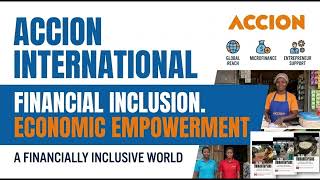
In this deep‑dive dialogue, the hosts trace the evolution of ACCION from a 1960s community‑development NGO into the world’s pioneering microfinance institution. They recount founder Joseph Blatchford’s early goodwill tour, the decade of infrastructure projects, and the 1973 pivot in Recife that introduced micro‑enterprise lending to the poorest without collateral. The conversation explains ACCION’s core innovations – social‑collateral group lending, character‑based and stepped loan sizing, and the use of local reputation as credit assessment. Through vivid case studies from Guatemala, Honduras, Benin, and the United States, they illustrate how tiny loans for tools dramatically boost productivity, enable schooling, and generate high repayment rates (≈97%). The hosts confront the controversy of high interest rates, arguing they cover intensive operational costs and enable self‑sustaining scale. They describe the creation of BancoSol, the issuance of U.S. certificates of deposit, and the 2007 Compartamos IPO that brought Wall‑Street capital to microfinance, followed by global expansion into Africa, India, and U.S. cities. Finally, they discuss the massive unmet credit demand (≈500 million micro‑entrepreneurs, $250 bn needed) and the tension between commercial growth and mission purity, concluding that unlocking the poor’s social capital may be the world’s biggest untapped economic resource.
Chapters
If I asked you listening right now to design the absolute perfect bank customer—
Oh, I think I know where you're going with this.
Right. Like someone who is essentially guaranteed to pay back their loan on time every single time. Who are you picturing?
I mean, you'd probably picture a massive multinational corporation. Or maybe just an individual with a pristine credit score, a six-figure salary, and, you know, a nice house in the suburbs to put up as collateral.
Naturally. That's what anyone would think.
Yeah.
But what if I told you to picture the absolute worst risk? The person no sane banker would ever lend a single dime to?
Well, then you're probably picturing someone with zero job history, no bank account, no collateral, and maybe not even a permanent address, like someone living in a shantytown.
Exactly. That is the conventional wisdom. But for today's deep dive, we are looking at a stack of sources—extensive internal reports, historical retrospectives, case studies from all over the world—that essentially takes that wisdom, crumples it up, and throws it straight in the trash. It really does. We are diving into AC/Science and the history of the microfinance revolution. And the data we have here is just baffling at first glance. It suggests that the person in the shantytown might actually be a much better credit risk than the person in the suburbs.
It sounds totally impossible, but that paradox is literally the foundation of a multibillion-dollar shift in the global economy. Today, we're looking at how this small group of idealists stumbled upon a way to lend money to the poorest people on Earth, people with zero physical assets, and get repaid at rates that would make Wall Street banks jealous.
Because the mission here wasn't charity, right? It was giving people the tools to work their way out of poverty with dignity. And we're talking about historical repayment rates of over 97%. That's astronomical.
I mean, commercial banks dream of those numbers.
They really do. Yeah. But before we get to the mechanics of how you actually lend to someone who can't offer a house or a car as collateral, we have to talk about where this whole thing started, because I went into this assuming it was cooked up by, I don't know, some World Bank economist or a financial genius.
Yeah, you would definitely think so. It seems like such a sophisticated financial instrument. But the origin story is actually a lot more amateur. It starts in 1961 with a guy named Joseph Blatchford, who was a law student. A law student. A law student and an amateur tennis player. Okay. A tennis player. Right. And he decided to go on a goodwill tour of Latin America. He actually visited 30 different cities just playing tennis matches to promote cultural exchange.
I mean, that sounds like a lovely vacation, but I really don't see how working on your backhand leads to a global banking revolution.
Well, it wasn't the tennis that mattered. It was the downtime between matches. Blatchford was traveling through these cities, and he was seeing the reality of the shantytowns up close for the first time. The historical reports we read describe him being genuinely haunted by these hopeless faces. He saw the open sewers, the severe overcrowding, people living in literal mud huts, and it just completely derailed his life plan. He couldn't just go back to law school and pretend he hadn't seen it. Exactly. So he decides he has to help. He goes out and raises some money, about $90,000 from private companies, which was a massive fortune in 1961. He recruits 30 volunteers and they fly down to Venezuela.
But looking at the early history of ACCAÑA, it's wild because they weren't lending money at all back then, were they?
No, not a dime. And this is a really critical part of the story that often gets skipped over. For the first decade, from 1961 to about 1973, ACCION was doing what we call community development.
They were basically builders.
Literally builders. They called themselves accionistas. They were out there digging ditches for sewer lines. They were stringing up electrical wires, building schoolhouses. I mean, they spent years and about $9 million doing this across Brazil, Peru, and Colombia. Which, to be fair, sounds incredibly noble.
If a community doesn't have a school, Building one seems like the obvious right move. It is noble.
But here's the brutal reality they faced by the early '70s. The leadership looked around at these communities where they had poured all this money and sweat, and they realized that nothing had fundamentally changed.
The people were still desperately poor.
Exactly. Because a schoolhouse doesn't put food on the table tonight. Right. The leaders at the time realized they were just reorganizing resources that a community already had. They were treating the symptoms of poverty like bad infrastructure, but completely ignoring the disease, which was a lack of income. Them. You can give a family electricity, but if they don't have a job to pay for the light bulb, they're just gonna sit in the dark.
That must have been a crushing realization, to spend 10 years of your life on a project and realize you completely missed the core problem.
It was a huge crisis of faith for the organization, but it forced them to look much closer at what the poor were actually doing every day. And they realized these people weren't idle. They were working incredibly hard, sometimes 18 hours a day, weaving belts, making pots, selling potatoes on the informal economy. But they were trapped in this vicious cycle because to buy the potatoes to sell, they needed cash up front. And since traditional banks wouldn't touch them, they had to go to local loan sharks.
I have to say, I read the numbers on the loan sharks in our source materials, and I honestly thought there were typos. 10% interest per day. It's not a typo.
Just imagine the math on that for a second. You borrow money in the morning to buy your inventory of vegetables. You sell all day in the hot sun. In the evening, the shark comes back and takes the principal back plus 10%.
That eats up almost your entire profit margin, right?
You are running on a treadmill that is set to maximum speed just to stay in the exact same place. You can't save a penny. You can't expand your stall. You certainly can't send your kids to school.
So this is where the major pivot happens. 1973 in Recife, Brazil. ACN decides to stop building schools and start directly competing with the loan sharks.
They asked this really radical question: what if we became the lender? What if we lent money to the payto seller at commercial rates, fair rates, so they could actually keep the profit they earned? They coined the term microenterprise.
But this brings us right back to the central problem. The loan shark lends money because he has a goon who will literally break your legs if you don't pay. A traditional bank lends money because they can legally seize your house. If ACCION isn't breaking legs and they can't seize assets, how on earth do they ensure they get paid back?
This is where the real genius of the model comes in. They realized that while these people lack physical assets, they have an absolute abundance of social assets. Social collateral. Exactly. In a tight-knit shantytown or village, your reputation is everything. If you burn your neighbors, you lose your entire safety net. So ACCION figured out how to monetize that trust.
This is the solidarity group lending concept from the reports.
Yes. Let's say you want a loan. ACCION says, "Fine, but you need to find 4 or 5 other people in your neighborhood who also need loans." You form a group, and here is the mechanism: the group cross-guarantees every single loan.
So if I don't pay my share—
Your neighbors have to pool their funds and cover you.
And if they don't cover me?
Nobody in the group ever gets a loan from ACCION again.
Wow, that is intense pressure. It is, but it's highly sophisticated.
Think about it from a risk assessment perspective. A bank officer in a suit from the city can't tell if you're trustworthy, but your neighbor, the woman selling vegetables in the stall next to yours, she knows exactly who you are. She knows if you drink away your earnings. She knows if you're a hard worker. By making the group liable, ACCION effectively outsourced the credit check to the community itself.
So it's not just peer pressure to pay, it's using the community's own deep knowledge to filter out the bad risks before the loan is even made.
Precisely. It turns social capital into financial capital. And then they combine that with what they call character-based lending. The loan officers actually go out and visit the market stalls. They rely on their gut feeling and community references, and they use stepped lending.
Stepped lending. That's the ladder approach, right?
Right. You start with a tiny loan, maybe $100 in Latin America. You prove you can pay it back on time, and that unlocks access to a slightly larger loan. You are essentially building a credit history out of thin air.
But I guess the big question for you listening is, does it actually work? Does a $100 loan actually change anyone's life, or does it just keep them in debt to a nicer lender?
The internal case studies are so fascinating on this point because they focus heavily on productivity. It's not about using the money to buy groceries for the week. It's about buying tools to make more money. Take the story of Juan Perrier in Guatemala.
Oh, the furniture maker.
Yes. He was a farm worker who made furniture at night to bring in extra cash, but he was using entirely manual tools: a handsaw, a hammer. The reports note it took him 3 full days to make a single couch. He was working himself to the bone for almost no output.
And he used his microloan to buy an electric saw. He did.
And just look at the economics of that. With the electric saw, he went from making 1 couch every 3 days to making 1 couch every single day. He literally tripled his productivity overnight.
So the loan pays for itself almost immediately.
That's the multiplier effect of capital. He didn't work any harder. He worked with better tools. The source material notes he was eventually able to put a tin roof on his concrete house. And that's the recurring theme in all these field stories, like José Antonio Sano's in Honduras. Exactly. José started a cement block business. He got a loan of about $550 for better tools and sand. He paid it off, took a second loan for $1,600, and bought a blue truck to deliver his orders. Suddenly, he's employing his own nephews.
And Fatouma Dijibril Issifu in Benin. She had inherited a vegetable stall she'd worked at since she was 5 years old. A tiny loan of $130 allowed her to buy her carrots in bulk. The case study noted she made about $2 profit on a bushel, but that tiny margin allowed her to send 2 of her children to school.
Which completely changes the trajectory of the next generation. Maria Otero, who was the president of ACEON, shared this amazing anecdote. She was asking a woman in Central America to show her how microfinance had helped her, and the woman didn't pull out a bank ledger or show her a new roof. She pointed to the wall where she had framed her children's school diplomas. That was the real return on investment.
Okay, so the human impact is undeniable, but I wanna push back on something we discussed earlier. You said they land at commercial or fair rates, But when I look at the details of ACCION's commercial model in these reports, the interest rates they charge are high, much higher than what I'd pay for a mortgage or a standard small business loan here. They are.
And we should be clear, this is often the most controversial part of microfinance. It makes a lot of observers uncomfortable.
It makes me a little uncomfortable. If the whole mission is to help the poorest of the poor, why charge them high interest? Isn't that just a slightly more polite version of the loan shark?
It's a very valid question, and it was actually the subject of a massive internal debate at ACCION itself. It really came to a head during a moment they refer to historically as Black Friday.
This was the major funding crisis. Yes.
In the early days, ACCION ran entirely on grants and charitable donations. Two of the executive directors, John Hammack and Bill Burris, were in different cities, Pittsburgh and New York, basically begging corporate foundations for grant money just so they could make payroll. And they both got flatly rejected on the exact same day.
They realized they were completely dependent on charity to survive.
And charity is incredibly fickle. It runs out. They realize that if you rely purely on donations, you can only ever afford to help a few hundred people. And when the grant money stops, the program dies, and those people go right back to the loan sharks. So they made a strategic shift. If they wanted to reach millions of people, the lending operations had to cover their own costs.
But why are the costs so high? That it requires those interest rates?
It comes down to logistics. If a traditional bank lends a corporation $1 million, the bank processes one stack of paperwork. If AC EON lends $1 million in a shantytown, they have to process 10,000 separate loans of $100 each. Oh, wow. That means 10,000 interviews, 10,000 collections, 10,000 physical visits to market stalls by loan officers. It is an incredibly labor-intensive process.
So the high interest rate isn't about executives taking huge profits. It's literally just covering the salary of the loan officer who has to ride a bus 2 hours to the village to collect $3. Exactly.
And the economic argument they settled on is this: access is fundamentally more important than cost. The borrower is more than happy to pay 20 or 30% a year because the only other alternative is paying the loan shark 10% a day or having no capital at all.
So by charging sustainable interest, the program becomes self-funding. The interest from one borrower's successful business funds the capital for the next borrower's loan.
And that financial sustainability is what finally allowed them to scale. This directly led to the creation of Bancasol in Bolivia in 1992, which was a massive historical milestone.
This was when they transitioned into a real bank.
The first private commercial bank in the entire world dedicated exclusively to microenterprise. They evolved from being a nonprofit NGO into a fully regulated financial institution.
And the sources mentioned they were selling certificates of deposit in the U.S. financial market. Can you explain why that specific detail matters so much? It was a total breakthrough.
It meant they weren't going to wealthy Americans asking for a handout. They were selling a legitimate financial product. They went to Wall Street and essentially said, don't give us charity, buy this bond. It pays a solid interest rate. And US investors bought it, backed entirely by the good word of a woman selling oranges in La Paz.
They connected the informal economy directly to global financial markets.
That's the key to the whole revolution. Charity is a limited pool of money, but capital markets investment money is essentially infinite. By proving these loans were investment worthy, they could grow from helping thousands to helping millions.
And speaking of growth, they didn't just stay in Latin America or Africa. One of the most surprising twists in the reports is that they brought this model to the United States. ACI USA started in Brooklyn in 1991. Yes.
And they eventually expanded to Chicago, Texas, all over.
But this really surprised me because we don't have shantytowns in the US in the same way they do in developing nations. So why bring a poverty alleviation model to Brooklyn?
Because the underlying credit gap exists absolutely everywhere. In the U.S. context, it's not usually about absolute day-to-day survival. It's about the formal banking system freezing people out. A huge percentage of their U.S. clients are minorities or women. If you have a thin credit file or a damaged credit score from a past mistake, you simply cannot get a traditional business loan no matter how hard you work.
So the mechanism adapts, but the philosophy is the same, right?
The loans are bigger. The U.S. average is around $5,000 compared to maybe $800 internationally. But it's still character-based lending. Look at the case study of Leo Oden in Chicago.
He was the caterer.
Yeah, he ran a catering business out of his house, but he couldn't get a bank loan to expand. ACCION came in, looked at his drive and his community standing, and gave him the capital to buy a commercial industrial oven. His production went up 10 times.
It's the exact same story as Juan Purier and the electric saw in Guatemala.
Same exact story, just a different zip code. It's about unlocking economic potential that the traditional system completely ignores.
So where does this movement go from here? Because we've seen the model work. We've seen it scale globally into Africa by 2000, India by 2005. But the briefing materials highlight a looming scale problem.
It's simply the sheer magnitude of the global need. Estimates suggest there are around 500 million people globally who run micro-businesses and desperately need credit. To reach all of them, you'd need something like $250 billion in capital.
And even with Banco Sol and the certificates of deposit, they aren't anywhere close to that yet.
No. And that's why the future of microfinance is increasingly entangled with big money. We are seeing major international banks and huge insurance companies entering the space, like AIG giving a $5 million grant to develop microinsurance.
And the reports highlighted the IPO of Compartamos in Mexico in 2007. That was a watershed moment.
Microfinance went fully public on the stock market. It proved beyond a doubt that you could make significant commercial returns for investors by lending to the poor. But of course, this brings in a whole new wave of controversy. Critics argue that bringing in Wall Street might make these institutions too greedy.
That seems like a very real risk. If you are suddenly beholden to quarterly shareholder returns, you might prioritize extracting profit over actually helping the poor.
It is absolutely a risk and it's heavily debated. But the counterargument from Asisian and others is that without that massive influx of commercial capital, you leave hundreds of millions of people behind in poverty. It's a very real tradeoff. Do you stay small and pure and only help a few, or do you get big and commercially messy but actually reach everyone who needs it?
It seems clear from their trajectory that they've chosen reach.
They have, and they are expanding way beyond just microloans now. They realize that to truly build wealth, the poor need a full financial ecosystem. They need safe savings accounts. They need housing loans to improve their living conditions. They need microinsurance to protect them from a sudden injury or a crop failure that could wipe out years of progress.
Reading through all of this, it really reframes how we look at poverty as a society. We usually talk about poverty purely as a lack of money, a deficit. But listening to this deep dive, it sounds a lot more like a lack of access.
That is the ultimate paradigm shift here. For centuries, the formal financial world looked at the poor and just saw mouths to feed. ACCION looked at those exact same people and saw minds to employ. They treated them as capable business partners.
And the fact that those business partners pay back their loans at a 97% rate, better than many Fortune 500 companies, proves that that view was right all along. They have lent over $12.3 billion and reach nearly 5 million people.
It's staggering, and it leaves us with a really provocative thought for you to chew on after this. We spend so much time in the financial world analyzing complex algorithms, building derivatives, trying to squeeze tiny fractions of value out of the economy. But if a woman selling vegetables in a market in Benin can manage her daily cash flow with that level of precision and reliability over years and years, what does that say about how our traditional banking system assesses risk and value?
It strongly suggests we might be looking for economic value in all the wrong places.
Perhaps the world's biggest untapped economic resource hasn't been hiding in Silicon Valley tech startups or offshore oil fields. It's been hiding in plain sight in the street markets and shantytowns of the world, just waiting for someone to finally offer them a fair deal.
Well, that is a wrap on our deep dive into ACCION and the microfinance revolution. Thank you so much for listening. And we will catch you on the next one.
More from Dr.

2025 Mercedes-Benz CLE 450 4Matic Cabrio – Owner’s Views After a Year-and-a-Half as a Daily Driver

The Complete Guide to a Successful Everest Base Camp Trek – Post-Trek Debrief

The Complete Guide to a Successful EBC Trek – Post-Trek Debrief: What I Needed (and What I Didn’t)

What Went Wrong Customizing My New 2026 Porsche Carrera T …and what I did about it!

Coming May 1 At the Intersection of High Performance and Fulfillment: A Conversation with Alisa Cohn

From High Performance to Fulfillment: Lessons in Inner Mastery with Jim Murphy

Coming March 19: From High Performance to Fulfillment: Lessons in Inner Mastery with Jim Murphy

The New Humanitarians Volumes I - III:- Inspiration, Innovation, and Blueprints for Visionaries

The New Humanitarians Volumes I - III:- Inspiration, Innovation, and Blueprints for Visionaries

The New Humanitarians Vol I - III: Inspiration, Innovation, and Blueprints for Visionaries - Forward
