The New Humanitarians Volume II – Building Educated Leaders for Life
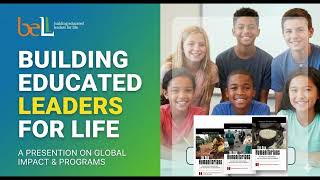
This content was created by Dr. Chris Stout. This content was uploaded by Dr. Chris Stout. YouTube episode titled "The New Humanitarians Volume II – Building Educated Leaders for Life" (created 2026-03-11, last edited 2026-03-18). Presented as a two-speaker, podcast-style deep dive (hosts labeled SPEAKER A and SPEAKER B) examining the nonprofit BELL (Building Educated Leaders for Life). The hosts trace founder Earl Martin Phelan’s origin story, describe BELL’s summer-intensive "scholar" model to combat the summer slide, discuss pedagogy (rigorous academics plus character/"knowledge of thyself"), and summarize outcomes and evidence (average gains of ~5 months in a single summer, a 20-for-20 college result for the first cohort, and an Urban Institute randomized-assignment study). They analyze BELL’s organizational pivots—moving from volunteer to paid staff, generating earned revenue via Supplemental Educational Services under No Child Left Behind, high-profile partnerships (e.g., Red Sox Scholars), influence on federal policy (STEP UP language incorporated into the America COMPETES Act), scaling via an affiliate/licensing model, and targeted initiatives like Bell Boys. The episode frames broader lessons about abandoning the "saint"/"starving artist" myth, building sustainable financial models for social impact, and the principle of "high expectations, high support."
Chapters
You know, there's that, that really romanticized image of the starving artist.
Oh yeah, the Van Gogh model.
Right, exactly. The whole idea that to create something truly beautiful, you have to be, you know, suffering in a tiny apartment somewhere, burning your furniture just to stay warm.
Great for art history, but terrible for your actual life expectancy.
Yeah, completely. But here's the thing about that. We tend to apply that exact same logic to doing good, to charity.
We really do.
There's this pervasive belief that if you're running a nonprofit or trying to change the world, you should be doing it on a shoestring budget. Like, if you aren't suffering, are you even really helping people?
It's what you call the saint trap. We just expect social entrepreneurs to take a vow of poverty. But our deep dive today is going to challenge that assumption pretty aggressively.
It is, because today we are looking at the sources for an organization called BEL that stands for Building Educated Leaders for Life. And on the surface, it just looks like a story about tutoring kids in math and reading. But when you actually read through the history and the strategy in these documents, It's really this incredible masterclass in how social entrepreneurship has to evolve if it wants to survive.
It's a fascinating case study for you to dig into because it starts with pure heart. We're talking law students in a basement, literally a living room, actually a living room. And it ends up with them shaping federal legislation and building a multimillion-dollar business model. And the journey between those two points was anything but smooth.
You know, it was incredibly rocky. So let's set the stage for you first. We are talking about the education gap here, specifically the gap in low-income urban communities. And Bell isn't just trying to get kids to pass a standardized test. Their mission statement is bold, like almost crazy bold.
It is. They want 100% of their scholars to achieve proficiency in their elementary years.
Which is wild because 100% is a scary number in the education world.
Terrifying. Most programs are thrilled with just being better than average. But Bell's core philosophy is that you can't just teach the 3 Rs, you know, reading, writing, and arithmetic. You have to teach character.
Yeah, the sources mention this concept they use called knowledge of thyself, which honestly feels a little heavy for a 3rd grader. I mean, I was just trying to memorize my times tables at that age.
That does sound heavy, but you have to think about the context here. These are children who are often told either directly or indirectly, that they just aren't going to amount to much.
Right. Society tells them that.
Exactly. So Bell pairs really rigorous academics with social skills and self-knowledge to build this kind of armor. They aren't just trying to make better students. They are actively trying to build leaders who know exactly who they are.
And to understand where that kind of intensity comes from, we really have to talk about the founder, Earl Martin Phelan, because his backstory is just, well, It's cinematic.
It really belongs in a movie. Phelan was an adoptee. He spent the first couple of years of his life in the foster care system. And when he talks about his adoptive parents, he credits them with instilling this massive sense of responsibility in him.
He knew his life could have gone a very different way if not for them stepping in.
Exactly.
Yeah.
So he always had this drive to give back. But he wasn't planning on being a teacher at all. He was at Harvard Law.
Fast track to power.
Yeah, he was on track for politics or high-level corporate law. The plan was to be a major player. The standard path for a Harvard Law student is to spend your summer at a prestigious firm, billing hours and rubbing elbows.
But in 1991, a mentor pushes him to do something different, right?
Right. So he goes to Kingston, Jamaica—
To do human rights work, which is still very serious, high-level legal stuff.
Very serious. But while he's there, he finds himself drawn to this local orphanage called Maxfield Park. He grew up with like 30 nieces and nephews back home, so he's completely used to the chaos of kids. He starts volunteering there on the side, and that is where the big aha moment happens for him. It's a pencil and crayon story. I love the visual of this.
It's so beautifully simple. He's sitting with a first grader, and he's trying to explain that 1 1 2, just basic addition, but the abstract numbers just aren't clicking for her.
Yeah.
So he grabs a pencil, And he grabs a crayon, and he puts them together physically on the table.
And light bulb goes off.
Her eyes just light up. She totally gets it. And for Phelan, that was the lightning bolt. He realized in that split second that the satisfaction of unlocking a child's potential was way more powerful than winning any court case.
So he comes back to Harvard in 1992. He grabs a classmate named Andrew Carter, and they start BELL.
As a community service project.
Right. At the Agassiz School in Cambridge. Now this is the part where the movie montage usually kicks in. They start a program, the kids love it, everyone gets an A, roll credits.
But that is not what happened in reality. Not even close. They expanded into Roxbury, Massachusetts, and they hit a brutal reality check because they went in thinking, we'll be mentors, we'll be role models for these kids.
Which is a great goal, but mentorship doesn't magically teach a kid how to read.
Precisely. The volunteers found out pretty quickly that raising a child's aspirations was actually the easy part. You can easily get a kid excited about becoming a doctor or a lawyer.
But then they looked at the actual academic skills.
Yeah, these kids were years behind in basic reading and math. You can dream about medical school all day long, but if you literally cannot read the biology textbook, it's just a cruel joke.
That is such a heartbreaking realization for a volunteer to have. You think you're saving the world, but you realize you're basically just cheering on someone who is stuck in quicksand.
That's a really vivid way to put it. But yeah, that was the major pivot point for their whole methodology. They realized they had to stop just mentoring and start essentially running a school. They had to become an academic powerhouse.
And this brings us right into the structure of their program because they do things very differently than your standard summer camp. First off, let's just talk about the terminology. They don't call them students. They call them scholars.
That is so intentional.
Words create worlds. If you call a child a student, that's passive. If you call them at risk, that's just slapping a label of deficit on them.
Right.
But scholar. That implies dignity. It implies a future. It tells the child, I take you seriously, so you need to take yourself seriously.
But looking at the sources, the real secret sauce here seems to be their attack on the summer slide. And the math on this, when you really break it down, is actually terrifying.
It is deeply unsettling. Let's break it down for the listener. An average American student is in school for about 180 days a year.
Which feels like an eternity when you're a kid.
Sure it does. But compare that to their peers in high-performing countries in Europe or Asia. Those kids are in school for 40 to 70 more days a year.
Every single year.
Every year.
Yeah.
So if you compound that over 12 years of schooling, you are talking about 3 to 4 entire years of additional education that American kids are missing out on.
By the time an American kid graduates high school, a kid in another country has essentially completed a college degree's worth of extra class time. Just by showing up more often.
It is a massive competitive disadvantage globally. And that's just the average. For low-income kids, the summer isn't just a pause in learning. It's a severe regression.
Right, because middle-class kids might go to a science camp or they have shelves full of books at home.
Exactly. Low-income kids often don't have access to those resources. They actually lose months of grade-level equivalency over the summer. So Bell looked at this and decided to turn the summer into a weapon against that gap.
A 5-day-a-week, 8-hour-a-day weapon? I mean, that is a full-time job for these kids.
It is extremely intense. Yeah. But they structure it very carefully. The mornings are the grind—literacy tutoring, math, small group work. It's highly rigorous.
And the afternoons?
The afternoons are enrichment—art, drama, STEM projects, field trips.
So it's the vegetables first and then the dessert.
Exactly. And Phelan has this incredible line about it. He asks parents, If your child couldn't read and you had to choose between 2 hours of reading tutoring or 2 hours of basketball, what would you choose? Well, reading, obviously. Right. But Phelan says, I don't care what your answer is. Because he views these scholars as his own children, he refuses to let them reach age 16 and look back and say, you didn't prepare me for the world. So they do the reading and the basketball. They do the math and the theater. And what are the results?
Because there are plenty of education programs out there that promise the moon and deliver nothing.
The data here is rock solid. They are obsessed with metrics. They use nationally normed diagnostic tests before and after the program. And Bell Scholars gain an average of 5 months of grade-equivalent skills in a single summer.
Think about that. They are doing half a school year's worth of learning in just 6 weeks.
While their peers who aren't in the program are sliding backward. It closes the achievement gap incredibly fast.
And this wasn't just them grading their own homework either.
No, the Urban Institute stepped in and did a randomized assignment study. That is the gold standard of scientific research. And they definitively proved Bell's impact. Statistically significant gains in reading scores and in parental involvement.
Okay, so the program works, the methodology is proven, the kids are learning. But I want to pull us back to that starving artist idea we started the show with. Because looking at the early financial history of Bell, it is an absolute miracle they survived long enough to help anyone at all.
It really is a miracle. We have to address the saint mentality that Phelan fell into early on. He and his co-founders started this entire thing with a total grant of $12,500. For the whole organization. For everything. They were living on about $6,000 a year each. Phelan was living in his parents' condo rent-free just to survive, and they turned the living room into the Bell headquarters.
See, that sounds super noble when you read it in a biography. But in real time, that is a recipe for complete burnout.
It's worse than burnout. It's structural instability. Phelan openly admits that he thought money was the enemy of good work. He thought if you paid yourself a decent wage, you weren't truly serving the community. But you simply cannot build a lasting institution on martyrdom.
By '96 and '97, they hit a massive wall.
The deficits were piling up fast. They were over $100,000 in the hole. They had weeks where they didn't know if payroll would clear. Board members were literally pulling out their checkbooks and writing personal checks just to keep the lights on.
Imagine the stress of that. You have hundreds of families relying on you to educate their kids, and you were checking the couch cushions for change. So how did they break that cycle? Because frankly, a lot of nonprofits just die right there in the living room phase.
They had to make two fundamental shifts in how they operated. The first was about people. They moved from a purely volunteer model to a paid staff model. And this wasn't just about getting reliable people who show up on time. It was a diversity issue.
This is a really important nuance to highlight. It is.
They desperately wanted mentors who looked like the scholars. They wanted Black and Latino college students who had navigated the education system successfully. But here's the harsh reality. A lot of those college students could not afford to volunteer for free.
They had their own tuition to pay.
Exactly. They were having to quit Bell to go flip burgers or work retail because they needed actual cash to live on.
So by refusing to pay people, Bell was inadvertently filtering out the exact role models they needed to hire. Exactly.
Only wealthy kids could afford to volunteer their summers. Phelan realized that if he wanted a diverse, high-quality, dedicated team, he had to pay them. He had to treat this like a real job, not a weekend hobby.
And that leads directly to the second major shift, the business model itself. They found a way to stop constantly begging for grants and start actually earning revenue.
The pivot. They tapped into something called Supplemental Educational Services under the No Child Left Behind Act. Okay, lay this out for us.
How does that policy actually work in practice?
Think of it essentially like a government voucher system for tutoring. The government says, okay, this particular public school is underperforming based on our metrics. So we're going to allocate federal money for every single child in this school to get outside tutoring services.
So the government becomes Bell's customer. Precisely.
Instead of Phelan having to put on a suit, go to a fancy gala, and convince a rich donor to give him $50 grand out of the goodness of their heart, he could go directly to a school district. He could say, we have the capacity to service 500 of your kids, and here is the invoice. That changes the entire dynamic.
It turns a struggling charity into a legitimate vendor.
It provides a recurring, reliable revenue stream. It allowed them to actually plan for the future. It allowed them to hire real infrastructure. Because of that pivot, their revenue grew from $4 million to $31.4 million in just 4 years.
That is explosive growth for any sector, and it just proves the underlying point: you cannot help the kids if you cannot pay the electric bill.
Phelan had to learn the hard way. That passion is not a business plan. You need a strong economic engine if you want to scale impact.
So they secure the money, they dial in the methodology. Let's talk about the human impact of all this, because we threw around that 100% goal earlier. Did they actually hit those numbers?
Let's look at the first 20. That was the original cohort of scholars. Every single one of those 20 kids enrolled in or graduated from college. 20 for 20. 20 for 20. And you have to compare that to their peer group in those specific urban neighborhoods where the college graduation rate was hovering around 30%. That is a life-altering statistical difference.
And there's one specific story in the sources that really stuck with me. Courtney Jordan.
Courtney is the perfect example of why merely giving someone access isn't enough. She was a very bright kid. She got accepted into a program called METCO, which transfers urban students into high-performing suburban schools.
So on paper, she had made it. She was out of the underperforming district and into a better school. Right.
But that is exactly where the trap is. If you drop a kid into a highly competitive new environment without building their foundational skills first, what happens?
The school placed her in remedial classes. They did.
They saw a kid coming from the inner city and immediately assumed she couldn't keep up with the suburban kids. But Courtney had been through Bell. She had the actual academic skills, and more importantly, she had the confidence. She pushed back against the administration. She advocated for herself. She did. She demanded to be moved from remedial classes to regular ones, and then she pushed to get into advanced ones.
And she didn't just survive in those advanced classes, she thrived.
She ended up earning the highest GPA in her entire grade. If she hadn't had that inner confidence, that knowledge of thyself we talked about, and the rigorous math and reading chops from the Bell summer program, she might have just accepted that remedial track forever. Belle gave her the tools to fight for her own education.
That is the micro-level impact, just changing one life completely.
But Belle also managed to pull off something on the macro-level that most nonprofits only ever dream about. They didn't just work within the broken system, they actually changed the laws.
And this is where their networking really comes into play. It speaks again to shedding that starving artist mentality. They started rubbing elbows with the elite in Boston. They built a strategic partnership with the Red Sox ownership group.
Which is brilliant because in Boston, the Red Sox are basically a religion.
Exactly. That partnership created the Red Sox Scholars Program. It provided scholarships and gave the kids recognition right on the field at Fenway Park. But more importantly for Bell, it gave them massive institutional credibility. When you have the Red Sox backing you, Bess, politicians start returning your phone calls.
And one of those politicians just happened to be a rising senator from Illinois.
Barack Obama. This was well before his presidency. He saw what Bell was doing on the ground in Baltimore. He looked at their data on reversing the summer slide, and he championed federal legislation called the STEP UP Act based on their model. And that bill didn't just disappear into some congressional subcommittee to die.
No. That specific language and the Bell model itself were incorporated directly into the America Competes Act, which was signed into law by President George W. Bush in 2007.
I just want to pause on that trajectory for a second. You have an idea that was born while playing with a pencil and crayon in a Jamaican orphanage, tested in a basement in Boston, championed by a Democratic senator, and signed into federal law by a Republican president.
And that legislation unlocked nearly $100 million for summer learning programs nationwide. They didn't just run a good local program. They fundamentally shifted how the federal government thinks about the American school calendar.
So where does an organization like this even go next? I mean, if you've already influenced federal law and scaled your budget past $30 million, have you just won?
The problem with education is that the issue is too massive to ever say you've won. But they're changing their tactics to scale even further. They realized they couldn't just keep opening and running new Bell sites themselves forever. The administrative heavy lifting was too much. So they transitioned to an affiliate model, like a franchise system in business. Very similar concept. They package up their curriculum, their diagnostic tests, their staff training modules, and they license it to other established nonprofits, places like the Boys and Girls Clubs or the YMCA. They essentially say to them, you already have the building and you have the kids. Here is the software to make it actually work.
That allows them to scale their impact across the country without drowning in operational overhead. Right.
And they are also getting much more targeted in who they help. They launched an initiative called Bell Boys in partnership with the Charles Hayden Foundation. It specifically addresses the needs of Black and Latino boys who statistically are often the most marginalized and overlooked group in the entire education system.
It really feels reading through these documents like Earl Martin Phelan views all of this as much more than just an education initiative.
He keeps referencing the civil rights movement. That is the absolute core of his philosophy. Phelan draws a direct line from the Montgomery bus boycott straight to what Bell is doing today. He talks about how those activists sacrificed their physical safety and their comfort so future generations could have rights. He sees education as the defining civil rights battle of our time.
So it's not just about getting the right to sit at the front of the bus anymore. It's about having the skills to own the bus company, or at least the math skills to run its accounting department.
It's about fundamental liberty. You cannot be truly free in the modern world if you cannot read, write, and compute at a high level. Without those skills, you are effectively locked out of the entire economy. Bell is trying to hand these kids the keys to access that economy.
So as we wrap up this deep dive, what is the big takeaway here? We've covered a huge amount of ground from crayons to Congress. What should you, the listener, walk away with?
For me, the defining takeaway is the phrase high expectations, high support. We as a society love to tell kids to dream big. We love the high expectations part of the equation. We love saying no excuses. But Phelan's work shows us that high expectations without high support is basically just cruelty. You can't tell a child to go climb a mountain and then refuse to give them any boots. You have to actually provide the ladder.
Exactly.
You have to be willing to do the unglamorous, sweaty, 8-hour-a-day summer work of actually teaching them how to read.
And I think the other major lesson here is for anyone listening who has a cause they care deeply about, we have to collectively kill the saint myth.
Absolutely. Phelan proved that you do not help the poor by being poor yourself. You help them by building a sustainable, robust organization that has the financial strength to weather the storm.
It's a provocative thought to leave you with today. How many world-changing ideas are currently stuck in a living room somewhere, limiting their own potential because the founders are afraid to treat their mission like a business? How much good is being left undone in the world just because we are so afraid of the word profit? Passion is what ignites the fire.
But strong economics is the only thing that keeps it burning.
I absolutely love that. That's a wrap for this deep dive into Bell and the business of education. Thanks for listening, and we will catch you on the next one.
More from Dr.

2025 Mercedes-Benz CLE 450 4Matic Cabrio – Owner’s Views After a Year-and-a-Half as a Daily Driver

The Complete Guide to a Successful Everest Base Camp Trek – Post-Trek Debrief

The Complete Guide to a Successful EBC Trek – Post-Trek Debrief: What I Needed (and What I Didn’t)

What Went Wrong Customizing My New 2026 Porsche Carrera T …and what I did about it!

Coming May 1 At the Intersection of High Performance and Fulfillment: A Conversation with Alisa Cohn

From High Performance to Fulfillment: Lessons in Inner Mastery with Jim Murphy

Coming March 19: From High Performance to Fulfillment: Lessons in Inner Mastery with Jim Murphy

The New Humanitarians Volumes I - III:- Inspiration, Innovation, and Blueprints for Visionaries

The New Humanitarians Volumes I - III:- Inspiration, Innovation, and Blueprints for Visionaries

The New Humanitarians Vol I - III: Inspiration, Innovation, and Blueprints for Visionaries - Forward
