The New Humanitarians Volume II – Our Voices Together
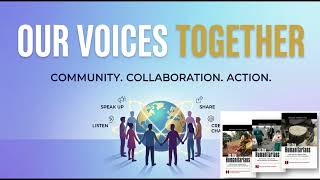
Dr. Chris Stout discusses Marianne Scott's manuscript about 9/11 families who built a grassroots counterterrorism effort through philanthropy and citizen diplomacy. Families like the Stoilers and Rosenthals created schools, mental-health clinics, and giving circles in conflict zones. The core idea: development and compassion can compete with extremist recruitment.
Chapters
Welcome to the Deep Dive. We are, um, we are so glad you're here with us today. For this Deep Dive, our mission is to explore a truly remarkable draft manuscript. It's titled Our Voices Together by Marianne Scott.
It is quite a document. It offers a very grounded, meticulously detailed look at a piece of history that, Well, most people think they already know from top to bottom.
Right.
But it approaches the subject from an angle that is rarely discussed in mainstream history.
Yeah, because when you think about the aftermath of September 11, 2001, your mind probably goes straight to the military response, right? The geopolitical shifts, the sweeping changes to Homeland Security.
Exactly. We all know that narrative.
We do. But today, we are looking at a completely different kind of response. We're going to explore a premise that turns conventional wisdom entirely on its head.
It really does.
What if the ultimate counterterrorism strategy isn't, you know, a new weapon system or a massive piece of legislation, but a coordinated, decentralized network of ordinary citizens armed with nothing but compassion?
It's a profound shift in perspective. What this source material provides is a fascinating look at how private citizens, specifically families who suffered unimaginable personal losses on 9/11, attempted to shift global foreign policy and root out extremism at its very source.
And they did it without firing a single shot.
Not one.
Okay, let's unpack this. Because to really understand this movement, you have to understand where it started. And it started with one specific family, the Stoilers.
Right, the Stoil family.
On the morning of September 11, 2001, Norma Stoiler was on American Airlines Flight 77. She was heading west for a family vacation. But as we know, a little over an hour after takeoff, Flight 77 was crashed into the Pentagon. Can you walk us through what happened with her family in the immediate aftermath?
It's an unimaginable tragedy. Her husband, Gene, who is an economist, was actually in Asia for a conference at the time.
Oh, wow.
Yeah, and their daughter, Kristin, who's a pediatrician on active duty with the U.S. Navy, was stationed over there as well. They had to navigate this horrific shock from across the globe.
I can't even imagine.
Right. But what Maryanne Scott highlights in her manuscript is the incredible outpouring of global solidarity the family experienced. Strangers, neighbors, people from all walks of life stepped up with goodwill and support.
And that support led to a massive turning point for them. Jean, Kristin, and their other daughter, Lynn, had this sudden realization that they possessed a platform.
A very powerful one.
Exactly. It was a voice they never asked for, a voice they would have gladly given up to have Norma back. But they had it. The government had set up the Federal Victim Compensation Fund, which was a massive federal payout meant to help families survive financially and, you know, prevent a wave of lawsuits against the airlines.
That fund is crucial to the story. The Stoilers received their settlement, but instead of using it to rebuild their own private lives or giving in to anger and a desire for retribution, they did something astonishing.
They really did.
They decided to take 100% of that federal settlement and donate it to start charities. One of those charities became the organization at the center of this manuscript, Our Voices Together.
Giving away that entire settlement is staggering. It's putting your money exactly where your mouth is. What was the driving philosophy behind that decision?
The author provides a powerful quote from Gene Storiel that lays it out perfectly. He said, terrorists today are using their resources to do enormous harm. We are trying to use our resources to do enormous good.
Wow.
If we look at this impartially, based purely on what the source outlines, this was a highly deliberate strategic choice. The family recognized that terrorist tactics are designed to divide people through fear and isolation.
Right, that's the whole point of terrorism.
Exactly. By reciprocally sharing the generosity they received from strangers, they were demonstrating the oneness of humanity. They were making a conscious choice to defy the terrorists' intent to divide.
There's another story in this manuscript that's just stopped me in my tracks regarding that defiance. It's about Marilyn M. Rosenthal.
Yes, her story is incredible.
She was a professor who lost her son Joshua at the World Trade Center. And the notes mention she eventually traveled to the United Arab Emirates. But she wasn't there on vacation. She went to meet face-to-face with the family of the young hijacker who piloted the very plane that killed her son.
What's fascinating here is her reasoning for putting herself in such a deeply vulnerable, painful position. Marilyn is quoted saying, "I'm not justifying what he did. He's a murderer. But if you just hate and you don't try to understand, all you do is perpetuate the hate and the wars and the killing over and over again." That takes so much strength. It does. She made it very clear that she wasn't looking to absolve anyone. She said, "That doesn't mean forgiving. For me, it's not a matter of forgiveness.
It's a matter of understanding." I just want you, the listener, to pause and imagine being in that position. It's a real aha moment about human resilience to look at the people responsible for your absolute deepest pain, to sit across from them in a foreign country and decide that understanding the root of their actions is the only way forward. It's heavy.
It is incredibly heavy. And Marilyn, along with the other families who formed Our Voices Together, consciously chose to try and break that cycle of violence.
Right.
But they didn't just want to heal themselves emotionally. They wanted to build a framework. They recognized that taking this personal philosophy and applying it globally could function as a genuine counterterrorism measure.
Hearing about Marilyn makes me wonder, how do you take that massive personal empathy and actually turn it into a national strategy? Does the manuscript explain how this scales up from individual grief to global policy?
It does, and it leans heavily into the macro perspective of counterterrorism. The argument presented is that military force, intelligence gathering, and homeland security, while significant, simply aren't enough on their own to stop terrorism permanently.
Just to pause here and be completely clear for you listening, we aren't taking a political stance on the War on Terror or military doctrine. We are strictly relaying the strategic arguments that Mary Ann Scott synthesizes in her work.
That's a vital distinction. The author's thesis relies heavily on the official 9/11 Commission Report. That report noted something crucial: poverty and a lack of education do not directly cause terrorism.
Which goes against what a lot of people assume.
Right. Most terrorist leaders historically are highly educated and come from middle-class or wealthy backgrounds. However, poverty, exclusion, and lack of opportunity create fragile, desperate conditions within a society. Extremists exploit those fragile conditions to build their networks.
They use those broken societies as a breeding ground because desperate people are looking for any kind of stability or purpose.
That breeding ground concept is exactly what forced the 9/11 Commission to propose something called an agenda of opportunity.
An agenda of opportunity.
Yes. The core idea is that a comprehensive defense strategy must include economic policies that encourage development. You have to give people prospects for a better future, or someone else will step in and give them a much darker purpose.
And there's this one quote in the text from Robert Pape at the University of Chicago that perfectly captures this dynamic. He says, an individual can die. Only a community can make a martyr.
This raises an important question. How do you stop a community from making a martyr?
Right.
If terrorists lose their ability to recruit, they lose all their power. The source argues that extremists rely entirely on the emotional and logistical support of their local communities. But those communities are far less likely to harbor hatred toward people who are actively helping them build schools, staff medical clinics, and secure clean water.
It's hard to demonize someone who just funded your daughter's education.
Exactly.
Did this idea gain traction beyond just the families? I remember reading that even the military started shifting their doctrine around this time.
The author points to a major shift in 2006 with the release of the Army and Marine Corps Counterinsurgency Field Manual. To break that down simply, traditional military doctrine was often about neutralizing the enemy through sheer force. Counterinsurgency, however, recognizes that you are ultimately in a struggle for the local population support. You can't just win firefights. You have to win trust.
And the manuscript quotes former Secretary of Defense Robert Gates on this, right?
Yes, from a 2007 lecture. He became the first Secretary of Defense to publicly call for a dramatic increase in spending on civilian instruments of national security.
That's a big deal.
Huge. He bluntly stated that military success isn't sufficient to win. You need economic development, good governance, and basic services. But he also made a crucial caveat: the military taking on these burdens is no replacement for the real thing, which is civilian involvement and expertise.
Here's where it gets really interesting because that civilian gap is exactly where Our Voices Together, or OVT, stepped in. They took that high-level concept of civilian involvement and built a literal counterterrorist network of good.
Yes, a literal network.
The premise is so compelling when you view it as a mirror image. Al-Qaeda is a decentralized network that uses violence and intimidation. So, OVT created a decentralized network of ordinary citizens using goodwill and compassion. I remember reading a brief mention of the Goodrich family in the notes, but what exactly did they do in Afghanistan?
The specific examples the manuscript provides really bring the scale of this to life. Sally and Don Goodrich lost their son, Peter, on United Airlines Flight 175, the second plane to hit the World Trade Center.
Oh, man.
Peter had actually been reading the Quran before his death. He read it because he wanted to be a peacemaker. He had this wide-embracing intellectual search for answers.
That is incredibly poignant.
It is. So his parents, Don and Sally, channeled that exact spirit. Don became the chair of the Board of Families of September 11th, and Sally became the driving force behind a foundation that works primarily in the Pashtun provinces of Afghanistan.
What do they do there?
They actually funded and built a school for girls there, directly challenging the extremist ideology that relies on keeping women uneducated.
And there was also Susan Reddick. We briefly touched on the sheer cruelty of her situation earlier. She was 7 months pregnant with her third child when her husband David was killed on 9/11. How did she turn that immense personal trauma into international action?
She recognized the incredible financial and emotional support she received from around the globe as a widow, but as she watched the war unfold in Afghanistan, she realized that many Afghan women were being widowed by the exact same conflict, but without any of the global support systems.
So she stepped in.
Yes, she co-founded an organization called Beyond the 11th. They specifically reached out to widows in those war-torn areas, offering them mutual support, community, and financial grants to rebuild their lives.
A literal lifeline. And speaking of rebuilding lives, the manuscript also details the Alderman family. Elizabeth and Stephen Alderman lost their youngest son, Peter, at the World Trade Center. He was just 25 years old.
Just 25.
They realized they couldn't bring Peter back, but they could help heal others as a living memorial to him. How did they approach this?
They founded the Peter C. Alderman Foundation, and their focus was incredibly targeted. The author points out a staggering statistic: 1 billion people worldwide have directly experienced terrorism, mass violence, or genocide.
A billion people. That's hard to even wrap your head around.
It is, and the Aldermans realized that surviving the violence is only the first step. They focused on what they called the walking wounded survivors, who can no longer function in their daily lives due to severe, untreated trauma and depression.
Because if a society is entirely traumatized, they can't rebuild their economy or their infrastructure.
Precisely. So, the foundation trains local doctors and establishes mental health clinics in post-conflict countries like Cambodia and Uganda. They provide the psychiatric care necessary to help these communities heal from the inside out. Their guiding philosophy is summarized in a very powerful, simple quote: "We are victims of terrorism helping victims of terrorism." And it wasn't just families who lost relatives.
The manuscript highlights that colleagues and friends got involved too. There's the story of Len Berman, an economist. He literally cycled across America with his son, to raise over $100,000 for medical work in Haiti.
That's a serious ride.
Yeah. And he did it all in memory of his colleague from Georgetown University, Leslie Whittington, who died on Flight 77.
When you lay all these stories out— schools in Afghanistan, mental health clinics in Uganda, medical care in Haiti— you see the sheer diversity of the response. It's a decentralized web of philanthropy attacking the root causes of global instability.
But I think what's most relevant to you listening right now is that OVT didn't just want this to be a handful of 9/11 families doing doing incredible things. Yeah. You don't have to be intimately connected to a global tragedy to participate.
No, not at all.
They wanted everyday people to be able to scale this up. They wanted you and me to get involved. And that leads us to the story of the Afghan Education Giving Circle of Northern Virginia.
This is a perfect example of how OVT sought to engage the broader public. The giving circle was started by Joyce Manchester and David Stapleton. They lost their good friends, the Whittington-Falkenberg family. That's Leslie Whittington, who we just mentioned, her husband Charles, and their two young daughters, Zoe and Dana, who are all on Flight 77.
Joyce and David are economists, so they understood the data. They knew that investing in education in developing countries is critical for long-term political stability. But they didn't just want to write a one-off check to a massive charity and forget about it.
Right, they wanted a deeper connection.
Exactly. They wanted an ongoing connection to the work. So they formed a giving circle. For those who might not know, a giving circle is almost like an investment club, but instead of pooling money to buy stocks, you pool your money and time to make a highly targeted charitable impact.
They invited 4 households to join them, and the process they used was highly structured yet deeply personal. For 6 months, they met for monthly potluck dinners. The author even notes they cooked Afghan food from recipes they found online for their very first meeting. To ground themselves in the culture they were trying to help.
It makes it real. It takes it out of the abstract realm of foreign policy and puts it right on your dining room table.
Over those 6 months, they didn't just talk about how sad the world was; they did the logistical work. They drafted a formal request for proposals, or RFP. They researched and vetted various nonprofits working in the region.
They were thorough.
Extremely. Ultimately, they chose to fund 2 specific projects. One provided vital water systems and hygiene training for 3,000 students in rural schools north of Mazar Sharif. The second provided $74,000 over 3 years to support an underfunded girls' primary school just outside of Kabul.
Imagine the empowerment in that. 4 households in Northern Virginia getting together over potluck dinners and effectively changing the trajectory of thousands of lives across the globe.
If we connect this to the bigger picture, This is the very definition of citizen diplomacy. It's the concept that every individual has the power and perhaps the responsibility to help shape their nation's foreign affairs.
That's a great way to put it.
The manuscript points out that public opinion polling during this era frequently showed people around the world viewing Americans as arrogant, violent, or culturally insensitive. Citizen diplomacy aims to dismantle that global perception one handshake or one funded water system at a time. It replaces the image of a military occupier with one of a generous, compassionate partner.
To make this kind of diplomacy accessible to anyone, OVT set up practical online tools. They created an initiative called Gifts That Count. It was essentially an alternative gift-giving portal. So instead of buying your friend a sweater they don't really need for the holidays, you could donate to a global development project in their name.
Which is brilliant.
It really is. That initiative alone raised over $200,000. They also built an online action center categorized into 4 actionable pillars: build understanding, give, volunteer, and raise your voice.
But the author is also very transparent about the fact that this is not some frictionless fairy tale. OVT was not naive about the realities of international development. They explicitly acknowledged that their efforts were only one component of a much broader strategy, and that traditional security measures still had a place.
You were realists.
Very much so. Furthermore, they were operating as a tiny organization. The manuscript notes their operating budget was under $300,000 annually.
That is tight.
Yeah, they relied incredibly heavily on volunteers, discounted professional services, and the sheer willpower of their founding board members.
With a budget that small, I imagine they hit some significant logistical hurdles along the way. Was it all smooth sailing?
Far from it. The manuscript shares some really relatable instances of trial and error. For example, they tried to launch these Think Big, Act Big fundraisers to get youth involved. A high school student in California organized a massive basketball hoop-a-thon to support anti-child slavery efforts.
That sounds awesome.
It was an amazing, empowering experience for the kids involved locally, sure. But for a tiny charity like OVT, helping to organize and manage these local physical events was just way too labor-intensive. The return on investment regarding their time simply wasn't sustainable.
And they had to figure out their digital presence in an era when the internet was rapidly evolving.
They struggled with their digital strategy initially, yes. They launched a learn, act, share website model, hoping to track user engagement from education to actual donation, but the analytics were flawed.
No.
Yeah, they found that people would click links to go off to other websites to learn, but the software couldn't track them once they left. Meaning they had no idea if anyone ever came back to act or share. Because OVT couldn't track the user's actions, they couldn't prove their own effectiveness to donors.
That's a nightmare for a nonprofit.
Exactly. This forced a massive pivot to build a new centralized action center where everything happened in one place.
It's a great reminder that even the most noble, world-changing causes still have to deal with broken website analytics and tight budgets. But they clearly kept adapting.
They did. They realized that tweaking a website wasn't enough. They needed to reframe the public dialogue on a much larger scale. So for the 5th anniversary of 9/11 in 2006, they launched the Safer, More Compassionate World campaign, specifically targeting college campuses.
Why college campuses?
Because college campuses were highly tense environments at that time. The war in Iraq was raging, there were massive debates over civil liberties, and the country felt deeply polarized. University administrators were genuinely worried about how to mark the 9/11 anniversary without inflaming those political tensions.
So OVT offered an alternative.
They stepped in and offered a totally different path. They told universities to move beyond just disaster preparedness drills and passive memorial services. They helped organize active forums on campuses like Brandeis, the University of Michigan, and American University.
What was the focus of the forums?
The goal was to ask one simple, unifying question. What can I do to help stop terrorism?
They completely flipped the script. They took a day historically rooted in mourning and fear and turned it into a day of agency, focusing on sustainable development, global partnerships, and interfaith dialogue.
They recognized that moving Americans from passively embracing the idea of citizen diplomacy to actually putting in the work to become citizen diplomats was their biggest hurdle. Those campus forums were a direct attempt to bridge that gap and mobilize a new generation.
So, what does this all mean? We've covered a massive journey today. We started with a tragic morning in September that permanently altered the lives of these families, and we followed their response all the way to a global network of potluck dinners, scholarships, mental health clinics, and schools.
It's quite the trajectory.
It really is, and it comes back to you, the listener. The core message of Marian Scott's manuscript, is that you do not need to be a billionaire philanthropist or a politician with a security clearance to alter the course of global events. Citizen diplomacy starts with basic curiosity and a willingness to connect with someone outside your immediate bubble.
And from a strategic standpoint, the text leaves us with a profound, almost uncomfortable insight: terrorism ceases to be used when it is no longer effective.
Right.
The ultimate goal of these targeted acts of compassion isn't just to feel good. It is to directly neutralize the polarization, the alienation, and the despair that extremists absolutely rely on for their survival.
I want to leave you with one final thought to mull over. Earlier, we talked about that quote from the source: "Only a community can make a martyr." But think about the reverse of that for a second. If ordinary citizens from across the globe step up and successfully bridge the gap of poverty and isolation in these vulnerable areas, could the ultimate defeat of terrorism come not from a sweeping battlefield victory, but from a complete loss of relevance.
That's the real question.
Exactly. If the so-called enemy is the one building your local school and funding your clean water system, the entire narrative of the extremist completely collapses. It's a powerful idea to take with you today. Thank you so much for joining us on this deep dive. And as always, keep learning.
More from Dr.

2025 Mercedes-Benz CLE 450 4Matic Cabrio – Owner’s Views After a Year-and-a-Half as a Daily Driver

The Complete Guide to a Successful Everest Base Camp Trek – Post-Trek Debrief

The Complete Guide to a Successful EBC Trek – Post-Trek Debrief: What I Needed (and What I Didn’t)

What Went Wrong Customizing My New 2026 Porsche Carrera T …and what I did about it!

Coming May 1 At the Intersection of High Performance and Fulfillment: A Conversation with Alisa Cohn

From High Performance to Fulfillment: Lessons in Inner Mastery with Jim Murphy

Coming March 19: From High Performance to Fulfillment: Lessons in Inner Mastery with Jim Murphy

The New Humanitarians Volumes I - III:- Inspiration, Innovation, and Blueprints for Visionaries

The New Humanitarians Volumes I - III:- Inspiration, Innovation, and Blueprints for Visionaries

The New Humanitarians Vol I - III: Inspiration, Innovation, and Blueprints for Visionaries - Forward
