The New Humanitarians Volume III - Southern Poverty Law Center
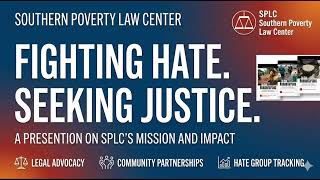
Dr. Chris Stout examines the Southern Poverty Law Center's evolution from its 1971 founding through landmark lawsuits that bankrupted hate groups like the United Klans of America and Aryan Nations. The organization won massive judgments, seized headquarters as community assets, and expanded into prison reform, death-penalty challenges, and the Civil Rights Memorial designed by Maya Lin.
Chapters
Welcome in. If you are joining us today, uh, you're probably the kind of person who really loves to peel back the layers of history, you know, to see the mechanics of how things actually work.
Absolutely.
You are the curious learner, and this deep dive is crafted exactly for you. Today, our mission is to explore a pretty comprehensive document. It's compiled by Myron Panchuk and Patrick Saviano, and it's simply titled SPLC Final PDF.
Right. And it covers a lot of ground.
It really does. We are going to unpack the history, the highly innovative legal strategies, and the major projects of the Southern Poverty Law Center, or the SPLC. We'll be tracing their journey from their inception back in 1971 all the way through their multifaceted initiatives the late 2000s.
Before we jump into the actual timeline, I do want to set a crucial ground rule, a quick caveat for today's discussion.
Yeah, that's a good idea.
Because we are dealing with some heavily charged history today— hate crimes, systemic discrimination, and really intense politically fraught legal battles. So just to be completely clear to you, the listener, our goal here isn't to take political sides.
No, not at all.
We are not endorsing any specific viewpoints, left-wing or right-wing. Our sole objective for this deep dive is to impartially report on the factual content and the history exactly as it is presented in our source text.
That is an important baseline to establish and to really understand the landscape that SPLC was navigating. I think we need to set the scene with some stark statistics from the document.
The numbers from the early 2000s are pretty wild.
They really are. If you look at Department of Justice data, there were over 190,000 hate crimes occurring annually in 2005. And between 2000 and 2006, the number of active hate groups grew by 40%.
Wow. 40% in just 6 years.
Exactly. And to give you a visceral sense of what that looked like on the ground, the text notes specific incidents just from the year 2007. We're talking about nooses left in an African American Coast Guard cadet's bag.
These.
Swastikas spray painted on Jewish synagogues in New Jersey, and even a chemical bomb tossed at a mosque in Arizona. That was the reality they were combating.
It is a sobering picture. And to understand how a legal organization positions itself to fight that kind of widespread landscape, we really have to look at how it was built from the ground up.
So let's go back to the origins. Montgomery, Alabama in 1971. The SPLC was incorporated by two local lawyers, Morris Dees and Joseph J. Levin Jr., along with civil rights activist Julian Bond.
Who served as their first president, right?
Yes, he did. And Dees and Levin were a uniquely formidable pair. Levin was this natural-born trial lawyer, grew up in Montgomery. Dees, on the other hand, was a highly successful entrepreneur. He had actually made a fortune in direct mail and book publishing before selling his company to the parent corporation of the Los Angeles Times, I believe. Exactly. So they combined their resources to take on these pro bono cases that, quite frankly, very few other attorneys in the South would touch at the time.
If we connect this to the bigger picture, the timing of their partnership is absolutely critical for the listener to understand. Well, in the late 1960s, you had these monumental legislative victories. The Civil Rights Act of 1964 and the Voting Rights Act of 1965 had just been passed. But passing a law in Washington is just the first step, right?
It doesn't instantly change things on the ground.
Exactly. Those laws had to be tested. They needed to be enforced in the real world at the local level. And that almost always meant taking the fight to a local courtroom. The SPLC was essentially born to put teeth into those new federal civil rights laws.
And they found some surprising, really systemic wins very early on. Take the Montgomery YMCA in 1969.
This is a fascinating case.
It is. The YMCA refused to admit two African American children to its summer camp, basically claiming, well, we're a private organization. We can admit whoever we want.
Which is a common defense.
Very common. But instead of just arguing against the unfairness of the policy, Morris Dees started digging into municipal archives, and he uncovered a secret agreement from 1958.
A secret agreement?
Yeah. It turned out that Montgomery City officials had actually given the YMCA control of the city's recreational activities specifically to avoid integrating the public pools. In fact, the city had filled its public pools with dirt rather than integrate them.
Which completely shifts the legal standing of the YMCA in that case. They aren't just a private club anymore.
Bingo. By exposing that secret 1958 handshake agreement, the court ruled the YMCA actually had a municipal character. It was acting on behalf of the city, which meant it was bound by the Civil Rights Act, and they forced them to integrate.
That case is a perfect illustration of their foundational approach. They didn't just look at the immediate symptom, you know, a child being turned away from a camp. They dug deep to find the structural legal root of the discrimination and dismantled it.
But I have to ask, that makes sense for a local YMCA where you can find a paper trail. How did that strategy hold up against a massive state entity? Because tackling something like the Alabama State Troopers seems like a completely different weight class.
Oh, it was a massive undertaking, and it required a completely different level of legal endurance. The case you were referring to is Paradise v. Allen.
Right.
As late as 1972, the Alabama State Troopers were a completely all-white institution. This was the same force that had historically clashed with civil rights activists.
And the SPLC didn't just file a lawsuit and walk away. They fought this battle for over 23 years.
23 years of constant litigation.
Constantly dragging the state back to court, all the way to the US Supreme Court. The sheer persistence paid off. Ultimately, Alabama was ordered to hire one qualified African American trooper for every white trooper hired until the force reached a benchmark of 25%.
It's a remarkable institutional transformation.
They transformed the state troopers from a symbol of oppression into the force with the highest percentage of minority officers in the entire nation at the time.
But while those civil rights enforcement cases really built their foundation, the SPLC is perhaps best known for a very specific legal tactic they developed later.
Okay, let's unpack this, because this is the strategy that really put them on the national map. Bankrupting hate.
The civil liability strategy.
Exactly. Hitting violent extremist groups in their wallets. I want to look closely at 4 specific courtroom victories from the text because they demonstrate how this evolved in real time.
Let's hear them.
First, the United Klans of America. In 1981, a 19-year-old named Michael Donald was horribly lynched in Mobile, Alabama. The SPLC sued on behalf of his mother, Beulah McDonald. But they didn't just sue the two men who committed the crime. They sued the entire Klan organization, which is a massive legal leap.
It is one thing to prove two guys committed a crime. It is entirely another to prove that a sprawling, secretive organization is legally responsible for the actions of those individuals.
They used the legal theory of agency. They proved the organization fostered and encouraged this violence, establishing institutional liability, and they won a historic $7 million verdict. And since the Klan couldn't just write a check for $7 million, the SPLC forced them to hand over the deed to their actual national headquarters building to Beulah Mae Donald.
Just incredible.
Think about the weight of that. The victim's mother became the owner of the very building where her son's murder was ideologically plotted.
What's fascinating here is how this civil suit dismantled their physical infrastructure entirely.
And they took that same mechanism across the country. Let's look at White Aryan Resistance, or WAR, run by Tom Metzger. Right. Metzger's group trained skinheads in Portland who then killed an Ethiopian student named Mulujida Serra. The SPLC won a $12.5 million verdict that completely bankrupted WAR.
To this day, the victim's son receives monthly payments from the liquidated assets of that hate group.
Then you have the Aryan Nations in 1998. Guards at their Idaho compound shot at a woman and her son who were just driving by. The SPLC sued the leader, Richard Butler, for gross negligence.
And the result of that one?
A $6.3 million verdict. It forced Butler to give up his infamous 20-acre compound. It was eventually turned into a community peace park.
A peace park. That is a brilliant turn of events.
And the fourth case involves the Macedonia Baptist Church. The SPLC won a massive judgment against the Christian Knights of the KKK for burning down a rural church.
I think that judgment ultimately reached $21.5 million.
Exactly. And the most striking part, it resulted in a deed restriction ensuring the Klan's former land could never again be used for white supremacist activities.
What's fascinating here is how these civil suits bypass the heavy burden of criminal convictions.
Explain that a bit more for the listener.
Well, criminal courts require proof beyond a reasonable doubt, and they only put individuals behind bars. The organizations survive. But civil suits operate on a lower burden of proof, a preponderance of the evidence. By suing for monetary damages, they dismantled the physical and financial infrastructure of these groups. They took their buildings, their bank accounts, their printing presses.
Here's where it gets really interesting, though, because as famous as they became for fighting the Klan, the SPLC actually did much more than that. They cast an incredibly broad legal net.
They applied that same rigor to systemic state and corporate issues.
Exactly. Let's look at the death penalty. They struck down Alabama's unconstitutional "kill 'em or let 'em go" statute.
That law was a disaster. It forced juries to choose only between a capital murder conviction, meaning an automatic death sentence, or a complete acquittal.
Right, no middle ground. They also rescued Johnny Ross, a 16-year-old on death row, using blood tests to definitively prove his innocence.
And their work inside the prison system itself was just as aggressive?
The conditions they were fighting were horrifying. They permanently banned the use of the hitching post.
The torture device?
Yeah, used on inmates as punishment. They also fought to restore mental health care for isolated inmates. There was a case of an inmate suffering from schizophrenia who was locked in an isolation cell for 22 hours a day with zero psychiatric care. The SPLC forced the state to overhaul that system entirely.
Moving outside the criminal justice system, it's fascinating to see how they protected vulnerable workers.
The worker safety cases are incredible. They won rights for cotton mill workers suffering from preventable brown lung disease, proving that the textile industry actively concealed the dangers of cotton dust. And they forced Kentucky coal mine owners to pay fair taxes on unmined coal. Out-of-state corporate owners were dodging taxes, starving the local communities. The SPLC lawsuits forced them to pay, and that money ended up funding local impoverished schools.
So, while all this courtroom battling was happening, they were also building proactive projects, focused on tracking threats, educating the public, and remembering the past.
Let's talk about the Intelligence Project. It originally started as Klanwatch in 1981.
Right. They realized they needed to anticipate violence, not just react to it. This became a crucial resource for law enforcement. In fact, there is a chilling detail in the text. Morris Dees actually wrote a formal letter warning U.S. Attorney General Janet Reno about the danger of heavily armed militias.
And he sent that warning shortly before the 1995 Oklahoma City bombing.
Exactly. Their intelligence gathering was remarkably sharp.
They also focused on education with the Teaching Tolerance program, which reaches over 600,000 educators and has even produced Oscar-winning documentaries.
It's about stopping the ideologies from taking root in the first place.
And to honor the past, they commissioned the Civil Rights Memorial in Montgomery. Memorial, designed by Maya Lin, the same architect who did the Vietnam War Memorial. It honors the martyrs who died between 1954 and 1968.
As we move into the 2000s, the document outlines how they expanded their mission to tackle the juvenile justice system and immigrant rights.
The juvenile system statistics are just heartbreaking. The text reveals that 8 in 10 incarcerated children suffer from educational or emotional disabilities.
And they're often locked up for nonviolent misbehavior. The classic school-to-prison pipeline.
The SPLC exposed horrific abuses in Mississippi youth facilities. We're talking about suicidal girls locked in dark cells, children being hogtied. Their litigation pushed the state toward community-based treatment instead of punitive lockups.
Concurrently, they launched the Immigrant Justice Project in 2004.
Taking on major corporate players, right?
Yes. They filed lawsuits against food giants like Del Monte for underpaying guest workers. And they exposed the ruthless exploitation of immigrant cleanup crews after Hurricane Katrina. Companies were using vulnerable workers for hazardous cleanup and just refusing to pay them. The SPLC stepped in to enforce federal labor laws.
So what does this all mean? When you step back and look at the entirety of this deep dive, you see this incredible trajectory.
From two lawyers in Montgomery to a massive force.
A small effort that grew into an organization with a $175 million endowment They practically dismantled the financial backing of America's most notorious hate groups while simultaneously reforming systemic abuses in prisons, schools, and workplaces.
If we look closely at this journey, I want to speak directly to you, the listener. What this deep dive truly illustrates is the profound power of applying the law creatively.
Using it as a lever.
Exactly. Not just to punish individual bad actors, but to force systemic, industry-wide, and institutional change. They proved that civil litigation can completely dismantle the infrastructure of injustice.
It's a masterclass in hitting the root of the problem.
It absolutely is.
Yeah.
And as we wrap up today, I want to leave you with a final thought to mull over. The SPLC's hallmark strategy in the '80s and '90s was bankrupting hate groups by seizing their physical assets.
The compounds, the headquarters.
Right. But in today's digital age, extremist movements often exist as decentralized online networks. They don't have physical compounds or centralized bank accounts. So, how might the strategy of financial disruption need to evolve to remain effective against the borderless infrastructure of modern extremism?
That is a phenomenal question to leave on. Thank you for joining us on this exploration of history and legal strategy. Keep questioning, keep learning, and we'll catch you on the next deep dive.
More from Dr.

2025 Mercedes-Benz CLE 450 4Matic Cabrio – Owner’s Views After a Year-and-a-Half as a Daily Driver

The Complete Guide to a Successful Everest Base Camp Trek – Post-Trek Debrief

The Complete Guide to a Successful EBC Trek – Post-Trek Debrief: What I Needed (and What I Didn’t)

What Went Wrong Customizing My New 2026 Porsche Carrera T …and what I did about it!

Coming May 1 At the Intersection of High Performance and Fulfillment: A Conversation with Alisa Cohn

From High Performance to Fulfillment: Lessons in Inner Mastery with Jim Murphy

Coming March 19: From High Performance to Fulfillment: Lessons in Inner Mastery with Jim Murphy

The New Humanitarians Volumes I - III:- Inspiration, Innovation, and Blueprints for Visionaries

The New Humanitarians Volumes I - III:- Inspiration, Innovation, and Blueprints for Visionaries

The New Humanitarians Vol I - III: Inspiration, Innovation, and Blueprints for Visionaries - Forward
