The New Humanitarians Volume III - Witness
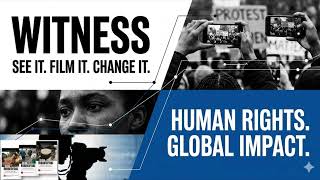
This content was created by Dr. Chris Stout. This content was uploaded by Dr. Chris Stout. This is a YouTube episode titled "The New Humanitarians Volume III - Witness" (created 2026-03-11T15:54:30+00:00; last edited 2026-03-18T20:20:33.656388+00:00). The excerpt is an English, diarized-style deep-dive between two hosts (labeled SPEAKER A and SPEAKER B) who discuss and summarize the source document "WitnessFinal.pdf" by Gillian Caldwell. They cover the origin and mission of the organization Witness (including Peter Gabriel's role and the 1992 founding), a Moscow undercover sting and the Bought and Sold documentary, three impactful case studies (Mexico, DRC, Brazil), operational practices (funding policy, corporate-style management, staff trauma care), tech initiatives like The Hub, celebrity leverage, and the contemporary challenge of deepfakes. The tone is explanatory and narrative, aimed at explaining how visual evidence has driven human-rights accountability and the future verification challenges.
Chapters
Welcome to today's deep dive. If you're joining us, it's because you have a curious mind and you're looking for that perfect blend of deep knowledge without the overwhelming information overload.
Exactly. We're getting straight into it today.
We really are.
Yeah.
We've curated a special journey for you. Today, we're exploring an incredibly detailed source document. It's titled "WitnessFinal.pdf," written by Gillian Caldwell.
And it is honestly, it's a phenomenal source text. It tells a story that fundamentally challenges how we think about history, about justice, and really the way we consume media.
Yeah, so the mission of this deep dive is to explore the profound evolution of human rights advocacy.
Right.
We are looking at what happens when you take the traditional, you know, that dry written NGO report.
The ones nobody really reads.
Exactly. You take that and you replace it with a consumer video camera.
It changes everything.
It does. We're gonna travel from a terrifying undercover mafia sting in freezing Moscow all the way to the halls of the International Criminal Court. We're unpacking exactly how visual evidence forces the world to pay attention.
And, um, The journey of how this organization called Witness actually came to be is just as compelling as the work they end up doing on the ground.
It really is. And the source document actually starts with a deeply personal, visceral story from the author, Gillian Caldwell.
Yeah, that opening is striking.
It begins with this epiphany in an art gallery. So Caldwell describes being a little girl living in New York City, Her mother ran an art gallery in SoHo.
Right, and they lived right next door.
Yeah, their loft was right there. So one day, this massive, intense painting by the artist Leon Golub just appears on their living room wall.
Which is, I mean, it was part of his Mercenary series. That is a very jarring image to encounter in your own home, especially as a child.
Unbelievably jarring. The painting depicted a mercenary, a government agent, urinating on a tied-up political prisoner.
Just a horrific scene.
The prisoner's lying on the floor, hands bound, Other agents are just standing around while this torture is happening. But here is the detail that changed everything for Caldwell.
This is the crazy part.
One of the agents in the painting was staring right out of the canvas.
Yeah.
Staring right at her. She felt like he was actively challenging her to stop him.
And I think the psychological shift here is what's key. By having that painted figure lock eyes with the viewer, it breaks the fourth wall of art.
It does.
He forced everyone who looked at that painting to become a witness. Rather than just a passive viewer.
A witness.
Exactly. It shifts the burden. It leaves you with this burning question of, okay, now that this image is seared into your mind, what are you gonna do about it?
Hmm. Okay, let's unpack this because that childhood experience perfectly sets the stage for what happens two decades later.
Right. In the '90s.
Fast forward to 1995. Caldwell was working as a civil rights attorney in Washington, D.C. She agrees to grab a beer with an acquaintance named Steve Golster.
And Golster had just come back from the Russian Far East.
Right. He was there for an environmental nonprofit. They were investigating the Russian mafia's involvement in the Siberian tiger pelt trade.
Which, just investigating the Russian mafia in the mid-'90s is already an incredibly dangerous situation.
Completely. But the story takes a much darker turn. While he is investigating tiger poaching, the mafia actually offers to sell him women.
Wow.
Yeah. He is completely shocked and disturbed.
Yeah.
So he asks Caldwell, this DC civil rights attorney, if she would help him plan and execute an undercover video investigation into the trafficking of women out of Russia for forced prostitution.
That is a massive leap from her day job.
Seriously.
I mean, it is one thing to litigate in a courtroom. It is entirely another to launch an international sting operation.
Well, at first she says she will help out after hours.
Yeah.
You know, do some research, maybe raise some money.
Sure. Keep it casual.
Right.
Right.
But 2 weeks later, she is so deeply informed and invested that she resigns from her law firm entirely.
She just quits.
Just shows up at Golster's office and says she's ready to work. She even figures she can wait tables to make ends meet while they raise the funding.
That level of dedication is extraordinary. And the operation they actually pulled off is straight out of a thriller.
It really is. 5 months later, they have formed a dummy escort company called International Liaisons.
Brilliant cover.
Try to picture this. They are right in the middle of a frigid January in Moscow.
Freezing.
During the day, they are meeting with nonprofits, but at night, they are running undercover sting operations.
They go to a popular spot called the Night Flight Club.
Yes, known for its prostitution business.
Right.
Caldwell is trying to dress the part to connect with the women, though she admits in the text she wasn't very convincing.
Right.
But Steve's wearing hidden cameras, filming meetings with the mafia, pretending he wants to import women to the US as high-class call girls.
We really need to pause and consider the mechanics here.
Yeah, the tech.
Exactly. 1990s undercover camera technology, along with the psychological toll this takes.
They aren't using sleek smartphones.
No, they are using bulky, early-generation hidden cameras, and they are living in the exact same apartment where they are holding and filming these mafia meetings.
Oh my God.
The stress of maintaining a cover identity with dangerous organized crime figures in your own living space, it's immense.
The details in the source are so vivid and really highlight that stress. Caldwell describes a drunken neighbor beating his wife next door. Awful. She describes a homeless woman hanging out in the stairwell late at night with a pack of growling dogs. She says they look more like wolverines.
It's just a highly volatile, completely unpredictable environment.
But they survived it. They spent 18 months filming, not just in Russia, but in Japan, Macau, Germany, Holland, Switzerland, and the US.
And that massive global effort culminated in the documentary Bought and Sold.
Yes.
If we connect this to the bigger picture, so what impact of this specific operation is monumental?
It changed things.
It did. The documentary mixed that grainy, terrifying undercover mafia footage with candid interviews from women forced into prostitution alongside expert testimony.
So Caldwell proved that a camera can literally change laws.
Exactly.
The source notes this film laid the groundwork for a congressional resolution. It led the U.S. Congress to pass the Trafficking Victims Protection Act. And it pushed the UN to approve a protocol against human trafficking.
Incredible impact.
But how did she even get that camera?
That's the real origin story.
Right. To answer that, we actually have to rewind the clock a few years to 1989, and look at a completely different world: the music industry.
This is where the story takes a really unexpected turn. In 1989, rocker Peter Gabriel was on the Amnesty International Human Rights Now tour.
Of Genesis fame.
Right, Peter Gabriel. He was traveling to 19 different countries, meeting dozens of survivors of severe human rights abuses, people who had been tortured, denied basic rights, or seen loved ones murdered.
And the perpetrators were just getting away with it.
Completely. The stories were being actively covered up.
The source mentions Peter Gabriel starting this on a tour in the late '80s, which seems like a wild origin story. How does a rock star trigger a global human rights movement?
What's fascinating here is it comes down to a profound realization about human empathy and cognitive load.
Okay, tell me more.
This is the early '90s before the internet connected everyone, but Gabriel had brought along one of the very first consumer video cameras to record the stories he was hearing.
Ah, okay.
He Gabriel realized that moving images communicate with an immediacy that text simply cannot match. Think about the cognitive effort required for an average citizen to read and process a 100-page UN human rights report.
It is exhausting. Most people won't do it.
Exactly. But a 2-minute video bypasses logic and strikes directly at the emotional centers of the brain. Gabriel saw that if you equip local activists with these cameras, they can harness that emotional strike themselves.
But wait. Aren't those written UN reports the actual legal bedrock for prosecuting these crimes? You can't just replace a legal document with a shaky camcorder video, right?
You're absolutely right, and they don't replace them. The written reports remain the essential legal foundation.
Okay.
But the video serves as the battering ram to get the public to actually care about what's inside those reports.
That makes perfect sense.
The macro landscape at the time really proved this. The tipping point for the broader public recognizing the power of amateur video came in 1991.
Rodney King.
Exactly. That was when a bystander on a Los Angeles freeway used a consumer video camera to record the city police beating Rodney King.
Right.
It bypassed official narratives and sparked global conversations about police brutality and race. Gabriel leveraged that exact cultural momentum to get seed funding from the Reebok Human Rights Foundation. That officially launched the organization Witness in 1992.
The source document provides a few clear examples of this shift to visual evidence over the subsequent years, and we are simply relaying these as the source presents them to illustrate the power of the camera. For instance, the author points out that major human rights organizations had released written reports on the abuse of Iraqi prisoners months before it became a major issue.
Yes.
But it wasn't until visual evidence shot on cell phones by the perpetrators themselves at the Abu Ghraib prison surfaced that the public demanded accountability.
The source also points to a bystander's tape clearing a man who had been arrested for inciting violence at the Republican National Convention in New York simply by showing him peacefully walking down the street.
Just undisputed proof.
And it notes that for the first time, an eyewitness to the London terrorist bombings reported live to the BBC on a cell phone from the underground tube. These examples highlight the core thesis of Witness: visual evidence forces a reaction.
And because of this undeniable impact, Witness grew. By 2001, they spun off into an independent organization operating out of a loft in the Tribeca neighborhood of Manhattan.
Doing field training, video production, media outreach.
Everything. But as much as we talk about the history and the macro impact of visual evidence, it is the individual stories that really anchor this entire document.
They really do.
Here's where it gets really interesting. Because we have to ground all this data. The source is very clear that a video is only as powerful as the story it contains.
It's all about the human element.
There are 3 specific case studies detailed here that just stop you in your tracks. Let's look at the first one from Mexico, focusing on David and Naira.
This case is a devastating look at systemic injustice. Naira was a 16-year-old girl who disappeared on her way home from school in Chihuahua City, Mexico, back in May 2003.
And her body was later found.
Yes, she had been raped and murdered.
And the source emphasizes that this wasn't just a string of isolated tragedies; it was part of a massive wave of feminicide in the region.
Right.
Meaning women were being targeted and murdered on a massive scale simply because of their gender. And the local authorities were completely failing to investigate or protect them.
Just a total systemic failure.
And as if that failure isn't horrifying enough, her first cousin, David, was tortured into falsely confessing to her murder.
He spent 3 years in jail waiting for a trial that never even took place. Place.
3 years.
That is 3 years of a young man's life stolen for a crime against his own family member that he didn't commit. Witness partnered with a local commission and produced a video called Dual Injustice.
And that changed things.
That video didn't just tell a sad story, it became the centerpiece of an international pressure campaign that finally secured David's release.
Then there is the story from the Democratic Republic of Congo. A video called A Duty to Protect.
This one is incredibly difficult to hear, but it represents a massive legal milestone. It features a girl named January.
Yeah.
She is wearing military fatigues and recounting how she was recruited into the army when she was just 10 years old.
A 10-year-old child. She explains how they were given drugs to numb their fear and conscience and then actively taught to kill.
It's heartbreaking.
And Witness didn't just put this on the internet for awareness. They strategically screened this video for key officials at the International Criminal Court.
Which is a huge leap in jurisprudence to take amateur documentary footage of a child and use it to compel the highest international court in the world to act.
Yeah.
And the result was tangible justice. In March 2005, an ICC commitment was secured and Thomas Lubanga Jivilo was arrested for enlisting and conscripting child soldiers. The video served as a catalyst for actual prosecution.
And the third case study is about a young man named Valdemir in Brazil. He was a modern-day slave.
Literally.
In the video Bound by Promises, Valdemir describes being hired to load 130-pound logs onto trucks on a charcoal estate. He'd do this for 60 days straight.
Just conceptualize that physical toll for a second. 60 days of manual labor moving 130-pound logs without a break.
And his paycheck? $45.
Unbelievable.
One-tenth of what he was promised. When he complained about it, he was told, and I quote from the source, "A bullet from my shotgun is all you have a right to hear." Terrifying. There are an estimated 25,000 men like Valdemir in rural Brazil trapped in indentured servitude. That video was screened directly for the state commission responsible for eradicating slave labor in Brazil.
I want to speak directly to you, the listener, for a moment.
Yeah, please do.
If you've ever felt completely overwhelmed by the statistics of global suffering, the thousands of people displaced, the massive numbers of analysis that just blend into a blur on the evening news, this is the antidote.
It really is.
Seeing one face, hearing one voice like Waldemar's or January's, it cuts through the overwhelm. It forces accountability in a way that numbers on a spreadsheet never could.
Which naturally leads to a big question. How does an organization actually manage all of this?
The operation side.
Exactly. How do they scale this work globally, dealing with such heavy, dangerous material without completely burning out or losing their focus?
It is a massive operational challenge. WITNESS tackles it through a very unique confluence of three worlds: human rights, the corporate sector, and entertainment.
Entertainment?
Yes. They heavily utilize strategic alliances and celebrity leverage to get these videos seen by the right people.
But how exactly do you use a celebrity for something this serious without it just being a cheap photo op? The audience might be wondering how Hollywood actually intersects with human rights diplomacy.
It is all about weaponizing their fame for specific diplomatic access.
Give me an example.
For example, Angelina Jolie didn't just do a press conference. She traveled with the director to Sierra Leone. She personally presented the Witness to Truth video to the president of Sierra Leone, urging him to implement recommendations from the country's Truth and Reconciliation Commission.
So she gets right to the top.
Her presence forced the head of state to take the meeting. Similarly, Gael García Bernal co-hosted a benefit and petitioned the UN regarding the forced displacement of people in Burma. That generated targeted coverage in over 60 global newspapers, bypassing bureaucratic gatekeepers.
So the celebrity is essentially the Trojan horse to get the video into the room where it happened.
Exactly.
But what about the day-to-day operations? Because a lot of people listening might be curious about how a global nonprofit actually functions under the hood to maintain this level of outgunning.
The source provides some fascinating structural details about how they run things. First, as a strict policy, Witness accepts zero US government funding.
None at all.
This is a crucial ethical boundary. They do this to completely avoid any conflicts of interest when they are doing human rights work that might require holding that very government accountable.
That makes total sense. You can't bite the hand that feeds you, so you just refuse to take their money.
Precisely. To manage their growth without that massive government funding, they borrowed heavily from the corporate sector. They implemented a performance evaluation dashboard. It is literally named that because it looks like a car's dashboard, providing at-a-glance metrics to quantify their advocacy outputs and impacts. Wow. They also use an accountability matrix called DARSRI.
DARSRI. I've heard of corporate acronyms, but why does a highly emotional human rights group need a corporate management structure?
Because without cold, hard corporate efficiency, mission creep will destroy an NGO.
Ah, I'm pretty—
Darcy stands for Decision Accountable Responsible Consultant Informed. It is a strict management structure to ensure everyone knows exactly what their role is on any given project.
So no one drops the ball.
In an environment where the stakes are life and death, you cannot afford ambiguity about who is responsible for a task. This Tight corporate-style management allows them to be incredibly efficient. For every dollar donated, 75% goes directly to programs.
Which is significantly higher than the nonprofit industry standard.
Much higher.
But there's also a profound human cost to this work that no spreadsheet can capture. Because the staff isn't just pushing paper, they're watching raw, unedited footage of brutal human rights violations all day long.
Yes, the risk of psychological injury is severe. It is called vicarious trauma. To combat this, Witness didn't just offer standard health insurance. They actually hired a licensed trauma therapist affiliated with NYU Bellevue Hospital.
Oh, wow.
They hold dedicated vicarious trauma sessions for the staff to help them process the horrific imagery they have to confront daily. They are treating the psychological impact on their staff as a true workplace hazard.
Much like a construction company treats physical safety.
Exactly.
It is a necessary investment in their people. But even with all these smart management practices, they still hit some major bumps in the road, especially regarding technology. By the fall of 2007, they launched something called The Hub.
The Hub was an incredibly ambitious idea. It was essentially envisioned as a YouTube for human rights.
Okay.
A platform where anyone globally could upload their own cell phone footage of abuses directly to the web.
This raises an important question about the balance between innovation and security. Introducing this caused a lot of friction internally, didn't it?
It did. When management introduced the hub, many staff members actively resisted it. They were deeply worried about the security risks to vulnerable users uploading from dangerous locations. They also felt it was a shift away from their core mission.
Because they used to be so hands-on.
Right. Historically, Witness provided intensive hands-on training to a select few partners. The Hub was moving toward a massive, unvetted populist platform.
So they basically tried to build YouTube before everyone was ready for it, but with life-or-death stakes. I can see why the staff freaked out. It's like trying to crowdsource a bomb defusal. How did leadership resolve that tension?
It taught the leadership a very hard lesson about getting staff buy-in. They had to completely slow down the entire project.
Just hit the brakes.
Yeah. They held a full-day staff meeting, a town hall, and created an internal steering committee to address the security concerns. They learned that rushing into new tech without the united support of the staff can derail an organization.
You have to take the time.
You have to discuss, explain, and build consensus, even if it delays your launch.
So what does this all mean? When we look back at the entire source document, from that intense Gulag painting to the terrifying Moscow sting, all the way to launching the hub, What is the ultimate takeaway for you?
The core takeaway is that witnessing is no longer a passive act. Blending undeniable visual evidence with strategic, targeted advocacy turns ordinary bystanders into catalysts for global justice.
Yeah.
A camera in the right hands doesn't just record history; it actively changes the outcome of it.
It turns a victim into an advocate and a viewer into a witness.
Beautifully put.
But before we wrap up, there is one final provocative thought we want to leave you with. Something to mull over that builds on everything we've discussed today.
Right. The entire premise of witness in the '90s and the 2000s relied on this foundational idea: that video was the ultimate indisputable truth.
If you had it on tape, it was real.
And the perpetrators could not deny it. But today, we are entering an era of deepfakes and highly sophisticated AI-generated media.
It's everywhere now.
Video can now be entirely fabricated from a simple text prompt.
So the question for you to explore is this: In a world where video can be easily faked, how will the next generation of human rights defenders prove to the world that what they are witnessing is actually real?
Will the visual evidence that once guaranteed accountability loses power?
Or will we find new ways to verify the truth?
It is a daunting challenge for the future of advocacy.
It certainly is. Thank you for joining us on this deep dive. We hope it gave you some incredible insights into the history and mechanics of visual advocacy. Keep questioning the world around you, and we'll catch you next time.
More from Dr.

2025 Mercedes-Benz CLE 450 4Matic Cabrio – Owner’s Views After a Year-and-a-Half as a Daily Driver

The Complete Guide to a Successful Everest Base Camp Trek – Post-Trek Debrief

The Complete Guide to a Successful EBC Trek – Post-Trek Debrief: What I Needed (and What I Didn’t)

What Went Wrong Customizing My New 2026 Porsche Carrera T …and what I did about it!

Coming May 1 At the Intersection of High Performance and Fulfillment: A Conversation with Alisa Cohn

From High Performance to Fulfillment: Lessons in Inner Mastery with Jim Murphy

Coming March 19: From High Performance to Fulfillment: Lessons in Inner Mastery with Jim Murphy

The New Humanitarians Volumes I - III:- Inspiration, Innovation, and Blueprints for Visionaries

The New Humanitarians Volumes I - III:- Inspiration, Innovation, and Blueprints for Visionaries

The New Humanitarians Vol I - III: Inspiration, Innovation, and Blueprints for Visionaries - Forward
