The UN Challenge: Creativity, Sustainability and the Power of the Small Project
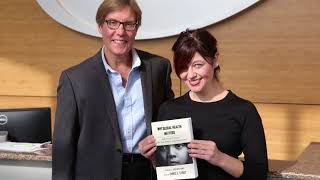
Dr. Jennifer White founded Project 1948 to give Bosnian young adults cameras and storytelling skills to influence policy on gender equality and unemployment. Her work grew from doctoral research on intergenerational trauma in Sarajevo using photography, and the organization recently gained UN special consultative status. She's now working to amend the Dayton Peace Accords and scale the model globally.
Chapters
Living a life in full is a conversation you always wanted to have with that person who gave an amazing TED Talk, or the author of one of your favorite books, or that inspirational Olympian you always wanted to know more about. It's graduate level conversations with those making a difference in the world and in the lives of others. This show brings you new ideas and approaches so that you can live a life in full. I'm your host, Dr. Chris Stout and I hope you enjoy this episode. Today's episode is sponsored by a different entity. It's actually my new book, why Global Health Matters. Very excited about the release. It's an edited work that has over 30 chapters and over 30 contributing experts, academicians, people in the field, tactical work, et cetera that I'm really thrilled about. I'm also super excited that Nobel Laureate Jody Williams agreed to write the foreword to the book, so very excited about that as well. Basically, global health represents an integration of multi causal problems. As such, it must be considered by a diverse set of professionals and humanitarian actors. Disasters of nature as well as war and conflict are exacerbated by sustainability issues, lack of resources, poverty and illness. Why Global Health Matters aims to address these multiple global health issues in multiple regions of the world from multiple perspectives. Admittedly, it's an ambitious effort, but when tackling global crises, it would be a mistake to expect anything else. Why Global Health Matters is divided into four backgrounds and trends, approaches and clinical solutions, approaches and structural solutions and and sustainability. Whether you're an academic looking for classroom material, a policymaker researching an issue, or a boots on the ground humanitarian, there's something in this book for you. The hope is that this book will both inspire new projects and improve existing ones, and that the readers will not only be informed by this book, but motivated by it. You can get it on Amazon. You can also learn more about it at the website where thanks. Hi everyone, I'm Dr. Chris Stout. Welcome back to another episode of Living a Life in Full. I'm very excited today with our episode to have Dr. Jennifer White, a very good friend of mine, a contributor to our most recent book, why Global Health Matters. Jennifer's got a great background. She is an international psychologist and arts based researcher, the founder of Project 1948 which we're going to do a deep dive into about what that's all about and the work that she's done with that and how it came about. And really the heart of her work lies in Sarajevo, combining photography with human rights and photo voice for policy change and just amazing work that she's been able to do with that. I wish this was a vlog so we could have more images. So people are going to have to imagine this and then go to her website and see some of her work. She received her PhD from the Chicago School of Professional Psychology here locally, which I've been involved with for a number of years, and really attest to that program. A great set of folks and great set of graduates. She's also a NGO non governmental organization consultant to the United Nations. So we also have that as our common link in our backgrounds. And she's committed to empower and advocate for global social change. By using data science. She's prepared Project 1948 to influence policy, policy change. And again, I want to go deep into that side of it, too. And what was it? Data scrubbing. I saw on a recent post that you had today, can they do the same to my apartment? There's a title in that somewhere. So she, although being global, she does have a bit of a base in Tulsa, Oklahoma, where she hangs out with her dog, Moscow. So welcome to the show, Jennifer.
Hello. Thanks for having me.
You bet. Well, let's. Gosh, I have so many notes all over the table here. But you have been. Let's just maybe kind of start with your worldliness. You have worked in Rwanda, in Brazil, in Italy, in South Africa, in Germany, in France and Bosnia Herzegovina. So how did that all come about? Where did this start? And take us on a little bit of a world tour in your world.
Yeah. So a lot of it started in the doctoral program at the Chicago School, connecting with professors that had international work. So I started in Kigali, Rwanda, with Dr. Tiffany Masson, and she had an NGO set up called the Global Health Projects.
Yes, yes, Global.
I'm forgetting.
I know. She and I have talked about it, too. We'll get it right in the show notes. So no worries. Whatever our memories fade today, they will magically be reconstituted in the show notes. So no worries, we'll get that in.
Yeah. So I kind of set off on a little plane and arrived in Kigali. And really I had practiced as a Western clinician for, you know, five years at that point. So I didn't know how to apply trauma in an international setting. So that was my first taste of what trauma looks like outside of the dsm.
Wow. Kind of hardcore in Kigali, Rwanda, with the history and genocide.
So I got to explore all of that and I started comparing the genocides that happened between Cambodia, Bosnia and Rwanda at a memorial center because we were there during 100 days of commemoration. So that's kind of how I started getting into intergenerational trauma, what that looks like, doing culturally sensitive treatment approaches. And then, you know, you go on one trip and then you just start planning all the other things.
Well, you kind of get the bug. Right. So in these different areas, was it all by virtue of the work that you were doing at the Chicago school, or was it working with other NGOs and entities?
Yeah, so I had been to Brazil a few times with just friends and different NGOs. The work in Italy was through the European Society of Traumatic Stress Studies and then working with international researchers. We have published a paper together.
So you're really kind of bridging practice and academic aspects as well, too, looking at evaluating and things or.
We were looking at how traumatic stress research wasn't truly global, and we pulled from EBSCOhost at that time, it was like 2012. We pulled all the published articles and then basically categorized them on how many were Western funded or US funded and then how that was. Most of them were first authors. So we were doing all these studies in other countries, but not allowing the locals to have first authorship because of
West Knows Best and hubris. That's why
that was a really interesting, interesting group to work with. And I was the only American, so.
Wow.
It was an interesting balance of how do I kind of hold my place but then be sensitive as well.
Yeah, I think. I mean, some of the work that we've done in my nonprofit also has looked at some of the academic, like even just the difference in publishing and, you know, the writing styles and what gets accepted. And some of the stuff I did with APA and SERP was also around just this presumption that kind of the way that we North Americans or whatever do it is the way that everybody else should do it. And there's something subpar or wrong if people aren't doing it that way. So I think it's nice to kind of have this globalization in the context of being able to have proper ethical representation of authorship and idea sharing and things like that. So then. So was the first. Your first. You were doing international stuff before Chicago school, then. Okay, so that maybe is what got you towards wanting to do your PhD in international psychology or what spurred that interest.
I think I went to Brazil when I was 19 and I was working over the summer in a city called Belo Horizonte, and I loved it. And I know. And that's kind of how I think that. And then I went to grad school and Hillary Clinton was the Secretary of State at the time and she was making all these wonderful speeches about what was going on in the world and
really kind of served as inspiration. Yeah, well, what can you do from there? So can I ask, what is the work that you did for your PhD dissertation related to any of the things that you're doing now, or tell us about what that work was like?
Yeah. So basically I chose to do my dissertation in Sarajevo because my study was in 2014. So I looked at the 100 year culture of war beginning in 1914 and the events that led up to that. And I kind of bridged it with intergenerational trauma, seeing what narratives were passed down from one generation to the the next. But I chose an arts based way to do that, so I chose photo voice. And so when I went to Sarajevo to implement that and then came back and did the data science analysis, I realized that there were a couple of things, like my dissertation questions got answered, which is great. That means I got to dissect priority number one. But I realized that there was a huge policy gap and that the United States held a lot of the policies into place. And it kept coming up in all the interviews. And so I was coding for it, but I didn't necessarily get to use that data anywhere. So I started thinking, well, okay, so this Dayton Peace Accords, this agreement that ended the war keeps coming, coming up in every interview. I had coded it like 80 times. So I was like, there's something here. So I went back to the photovoice research definition and it basically combines photography and grassroots community change with the hopes of policy change. So I was like, oh, well, here's a way that I can just apply it further. But there's not really any textbooks that tell you how to do that, or
no practical applications of no.
And so I was like, how do you do this? And so I figured out a way to do it.
Wow, that's amazing.
That's where we are today.
Well, I have a colleague that's done a lot of work in Kosovo that he also, he was using. He kind of introduced me to a qualitative analysis or a quantitative analysis of qualitative data. There's a problem program, this is years ago, if memory serves, called Atlas Ti. And that was one of the ways to go about. And he very much looked into the narrative. There's quite a number of refugees from Kosovo in the Chicago area. So he would go with them and did sort of this ethnographic in the coffee shops in Chicago of these communities and spent years kind of getting to know them. And then also similar to probably your work in the context of looking at trauma and intergenerational kinds of things and you know, revenge feelings and you know, just all sorts of very fascinating kinds of things. His name's Steven Wine. I mean I should probably introduce you guys sometime, but I was in Bosnia Herzegovina in. What is the. Is it. I'm going to mispronounce stuff. Yes, thank you. And that sort of iconic bright bridge and seeing there's like a little museum kind of by there that I went to and just sort of, you know, kind of learning the history of it and visiting some of the places that were still somewhat in ruin and visiting some of the places that had been rebuilt. And my gosh, it just sort of tears your heart out and to hear about the history and to think about it, you know, it's. It's one thing to go to Gettysburg and re experience the Civil War hundreds of hundred plus years ago, but it's another thing to think about, you know, the Olympics were in Sarajevo, you know, and that these are very contemporary and same with Rwanda, you know, kind of thing that these are very contemporary kinds of things of long standing animosities, political complexities and you know, expressed kinds of traumas. So from being able to do that was the result then also of your dissertation to be able to talk about creating that guide of how to get from point A to point B in these kinds of situations that it didn't.
Since it didn't exist before I addressed it I think and then kind of left it and it's done, it's finished, let's defend this thing. But then I've really used that as a springboard to figure out how do you address policy change and then how do you do that in an ethical way. And that gets kind of muddy with having a non profit status, telling people that you want to do long term policy change and then the ever pull between a 501C3 and a 504B or
whatever the political aspects because then once you start to do that the IRS looks at you a little bit differently versus advocacy, which is sort of ironic I think, you know, with the work you did in our book that it, you know, it was really, you know, it's sort of like hard to talk about and this is my biased social opinion, but to talk about, you know, global health, global change and stuff without wanting to be an advocate, I mean you can sort of be a, I guess a disconnected scientist of about it. But you know when you spend time with these people and you do the work there with yourself, rather than just someone, you know, looking at, you know, sterile data, you know, your heart goes out to these folks. I mean, I've been, I think, to the same places you've been to, or quite a few of them. And, you know, I've worked in Kigali and, you know, Brazil and South Africa, etc. And you know, the, the trauma. Even though things might be, you know, a bit better than they were during whatever crises, there's still lingering kinds of things. So you can't experience that and then just sort of come back and write some dry book, chapter or treatise or something. You kind of become a de facto advocate in doing that. So it does raise these interesting kinds of issues. So let's take that as a segue. You have started Project 1948. I love the coolness of what that does and how you named it, but a lot of our listeners may not be familiar with it. So what happened in 1948 and what's Project 1948 all about?
So in 1948, the Universal Declaration of Human Rights was published. And so it just kind of gives a reference to this is what we believe in, or this is what I believe in. And it's our project to kind of carry this vision out and make this known and to give young adults a voice so that this happens. So we invest a lot of our time into young adults because we know that they are the future of Bosnia. And yeah, that's kind of how I named it.
So is it going to be specifically limited to Bosnia Herzegovina or is it going to grow? Give us a little deeper dive of what you do with the youth there now.
Yeah, so right now we're just focused in Bosnia and from there I've built multi level, like stakeholder organizations to partner with Project 1948 so that the work does get complete. So, for example, we have United Nations Volunteers is one of the organizations. So we have six core volunteers that work year round that help with everyday tasks. And then we have like Photographers Without Borders who have really helped come in and document the work that we do. When we're handing a camera to a young adult, what that looks like, what that photo, voice interview looks like. And also they sent some videographs for his last time. And we're coming out with a documentary in two weeks.
Awesome. Congratulations. I didn't know about that.
Yes, we're coming out with a documentary on the power of photography, what that looks like in Sarajevo, the work that we're doing. So I'm excited.
Is there a website yet for that or how will the listeners find out more about that?
Yes, there is a website. It's Photographers Without Borders to. And then it will be on their PWBTV web series and then we'll have it on our website as well.
Great, great. So people could just be able to stream it and watch it. Excellent, great. And then so is your website project1948.org.ngo.ngo.
but we own the dot org, so you can.
Oh, that's good. So it'll go. Either one will get to you.
Yeah.
And are people able to go there and be able to see some of the photography and read some of the stories and learn more about. Is it something that people could get involved with if they cared to or reach out to you that way?
Yes, we're always looking for photographers to help document. You don't have to be a Photographer Without Border to help document. And then also I've really stepped back from implementing the program and doing the interviews and I've let investigative journalists and clinicians come in and start doing the interviews.
That's fantastic.
And it's interesting to see their different approaches and how they get. They have two different sets of techniques, but they get the same answer. It's interesting.
That's very cool. That's very cool. And then was Project 1948 the Pathway to then getting NGO status with the United Nations? Tell us about that story.
So basically the UN has a general consult status, a special consult status and a roster status for NGOs that meet certain guidelines or standards. And so I started working on that application probably three years ago. As you know, the bureaucracy is ever
ending and there's no rule equatial in speed.
Yeah, it's never ending. And so I started setting up the NGO at, you know, a non profit state level, but then also sensitive to what was going on at the un and then then also being mindful with what was going on ground. So there's really three parts to how it's set up. And then just reading a lot of the unwritten rules of how the UN chooses NGOs is kind of how I started to form what global goals we would work towards, which ones we could implement. And then after getting those global goals, partnerships being like, I don't have a way to measure this, I can't do this myself. And so they came alongside and said, okay, we'll provide data, Scientists Without Borders for you so they can measure your data. So that process was interesting. So we submitted for it last June of 2016. And then the first part of the application review process came in February. And so I got everything on the application correctly, which is amazing.
Congratulations.
And so then they emailed and asked for us to come to the New York un, which is one of the headquarters, to go through a review. And there's not that many NGOs that have this status. It's maybe 3,500 NGOs. So I didn't know what to expect. And I don't know any NGOs that have this data. So it's not like I can call
a friend and ask, how does this work?
How does this work? So my UN volunteers that live in New York, we all got together and we went and we kind of went through the review process. And it was interesting because parallel to what's going on in the world right now politically, is what really bleeds over into the room of what goes on and who gets in and who doesn't get in in the NGO world.
There's certainly. I was going to ask you if there's a lot of politic to the aspect of it, and. Yes, indeed.
And so I think that I am just. I'm lucky because I am an American. And so when there were questions asked by, like, Sudan or South Africa, the United States really stepped up and said, you don't have the right to ask these questions.
Wow.
So it was really intense. And, like, China, Iran and Russia were, you know, very upset. And so anytime, like, we were sitting beside Amnesty International, so anytime they would ask for the right to speak, the United States would give them the floor. But then China, Iran and Russia would, like, take the floor away from them. So they never actually got to speak their statement on human rights concerns. So you have to, like, learn how to play the game that no one tells you.
You would certainly think that Amnesty International would certainly have a track record of knowing how that game was played. So even in spite of that, it's still getting the word out. Wow, that's amazing.
It was interesting.
So you made it through the gauntlet.
We did.
And now you have more of a voice there. You were saying before we started rolling about some of the work that you're doing. Share that with our listeners.
Yeah. So basically, we got a special consult of status. So we're focused On Global Goal 16, Peace, justice and strong institutions. And then we have about a segue to six different subsidiary bodies of the un. One of those is UN women. So in the spring, they have the UN Women Commission for the Status of Women Conference And. And we had submitted last month about what we're doing in a small way, what we're doing for gender equality through photovoice in Bosnia. How when we give a camera to a young woman or girl, that that is an empowerment tool, that it is access to technology and information and communication technologies, and then how we're using that data to influence. Wanting to influence policy for gender equality in Bosnia. So that statement got accepted. So that's exciting.
Wonderful. Congratulations. That is such a big deal. I mean, we. I had worked at kind of a weird situation with the UN 1998, 1999, the American Psychological association had, through one of their divisions, Division 9, SPSSI, had NGO status with the UN. So I was kind of this fluky exception because I did not live in the New York, New Jersey area and lived in Chicago. So I said, you know, hey, I would commit on my own dime to fly out once a month to go to the meetings and do this or that. Yeah, this is all late 90s, so it was pre 9 11, so it was much easier to get through the airports and so stuff like that. And there are some times where I'd stay over, and there are other times where I would, like, just literally get up at the crack of dawn, hop on a plane, go to New York, do my thing, hop on a plane, be back home. It's just like a long day at work, so to speak. But I don't think I could do that with the TSA anymore. But it's such a heady experience. I mean, I have such a respect for the United nations and historic League of Nations, but, you know, almost kind of like a. An ambivalent feeling too, because I think part of the love hate aspect of it is that it's. It is so bureaucratic. It is so like, just weird in certain ways of, you know, not having a roadmap, you know, maybe not even having a compass. You know, like, what do I do? You know, I'm new here. And then. But I remember one of the things that APA did let me still do this. There's. There's a. My mentor was a psychologist, Karan Okorodudu, who is now retired from Rowan University. Do you know her? Does that name ring a bell? She's just amazing. And she said the best way to be able to focus the efforts of what I was doing was to have a specific kind of project to work on. So again, this is late 90s, so there was something called the Copenhagen Declaration, and that was published in 1995. And it basically, basically Looked at sustainability, and in the mid-1990s, sustainability was not the big word that it is today. Everything is like, sustainable, sustainable, sustainable. So with the kinds of stuff that we were looking at, my lens was what aspects of psychology or behavioral health or substance abuse can get in the way of or support sustainable development. So I got to know the Copenhagen Declaration in Inside and out is 100 and some odd pages long. And I just literally, kind of probably similar to a little bit the work that you've done of kind of deconstructing it and looking at all the areas where there was something around behavioral health, substance abuse, et cetera. And then sort of made this case and made this kind of response. I don't know if this is still the way. We couldn't call anything a white paper because that seemed racist. So I don't know what we call position papers. I think we still. Yeah, we still had them. The physical paper was white, but we didn't call them white papers because that was bad. But we worked and put that together, went through a number of drafts, and they had this, which I presume they still have this wonderful library where you can get free resources and just take it home with you. I was like, oh, this is amazing for a nerd like me. And then similar to probably what your thing was, we had to get vetted and vetted and vetted around. Could the paper be distributed? Yes or no. Could the paper be distributed or. And if it couldn't, could it be at the back at a table? And could it be at the back at a table with a person there offering to hand it to someone, or nobody around, and someone would just stumble upon it and go, oh, my, what is this? I mean, this is kind of the hate part of it is like, really,
do I have the right to speak for the three minutes allowed on it?
Yeah, exactly. So I feel your pain. We kind of remember those days with great frustration, but also the fact that when you can kind of make it through, like you have, you know, there's an immense satisfaction with that as well, too. So would you. Knowing what you know now, would you do it again?
Yeah, I think I would.
You've had such success with it. I mean, it's just.
And I would think I would mentor people on how to do it. I'm trying to pull in a friend's poetry NGO right now to help, because I'm like, you fit this so well. It would be great to have. I know so many NGO founders that would really benefit from having. Having their voice and present in that space. And so. And, like, if I can figure it out, you guys can do it.
I see a parallel project now, project 1948. I mean, that would be huge. I mean, that's that kind of thing that now they've got. Maybe there's, you know, no map, and maybe the compass is broken, but now there's a guide. You calling Dr. White? You know, let's figure out these kinds of things. Thanks. Because I think, again, the plurality of being able to have those other kinds of voices and the other kinds of perspectives in that kind of venue is huge. It's just. It's something that I think, you know, and you know, from our bias. I mean, also having kind of a psychologically informed perspective. I mean, that's why I was really happy. And then APA, to go back to that part. APA 4ish, 5ish years. I think after SPSSI had theirs, APA got official recognition, too.
Oh, wow.
So there's now, I think actually it's in April. Like an official psychology Day at the United nations and things like that. Yeah. So there's, I think, a variety of ways to have a number of different specialties within psychology. International psychology, obviously, is a natural. But there's also, you know, I forget what Quran's focus was, but, you know, social psychologists are there. Psychologists on aging, psychologists and kids and pediatrics. I mean, it's just really a venue where people with expertise and those kinds of voices can kind of come to it. I did a. You mentioned Hillary Clinton when she was Secretary of State. So for those that aren't UN geeks, like Jennifer and I, that there's a position that's always available for. For the United States Secretary of State to be at the United Nations. And I have a dear friend, Harvey Langholtz, who's a professor at College of William and Mary, social psychologist. And he. Before he finished his PhD, he worked under Madeleine Albright at the UN, wrote a book called the Psychology of Peacekeeping and what? Yes, you know it. Yeah. And one of the things I thought was really kind of interesting was that the. In addition to, like, the Secretary of State, there's also sort of this military position that's always available from the United States, which I thought was kind of weird, you know, is the fox in the henhouse. You know, it sort of seemed kind of weird. So in talking with Harvey about that situation, I don't know what the history of that was, but he was in the military at the time, and he was kind of what I think of as, like, the kinder Gentler kind of military. He was with the Coast Guard. So it's sort of like the kind of thing you always want the Coast Guard or maybe you want the cavalry, depending upon what's up with you. But it's that sort of a thing. And he just really, you know, had this wonderful experience in working with her and working at the UN that then sort of set this trajectory for his career to be more involved in those kinds of things. So again, you know, I think our biases here, sorry, non psychologists listening to this episode, but that as well as photographers and artists and poets and, you know, writers and journalists of different ilk and different perspectives, those kinds of. The diversity of all those kinds of things being focused on where needs are like Bosnia or other kinds of places that have our hotspots going to be hot spots, are cooling off spots because, you know, conflict could flare up at any point in time, I think can make a huge, huge difference.
So, yeah, that's what I really like, like, about being a voice for civil society, having everyone represented, because at the end of the day, your member states are going to represent their countries and their country's agenda. So even if they are a poet, they might not represent that in that moment. So it's so important to have that representation.
Do you. You were just recently profiled in the American Psychological Association's Monitor, as it's called, not the Christian Science Monitor, but the Monitor on Psychology. So it'll be clear, we'll get that clear in the show notes of what issue that was. But tell our listeners a little bit more about what that Profile was about and what the work was.
Yeah, so basically one of the journalists and editors reached out and just asked to profile Project 1948 as an NGO, what that looked like. So I just provided a lot of photographs that the students had taken and really talked about the youth unemployment rate in Bosnia and Herzegovina right now is 65% and highest in the world.
Gosh, that's really saying something because there's probably some big competition for being worse. But, but that's. I had no idea.
Yeah. And so kind of going back to policy change, one of the policies that the US has put into place, the Dayton peace accords that ended the war keeps that youth unemployment rate. It's related, keeps it high because. For a couple reasons. One is because Bosnia has three presidents. So the. At one time. And so the way the Dayton is laid out is that they would always have a. A Bosnian or Muslim president, a Croatian or Catholic president, and a Serbian or Orthodox Christian president. But for the. If you don't identify as one of those three. So say you're a Jew or a Roma, you don't have access to health care, or you can't run for political office.
Holy cow. You're Persona non grata.
That keeps the youth unemployment rate low for the Jewish students that we work with and the Roma and then the students that don't want to identify with those three because of what their parents have experienced with the war, they can't find a job, or because they're not saying, okay, I am a Catholic, I want to work at this bank. So we just kind of talked about. That's kind of what it highlights, is the issue of this policy needs to be amended and changed. And then that also helped put into perspective of how we can add entrepreneurial skills to our photovoice program. So when we have a camp that we're giving you and you have this voice and this interview comes into play, and then we're teaching you to dialogue with community leaders and policy changers about your photos, and then we're doing our part of pushing data science to do policy change, we can really give you some entrepreneurial skills. Next to take that camera and maybe look into investigative journalism or if an even predictive network with data Scientists Without Borders have said, oh, well, we can train on basic data science skills if you. That's great. Yeah. So kind of pulling all pieces together. So it's just kind of a highlight of all of the things that we're doing.
That's fantastic. So I also. We were chatting about this before. I saw you on Facebook this last week about gender equality, too. Tell us a little bit about what you're working on in that area.
That's new.
Yeah. Good. No surprise.
Yeah. I think that previous to this year, I wouldn't have been comfortable with being a gender equality advocate, just because I think that as a woman, you would get a lot of like, oh, you're one of those. So. And so in the NGO world, I had all these NGO founders reach out to me and just say over the last year. And I don't think none of them are related. So I don't think that they talk to each other about this, but they were, like, really surprised that you're not more into gender equality. And I'm like, oh, okay. Like, they would point out things in my work that okay. And I'm like, okay. So I kind of took all that feedback and I realized after getting this special consult status and the political climate of what's going on in our country that it's important and there's a way to be a voice not only for myself and the organization that I'm leading, but for all the women that I'm working with and men. So our statement for UN Women is asking women and men to break the glass ceiling from outside, but then also from within. So that's kind of like where I'm at with that. It's a progression.
Great. We'll keep watching and see how that evolves and unfolds. So I just. I think that's just awesome. So I have to ask, because I'm such a voyeur, but what's like a typical day, a typical week, or a typical month in the life of Dr. Jennifer White? I can imagine it's quite varied from day to day, month to month. But give us a general snapshot of what you're.
Okay. Well, daily it starts out with coffee. So I have a coffee club that
I meet with organized coffee at 7am every morning. Oh, that's so fun.
And it kind of happened naturally because we were all going to this local coffee shop in Tulsa and it kind of. None of us would be friends outside of this coffee club if we.
Because you're all diverse in different directions.
So diverse. All have way different careers. And honestly, for like the first year, I probably didn't know anyone's career or last name. So we. And we didn't talk about our jobs. And so we would just. Was a true coffee club. So that's progressed now. I do know people's last names and careers. We've got that squared away. But I usually start out with coffee. And then I also am a therapist, so I have kind of switched my practice to working with children. So I do a lot of play and art therapy, ages 3 to 7. So I kind of do that throughout the day.
Were you just speaking at a school, too, recently?
Yeah, so I've been doing a lot of. I have a contract with a couple of schools around the Tulsa area. So I'll go in and do play, art therapy or work with teachers, principals.
Wonderful.
Yeah.
Elementary school or all ages?
Mainly elementary. And so that's so interesting. That's not my training. My training is in addiction and substance use.
That's what I was thinking. So. Yeah, well, things evolve.
So evolved. So I was doing that at the beginning of my counseling career, and then it just kind of evolved into children. And then in the afternoons I see therapists. I'm a therapist for therapists, so a lot of them are trying to get licensed. So I mentor Them through that process, making sure that they're ethical and all those fun things. And then NGO work is somewhere in between all of that. Early morning, sometimes noon, sometimes tonight. Just whatever.
Yeah, just when it fits in. So. Because, I mean, it's, you know, international work, and especially if it's the kinds of things you're doing, research and whatnot. If it's. If you're not in the field, then it, you know, it fits in when you can kind of fit it in, which is kind of the nice part about that. So I really hear a thread with the mentoring aspects of, you know, what you do with therapists and the educational aspects of what you're doing with kids, as well as therapists, as well as the work, because you're also on five dissertation committees, did you say, at the Chicago school. So I would imagine, you know, all those kinds of things, too. Just really, you know, they ebb and flow. They're not, you know, eight hours a day, every day. But it can really be time demands and things, too. Are you seeing as an alum and now seeing kind of the next cohorts coming through? Are you seeing good work being done in the sense of their. Not necessarily the mechanics and technical, but the kinds of interests that they have?
Yeah. One of the students have asked to replicate Project 1948 in Rwanda, which is interesting. So her dissertation is focused on that. So that will be interesting. A part of me is like, don't do it.
That sounds awesome. Informed consent.
And then a part of me is like, this is exciting. I kind of go back and forth depending on the day. Another dissertation is really interesting. She is measuring. Immigrants attitudes and personality as they come to the United States and then get a US job and what that looks like over their adulthood.
Interesting.
It's very niche.
Yeah, it is. Yeah.
With Korean immigrants. Very specific. Yeah. So it's. It's really interesting. And then I recently gave a talk at the Chicago School last month and happened to be. There was a guy in the international Psychology program that moved from Chicago to Tulsa. So I met up with him, and his dissertation was interesting. So it was cool to kind of, the world is a small place.
Connect the dots. It certainly is. So you go start off as a clinician. You then do a lot of international kinds of work. You get a PhD in international psychology, you work at the UN, you start an NGO, et cetera, and find time for coffee. So that's good. But is there someone that was inspirational or a role model within the humanitarian space or psychology or, you know, who would you Know, or people or projects or things.
Kind of what sparked you in the NGO space. I would say Scott Harrison, the founder of Water, really helped me wrap my mind around how he set up the organization. They're kind of like the apple of nonprofits. They have the best branding.
Yeah. Hugely popular. I mean, got into so many a list, people supporting them and things. Yeah.
And you can just look at any of their photos on Instagram. You don't even have to read anything. And you know what they do. It's brilliant what they do. So. And then I was like, how can I do that with the Universal Declaration of Human Rights? That's the challenge.
I'm going to check your Instagram periodically. Oh, yeah. That just really speaks to the Declaration of Human Rights.
It's hard. And so even the way that he formed Charity Water, setting up two bank accounts, one's for operating cost and one is for program cost, and knowing that your donor dollar is going here really helped me come into that space and be like, that's what we're gonna do. So he definitely was one of the. Probably one of the nonprofit founders that I followed the longest in charity waters. Around 12ish.
Probably. Yeah.
1012.
1012, yeah.
So that's one. I think that at the Chicago school, the thing that drew me there was the international psych program. That's special. There's not really a lot of program. Programs are women that can combine both. And so I think learning from the professors on ground, as they were doing their thing helped a lot, and then they were always available for mentorship.
That's nice. Yeah. It takes it away from being sort of the abstract kind of thing, like, how does this work in Rwanda? Well, let's go show you.
I think Kigali was one of the really formative parts. And what gave me the travel book, and I was like, oh, here's this trip. Oh, here's this.
That's good. So did you travel a lot when you were, like, with your family as a kid or.
Yeah, yeah. We did a lot of nerdy things like go to museums, and my dad was in the Air Force, so we did. We were always talking about war and peace and books and all that kind of stuff.
Very cool. Well, I can see some formative things then that have grown through you, so that's great.
Yeah.
What would your. I hate these kind of, you know, reductionistic kinds of questions. But having said that, I'm going to say what? Anyway.
Oh, go for it.
What would you say for people listening that get inspired by the work that you've done want to do something themselves, Would they be a part of something or what advice would you give them? Would you. Like you said, you see people that maybe want to start their own NGO or have an affiliation with the UN or things like that. What would you recommend? For someone that's got a busy life like you does irons and a lot of fires and a lot of things, things going on, what would you recommend?
I guess I would recommend two things. One, just go for it. If you have that entrepreneurial drive and know that you can, whatever you put your mind to, that you can kind of do it. Just I would say go for it. For the people that probably have really busy schedules or are like serial entrepreneurs and they want to do policy change or photography or data science, contact me. I can use all of the help.
That's good. Well, we'll have all your contacts. Speaking of which, what are good ways for people to follow you, be in touch with you, learn more about Project 1948?
I would say Instagram. It's a visual medium. It kind of gives you a direct visual into what the work looks like. And then Twitter, those are the two main. We do have a Facebook and a website there and LinkedIn. But I would say Twitter and Instagram are too. For Project 1948. I guess if you want to follow my personal tweets about the world, you can do that. That's good.
I do. So that's good.
There is a difference between, between the project 18:48 Twitter and my first Twitter.
So I guess maybe in closing people can reach out to you. We'll get all these things, your Twitter handles and whatnot in the show notes. But you've mentioned that, you know, you're going through your data now. You've mentioned that you're going to be more involved in gender equality and things like that. So you sort of answered that question about kind of like what's next? And those are probably kind of near horizon kinds of things. But do you have maybe overarching goals that you'd say, well, five years from now I want to have done this or started that, or let's say it is five years from now and you look back, what's been some of the things that are highlights that you'd be proud of?
A couple things come to mind. 1. One is I would really like to try to amend the Dayton Peace Accords on that UN level or consult for that. I think the Dayton turns like 20, I don't know, five and three more years. So it's reviewed Every November. And so it would be really nice in three to five or ten years to have that so that that policy can really shape a more of a positive direction when that policy is followed. So say it's amended and it starts to be followed, then Bosnia can get into the European Union, which then would give them some.
That's one of the limitations that it has now. Interesting. Gosh, it makes you wonder what they were thinking. Was it Holbrooke?
Richard Holbrook?
Richard Holbrooke, Yeah. Because I just remember tracking all that stuff and reading about the stuff that he was kind of going through and up and down and sideways. I mean, I guess, you know, I appreciate the fact of there's certain kinds of things that you have to compromise to get any kind of change. But, man, you just think about these, the issues that you said. I mean, I'm too ignorant to know that there are three presidents. You know, I mean, just those kinds of things that you totally get, you know, by virtue of compromise and trying to have peace. But, gosh, the knock on effect, the ramifications of that. So again, being naive. So every so often there's a window of opportunity to then go in and have opportunity to make change and to have a voice in that change process.
That's what it seems like.
We'll find out. We'll find out. We'll have you back on. How did that go?
Well, China, Iran and Russia.
Gosh, that's fantastic. Well, I just have to say, Jennifer, it's great. I'm glad the opportunistic situation to have you be in town allowed us to be able to get together today to talk about these kinds of things. So any closing bits of advice or anything that you'd like to end the show on?
I'm like, closing bits of advice. Do lots of yoga, meditate every day.
Drink coffee.
Drink coffee. That's about it.
Keep track of the basics. That's good. That's good. Well, I just have to say, I mean, for my closing, it's been a pleasure to work with you. I mean, prior to the work that, you know, for the book, but just in kind of, you know, hearing about the trajectory that you were on and then being able to, to sit across the table from you today and to see what you've accomplished is just really, to me, it's very inspirational. It very much. You know, I think you serve as like just this wonderful synthetic, integrative kind of role model that can balance so many different kinds of things and not just do a get by kind of thing, but, you know, to be just really superior and stellar and hit all the high nodes. So I think it's your creativity, your ability to deliver the bringing in the whole data science to this kind of an area just is fascinating to me. So I just, you know, I really want to tip my hat to you and thank you for being a guest today. I think our listeners are really going to have enjoyed this episode, and it's been a treat. So thanks for being on.
Thanks for having me.
Living a Life in Full is a production of Stout Media, a subsidiary of Gordian Knotted, llc. Assistant Gracie Wong Music Dan o', Brien, Sam Rude Graphics Larry Newberry Executive producer and host, Dr. Chris Stout. To learn more, stop by our website alifeinfo.org for show notes and please recommend us to your friends and leave us a review on itunes. Thanks.
More from Dr.

2025 Mercedes-Benz CLE 450 4Matic Cabrio – Owner’s Views After a Year-and-a-Half as a Daily Driver

The Complete Guide to a Successful Everest Base Camp Trek – Post-Trek Debrief

The Complete Guide to a Successful EBC Trek – Post-Trek Debrief: What I Needed (and What I Didn’t)

What Went Wrong Customizing My New 2026 Porsche Carrera T …and what I did about it!

Coming May 1 At the Intersection of High Performance and Fulfillment: A Conversation with Alisa Cohn

From High Performance to Fulfillment: Lessons in Inner Mastery with Jim Murphy

Coming March 19: From High Performance to Fulfillment: Lessons in Inner Mastery with Jim Murphy

The New Humanitarians Volumes I - III:- Inspiration, Innovation, and Blueprints for Visionaries

The New Humanitarians Volumes I - III:- Inspiration, Innovation, and Blueprints for Visionaries

The New Humanitarians Vol I - III: Inspiration, Innovation, and Blueprints for Visionaries - Forward
