Treating COVID19 & Other Diseases: Making Personalized Medicine Personal with David Fajgenbaum, MD
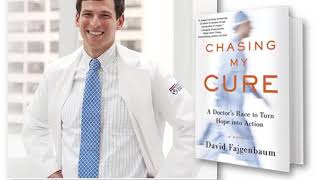
Dr. David Fajgenbaum survived a rare immune disease by analyzing his own molecular data, identifying mTOR pathway activation, and treating himself with sirolimus. Now he's applying that N-of-1 drug-repurposing strategy to COVID-19, testing 115 repurposed drugs across data from over 9,000 patients to find personalized treatments.
Chapters
Living a life in full is a conversation you always wanted to have with that person who gave an amazing TED Talk or the author of one of your favorite books, or that inspirational Olympian you always wanted to know more about. It's graduate level conversations with those making a difference in the world and in the lives of others. This show brings you new ideas and approaches so that you can live a life in full. I'm your host, Dr. Chris Stout and I hope you enjoy this episode. This episode is brought to you by the nonprofit I founded, the center for Global Initiatives. The center is an all volunteer organization so there are no salaries and thus all tax deductible donations can go to the work. While our key country partner is in Tanzania, our work is global and generally focused in the areas of education and healthcare. We also help others to get their nonprofits started or augment others project based initiatives. It's our goal to open source humanitarian intervention and to help make it easier for others to do more good in the world. We are proud to have been ranked a great nonprofit every year since 2011 and to have achieved a Platinum level rating by Guidestar Links. In this episode's show, notes will take you to published articles on our outcomes, a number of helpful tools, and downloadable resources which are all free always. Please Visit us at CenterForGlobalInitiatives.org and be sure to watch our video at Patreon.com DrChrisStout to learn more. Thanks welcome to another episode of Living a Life in Full. I'm your host, Dr. Chris Stout. It's truly an honor to have a very special and timely guest on this episode, Dr. David Feigenbaum. David received his Bachelor's Degree from Georgetown, a Master of Science from the University of Oxford, his MD from UPenn, and an MBA from their Wharton School of Business. He's one of the youngest individuals to be appointed to the faculty of the Perelman School of medicine at UPenn, where he is an Assistant professor in Translational Medicine and Human Genetics and is the Associate Director of their Orphan Disease Center. He is one of the top 1% youngest grant awardees of a leading NIH grant. He is also the Founding Director of the center for Study and Treatment of Kasselman Disease, co founder of the Actively Moving Forward Support Network, a non profit organization dedicated to supporting grieving college students, and co Founder and Executive Director of the Kasselman Disease Collaborative Network, which will do a lot of deep dive and exploration in today. He's also won more awards than I think can be counted, including the Distinguished Service Award from the University of Colorado, appointment as a fellow from the College of Physicians in Philadelphia, listed On the Forbes 30 under 30 in health care and profiled in places such as Reader's Digest, Good Morning America, cnn, the Today show, science, and a New York Times cover story. David is one of three recipients, including former Vice President Joe Biden, of a 2016 Atlas Award from the World Affairs Council of Philadelphia. He's the author of two books, the first, we Get It Voices of Grieving College Students and Young Adults, which is a very unique and fascinating collection of 33 narratives done by bereaved students and young adults, and most recently, which we'll also be going into. I have all these science puns I want to say we're going to be dissecting, Chasing my A Doctor's Race to Turn Hope into Action. But perhaps even more amazing, David has been so close to death that last rites have been performed on him five times. In medical school, David became critically ill with idiopathic multicentric Castleman disease, which we'll talk about as well. In this episode, we'll discuss his subsequent pioneering work with this disease, as well as his personal experiences as a physician, patient and research scientist. And as of late, using a similar approach that he's used in Kasselman disease to research and treatment applications vis a vis COVID 19 possibilities. David, welcome to the show. It's a true honor, Chris, it's such
an honor to be on the show with you. Thanks so much for having me.
Absolutely. So, gosh, there's so much I want to talk about with you, but I need to kind of do a little bit of context setting. So I think maybe you and I got connected through a mutual friend, Jamie Metzl, who's been on the show a couple of times before. And he and I met at Exponential Medicine and I'm guessing that's where you guys perhaps connected because I saw, I have to say I'm going to be doing shout outs throughout the show so, so everybody can just get used to it in the audience. But you did, I've been to that, obviously. And it's, it's a hardcore group in terms of status of presenters and status of audience members, me being one of the few exceptions of that. And you got a standing ovation talk there, which was just, which was well deserved and, but just outstanding. So kudos, man. That was really. I. And it's, it's. Fortunately, it's also freely available to the public too, so we'll put it in the show notes a link to it because it's it's something really, really extraordinary and something great to see. So. So I'm going to hop in the time machine, Mr. Peabody. We're going to go kind of way back, and I want to start off with a little bit of background on you. Can we go back to Ravenscroft? Ravenscroft in North Carolina and high school?
Absolutely. So, yeah. I grew up in Raleigh, North Carolina, where I have two older sisters. They're seven and five years older than me. So for really, my adolescence, it was just me at home with my mom and dad. And my number one goal back then was to play college football. I worked out basically all day, every day. I was just totally obsessed with this goal of playing college football. I even would throw the football with my mom if I couldn't get a teammate to, you know, to catch the football with me. I mean, it just. For me, it was like everything. And I ended up having a very good junior year of high school and was recruited by a number of schools. And then my. My first game of my senior year, I broke my collarbone and didn't think that I was going to be able to make it back that season, but I was actually able to come back. And Georgetown and a number of Ivy League schools continued to recruit me despite my injury. And I ended up choosing to go to Georgetown, which really, it felt like such a good fit in a lot of ways. And kind of like I had achieved this dream that I had spent my, really, my whole adolescence, you know, working towards. You know, I wanted to be a quarterback for a Division 1 team, and I kind of achieved that goal. And a couple weeks after getting to Georgetown, my life was just, like, completely shattered when my mom was diagnosed with brain cancer. As I said, she. It was. It was really just me, her, and my dad for so many years, and I was so close with her that it just like anyone to have a parent ill. It was just absolutely devastating for me.
I can imagine. So. So you were away at school at that point in time?
I had only been there for a couple weeks. I've been at Georgetown for two weeks. Yeah.
Gosh. So. And that was the genesis of the actively moving forward.
That's exactly right. So I spent a good bit of time back and forth at home in Raleigh, back up to school. And there's one anecdote that I do want to share. It kind of, I think, captures who my mom was and why she inspired me in so many ways or one of the many reasons she inspired me. And that was that right after the surgery was done, I had Flown down to Raleigh so I could be there for the surgery to take out this brain tumor. And right after the surgery, we didn't know how it was gonna affect my mom and my dad. My sisters and I were just so worried about, would our mom. First, would she survive? And second, would she still be the same person before they took out a large portion of her brain? And we went back to see her, and I remember being so nervous, and they pulled back the curtain, and we saw my mom was there. She was sitting up, and she had a bandage around her head and had a bulb coming out of her head. And we just were so nervous and didn't know what to. And she pointed up to her head and she said, chiquita banana lady. And we burst laughter and burst tears because, you know, didn't know. We were so afraid. And the thing that we needed the most at that moment was to know that, a, we still had our mom, and B, we needed something to laugh about. We were so afraid, and she gave us both. And I think that's just. It's a reflection of who she was, where she just went through this awful thing. But what she wanted to do was, was to make my dad, my sisters, and I feel better. And that's what she did with that, you know, really subtle joke.
Yeah, she sounds like quite a person, quite an inspiration to who you've become today.
She was. She. She battled cancer so valiantly for 15 months, and she passed away during my sophomore year of college. And as you mentioned, I went on to start an organization in her memory. I actually told her that I would create something in her memory for college students dealing with the illness or death of a loved one, and that I name it amf. Those were her initials. Anne mariebaum. Took on a second meeting of ailing mothers and fathers. And now it stands for actively moving forward. And the group still helps college students all over the country.
That is brilliant. That is brilliant. Wow. I did not know that. I love the AMF homage to your mom. That's cool. So graduated Georgetown, then. And then, was it right after that, Oxford?
That's right. So my mom's illness really put me on two parallel paths. One was to create this organization in her memory to help other college students dealing with grief. And the second was to say, I want to become a cancer doctor. I want to treat patients like my mom, and I'm going to dedicate my life to that. I did pre med at Georgetown, and then I went to Oxford to do a master's focused on cancer prevention. There was A lab in Oxford that was really focused on how can you prevent cancer through chemo prevention, but also through diet and exercise. So obviously smoking cessation, but really what can you do to prevent it in the first place? And I came back to the states for medical school after I did my master's, came to Penn for med school, and I was really still on this track. I want to be a cancer doctor, but I want to hit cancer kind of from every angle. The prevention angle, the treatment angle. And I was a third year medical student when really my life was turned upside down for a second time.
Gosh. So step us through that. I mean, I. I know your story. Maybe not all the listeners are familiar with it, but it's. It's just such. It must have been such an unbelievable kind of thing. So let. Pick us up from there. So, third year med. What. What happened? What were the first symptoms?
So I. I started noticing I was more tired than usual. And as you know, as a medical student, everyone's tired. So I just kind of like. I just kind of wrote that comes
with the territory, right?
Exactly. And I was getting more and more tired than usual. I noticed some lumps in my neck that I thought were lymph nodes. I didn't really know what they were. I noticed fluid accumulating around my. My ankles and in my legs. Had this really awful abdominal pain. And kind of the combination of all these things were really concerning for me. But I was on a really important medical school rotation, and I really wanted to finish it out before I sought my own medical care, which I don't recommend, but it was certain it was the approach I took. And so I just kind of suffered through these symptoms for about a week and a half. And I took my medical school exam. I literally was like, head to toe, dripping in sweat. I remember there was one point where I was like, is the answer A or is it C? And then I was like, well, wait, what's the question again? And then it was. I was very sick. And so I finished the exam and I went right down the hall to the emergency department because I took my exam in our hospital. And so I went down to the emergency department and they ran some blood test, and the doctor came out and said, david, your liver, your kidneys, your bone marrow, and your lungs are failing. We have to hospitalize you right away.
Oh, my God.
And it was just this shock to
be like, wait, how could this be?
I know. And so they hospitalized me. They ran a number of scans and tests which showed that I had enlarged lymph nodes all over my body and that I was experiencing multi organ failure. So they transferred me to the icu and we all thought that I had a very aggressive lymphoma. Didn't know what type of lymphoma, but we were running test after test after test and I became incredibly ill, Chris. I had a retinal hemorrhage that made me blind in my left eye. I gained 70 pounds of fluid due to my liver and kidney failure. I was on dialysis, daily blood transfusions, and I was in and out of consciousness. I probably was awake for about an hour a day. And when I was awake, I was just absolutely terrified. And unfortunately, this sort of, you know, frightening kind of being on the brink of death lasted for about 11 weeks. Oh, God. With no diagnosis. It was absolutely terrifying.
Oh. So, I mean, and in some sense you're sort of like on a conscious life support.
I mean, that's exactly right. I was being kept alive by medical technology, but no one knew what it was. And so I was very confused because my kidneys weren't filtering my blood, so my brain wasn't working at a very high level. But I do remember as I laid in the bed being terrified and really being sad for a couple reasons. One, I was kind of grieving the fact that I would not survive and that I wouldn't be able to do the things that I had hoped to do. But really, in particular, I was really grieving the fact that I had started dating a girl named Caitlin when I was in college and we had broken up about six months before I got sick. I remember when we broke up, we didn't really fight for the relationship because we said, well, we're 25 years old. If it's meant to be, it's meant to be. You know, we've got all the time in the world. And there I was dying in ICU and realizing, I wish I could have spent those last six months with the person that I love and I'm not going to be able to spend any more time with her. And so I was really devastated about both of those things.
Gosh. Sort of just lucid enough to feel that kind of pain on top of everything else.
That's exactly right. And it made me realize that as I laid there and I didn't regret anything in my life that I had done. The things that I regretted were the things that I didn't do or I didn't say. And one of those was fighting for Caitlin and I's relationship. But it made me Realize that if I were to survive, I was going to live by this new motto that I have. And that's think it, do it. So if I think of doing something and it's the right thing to do, I'm not saying impulsively right, exactly, but if you think about it, don't talk yourself out of those things. Don't say, you know, I've got all the time in the world. Because I think oftentimes we'll have really great ideas, but they'll, they'll require a lot of hard work and we just put it off to the future.
Yeah, I used to, there was a lecture I would give and oftentimes I'd wrap up with something. I referred to the pox of the untils. And that many of us are infected with the pox of the untils. That we wait until we graduate, or we wait until we get married, or we wait until the kids are out of the house, or we wait until. Yeah. So, and then all of a sudden we're, you know, if we've advanced in age then, you know, we've kind of, maybe the clocks run out and there is no more until. So. And this is a concept I want us to circle back to as well. I don't want to have any spoilers this early, so let's do a little Kasselman's 101. So idiopathic multicentric Castleman disease. It's the immune system attacking and shutting down the body's vital organs. So, so tell us about that and then tell us about the confusion. Diagnostic confusion. The differential with like a lymphoma.
Sure. So you're exactly right. Immune hyperactivation and it's called idiopathic because we don't know what causes it. You know, anything in medicine that starts with idiopathic you worry about because that means that, you know, not enough research has been done to figure out what causes it. But all we know is that our immune systems just, just go into overdrive and in the process they destroy our healthy organs. And it goes into overdrive until it basically kills you unless you treat it. And back then the only treatment options were chemotherapy. So after 11 weeks of multi organ failure and requiring medical technology to keep me alive, I was finally diagnosed with this idiopathic multicentric Castleman disease. And actually the diagnosis came within about 48 hours of a priest coming into my room and administering my last rites to me.
David Gee.
Yeah. Oh man, it was, it was terrifying. And mainly just terrifying for like the realization that that meant that the doctors told my family, that this was it. And I knew that it was it, but it, but there was something so final about a priest, you know, coming in and saying that this is it.
Right.
And so thankfully with the diagnosis and right around the time that my last rights were read to me, I was started on chemotherapy because we don't know what causes idiopathic multicenter Castleman disease. You don't know what to target directly. So if you just basically nuke the whole system, carpet bomb the whole system, then maybe you'll stop with the problem. So that's what we did and thankfully it saved my life. Unfortunately, I would then go on to relapse about seven weeks later despite the chemotherapy. And the relapses for me are multi organ failure, back in the hospital, requiring dialysis and transfusions, feeding tubes. It's really frightening. But thankfully with the next relapse, I got a combination of seven different chemotherapies that really just kind of destroyed the entire immune system and that finally got me into remission.
Wow. So let me, let me take this, go down a couple little strands with this. So how common is Castleman?
About 5,000 patients are diagnosed each year in the US which makes it about as common as ALS. So ALS has a similar incidence, but of course there is a huge difference in public awareness. And ALS is very well known because it is such an awful disease and it needs the awareness. But I do like to highlight the similarities because there are, are actually a lot of other rare diseases like Hasselman disease that are equally devastating but have very little public awareness.
And like, when did, like I just think of Lou Gehrig, so to speak. So thinking that, you know, we've known about ALS for decades, I'm ignorant as to when did Castleman first become Kasselman.
So Castleman is named after a doctor named Benjamin Castleman who described the disease back in the 1950s. And so it's been, you know, we've had about 70 years to work on this disease and I wasn't diagnosed until 2018. And I remember just being really kind of blown away, like, wait, we've had 60 years to work on this and this is where we are. But unfortunately, as you know all too well, science does not move forward unless people take action to move it forward. And as you mentioned, someone like Lou Gehrig bringing awareness to ALS and just some amazing researchers over the years really dedicating their lives to als, that's why there's been progress. But in Kasselman disease, there just really had not been an effort since Benjamin Castleman first described it in the 50s.
What's its mortality rate?
So my subtype idiopathic multicenter Kasselman disease, about a third of us will die within five years of diagnosis and another third will die within 10 years of diagnosis. So that's actually an almost identical mortality rate to when you combine all cancers together. It's about a 35% five year mortality. So similar to cancer. But actually we don't know if idiopathic multicenter calcium disease should be called a cancer because we don't know if we don't know what causes the immune system to get out of control. And it may actually be that we will eventually classify it as a cancer. But right now it sits in this middle ground between, is it a cancer, is it an autoimmune disease, Is there maybe some sort of infectious etiology? It kind of sits in between the three. And our work is to try to tease out what is it it.
So in terms of mortality rate, do you think that, that it's at this rate because people perhaps don't get it? Like, it seems like it's freaking hard to diagnose that. People, you know, it's, it's, it's not the zebras when they hear the hoof beat. So, you know, for you, 11. What? How many? 11 weeks.
11 weeks, yeah.
So.
And if it had been 11 weeks and two days, I wouldn't have survived just in time.
Oh my gosh. I mean, it just seems like, I mean, like something from a movie or, you know, just a novel. So for you, like, tell me again, what was the period, the relapse time between first diagnosis and the second flare up?
So it was just, it was seven weeks between actually. No, sorry. It was seven weeks between the first flare, the second flare, and then it was four weeks between the second and the third. And so I was only out of the hospital for four weeks when it all came rushing back, despite the chemotherapy. And you know, one other kind of nugget that I've taken away from that moment of having my last rites read to me, which you and I have discussed before, is this concept of overtime. And so that's that, you know, in overtime in sports, it's time that you, that you didn't think you'd have. It's time that really, really counts. You know, if you make a mistake in the first quarter of a football game, you can make up for it, but in overtime, you can't make a mistake, the game's over. And so I've really lived in this concept of overtime and feeling like ever since I had my last rights read to me, that I live in overtime. I don't know how much time I'll have, but I need to make the most of every second. And I think that bringing it to kind of more current events, I think that we're all kind of feeling, you know, the sense of overtime right now that, you know, at any moment, you know, COVID 19 could affect us or even outside of COVID 19, all of a sudden our health is becoming, you know, something that we're all more aware of or our health and our mortal. And so I've really been a proponent and I talk about it in that exponential medicine talk of really living. We should all live like we're in overtime. And that's not to live fearfully, like, oh my gosh, you know, the clock's about to run out, but it's to live mindfully and to make sure that we're really making, you know, making the most of every moment.
That's great. Yeah. And it fits right in with your point about, you know, living without regrets as well too, to, you know, to, to not exactly. To not put things off. So, gosh, I just find that it just touches my heart to think about that and the way that you, you know, the hard way that you came to that. So let me just geek out a little bit more. So when you had your relapses, it sounds sort of like whammo. I mean, it wasn't like some little, you know, a little, you know, minor sign and symptom or oh, we got a bad result on a lab. It was just like full blown symptomatic. And let's go back to the er. What was it like when you would have the flare ups?
That's exactly right. It would be over the course of just a couple days. I would go from feeling really good. Like I've been, you know, maybe we've kicked this thing. Maybe the chemotherapy is going to put me in remission and I'm going to, you know, I'm out of the hospital to within a couple days, sleeping like 16 or 17 hours straight. Or, you know, I go to bed and I don't. And I don't wake up until, you know, 17 hours later because my sister is waking me up, you know, shaking me and just the fatigue. That's hard to describe. Almost visibly being able to see from hour to hour fluid pooling in my ankles because my liver and my kidneys are shutting down. I mean, it's like it's hard to describe how frightening and to know the implications of it. You know, it's one thing that fluid in your ankles. It's another thing to see the pooling and knowing that that's because your liver, your kidneys, and your heart are shutting down and that you know what's about to come because you just. You just went through it, you know, four weeks before, and here it is again, and it's kind of like. Like, you know, buckle up, you know, get ready for, you know, what's going to be frightening and could be, you know, your last days on Earth.
Well, to me, the whole serial aspect of it is thinking, you know, I dodged the bullet. You know, how many more times is that possible? You know, you just sort of think, you know, lightning strikes. Well, here's one, and here's two, and here's three. I mean, it just. I mean, the hopelessness that I would imagine that that would instill. And then just the little bit that I know about you, David, from your book and from your work, I mean, the hopefulness that you have is such a, you know, an additional, you know, sort of meta inspiration about, you know, who you are and the work you do. So again, circling back, I gotta. Gotta continue being geeky. So to the treatment aspect of this, to some of the bright spots and stuff. So if I understand correctly from your book and from my readings of your work, you. You kind of became a little bit of a sleuth of your own. Going through your own medical records and your labs and your blood samples and stuff, you kind of put two and two together that. Like an MTOR inhibitor, I'm guessing that's probably sirolimus, had shown some promise. And then in that process, you developed a way to study rare conditions that could be generalizable beyond Castleman, too. We'll get to Covid in a couple of sentences here, but tell us about that process. How did you. How did you come upon that? What spurred that thinking? How does that work for people that aren't yet familiar with your book and your work? Tell us about that.
Sure. So, as we just talked about, I'd gotten through these three flares of the disease. Chemotherapy saved my life. And I was put on an experimental drug that I thought would, and I hoped would keep me in remission, a drug called Celtuximab. And I went back to medical school, back to my old plan of becoming an oncologist. And I really hoped that. I've dodged this bul three times. I'm on this experimental drug. Let's you know, can I get back to my old life and my old mission? And then about a year later, I had my fourth deadly flare of the disease. And that was a really. All four of them were frightening. But what was so scary about number four was that now I had failed to respond to the only drug in development. So beforehand, it was like, well, we just didn't know what drug to use. I wasn't with the right doctor. I wasn't on the right drug. This time. It was the last hope. And I had relapsed on the last, the only drug in development. There were no other promising leads. And so that's when I promised my dad, my sisters, and I should also share my girlfriend, Caitlin, because Caitlin and I got back together soon after I got out of the hospital. And I promised them that I would dedicate the rest of my life to trying to identify a treatment that could maybe keep me alive and hopefully help other patients as well. And chemotherapy saved my life again, thankfully. But I started conducting laboratory research at Penn, and I also started a foundation called the Kasselman Disease Collaborative Network to try to accelerate research on a global scale. And I really just started to make some progress on the network and also the research that I was doing when I had my fifth deadly flare of the disease. And this time, Caitlin and I were now engaged at this time. And all I wanted to do was make it to our wedding day. That's all I could think about is, could I find a drug that could keep me alive long enough to make it to our wedding day? I didn't have any grand visions of living longer than that or curing myself. I just wanted to make it to May 24, 2014. And so I dove into the data that I'd been generating over the previous year. I began conducting additional experiments on my samples because this is after I got chemo and my life was saved. But through performing those experiments, and as you said, through my data, I found a signal that suggested that this particular communication line in the immune system, called the MTOR pathway, seemed to be turned into overdrive. And I ran an experiment that confirmed that. I did an experiment on my lymph node that showed that this particular communication line was highly active. And as you mentioned, there's a drug that was developed 30 years ago for kidney transplantation, and it had never been used before for Kasselman disease that I decided to try on myself. It's called Sirolimus. And I started taking it back in February of 2014. So now it's been over six years that I've been on this drug and I have not had a single relapse since starting on this drug.
Holy cow. So this is really kind of born from an N of one kind of study.
That's right. And it's this whole concept of purposing. It's kind of crazy for me to think that this drug was at my neighborhood pharmacy three and a half years I was in and out of the ICU having these deadly relapses and no one ever thought to try it. And I kept passing by it. It was right there at my neighborhood pharmacy. And then the research I did revealed that it could work. And so it makes me really a huge advocate for this concept of drug repurposing and making sure that let's not just work on new drug development, we have to develop new drugs, but let's also look in our rearview mirror at all the drugs we've already develop. Say, you know, could any of these potentially help us?
Yeah, I worked with a fellow, Joe Moskal, at Northwestern some years ago, and his focus was kind of looking at the genetic side of things. And as we were, this is, I mean, a long time ago. So the genome hadn't been sequenced yet, et cetera. And the whole idea was then to, you know, kind of a. You and I joked before the show about this in some of our email correspondences about, you know, you were the person of personalized, as you used for your talk, personalized, personalized medicine. So and the idea that there's a lot of drugs out there that maybe never made it out of clinical trials because, you know, their efficacy was not broad enough to, you know, to have a market for, so to speak. But if you could find, you know, I know that like certain medications will work with more specific, you know, maybe males and not females, maybe, you know, people of a certain ethnic group, but not all ethnic groups, et cetera, so that it can be much more targeted and going in that direction. But I mean, it seems like your approach to this, this is it really kind of like a meta analytic approach, looking at the literature and what's out there, versus a randomized controlled trial, or how would you conceptualize this, the approach that you've used to the repurposing aspect?
Yeah, it's a good question. In my opinion. I think that you need to take multiple orthogonal approaches to try to answer this sort of a question because as you know, there have been many examples where AI has been used predict a particular drug and it hasn't worked many times. They have, or maybe in vitro drug screens where you test it in a dish and you say this drug is definitely going to work based on this data. And then it doesn't work. Sometimes this will happen in mice in vivo experiments. So there's. So my opinion, you want to look at these sort of questions from multiple angles and you want to try to pull together data that can give you a picture that maybe you wouldn't have seen from just one angle or another. So for Castleman disease, that was performing and continued to perform really in depth analyses of human Castleman patient samples. So doing things like single cell RNA sequencing, doing things like serum proteomics, but really dissecting out exactly what's happening on a cellular and molecular level within Kasselman disease. So in this case, figuring out that the MTOR pathway was highly activated, figuring out particular cell types were activated or producing particular proteins. So it's using human data for that perspective. Secondly, it's looking at all FDA approved drugs to ask, do any of those drugs inhibit the thing that we just found to be high in patients? Do any drugs increase anything that we found to be too low in patient samples? So it's using the biological data, tying it with this kind of big data databases that help you to understand how FDA approved drugs work. And then it's also performing experiments in the lab where we actually treat calcium in patient cells with the drugs from those databases that were predicted. So now you're getting three angles, you're getting human samples, you're getting this kind of analytic approach, but then you're also getting the in vitro experimental data. And what I think when you can combine those three things, that's when you can start to get, you can start to uncover, in my opinion, what seems to be more likely than if you just looked at it from any one of those three approaches.
I like that. So it's, you sort of have like a probabilistic model that informs to say, you know, these, these folks we think are candidates. And then you actually get to experimentally test that out and see, you know, if indeed that worked or whatnot. So, so you've, you've established a registry. Is it for Kastleman patients or what? Tell us about your registry.
Sure. So, yeah, we run a registry for Kastleman disease where patients from anywhere in the world can enroll online. We call it a patient powered registry. It's really the first one of its kind where any patient anywhere in the world can enroll. And then once they enroll, we can get access to all of their medical records and then we extract data from all of their medical records into this registry. And we don't take the, I guess, the 21st century approach of AI. We actually take the 18th century approach of manually entering it in. We have three data analysts who go line by line and enter it in. And it's not because we think that it's better to do it manually than the AI approach. It's because we are still waiting for AI and natural language processing to surpass human ability to extract out really confidently data from these huge medical records that are all structured in different ways. And it's really messy in a lot of ways. So we take the brute force approach. My best data analyst can enter about 100 pages of records per day. And my average record from a patient is about 1500 pages.
Wow.
So my best data analyst spent three weeks of full time work to get one patient into our registry zone. So it's a really brute force approach, but it's our best attempt to get as much data in as we can.
That's great. I wonder if you should do a study then of these people doing this amazing work and see if they start to have certain pattern recognition things that they've developed. Because I would imagine they become so intimate with the data. They sort through all the different cerners and epics and all the mishmash of stuff. That whole part just makes me feel like, oh, bless your hearts. Just getting to the data is. Is no easy task. So that's, that's really. That's cool. So that then is. Is that part and parcel then you. You've made reference before. I want to talk a little bit more specifically about the Kasselman disease collaborative network because you shared with me recently, taking that network and now brute forcing, maybe the similar model. I may be misspeaking. So correct me, but vis a vis COVID 19 treatment. So tell us about that. Then I want to circle back to Kevin Castleman.
Sure. So for the COVID 19 effort, this began a few weeks back where I was really hoping that a researcher, someone somewhere would follow the approach that we've taken to Castleman disease for COVID 19. I remember thinking to myself while I was driving my car, you know, I really hope someone follows our blueprint. I hope that maybe they read my book and so they can know the steps that we've taken and that, you know, they can do that for COVID 19. And then I was just kind of, I just caught myself and I was like, wait a minute. If, you know, if I'm hoping and praying that someone somewhere will follow my approach, you know, maybe, maybe I should just follow my approach and we should just, you know, do what we can against COVID 19. Because of course, there were no COVID 19 researchers four months ago when it didn't exist. So maybe we should give it a shot. And so we did. And I redirected about half of my lab towards COVID 19 work. And I redirected a number of members of the Castlin Disease Collaborative Network to focus on COVID 19. And we're taking two parallel approaches. One is, and this is very much in kind of in line with the chasing my cure effort that we've done for Kastelman disease. And that is first to pull together in one central place what we call a COVID 19 immune map, where all of the published literature on single cell RNA sequencing or proteomics or whatever experiments have been done on human COVID 19 samples, pulling them together into one place, where we map out how did all of these different data points fit together? Because unfortunately, no one study is going to solve COVID 19. It's actually the patterns across studies that are really going to help us to understand how this thing works. And so we have this map that's freely and publicly available. Anyone can access it where we're trying to keep up to date, how all this information fits together with the hope that through mapping this data out, that we understand and identify a pattern like MTOR that maybe could help to propose a new drug that we should start using. And then in parallel, we assembled an Incredible team of 31, both volunteers, but also people who work in my lab who went through the over 2,500 published papers on COVID 19 from the first three months and did the brute force manual extraction of data from so that read through 2,500 papers, extracted data on over 9,000 patients. We amazingly found that 115 drugs have been given to the first 9,000 COVID 19 patients. So doctors are trying all kinds of things on their patients. And this is drug repurposing 101. Because by definition there are no drugs approved for COVID 19 because it didn't exist. And so there's no approved drug. So every drug being used as a repurposed drug, and it's been really exciting to see that drug repurposing is happening. And the reason I say exciting is because we need to. This is a war mode that we're in. We need to try everything that we've got against this disease. And yes, some of these drugs we're going to learn, actually some of them will have done nothing. Some of them will actually have caused harm and some of them will have helped patients. And so drug repurposing is happening. And I feel compelled to say I'm not going to promote drug repurposing, but if it happens, we need to capture data on what happened to those people. And so that's what, that's what our lab is doing. We've gone through the effort to pull all the data into one place and we're actually getting ready to submit a manuscript from our work this afternoon describing the first 115 drugs using the first 9,000 patients.
That's great. Keep me posted with that and I'll be happy to share it out on my links. We've kind of, I have a nonprofit called center for Global Initiatives and we've kind of, we have our projects that were already going on, but we're doing kind of a public data sharing of these kinds of things, of legitimate scientific resources and news feeds and things along those lines. And one of the things I just recently, I think it was just yesterday posted. You may be already familiar with this, but the Allen Institute, which gets back more towards the AI aspects of this stuff, has developed a registry. Well, it's not really a registry. It's a open research data set that they call Core Chord 19 and they've got 51,000 scholarly articles, including 4,000 40,000 that are full text. So, yeah, so it's nice to see. I think this is from the. I'm gonna get the name wrong, but it's something like the. It's meta, but it's like the Zuckerberg Institute is. Oh yeah, focusing a lot of this stuff. So anything even preliminary or the links to the registries and things that you have, you know, please send along and then I'll publicly share those out as well too.
That'd be great. I will definitely do that.
Yeah, I'm a old fashioned, big fan of registries because I feel like I kind of grew up in the behavioral health side of things where you needed to have outcome studies first before you could then base your treatment guidelines on what worked and what didn't work and that sort of a thing. And then taking, going from the somewhat quasi sterility of randomized control trials and lots of exclusion criteria to real world samples of real patients in real clinical settings and putting together registries. I had done some stuff a few years back of establishing some more in the orthopedics space and really, you know, found that I liked that kind of collaborative model where you could share Those data, it was, you know, all HIPAA compliant and things. So I, I tip my hat to you. I think that that type of work is a very nice, you know, nothing trumps or beats anything else. It's just all an augmentation. And you sample from like your approach. I, I felt like your approach is very ecumenical, you know, it's sort of like, hey, whatever works. And hey, it's also good to know what doesn't work so that we don't, you know, keep trying it or that we don't waste time, you know, spinning our wheels in an area. So that's, I think that's fantastic. Pardon me. So you talked about a lot of this showing up and hoping people will take a look at your book Chasing My Cure. So, so it's not like I want to talk about that for a while now. So your, pardon me if I can get my voice back. So part of your book is somewhat of a guidebook I think for scientists and medical researchers, et cetera. Part of it's a little bit of a love story, which is nice. Part of it is just a autobiography of what you've talked about and shared with us in this episode. And first of all, again, I applaud you. I really enjoyed it. I'm going to give some shout outs from some other people, much more prestigious than me, of what they've said about it. So Adam Grant, who probably a lot of listeners to this show, knows a New York Times best selling author, he said about your book, it's an extraordinary memoir. It belongs with Atul Gawande's writings. Angela Duckworth said, it's a page turning chronicle of living, nearly dying and discovering what it really means to be invincible in hope. You've also had other notable endorsements from amazing people like Andrew Weil and Nobel laureate prize winner in medicine. So it really is a great work, David. And if I pardon me correctly, recall that you said by the time it came out you'd been five years post sickness. So, so just you've mentioned this before, but just to make sure I'm clear on it. So you've been asymptomatic for five, six years now?
Yeah, it's been 75.39 months, but who's counting? Exactly that I've been in remission and I say that somewhat jokingly, but I really, I don't like to round up, I don't like to say it's been almost 76 months because I do live over time where, you know, I can't. But I also don't round down because I'm really happy about that. 0.36 months. Exactly. That I've got.
So. So step us through it. I mean, we've. We've talked a little bit about your history. We've talked about, you know, football days in high school and all that. What. What spurred you to write the book, though.
So for me, the number one thing was that I learned so much about life and about living from nearly dying five times. And there were lessons that I felt. Felt like, I mean, I didn't know any of this before I went through all that I did, and lessons that I felt just totally compelled that I needed to share with the world. And as I said earlier, I have this real sense of urgency to my life where it's okay, I've learned these things. I'm alive right now. I can put them on paper and I can share them with the world now, and I need to do that. And so the number one thing for me was to share these lessons. And there are a number throughout the book, we've talked about a couple that I'll highlight again. One is this concept of being in overtime and how being in overtime can actually help you to lead a life of clarity. Because since you know that you have limited time, it helps you to focus on the things that are most important to you. Like I said, in an overtime of a football game, you're never more focused than would every single play of overtime. And I think that that's something that I hope to spread with the world. Another is that concept of think it, do it that we talked about earlier. You don't regret what you did? Well, I think probably some people do regret what they did on their deathbed because sometimes you make bad decisions. But for the most part, I think that what we usually regret on our deathbed are the things we didn't do. And I really liked your connection with the pox of untils. And I think that we don't know how long we have, and so we should avoid the untils. I think another important lesson that I talk about a lot in the book is the power and importance of humor during really tough times, which I think is very relevant now with how scary things are with COVID 19. I think all of us are terrified of what this could do to ourselves, to our loved ones, to the world. But I do think that sometimes humor can be really powerful. I shared about my mom's experience as the Chiquita Banana Lady. At one stage, I was even confused as a pregnant woman, a drunk guy on New Year's Eve thought that I was my dad's pregnant wife because I had such a big belly and I pull around and he thought that I was, you know, we were getting ready to deliver our child, but I had. I had to laugh about it. And you have to laugh about that sort of stuff, right, Chris?
Yeah.
You're like, if I don't laugh about it, I'll cry about it. I think that. I think that that can be really powerful during tough times. Turning hope into action is another important lesson. When I was hoping and praying that someone would make progress, I realized I should just do it. And so these are just a few of the lessons, but they're for me. I feel like there are things that I just didn't know before I went through this, and I felt like I need to get these out to the world while I can. And so I started working on it. I guess it was about almost, maybe two and a half or three years ago, and I didn't think that I would necessarily, you know, I didn't think that I would. I would be in remission for this long that I would necessarily be here to talk to you today, Chris, as to, you know, about it, but I'm just so thankful that I'm able.
Well, I. I feel so fortunate that, you know, for the world that, that you are here with us in so many different kinds of ways. I mean, I think your humanity just speaks to what a, you know, an amazing person you are, but also your. Your science and. And your compassion to, you know, the, you know, for me, again, behavioral health and empathy is kind of a critical thing, but to be able to take that aspect from a clinical, applied treatment research scientist and looking at these kinds of things, I think it's a very distinctive and, you know, hopefully it'll continue to be rare for any other people, but you've taken it and done a level of things that I think can be inspirational but also inform, you know, people that read your work. You know, like, you made the point earlier that, you know, hey, take a look at my model. Hey, please, you know, rinse and repeat. Please, you know, do this. Apply this, you know, as best you can in other places. Places. So, and I think, you know, to the ethos of people that are fans of. Of this podcast, you know, it's the name of. It's living a life in full. And I think, you know, you show that you. You, you know, become sort of a, you know, a great symbol of that in the sense of bringing your work together, your life together, they're not necessarily disparate parts, but you've actually taken your work to a level to, you know, to saving, in a sense, your own life as well as the. The lives of other others. I want to kind of paraphrase something from your book that I was really touched with and I want to share with our listeners. You say each of us has challenges. We're facing our own Castleman disease or thing you're hoping for or passionate about that motivates and inspires you. We all have the tools, though some may need sharpening, to chase after, even solve these problems. Start doing it. Start small. Small. Do something. My greatest regrets on my deathbed were actions that I didn't take. Make every second count, because the truth is, we're all in overtime. And, you know, it's sort of like, David, you're like the poet laureate of medical science too, I think. I mean, that is just so touching. So you've made reference to this before. Now, if you don't mind, unless, you know, feel free to filter for personal things that don't necessarily need to be public, but circle us back to that girlfriend and some of those days and bring us up to current time.
Sure. So that. That girlfriend that I couldn't stop thinking about when I was on my deathbed for the first time, Caitlin, she actually came down to visit me right around that time. And you would think that I would have wanted nothing more than to see her, Chris. And I did want nothing more than to see her, but because I didn't think that I was going to make it, I didn't want that to be her last memory of me. So I actually asked my. I asked my sisters to not let her come in the room to see me, and they. They told her that she couldn't come in. And obviously she was devastated by that. And in hindsight, I would. I would have done things differently. I would have, you know, I would have just said, who cares what I look like? It's just about seeing her and her seeing me. But I also wasn't really fully there mentally, so I think it would have been a hard conversation to have have. And so I pushed her away. And then when I got sick again and I nearly died for the second time, she. She flew down to see me. This time I was in a hospital in North Carolina, and I clearly didn't learn from my first time because I actually asked my sisters to do the same thing again. And so they. They didn't let her see me for a second time. And when I got out of the hospital after the third time, when I got multiple chemotherapy drugs. She flew down to see me when I was recovering in North Carolina, and. And it was just so special to be able to see her and know that she was seeing me and to just be open about what I was going through and about how I had been thinking about her so much, even though I had really been pushing her away. And amazingly, despite all that I was going through and all that I had really put her through during that tough time, we decided to start dating again. And we joked that at the time, so I was completely bald from chemotherapy. I had about 50 pounds of fluid on my body. 30 pounds of that was in my belly. I just recently been confused as my dad's pregnant wife. And we joked about how she still loved me even when I was fat and bald. And if you can make it through, then I know that when I get fat and bald in old age, that she'll still love me. And so she wanted to get back together. And of course, my physical appearance was, I think, the least of her worries. But we started dating again, and we eventually got engaged. And I mentioned that our engagement really was, I think, the motivation that I needed to just work all day, every day to say, I have this goal. And I think that you've talked about this before on your podcast, the importance of having a really clear vision and a goal and how that can drive you to. Towards being able to do things that you didn't think you could do otherwise. And for me, the thing that really was driving me when I was working relentlessly to try to find a drug that could save my life was I want to make it to our wedding day, and I want to make a difference that can help all the other patients who want to make it to their wedding day. And so I worked tirelessly. I was able to find this drug, and I was able to make it to our wedding day. And actually my hair grew back just in time for our wedding day, which is actually pretty important to me. Yeah, I think it was. I don't really. I don't know. I'm not too. I don't care that much about vanity. And it wasn't how I looked. It was more that I just didn't want that kind of external reminder that of all that I had gone through and all that I probably would continue to put her through of being bald and having hair was actually really important to me that day.
Yeah, you probably felt more like yourself. Like that was you. Yeah, exactly.
I looked. I looked more like myself than you know, because I think being bald from chemotherapy therapy, everyone knows why you're bald. And I think that having hair back was important. We had the most amazing wedding. And we have been married now since May of 2014. And about 20 months ago, we welcomed our first daughter, Amelia.
Wonderful.
And I don't know if the listeners have heard her. I've heard her say Dada in the background a little bit. She's not in my office, but I hear her walking around with her mom. Had that couple times. So we're doing great. And this is just something that I never thought that I would be here to experience. I have literally cried in my life about the fact that I wouldn't be able to experience this. So being able to experience it and then also to think about all the other patients. This drug, Sirolimus, we've given to a number of other Kasselman's patients. We also have a clinical trial right now that's enrolling patients to give this drug to them. And it's not working for everyone, but it's worked for a large number of them. And the fact that this drug and the other work that we're doing are helping people like me to experience these life memories and experiences that we would not otherwise has just been the most meaningful thing for me.
That's wonderful. And again, it just, you know, it speaks to. There's. It's one thing to be alive. It's another thing to have such a rich life with, you know, people you love and a little girl. All is just wonderful. So. Oh, gosh, that's great. So I want to wrap up maybe with some getting back with my nerdy hat on. I should put a lab coat on for the rest of these questions, I suppose. So I want to leave listeners with kind of an expectation of kind of like, you know, what's coming down the road. What have you found? So I want to circle back to the research. I think it's correct that your lab got the first ever NIH grant to study idiopathic multicentric Castlemann disease.
That's right.
Okay, awesome. Congratulations. So we've talked about your registry now maybe kind of a feel free to do a highlights reel or feel free to go deep on any of these things, but you're working to develop an animal model with Castleman or tell us what's going on with that.
Sure. So we have what we call a translational research lab, which means that we do everything from basic science work where we work in cell culture, but also with animal models on kind of the basic side of things. We do what we call more translational work, which is where we' working with human samples, but we're working with them in the laboratory doing things like proteomics and genomics all the way through clinical research. So that's like the registry we talked about where we get data from patients around the world and also clinical trials where we actually give this drug Sirolimus to patients and we track how they do on the drug. So it's this translational meaning that we try to translate what we figure out on the basic side of things to the clinic. And then we try to translate, we figure out in the clinic back to the basic side. And it's this very fluid lab where we're constantly moving back and forth between the lab and the bedside. And so we do a number of different things. As I mentioned, we are working on an animal model that we are really optimistic about based on a genetic mutation we found in one patient and modeling that in this mouse and creating something that looks similar to Castleman disease. The reason that that's important is because then you can start doing a lot of drug testing and this can help you to identify hypotheses very quickly that you can then test in humans. So that's one kind of small part of the lab. The biggest areas in the lab are doing are kind of in the middle where this really translational, where it's serum proteomics analyses, single cell RNA sequencing analyses, where we're trying to use utilize novel technologies on human tissue samples to gain insights into Kastelman's, but also just to gain insights generally into how the immune system works. As we mentioned earlier, we quickly transitioned to COVID 19 and that's in part because of our process, but it's also because COVID 19 what actually kills you about COVID 19 is the cytokine storm that is initiated by this hyperactivation of the immune system, which is actually very similar to Kasselman disease. A number of those 115 drugs that we found in the first 9,000 patients are actually Kasselman disease drugs, two of which were developed for Kasselman disease and are now being tried in COVID 19. Because there's so much overlap between the cytokine storm and Kasselman's and COVID 19. So our lab is very interested in, and we've always been in dissecting what causes the immune system to become hyperactive and how do you appropriate turn it off to save lives. And now all of a sudden, this now has implications far beyond just Kastleman. It's Always had implications for other hyper inflammatory disorders. But now that COVID 19 falls into this category, we feel particularly compelled to continue to try to dissect what causes a cytokine storm and how do you more effectively control it.
Wow. So for the folks that have been not treatment responders to Sirolimus, are you then looking at predictive biomarkers, like folks that are Sirolimus responders versus those that aren't?
That's exactly right. That's the most important next step for us. So we know that this one drug, celtuximab, the drug that I was given initially, it works for about one third of patients. And it went on to get FDA approval and now it's being tested in Covid. But that drug works about a third of patients. And then Sirolimus we found, works in about one third of the two thirds who don't respond.
Really? That's great. I was wondering if it's like a Venn diagram, it just overlapped or something.
It's like one third of the two thirds where it doesn't work. So that means that now we're up to about 50% of the whole population.
That's huge. Wow.
Yeah. So, you know, we still have a trial going on, so of course that 1/3 of the 2/3 is anecdotal based on, on this off label drug use. So we'll have to see what pans out in the actual trial. But I think that it's going to be somewhere around that number, maybe as low as a quarter, but I think it'll be closer to a third. And so that means that about half of patients with my disease don't have either a drug. They won't respond to either of these two drugs. And so they keep getting chemotherapy and unfortunately these patients just eventually don't survive. You're kind of playing Russian roulette with each relapse. And if you can't prevent a relapse, if you have enough of them, you just won't survive. And so our work is exactly as you said, to figure out how can we predict up front who's likely to respond to either of those two drugs. So that way we know up front versus the people who are unlikely to respond and then the people unlikely to respond. We're running full speed after new drugs that can help those patients and we're not going to relent until, until we get to 100%.
I really like that approach. I mean, it seems like it's such a, in some sense sort of like crass way to say this, but like not wasting your time with something that eventually, you know, will not be therapeutic for the patient in the first place.
Exactly.
Being able to be, have like a differential therapeutic to know, okay, because of xyz, you know, your, your genome or your whatever else that, that you're not going to be a candidate for this. So not to waste, you know, the time or the resource to. To do that. So.
And it may be that even if we predict that you're low likelihood to respond respond in many of these cases, we still give them those first couple of drugs because even if it's a small percentage, that's better than, you know, 0%. And so we still will give it to them. However, we will know that there is a low likelihood so that we have a lower threshold for starting them on chemotherapy because we say, you know what? It's probably not going to work. There's no reason for us to be patient to see if it will work. We just need to be. We need to move more quickly. Chemo.
Well, also, like when you were talking about, you know, your first 11 weeks of suffering, that there's also, you know, just a humane benefit of not putting someone through the atrogenic crap that comes along with certain kinds of treatment regimens that, you know, if you can avoid that and be, you know, obviously more. More targeted by, you know, whatever data, you know, makes the recommendation. So again, it's just a, you know, much more, I don't know, just a better in a variety of ways therapeutically as well as just, you know, avoiding unnecessary pain and suffering, so to speak. So. Well, David, gosh, I want to thank you. You've got so much more important stuff to do than spend time with me, so, so I appreciate you carving out the time and being able to do this. I was so looking forward to this. I mean, I just like every chapter in your book. It was sort of, you know, just. Again, I can't, I can't say enough about it. It's such a unique kind of book to be able to know that this is, you know, a. A true story, that it has a happy ending, that it gives, you know, little kernels and nuggets where I get to, you know, nerd out on the science and trying to understand and get my head around some of the. The biology that, that I would love to understand even better. And to be able to have this opportunity to go down some of those paths and be able to. To get your opinion and your thoughts on things and then just honestly, David, to t. Being able to see the repurposing of the approach to the COVID 19 crisis is terrific. I'll post that. If you don't mind, I'll share that video because it's so cool and so inspirational. So if there are listeners that want to know more about your work, want to know about the registry, maybe folks have patients that do. Are Castleman positive or whoever. Be it from the scientific, the research, the medical, the treatment, the independent individual. What are best ways to get a 101 on your work to be brought up to speed, to reach out to you, to be one of those volunteers that will brute force some data for you, that type of thing.
Thank you so much, Chris. The best place to go would be to go to chasingmycure.com that's where you get kind of everything in one place. A description of the work, a description of the things we're going to do, the things we are doing. You can get in touch with me by email. My social media info information is all there. But one thing I would say so that the title of the book and of the website is Chasing My Cure. But I think if I could do it over again, I think I probably would have retitled it Chasing Our Cures. Because the truth is, is that yes, I started out chasing my cure, but this is so much bigger than my cure for Kasselman disease. This is what we really are chasing is, is we're chasing cures for all patients with calcium disease, not just my calcium disease, but we're really also chasing cures for many, many other diseases through trying to promote this concept of drug repurposing. Efficient collaboration within the system, but also specifically with things like COVID 19 where we're trying to apply what we've learned from our Cytokine Storm research. So I'd be so delighted for any listeners to check out chasingmycure.com, check out the book and how hopefully there are these lessons that have. They've changed who I am to my core. And I don't want your listeners to have to wait until they've gone through the things that I've gone through to learn those lessons that have changed me to my core. And I hope that the book and checking out the website can help to share some of those lessons so that you can keep living the full lives that you guys are.
Thank you. David, you are such a gift to humanity in so many different kinds of ways. It's just been a pleasure to get to know you better and to publicly geek out with you. I very much appreciate that. So I will let's, you know, back channel. Keep me posted with any new updates and publications and things and then I'll repost those through all of our center for Global Initiatives channels. And again, thank you my friend. I am I am touched with your story in a variety of different kinds of ways and very grateful for the work that you do and for the time today.
Thank you so much, Chris. This has been so wonderful and the feelings are very, very mutual. Thank you so much.
Thank you dav. Living a Life in Full is a production of Stout Media, a subsidiary of Gordian Knot, LLC. Assistant producer Gracie Wong Music Dan O' Brien executive producer and host Dr. Chris Stout to learn more, stop by our website at lifeinfull for show notes and please recommend us to your friends and subscribe on your favorite platform. And as for the obligatory disclaimer, this podcast is for general information uses only and does not constitute the practice of psychology, medicine, nutrition or other professional health care services, including the giving of medical or psychological advice. No doctor patient relationship is formed. Lastly, and perhaps most importantly, I take conflicts of interest seriously. For all of my disclosures as well as show notes, please see livingalifeinfull.org podcast and my link profile. Thanks and until next time.
More from Dr.

2025 Mercedes-Benz CLE 450 4Matic Cabrio – Owner’s Views After a Year-and-a-Half as a Daily Driver

The Complete Guide to a Successful Everest Base Camp Trek – Post-Trek Debrief

The Complete Guide to a Successful EBC Trek – Post-Trek Debrief: What I Needed (and What I Didn’t)

What Went Wrong Customizing My New 2026 Porsche Carrera T …and what I did about it!

Coming May 1 At the Intersection of High Performance and Fulfillment: A Conversation with Alisa Cohn

From High Performance to Fulfillment: Lessons in Inner Mastery with Jim Murphy

Coming March 19: From High Performance to Fulfillment: Lessons in Inner Mastery with Jim Murphy

The New Humanitarians Volumes I - III:- Inspiration, Innovation, and Blueprints for Visionaries

The New Humanitarians Volumes I - III:- Inspiration, Innovation, and Blueprints for Visionaries

The New Humanitarians Vol I - III: Inspiration, Innovation, and Blueprints for Visionaries - Forward
