Understanding Forensic Psychiatry from One of the Best, William Reid, MD, MPH
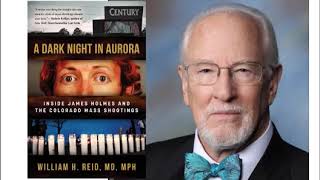
Forensic psychiatrist William H. Reed discusses his 40-year career and his book about evaluating James Holmes, the Aurora theater shooter. Reed conducted 25 hours of video interviews with Holmes and reviewed 75,000 pages of evidence. He explains legal insanity, competence to stand trial, and why many states have abolished the insanity defense.
Chapters
Living a life in full is a conversation you always wanted to have with
that person who gave an amazing TED
Talk or the author of one of your favorite books, or that inspirational Olympian
you always wanted to know more about. It's graduate level conversations with those making
a difference in the world and in the lives of others. This show brings you new ideas and
approaches so that you can live a life in full.
I'm your host, Dr. Chris Stout and
I hope you enjoy this episode.
This episode is brought to you by
the nonprofit I founded, the center for Global Initiatives. The center is an all volunteer organization so there are no salaries and thus all tax deductible donations can go to the work. While our key country partners in Tanzania, our work is global and generally focused in the areas of education and healthcare. We also help others to get their nonprofits started or augment others project based initiatives.
It's our goal to open source humanitarian
intervention and to help make it easier for others to do more good in the world. We are proud to have been ranked a great nonprofit every year since 2011 and to have achieved a Platinum level rating by Guidestar Links. In this episode's show, notes will take you to published articles on our outcomes, a number of helpful tools, and downloadable resources which are all free always. Please Visit us at CenterForGlobalInitiatives.org and be sure to watch our video at Patreon.com DrChrisStout to learn more. Thanks
welcome to another episode of Living a Life in Full. I'm your host, Dr. Chris Stout. I am so happy to have a dear and longtime friend on the show today, Dr. William H. Reed. Dr. Reed is board Certified in General and Forensic Psychiatry, a professor at Texas Tech University Health Sciences center and the University of Texas Dell Medical School. He's a former Medical Director of the Texas Department of Mental Health and Mental Retardation and a past president of of both the American Academy of Psychiatry and the Law and the Texas Society of Psychiatric Physicians. He's authored or co authored over 300 publications and abstracts and 16 professional books, and he consults nationally. He graduated with a BA in Psychology and an MD from the University of Minnesota. He did his psychiatric residency at the University of California, Davis, with a pause to serve in the military, and afterwards obtained a Master's in public health from UC Berkeley. Dr. Reed is a Fellow of the American College of Psychiatrists, the Royal College of Physicians, and he is a Distinguished Life Fellow of the American Psychiatric Association. He's a longtime advocate for patients and for good mental health and developmental disabilities care. He's especially concerned with improving recognition, assessment, protection, treatment and management of suicidal patients. In his forensics practice, which has spanned over 40 years, he's worked in at least 35 US states and internationally, including adult civil and criminal matters for both plaintiffs, prosecutors and defendants, and sometimes for judges themselves. Many of his cases have involved mass killings, filicides and suicide in the context of malpractice suits. In this episode, we'll be discussing Kind of a Forensic Psychology 101 in general, and I think that'll set the context for better understanding his work. In particular, we'll discuss his latest book, A Dark Night in Inside James Holmes and the Colorado Mass Shootings. Welcome to the show, my friend. It's an honor to have you on.
Oh, what an honor and a pleasure to be with you, Chris. I've known you for many years and we've written together. I'm just very pleased to be here. Thank you.
My pleasure. So before we get into the work, which I'm just so looking forward to, I kind of realized in putting together the questions and discussion topics, I really don't know what drew you into medicine and psychiatry and then on into forensics. Can you kind of discuss your origin
story a little bit?
I'm happy to. I always love talking about myself, but I'm not sure anybody likes to listen. I often say, and I just said the other day to my daughter, I went to medical school on a bet, a bet with myself. I literally flunked out of physics. I thought I was going to be the nation's answer to physics. I an F in physics my first year and bet with myself that I couldn't get into medical school. The next problem that arose was I got into medical school. In medical school, there are lots and lots of interesting things to take. And at the end of the training, I was particularly interested in psychiatry. My father was a psychiatrist. I don't think that had anything to do with it because goodness knows I wouldn't want to do anything just to be like my dad. He was a nice guy, too. So I went for residency at the University of California at Davis up north, and spent some time at Berkeley getting a public health degree in healthcare management. The forensic stuff started early in a private practice career in which lawyers, from time to time, just as they do with lots of clinicians and with you as well, they call and ask for help on a legal case that's at the interface of mental health and the law. That became more and more interesting over time. No matter what I was doing, whether I was working with the university as a professor or whether I was in healthcare management and large scale healthcare systems. I always worked to some extent with mental health and the law. And about 20 years ago when I stepped down from a position as state medical director for Texas, decided that a lot of my work would involve both civil cases. As you mentioned, things like malpractice in psychiatry and criminal cases. As you also mentioned, things like whether or not a defendant is competent to stand trial or whether or not that defendant should be held responsible for his or her act otherwise criminal acts. It's been a nice ride. Getting a little long in the tooth, but the ride is not over well.
Hear, hear. So I think, you know, it seems like there's such a fascination these days, and maybe it's just because we've been housebound and looking at streaming channels and things, but it seems like there's this, you know, interest of the population in terms of docu series as well as, you know, scripted shows about, you know, the interface of, of legal issues, forensics, DNA findings, and then the whole aspect of when you bring in psychiatry. And you know, I, I've periodically, you know, like you've mentioned, you and I have written some things together and I've written about it and I've given lectures and stuff. But could you maybe. Not everyone in our audience has got a psychiatric or medical or psychological or forensic background. Maybe to kind of start off with some of the things that might be confusing to most people, like, like the, the concept of insanity, that's not a clinical term, and, and not guilty by reason of insanity, et cetera. Could you maybe a little bit to set a context for the rest of our conversation?
Sure. And I think you're absolutely right that there's a lot of confusion about it for everybody that's not in the profession. And a lot of psychiatrists and lawyers are confused about it too, trust me. Psychiatrists and psychologists, as you know, work with mental illness. We talk about mental disorders or mental diseases. The law, particularly in the criminal law, often deals, when we're talking about responsibility for one's act, with the concept of legal insanity. If you read much psychiatry and psychology, you don't come across the word insanity very often, but the law in each state and in the federal law has a definition of, for criminal insanity that's related to whether or not a person has a mental disease or defect. That's another legal term, mental disease or defect, that prevents them from being capable of knowing what they're doing or knowing that what they're doing is wrong and thus perhaps should not be held responsible for. For an otherwise criminal act. Some folks balk at that a little bit. They say, well, gee, this person just killed 11 people, or this person just did something terrible. He or she needs to go to prison. Usually it's a he. So I'll keep saying he should just go to prison. Get this person off the street. Some people also say, get this person off the planet. But the point really is a good one. We don't hold children responsible if they pick up their daddy's gun and shoot someone. We don't hold motorists responsible when they slide on the ice and kill someone. So it makes sense that the person cannot form the intent to commit a crime, then. Just because they've committed a criminal act doesn't mean that we should treat them as a criminal person if they didn't intend that criminal act. I hope that's clear.
Yeah, exactly. It harkens Back to the McNaughton Rule. Do you feel like putting on your scholar's hat and talking about that for a second?
Sure. Society, for actually thousands of years, has found ways not to hold people responsible if they didn't intend to do something bad. Talmud, for example, has rules for not holding someone responsible and executing them or throwing them in prison if they are truly inside a wild beast rather than a person, if they were intoxicated. We don't excuse people for being intoxicated nowadays very often, but the idea has been around for a long time. About the mid 19th century, a case came up in Britain that involved someone who tried to assess, excuse me, assassinate the Prime Minister. And that case developed, actually, to Queen Victoria. I think it was her chagrin that there should be some rules that such people, if they're severely mentally ill and not able to form the necessary intent, they should be put somewhere besides prison and besides being executed, too. The case, the basic case, was the McNaughton case. There have been lots and lots of others through the years. And since much of our US law is based on English common law, it became very important for the US as well. Most states have something similar to that, although there are considerable differences among the states.
Gotcha. So also, let's talk about fitness to stand trial. I mean, I remember, I think you and I first got together, got introduced to each other when I was doing some work for the state of Illinois and their state facilities. And some of those state facilities are just sort of, if you will, general psychiatric care. And others were specific to forensics. And I remember at Elgin State Hospital, where Mary Todd Lincoln, I think, had been a patient, you know, many years ago, also has a forensic side, and they call it a forensic and a civil side. And that a lot of the work that goes on, on the forensic is not for people that have been put away, if you will, because of an insanity plea, but are there to actually become fit to stand trial. Can you kind of share with the audience what that means and fitness to stand trial versus an insanity defense?
Well, that's a really good question and a good point. A lot of people confuse the idea of responsibility for one's otherwise criminal act, that is NGRI or not guilty by reason of insanity. Many people confuse that with competence to stand trial. If we're talking about responsibility for the act, we're talking about what was the person's mental state when he or she committed the act, whether it was a robbery or a killing or something like that. But we also, in this country, we believe that a defendant, a criminal defendant, is entitled to be present at his or her trial. We don't try people or it's very rare to try people without their being present. If you think about it, they need to be both physically and mentally present. So a person may be physically in the room. If that person doesn't understand what's going on, doesn't understand what they're being accused of, thinks they're a restaurant or something, doesn't understand the quality of what's going on around them, then we can't bring that person to trial. What we do is the prosecution or the defense or even the judge raises the question of that person's competence to stand trial. And if the person is found incompetent to stand trial, several things may happen. First of all, it may be sent, generally first sent for an evaluation to see if the competence can be restored. People with mental illnesses frequently can, with appropriate treatment, be restored to competence and as you say, go to a hospital of some sort and then later come back to trial. Sometimes this occurs in jail. It's much better to do it in hospital. There are people, however, who are permanently incompetent to stand trial. For example, people with Alzheimer's or with an intellectual disability that will never get better, no matter what. Those people may be placed in institutions or they may be released in some way that's safe for the public. But what you were just talking about is a large number of people who are sent to a facility in order to be restored to competence, if that's feasible. It's important to point out that you can't keep them forever There because they haven't had a trial yet, they haven't been found guilty of anything.
Right.
And so the law in the US and in most other civilized countries is that if they're being tried for trespassing, you can't keep them for more than a few weeks or months because that's not fair. If they're being tried for murder, then you may be able to keep them longer if you can show that they're dangerous. People who do go to hospitals. I know this is getting a little long winded. People who do go to the hospitals for common is restoration. If they haven't been restored, every so often, a hearing is held in every state in one way or another to see whether they're able to stand trial, whether they're eligible to be released without a trial. Because in this country, at least in most civilized countries, we don't keep people incarcerated without either being found guilty or being pretty clearly shown to be dangerous to other people.
Mm.
Yeah.
It.
It also brings back memories. I hadn't thought about this in a while, but for. For listeners that, again, may. This may be a little outside of their. Their experience is that a number of the hospitals in Illinois, and I'm sure in other states, we had mental health court right there. I mean, we had a judge's chambers and. And it was. It was nice because the judges became, you know, probably to get into that position, were very familiar, you know, had a great expertise in mental il restoration and, you know, not just that in the law. So it was really sort of interesting when I first came upon it to see that, you know, you don't. There wasn't even a transport issue that this was so frequent and there's so much of it going on that you had experts right there on campus that were able to do those kinds of things.
It's good to have both sides understand the other. It's very good to have judges and lawyers, but particularly judges understand important things about folks with mental illness and about where those folks sometimes are hospitalized. It's also good for the strengths of people who work with them to understand something about the legal process that some of their patients or clients are involved in.
Yeah, I remember, like in one of our downstate facilities, it was a forensic women's only. And the most common criminal charge, I guess it would be, it's not a clinical diagnosis, was infanticide. And, you know, again, this was just sort of, you know, me as a somewhat of a young, you know, whip, you know, getting my eyes wide open about some of these kinds of Things. And I later learned that I don't know if this has changed, but that in England that the maximum charge for a woman killing her baby within 12 months postpartum was man manslaughter, that they couldn't be charged with anything, you know, severe with that. And I think it sort of speaks to a difference in terms of interpretation and, you know, somewhat trying to weigh the justice, you know, the balance of justice, but then also have an appreciation as much for the person that's committed the act as well as the, you know, the victim or the people that have been victimized by the act. I think that is a very difficult thing for myself and for anybody, you know, to kind of appreciate out of context. And I want to get to your book in just a second. But, you know, I had my presuppositions
about
the Aurora shootings and stuff, but then once I got into what your work was with that, it really became a different kind of thing. But I don't want to get ahead of myself here.
Go ahead.
I think you're raising an important thing and once again, something that is awfully important for the general public to understand about people who do heinous and terrible things, but may not be. May not be fully responsible or responsible at all for what they do. It sounds to me like the British system does its best to understand some of the nuances because that trivializes it. But some of the difference between, difference is between someone who goes out and slaughters people willy nilly for the fun of it or to get money for it, and a mother who almost always within hours or days or weeks is absolutely regretful and remorseful and lives a terrible life after that. I've had many, many cases like that. They're so sad. And the public very often is terribly angry at these folks, and I can understand that anger. One hopes that the legal system and the judicial system look below it, below that surface and try to get some kind of justice. You used the word justice. And by the way, I think we can, we can apply that concept to all kinds of things that we see in the news today, whether they have to do with various kinds of violence, one person against another, one race against another, etc. The importance of looking below the surface to see what justice and accuracy tell us rather than reacting with a knee jerk from media headlines or bumper stickers.
Yeah, yeah. Well, here, here. I think that is the thing, because it's. People like their news in bite sized, adjustable chunks. And too often I think people just use that as means to be reactionary towards. And I guess maybe that's a good segue. You had mentioned earlier about the insanity defense in, you know, a number of states throughout the United States and how a lot of, you know, the laws are predicated on what's happened in, you know, Great Britain prior to. I read last year, and this was kind of news to me, that Kansas, Montana and Utah have abolished the insanity defense. I don't know what, why, I don't know exactly when that happened. Those things happen. But do you have any opinions about that? Of states not having one?
Sure. I think there's a fair amount of misunderstanding about this. As we mentioned earlier, the general public doesn't like the insanity defense. The general public thinks that bad people are getting away literally with murder often and, quote, getting off. Nothing could be further from the truth, as you and I know. First of all, when it's legitimate, it is absolutely legitimate. The second thing is the insanity defense is a very hard defense to win. Far, far more people do not win an insanity defense than do so in general. There's always been a group, a part of the public that thinks these folks are just getting off and have, I guess, for the abolishment of the insanity defense. They have never been successful. Because in general, the Supreme Court recognizes the need for something like an insanity defense. A couple of years ago, the Supreme Court began to indicate that it would hear cases against insanity defense and indeed allowed one state, I can't remember which one it was, to abolish its insanity defense with certain. With certain criteria. That's led here for other states to do the same. But I hasten to say that there is still a requirement that the defendant be able to form the mental intent to commit a crime before he or she can be convicted of a crime. Once again, we go to the person who is. Who is terribly mentally retarded or intellectually disabled. We go to the person who's four years old. We go to the person whose brakes went legitimately, brakes went out and plowed into a crowd with his truck. Those aren't insanity issues. There are situations in which the person didn't intend to. To commit a crime or to kill people. So mistakes don't have an insanity defense. I don't know the details of their legal situations, but I am confident that there is still opportunity within their judiciaries or within their judicial systems to show whether the person could or could not form intent. I don't really care whether you call it insanity defense or not. Actually incentive defense, sort of prejudices, doing away with the Wording.
Yeah, good point, good point. Well, thank you, that's very helpful. And I think again, this is a good setting of the stage for listeners to understand the context for your latest book, which I want to shift into. It's called A Dark Night in Aurora. But first I have to give a little background about it. Daniel Patinkin, author of the Trigger Narratives of the American Shooter, said about your book, Bill, stunning, scrupulous and relentlessly gripping. A triumphant work of investigative non fiction. Reid is brilliant, as deft a storyteller as he is a scientific communicator. And more praise. New York Times best selling author Robert Kolker said, anyone searching for insight into our nation's crisis of mass shooting should start here. And it's, it's high praise, Bill, and I very much agree with it. I've so enjoyed your book. It was, you know, I found sometimes it was just sort of upsetting. I had to kind of like take a, take a break, you know, from, you know, more so the front end of the book and kind of learning, you know, about, you know, James and kind of what happened. And I also have to say if I highly recommend the book for all the listeners, but it's also kind of serves as a good guide or a primer for not just forensic psychiatry, but you also do a very good job of kind of explaining in context, you know, psychological and neuropsychological assessment and how that plays out. So, so anyway, I very much enjoyed it. You had very rare, what I think is rare, and broad access to James Holmes. You were the only psychiatrist allowed to do video interviews. You worked on the case for over a year. I can't believe these numbers. You reviewed over 75,000 pages of material and hundreds of CDs and DVDs. You yourself interviewed dozens of witnesses and other sources and you spent over 25 hours interviewing Holmes himself on video. So I want to do a deep dive into this. Share with us. How did you get involved in the case, first of all?
Well, thank you so much for the compliments.
Sure.
Man. I gotta tell you that for a shrink, an old academician, to write something that people actually enjoy reading and enjoy, I use kind of in quotes because the whole thing is such a tragedy. But write something readable and to have people review it so well has been very, very nice for me. I appreciate your mentioning that.
Well deserved.
The way it all came to be, first of all, was because James Holmes wasn't killed in the process. He didn't kill himself. Nobody killed him. It's way back In July of 2012, just eight years ago, as the case moved toward trial, both the prosecution and the defense had their investigators and their experts of various kinds. The only thing the defense had was to try for an insanity defense. Otherwise, Holmes, who was obviously guilty of the actual, was either going to go to prison the rest of his life or was going to have was going to be executed. The prosecutor refused to bargain the case down to life without possibility of parole. Colorado is in some ways a conservative state. In other ways, it's a very liberal state that the prosecutor was not going to take the death penalty off the table. That meant both sides geared up for an insanity defense and hired experts, etc. I knew all the experts on all sides. Well, not all of them. I didn't know a couple of them. The judge, at some point, about two years in, decided that he needed his own experts to clarify things and to not be partisan. And as you know, but the public may not know, most forensic psychologists and psychiatrists are not particularly partisan. The lawyers that hire us are partisan. We do an honest job for those lawyers, and if they wish to use us in court, then they offer us to testify in court. So the judge first retained a very good forensic psychiatrist named Jeffrey Metzner, who lives in Denver and was quite nearby. He has a wonderful national reputation for being very good at what he does and extremely ethical. Jeff examined both sides just almost the same way I did, except not on video, and submitted a report as requested. As you might imagine, neither side really liked his report very much. You can't please everybody, and if you're being honest, you generally don't please everybody very much.
Right.
So each side, in its way, said to the judge, oh, we can't have this. And the judge looked for a second expert at their request. That is not to say anything at all bad about. And the judge, in fact, certainly praised Metzner as well. So they did a national search and someone put my name in the hopper. And eventually they arrived at inviting me to take a look at it and see if I wanted to participate. The deal with working for the judge is a luxury. Both sides have to cooperate with you, as does law enforcement, et cetera. Either side may use what Jeff or I had to say. They could call us as an expert witness, they could take portions of our report, things like that. So I wasn't on either side, so to speak. The state was spending a lot of money on this. The state was supporting the indigent defense of James Holmes. That is, they made millions of dollars available to the defense to defend him. And the prosecutor's office also had a very large budget because it was one of the biggest cases they'd had in Colorado in a long time. There certainly have been others that have been other mass shootings. So that's where we start. Both sides brought me records, came to Texas to talk with me, things like that. I had an office full of boxes of paper and DVDs and stuff. And about two years after the event, I began to interview Holmes. I know I'm going on and on, but let me just say this, please. My practice and the practice of many people like me is to video all of my evaluation. There are perfectly good forensic psychiatrists and psychologists that don't do that. But my view is that things should be on video so that anyone can see what I did. Nothing's hidden. The defendant knows that nothing is hidden. I don't have a good enough memory not to video, and I don't have to deal with writing notes down. I can just sit with the person as we're talking here today to some extent. So the defense did not want me to video. The prosecution thought it was fine. They went to the judge. The judge said, if we watch the video, read some video, and made an order to that effect, and the rest is pretty much as you described. I spent some nine sessions being home in both a hospital interview setting and a jail interview setting, and did all
those other things you also talk about. I thought your sensitivity throughout, Bill, was really striking. The. You present the story in such a. In a narrative way, and like reading us reading a story, except obviously it's. It's reality and even some of the technical kinds of things that you did, like with the. I remember reading where you talked about the. The videoing that the videographer, you know, would leave the room unless there was some kind of, you know, problem with the recording, so that there would be, you know, there wouldn't be some kind of contamination by having a, you know, a third party in there and how that might, you know, have caused James to respond differently and stuff. I mean, it really seemed like you took a. A thoughtful, balanced approach to it, which, again, I think, you know, good, good forensic experts, that's exactly what they do. But I think it's also maybe unknown to what the. The nuts and bolts are like when people go through that kind of process. So the. Let's deconstruct your book a little bit more, too. You used a very interesting approach of, like, how you named sections and how you named the chapters. Like, at the beginning, you would kind of give this sketch about James. And then at the very end of the chapter, it would be like a paragraph or two about something that had happened that night in the theater. And then later in the book, Jimmy quit being called Jimmy and then became called James. And then later that kind of went away after the event had occurred. How did you come up with that format? Because I found it very refreshing and unique and different, but also very grounding because I would get lost in this history of Jimmy and then be brought right back to the reality of why I'm reading this book in the first place of. Of how this little boy from loving parents and a sweet sister got to what happened that night. So I've never seen a book formatted like that before. How did you develop that?
Well, thank you. It is a story. It is a story, and I wanted to write about the story. You and I have both written and edited academic books and professional books and reference books. This one was not that. This is just, as you said, a story. It doesn't start out with a person who's 6 years old and a killer. It starts out with a little boy named Jimmy. It doesn't have a person starting college who's a killer. It has a young college student named Jane. By the time we get to the business of planning to kill people and going through trial, et cetera, these homes, as you pointed out, I think that that's really a different person to read about. It's all the same person, of course, but it's a different person to read about. It's interesting that the prosecutor, who's a very good prosecutor, named Brockler, and there were other lawyers on the prosecution team, by the way. All the attorneys that I, on both sides, I think, were very good at what they did. They were ethical. They were. I appreciated working with them as well as with the judge. He's one of the best judges I've ever worked with. He's now a Supreme Court justice in Colorado.
Wow.
But the prosecutor always referred to him as that guy. He never said Holmes. It didn't say. Very often he said that guy. And he said it just like I'm saying it. That guy pointing to him when he was. When the prosecutor was talking to the jury or talking to somebody on the witness. There are purposes for each one of those kinds of names or descriptors if you want to shape the way the listener or the reader is picturing the person about whom you're speaking and writing at the very end. The judge himself did not refer to Holmes by name at the Very end. After all the sentencing was done. The judge said, the judge was very, very even handed during the trial. But he finally said, sheriff, get the defendant out of my courtroom, please. Didn't refer to him by name. That's an interesting thing that you picked up from that.
Yeah, it kind of. It might help, I don't know, I mean, it almost seems like a, like might help a juror see the. See him not as a person, you know, again, with, with the structure of your book. I very much, you know, had this. Found myself having this empathy for him and his parents, which I really didn't expect, and then see, you know, as things turned and as the story unfolded to kind of see how that, that changed and then to get very much into the, you know, the, the, the. The clinical legal mechanics of forensics with it, I thought was, you know, just again, very well done. So I.
And of course, the prosecutor didn't want the jury to see him as a person.
Exactly.
The defense wanted very much for the jury to see him as a person. And his parents were sitting in the courtroom every single day. His, his sister was there much of the time. She was a bit separated from things. She was, as any family member would be, very, very affected by the whole process.
Yeah, there's a few little call outs. I want to have that, if you wouldn't mind. I don't want to just do an oral version of your book here, but there's a phenomenon that happened with him that I know happens with a number of folks that have been incarcerated and have a very kind of like a, you know, a horrific reason for being in jail, of getting gifts from women and getting photographs and suggestive, you know, kinds of come ons and things like that. Can you speak to that maybe in James's situation in particular or maybe others in general?
Isn't that interesting? Yeah, yeah, we're both aware of it. And you see stories on the news occasionally about a woman. It's usually a woman who writes to a guy and marries them in jail or in prison or something like that. But even I was surprised. There were hundreds, perhaps thousands of notes and letters and scores and hundreds of photographs that came. They were censored by the jail and he may still be getting them. I don't know. They were censored by the jail. He put some of them up on the wall of his cell and a certain number of them did send him money. They knew how to do this, by the way. The ones who did this maybe had done it before. They knew that they had to Send a money order, not cash, not a check and money order. Some of them for 50 bucks, some of them for 5 bucks for his commissary account. And he didn't get to have the money in hand, but it was credited like an account. You have his commissary and he could eat all the Doritos and donuts that he wanted from the commissary.
Wow.
The total that he got by the time of the end of his trial was between four and five thousand dollars over a three year period.
Gosh, I don't know if anyone's ever studied that. If they have, someone needs to back channel me with it. And we'll discuss that in a future episode.
That just seems like amazing. And we can, you know, there are lots of reason things about women who are shy or women who, for one thing, if you're involved with a person in prison, you have a lot of control over that relationship.
Yeah, good point.
But it's a very interesting phenomenon. Some other people wrote to him, some religious people wrote to him to save his soul. A lot of other, and I'm talking about pretrial now, a lot of other prisoners, people in both prison and jail wrote to him and said things like, hey, you know, we're on the same side and the man is terrible and things like that. But by far the most letters came from apparently young women. He did get letters from family. He did not write much to family. Family is of course cautioned by the defense lawyers to be careful what they write to him. And he is cautioned to be careful
what he writes back because it's discoverable. Is that why?
Oh, yeah. Everything that came in and out I was able to look at had copies of, et cetera. And except for communications with his attorney, everything he did was very, very monitored, including monitor with video in the jail.
Gotcha. Yeah. I almost felt like in the course of the story, it could have been my misinterpretation, but I almost felt like, kind of like he would have wanted to, you know, reach back out or something, but, you know, didn't really, you know, wouldn't have probably been a benefit for him to do so, especially in his state of mind as he was so interesting.
You mentioned that. And the Holmes was, and I believe still is, even though I haven't seen him in some time. Very mentally ill person. Yeah, he was not mentally ill. In a way, I believe that prevented him from being responsible for his act. He was not found not guilty of a reason. Insanity. He was found guilty and given the longest prison Sentence ever in the state of Colorado from 3,000 some odd years. Part of his mental illness, of his disorder had to do with his not interacting much with other people and his controlling interactions with other people a great deal. So he never wrote to, or he extremely rarely wrote to his mother or sister or his dad from jail. If I asked him about that, he would say, well, I'm not supposed to, the lawyers don't want me to, or something. But the real reason was because he is a singularly solitary individual. He doesn't get along with people. I don't mean in an angry way. He's not an angry person. And we can get into that if you want. Even though he injured 70 people, killed 12 of them. But he just is content for psychological reasons, I'm sure, to be within himself. And sometimes that gets a little crazy and sometimes it doesn't.
Yeah. Wow. Well, I guess. And maybe to bring this back, too, to kind of the balance of things in the course of the book, obviously it's focused on him. Secondarily, it's focused on what he did. And in that context you give. I mean, it just. This is like when I'd have to put the book down. I mean, it would be like you would talk about the victims and you talked about it in the first, you know, few sections of the book, like in the. At the end of those chapters, like I mentioned about what happened, but you gave in such a concentrated way, such powerfully concentrated way of like describing, you know, a couple that was together and what, that, you know, what, what they, you know, what the person's job was or, you know, whatever. And it'd be like, man, I'd read like two paragraphs and I could just visually see this couple, you know, going into the theater. I could visually picture what one person did in reaction to the other or a father and his children or a whatever and a whatever. And then to read in the last third of the book, you know, about how the survivors and. And family members, you know, had the opportunity to speak to the court, speak to the judge about, you know, their losses and what had happened. And it just really, again, brings into this, you know, the numbers that you describe. I mean, you can kind of understand why the, you know, the decision was what it was. But then to also kind of, you know, understand from these people's perspectives of the, you know, the horror that they had to go through, you know, this evening is just really, again, I think, a difficult balance for an author to manage with a book like this. So that it's not just, you know, some, you know, one versus the other, but to really have this balanced approach, to appreciate both the, the. The person that caused it, but then also the, the consequence and what the aftermath was for those that were victimized by it.
It's a horrible after aftermath for all those families and for people in the theater and for people beyond them. But as I'm a guy named George Sturup is a Danish or was a Danish psychiatrist who was head of the Danish Institute for the Criminally Insane back in the mid 20th century called Hurstedvester. And George once said to me, once he'd retired, we were talking in Aarhus, Denmark. He said, don't forget that these are people, they've done terrible things, but there are people, whether they're severely mentally ill or even sadistic. Part of the deal with the beginning of the book and you're very sensitive to notice this. You're more sensitive than most shrinks. I appreciate that.
Thank you.
But part of it was I wanted to convey, and I hope I did, the humanness and birth story of a little boy. Excuse me, of a little boy, but I didn't want the reader to forget what happened 20 years later or 15 years later. That's why at the end of each of the early chapters there was a one paragraph vignette that took you forward to the horrors of one of the victims being shot or something like that. By the way, the victims, I'm very concerned about them for the most part. The feedback that I have from the survivors and from family members who survived the death of a loved one, for the most part, the reactions have been good. The book has been given to many of them by third parties, not by me. They send me a little note or something like that. They speak a bit in terms of resolution, etc. There have been a few letters or emails from people who think it's just horrible. But I did this book and simply glorified the name or used the name of the person who did these terrible things. It's interesting to me that so far as I know, the angry letters, which have been quite in a minority, have come from people who were not wounded or didn't have family members wounded. A couple were within the theater at the time. There were 400 people in that particular theater. But I'm very sensitive to those victims and their families. And let me put in a word for another three victims. And that's the mother and father and sister of James Holmes. They particularly mom and dad. There are Internet trolls and Twitter trolls and Facebook trolls. For years. And they may still do it. Blame them, are angry with them, think what kind of monsters they must be. They are not monsters. They didn't do anything wrong. Arlene Holmes does wonderful things for mental patients and for mental illness right now. She is a very quality woman. I don't know the husband very well, the father as well. And by the way, this is true of some of the parents of other young people who have done this. They are hounded by some small portion of the public. They have to move, they have to not get their emails out, things like that. One of them, who I won't get her name just now because I don't think she would want me to, does very good work once again, for mental illness and law enforcement. But you can't find her unless you know how to find her. And fortunately, a few of us do. She's a wonderful person who had nothing to do with the tragedies that took place.
Yeah, it's. Again, I think it really does come through it. I feel like you are very respectful of all parties, you know, of the family, of the victims, of the survivors. It's just, it's a fantastic work. You've been involved, as I mentioned, you know, you've been doing forensic work, you know, across the United States and across the globe for, you know, a better part of your career. And I think a lot of the focus of the work that you've done, of the bits of that. I know I don't have a complete, you know, dossier of, you know, your bona fides, but the, a lot of the work that you've done could also be considered somewhat, you know, sensational. What was it that of all the cases that you've dealt with over the years, what was it that spurred this book?
Part of it was the. The amount of information available about both the event and James Holmes. We just mentioned that one reason that I was involved was that he survived. When people are killed by law enforcement or by suicide or something, there's not much to write a book about. And I usually don't end up becoming involved in the case. There was so much information here and there was, once again, the story, a second piece of it. By the way, I've criticized a few forensic colleagues over the years who have written sensational books. Kind of sold out, if you will, and maybe they did, maybe they didn't. But I'm now in my 70s. I sort of said to myself and my wife as well, what are they going to do? Send me to Vietnam? No, Vietnam's over. It was something that I wanted to do instead of writing another textbook or reference book, wanted to get it out. It was a difficult experience. The year it took to write the book, I had to take a week off because of the trauma of writing about it, of bringing back up an intensive way what I had gone through and what I went through this third, fourth, fifth hand, not nearly what the people in that theater auditorium went through, but I was feeling anxious and depressed and down. And my wife comes in and she says, you do understand, don't you, that it's the damn book? And she was absolutely right. I'm so glad I have a wife with common sense who is not a shrink. She has common sense.
Trauma by proxy.
Gosh, there you go.
Wow.
Taking a week off was helpful. Anyway, I probably got off the topic.
No, no, no. I think it's.
It's.
It's. You raise a good point. Because I think, you know, I know of what you speak with, you know, some things that just seem sort of sensational and clickbait and, you know, that it's a totally different kind of thing than the balanced, you know, work that you've done with this. And I. And I appreciate your transparency with saying, you know, like, that it impacted you, too. I mean, I think there's a lot of times people that work with others or deal with experiences like this, be they, you know, medical professionals or first responders or, you know, whomever, these kinds of things, you know, have an impact on people, and it's. It's hard, you know, unless you're, you know, not very human. You know, it's. It's hard not to have it, you know, have an impact on you. So. So I. I appreciate you saying that and.
And appreciate even more the. The first responders, the cop that sloshing of blood in his car as he was going through emergency rooms, I mean, this is just. It's amazing that they do what they do. I have such respect for those folks.
Yeah. Yeah, that's. And again, that's a good point, though. You do a nice treatment of what some of those folks went through and how they were concerned. Is there another shooter? And, you know, is this, you know, what. What are we dealing with? You know, when you look at it after the fact, you know, it's sort of like you can't get into the minds of what was, you know, what was a professional thinking of this. And. But you did, you know, you got in there and because you had interviewed these people and talked with these people and found out, you know, that Is, you know, is this, is there more than one shooter? Is this, you know, a terrorist event? Is this, you know, what's, what's going on here? And again, it gives a. From an intellectual curiosity kind of perspective. It, it kind of, you know, deconstructs and unpacks that in a very clear kind of way. So let's maybe shift gears a little bit. I know we started off with talking about your background and some of the things that you've done from a forensic and medical and professional kind of way. And the book, again, just kudos. I highly recommend it. We'll have links in the show notes where people can get it. And it's also available as an audiobook. And are you the, the voice on the audiobook?
Is that.
Do I have that fact correct?
Actually, I am. Apparently audiobooks fell better when the author records them and I actually had to audition for it. They asked me to audition for it and they gave me Screen Actors Guild scale to go to Michigan and record the.
That is so cool. Wow.
It's available in paperback and audiobook and, and of course Kindle ebook from Amazon. Just A Dark Night in a Row. But it's nice of you to highlight it a little bit.
That's cool.
A very interesting ride. And now I've got some other non psychiatry things to do with the rest of my life.
Well, and that's what I want to finish up with. You are quite the polymath in terms of skills and it surprises me that you'd have to audition because I know of your musical background. So for folks that don't know you very well yet, we'll finish up with this. That you also, you compose and you perform music and four of your albums have been on Grammy ballots in various categories. You have a band, Bill Reed and the Fewer Sorrows Band. So tell us about that. How did that start? How long have you been doing it? That's so cool.
If I had been a better musician, I would have never gone to medical school. But I, I was not that good a musician. I've been so lucky in the last, oh, the last 15 years to be able to bring back up that fledgling music career and work with some absolutely outstanding musicians in Nashville. Background singers, recording studio, in particular the Hilltop recording studio in Nashville. It's been a joy to work with these people who don't laugh at me in the studio, who make me sound good and then sometimes pre Covid, of course, playing blues in sleazy bars and house concerts with the Bill Reed Trio. It's a fun thing to do. I would never be able to make a living at it. But I am so grateful to be able to be on the stage with some people. They just blow me away.
That's great. What a nice, wonderful creative outlet because you also have. I don't want to give anything away, but you've got a symphony that you're working on. It's not yet public, is that right?
Good Lord, man who wrote a symphony in the 90s. It's a wonderful symphony and nobody will ever hear it.
The Unplayed Symphony.
I'm on the board of a small university and the music department is one of the things that I enjoy supporting. I have never even asked one of the music faculty, hey, would you listen to this and tell me what you. I'm way embarrassed because they're serious about what they do.
I hope someone from there listens to this episode and seeks you out. So that is so great. Well, Bill, you have been more than generous with your time. Not just on. On this conversation today, which has been long overdue, but then also the. The work that you've done and the difference that you've made in so many people's lives and your leadership and your consultation and your clinical work.
What.
What are ways for interested listeners to learn more about your work? Or get. Get a hold of your music or obviously, you know, we'll like I'd mentioned. You just mentioned too, the availability of your book in paperback, digital and audio. What are some good links? We can put those in the show notes for you.
I appreciate that. The big dog, of course, is Amazon. It's available on Amazon. You can get it any bookstore, order it, or in stock, Barnes and Noble, etc. If listeners are members of organizations like Goodreads or Bookbubble, they're often available there at some discount. I'm told that the paperback is headed for Walmart and Costco as we speak.
Awesome. Congratulations.
Good. But you should be able to get it at literally any bookstore. And I thank you for allowing that plug.
Well, sure, absolutely. And then music. We were just chatting off mic before the show about some of your things are available on cd, baby. Or what are some ways that people can be able to get a hold of that since the bars are on,
you can find me on Spotify. The music is available on Amazon, on itunes, all those outlets, both as CDs and as streams, both individual tunes and albums. Just look for Bill Reed and the Fewer Sorrows Band. And hey, mama needs a new pair of shoes.
There you go. Pics aren't free. Right. Well Bill, it's again, this is a great excuse for me to reconnect with you like this and spend some quality time together. I look forward to more of this, maybe on mike and live or off mic in private. But thank you for the time today. Continued blessings and good work and looking forward to see what happens next, my friend.
Thank you Chris and thank you so much for the hospitality. And you go have a very nice day.
You too.
Bye bye.
Living a Life in Full is a
production of Stout Media, a subsidiary of Gordian Knot, LLC. Assistant producer Gracie Wong Music Dan O' Brien executive producer and host Dr. Chris Stout to learn more, stop by our website at lifeinfull for show notes and please recommend us to your friends and subscribe on your favorite platform. And as for the obligatory disclaimer, this podcast is for general information uses only and does not constitute the practice of psychology, medicine, nutrition or other professional health care services, including the giving of medical or psychological advice. No doctor patient relationship is formed. Lastly, and perhaps most importantly, I take conflicts of interest seriously. For all of my disclosures as well as show notes, please see livingalifeinfull.org podcast and my LinkedIn profile.
Thanks and until next time.
More from Dr.

2025 Mercedes-Benz CLE 450 4Matic Cabrio – Owner’s Views After a Year-and-a-Half as a Daily Driver

The Complete Guide to a Successful Everest Base Camp Trek – Post-Trek Debrief

The Complete Guide to a Successful EBC Trek – Post-Trek Debrief: What I Needed (and What I Didn’t)

What Went Wrong Customizing My New 2026 Porsche Carrera T …and what I did about it!

Coming May 1 At the Intersection of High Performance and Fulfillment: A Conversation with Alisa Cohn

From High Performance to Fulfillment: Lessons in Inner Mastery with Jim Murphy

Coming March 19: From High Performance to Fulfillment: Lessons in Inner Mastery with Jim Murphy

The New Humanitarians Volumes I - III:- Inspiration, Innovation, and Blueprints for Visionaries

The New Humanitarians Volumes I - III:- Inspiration, Innovation, and Blueprints for Visionaries

The New Humanitarians Vol I - III: Inspiration, Innovation, and Blueprints for Visionaries - Forward
