Valerie Plame’s Modern Odyssey (and Cautionary Tale) of Speaking Truth to Power
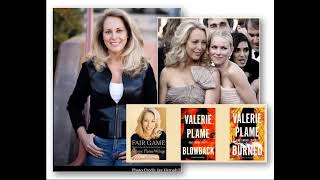
This content was created by Dr. Chris Stout. This content was uploaded by Dr. Chris Stout. This is a YouTube interview episode titled "Valerie Plame’s Modern Odyssey (and Cautionary Tale) of Speaking Truth to Power" (created 2023-10-08) featuring host Dr. Chris Stout and guest Valerie Plame. The excerpt is an English, long-form interview/conversation in which Dr. Stout and Plame discuss her CIA career and covert work, the 2003 public outing and its personal/professional consequences, her memoir Fair Game and its film adaptation, nuclear nonproliferation, the Iraq War, cybersecurity/AI/deepfakes and disinformation, gender and diversity in the intelligence community, running for Congress, and advocacy on mental health/postpartum issues. Metadata: contenttype=YOUTUBE, createdtime=2023-10-08T00:59:33Z, title as above.
Chapters
Living a life in full is a conversation you always wanted to have with that person who gave an amazing TED Talk or the author of one of your favorite books, or that inspirational Olympian you always wanted to know more about. It's graduate level conversations with those making a difference in the world and in the lives of others. This show brings you new ideas and approaches so that you can live a life in full. I'm your host, Dr. Chris Stout and I hope you enjoy this episode. This episode is brought to you by the nonprofit I founded, the center for Global Initiatives. The center is an all volunteer organization so there are no salaries and thus all tax deductible donations can go to the work. While our key country partner is in Tanzania, our work is global and generally focused in the areas of education and healthcare. We also help others to get their nonprofits started or augment others project based initiatives. It's our goal to open source humanitarian intervention and to help make it easier for others to do more good in the world. We are proud to have been ranked a great nonprofit every year since 2011 and to have achieved a Platinum level rating by Guidestar Links in this episode's show, notes will take you to published articles on our outcomes, a number of helpful tools and downloadable resources which are all free always. Please Visit us at CenterForGlobalInitiatives.org and be sure to watch our video at Patreon.com DrChrisStout to learn more. Thanks. Welcome to another episode of Living a Life in Full. I'm your host, Dr. Chris Stout. On July 6, 2003, four months after the United States invaded Iraq, former Ambassador Joseph Wilson's now historic op ed, what I Didn't Find in Africa, appeared in the New York Times. A week later, conservative pundit Robert Novak revealed in his newspaper column that Ambassador Wilson's wife, Valerie Plain, was a CIA operative. Valerie had been serving as a covert operations officer for the CIA and her occupation and identity had been a classified secretary, even from her closest family and friends. It was payback for her then husband, Ambassador Joseph Wilson, questioning the administration's primary rationale for the Iraq War. It ended her covert career and set off a political scandal that rocked the Bush Cheney White House. The public disclosure of that secret information spurred a federal investigation and led to the trial and conviction of Vice President Dick Cheney's Chief of staff, Scooter Libby, and the Wilson's civil suit against top officials in the Bush administration. Valerie had worked to protect America's national security and prevent the proliferation of weapons of mass destruction in particular nuclear weapons. All that ended with the public disclosure. During her career with the CIA, Valerie managed top secret covert programs designed to keep terrorists and rogue nation states from acquiring nuclear weapons. This involved decision making at senior levels, recruiting foreign assets, deploying resources around the world, managing multimillion dollar budgets, briefing US Policymakers, and demonstrating consistently solid judgment in a field where mistakes could prove disastrous. She was also involved in covert cyber operations and counterterrorism efforts. Today, Valerie is on the boards of Global Data Security, a cybersecurity program company that safeguards digital data streaming, and Starling Trust, a predictive behavioral analytics company that interprets and forecasts behavioral trends. She has served on the nonprofit boards of the Plowshares Fund, Global Zero, the United Way of Santa Fe County, Penn State School of International affairs, and Postpartum Support International. Valerie is affiliated with the Santa Fe Institute, the transdisciplinary scientific think tank created by two Nobel Prize winners to address the most compelling and comple problems in the world today. Valerie has lectured throughout the country and internationally on cyber security issues, national security, nuclear proliferation, women in intelligence, and the NSA revelations. She has written for many national publications including Time, Newsweek, the Daily Beast, and the Huffington Post, as well as the Guardian and O Magazine. She's appeared on the networks as well all the networks as well as cnn, msnbc, Fox, Al Jazeera, npr, and the Daily Show. Valerie is the author of the New York Times best selling memoir Fair My Life as a Spy, My Betrayal by the White House, which was released into a major motion picture of the same name starring Sean Penn and Naomi Watts. Along with Sarah Lovett, she published the well received fictional spy thrillers Blowback and Burned. She has also served as narrator and appeared as an expert in the film Countdown to Zero, a documentary on the threat of NUC war. A graduate of Penn State, Valerie also holds graduate degrees in international Relations from the London School of Economics and the College of Europe. In 2020, Valerie ran for Congress to represent New Mexico's 3rd congressional district. She is married to Joe Shepard, President of Western New Mexico University, and is the proud mother of young adult twins. Huh. So wow, Valerie, talk about living your life in full. Welcome to the show. It's great to have you on.
Thank you so much for having me. Chris.
Oh my gosh. So there's so many things. Your life is so complex and twists and turns and intrigue and whatnot. There's so many. I know and so I want to. There's a lot of territory I want to cover with you, but maybe the way to kick it off would be to start with your experience as a CIA officer in the work that you
were involved in, of course. So I started very young. It's not like I grew up thinking that I wanted to join the CIA, but I did come from a family that valued public service. My dad was an Air Force officer and served in World War II, and my brother fought in Vietnam and was wounded. My mother was a public school teacher. So when I got this opportunity, I was excited to serve my country in what seemed to be a really interesting and fascinating way, even though, trust me, I had no idea what I was getting myself into. Over time, I was sent overseas. I went through all the training, and turned out I was good at it. And I went overseas. And over time, I developed my expertise in nuclear counter proliferation, which is essentially making sure that bad guys, terrorists, black market dealers, rogue nations do not get a nuclear capability. And I love my job. I loved what I did. It felt really meaningful. And it ended abruptly in 2003 when I was outed by senior members of the Bush White House.
Wow. Well, to circle back, because I want to do a deep dive into that. But, like, was it, you know, they didn't have a table at Penn State recruiting for the CIA? I mean, and people you read in novels, spy novels, and you see in
movies, well, you'd be surprised.
Do they.
Did they quite openly? Yeah, you know, now you just go to CIA.gov, but I think they do go on campuses, as they did at Penn State.
Okay.
And that's how it started.
I'll be darn. What were you studying at the time?
As an undergrad, I was doing journalism. I did a minor in German and international relations. I think something like that. It's like a thousand years ago. I just knew. I didn't, you know, be careful what you wish for. As the old saying goes. I didn't want what was a typical life. I wanted to live and work overseas. Plan B was to look into the Peace Corps. I was accepted. I was fortunate in that it was a time when the Cold War was at its height and they were seeking, they were expanding their search for people to serve. And one, I'm female unusual. Two, I was at a state school and I was sort of the right place at the right time, and I got a job offer. Yay.
So when you went over, you said that there were certain skills or things that you had maybe some, you know, an innate ability or background in. What were those kinds of things that they liked or what kinds of, you know, activities besides the, you know, Becoming expert in nuclear issues.
Yeah, well, trust me, it wasn't the nuclear expertise. I had none, but I would say innate ability. The following. I'm curious. I'm deeply curious. I ask questions and I'm really interested in the response. And you can't fake that. I had common sense even as a young person. I won the parent lottery. I had great parents and we had traveled far and wide and my dad retired, so we were constantly flying space a or space available to Europe and other places. So early on I got the message that people live all different ways and they all seem to be doing perfectly fine, that there wasn't one way of doing something. And I think all those things added up. And I was also so young that it's probably I hadn't yet. I mean I just kind of kept my mouth shut, if you will, and paid attention. Right. I wasn't trying to be. There were a couple older guys in our group that had done military, you know, they had served in the military and they were a little arrogant, a little more, you know, I got this and I did not have that confidence, but I just paid attention.
So when you were recruited that was right out of undergrad, is that right?
Correct.
Okay, so then what did you tell people? I mean, because you, you, you were, you know, undercover, you were covert, so you kind of had to have a fake career too, or tell how did you. What was that and how did you negotiate that?
With different types of covers? On one end, it's a spectrum. On one end there's what's called official cover, where you are affiliated with the US Government, usually the State Department in an embassy overseas. And at the other end of the spectrum, you're under non official cover where you're working for, you know, like Acme Storm Door company and you have no affiliation with the government. And those are for very used for very sensitive cases, as you might understand. But the problem with that is if you get caught, you have no diplomatic protection. But so initially I was under official cover and you just live that cover and you know all your friends, when you're young, you're just starting out and you're not really, you don't really have to, you don't have to spend too much time, put it that way on cover is with your, with your friends in your group because everyone's just moving around and trying different things and you know it. But over, over time my cover changed and I be, I ultimately did some non official cover work as well.
Okay, and where do kids start to
come into this mix not until much later.
Okay.
It was very clear to me that, you know, I was immature in a lot of ways, mature in others, but I knew one thing for sure is I. I was not. I wanted children very badly, but far, far in the future. So I delayed as long as I possibly could. Of course, you need to find the right person, and I did as a. In Joe Wilson. And I didn't have my twins until I was 36, so I was well into my career.
Gotcha. Gotcha. Yeah. Because I think. And we'll circle back and talk about family and stuff, too, but I think, you know, when we first met at the Renaissance weekend, our kids kind of hung out together. So that was kind of similar to.
I'm 23. How old are yours?
My daughter's 25 and our son's 28.
So, yeah.
Yeah. Kind of. Kind of similar.
Still do that. Great program. So. Yeah.
Yeah, yeah. Well, then this may be a good segue to then kind of dig into these next phases and shift to your first book, Fair Game. It's a historic, unvarnished account of the personal and international consequences of speaking truth to power. Before we dig into it, I want to start off, Valerie, with maybe what some others have said about it. Bob Kerry, former U.S. senator and vice chairman of the Senate Select Committee on Intelligence, said, among the risks faced by men and women who volunteer to serve in our intelligence services are those which derive from American politics. This story shows us how strong the desire to serve can be and how treacherous the risks are in. In the minefields of Washington. Valerie Wilson volunteered at the height of the Cold War. She expected to be betrayed by our enemies, not us. The New York Times said Fair Game, which takes its title from Karl Rove's phrase about the legitimacy of blowing. Ms. Plain's professional camouflage, describes how intense stress wrought havoc on her marriage, not to mention her state of mind. And she powerfully evokes the disbelief, fury, and uncharacteristic terror that came from being outed. And the New York Times, or pardon me, the Los Angeles Times, said that Plame's own account of her life reveals her as a patriotic true believer in the CIA and its mission. So high praise and hear, hear. I've now read it twice. I just remember I was so shocked the first time of, like, these sections where you had that, like, had all the redactions and things in it. It was just like, oh, my gosh, this is really serious stuff. So in the context of all this and all the things that we're going to unpack for Our audience just initially, did you have any trepidation or additional fear of reprisal, like with writing this book?
Yes. And it came to pass. The reason about 10% is redacted is because that was done by the Central Intelligence Agency, something called the Publications Review Board. When you join the agency, you sign a pledge that you will never reveal classified information. And I completely uphold that. Take that as sacred, honestly. And when I wrote my book, initially, when I was drafting my book, I knew that many other CIA officers had written about their experiences without any reprisals, but that wasn't to be my experience. They, they clearly saw my book as a threat. And it, it took extraordinarily long. They redacted. They kept saying, well, why don't you do a fictional book? I'm like, have you heard of a memoir? You know, kind of chuckle worthy now. At the time, it just felt existential.
Yeah.
And I ended up, much to my horror, suing the CIA on first Amendment grounds because I was not revealing classified information. I just wanted to tell my story. But naturally, you know, national security always trumps anything. And it was so. It was just a really horrible, painful process. And finally, you know, it was released. My publisher at Simon and Schuster came up with a great idea of hiring an investigative journalist to kind of fill in the blanks. And we, of course, had no contact before. I had no idea what she wrote before the book came out. By and large, she was correct. There were some things that were wrong, but she filled in the blanks and they put that as an afterword. So it was just such a sense of betrayal all over again because I received so little, like, no. So I received no support from the agency in terms of this crazy political maelstrom that I found myself in the middle of through no making of my own.
Yeah. It seemed, I mean, just to hear this story and to know your story in the book, that it's such a meta aspect of it. I mean, there was sort of all this political involvement in. And not to get. I mean, people know the news people know what happened in history, but all the Iraqi kinds of stuff and all the subterfuge around trying to put up these straw men to create, you know, an event that really didn't necessarily, you know, fit what the facts were. Excuse me. And then to be able to go through this process and like, here we go again, you know, it's, it's. We're going to make up, you know, revisionist history about these things or trying to keep, you know, the truth away from the Light of day. So I think my supposition is I don't know you as your career as an operative, but that probably took a lot of bravery and courage. And now knowing you after all this and seeing what you've had to go through and what we'll talk about, I mean, it just emphasizes that, the kind of courage that you had to do that and then do it again, do it in covert operations with lots of danger and then to do it in such a public forum, the yin to the yang, but still within the, the aspect of your courage. So can you walk us through for people that haven't necessarily, you know, read the book yet or seen the movie, can you walk us through that experience of what it was like for you personally and professionally, like sharing, you know, with your, your parents and with your friends, of saying, well, this is, you know, what's in the papers. Actually, part of it is true, you know, that I was with the CIA. What was. Step us through that, Valerie,
to back up just a step or two, what happened was on July 7, 2003, Joe Wilson, Ambassador Joe Wilson, my husband, wrote an op ed piece in the New York Times what I did not find in Africa. And he went after the central premise the Bush administration had given for the war in Iraq, which was an imminent nuclear threat. And Joe wrote in a very sober way, you know, look, I know that's not true because the year before he had been sent by the Vice President's office to investigate these reports of yellow key uranium, which is used to be enriched for a nuclear explosion. Highly enriched uranium to that 500 tons was being transported from Niger, a West African country, to Iraq. And if that had been true, that would have been really significant. It would have indicated that Saddam Hussein was seeking to reconstitute his nuclear program. However, it wasn't true. Joe came back from that trip, which I did not send him on, which was one of the lies perpetrated by the right. But he said, no, that's not true and here's why. And so he thought the year before he had put that to bed. But here it came out. When President Bush gave his State of the Union address In January of 2003, he talked about significant quantities of uranium from Africa. It was totally bogus. And Joe wrote this in his op ed piece very sober. And it just happened that it came out, it was published at a time when the war was going badly, although compact operations had ended. One, no WMD was found. Two, the insurgency was really gaining traction. And I think the White House felt particularly Vulnerable. And they were back footed by having a very credible former ambassador call them out in a very public forum. So they quickly pivoted and they're very good at this. Karl Rove and his likes of making the story about Ambassador Wilson and Valerie plain that we were traitors and liars. And you know, we had set this up. I mean it was just complete and utter nonsense. Except we of course know that disinformation repeated enough is believed. And it launched this years long investigation into the leak of my name because despite what they said, I was covert. My true status was known to truly a handful of people outside of the agency. And when what happened? So he wrote this piece on July 7th. A week later, Robert Novak, who is gone now, wrote a column saying, yeah, Joe Wilson went to Africa and by the way, his wife works for the CIA. And when Joe came into the bedroom early that morning, July 14th with the Washington Post in Novak's column, he tossed the paper on the bed and he said, well, the SOB did it. We had inklings that this was going to be written. And you know, you just know in an instant that your life has changed in. And I, I was thinking first about my twins, three year old twins that were sleeping in the room next door or you know, next to our room.
Right.
I was thinking about all the assets that trusted me to keep them safe. You just, your whole world collapses on you. Especially when you spend your entire career up to that point making sure that your cover is secure and airtight and there no problems prior to that was absolutely devastating. And it became over the next weeks and months and years something I liken to Alice's rabbit hole where all down and black is white and white is black and it just makes no sense. You know, they're on the media, they're talking about these people, Joe Wilson and Valerie Plame, that actually have nothing to do with us. And it was such a disorienting and painful period. Every time Joe would go out or publicly to push back against these terrible charges of traitor and you know, he's called a showboat and undermined further his career. At this point he had retired from the Foreign service and he was doing consulting and that was destroyed. My career as a covert operations officer was destroyed and it was just an extraordinarily painful period.
Wow. Gosh. Well, again, I just tip my hat to the courage and the grit that you had to go through that with your relationship with your families because I'm sure, you know, those had all kinds of weird twists and issues of, you know, Trust and whatnot. So just I had for a number of years. I actually also worked in the area of counterterrorism and did some writing and presenting and whatnot and some consulting myself. And I came across at a conference, the Madrid 11 conference, some years ago after the bombings there. And I had a conversation with Jessica Stern. I don't know if you know her, but she served as an advisor. She kind of her job, I don't know if it still is the case, but she was like sort of in charge of keeping track of where a lot of nuclear material winds up and a lot of it, you know, from appropriate purposes like medical uses with nuclear medicine and things and other stuff. But she, because of that expertise, she was served as an advisor and a bit of a model for the Nicole Kidman character in the movie Peacemaker. So. Which is all kind of interesting. We had fun conversations about that. But then for you, when your book became the basis for a major motion picture, it was then actually you being portrayed and was it like again, this Alice in Wonderland thing saying like, well, here's this person on the screen, but gosh, that's actually me. Or what was that process like to work with them and then to actually see the movie come out?
So bizarre. It's an out of body experience. You know, I never wanted to be a public person and I'm. I just. On one hand I was happy to get the story out. On the other hand, it was just sort of mortifying to be so public. And fortunately, the film is not silly or foolish. Yeah, I think it's a good film. It tells the essential truth of what happened. And I. We worked with the writers closely, Jez and John Henry Butterworth, and it was just a. It was fun, but it was also. Just felt it was disorienting. Is the best way to.
Yeah, well, to move from covert operations to the major motion picture screen. Valerie. I mean, talk about being a private person to not being a private person. That's about a hundred and eighty as you can get.
I know.
Gosh. Yeah, well. And so also in the book, you discuss the Iraq war and the controversy surrounding it and stuff. So now that there's been this time and looking back and all the things that have happened, do you have any particular reflections about that period and the consequences that have sort of led to where the world is today?
Yeah, it's hard to believe this year is the 20th anniversary of our invasion of Iraq. I think America still has yet to come to terms with what that meant. Think about, you know, the days and weeks and months after 9 11, the world was with us. And we so squandered that trust and goodwill with our global war on terror and Abu Ghraib and Guantanamo. And in fact, I think what happened to Joe and me in many ways was a foreshadowing of where we see full blown disinformation now. And it was certainly, it wasn't the beginning, but certainly accelerated an erosion in trust of the American people toward their government and institutions at large because they were frickin lied to.
Yeah, yeah.
And there still has not been a proper accounting for those that led us into war under jingoistic ideological banner that made no sense. Joe was in the run up to the war, was very vocal, very public about saying, you know, Saddam Hussein is a bad guy, but you don't know the Pandora's box that you're going to open up.
Right.
And sure enough, and we are still. It wasn't. Yeah, I was surprised like everyone else to a certain extent with the rise of ISIS in 2013, 14, 12, 13 14. But you can follow the dots. I mean, it's not hard. And so it's deep sadness where we are in our country today, our lack of standing and you know, the thousands of servicemen and women who lost their lives in that war, in that conquest, not to mention hundreds of thousands of Iraqis and probably millions of displaced Iraqis and where's Iraq today? So, yeah, that's a whole other conversation.
Yeah, yeah. So with where we are today, what's in your opinion, what do you see as the biggest threats to the United States in terms of national security?
Well, my go to is always the nuclear threat, because that's something I worked on passionately for years. And of course with Russia's February 2022 invasion of Ukraine, that has just jumped Putin has rattled that nuclear sword. But in addition to that, and I think in many ways just as fear, it's perhaps not existential, but it is just as fearsome in many ways is the wash of disinformation that Americans and how deeply it's divided our country. There's no doubt that the Russians interfered in the 2016 and 2020 election and they continue to do so. And for reasons that make my head spin around, Republicans have embraced Putin as somehow the victim in the Ukraine invasion. It, it's crazy for those of us that grew up in the Cold War that the Republicans should be the one saying, oh, you know, he's not such a bad guy after all.
I know our sort of sworn enemy is now,
so I'm what bothers me so much is, as I mentioned, the erosion in public trust and the extremists that have filtered into, have been elected to Congress. The lack of respect and the name calling. Politics has always been ugly in a blood sport, but it is worse now than ever, of course, amplified by social media. And that undermines our democracy and the things that we hold dear. We are reminded every day how we're different from them and them and them, rather than the things that hold us together.
Well, and I think too, does this overlap with some of your expertise and experience then with cyber security kinds of things? Because I'm certainly, this is well out of my depth with any of these things other than just what I might, you know, read in the Wall Street Journal or someplace online and whatnot. But that's a semi trusted source, I guess. But it seems like, you know, that there are just like billions of bots, you know, tweeting and whatnot, you know, during the Trump administration and you know, all these other kinds of fake news things. I just recently saw one. I mean I've so, I don't know, distrusting or skeptical or paranoid. I got a, a company I used to work for, I have a trigger on Google. Like if something gets mentioned and Google sees it, I get a little alert in my Gmail. So I got one, I thought, oh, this is interesting. It seemed kind of, just kind of quirky with getting it. And I looked, I opened it up, I read it and it was like from the, oh gosh, what was it? The current current county register, I think. And it, I'd never heard of the current county Register. And I read this thing and it was about my, like the founding of a company I used to work at. And it had some facts straight and some facts wrong. And I thought this was written by an AI. And then I, so I go down to the bottom. So I open up the thing on the site and I go down to the bottom where usually would see things like contact us or about us or editorial, you know, whatever's philosophy or whatever. There is nothing like that. And then I googled the name of the registry and couldn't find anything on it. And I thought, oh my gosh, this is something. I thought, I don't know why in the world someone would, you know, churn out something for a company that's been around for like, you know, 30, 40 years and kind of write, you know, it wasn't like bolstering it or you know, trying to up its stock or anything, but it was just sort of this odd little. I thought there's some been little AI Hicc. So what, what do you feel in the sense of, you know, like ChatGPT and AIs are quite the, you know, the vogue today in terms of interest. But then also circling that back to bots and cybersecurity and social media exploitation by, you know, whatever, troll farms and things like that. What's your thinking about that today?
Oh, I, of course, it's quite the in vogue thing to. We don't know what we've opened up and what we've started. In fact, I'm working on a project now about intelligence and AI. And when you, for instance, you look at what deep fakes can do. Holy moly.
Yeah.
Who hasn't seen Tom Cruise?
Yeah.
Play the guitar and sing Spanish, you know, oh my God. And imagine, I mean, that's mildly entertaining, but imagine if you have leaders in deep fakes saying things that are truly disruptive and cost lives. We know of course from Facebook in Myanmar, it led to genocidal action. But so this is. Yeah, it's a thing and it's real. And we are the United States. We're still very slow off the mark in figuring it out. But it also. Congress has completely abdicated their responsibility in trying to get their arms around tech because. Well, for many reasons. One being the average age in the Senate is, you know, they don't use social media, they have young staffers to do. They don't understand it. So it. We've got to get smarter on this.
Yeah. So in the context of that, do you have an opinion about what you see as maybe the most significant challenges that are faced by intelligence agencies these days with all these kinds of, you know, nuclear with deep fakes, with AI?
Oh, yeah. It's just become so much harder.
Yeah, yeah.
So much harder.
It is. Are we doing a good job with it? I mean, I know all these kinds of things by definition are, you know, private and covert, but from any of the sources, you've got your thumb on the pulse and a tremendous network from what you do with your conference of experts and people in these areas. But, you know, is there anything that's publicly available to know that, you know. Well, we do have like, you know, the good news and bad news. Like with nsa, you know, you can be frickin terrified of the NSA and you can be, you know, kind of sleep well at night thinking that, you know, they're really monitoring everything that's possible. So, you know, where's the sweet spot with that of privacy rights versus you know, security and homeland security.
That's right. And in fact, one of my speakers is tackling this. It's an entirely different intelligence battlefield now with AI, and it's all encompassing. And I know that my former colleagues are smart and these are true public servants, but it is a massive undertaking to try to get your arms around it and make sure that national security prevails. I don't mean to. I mean, I know that's sort of a general answer, but they're just working frantically at this. I know that, but it's, you know, that is good, but has not helped. Those efforts are not being aided or supported by divided Congress.
Yeah, yeah. Well, circling back to you, and you're working at the CIA and the recruiting at CIA, one of the things you said was, you know, being, excuse me, a woman at the time, and things were, you know, a benefit probably to getting recruited. Do you have any opinions about role. The roles of what role gender diversity plays in the intelligence community beyond maybe the stereotypes?
Yeah, yeah. You know, the agency has tried very, and I think in a serious way to bring in more diversity into their workforce, but old habits do die hard and women are still underrepresented. And you can point out, oh, but we had Gina Haspel as head of the CIA under Trump. But it is not pervasive. And it's my experience of being a woman in truly a man's world. It was. It's. You don't even know. I mean, they're, they're smart. These are savvy people. And it's an, to use the phrase unconscious bias, you don't even know you're up at bat. And, you know, many of the good cases and the promotions go to men, people who look and remind older, you know, those in power of themselves when they were young.
Right.
And so, yes, it will just. The agency is like any other large organization, a law firm or corporate America. Women, you know, as the great saying, Ginger Rogers dance as well as Fred, except backward and in high heels. That's still the same.
That's great. Oh, that's good. Well, do you think there's been. I mean, I know you're out of that, that world per se, directly, but do you feel like there's been any improvements or change? Not necessarily just with gender. I mean, gender's fine, but like in other ways of, of being more. I don't know what. Being, being better, having less. Less. You know, the kinds of things that you wrote about in your book of what your experience is like, or is it more. You Know, really, the. I don't know. Is it. I almost. I'll tell you, this is not a very articulate way to put it, but it almost feels to me in a stereotypic kind of way of an entity, more so like the KGB or something. More like, you know, in my bias of maybe the old Soviet, you know, kind of, you know, do as we say, take your orders, something goes sideways, you know, we don't know who, you know, we're. We're not going to support you. We're not going to have your back. We're not, you know, we. We never were your wingman, we're not going to start now kind of a thing. Do you think any of that stuff has changed? I don't know that you'd even have visibility to it?
In some cases, yes. There's still a long ways to go. I was watching last night, I finally got around to watching the first couple episodes of the Diplomat with Keri Russell.
Oh, yeah. Yeah.
Which is a good show. And there, the CoS. London is an Asian female and she's tough as nails and, you know, but, you know, movies. I love it when movies show, like, a black female president. It's like, oh, look, we know it's a movie. It must be set in the future.
Right. Where's the laser beams and flying cars?
Right. I mean, it's just. That's. Yeah. How it is.
Yeah. Gotcha. Okay, well, there's maybe some aspirational areas for the new recruits that come in. That's good. Okay, gotcha. Are there. So let's. Let's flip that question around. So are there any misconceptions from, like, the stereotypes of what people read about and see in the movies and stuff, or myths about the intelligence community that. That you can address or clarify?
No question. A big one, of course, is using sexuality to. Using sexuality, using sex to recruit a source. That doesn't happen. It doesn't happen. Another one is using guns, which, you know, who doesn't love a Jason Bourne movie? Right. So, fine. But I mean, this idea of being the lone wolf is false because it always takes a team. Always. And, you know, you just don't do operations on your own. It's impossible. And furthermore, you never collect intelligence with a gun in the room. Hello. So, you know, it makes great tv. And I loved Homeland like everyone else, but if you notice how Carrie Matheson was bipolar and slept indiscriminately, people that she probably should not have. Yeah. You know, there's a difference between great TV and how intelligence really operates Gotcha.
Okay, good. That's that. I kind of thought so. But that's good. To no contemporary Mata Haris or anything like that, so that's good. Well, maybe circle back. I'm gonna bounce around all over the place like I have been for this conversation so far. But back in the day, Alan Cranston had something called Abolition 2000. And I was involved with that in the late 90s and it sort of, I mean, just as I was doing research for you or on you and on your background, it just sort of harkened back to those times and it just, to me it sort of felt like, you know, we share a common thread of, you know, advocates for non proliferation and disarmament. But, but where are we in 2023 versus abolition 2000? I mean, we, you know, poor, you know, Alan didn't realize that that was a very, you know, moonshot kind of project, let's call it. But how do we compare? How's the dial?
Well, I'm afraid we've gone backwards. A lot of the guardrails that were put into place during the Cold War and subsequently have been removed. The new START treaty, gone. Of course, we unilaterally withdrew under Trump from the Iran nuclear deal, which was working very well until we left. And it just, there's, it just is so painful for those of us who have been in this field for years to see, you know, there's no joy in saying I told you so. You really need to pay attention. Yeah. And so we. There's so much work to be done. There's two existential threats, the nuclear threat and climate change. And you're woefully behind in both of them. And they're both man made and the United States needs, I would love to see the United States provide that much needed leadership worldwide to move forward on these in ways that benefit everyone.
Yeah, My son and I saw Oppenheimer. Have you had a chance to see it yet?
I have not. Shamefully, no.
No, no. It's a long movie, It's a commitment.
No small rural town. It's not here.
Yeah, well, I had to go drive to see it. So I hear you, I feel your pain, but just no spoilers for people. But one of the things that, you know, kind of just. And I did not, I was no Oppenheimer historian or expert or anything, but sort of the message of the movie, which I presume has a certain degree of truth to it, is that there is this thought that this is going to be so horrible and it's going to be so devastating, which it was, and on both counts, horrible and devastating that no one would ever, you know, want to do this again. And by the, you know, towards the end of the movie, he has interactions with the President and, you know, the president's just sort of, you know, downs, you know, says him that, you know, tells him that. I forget the exact wording, but it's something along the lines. Oppenheimer's feeling guilt, existential guilt about this, you know, creating this bomb, being the role that he played. And the President says, well, you know, you didn't drop the bomb, I did. And, you know, sort of has this prideful thing and sees, you know, Oppenheimer as weak and, you know, and then Oppenheimer's attempt to be anti proliferation and anti nuclear weapons kind of a thing just, you know, then became, you know, sort of his Waterloo too, of being, you know, losing his security clearance and things along those lines. I mean, it's just like, you know, here we go. Here we go again.
Tragic.
Yeah.
I read American Prometheus, which. That's the story Chris Nolan, the director based the book on, I thought years ago, I thought that was great. Of course, I lived in Santa Fe for many years and Los Alamos was up the road. So that's a big part of our history. And it just is a tragic tale. And it seems we've learned so little from. But once the genie is out of the bottle, so to speak, that's it. Getting that back in has been. Or putting fencing around it.
Yeah, well. And so with these kinds of things and with your advocacy three years ago, as I mentioned in the intro, you ran for Congress. And I have to say, Valerie, I loved your promo videos. They were just awesome. I'm going to put them in the show notes because I want people to see them. They're so awesome. So was it the advocacy bug that spurred you to run or what was it like to campaign? Tell us about that.
It's simple. I truly wanted to serve my country again because that one pathway had been closed. And I thought I would be good at the job. And I ran, and I'm glad I did. Maybe itch I needed to scratch, but at the same time, I'm glad in a way I didn't win because it is such a circus.
Oh, gosh.
And the aspect of having to raise money the day you get into office constantly is so distasteful to me. I mean, I know that's what you have to do, but I just find it. Ugh, you know, I'm not That person. I love policy and I love connecting with people. I don't love asking for money, and that's a big part of it.
Yeah. Gotcha. Well, I understand, but I'm glad the videos are still up on YouTube. So they're. They're just.
That was. They were fun to make, I gotta say.
I bet, I bet. So just kind of bouncing around again. So I talked about how, you know, we first met at the Ambassador Later's and his wife's Renaissance weekends and our kids hung out together. Kind of related to that sort of a thing. You've also been a vocal supporter and advocate around mental health issues, which my wife and I, as psychologists, very much appreciate and respect that. And in particular, you've also had a focus on postpartum depression. Can you share more about that?
Yeah, happily. I experienced pretty severe postpartum depression after the birth of my twins in 2000. And honestly, for some months I had no idea. I couldn't even put a name to it. I didn't know it was happening at that time. Few pregnancy books spoke about it. I mean, they talked about the blues, you know, the post pregnancy blues, but it didn't describe what. I did not have a psychotic break, but it was. I was. It had me on my knees. It was just so, so all encompassing.
Gosh.
And I. And despite the fact I had two beautiful, healthy children. And so as a result of that, I finally did get help and I pulled out of it. But I turned around and wanted to help others. And it's something I care about deeply. It's a little better now, I think people. It's a constant battle to fight the stigma of mental health issues. And the thing is, with postpartum depression, it's something that's easy to diagnose and relatively easy to treat. And so all this pain could be, a lot of pain could be avoided. So we're a little better, but there's still so much work to be done.
Yeah, well, I respect your advocacy around that and, you know, pushing back against the stigma. I've had conversations with a variety of folks that, like back in the day, for about 12 years, I would go out to Washington D.C. and we'd kind of stump the hill for the American Psychological association around parody issues with mental illness and insurance coverage and patient rights and all sorts of things along those lines. And I sort of a little tongue in cheek, but with great deal of irony, said that one of the best things, I think, to destigmatize mental illness was Covid that people had this much More open awareness of it. I mean, I saw an uptick in my professional life around services being, you know, needed and a paucity of therapists to be able to fill hours and you know, now that we could do things with telehealth and other kinds of ways to provide those services. So, you know, I just, I think we, but it's, you know, it's not one and done. I mean it's one of these things where you still have to kind of, you know, keep out there, keep the efforts up. And again, I just, I applaud you for what you've been able to do with that and bring that awareness to people and help fight back that stigma. So brava.
So yeah, I'm, I would just add to that that during the pandemic, during lockdown periods, telehealth became much more accessible nationwide, thank goodness. And I think most mental health professionals have found that that option is truly a lifesaver in some cases and that their patients are much more likely to keep their appointments and keep up with it when they're not faced with maybe transportation issues or you know, what, whatever, it might be right to keep them from their, from their doctors.
Yeah, and that's a really good point. I mean just the practical aspects, not even the, I mean, stigma's an issue. But then in addition to that it can be, well, I got to get a babysitter. How am I going to get a babysitter? That's going to be more cost, I can't afford my copay, I haven't met my deductible or I can't find parking, or when I drive downtown, it's a 45 minute drive each way and it's 20 bucks to park. You know, all those things became not issues, you know. So I think, you know, those kinds of things are terrific. I will tell you, I don't know that this necessarily show up on your radar, but it has on mine that a lot of the big insurers that would all be kind of household name brands gave kind of a, they used to have a lesser. There's, when you go see any kind of healthcare provider, they bill by virtue of what's called a CPT code and regular office visits had a, let's call it $150 office visit. But if you did it telehealth, it might be $75 to the clinician. So there's always this kind of disincentive to do that. So a number of the insurers bumped it up and made it equal, you know, Just because, you know, we're not looking at each other, you know, in the same airspace. We're still looking at each other. It's not over the telephone or whatever. And now there's now this pullback, you know, the insurer, some of the insurers are saying, you know, well, now, you know, I think that it's passed. And, you know, they're just. And it's again, now becomes another advocacy issue. We've got to let people know to say, hey, this just isn't right. It worked. It was helpful. Just because you guys don't want to pay, you know, the same price for something that you used to give a discount for, you know, isn't, you know, equitable to the people that need it, nor the people that provide that care. So that's. That's it for my editorial today, Valerie.
So now I sign up completely.
So all the stuff we've been talking about, in addition to all this, you are the author, with Sarah Lovett, of two spy novels, Blowback and Burned. And they focus on this kind of a cat and mouse. And this is going to be a real surprise for folks. Probably a female covert CIA operative and a terrorist arms dealer. Tell us about how this came about. And I'm just a real writing nerd. So what's your writing process and what was it like to put those novels together?
I wanted. The Agency kept encouraging me write fiction so you can write a lot more in fiction. I did. That is not. It will pass muster with the Agency because it's fictionalized. I enjoyed it. My publisher teamed me, teamed me up with Sarah because she was a thriller writer and she understood about pacing. And so that was very helpful. And I'm woefully behind. I've been meaning to write the third in this trilogy of Vanessa Pearson, and I failed to do so, but I'm trying to just make the space and the time to do that. I. All this, everything in those two books about the Agency and places and relationships and people all come from real life and infused with my experiences with the nuclear.
That is very cool. Yeah.
So it was fun. I. I had fun doing it, but it takes a lot of discipline and. Yeah, yeah.
Well, it's the classic write what you know. And I suspect with those novels, it's sort of like there's just as much to read between the lines as it is what the lines are. So that's very cool. You got to get those optioned into movies and stuff, too. That would be.
Oh, I. I've tried. I've tried Maybe happen one day, but not yet.
Yeah, keep at it, because those I. That would be such fun. So. And then we've kind of made mention of this as well, too, and some of the experts. But I certainly want to. To make this called out. You've got an upcoming annual conference. It's in Santa Fe. Tell us about it. What's going on? Who comes as attendees, who comes as presenters, and what's it all about?
Yeah. So it's called Spies, Lies, and Nukes. This will be our third enhanced running. We did it first in Santa Fe, moved to Tucson last year back in Santa Fe, which feels really good because, of course, a lot of espionage went on in Santa Fe. Los Alamos is up the road. It is open to the general public. It will be three days, November 10th, 11th and 12th. I've invited my former colleagues. I know them all. I call them my friends. And I'm really proud of our speakers. They are truly heroes. They have really walked the walk. And we will be talking about all sorts of national security espionage topics, from how do you recruit a spy? From one of the agency's best recruiters to Chinese spy balloons. What's going on in Putin's head disguises? We're getting a talk from John Mendez. It was her husband. Well, she and her husband wrote the book Argo that. Yeah.
Ben Affleck. Yeah, yeah, yeah.
So I want it to be educational. I want it to be entertaining. I want it to be an experience. And we're setting that up. And for any of your listeners that might be interested, they can go to spiesliesnukes.com and buy tickets there. We're holding it at La Fonda Hotel, which is right on the plaza in Santa Fe. Beautiful hotel, so lovely surroundings. Plus, you know, Santa Fe is always great to visit.
Oh, for sure.
And it will be, I think, a really fascinating conference. I'm more excited than ever for this year. And it's intimate enough, you know, I'm not looking to do Comic Con for spying. I want it to be intimate so that the audience can really interact and talk to the speakers. And I think we've made that happen. So I invite all your listeners to check out our website and buy your tickets.
Excellent. Good. I'll make sure that that's in the show notes, too. So if people are not in a place to. If they missed that, just check out the show notes. It'll be there, too. So as we wind down, looking back on your career, is there any advice you would give to aspiring intelligence professionals or people that are interested in public service or serving for their country.
Yes, please consider it. We need smart, fresh blood to come in and serve their country, whether it's a CIA or in other. Of course you can serve in many different ways, but I loved my career and the people that I met were some of the best of the highest standards of integrity and smart. And you feel that not every day, but every so often you feel like you're doing something that is really worthwhile and you are serving a cause that is bigger than yourself. And your listeners can go to CIA.gov and check out all the different areas where they can work. And as far as advice, I would just say at least investigate it. Think about it. A couple years ago I was speaking to a class at the Wharton School at University of Pennsylvania and I asked for a show of hands of who was considering going into public service. And out of a class, I don't know, maybe it was 70 hands went up. You're not going to get rich, that's true. But you do have stability and there's other things that make up for the fact that you're not going into a hedge fund.
Yeah, well put, well put. Well, Valerie, this has been such a great conversation. We've sure covered a lot of territory like I knew we would. But is there anything that we haven't covered that we should that you want to add here as we wrap up?
Oh, well, we have covered the landscape and I'm so appreciative of your questions, which were thoughtful. I don't look back often. I look forward. But it has been an interesting journey, that's for sure. I don't know what's coming next. I always have some projects going and the whole field of nuclear counter proliferation is desperate for people that can articulate it and organize and get people to think about what this means. I know it seems overwhelming and intimidating, like what can I do? There are ways you can be involved. And so I would encourage your readers to at least consider that if they're in a. A point in their life where they want to try something else.
Good. Okay. That's very good advice. So what are some of the best ways for listeners to get your books, your fiction and nonfiction? We've got the conference, put that in the show notes and actually to learn more about you and your work.
Well, thank you. You can find my books on Amazon, of course, but also through independent bookstores, which I always advocate for.
Here, here. Yes.
I have a website, valerieplame.com where you can find all, all things. I've, I've written and books and some videos, things I'm involved in and I care about. And then the conference is@spiesliesnukes.com Great.
Okay, those will all be in the show notes folks. So. Oh Valerie, I've just been so looking forward to this. This did not disappoint. Thanks so much for making the time to reconnect and catch up on things and do it in a public way. This way has been and fun and to discuss your life and work. You certainly have lived and continue to live your life in full and it's just been a treat and long overdue.
Well, thank you. It took some doing to schedule this, but I'm so glad it finally happened.
Yeah, me too.
I appreciate your patience and thank you so much for your generosity of time.
No worries. Take care.
Thank you.
Bye bye.
Bye bye.
Living a Life in Full is a production of Stout Media, a subsidiary of Gordian Knot, LLC. Assistant Producer Gracie Wong Music Dan O' Brien Executive Producer and Host, Dr. Chris Stout to learn more, stop by our website at Life in Full for show notes and please recommend this to your friends and subscribe on your favorite platform. And as for the obligatory disclaimer, this podcast is for general information uses only and does not constitute the practice of psychology, medicine, nutrition or other professional health care services, including the giving of medical or psychological advice. No doctor patient relationship is formed. Lastly, and perhaps most importantly, I take conflicts of interest seriously. For all of my disclosures as well as show notes notes, please see livingalifeinfull.org podcast and my LinkedIn profile. Thanks and until next time.
More from Dr.

2025 Mercedes-Benz CLE 450 4Matic Cabrio – Owner’s Views After a Year-and-a-Half as a Daily Driver

The Complete Guide to a Successful Everest Base Camp Trek – Post-Trek Debrief

The Complete Guide to a Successful EBC Trek – Post-Trek Debrief: What I Needed (and What I Didn’t)

What Went Wrong Customizing My New 2026 Porsche Carrera T …and what I did about it!

Coming May 1 At the Intersection of High Performance and Fulfillment: A Conversation with Alisa Cohn

From High Performance to Fulfillment: Lessons in Inner Mastery with Jim Murphy

Coming March 19: From High Performance to Fulfillment: Lessons in Inner Mastery with Jim Murphy

The New Humanitarians Volumes I - III:- Inspiration, Innovation, and Blueprints for Visionaries

The New Humanitarians Volumes I - III:- Inspiration, Innovation, and Blueprints for Visionaries

The New Humanitarians Vol I - III: Inspiration, Innovation, and Blueprints for Visionaries - Forward
