I Chose Fat Transfer Instead of Implants. Here's Why
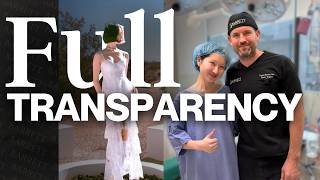
A creator documents her fat transfer breast surgery with Dr. Barrett in Beverly Hills, explaining why she chose it over implants. She injected about 300 cc per breast at a cost of $10,000 to $24,000, expecting 20 to 50 percent reabsorption, and details her three-hour surgery, recovery protocol with red-light therapy and lymphatic massage, and potential complications like fat necrosis.
Chapters
I got a natural fat transfer to the breast and vlogged the whole damn thing. The good, bad, very ugly, pre and post-op, what I wish I had done differently, so maybe one of you won't go through the same mistake but still get the most natural looking results if you choose to get a fat transfer. Will the fat dissolve over time? How many cc's? Did it hurt to walk after? Now, was it a waste of money? To be honest, I am really scared to make a video so personal, but when I was researching the whole web, I realized because the results look so natural, most people who get it done never tell anyone. So most people don't know that you can move fat from anywhere in your body to your boobs or have a realistic expectation of the results, side effects, how to recover so you don't lose the fat or have lumps forming, aka fat necrosis. Yes, it is my own fat, but I don't want to pretend that I got puberty 3.0. And hopefully I can help at least one person trying to learn about the real raw experience. This video will be about my personal experience, not about whether if you should or should not get a natural fat transfer to the breast. In fact, more than likely most of you will learn that it might not be for you. We will get through your questions from Instagram, who is it not for, my full story, cost, my mistakes you do not want to repeat. You are welcome. My personal secrets to have the fastest recovery, aka weird hacks from my personal experimentation that no one shared on the internet. To tackle the most surprising things, how to not lose the results. I'll leave all resources including a private playlist I gathered during my research in the description for you. All the essential supplements, healing, and deswelling things I tested and found useful. Don't want to gatekeep my surgeon either. Dr. Barrett in Beverly Hills. I will get to how I research him later. And for the actual pre- and post-surgery vlog, I'll be sharing them in surgery diaries on my Instagram and a new secret channel, which I don't even know how some of you found. It is called Dear Unlimited, where I share my video diaries on girlhood and glow up, whereas this channel will be mainly dedicated to internal and intellectual glow up. First, what is a natural fat transfer to the breast? This is a procedure where no implant is involved. You move fat from donor sites of your choice to the breast, which means it's two procedures in one. A, the taking of the fat and treatment of it to make it safe to be transferred to the breast. B, fat injection. Purified fat cells are injected into the breast to add volume and improve shape. Some of you are very sweet and said you would have donated fat to me, but unfortunately the body only accepts its own fat. And some of you want the reverse, you want to take fat out of your breast. We'll get to that later. So this sounds a bit too good to be true, right? First, natural results, you use your own fat, the breasts look and feel natural. Second, you don't need to switch out the implant every 10 years or put silicone in your body. That's like 5 to 6 pounds on my chest. Third, for the people who wish to lose stubborn fat, the donor site will lose fat cells Fourth, minimal scars. The incisions are very small and the scars will be barely visible, with scars that fade. I'll get in details later of where and why I had my donor sites and how much was put into each breast. But first, who is it not for? If you want Kylie Jenner boobs, don't do it. If you want to go from A to D, don't do it. A surgeon who knows what they're doing will not recommend too big of an injection, which can lead to fat cells dying. Very important. If you are not okay with half or 1 cup change, don't waste your money on a natural fat transfer. If you want a very specific shape, don't do it. Why? Because fat is not implant. There is no shape guarantee. If you have a family history of breast cancer, please consult the experts. Will the fat dissolve over time and the girls will go back to their size before the enhancement? Maybe. I'll talk about how to prevent that in the end. But if you're not okay with 20 to 50% of the fat being reabsorbed, don't do it. If you are way over a healthy weight and body fat percentage, don't do it. Because post-surgery, to keep the fat alive, at least for me, I intentionally gain weight by eating 2,000 to 4,000 calories a day. I'm going to eat a bunch of meat. This entire table is my breakfast. My grandma straight up told me, "You got fat." I agree, and so be it. I'm making sure enough nutrients go to my precious transferred fat so they survive. Don't do this if you're not okay with gaining fat. If you don't have a lot of fat, you might still be able to do it. I'll get to that in a bit. Up till a month before surgery, I did an InBody scan. Granted, InBody scans are not very accurate, but it did show 14% body fat. Last and most importantly, if your state of mind is you need the surgery to change your body to look a certain way. Please do not do it. Surgeries all have risks. There are ways to mitigate the risks that I'll discuss, but nevertheless, there is a very high chance you will not look exactly how you wish, and you need to be okay with that. My mindset going into this was, even if the fat all got metabolized, even if this was a waste of my time and money, I accept it. Anything is a nice bonus to me, not a need. Of course I'll make sure I find the best surgeon. Of course I'll optimize for recovery to ensure the surgeon's efforts are not wasted, but I surrendered fully to the outcomes outside of my control. Which brings us to my full story. How did you prepare yourself mentally before the surgery? Was it a hard decision? Why did you opt for natural fat transfer rather than the more traditional implants? What size did you start out with and hope to achieve? As the vice president of the Flat Chested Club, I always thought a full A would be nice. I've shared on this channel many times how ever since I was 14 or 15, I just felt puberty completely miss me. I gain fat anywhere in my body except my boobs. And yes, I can grow a glute in the gym, but I could not grow any testicles through training. I think about getting a breast augmentation maybe once every year, but then back off because although they look great, I personally don't want any foreign objects in my body or replace the silicone every 10 years or have really heavy chest that will make physical activity hard. When I found out you can move your own fat to your boobs, I did some deep research only to hear stories of how some people got lumps or cysts, which made me kill. The idea. How high or low are the risks of developing fat cysts after the transfer? Is it safe to get a fat transfer? The answer is it depends on the surgeon. When I found Dr. Barrett through research, I had a little glimmer of hope. A, he specializes in all things breast. B, because natural fat transfer to the breast is still a relatively new procedure, plus it's a bit gatekept and more expensive. Naturally, way less people get a natural fat transfer versus an implant. So very few surgeons have a lot of experience doing it, but Dr. Pereira does. The volume of cases speak for themselves. But there still lies one problem. What about potential lumps and cysts, which is highly dependent on the surgeon's technique? It makes a huge difference. Small tangent, people usually leak blood or fluid from their incisions after. Even though it is normal, I did not have any of that with my surgeon. So this is the crazy part. I later discovered he helped more than one of my friends with their breast procedures, fat transfer, explant, reduction. I don't think she'd mind me sharing. I saw Kristin Dominique's vlog from 7 years ago getting her implants out by Dr. Barrett. Then, because the breast will be hollow, she also did a natural fat transfer to the breast. Before this, I didn't know anyone directly who's done this, so I messaged her to ask if she has any cysts or lumps. None, which cleared my biggest concern. And then I asked if she had any side effects after 7 years, to which she said, it's fine, just if you gain weight, so does that area. Music to my ears. And the fact that she took her own to get surgeries done by Dr. Barrett speaks volume. So after years of researching, reading case studies, then cross-referencing with people I knew who got the same procedure done by the same surgeon, did I finally start to feel trust towards the process. Had a phone and in-office consultation, felt aligned, and from there it was very easy. Found a spot within 3 weeks that was perfectly timed between my travels and full scent. Did you go home the same day? Yes. Surgery lasted about 3 hours, including briefing, marking, anesthesia. And now we get to pre-operation. What fat did you remove and where did you move it and why? Dr. Barrett suggested 3 donor sites for me to ensure enough fat can be taken, but I really wanted as few donor sites as possible for faster recovery, and I really didn't want to take any fat from my leg. So the original surgery plan was taking fat from the abdomen and the flanks, which are popular donor sites. Some people take fat from their arms too, some from knees or that little pocket of fat around the armpit. The surgeons will find their ways. Did you change anything in your eating prior to the surgery to have a higher fat percentage? Yes, I was worried I wouldn't have enough fat, so up to the surgery I've been intentionally trying to gain body fat but with a low inflammatory diet. But when finalizing the surgery plan a week or two before, I was still recommended to add the inner thighs. I agreed because although you can get this done multiple times, I just wanted to do it once, and it'd be very terrible if during the surgery they say Oh shoot, we can't find enough fat. Cost. The cost is higher than implants because there are more procedures involved. Also, I came in with the expectation that a surgeon top in their field will naturally charge higher. For me, finding a top surgeon is a non-negotiable investment in de-risking and optimizing results that relate directly to my health and my body. Depending on the number of donor sites at Dr. Barrett's office, this can range anywhere from $10,000 to $24,000. $10,000. To find out the accurate pricing for you, feel free to send Dr. Barrett a DM and his team will get back to you directly. The quotes I got from Dr. Barrett were similar to what I got from another well-known surgeon in Beverly Hills, but I didn't know anyone who got the exact same procedure. With 7 years to see if there were any side effects, I can check from there though. So ultimately, Dr. Barrett for the win. Now, was it a waste of money? Don't worry, I created a section of notes all about how to have the best results. But I do want to talk about things I did not expect. Did anything surprise you? If so, what? How has recovery been? Does it hurt now and is it still noticeable? How long was the downtime? I heard the result is very hard to maintain because you need to rest well. First, the recovery from the fat donor sites. The breast recovered in a few days, no problem. But swelling and bruising in the parts where fat was taken out was a whole other game. I've only heard online that it can lead to a lot of swelling, but Nobody ever visually showed how severe it could get, so I'm here to show you and you can have a more realistic expectation. It will also be so much more detailed in the actual surgery diaries. Second, pain was not that bad. I heard from a girl that it's the worst pain that she's ever experienced in her whole life. To me personally, it just felt like doing too much berries. Going to the restroom though was painful because of how sore the legs were. Thank God for years of strength training. I stopped taking pain medication after 24 hours and had no issue. 2. Did it hurt to walk after? Yes, it was a bizarre type of pain, all from swelling. I'm sweating profusely. Everywhere is really tight and it's very hard to move around. Third, none of my clothes fit. None of my pants fit. I almost had no underwear to wear because my legs were triple their size. The only reason I was able to have a record speed in recovering to this in 13 days— take notes. First, red light therapy. Dr. Barrett and his medical team recommended clinical-grade red light for recovery. I was like, um, I already got this and this to improve my acne scars and skin texture, might as well use it on my thighs, waist, anywhere there was swelling or bruising. Literally, I'm telling you, don't buy the $1,000 red light panels, just get one of these. It curves around your skin. I'm wearing pants right now, but like, you see how it wraps around? You can wrap it around your waist. Your stomach, your thighs, like super easy instead of a straight panel that costs thousands of dollars. I kid you not, I spent at least 50 minutes every night doing this and it made a difference for scarring, swelling, pigmentation. I'll link it below for you. The special discount when I worked with them last year should still work. $300 off. You're welcome. If it's still in effect, you get this for free by getting this. Second, massage. Both lymphatic massage by a professional— did it 5 times before flying out— also self-massaging with any essential oil. The secret that nobody ever shared is I use the Therabody Depuff Wand, and I set it to warm mode and massage. And this actually leads to the fourth unexpected thing: lumps. My masseuse told me, because she sees a lot of surgery recovery patients, if you are Asian or have colored skin, our bodies are great at producing collagen, but when there is a wound for the body to heal, the body will overproduce collagen, which can cluster up into lumps. It's called fibrosis, aka scar tissue, and I was beginning to form some on my waist. So of course I'm like, no fucking way am I going to let it happen. Hence lymphatic drainage. If you are in LA, you can go to the lady I went to. I'll put her info below. But also every single night I use the red light plus therabody heated wand religiously with some kind of essential oil or a special cream. When I was visiting a Korean med spa for acne, the lady there recommended me to try a slimming cream to reduce the swelling, so I bought 4 types. Really like one Japanese and one Korean brand that work well. I'll also link them below for you. By doing all of the things combined, my masseuse said I recovered at record speed. I began having a waist again at day 4-ish, but the The fifth unexpected thing, loss of appetite, was due to antibiotics. Everything tasted bitter, literally. Steaks, avocado, tuna salads, popcorn was fine. Smoothies and juices were also fine. The detailed recovery what I eat will be in the surgery diaries. But losing appetite was a big problem because new breast fat need nutrients to survive. If you don't eat, they die off, form lumps, no matter how good your surgeon is. So I forced myself to eat the first few days until finally regaining my taste buds day 4-ish. This leads to my mistakes. First, I did not wear my waist or compression socks after a few days because they felt really uncomfortable. That led to small bumps starting to form on my waist that thankfully were gone after my red light therapy plus lymphatic massage plus twice a day heat and massage with the Therabody wand. Technically, you don't need to wear them after a certain time, but I'm 7 weeks post-op and still wearing it to be safe. Second, will they dissolve over time? I was scared of lumps forming in the breast, so I overly massaged them early on. Obviously, the breast shrinks after the swelling is gone, but I think I might have killed some of my own fat too. Gentle massage should be fine. At least I don't have lumps. And yes, my fat will metabolize when I start normal training again, but I'm okay with it. Like I said, I'm happy that I'm safe and healthy. Anything else is a bonus to me. Visually, it's never super obvious, which is what I was going for. And as of now, yes, the fat is still there. But the bigger question is how to keep the best results and recover fast. Any tips for good recovery? Did you worry about loose skin post-op? The surgery starts from pre-op, a very specific diet and right supplements and mindset. Yet. I'm very lucky that my surgeon really cares about every single step being optimized, so I took Dr. Barrett's own formulated pre-op supplement, then post-op supplements that have every single micronutrient, vitamin, prebiotics needed. And for swelling, I restocked and finished 3 jars of the arnica he formulated, plus my favorite Salute elderberry-infused electrolytes to flush out swelling. A lot of you asked about scars, so I have 4 2 small incisions near the hip and the top of my leg, about half a nail size. Dr. Barry hates scars on his patients, so he gave this special scar silicone patch and the Scenuva gel to fade away the scar. I also got a whole surgical kit from him for every single thing I might need post-surgery, including antibiotic cream. Very useful. How to prevent the breast from losing volume. First, this is from my own experience, but Volufiline, highly correlated with fast L growth. Just massage it in with the breast I bought 20 bottles and I'm down to 9. I'll link it below as well as Volufiline cream. Second, nutrition. You need to eat. When I did not have the appetite, I either forced myself to eat or ate a lot of this corn-flavored Japanese protein mix with all the essential nutrients. It tastes like if Cheetos and Popcorners had a baby. Huel or any other protein mixes are also good choices. Questions. First of all, Thank you for all the caring messages. How do you feel now, both emotionally and physically? Not going to lie, the first few days I felt a bit down and drained. Vlogging has always been my therapy, so that's what I did. I didn't have the energy to write journals, so I vlogged a lot and watched a few films. Overall, this experience helped me gain even deeper gratitude towards the very simple things that my body is able to do, like lifting something heavy, picking something up from the floor when my waist is not swollen, and it has allowed me some time to really take a break and be okay with low productivity. But I feel both emotionally and physically well now, just really excited to return to enjoying moving my body around in full capacity. How many cc's was he able to put in each breast? 300 to each, but again, 20 to 50% of the fat will be reabsorbed. Anything too high volume-wise risks the fat dying off and forming lumps. What bras 2 right now? Answer is I don't know yet. Probably between an A or a B. I haven't worn a bra since surgery to avoid cutting off the circulation and killing the fat. Once the swelling is fully gone, I'll do a fitting. Is it possible to do it in reverse, so like boobs to somewhere else? Yes, breast reduction is a thing. One of my friends did hers years ago through Dr. Bear, and yes, natural fat transfer can be to anywhere. Some people move it to their face, some people move it to their butt, it. Okay, now some golden weird tips. Lastly, a few weird tips for me that I didn't see anyone else talk about. First, buy laundry sheets or pods. You won't be able to lift the bottle. Second, open up all your medication and supplement bottles prior. Shout out to my best friend Olivia and my sister for opening things up for me. Third, buy loose underwear if you will take fat from your thighs. You will be very very swollen. Nothing will fit. Fourth, no need to buy the full $1,000 worth of red light panel. Just get the Cure Mask and you get the big décolletage light for free. Don't tell them I sent you this lupo. Fifth, warm massages with tightening cream on swelling areas. How to make a warm Therabody depuff wand. Sixth, Volufiline to grow the breasts whether or not you do the surgery. Seven, if your surgeon does not have a specific formula, Dr. Barrett's pre- and post-surgery supplements. 8. In case if you forgot, I linked everything below. Yes, everything, including the videos I saved during my research. Surgery diaries will be out on new channel. If you have any specific medical questions, please feel free to contact my surgeon and their medical team. They're very, very helpful. I hope this video helped you. Let me know in the comments if there's anything else I can help with. And if you like this video, you might like these other two I made just for you.