Dr. Katie To explains why asking "what's wrong?" misses the real problem in pediatric dentistry. Instead, look upstream at breathing, eating frequency, and facial growth. Ask your dentist about selective caries removal and indirect pulp treatment before jumping to extraction.
Chapters
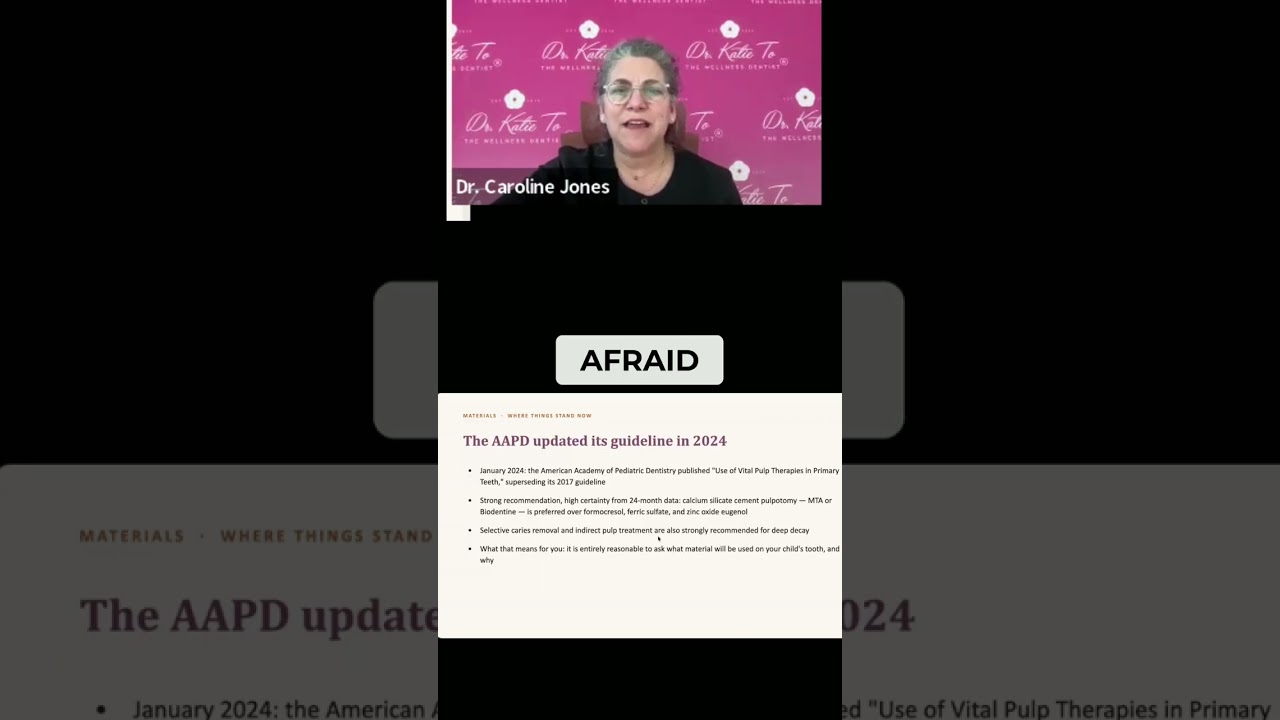
Stop asking what's wrong with the tooth and start asking, what is my tooth trying to tell me? You don't have to figure this out alone. Selective caries removal and indirect pulp treatment is strongly recommended for deep decay. And what that means is we're not going into the nerve if we can avoid it. So for you, it's completely reasonable to ask, hey, what material is going to be used on my child's tooth? And why are you picking that? So that's a conversation a lot of parents feel intimidated by. Having a conversation with people that they might feel a little like they don't know enough, but I guarantee you, the more you ask, the more you'll learn. And a provider that is doing the best, what's in the best interest, can explain why are they doing this to this tooth at this time with these materials. So don't be afraid to ask. The materials changed, but because the evidence changed, and that is the system working the way it should. And I hear patients every day say, oh my gosh, no one ever told me. To make my meals only 30 minutes and then wait 2 hours in between. Pretty interesting. And then every one of these was a question about a symptom, and every answer lived only one level upstream in how you breathe, how often you're eating, how your face grew, and what created the problem in the first place. So stop asking what's wrong with the tooth and start asking, what is my tooth trying to tell me? You don't have to figure this out alone.