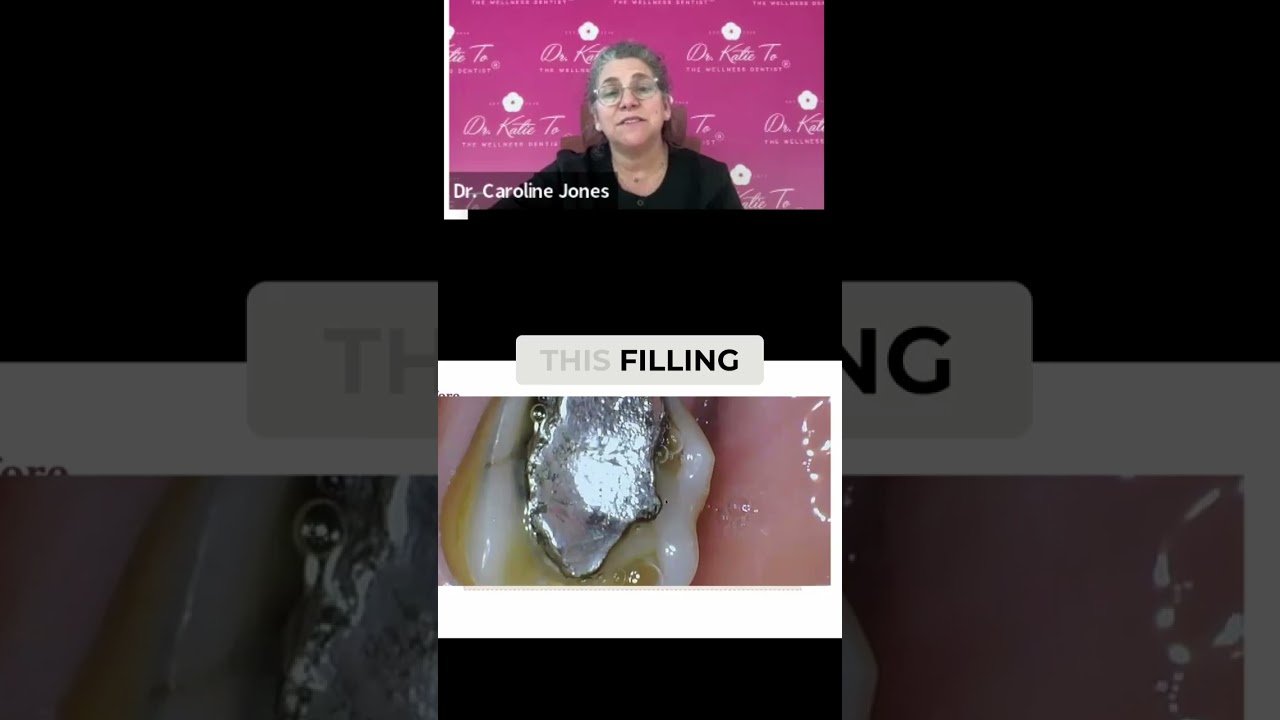
Dr. Katie To examines a 45-year-old amalgam filling that's oxidized and leaking mercury into the tooth, creating cracks where bacteria enter. The real danger isn't the filling itself but removing it without proper safety protocols, which can release hazardous particles into the air.
Chapters
The bigger risk is not the filling sitting in your tooth, it's actually how it comes out. And I'm going to show you a slide in just a few minutes, and if your provider is not doing this protection for you and for themselves, that's definitely an office you want to have some questions about. Here's our before picture for our patient. This is an old silver filling material, this mercury, and we call them silver fillings because it sounds better than a mercury filling. And I've been in dentistry for over 30 years, and I learned how to place these back in the '90s, 1990s. last century. And as I'm going through and seeing patients in my age group or a little older, we see these highly oxidized restorations. Now that tooth has had this filling. This is a second molar. It's a 12-year molar. That tooth has had this filling in there for at least since this patient was 15, and he's in his 60s now. You can see all of this leaching. That is the stain, the oxidation going into the tubules of the tooth. And that is definitely a fracture here. And we know that this tooth is not healthy. This is space where the bacteria can actually get between the filling and the tooth, and you can't brush underneath your fillings every day. You can see where it's actually coming out of the tooth.