Get Inspired with Dr Nataliey Bitature Part 2 | TAMBO TV
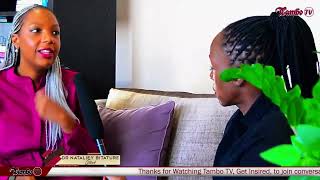
Dr Nataliey Bitature discusses Uketa/Iketa Learning, an online course platform she launched during COVID offering 15 practical courses like public speaking and grant writing for about 100,000 Ugandan shillings each. Courses include certificates and optional coaching, with immediate access after mobile money or online payment. She also shares her work as board chair of Save the Children and names Sara Blakely and Oprah as role models.
Questions this video answers
About 100,000 Ugandan shillings.
uketalearning.com
During the COVID pandemic.
About 15 courses.
She served on the board and became board chair after two years on the board.
Chapters
Like I told you, she's an intelligent and beautiful woman. She has a. A business online. She's going to teach us something. He's going to explain to us and I know you will learn something. Please explain to us about Uketa.
Thank you. So you get a. Learning is something that I started during COVID because I was doing a lot of online workshops and webinars for the women in the her community. But I realized that we can't all attend at the same time. Right. You know how you can do classes, but you have to be there on time. You come once a week at the same time. And we're very busy people these days, but these days we all have access to Internet. So I started filming courses that you can access on your phone or your computer and watch at any time. And you just have to go through all the videos, do the workshops and you get a certificate. Then I managed to get other experts and coaches who are experts in fields that I am not, and get them to also film some courses. So on the Iketa platform, we have about 15 courses right now in different areas like public speaking, people management, content creation, how to plan out your life, how to know your life path. So there's so many different things. How to apply for grants, how to start an ngo, which I'm trying to get practical courses that I know people want to learn these things, but it's so hard to find the right information.
So.
So what we've done is made it easy. We get the expert who has done it for many years to tell you, these are the steps you have to take, these are the things you need to do and then it will work. This is how you do it.
How much does it cost?
So the average course is 100,000 shillings. We're trying to make it as affordable as possible. You get a certificate at the end and you can even interact with the coaches if you have questions or comments or feedback or you want them to give you advice on a specific issue after you've done the course.
Do you have a website?
Yes. Uketalearning.com for how long?
You said you. You started it during COVID Yeah. Have you seen any success out of it? Because here in Uganda, people are not yet matches on online. Start that studying thing. Also, the business is a bit slow. How do you find it?
Yeah, it has been difficult to get people to understand. A lot of the questions we get is when does it start? And it starts the moment you pay. You can use mobile money or pay online and you started that day if you want and you can keep access to the videos so you can watch them again and again to make sure you understand or to show someone. So we started it in Covid and now I feel like we're getting the stage where it's nice and formal and organized. So we've had some success. I think women who have worked with me before, women in the her community, they are much more used to it because they see me a lot online. But it's taken some sensitization and I think it's now going to continue to grow.
I think you're doing so much on online than going down on the. On the ground, let's say. But anyway, you're balancing the two. And I want to know if people would like to meet you. What, what are the. Some of the procedures? Because some people would like to know how can I meet that lady? I would like to interact with her. She has, you know, you have, you have all that, the ideas, the business they would like. I believe someone would like to be like you or to meet you. What can that person.
So first, I always encourage people to just follow me on socials. I'm on LinkedIn, Instagram, Facebook, Twitter, Tick tock. So you can always find something and find useful information. On YouTube. I have longer videos where I explain different concepts or ideas or give my opinion or experience for different areas in business. So I always think that's the easiest. I can be reached on email if you need like a specific question. And I do offer coaching services. That's what like one of the things you're saying about performance coaching where you can book a session and we can talk about you and your life and your business or your challenges. And I have several coaching clients who I do that for like every month so that we continue to grow together. And I can encourage them and help give them guidance in the different areas of their life.
Who is your role model?
I think I have many role models.
Yeah, you can give us like three or two. Why?
Okay. One of the people who I love to watch and know online is called Sarah Blakeley. She's the founder of Spanx. You know Spanx? Spanx are like panties that like squeeze your stomach so you look flat. And I like her because she invented something. She saw a gap in the market in, you know how Bazungus wear tights cuz it's cold and. But they're super uncomfortable and they were not designed for women by women, it was all designed by men. So she found a gap in that market and she invented a whole new Way to do it. And. And she's one of the few women who has made a billion dollars on her own. She didn't inherit it, and she didn't marry into it. She built her own company. So Spanx is a very big brand in America and other countries. And I was lucky enough to meet her at a Forbes conference. And what struck me about her, she's such a passionate, lively person, but she's also very fun and interesting and relaxed because I think when I was growing up, a lot of the role models we had were very serious women who are, like, in SU suits, who are acting like men or being a certain type of way to be a successful woman. So when I started to see these women like Sarah Blakely, who are fun and dress how they want and say silly things and have fun offices, but are still serious and, like, successful, it was really inspiring for me to know that you can make your own way and make your own path. So I love to follow her on Instagram and see her family and her lifestyle and what she does and how she makes decisions, because it shows me that so much is possible in the world.
Okay, and another one you said you have ready, so I asked you to.
I do love Oprah because I feel like she's very. She had a hard, like, beginning and she built herself, and she's very giving in what she does, but also very efficient. I really like, like efficiency because I feel like to do many things, you have to be so organized if many people have ideas, but it's very hard to execute all the ideas. But because of the resources you have, even if you had unlimited money like Oprah, you have to be super organized to do things consistently in high quality, in that, like, scale. So I find that very impressive. And I hope that I can grow and one day have an organized system like Oprah does. And that's how I think you become as successful as she is, because of the way that she regulates and manages things. And she's involved in everything. So you can see her touch and her feel on everything. But it's organized and structured and it runs properly.
Okay, talk about the charity. How did you come out with that vision of charity?
Actually reached out to me. I think charity is something that. You know what's interesting? I was reading an article about this recently. In Africa, we give a lot of money in charity, but it's not counted. Like Muzungu charity of donor funding, Right? Yet here we have a culture of, you can never leave someone. We all have relatives, Everyone pays school fees for Someone we give money on the road with the street kids. There's always something we're doing that's not ours. You're paying for something or someone in your life, you're giving your extra change or you're buying someone food. There's always something we do because we have a charitable culture. So we don't quantify it the way foreign countries quantify it, where it's a CNN advert, donate to a unicef, give children in Somalia this much money. That's how they count it. But I was recently reading a study about how in certain countries, like in Africa or Latin America or some Asian countries, we already give so much in charity more than if we even receive. But because we're not counting it in the same way, we're not valuing it the same. So I think because we have that charitable attitude. I have always been involved in some sort of charity from when I was younger. Whether it's someone you know personally, it's a relative in the village, it's someone's child, or it's a Rotary club, or it's a project at school. School. You get used to having this giving attitude, especially when you live the way I've been brought up, so privileged and you can see so many people around you don't have enough. So I think when I was younger I used to ask myself why do we have so much and other people don't have enough and why is there such a gap? And it made me more curious about the inequalities in the world. And that's one of the reasons I wanted to study social entrepreneurship and like development economics to understand how the whole system is like this and what can we do, what interventions and can make a change. Cuz it's helpful to buy someone food for today. But you have to think this is their life of every day. I can't do this for everyone all the time. We have to change. What is the reason that some people are stuck in that cycle to make intervention so that they change their life forever and it's sustainable or for their children and it's sustainable and that's how you have upward socioeconomic growth. So I've always been interested in that and I felt like. Because I felt so connected to women and supporting women and when you support women, they change the whole community around them. Once a woman is able to earn more, make her own decisions, that agency I was talking about, look after her children, look after her relatives, make decisions with her money that empower everyone around her. That's the work I had started to do. And that's when Save the Children approached me. Because you can't work with children without dealing with mothers, and you can't work with women without dealing with children. It's so intertwined. So it was a long process to understand what they do, what I do, is it a good fit, how do we make it work? And I started to understand more about the work that they do. And after two years on the board, that's when I became the board chair. And I really love Save the Children because firstly, all their staff are so passionate, dedicated, well trained, well educated. They really understand the issues and the challenges that they're working with. And I've met their staff in Uganda, in Kenya, in South Africa, in the uk. So I try to go to the field, I try to interact with them, I try to understand. And they're all very dedicated and the programs that they are running. Save the Children is not trying to remove children from their home environments. It's trying to support communities to learn what they need and to be able to thrive there. And then whether it's with nutrition, it's with health and sanitation, it's with healthcare, it's with education, they are working in every community and in the field to make sure children from all these communities have an opportunity, have a chance. Because a lot of them, they're just born into these situations, whether it's war, whether it's. Whether it's poverty, whether it's a refugee situation, and they're trying to move them forward through that. So I really enjoy working with them and supporting them to raise awareness in Africa, to raise local funding to make sure that people understand the programs and also to help to speak to the donors in the UK is a lot of part of my work to tell them what is happening on the ground. Things like climate change are really affecting African children so dramatically, and yet the funding for climate work comes from foreign, foreign countries where they don't feel the physical pressure as much. So it's helpful to always have someone they can ask questions to, someone who has been there in the field to see and understand. I went to a refugee settlement in Hoima last year and I got to speak to some of the parents of the children who go to the schools in that refugee settlement. And they were so grateful to the work of Save the Children because a lot of them come from Congo or Sudan, and now they come not speaking English. They don't know how they're going to live in Uganda and start a life. They can't go back. But one of the fathers was like. My children now speak English. They can translate for me. They're helping me to start my business. They go to the town. They're going to have a good life. And you could see it in his eyes, how he sees his children will have a better life. And he's grateful he crossed the border. He went through so much, but he knows he did the right thing. And so Save the Children does things like that to support people, families, communities so that they have a better life moving forward.
You have a big heart. May God bless you because the Bible says that give it shall be given back to you. Give good measure, press down, shaken together, runneth over and it's. And when you give, God protects you. He'll protect your, your family and everything. Okay, we're gonna take a commercial break. I'll be back soon with Dr. Natal.










