Get Inspired 💫 with Dr Nataliey Bitature Part 1 | TAMBO™ TV
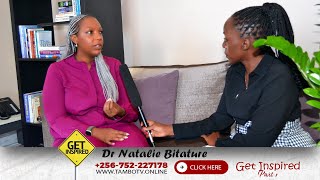
Dr. Nataliey Bitature, chief of staff at Simba Group, talks about building businesses across Africa and coaching women entrepreneurs. She runs Hard Working Women, a networking group, and Musanna Carts, solar-powered street food stands. Her advice: start small, gain experience, network, build agency.
Questions this video answers
About 25 years.
More than 100 vendors.
About six to seven years.
From about age 16.
An honorary PhD in innovation.
Chapters
Hello, viewers. My name is Pamela Senyonga. I'm so honored. My guest tonight is Dr. Natale Bitatule. Beautiful, intelligent. She's the chief of staff, Simba Group and also performance coach for African women. Nice to meet you.
Thanks, Pamela. Nice to be here.
Yeah. Briefly, that people would like to know. Who is Dr. Natalie Bitatori? Sure. Yeah.
So I am the chief of staff of Simba Group of companies. Simba Group is my family's business that has been operational in East Africa for the last 25 years. We work across hospitality.
25? Yes. Oh, my God.
So we work in different industries like hospitality, with the hotels where we are, real estate, telecom, energy, bits of media, education, agriculture. So we cover a lot of different sectors.
How do you manage to cover all the real estate? The same group of company. I see.
There are.
There are many businesses, a lot of.
Teams, a lot of companies, Lots of good stuff.
Yeah. Okay, briefly, can you give us your. Your biography briefly?
Sure. So from an educational perspective, I studied education and business management in my undergrad I and my masters is in social entrepreneurship and I was awarded an honorary PhD in innovation for my work with LS. Wow. So I've always worked in and out of my family businesses since I was very young.
At what age when did you start business?
I don't know what particular age, but we'd always go along to work with my parents because they work together. So it was different construction sites. There was a video shop called Bits. We've had Simba Telecom shops for more than 20 years now. So I remember working in the shop, selling phones, working in the stores, organizing things, you know, counting stuff. So you kind of learn as you go. And attending board meetings from the time I was about 16. Okay, you understand. And you can ask questions, you interact with different managers, see what the working world is really like. And so it gave me a really good insight to what it's like to work in businesses, in organizations from when I was younger. So when I finished university, it was easy to start my own business and try to learn for myself how to do it.
What are the sum of your business besides your father's business?
So I have a company called Hard Working Women, which is a women's platform that provides opportunities and knowledge to young women in Africa who want to have different ways to earn money. So we work with entrepreneurs, we work with career women. The students want more information. We have monthly meetups, we have dinners, we have workshops, we show different opportunities for scholarships, for jobs, for grants, different things in the different communities. So we have different groups for Kampala, for Ginger, for Mbarara, for Dubai, where women can discuss these things and come together and move forward.
So it's not all about Africa, because you've talked about also Dubai.
Yes, true. We do work with African women in Dubai, so it's all tied together. So there's women in the diaspora who work in Dubai, but we provide them with different workshops, introduce them to guest speakers. So they have networking events in Dubai so that they can interact with each other and also to grow their own community there so they advance their careers and businesses.
Now, about your company, what are some of the success you've come out with?
So one of my personal companies that I'm proud of is called Musanna Carts, where we work with Rolex vendors. Mosana builds the Rolex cart for the vendor with a solar panel on the top. And we also provide training for the vendors in hygiene and sanitation, marketing, customer service, so that they can feel more upgraded in how they are delivering their businesses. That has been a really interesting project over the last six, seven years where we've worked with more than 100 street food vendors in Uganda. We've outsourced the designs to different communities in India and across the other countries in Africa. So Mohsana helped me learn a lot about what's possible in the startup world and with innovation. And I think it's been a really good journey for me and the team and also, of course, all our vendors.
Okay, since you're a woman, how do you find business? I think most, you know, people under. Under look. Women.
Yeah, most sectors, especially in Africa still, where women. Women are underrepresented and undervalued. So that's why a lot of my work is focused on empowering women through education and opportunities. Because once you give a woman access, they are very capable. So we're able to deliver. We're not not able to keep up with men in the office or deliver in the same terms of work. So I think that's something that we all have to work on, those of us who are already in the workforce, to open those doors for young women, give them a chance. And even older women, more mature women, after they've had children, who are ready to come back to the workforce. A lot of our managers in Simba Group are women over 50, because now they're very confident, they're very organized, they have experience and they can be very good leaders.
Do you work with the people who are in urban areas or both urban and rural?
Both urban and rural, depending on what company and how we interact. For example, Simba Telekom. We have shops across Kampala and across the whole western region. Kavale, Ntungamore, Bushenyi, Leontonde. So the shops go all along there and we save the children. Also, we work a lot up country in the rural communities, in refugee camps. So I feel like I travel up country quite a bit for work events as well.
Okay, what are some of the challenges you face and the solution to the challenges, problems and the challenges?
I feel like it's always a challenge working across different stakeholders. So a lot of projects you have to work with your own teams, with partners, with government organizations. You have to make sure you're working with regulation. And so it can be slow. For me, I find that challenging because I want everything to move as fast as possible. Let's go where we're going, going. But I've also learned along the way it's important to have buy in from the different stakeholders in whatever you're doing. So if you have a partnership, if you need regulation, if you have to work with other members or other organizations, make sure you speak to them and communicate a lot at the beginning, at every stage, so that everyone feels heard and you take into consideration why they're moving slow, the other things they are doing, the reasons for the structure of how things are so that things can move forward rather than stop because you're frustrated or communication broke down. So I think a lot in life I've learned is about relationships and how you interact with other people. And that's what gets projects and different products and companies moving forward.
Now, since you are you, you're a daughter to a wealthy man, don't you find it challenging? Because some of us, we have that mentality already. She has. Already. She has. How have you maneuvered that?
I think I learned that what other people think about me is none of my business. People can have their own opinion, but what you deliver is what builds your reputation. So if I am able to work and show that with my work, what I am able to do, that makes a name for me that's separate from my father or my companies, and that's what I stand on.
You're a beautiful lady. Don't you find some temptations? The people you work with, the stakeholders, the CEO, the big companies you happen to be.
Yeah, I think sexual harassment in the workplace is still a very big issue. I don't think we have enough sensitization about what's appropriate and not appropriate, because how a person looks has nothing to do with their work or how you should interact with them. And so I've had to learn over time with different courses, workshops, different partners to see what can we do to make sure that workplaces are safe environments for women. What can women know? How to stand up for themselves or not tolerate the comments or the inappropriateness, or being asked to stay late or can I drop you home? They're very many instances where it seems innocent, but you put yourself in a dangerous position as a woman because we still face a lot of these challenges.
In the workplace and, and some of the challenges I've seen with women because you're, you're in that area of coaching women. Some women would like to do some business whereby they don't have money, but they really, really have that zeal of starting something. What do you do for such people? Do you have something whereby they can have capital, you support them? How do you do that?
So that's part of why we started her. I think a lot of times people think they can't start a business because of capital. But even if you give them the capital first, they need to have research, they need to have experience. You need to know what they're doing. So I always encourage women to first try it, learn about it, understand the industry you're trying to get into before you spend all your money that you've saved getting stock of something that you've never sold. And you don't know your competitors, you don't know the suppliers. So get in the market first. If you can work for someone else, you in your sector get the experience. And then even with capital, start with what you have. Don't start with so much when you've not yet done it. Start very small, do it once, do it twice, provide the service, make the product and then grow from there.
So when we talk about women, there are women who are widows, there are women who are single mothers. And I would like to know which women do you deal with the most?
I think we deal with a mix of women of every age, every tribe, every like socioeconomic level. There are lot of young women, but they also a lot of more mature women, which I was surprised by at first. I remember in the first few months of her, I would see women who are older than me and I was like, oh, they want to listen to me. Cuz I used to do all the teaching myself and they benefited and they were a great asset to the community because they could also teach the younger ones things that I couldn't help them with, things that I didn't know or have experience with. So I Think that's the beauty of having community, cuz you get a mixture of different experiences and opinions and then we all learn together.
You talked about communication. You know, when you go deep down in the villages, some people happen to lose networks. How do you do that? How do you manage? Because there are people whereby they don't have even phones. Do you know that? They don't have phones. So how do you do that?
I've visited several women's groups, I think in Kasese and in Ramanja, where I can see what you're talking about. And I remember visiting a savings group and they would save 1,000 shillings per week. As the women in that community, most of them I'd say were like between 19 and 40 and they had children. So they. You're in this meeting and they're all carrying babies and of course their baby is their priority. So now they're trying to learn about savings so that they can save for a phone, then they can save for a goat so that they can start to have something that's going to bring them income. Because I think once a woman becomes a mother, she also starts to think of her child's future, not just hers. And we've had a lot of good sensitization about the value of education. So I think women know that they should be doing something and they've experienced enough that we have now realized we don't need to rely on men. We have to be part of the community and the family. But you can do something for yourself. So that's why I'm saying you have to use also your time and your energy. Can you work in someone's shop? Can you work for someone's business so that you learn something? Can you learn something online? The ones with phones, everyone has TikTok or Facebook. There's so much information that's useful, not just for fun, that you can learn and then implement in your community.
But there are some villages, I mean there are some people whereby they don't have smartphones. They still have. What should I call it? They still have those. The first one, should I say the Katoa, Katoche. So you have to think also about them. But we are having a lot of women. I've met some women, but not in this area of business. Most of them whom I've met, there are so much in church. But this is one thing I've come to realize, that we happen to meet some single. I'm not even single. Big, big A big, big women, whereby they come from wealthy family, they're like My mom will work for me, my dad will work for me. Everything is there. What advice would you like to give to those people? Because now your father is wealthy, but you're also active that you have to lay the legacy like he did.
I think every person has their own life to live. You can't sit on someone else's achievements and what they've done. Because also you, the pursuit of happiness is part of human satisfaction. To feel like you're making progress, you're growing, you're learning. So I think it's also a disadvantage to just sit and let things happen around you. You don't have agency. And I think that's a very important thing, especially for women to learn and to feel that ability to make decisions for yourself. Even if someone is giving you the money, you decide what you want to do with your day, with your money, with your time, with your energy. Learn something, have a project, even if it's a charitable project, even if it's something for your kids school or for your family's business, so that you're also active, your brain is engaged. You also feel a sense of value and worth as a person in you know, you're giving something, you're serving your community, you're growing as a person. You can see in one year, in two years, in five years, wow, I've changed, I've learned so much. I've grown in this area. And I think it's unfortunate when we deny ourselves those opportunities.
Let's take a break. We shall be back.










