How to get on boards as a professional
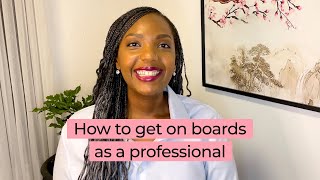
A short solo talk (YouTube) by Dr. Natalie Bitature offering practical career advice on how professionals can be invited onto corporate or advisory boards. Core recommendations emphasize (1) sustained visibility and personal-branding (LinkedIn, speaking, sharing work), (2) maintaining a strong, authentic reputation because of reference/due-diligence checks, and (3) being well‑read and continuously learning so you can add value as a board member. The talk includes concrete habits for introverts and busy professionals, peer-learning practices (article exchanges, book clubs), and examples from the speaker’s own experience (Forbes listing, honorary doctorate).
Chapters
Hi, I'm Dr. Natalie Bititore and today we're talking about boards. If you are career oriented. So a lot of people who have careers want to grow to be on a board. It's a very prestigious and useful thing in your career. It adds credibility, it expands your network and it's like a nice pat on the back in society that you're doing the right thing, that you are a leader in your field and you can help so many companies. It's a wonderful thing to be on a board. So let's talk about how you get on the board because that's something that's interesting and useful. It's not something that I think I've actively ever looked for. It's not something I aspire to. So. So it's something I kept getting invited to. And so these are the things I think that I was doing that helped me to get onto the board. Number one is visibility. I learned this from Mel Robbins. Visibility is the most important factor in your career advancement. Honestly, if no one knows who you are, there is no way they can promote you. Put your name forward for different things. Whether it's a board or a training or an opportunity or a project. They need to know who you are and what value you're adding in the company, in the organization. This happens a lot with women. We sort of get lost in teams, we're quiet in meetings. We contribute a lot to the project, but we never take the credit. Yes, we never take the credit for it. And that is a challenge. It happens with men too. But it's something that I also had to learn from Americans. They're so open about how they talk about themselves. And I used to think it's like bragging, there's no humility. But the truth is if you don't ask for something, you don't get it. So if you're not advertising your best self, how is anyone supposed to know that? You have to find like the balance between visibility and like humility. You don't want to. It's not a two step journey. And you're going to go from, oh, I was so humble and then I started talking about myself and now I'm super arrogant. Don't worry about that. You know how women worry. If I start going to the gym, I'll get too many muscles, I'll be ugly my guy. It's not that way. So even with visibility, don't worry about that too much. What's important is you first get out there so, so that someone else is recommending you for things. Because if you're not visible, there is no way you're moving forward. If you don't want to move forward and you think you're okay where you are and you just want to keep your head down, that's fine. You won't move forward. But if you do, you have to put yourself out there. It can feel uncomfortable at first, but you will get used to it. You don't have to do things like this, where you're putting videos and posting online, but social media can be very useful. What I always advise my friends is make the most of your LinkedIn profile. So make sure your LinkedIn is thorough. Like you've actually written a proper profile which has all your experience, all your education, it has a nice description and then use it. Follow all the relevant thought leaders and companies in your field. And then whenever they post something, make a comment, ask a question, congratulate people, get out there so people start to see you out there and see what you're doing. We also live in a world where there's repurposed content. I follow so many Twitter accounts which where the account person, all they do is look for the best threads, the most useful information in their specific field, and reshare it. And that's how they've grown their following. They're not making up anything new, but we follow them. So it's not about having original content all the time. It's about finding your medium and what works for you and making sure you are out there. That is the truth. There's no avoiding getting out there. You need to put yourself out there. You never know who's going to see, who's going to notice you, or be looking for someone with your skill set or your background and want to put you forward for something, find what works for you. Maybe you want to start a podcast with your friends. Just sit there with your phone and record it. You want to start doing videos like this, I'm using my phone. It's okay if you can write. Write articles and post them. You don't have to write about your industry. Even write about something you're passionate. It shows your writing talent. It shows your skill. You just have to find your way of being out there. Speaking up in meetings, ccing people in emails, sharing reports that you've written, taking initiative in your workplace. Sometimes you can walk up to your supervisor and say, you know what, I had this idea last week in the meeting. I didn't want to take company resources, so I researched it on my own. I've sent you a summary Brief on email that will impress them. They'll be like, wow, this person took initiative. The report is great. This idea is good. Let's move this on. And then when they're moving on, they give you the credit. It was Sheila's idea to do this. You have to make sure you get credit and you're adding value where you're going because your reputation arrives before you do. And that's the number one, the number two thing. So after visibility, you have to think of your reputation, because to get on board, you have to have a really good reputation because they're going to do a reference check on you. It's even worse than a job reference check. They have to do due diligence, that you're not going to be a problem. You're not tied up in scandal. You didn't cause trouble in your last board or in your last company or your last organization. People who have worked with you have to vouch for you. And we live in a world that is so small. It's wonderful that it's global, but everything is online. And we all live in these small circles where word spreads. If there's things I talk about in these videos and then I go to my workplace and I start to be a completely different person, the word would spread. It would get out there. She's lying. She's living a double life. We can't get away with things like that anymore. You need to be authentic. You need to be the person you are trying to be. Think about who you want to be in 20 years. What is that person like? What are their values? How is their character? How do people describe them? What do you want people to say about you when you died? Yeah. All the pressure. Put all the pressure on yourself. Think about it that way and start behaving that way today. You won't be perfect at it, but it's a start. You'll start to practice. You'll start to see what it takes to be that kind of a person. And the sooner you start to do it, the sooner you become it. You won't realize, but you'll start to become that person that you aspire to be. It's wonderful. Don't try and copy and paste someone else. I can't want to. I love Mel Robbins, but I can't become Mel Robbins. I can't just do everything she does. Copy, paste, copy, paste, copy, paste. I'm not her. I'm me. And you are you. And that is a good thing. Everyone is unique. Your background, your upbringing, your skill set, your personality. That wonderful mix that God has given you, make the most of it. It's not sustainable to have a work personality and a private life personality. Yes, there are things at work that you want to keep to yourself. You can be a private person, but you need to be authentic in what you are being and how you are. Because it's not sustainable. In five years, people won't realize that you're completely different in your personal life. What story will come out about you from this auntie's cousins, relative's friend who saw you at a wedding and you said this. And then now all your office colleagues are like, what? And it ruins your reputation. So you don't want these kinds of blemishes. You don't want these kinds of scandals. Because when people are inviting you for things, they do these checks. I did not submit myself to be on the Forbes list. Someone recommended me. Someone else had to vet me. People in my life were asked about me. By the time I was informed, I was already on the list. There's nothing I could have done. But it's because of the work I had done, the person I had been that spoke about me in the rooms, that I was not there to fight for myself. So you have to think about life like that when you're there to pinch yourself. That's hard enough, man. But now you have to think about how are other people pitching you. You want to be top of mind when the senior managers are having a meeting. Who is going to get this promotion? Who should we put in charge of this project? Should it be Joseph? Should it be Tom? Should it be Grace? Should it be Stacey? Who do we put? You should be the first person in their mind. Oh, Stacy is so good at these reports. She always reports on time. She adds value. She puts this in. It's excellent. I really have to vouch for her. That's where my vote goes. And I suggest all of you also agree with me. You don't want to be. Maybe. Is she good at that? Sometimes she's late, sometimes she over talks about things that are not relevant. That report had so many spelling mistakes. No, no, no, no, no. She won't represent us. Well, let's not put her forward. You don't want that to be you. And what you can do about it is how you live every day. Do your best, put in your effort, add value in what you're doing and make sure that the visibility you're getting is the right kind of. You don't want to just be visible for the wrong things. You have to Be visible for the right reasons, so that when people meet you, they remember you. When people hear about you, it's in a positive way. You want yourself to be positively associated. Because sometimes it's not even someone you know who's recommending you, it's someone you know who knows someone you know. I remember for my honorary doctorate at Kiel, I went for, like the dinner event that they had for me, and this guy came up to me and said, it's me who nominated you. I have never met this man in my life. He's some administrator in Kiel. And I was like, what? Really? I assumed it's one of the people that interviewed me, watched a video, maybe one of my peers. He said, yes, I was speaking to the alumni committee and one of them had read an article about you. And she sent me the article and I was so impressed. So I researched you and I watched some of this and I saw this and I said, we have to get her. I was like, what? Wow. Because you never know how your reputation is going ahead of you or where it's taking you or. Or who is going to see or hear of you. So what you can do is be the best you today in a visible way and don't feel bad about it, but do it in an ethical way and do it in a way that you're comfortable with and you can sustain. I know this is so hard for introverts to think about, but there's also a way for you to do that. Some people do writing or they show their portfolios online or they do something. You have to find a way that you can manage, find a way that you are comfortable with, that you can sustain. Because you can't be visible this month and then go quiet for six months. It doesn't work that way. Visibility has to be regular so that, you know, you keep popping up on people's radars. That's how you become top of mind. So the last thing I would say is you need to be well read. Because to have this reputation and to have that visibility, it needs to be for the right things. So you need to be adding value. If you're someone who never knows what's going on in your industry, you're not really going to be useful or relevant. The people who they want on board, the people who they invite for things, they know they're going to add value. They're at the cutting edge of what's happening, they know what's going on. And I find it so funny that I am the one giving this advice, because I'LL tell you a weird story. When I was, like, 20, I wanted to drop out of law school. My dad really wanted me to be a lawyer, and I hated law. It was so dull to me. And so he takes me to his friend's office, this big, fancy lawyer who's so successful, and he has a great career and everyone respects him. And he told his friend, you give her a pep talk that I would, like, go through with it. So I went to this guy's office, expecting to be impressed, probably. The office was nice, but the guy's office was covered in books. Books and books and books and not books. Like, they're on the walls for, like, decoration. Like, he's still reading them. This one is open. This one is open. There's papers here. He's taking notes. It was horrible. I can't even remember what this nice man said to me because I was just there. Traumatized, you mean? After I finish law school, I must suffer in these same boring books till I'm this old. Even when I'm successful, it's a big no. It shall not be me. I. I can't do that. And it scared me. And I. I dropped out of law school. I was like, this is not the path that I can take. I can't sustain this. And I think it's funny because now I'm telling everyone, you have to keep reading in your field. There's no age you're going to reach. There's no level of success you're going to reach where you're like, okay, I'm done. I know everything. Yeah, no, it doesn't happen. But that's why you have to find a way that you Enjoy, whether it's YouTube or a podcast or a book. These days, there's even apps that summarize books for you. You. There's so much information. You can be on Twitter. You can learn from Instagram. I learned so much From Instagram, from LinkedIn. There's so many different platforms if you don't want to sit and read books all the time. But you have to know what's going on in your field. Because when you go to a conference, when you speak at a presentation, you have to be able to say, yes, I know the recent studies have shown this, or I know these statistics of that, or I read this report, or I met this person, or I saw this innovation and now we're testing it in our company. You have to be relevant. You have to add value. When they send you board packs, sometimes they'll send me a board pack. That's like this big man. It's no fun to read. You're sitting there with a highlighter for like four hours just trying to understand everything, but you're also making notes, you're thinking, you're making connections. This is not the market value of this. This is not how this should be appraised. This is not the process that they should go through. This is the advice I can give them. This is the person I need to introduce them to. Oh, this is the challenge they're having. These are some of the solutions that in India they're using right now. You have to be able to make these connections, to add this value, to ask difficult questions to help the company move forward. That's the point of the board, right? But if you're not well read and you're not up to date in what's going on, you can't, you're not going to be helpful. So when someone is asking, who should we recommend? Eh, that one doesn't really help much. They're there. Yes, they have this, you know, good career. I don't know. You don't want those lukewarm recommendations. You need someone to fight for you. You need someone say, oh, I was on a board with that person. They read everything, they added all this value, they introduced us to this person, they did this. Or I was at an event or I met this person in the corridor, or I was at a wedding and I talked to this person. You have to be someone who adds value, who is useful, who is informed, who is informative. Then people will recommend you for things because they can vouch for you, you won't embarrass them. So it's a useful thing to have and to practice, but you have to find a way to make it sustainable. Because I am so busy and I work in so many sectors, I can't know every single thing going on in energy, in agriculture, in fintech, in telecom. It's impossible. So I have to make it easy for myself to constantly be getting information. My news feed in all my social media is not just people I know, it's not just my friends and all the fun things they're doing. It has to be useful. Companies, thought leaders, people who are moving forward in that area, advocates, activists. It's interesting all the information that I can get every day without putting in that much effort. If I need to learn something specific, I have to Google it. Do I want to listen to a podcast while I'm in traffic? Do I have time to watch YouTube while I'm doing Something in the house. How am I going to figure this out? Is there a go to book in this field? Can I ask my mentor what's the fastest way to learn about this? Or what's the current situation in this? Don't have shame, you're alone. Go on your phone and Google things you don't know. You have to keep learning, you have to follow, find what works for you. Because being well informed adds so much value to your reputation and in your visibility. So people get to know you for what you know and how useful you are. Then they recommend you for things. So it's, it's a practice. And the moment, the sooner you start getting used to it, the sooner it starts to happen. One of my brothers is into fintech like I am. So every week we send each other articles. Whatever you found out, whichever company got financed or whatever new innovation is happening. This happens in Nigeria, this is what they're doing in India, In Bangladesh, they tried this. Now there's this remittance thing. We send it to each other just so that we both keep up to date on what's going on in the field. Make buddies like that, have a book club where you talk about where this is the book club and we only read books about agriculture. And every month we sit and talk about it. And you learn so much. So put yourself out there, make sure you're learning new things, make sure you're implementing those new things so that you stay relevant, make sure you're visible, make sure you have a good reputation and make sure you're well read in your field. These are the things that will really help you move forward in your career. Whether it's a board you're aspiring to be or move further in senior management or start a project or start a company, become a consultant. You need these things to move forward. These are the things that give you the momentum and that open doors for you and that get other people to think of you and make opportunities happen happened for you. So I encourage you to put some effort in these areas. I hope you found that useful. If you found this video useful, be sure to subscribe on my social media channels so you can get more information. I believe in you. I want you to succeed and I'm here to support you.










