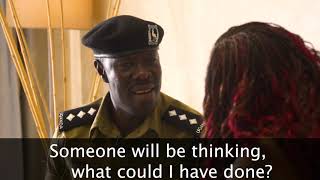
A short YouTube interview (uploaded by Nataliey Bitature) featuring Assistant Superintendent of Police Francis Ogweng from the Child and Family Protection Department discussing gender-based violence in Uganda. Ogweng reports that violence is widespread in homes ("more than 90%" by his estimate) and introduces different forms of violence (sexual, economic, psychological, physical), noting low recognition of non-physical forms among communities.
Questions this video answers
More than 90% of homes (per Ogweng's statement).
What are the challenges that you're facing that you see on the ground happening to women or anyone being abused by violence in Uganda?
My name is Assistant Superintendent of Police Francis Ogweng. I work with the Child and Family Protection Department. First of all, what I have seen happening is that there's a lot of violence going on in most of the homes. To me, more than 90% of homes have some kind of violence.
Wow.
Either they know it or they don't know that it is violence. Because a lot of time when we go out and tell people the forms of violence, the sexual violence, they open their mouth. Is it also violence? But when we explain that if you force someone, for example, your wife has been told by a doctor not to have conjugal rights with you, maybe for such a period, but you go against that. That is like forcing her. Some women also have fear that their husbands could have gone out and may bring for them diseases. But the men still forced them. That I have married you saying those things, we also explain to them, and they will understand. I think this is really violence. There's sexual violence. But before that, they don't know that there is something called sexual violence. Then also another form, which is called economic violence. Where a man will sell everything in the house, calling it their mind. Not knowing the family is his responsibility. When you say, you just go and say, this land is mine. You sell it. But people are annoyed about it. Your children, your wife is annoyed about it. That is a violence. They begin to realize, I think we've made quite a lot of violations. Then also, if we explain psychological violence. By the way, research tells us that psychological violence is more dangerous than even physical violence. Where you may just keep quiet. Nobody knows the reason of you keeping quiet or just keep quiet. Someone will be thinking, what could I have done? This guy, this woman is quiet. What is wrong? They will not even sleep. You call them names. You know these names. If you call them, they will feel bad. You call them such names, or you tell them you are as bad, you are as stupid as your mother or as your father, you say, that is the reason I think your mother left your father. This tortures someone psychologically. So so much name calling, other many and stalking following. So if we explain to them, they begin to realize, I think this is violence. And the other form is physical violence. So if we explain, they will now begin to realize, I think, hey, sure, we are living under serious violations. So the first challenge, the first problem which I have discovered is people don't even know that they are being violated. Because they don't know the forms of violence. So many times if we tell them this, then because I think I am being abused, I think I am being violated and you see them coming. Even this is violence. Even this is violence. How about just picking my phones and scrolling through when I'm not there? Is it violence? We keep telling them, yes, it is. If it's not with consent of someone. So that's the first challenge.