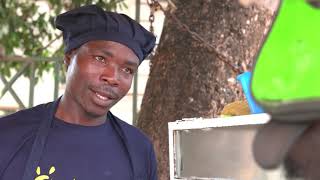
A first-person presentation by Nataliey Bitature describing Musana (Musanna) Carts: how the project began during a social entrepreneurship competition at Hult Business School, research with Kampala’s Rolex street-food vendors, and the design of solar-powered street-food carts that include lights, phone charging and sometimes fridges. The talk covers complementary training (financial literacy, bookkeeping, hygiene, customer service), the decision to use a franchise model to protect vendor livelihoods and quality standards, and coordination with local city councils.
Chapters
Moussana actually started as a student competition when I was doing my master's in social entrepreneurship at Hult Business School in California. My business partner and I, Manon, a French co founder, that I have entered a student competition that was all about improving the livelihoods of people who earn less than $5 a day. So we came from San Francisco to Uganda, where I'm from, and I've been working and we did a lot of research and focus groups to understand what kind of informal jobs we can make an intervention for using renewable energy that will help them to earn more money. And in Kampala, Rolex is the most popular street food. So we spent some time with some Rolex vendors and we saw how with small interventions, we can improve their working conditions and their livelihoods. At Musanna Carts, we provide a street food cart, which is a unit that we build, which comes with a solar panel and a battery that powers a light bulb, a phone charging unit, and on some of the carts, even a fridge. We also provide financial literacy training, bookkeeping, hygiene and sanitation training, and customer service. I'm a big believer in social business. It's not just about profit, but it's about the people, the community and the environment. So we had to find a business model that satisfied all those needs. We wanted to make sure that the vendors who are our clients are making enough money. We need to make sure the company itself is self sustaining so it can continue to grow and work with more people. So we decided to go with a franchise model. That way we can help with the trainings, but we can also help maintain the quality standards. It's the agreement we have with the local city council so that we can make sure that the vendors have certain hygiene and sanitation standards, that they're registered, that the customers are getting good service, there's no food poisoning, things like that. So we have to maintain a very close relationship with vendors rather than a typical lease to own model where the vendor would own the cartoon and then we have no jurisdiction over them later. That's why we work with a franchise.