Networking
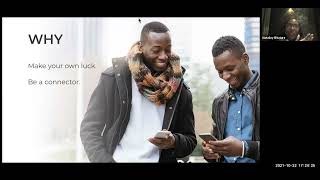
Natalie Bitaturi, Chief of Staff at Simba Group, explains why networking matters for jobs and visibility. She covers Malcolm Gladwell's connector and maven types, the power of secondary ties, and how to build genuine connections through listening and offering help. She walks through etiquette, reputation, and which platforms actually work.
Chapters
Over the last two, three years, we work with MasterCard foundation and some projects in Uganda, actually, with Youth Skilling, part of Young Africa Works. And I got to meet the team up in Scotland on Zoom over the summer, which was also really nice to understand better what you're doing. And it's always great for me personally to see and hear about what African students are doing abroad and help with any questions or be a supportive resource. If you're thinking about coming back, I'm very happy to help. So my name is Natalie Bitaturi and I work as the Chief of Staff at Simba Group of Companies. Simba Group is a family business that's been in Uganda, Kenya and Tanzania over the last 30 years. We work across telecom, real estate, hospitality, energy, media. And we always have lots of different fund companies in the pipeline. We work as an incubator for some social businesses. We have a foundation, we now have a university, farms, lots of different exciting things. And it's a passion of mine and my father's to support young people in all that they do and to succeed, especially entrepreneurs. So it's really great for me to speak to you today. I'm going to try and blow through this quite quickly so that we can do some Q and A. Firstly, networking, right? This is a topic that your advisors here suggested I talk about, and I know networking can be intimidating or daunting, and especially as an African abroad, like, you have different opportunities, but you also have to network in different spaces with different kinds of people. So, firstly, I wanted to talk about the direct benefits of networking because we need to understand why we are doing this and how it's going to affect the rest of your career. This is something I teach all the time and I coach a lot of women on because. Because I think visibility is so important with your career. It's something I learned. And can you see my screen? I hope it's clear. Yes, we can. Thank you, Natalie. It's something I learned and it has helped me so much in my own career. So when you think about your direct benefit, it's because jobs are given and as entrepreneurs, your company gets contracts not from another company, but from another human being. So I feel like human beings need to be at the center of your mind. When you think about networking, you will definitely get jobs or clients or conferences or opportunities once you meet other human beings, whether you work in the private sector or government or the NGO world. There's a huge difference in a cold call where you're just reaching out someone you don't know and In a warm introduction, because one person vouches for you. And as human beings, at the end of the day, we are all community oriented. It's in our DNA. So if someone introduces you to someone, you are way more likely to listen to them, to respect them, to give them a chance to keep them at the front of your mind than if it's just a random email. I can tell you, even as an employer, I get lots of random emails per day and we do filter through them. But when someone personally knows me and introduces me to someone, even if it's on email, I know I have to get back to that person because I don't know them. But my contact introduced me to them and that makes a really big difference. I know people complain about nepotism and tribalism and how unfair it is, but you know what? It's the truth. It's a bad system. I get that. But there's also a good side of it. It's because someone can vouch for you, someone can put their name on the line for you. And that's what the advantage is with networking. Why should someone give you the opportunity instead of their relative or their friend? Even if you have a great cv, a lot of times you miss out on something because you didn't know the person personally. You might have a great cv, but you have a terrible personality or character. And so someone won't give you that opportunity. If you have a warm introduction, it gets you to the top of the pile in any situation, in any opportunity. It gets your company on a procurement list. It gets your CV into the right hands. You have to do what you can, of course, to be a person of integrity and have the good CV so that you are in the running on credit, like you deserve to be there. But having a network that supports you, it makes the biggest difference, a world of difference. So sometimes I get criticized that I have had so many opportunities because of my family and the resources that I've had the blessing to have all my life. And I agree. But it's not just monetary opportunities. I think a lot of my career growth has happened because of the network that my family, my co workers, my colleagues have and I have tapped into. It's not just what schools you go to or what degree you have or what your actual value and skills are. If you don't know anyone and no one knows about those skills that you have, it's impossible to move forward. You need to be able to connect with other people and help them to help you. It is in everyone's Benefit. So as we continue through why Another area in networking is about growth. It's about how you are exposed to new things. It's about how you're challenged. It's about how you stretch yourself mentally. Who you follow on Twitter or who your mentors are, that has a huge impact on you. Whether it's an institution or a politician or a CEO, or it's your friends at school, it's foreigners, it's your people back home. Make the most of the network around you. Use something like LinkedIn. Know what's going on in your field, what's at the cutting edge, what's on the news, who are the thought leaders in your area. Subscribe to newsletters, attend webinars, talk to people in the comments, have conversations on Twitter, on Instagram, or on Facebook. There's so much information and knowledge out there. And if you have the right network and you position yourself, you have a flood of new information all the time. I just have to open my LinkedIn and scroll for 20 minutes and I will learn so much because I was proactive about who I follow on LinkedIn. Every time I attend a conference, I look at all the other speakers and I immediately add them on LinkedIn. Because if you are on a panel with me or you're speaking at a conference that I found interesting, surely you do that all the time. So I want to know what you post on LinkedIn, who you know on LinkedIn, what you like, what you comment on, and it shows it all. Because I know I can learn from you. You're a resource. So it's about putting yourself in the right network that also challenges you and helps you to grow. There's also a huge factor of luck. Like I said, a lot of people say I have so many advantages and opportunities, but. But it's because you can make your own luck. It's because you put yourself in the situations. There's no such thing as just dumb luck. Luck happens when the right person is in the right place at the right time. So if you've worked on yourself to make yourself the right person, you have studied, you've learned, you know what's going on. When opportunity comes, you'll be ready. You will be able to put yourself forward. You will volunteer, you'll speak up, or the opportunity will come straight to you because you are the right person in the right place. You have to put yourself in the right place because your network is your net worth. I can't stress that enough because the people around you will know this is the person who does this, this is the person who's good at this. I can trust this person with this project, with this job, with this opportunity. There's a TED talk that says that's called 20 is not the new 30. I really recommend you watch it. It's a psychologist talking about the different life stages and what you need to make the most of. And something she emphasizes is the power of secondary ties. So your first, your primary ties are people who you know. Your siblings, your parents, your teachers, your friends, your cousins, your relatives, your roommates. Those are people who directly know you. Secondary ties are people who know people you know. So your mom's friends, your uncle's friends, your professor's friends, or colleagues of your roommate. People who are a step away from you, right? And the power that affects our lives is in our secondary ties. If you want a job, I'm sure your family owners, you want a job. You have people in your life, in your circle, they know, oh, this person studied this. This is the job they're looking for. If they could help you, they'll help you, right? You don't have to squeeze them or stress them. They will happily help you. But you've already used the maximum of that network. Your network extends to your secondary ties. If it's one step away from you, it's a much bigger network. And the power of your secondary ties, psychologically, they've done studies on this. Most people marry someone who is a secondary tie. It's someone who you knew through someone you met through a friend, a cousin, a relative, a school friend, a co worker. And most people get hired through secondary ties. It's someone who you know who has recommended, oh, there's an opportunity in this bank. Oh, this company has an opportunity here. Didn't you say you have a cousin who studied that in school? Secondary ties. So you need to make yourself strong so that your primary ties know about you and they tell their secondary ties about you. Because to them, the secondary ties are their primary ties. Everyone has relatives who talk about them, right? Like if your mom is saying, my daughter is a lawyer, she will tell all her friends, her daughter is a lawyer, right? So you need to make sure you're a good lawyer. Because when your mom's friends know that and they need a lawyer, they should think, oh, so and so's daughter is the lawyer, let's call her. That's the power of your secondary ties. So you need to create your own luck by doing things like that. And I've seen this happen so many times in workplaces where I walk into a government office or a bank or somewhere else. And. And I will know someone through someone else. Oh, you're this person who I met at a wedding. Oh, you're this one's friend. Oh, you're this one's brother. Oh, you're married to my auntie's cousin. You know what I mean? You find people everywhere, but you need to be proactive about this because if you just see them or you've seen them on social media or you saw them at a wedding, you didn't introduce yourself, you didn't meet them, how are they going to help you? You need to make sure that you have. You become a connector, proactively be a connector. It helps you because whenever I travel somewhere, whenever I am in a different situation, there's always someone I can ask, there's someone I can help. Where can I get this? How can I meet this person who can introduce me to that person? If you go on LinkedIn, it even shows you who you have in common. I love that if I find a company that, oh, I need to apply for a grant here, or oh, I need to get this license, I type that like company organization in LinkedIn, it will show me all my secondary ties who work there. So now I find who I know and say, please introduce me to this person. Oh, Tally, of course I'll do that for you. Because they're my primary Thai, they know me, they trust me, they have no problem introducing me to someone else. And because they vouched for me, that person has taken me seriously and actually meet me and not just ignore all my emails. So it helps so much. And then that person can open doors for you that you couldn't have opened for yourself and that your primary tie couldn't have opened for you. So proactively be a connecting person. Malcolm Gladwell, the author, has a book called the Tipping Point and he talks about three types of people who make change happen. This is what he studied and researched. And he said there's three types, the mavens, who are people who just know so much about so much. They are those kinds of friends who, whatever topic you talk about, they know something about that and can recommend something. Then there are salespeople who are just. Some people have the gift of the gab. It's easy for them to sell things, to talk about things, to tell people things and get people to be convinced. And the third type is connectors. There are some people in life who are just connected to so many more circles. And the example I think of when I think about this topic is funerals. You guys are all Africans. Have you seen the size of African funerals? It's crazy, but you can always tell someone who had a smaller network and someone who had a bigger network. The people who have those funerals of 2,000 people, it's because they touched all those lives. They were friends with their classmates, they were in Rotary, they were in the church. They had their colleagues at every job they ever had. They have relatives and their cousins and their in laws. There are some people who are proactively knowing more and more people. And when you look at the size of those funerals, I'm always like, wow. And then you hear the speeches and it connects. Everyone personally knew that person and has a story about them, about how we met or how they changed my life or how they did this, or they were always supportive. Be a connector. It's a skill. You don't have to be born like that. You have to learn how to tell stories, how to connect with people, how to listen to people. And that's how you bond. And then you'll know them forever. And then you build your own circle. There's networking through groups like Fellowship and Rotary. But then you have to be a connector. It doesn't help you to be there. And you're not connecting to everyone who is already there. It's having a footprint. Your network is your footprint in the world. All the material things you'll accumulate over your life and your career will be gone one day. So will you. But the impact you have on other people's lives, that will last and that gets passed on. So you don't have to think about networking as this slimy thing where I have to pretend to be everyone's friend because they're gonna get me places in life. You can be genuine about it. It has a huge impact on your life, on other people's lives, and it can be a wonderful thing, a fulfilling thing. So let's move to how, like I was just saying, it's about genuine connection. Whenever I meet lots of different people and you can always tell the ones who are purposely trying to network just because they want something from me, and the ones who have no idea who I am or have no idea how I can help them. But we're just chatting at a conference, in a waiting room, in an elevator, waiting whenever. What is important is genuine connection. Because you don't want to be that slimy person that we all know is just harassing you for a job or harassing you for something. Find something in common as human Beings. No matter where you're from or what background you have or what experience, you will always find something in common with another person. I once went to a conference and they made us do this as an exercise. Find something in common with the person next to you, not one thing or two things, and find as many as you can. And they timed us, they gave us two minutes. And of course you don't know this person. You're from a different country, a different place. Is it ice cream? Is it puppies? Do you both like when it rains? What kind of music do you like? Just go through as many topics as fast as you can. And then they asked all of us, how many topics did you make? How many things did you find in common? And everyone found at least 10 things in common with the person next to them who they had never met before. And I do this sometimes at workshops because people are so nervous and like they don't want to say hi to each other. But we all have things in common. Find something that you can genuinely compliment in someone or say, I like this about this, or we're both at this conference for this reason. Genuine connection is more memorable. You find common ground and you connect and bond with someone. It really helps. It's also helpful to offer something, especially since you're students and you don't have that much experience in life yet. But you have time is the truth. So that's something you can always offer people. Some people ask me, like when I want to ask someone to mentor me, what do I do? I don't have money to be taking them for dinner or coffee, but you have time. Say, I can do this research for you. I can help you with this project because you want to get something from them. You want to build a relationship with them. When you're knowledgeable and you are prepared, people like you because you are more helpful. You are a useful person. So make yourself that useful person. Offer something to a connection. Oh, hi. I follow you on social media. It's so great to see you at this conference. I really like what you talked about. Can I please get your email address? I have so many questions about this specific topic and I wrote a report about this area or I did a case study about your company when I was in school and I had this idea when I saw it. There's so many small things you can give that are not monetary, that can help you bond with someone, but always think of what can you do for them before you think of what can they do for me. Don't just target people because you're like, I want to work at this company, Let me go and find a way to make friends with that HR person. The other part of Genuine connection, I'd say, is listen. People like to talk. Human beings all like to talk because, you know, we're all individuals. Ask people questions, pay attention to detail. And when it's you in the position of you want to grow your network, they have the advantage, right? You need them more than they need you. So try and be, observe. Observe them, listen, be specific. Understand, because they get. If you think about successful people, the more successful someone is, the more they have to protect themselves from the masses. Because everyone wants a job from them or money or advice or something. But if you are listening carefully on their panel, you can make a very specific comment. I love it when you said this, this and this. And I've seen that has happened in my country, I'm from this country and I work in this field. It connects something. It shows them that you're observant, you are listening, you're plugged in, you are well read and you're confident to come and talk to them about it. It helps them to give you their full attention rather than just being one of the other hundred people who came to them after the speech and said, oh, hi, can we get your contact? Can I have your business card? Try and be specific and make it about them. You know, Maya Angelou has a quote. I think it says, people don't remember what you said, but they always remember how you made them feel. And that is true for all human beings. No matter how successful and far off someone seems from you, they'll remember that nice person who came up to me and said they really like this about what I said or the student who asked me this specific question. You'll meet a whole big CEO who swarmed at the end of a conference and I'm sure he goes home to his family and says, wow, I really met a smart kid today. They asked me this or they told me this or they gave me this. It makes an impact and then they'll remember you. So years later, when you need something from them, you can send an email. Remember we met at this event and we talked about this. It clicks. But if you're just generic and you're not genuinely connecting with someone, you're not actually adding them to your network. It's like having an acquaintance instead of a friend. It's not the same. So try and be observant and listen and be present. I know we are fighting with everyone's phone these days for attention. But be proactive about where your attention and focus is going. Be in control of that, because that's something you can work on and you can control. Of course. Let's be polite, guys. I don't know how it hurts me that I have to tell people this, but it's. It's something I actually have to teach. I don't know where manners are going. Maybe it's old fashioned, but be polite. You never know who you're speaking to. You never know what situation you're in. Don't be rude to anyone. I don't mean be polite to big CEOs who you walk up to at conferences. Be a good person. Just be polite to everyone. Say please and thank you and hello. And look people in the eye when you speak to them. It doesn't matter what job they have or what situation you're meeting them in. If you can count on yourself and your own reputation, you are polite to everyone. You never have to try to be polite. You never have to think. I'm in a formal situation now. Let me make sure I don't use any swear words. Because if you're just a person who doesn't swear all the time, you never have to think about it. You have to curate the way you have as a professional self. Think of it as your professional personality. You have to treat people with respect. You don't know who that person is. Sometimes you'll be in a waiting room or in an elevator or at a function. You don't know that that person has so much power or they are married to someone who has power. Their child is someone who has power. Or their mother might be the one who's interviewing you tomorrow. You just never know. So do yourself a favor and never be caught offside. Never be caught in something that you're not comfortable with. Whether it's an outfit or a social media post or something you did when you were drunk. Just never be caught offside because you have no one else to blame but yourself if you don't get a job or you don't get an opportunity because of something you did. Think about it that way. When I was younger, my dad told me when he was 16, he wanted to be president. That was his dream. So from then he said I have to make sure I live a life that if they ever vet me for president, I won't be disqualified. He has never drunk. He's never been in any kind of scandal. He's never had any kind of negative personal story. He's polite he's nice, he's friends with everyone. Sometimes it drives me crazy. You have to greet a thousand people if you go in anywhere with him. But that is his reputation, that is his character. That is the person he has decided to be. I know it's extreme. I'm not asking you to do that. Unless you want to be president, go that route. But now, of course, he doesn't want to be president. But it was his dream as a kid and it kept him on the street and narrow when his friends were getting all kinds of activities and shenanigans. To be young. To be young. So many things can happen. So many not so good opportunities can find you. But now that you're at the stage in your life where you're thinking about your career, think about it that way. What opportunity we want one day, and you don't want to disqualify yourself. Maybe you want to be a judge, maybe you want to be a CEO. Maybe you want to be a president. Maybe you want to be a headmistress of a school. These are all jobs of prestige and jobs of ethics and character. So you have to think about that for yourself and make sure no one is going to look in your history. And now we live in a world of social media. So if anyone takes a picture of you and puts it on the Internet, it's there forever. You can't say, oh, I was in my 20s, so think about it that way. And I always include that in being polite. Think about your reputation like that. Also, you need to be proactive. Networking is a skill, it's true, and it's something that you need to put in effort in. You can't just say, I'll go through life and whoever is my network is my network. You can, but then you won't really have a big network. And the more network you have, the more opportunities can find you. So be proactive. Have proper LinkedIn accounts, use them, go for events. I know, now everything's on zoom. You can still connect with people. Go in the chat and find the person who you want to talk to. Send them a message. Hi, this is my email address. Please give me yours. I would love to talk about this, this and this. It's that simple. Copy the email address and make sure you stay in touch. Actually follow up, do the things that you say, it helps and it will really help your career. The last part of that is to be confident. This is something lots of people struggle with, with networking. Because firstly, many people think they're shy. Shy is not actually a character. Trait guys. The definition of shy is to be timid when you're around other people. It means that you're not actually timid when you're in your own environment. Right? So how I help people to go through this is I say, have your elevator pitch ready. I'm sure you know the concept of an elevator pitch, which is like a summary of the business that someone wants to. If you met an investor in an elevator and you only had the time you had in the elevator with them, how would you pitch your business? That's the history of where it comes from. But you can have an elevator pitch of yourself, your personal branding, like the bio I said at the beginning of this. I don't have to think about that. I've said it so many times that I don't need to remember I'm chief of staff of Simba, and Simba does this, this, and this because I've practiced it so many times. So make your own personal statement. Who are you? What are you about? It's not about the job you have, it's about what's the relevant information. If you had 30 seconds for someone to know who you are, what do they need to know? Is it where you're from? Is it what you've studied? Is it what you're passionate about? What is your elevator pitch for you? Of course, you'll evolve it with your career as time goes on, but have it ready and practice it. Practice on each other, Practice with your friends, with your family, till you feel confident in how you say it. Because if you go up to someone and you're mumbling and you're speaking to them quietly and you want. It's not just that I can't hear you, it's that I now can't trust you. If you can't be confident enough to speak up and tell me who you are and what you're about to. How do you want me to give you a job? Is that how you're going to go and talk about my company when I'm paying you to do it? No. Confidence is important. It's the vibe you give people. And you need to make a good impression, especially with networking. You don't know when you'll meet them again. You don't know how long you'll have them. You might only have that 30 seconds in the elevator with someone. Make sure they know who you are and they'll remember you. Practice that pitch. Practice that elevator pitch so you are confident in what you're saying. At least you can get through that one sentence. I am this person. This is what I'm about. Nice to meet you. Say it confidently. Shake their hand, look them in the eye. Makes a difference. And practice doing that so you get more comfortable doing this. I want this move. What is next? Ah, practice. Practice makes better. I hate saying practice makes perfect because I teach against perfectionism. Perfectionism is the devil. It's not attainable. But practice makes better. The more you do something, the easier it becomes. So even with networking, the more you do this, it becomes a part of you. You just get used to doing it so that you don't have to think about doing it anymore. You don't have to put in effort and energy and be stressed. Because I remember what it was like at the beginning of my career, and I would be dumped in all kinds of situations by myself, young and inexperienced. And now I had to figure out how to make it work. You're nervous and you're scared, and you don't know if you belong there. You don't know if people will listen. You don't know if you have anything to say. Why should listen? And it's scary and daunting, but I had to do it. So I didn't have a choice. Most people do have a choice. You can just choose to be at the conference and be quiet, but it doesn't help you. It doesn't do you any service. So I'm grateful. I was forced because I was not comfortable with it. I was not comfortable with public speaking, with managing people, with networking. I had to learn how to do it. And the more I did it, the more I got used to doing it. So I never had to go through the fear and the nervousness anymore. The first few events I spoke at, I was nervous. The first few conferences I went to, I was like, I have to get this many business cards. I had little targets. I have to meet this many people. I'd even go and look. Sometimes they tell you which speakers will be there or other attendees. Oh, it would be cool to meet this kind of person. Try and make it something that you're proactively doing. You're making sure you're attending, you're going. You're trying to. Don't go anywhere and not make a friend. Don't attend a meeting. Don't attend a concert or a wedding or a party or an event. Now that there's vaccinations and people are getting back out in the world, give yourself those targets. I will meet new people everywhere I go. It's not that you're going to meet Your next employer at a concert. But you're practicing the skill of networking, of connecting with people quickly in an easy way and saving them. When I was in my 20s, I used to go to lots of parties. That was the only hobby I had because I was always working. Parties, parties, parties. But what I would do, no matter how much I drank, if I met someone, I would immediately open Facebook in my phone and tell them, give me your Facebook. Let's be friends. After, of course, we've talked and, like, we've laughed about something or connected on some reason, they would always add themselves. Sometimes I wouldn't remember the next day, who was that? But. But they're in my Facebook. And I'll go and I'll see their picture. Oh, yeah, that's the guy from California we were talking about how that this was this. Okay, I remember him. And now we're friends. So then, of course, you like each other's pictures. You send each other stuff. Whenever I'm in California. Hey, how are you? Oh, do you have any recommendations for this? Do you know I need a lawyer right now? Do you know anyone in the area? It's super helpful. Just a random person you meet at a party. But I had a system, and I would track everyone because I wanted to make sure I am being proactive about my networking. It doesn't matter what situation you're in. What's important is that you're practicing the skill and you're getting better at it. Of course, I'm not going to have the same conversation at the party as I would at a conference, but because I met so many people in those days of parties all the time, it's so much easier for me now when I go to conferences or when I'm in the waiting room at the dentist. Oh, hi. How are you? Yeah, isn't that a really nice aquarium they have here? I know, right? Oh, so you're reading this book? Oh, I read that book last year. It's so interesting, don't you think? I like this part. Yeah, I also like this part. Oh, where do you work? Oh, I work here. Oh, really? My company was thinking we need some sort of a space. Do you have a card? It flows, it's natural. It's easy because you just get used to it. You remove the emotional stress and pressure from yourself. If you do this often, if you practice it all the time, you never know what opportunities you'll get into. I work across so many sectors, I can't afford to not talk about where I work because, like, more likely than Not, I could probably provide a service to someone. Do you need a hotel to sleep in? Do you know a food vendor who needs a cart? Do you want a cell phone? Do you need this service? Or like there's so many different things. It helps me and my businesses for other people to meet me and know what I do. So I don't think about myself. I think about this is what's best for the company, remove my own pride or shame or shyness because it's what's best for the company. And practicing has really, really helped. That's why I say it will end everything. Even hard things, even scary things, even difficult things, they end at a point. You're not going to sit there suffering and stressed for three days. It's a 10 minute conversation. That's what I'm asking you to have. Sometimes if I'm really nervous and I have to speak on a really huge stage, I will think, you know, in an hour from now, it will be over. I'll be back in the car, I'll be back in my office. I'll be back to my life. I'm only going to be on that stage for an hour. It will end. I will be fine. I will survive. If you're someone who's shy and who struggles with these kinds of things, think about it that way. You put yourself in the uncomfortable position for a few minutes, you connect with the person and you get to move on with your day. And at the end of the day, you get to pat yourself on the back. I made a friend today. I connected. I grew my network. We even added each other on LinkedIn. Well done. Pat yourself on the back. Because it's a skill and it's something you need to hone and practice and get there because it's going to help you for the rest of your career. So just to end, I wanted to give a word on social media. I recently watched the Netflix documentary about social media. I suggest you all watch it. And you know what they told us? Social media companies are the only companies other than than drug dealers who call their clients users. I was like, what? Because we're users. To them, we're all just junkies and they are the drug dealer. They're out here pushing us to use them more and more and more. And guess what? As users, we are all just compliant. Yes, hit me. Give me more notifications. Who has called? Who has liked this? Who has done this? I need to know. I need to know once, twice, 20 times a day. It's not healthy. And they have us they really do. I'm not judging here. I'm just saying be aware and be intentional. Social media can be super helpful and can work for you. Make it work for you. Don't work for them because if you're, like, complacent, if you are not thinking about it and you're not intentional, you are working for them. You are a user. You are generating revenue for them. They're not working for you. I switched off notifications on my phone maybe three years ago just because I'm so busy all the time, all day. I can't be having ding, ding, ding, it's too annoying. Made my life better, though. I can now work for chunks of time and when I want to check my phone, I check my phone. I've conditioned myself to do that. It's not easy, though, and I understand most people are very uncomfortable with that. But what I would advise is curate your social media. I've seen that psychological study that says if you have more than 300 Facebook friends, Facebook is now a negative force in your life because you're just always jealous. If you have more than 300 people, the algorithm and the science of it, you're always going to see someone on holiday, someone at a wedding, someone with their baby, someone smiling, someone whose life is better than yours, and it makes people feel depressed. I was like, that's awful. But don't let your social media be full of stuff that you don't want to see. Remove things you don't want to see. It's yours. No one is going to know you muted them or blocked them. And make sure you're following things that are useful. It's not only LinkedIn where you're going to get useful information about what's happening in the world. The amount of people I know on Twitter. During COVID I learned how to use Twitter, essentially. Oh, my God, I've met so many cool people. I've learned so many interesting things. You are in conversations with people you would never get to speak to in real life. I sent a tweet to one of the Shark Tank billionaires. He actually liked my tweet and replied. I was like, oh, my God, that's so funny. We're so cool. Not actually friends, but it was cool because you connect with people in different ways. The amount of information that people have, the cool jobs people have, the information they give you for free. I can't even try and quantify how much I learned from Twitter. Some people have horrible Twitter. It's just war. Like, the people are arguing. It's mean, it's gossip or it's about people. You know, that's not my Twitter. You scroll through my Twitter. Maybe one in 20 accounts is a person I actually know in real life, like in Uganda. But it's all these people who are interesting to me and have cool lives who are doing interesting things, and I find them there. Another good one is Clubhouse. Clubhouse has grown so fast, and they have really interesting discussions. They get really cool panels. And now, because we live in this virtual world, it's so easy. It's even easier than setting up a zoom. You just go onto Clubhouse and see what's going on. Put in topics that are interesting for you. Is it Africa? Is it energy? Is it oil? Is it FMCGs? Is it law? Is it banking? Whatever you're interested in or wherever you're working, there are people. The best minds in the world who are working in your field are on these platforms. Guys. Find them. Don't be looking for each other. And who went to this party this week? Yeah, sure, that's good to know, but that should not be the majority of your newsfeed because you're making your own life harder. It's so useful to keep learning and keep growing in your career. It's important for career development. So you try to make it easy for yourself. Put these things in your newsfeed. I still have Facebook. Yes, I have lots of people on Facebook. I use Facebook for work because I have a women's group there where we do coaching and we sell courses on that group. But also my Facebook feed is full of interesting things. Different organizations, different celebrities, different YouTube channels, conferences, webinars. And Facebook listens to everything you say on Do1. Like, I don't know how they use their science, but they know what's going on in our lives, right? The way they target ads is. It's admirable. It's crazy. But that's why I make sure my Facebook ads are not trying to sell me shoes and clothes. They're trying to sell me conferences. They're trying to sell me courses. They're trying to sell me packages for different things. Because that's what I spend my time on Facebook doing. I'm looking for organizations for individuals, for thought leaders, for institutions. I'm not looking at who had a baby shower last week. So it makes my life easier. Because when I'm opening Facebook to check on work or even to scroll and see who did have a baby shower last week, I'll see it. But then I'll see there's this conference there's this speaker, there's this event, there's this book you could be reading, there's this group where they're talking about this psychological effect on financial markets. It's so interesting. But it's there. If you look for it. You have to be proactive. I like Instagram for mentors because Instagram shows an insight into people's lives. Sometimes it's hard to see someone's work life and understand how they got there. How do you have work life balance? How do you do this? How do you make this work? I follow Sarah Blakely on Instagram. She's one of the few self made women billionaires in the world. And she's so cool, she's so funny, she's so interesting. She has four kids. Yo, that woman gave me inspiration for life because I always knew the amount of work I do. I will be lucky if I have two children and manage to look after them. She has four. Yes, she's a billionaire, but she makes them breakfast and takes them places and knows what's going on and goes for their swimming events and what, what it's so nice to see and it inspires me to know it's possible. It's so interesting. And you get to see different aspects of someone's life. What time they wake up, what kind of food they eat, how often they exercise, what support systems do they have, do they have assistants? Do they have nannies? Do they use this? How do they make their life work so they can be the best version of themselves and that they're giving all these things they're giving to the world. It's so interesting and insightful to see. And because I'm going to be on Instagram anyways, I might as well be learning from the best and seeing and understanding. My Instagram is full of inspirational quotes. It's full of people who are doing things that I didn't even know are possible. That's what I love to find and follow personally. Athletes, musicians, business people, but who are the cutting edge at the forefront of what they do. Because I teach a lot about innovation. So it's important for me to know what's going on in the world. And Instagram is a fun way to do that. The Last one is WhatsApp. WhatsApp man for using at your own peril. The amount of fake news that goes through WhatsApp stresses me out, but what I would say is be responsible in the way you use social media. Don't pass on fake news, don't pass on things unless you know it's real. Let's help our parents generation to have better quality information on WhatsApp and make the most of it. There's WhatsApp for business. If you have a business, you can put all your products there so people can look at it. WhatsApp is the easiest, cheapest way to call anyone in the world. So I'm not saying don't use it, use it, but use it well. Use it for you. Make these platforms work for you. They should not be triggering you, upsetting you, encouraging you down all kinds of paths. Take control of your own social media. Most people are just passive. Whatever the Facebook recommends, they'll say, oh, that's interesting. Like, buy, check this. And it's unfortunate because it takes some effort, I won't lie. But I feel like it's really worth it. It's something I really encourage young people to do because the sooner you take control of how you use social media, the better for you. Because they are spending billions of dollars in research in how they can keep you a user and how they can keep you addicted to the app in all kinds of ways. They don't have your best interests at heart, they have theirs. So think for yourself. Be proactive and use the platforms. See which one you like more, which one you connect with, which one you have better networks on and build them and grow them. You don't know how these things are going to affect you later. But I assure you, if you're proactive and you're using them with your own best intention, it will pay off later and it will make sense for you later. I hope you found that helpful. If you have any questions, I'm available. Thank you, Natalie. Thank you. I think we can stop sharing screens. We can open up to the.










