Practicing Humility | #09
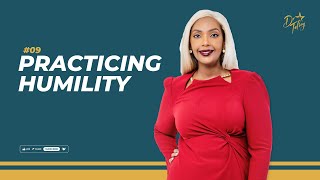
Dr. Nathalie Bitature argues humility is essential for learning and leadership. Ask for feedback, reflect daily on what you learned, and stay curious across disciplines. Humility prevents arrogance and keeps teams honest.
Chapters
Foreign. Hi, I'm Dr. Nathalie and today we're talking about humility. So humility I think is one of the most important areas when you start to learn something. I think when it comes to your mindset, it's very key to remember that you don't know. The wisest people know that they know very little. The more you think you know, the dumber you really are. So it's something that I think has helped me a lot in my learning journey to appreciate. There's always more I can learn, there's always the next level, there's always someone who can teach me and you can always be surprised by who these people are or where this source of information is going to come. So I feel like humility is important in two ways. One, to help you with your learning. So to have an open minded attitude and you feel like there's always more I can learn and there's more I can discover, there's always room to grow. I'm never perfect. So not to be too critical on yourself, of course it's important to encourage and motivate yourself, but also not to get too arrogant, which is the other side of humility. I think especially as success starts to happen or you start to see progress and change in your life, it's important to stay humble. Otherwise it gets to your head, gets to your lifestyle. You stop learning, you stop growing, you become more arrogant, you start to close yourself up to things because you think you know now. So I like to think of humility like bookends right at the beginning and at the end of different things. So before you start anything, take like a dose of humility and remind yourself, I don't know, let me go into this open minded or I know something but I might learn from this. And also at the back end when you feel like you're doing great and everything's amazing and you're on top of your game, another dose of humility. Am I really on top? Is the criticism correct? Is there someone I can ask for feedback? Because as you grow might outgrow the current people. You ask for feedback but doesn't mean you get to a level where you don't need feedback. Everybody needs feedback. So I like to think of humility in those two ways and give myself a healthy dose on both sides because it does help in your day to day operations. And I would say humility is part of a mindset sector of life. It's not something that you actively practice like a sport or a physical act or something technical, but it's something that you need to carry with yourself in your mind all the time and ask yourself specific questions and notice the different habits you have in your life and see, am I still humble? Am I staying humble? Sometimes you'll be invited for a meeting or for an event and you'll be like, I know all the things they're going to say. Maybe that's the time for a dose of humility. Or when you're moving to a new sector or a new field, you need to come with humility and say, okay, what don't I know? What do I need to know? How do I learn these new things? Because on the stages of learning there's many different levels or layers. And as you move from one to the next, you need to stay open minded. Because once you think you know, you stop accepting new information. Sometimes people who work in operations or like on the day to day will know more than you will know better than you. I work across so many different companies, there's no way I can be the one interacting with clients on a day to day. So I need to trust the feedback and guidance of my team who may be junior to me in hierarchy, but they have more knowledge than me on the operations on the ground, which is what do customers say about this food? Or how do customers feel about this product? Yes, I can read online reviews. Yes, I was probably there when we approved the product. But on a day to day it's not me listening to the customer say it's too salty, it's too pink, it's too big, it's too small. So they know more than me. But if I come into every meeting thinking I'm the boss, I know what should be happening. I'm not going to create an environment where my team is able to give me that feedback that is useful to the business and to the product or to the service. So it's important to stay humble, to remind yourself. You don't always know and you know very little, we all know very little. There's no human being who has the capacity to know absolutely everything. So it's important to make sure you remind yourself and get a healthy dose of humility constantly to keep you grounded, to keep you open minded when you're trying to innovate, when you're trying to improve something, you're trying to create something, you need new information. And then when things are going great, don't get too comfortable, keep pushing yourself, keep improving. Now that you've reached this level, let's find another benchmark who is not just our competitor? How are they doing this in another country? How are the people who are doing more than us in sales or in morale or in teamwork doing? What is the best company in the whole world for staff morale, or what's the best company in the whole world for the specific sector that you work in? There's always someone who's ahead of you. There's always someone who's innovating, who's growing not to make you feel bad, but to motivate you. Because you can't just rest on your laurels, you know, you don't just reach a point and say, okay, I've reached. I'm great now. I just have to maintain this for the next 20 years. Life is always changing. Things are so dynamic. The environment, the market, the customers, the opportunities, the competitors. So you need to keep humility as part of your key core values, I feel. Because that's something that's really important, and it's also something you can seek out from your mentors, from the people who inspire you. See who they are inspired by, who they listen to, what's their process for getting feedback, for listening to criticism, for assessing what needs to happen. You need to find a delicate balance because you need a certain level of confidence, right? To be able to pitch things, to sell things, to believe in your company, to believe in your people, to believe in your projects, to believe in yourself. But you don't want to go too far where you're now being arrogant and you're not listening to other people. As a leader, you should not be the one speaking the most in any room. That is something I learned from Nelson Mandela's book. It's important that you are creating an environment where other people are constantly giving you new information and feeding you with inputs. As a leader, it's your role to absorb all that information and now see what's the best possible decision, what's the best outcome or the way forward to lead people to. But if you're constantly talking and telling everyone how much you know and how you're the smartest and you're the most experienced and your company is the best, you're never going to hear about new things or alternative ways of doing things. Yes, sometimes it can be annoying. You know, you'll meet someone and they say, have you thought of this? Like, of course we've thought of that. We tried it. It didn't work for this reason. But you're not going to say that to someone. Explain, oh, yeah, that's a really great idea. Why would you like that product or service. Ask them, understand their background, because this is your company. It's in your best interest to get people's feedback. And even as a person, ask for feedback from your friends, your family, your colleagues, the people around you. Do you think I'm doing this too much? How am I performing on this task? Should I improve in this area? Don't just wait for appraisals to know if you're doing well or badly on something. Take an attitude of growth, of learning. Be humble and say, you know, I think I could learn more from you, from someone in your office and mentor them or shadow them. Ask if you can show up for this meeting or if you can get this kind of training. It's important to keep that attitude because it keeps you growing. I don't think being humble keeps you small. I think it's what helps you keep moving forward. Because if you think you know something and you're an expert at something, you're going to stop looking for more information on this area. You're going to stop trying to grow in it. Something I talk about a lot is learning and how you learn, right? So for me, when I have to move into a new sector, which happens every like twice a year, maybe, I go on my social media and I follow lots of people in that sector. All the industry experts, the big companies, the people speak about it, the competitors who in that field immerse myself in that area, learn lots about it. Then when I feel like I have a good hold on it, I know all the abbreviations and the market terms and what's good and what's bad and what I've now learned, the lay of the land, and I'm moving on to the next thing. I don't unfollow all those accounts because now I know, I leave them there. Yes, 60% of the things they'll tell me, I've seen it before, I have good understanding. But 40% of the time I'm learning something new. There's new innovation in this sector, there's new innovation in the field. Or a company tried this, or this company is doing this campaign or this promotion or this partnership, and you see something being done in a new way. That's something that's important because you're now moving across disciplines. It's one thing to learn everything in one area, but then if you become too niche, you don't see how that connects to other things. So you need to stay appraised in that field to see how it integrates and connects with other things. It's one of the things Elon Musk is very famous for, because he did not specialize in one specific sector. He's an expert on several different things. And all his companies, he crosses them around. And that was what had made him an expert in a special kind of way. So even if you work in one specific niche, I'm a lawyer or I'm a banker or I'm an architect, and that's all you work in. Make sure you follow a variety of accounts or make sure you keep getting new information in your field, because it's always updating. Look at how many sectors changed because of COVID Everyone had to learn how to work with technology in a new way faster than their sector was expected to do that. So you need to keep your sort of your finger to the pulse. You know, know what is going on in your field. And that takes a humble attitude. If you think you already know, you're not going to go on your LinkedIn and scroll there and see what's happening. Go on your LinkedIn, follow the right leaders in your sector, in your field, in areas that you just find interesting, and see what can I learn from them. Today I'll even take it a step further and at the end of each day, think about, what did I learn today? If you go three days, four days, one week, two weeks, and every day you've not learned something new, then you're doing something wrong. Because the world is constantly evolving and changing. You need to be moving forward. Whether you learn something funny or something interesting, something for work, something for home, a new recipe, a new route to drive home. Learn something you every day. It keeps your brain flexible and active. If you do that same thing over and over and over, your brain goes into autopilot to conserve energy. That's why you can be in the car driving and you'll find yourself at home. Yet you are not going home if you're not paying attention. Or when you reach a door that you open all the time, your hand just opens and unlocks it in a way that you know. Or the way you get dressed every morning, everyone has a way that they put on pants right leg first or left leg first. You don't even think about it because your brain is designed to conserve energy. So anything you do multiple times, it does automatically, without consciously thinking about it. But if your whole life is in autopilot, you're not going to notice new things, new connections, the way things are happening. Keep learning, trying different things, putting yourself in new situations, meeting new people, being uncomfortable in things that you don't normally do, do it often so that your brain stays agile. Then you'll make connections, you'll think of things, you have ideas, you'll be be creative because you're bringing in lots of good inputs and your brain is agile and flexible. So the outputs from you, your work, your thoughts, your time, your energy will help improve in quality. And these are the things that I think are a benefit of staying humble. There's a lot of different parts to think about, but if you are conscious of it and you start to apply this on your day to day, ask yourself reflection questions, write things down. Put yourself in new situations. Appreciate when people are trying to give you information, regardless of what background that person has. Take criticism, ask for feedback. These are small things that you can do to make sure you keep a humble attitude and you keep learning and growing as you move forward in life. Gary Vee describes humility as having an accurate view of oneself. I love that quote because I think that's something that's going to keep changing and that's going to be fluid. But being humble reminds you of just how small you are in a positive way. So ask yourself, how do you practice humility? What can you put into your life? What are the tools and the moments in your day that you can use to remind yourself to carry this value of humility across everything that you do?










