StartupTVBoston Musana Carts
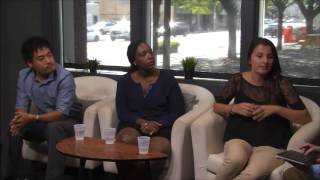
Nataliey Bitature, Keisuke, and Manon built Musana, a solar-powered street-food cart for vendors in Kampala, Uganda. Vendors using the carts increased their daily income from about $3 to $24. The team is competing in the Hult Prize, which awards $1 million to student entrepreneurs tackling poverty.
Questions this video answers
December 22, 2016 (video metadata / title).
10 carts deployed in Kampala.
Approximately 30 vendors (about 3 vendors per cart).
About $6 in revenue per day (netting $3–4 after costs and bribes).
$18 per day (food sales).
Chapters
Welcome to Startup TV Boston. I'm Michael McCarthy and I have some very special guests here today who in under a month or so may become millionaires at the hands of Bill Clinton. So stay tuned and we're going to explain how these three people may become millionaires pretty soon. I'd like you to introduce yourself. Welcome.
Hi, my name is Keisuke, I'm one of the co founder of three co founders of Musa Nav Kwaitz and I'm studying social entrepreneurship at San Francisco and the school is called Hult International Business School and we are so excited to be here. Thank you.
Welcome.
I'm Natalie, I'm from Uganda. I'm also studying my master's in social entrepreneurship at Hoult Business School and a co founder of Musanna Cards. Thank you for having us.
Welcome.
Hey, I'm Malan, I'm the third co founder of Moussa Nicat. I'm from France and we are super happy to be here and speak about our startup today.
Beautiful. Tell me a little bit about Holt University. What is it and why did you decide that you wanted to go to school there? Kisuke?
One reason why I decided to go to Holt School is because the school has one program, it's called Social entrepreneurship. That was the only reason. But also I found out the school is really international and I can just expand my relationship and also I can get some cultural differences. That's really great.
And where is the school located?
So the school has different campuses all over the world but we are in San Francisco. But in the US also we have three campuses in Boston and New York and San Francisco and that school is located in Shanghai and Dubai and London.
And do you spend all of your time in the San Francisco location or do you switch around during your degree?
So we are taking a one year program and in a one year program we have five modules and after completing three modules you are allowed to locate into other campuses. Depending on the program then you can just decide where you go. But usually after three module you can just decide to go to the different campuses.
I see. And Natalie, what brought you to Holt University?
It was the program specifically. I knew I wanted to do something that was about business, but not just business for making money. I didn't want an mba. It had to be business with a purpose. So I started looking into social entrepreneurship while I was founding my own startups in Uganda and seeing that business can have a positive impact on the community. And then when I found this program I was super excited because actually a few years before I'd Been at a MBA fair in London and I remember liking Hult because of the ability to rotate campuses. I think it's really important that we engage in the global world that we live in now. So I was very happy to know that they had the exact program I was looking for.
And how did you choose San Francisco's campus or did it choose you because of the program?
It chose us. So normally the program is in London and San Francisco. You can rotate between the two for our class and they wanted us to do the first three modules all together because we're a small class compared to the amount of MBAs, about 300 on each campus. There's only 60 MSCs, the social entrepreneurs. And because we think in such a specific and different way, it's really good to be together. So for the first six months of the course we were like a family. The 66 of us all know each other so well, we understand each other so well, we read the same things, we think the same way, we laugh at the same things and we all have this purpose that drives us above everything else. So it was really great to be together for the first six months.
And how long have you been in the program? When did you start?
We started at the beginning of September last year. It's a one year accelerated program so you don't get very long holidays.
So are you going to be graduating in a month?
In two weeks actually.
That's a fast program.
It's been an intense year.
And what brought you to Holt University?
I will not be very original, but the program too definitely spake. It's very rare to find a master of social entrepreneurship so we didn't have that many options. And as I guess everything in my life I've been a bit last minute but it has been a great opportunity to find this program. I was working in Paris in a consulting firm and I spoke with one of the co founders and I asked him, what do you think? Should I do a business school in Paris, one of the most famous ones, or should I go to San Francisco? And he graduated from Paris and he told me, you can go to Paris, you will be with the best students, you will be with the best professor, but it will have no money. Or you go to San Francisco where there is opportunities, where there is innovation, ideas and when there is money and when you can do something right. And I really wanted to do social entrepreneurship. I was passionate as I'm still passionate by social distance. So I went to San Francisco. I was not very excited by the idea to live in the Us. But what happened after, like, overcome my expectations for sure.
So for our studio audience, can you share with us your personal definition of social entrepreneurship and why that's attractive to you? Keisuke?
Actually, one reason why I I chose San Francisco, this is another reason is because ISIS or terrorism and that thing happened and they are still doing really horrible to the world. But also I believe that business can change the world because destroying something or destroying bad people or destroying bad terrorism is not a good solution. But I believe that the problem should be more like a deep. You can just dig in so you can just find a solution. Then we believe the business can solve the problem is because usually what if people can have something to protect, for example, a family or a children or friends. So they are not gonna think about having guns or doing something bad. But if they are so happy about their life, we can just reduce or we can just disappear, or I don't. Nothing bad will happen in the world. So like Natalie said, our students, social entrepreneurship, they believe that this business can change the world.
So your personal take on social entrepreneurship is that you think you can make the world more peaceful by people being more content and happy with their lives and there's no reason to be terrorists to get what you want because life's good.
Yeah, exactly. And so one thing is that and because the social entrepreneurship is so sustainable, so you can just keep doing what you want to do. If you rely on other people, that's not sustainable, then we can just keep doing what we want to do and what we are doing is a good thing.
So.
So for profit is also helping us to keep doing what we really want to do.
Interesting. Natalie, what's social entrepreneurship to you and why does it attract you?
For me, social entrepreneurship means you're doing business, but with a higher purpose. You're making a positive impact on the community you work with and on the planet as well. So before I did this, my first degree was in education and business, because I see them as things that go together. I worked at a rural school in Uganda and I raised money for the school because I thought, this is such a dire situation. I had never seen a school that was so dilapidated and had no funding. It was a poor church school, and it had hundreds of kids packed into these tiny classrooms. So I did a whole fundraiser and charity and went around and got some money and built some classrooms. But I went back a year later and nothing had changed since I left. And then I realized it's not the school's mandate to be raising money and building more classrooms. They don't have the funding, they don't have the staff, they have to focus on the education. So I knew that there's a gap and there's something missing. This charitable model is not sustainable. You can't just give someone something and then disappear. You don't enable them, you don't empower them to do something for themselves the next day. So I started looking into social business because I come from a business background and I understood the education side and I wanted to do more so that change is sustainable and it keeps going and growing and moving and progressing.
Interesting. Mano, how about you? What is social entrepreneurship to you and why does it appeal to you?
I think for me social entrepreneurship should be the norm. I realized a few years ago that we can continue like that. We can't continue the way we are doing right now, business. I think it's not sustainable. We don't put human in the center, we just put profit or like totally unreasonable goals. And so I realized that a few years ago I went to business school, but before that I knew that I wanted to do social entrepreneurship just because it makes sense for me to think about human first, to think about ecology, to think about education, health, all this problem in the world that nobody want to solve. We can't close our eyes for that long. We can continue like that. So yeah, for me it's something obvious, something that has to be the norm and something that just can make you feel that you are here for something and you mean to be.
And thank you for that. Caseke for you. Why was Holt University the answer for your social entrepreneurship goals?
So I looked at other school, if other school was providing social entrepreneurship and I couldn't find technically exists, but I thought the Houthi is really great for social entrepreneurship to learn. And like I said, the school is really international. So if you want to be a social entrepreneurship, you have to know the world better first. And I thought I can learn social entrepreneurships from school, but at the same time I wanted to learn from my classmates from the different background and different countries that attracted me a lot.
Thank you. And Natalie, why was Hult the answer for you?
I liked Hult as a business school because of the five campuses that they have around the world and the rotation program. So for every student that goes to Halton, an accelerated masters of one year, you spend about six to eight months on one campus and then you can rotate to other campuses. This whole globalized world that we live in, it's really cool to engage and experience it first hand for yourself. So when I found that Hult had a program in social entrepreneurship, it was perfect.
And which campuses have you studied at?
San Francisco and Boston.
And have you had the opportunity to go to the other campuses? London or Shanghai or Dubai?
Yeah, I've been to the Dubai campus. I went there for a campus premier. Halt invites you to come and see it before you attend. So they sort of have like a weekend with like sample classes. You get to understand the lifestyle and see the people that work there and meet the other people who would be your classmates. And then I'd lived in London for a long time, so I've also been been to the Holt London campus just to check it out and see, because I thought I wanted to go to San Francisco and Boston and London in my year.
I see. Thank you, Mano. Why was Holt University the answer for you for social entrepreneurship?
I think definitely because it's the first international school in the world. So like, that was appealing for me also for San Francisco, I think, because there, yeah, I saw that if I have to move to the US it will be in San Francisco for the opportunities and the innovation and Silicon Valley mindset. So it makes sense. And yeah, to be honest, I didn't really know now, and now I know my experiment held for one year. I see the value in the staff, in the faculty, in the international environment. It has been a great, great school.
It seems like things are working out for you. You've been in the United States, all of you under 12 months, and Bill Clinton might be making you millionaires. Start us from the beginning. How is it possible that Bill Clinton might be making you a millionaire? Natalie.
So we're participating in the HALT Prize. The Halt Prize is the world's largest startup accelerator. It's a student competition that Bill Clinton sets a challenge every year for global issue that affects everyone. So. So for this year, the challenge is to double the income of 10 million people who live in crowded urban spaces by connecting them to better goods, capital and services. So every year, 25,000 students around the world from all kinds of universities apply with business ideas that are innovative and disruptive to suit this challenge. And so the final six present at the Clinton Global Initiative in September and UN Week in New York. And President Clinton gives you a million dollars as seed money so you can start this business and change the world.
So you were one of the 25,000 applicants. And where are you now out of that field of 25,000?
So now we have been selected among the six finalists, and we are going to pitch in one month from now, exactly. For this 1 million, you're close.
You're really close. So you basically have a one out of six chance.
Yeah, actually, yeah. One of six fights? Yeah.
You think you're gonna win?
Yeah.
Oh, yes, we have some.
So how many rounds did you go through? How long did it take to get to the final six? You started with 20. Walk me through that process. You when did the application start? What was that like? Walk me from being one of 25,000 to being one of six. How did that happen?
So I guess because we are like three Master of Social Entrepreneurship. We applied to HUL International Business School. We all heard about Hull Price before arriving at school. And we all have a different point of view about the challenge. I wanted to do it. Natalie was totally open and Keisuke was so sorry. He didn't know if he wanted to do or not. So the process is we had to register before 5th of November. And the first round was the 6th of December. At this time, the first one is just internal. So you have to compete in your school with your different friends and different teams. So in our school there were like 30 teams which registered. And D day, only 15 teams show up because the challenge was too broad, too challenging. And then after that, the second round is in March and it happened in the five campus of Hull. So San Francisco, Boston, Dubai, London and Shanghai. And 60 universities goes to each campus from all over the world. In San Francisco where we were, there were like Harvard University, Yale University, Cambridge University, University from Australia, Mexico, Bangladesh. And among these 60 universities, we won. And now we are here in Boston for an accelerator with the six finalists. And we are going to pitch the six finalists in September at the Clinton Global Initiative.
So the other finalists came from Dubai, London, Shanghai, all the other locations.
They have been selected in all these five campuses.
They won at those campuses. They are not from those regions. They had to travel to the campus to compete in the regionals.
So the team selected in Boston comes from a College in U.S. indiana. In Shanghai, it's a team from Bangladesh. In London, it's a team from London. And in Dubai it's a team from Ghana.
So even though Holt is sponsoring this prize, you don't have to be a Holt student to do this.
It's a very international program. Actually, one of the universities with the most teams was the University of Egypt. They had 125 teams completed beat in one university for this prize.
And if we win this year, we will be the first team from Hult which will win the Hull prize.
Well, it sounds like they're being as fair as possible.
They really, really are. Don't get any help.
So where is the million dollars coming from?
Actually, it comes from the Halt family. Bertil Hult, who started the Hult Business School, owns Education first, which is one of the world's biggest education organizations. And he also funds the Hult Price Foundation. So in partnership with President Clinton and Professor Muhammad Yunus, they give us the prize to start the company.
And who is the professor you just mentioned?
Professor Muhammad Yunus is sometimes called the godfather of social business. He began the microfinance movement more than 40 years ago now. And one of his big philosophies is instead of giving someone a dollar in charity, you lend it to them so that they can improve their life. Pay you back that dollar so that same dollar can help the next person. So you keep the dollar moving through society. It's a more sustainable model than charity.
And the Peace Nobel Prize in 2006.
He won the Nobel Peace Prize in 2006. So one of the judges is him. Is one of the judges Bill Clinton?
Bill Clinton's not a judge. He's one of the facilitators. So. So every year the judging panel has Professor Yunus and then different esteemed leaders in different fields, like the Prime Minister of Australia, Mr. Mo Ibrahim, the President of Earth Day, the CEO of Kiva. So different people who understand the world of social business can be good, critical judges.
And how long has the prize been in existence?
Seven years.
So is the prize, the requirements, the challenge the same every year? Does it change? Does it repeat? Tell me a little bit more about what they're asking you to actually do.
So it change every year. Last year it was about education in urban slum. The year before it was about health and sanitation and before nutrition. So it changed everywhere. And also the concept changed. At the beginning they were more targeting like non governmental organization and non for profit organization. And they switch to build like sustainable, fast growing social enterprise like we have today.
So non governmental organizations or NGOs, those are, those are non profits?
Yes.
And are you a non profit NGO or no? How would you classify the business structure that you've decided for yourselves?
So our business model is a social business. It means we need to make profit in order to reinvest in the company so that we can grow and scale. It's not about getting rich very fast. It's about helping as many people as you can without having the strings of grants and donations and needing to spend money traveling and fundraising constantly.
The idea is to do good and to do Profit at the same time. So the profit is not the main goal, but it's necessary to be self sustainable. The main goal is to solve an issue in the society, so health, education, poverty and so on. But it's really a new sort of business. But we believe that it's the future.
And what is the challenge this year for the Holt Prize? What are the specific requirements?
So we have to double the the income of 10 million people by 2022 living in urban slum by better connecting them to goods, services and capital.
So when you had the challenge, Natalie, you weren't interested in this, but you were?
Manon?
I was, yeah.
So tell me what came first? The business idea, the challenge, the team. What was the first step? Because the. It sounds like you were the one that was interested in this. Yeah, walk me through the timeline here.
Yeah, so first I was interested because I knew the potential of this prize, but I didn't know if I wanted to volunteer or to compete. And then I called my dad and he didn't know nothing about Hull Prize or Hult International Business School except the fact that his daughter were going there. And he just told me that it's not the same woman who competes and the woman who volunteers for what she stands for. So he really pushed me to compete for what I believe. And as long as I believe in social business, I'm pretty sure that you can't achieve big things alone. So I really privilege the team. And from the beginning I knew that I needed a team before any ideas. So I really start to recruit the best teammates. And Natalie came and I just met her and I knew that if I had to start something one day it would be with her. So I tried to convince her over like a few weeks because we start school like in September and we had to submit our team in November. So I didn't have that long to convince her. And she was hard to convince, but because we were living close to each other, like every day. When I came back from school with her, I was speaking about her prize and speaking about all the potential and all that we can do together. And somehow I convinced her. And then we just met Keisuke in a bar like one week before submitting the team. And we were only the two of us and he was super excited, super motivated about the challenge and the idea. And he was also very famous in our class, everybody knew him. So we thought he would be a good asset in the team. And we were very attracted by his motivation and energy. So we just form a team and we apply one day before the deadline.
You do do things at the last minute, right? Yeah. No kidding.
No, no kidding.
So they say that some of the the best form teams share similar value systems. They share the same values. When you were pursuing Natalie, what values did she have that you wanted on your team?
Yeah. So obviously we are, like, super different. The three of us, I think, is one of our strengths. But we definitely share some values. So when I met her the first time, I was just like, I find her very friendly, very, like, willing to share about her life. And, you know, she's this kind of person who is very, like, I don't know, she just share a lot, which for me is one of the most important value in my life. And then it happened that we were together for a project at school, and I found her very creative, very empathic. And she just, like. She just makes you speak about your life without you, without realizing it. And this kind of person who makes you comfortable. And she's also very smart to understand you very well. And once again, very empathic. So I think all this just made me realize that I like this girl. And I also trust my guts. Right. There were no reason I didn't know her that much, But I just knew that I wanted to start something with her. And I think Kesuke Isami also value a lot human in general, and he has a lot of empathy for people.
So, Natalie, what did Manon say that made you change your mind?
She didn't stop.
Perseverance. Perseverance.
But it was great. We talk about it so much, and I do love social business and the idea of it. I just wanted a break from my real life. But I really appreciated Manon. And she was one of, like, you know, those people that you meet and you have to be friends, and, like, it just clicks. And we'd spend so much time together talking about the world and the changes and the dreams. And Manon has these principles and this energy. And she tells you that we have to do this, and you just believe her, like, we're going to do this. She said it, and I didn't believe her. And she kept saying it. No, we're actually going to do this health prize, and we're going to win this, and we're gonna keep going. And I was like, yeah, yeah, Shwarma. Okay. I didn't take it too seriously, but I always took her seriously, because when you meet her and you feel her energy, you know that this is someone who's going to do something special and important, and she's not going to stop until she gets it done. And I think it's her energy that's managed to carry us this far. Because it's been a really long, volatile rollercoaster of a journey. But. And it has lots of extremes. Like in moments, we've been in the field together. We've spent so many nights together, just the three of us working and trying and trying to be creative. And she always has this light way that she sees it. Like we're trying to do something so delicate and so important. It's. It's like a juxtaposition. It's such a heavy weight to try and change the world. But she does it with such grace that you just believe that what we're doing is the right thing. Even if we don't have an idea and we don't really know what we're doing, it feels right.
So the team is being formed. And Keisuke, how did you. So they met you in a bar. How did you. What did you. What did they have to say that made you say, I want to be a part of this? What did you like?
I think I was just in right place that time. So, yeah, I'm a kind of person who want to take or grab some chance if the chances in front of me. That's why I wanted. I was thinking maybe grabbing a chance, which is participating Hope Price is a good idea. But I was thinking because I didn't have any team. Then one day, just Manon came to me because I was in the right place. We are in the same place. And we just talked about Hope Price. And Manon was looking for one more teammate. So I thought, maybe this Manon is just giving me an opportunity, so maybe I should grab it. That was so like Monopoly said, I was not so serious about that. But also I knew both of them. And actually I lived just two blocks away from where they lived that time. So we are kind of neighbors as well. And I was so comfortable talking to them in a classroom. Of course, I love each classmate, but I'm so comfortable to talk to them. So as I felt a strong energy from both of them, so I thought, okay, this girl just invited me to join the team. That's great team. So yeah, that's why I jumped into the team.
So far, things are working out. You have a 1 in 6 chance becoming a millionaire because she talked you into joining the team. So what's the idea and who came up with it? Let's start from that. What is. What is the idea that you're going to do to become millionaires?
Okay. Maybe we start with the idea and then how we came to them. So we developed for street food vendors in Africa, solar powered carts. So you imagine here, like many people eat from food carts, right from food truck in the streets. So we developed the African version of food trucks, which is a simple cat with solar panels on the roof and can power sockets and light. So it's a very simple concept, but can totally change the life of a street vendor in Africa.
Where is the innovation or disruption in this? Because we have that in the United States and I know this is not the United States. So what's innovative or disruptive about this idea in Uganda?
So street vending is a very contentious issue in most parts of Africa. Most vendors are unlicensed, they're illegal, the industry is not regulated. So it's the livelihood of hundreds of thousands of people. They know how to cook, they know how to sell, they have a great product. But they're making such low margins on everything. There's no health and sanitation, there's no regulations. They're working on simple tabletops. They're using inefficient cookstoves which are charcoal and full of small. It's terrible for their health and for the environment and everyone around them. So we sort of found a way to be a bridge and a solution, a holistic solution for these vendors. So they get the cart which has what they need, which is an eco friendly grill, which is a clean improved cook stove. They have the cart which has the access to energy, so they have light bulbs. The sockets used to charge phones because 80% of people in Africa have a feature phone. It's not a smartphone, but it's a feature phone. Yet most of them don't have electricity in their homes. So phone charging businesses, big business in markets, so that's a value added service that they can provide on their cart. And most of all, we help them to come into the formal economy so they'll be legal and licensed, they have an id and they have some dignity and pride and consistency in their jobs. So from our pilot test that we've had in my hometown in Kampala in Uganda, the vendors who are using our carts are more than doubling their incomes because now they have access to a whole different type of clientele. People who are feeling safe to eat street food for the first time because the cart is clean and safe and regulated. They're not being arrested or seized or having their goods seized or harassed by the authorities because they have a right to be there. They're paying taxes, they are engaged citizens. It's a whole package of appraising for these vendors. We also provide them with financial literacy training and wash training so that they are more aware about their business and their skills and their capabilities. So we sort of give them a helping hand. We're not trying to change what they do or force a solution down their throats. We ask them, what do you need? How can we help you? And then that's how the idea came out.
So it sounds like the disruption is you're taking, you're modernizing them. One is you're making it a legal business from an illegal business. That's the first thing I'm seeing. The second one is you're getting them out of a bribing environment that puts them at risk to being criminals into legal, law abiding citizens. And then I'm seeing the cleanliness factor on the hygiene and then another income stream on doing the phone charging. So is that. Am I missing anything?
No, it's exactly that. I think it's a suitable solution.
Right.
We really study our environment first in Kampala. We understood the challenges and we tried to put all the solutions together. So it's more that we are the first who bring the different solutions for these street vendors together. It's a package.
So it's sort of like a three legged stool. So one leg I'm seeing is a legal industry that right now is illegal. That's the one leg. The next leg is clean and hygienic versus currently not clean and hygienic. And the third is a separate income stream. It's almost a separate business that it's phone charging where 80% of the citizens have phones but they don't have electricity. So you're actually fulfilling a necessity, kind of like a utility.
Yeah. If we think about this third one, it exists already in Africa. Some kiosks just perform charging.
Right.
With solar panels. But what differentiates us, I think, is the two others. So you summarize it very well.
What I like about how long does it take to charge a phone?
It takes less than one hour.
So while they're waiting around for an hour, they buy a soda, they buy some food. Is that the idea that while they're hanging around, you're there to sell them something else? The food part?
Yeah.
They're plugged into the community. So it's someone who was already selling food. You know him, you trust his. Well, you, you want to buy the food, have your lunch or your breakfast or your dinner, you can charge your phone. The power also powers the light bulb. So he can work whatever hours that he prefers, even in the evenings for the later rounds of food.
But yeah, the idea and the vision is also to diversify this business and to create a community around the cars. You can charge your phone, at the same time having a egg rolls with your neighbor. You can also buy mobile money, which is the equivalent of what, how do we call it here?
Venmo.
Venmo, sure. Venmo for Africa and so on. And I mean, for now it's at this stage, but we can imagine a cart like in a bigger scale in few years. Right. The cart can be bigger and do more things.
The cards are designed in Uganda for the Ugandan market. So how we see this is we would make sure that they're locally suited to the different countries that they operate in. So right now the stove is designed for egg rolls because that's the most popular street food in Uganda. We worked with a team of Design Without Borders, team of designers from Design Without Borders to come up with this using human centered design. So asking the vendors what they need, what they think, showing them the different versions, oh, we need more space. Oh, I need wheels. Oh, I need that. So that we make something that's perfect, perfectly suited to what they need to improve their business.
What I'm kind of seeing is, correct me if I'm wrong, it seems like the Starbucks model, where Starbucks will give you free WI Fi. They let you sit there and work all day. As long as you buy maybe one cup of coffee, they'll let you hang out for several hours. It seems that you're doing the same thing. It's a community gathering point. They have to sit around for an hour anyhow and you're giving them the ability to buy drinks and food. So it's kind of. Is that an accurate depiction that you're sort of like the Starbucks gathering place of Uganda now in the market?
Yeah, for developing countries, definitely, because some carts claim themselves Starbucks of Europe or Asia. But we do it for developing countries.
Now, if you're doing, if you're doing the phone charging, can you also do WI Fi?
Yeah. Our partner mtn, which is the largest telecom in Africa, is looking into making WI FI hotspots of each cart. And also we're looking at the difference with different types of solar systems that we can plug into the cart. So we can have a fridge or a tv, different kinds of business features.
Yeah, a TV can sound very silly, but it's not that much silly. Actually. The first feedback we received from the field. So in February, we went to Uganda, Kampala and we just built this simple car to show the concept to the vendors. And just by going to the market, like hundreds of vendors were around us and asking questions and so on. And one of the first ask was to have a TV the cat. Because in Uganda, 80% of the population doesn't have access to a TV. So having a TV is just a luxury. And if you have a TV on the cat, that means more customers, more sales of food, more sales of beverage, and just more attraction.
And I like the idea that people can now come and they're going to be watching free television. I like that they can charge their phone, they can have a drink, they can eat. So I could see people hanging around the cart for several hours at a time. Do you have the electricity power to power the television?
So yeah, definitely, we are outsourcing that right now. So each solar panel comes with a lithium battery. So we also have the storage space in case if it's not sunny or if it's at night. For now, our two prototypes are equipped with a 30 watt solar panel and a 100 watt solar panel. A 100 wide solar panel will be enough for a TV, but only for a TV. So we are developing another solar system to be able to charge one tv, two light bulbs and sockets. So that will be for the next round of car.
So the first round that you have now will not have a television, but it will be able to charge phones. And how many phones can you charge on a eight hour shift or in a day? Do you have any numbers on that?
Yeah, up to 30 phones for an eight hour shift.
Okay. So you can have 30 customers if they want to do a full charge. How are you going to price that?
So it's already working, right? I mean, so you have this kiosk just like this shop where people just plug their phone for 500 shillings. So it's 10 cents. 10 cents, one phone.
It's an existing market.
Yeah, we will just take the same rate. And I mean it's also up to our vendors. Right. They have the right to put the price they want. We offer them the opportunity to do it. But it will be around 10 cents.
So you can make about $3 a day in phone charging.
Yeah. Which is like a pure income for them. Right. They just have to pay the cart for that.
And what do they make on just the food cart? Just on the food sales in general.
Without Moussana carts?
Without Moussana carts. Just the food carts. Now what do they make a day?
So they make an average of $6 in terms of revenue after selling 200 egg rolls. So they work from 8 to 8. They sell as much as they can, but they make a very small revenue of $6. And from that you have to count the daily bribes and their cost of goods for sale. So they, they go back home with between three and four dollars.
Tell me about these daily bribes.
So we have been like asking a lot of vendors and also we can see it in the news like there is no, no one week without seeing one vendor which is arrested by the police or which is evicted from the market. So that's how we define bribes. And they can pay up to $50 when they are arrested. So we define that with a $50 bribes, it's around $3 per day.
And if you have a license now, you have an exclusive license. So you're the only people that have legal cards.
Yeah.
What happens when, with regard to the bribes, now that you have a legal.
Business, they're eliminated because each cart has the logo of the city council and will have the vendor's ID number that's registered with the council and the vendor has a national ID that matches it. So when the city council enforcers come to check, they can see and prove that I am a legal business owner. This is my business. This is my license number.
So just by having a legal license, they now go from. You've doubled their income. They've gone from $3 to $6. What does the license cost per day?
About $0.30 when you divide it over the time of a year.
So compared to $3 bribes now $3 abroad become zero and they have to pay $0.30 for one business license.
That's pretty minimal. So you're almost netting a double just by having the license. And then it's $3 a day for the electricity. So you've tripled. And the prize is asking you to do a double.
It's been way more lucrative than we had ever imagined because even the food sales triple just because of the appeal of a clean, safe cart.
So you've quadrupled. I'm making so much money. So walk me through this. You were starting out with $3 a day for a regular cart. That's what's happening now. Now that you've become legal with the license, it's about $6 net. So that's a double. Then with the phone charging, that's about $9. So that's a triple. But now you're telling me, Natalie, that people are buying more food because it's clean. So you're getting a Net new customers that normally were not food cart people. So now that's $6 a day that a regular food cart person has. What are the sales now on your cart? Just on the food side?
$18.
So you're making $18 just off of food and then you're making $3 off of the electricity for 21. Do I add another $3 for the non bribes?
Yeah, essentially because they a cost saving.
So it's. So your carts are netting $24 a.
Day versus are very excited about it.
Versus $3 a day. So you've gone eight times. Okay, yes. So you've gone eight. You got Eightfold increase in income and the prize for a million dollars is only asking you to double it. Okay, so you've overshot that goal. That's good, that's good. But now comes the next thing. Now you need to. You're doing it with how many people now? How many people have you? I don't even know what the number is for. That's more than a quintuple. So you're doing eight times now in real time. How many carts?
We have 10 carts deployed around different parts of Kampala and each cart serves three vendors because they tend to work in teams. It's not just one person who can run this business the whole day. It's too much work. So it's the three of them on each cart. So there's 30 vendors whose lives have been improved.
So your three carts have impacted 10 people.
10 carts, 30 people.
10 carts, 30 people. Okay, so one cart, three people. So you need to have about three and a third million carts out there to affect 10 million people, is that correct? Show me the pathway to getting three and a third million carts out there by 2022. 2022. So that is six years, six, seven years. So you've got 10 carts, you only need 3,300,000 more. Show me the pathway. How are we going to get there in six or seven years?
It's not as hard as it sounds. So these 10 carts were locally produced in Uganda, but they were quite costly for us. So what we've done is we've taken the design made in Uganda for the Ugandan carts. Working with a Chinese manufacturer, they build them there, flat pack them, shipped them over to Uganda and then we distribute them and manage the process. We take the same model and the same ecosystem, working with the local government and the local partners, the solar suppliers, the financial literacy companies like mtn, and we replicate it through a franchise model across Africa. So we're already speaking to the government of Kenya and the government of Tanzania and Zimbabwe, because these are all countries who have problems with street vending. Because there's so many people street vending, it's unlicensed, it's unregulated. And now they're seeing what a difference Musana is making in Kampala. Because our mission is aligned with the mission of the local city council to make it a cleaner, safer, more engaged, community driven city. It's an example model for the rest of the region. So what we do is we take the same system and replicate it. Right now in sub Saharan Africa, 25% of the workforce are street vendors. Africa is the fastest growing continent in the whole world. The population is due to double in the next 40 years. The street vending industry is a 200 billion dollar industry.
200.
200 billion dollars once you move to West Africa. Lagos is a city of 20 million people. Think of how many street vendors are serving that population. Once you have the model that works where they're paying small daily installments so that they can afford this infrastructure, it cleans up the city, it changes their lives, it increases the economy of the city. It's doable and you can do it fast because people want to do it. So we don't have to roll out 3 million carts and manage that logistics process. You work together creating collaborative cities.
Now, how many food carts are out there now that you want to convert?
In Kampala.
You need to do 10 million carts. No, excuse me, you need to do about three and a third million carts. How many food carts are out there now that you feel are in your scope, that you would like to convert?
So in Kampala alone, there is 100,000 carts. So we can just multiply it by we target around 15 cities in sub Saharan Africa.
Now what is, what is your market? The world. Africa, a part of Africa. What is your market?
Our primary market is Africa because this is where the situation is so dire. It's where there's the most dysregulation. The people are earning a minimal amount this less than $5 a day. If you look to Latin America, it's way more regulated. And also they sell a lot more clothes in street vending. And if you look to east, to Asia, like South East Asia, that's where like countries like Singapore have really, really organized street vending. Philippines, Indonesia, there's systems, there's order, it's clean, there's regulation. Their need is not as dire as the need in Africa. We're still open to it, but the model will have to Change.
So how many, how many food carts are in Africa now within the market that you want to influence? How many are there now?
So right now they're not even food carts, they're tabletops. There's more than 40 million tabletop vendors selling street food on the continent.
That's what I'm asking. So 40, so your, your total market size, your target market is 40 million carts right now. So you need to convert three and a third million of those 40 million. So you're looking at about a 10% market penetration. You need 10% of that market to convert for you.
Yeah. Knowing that also we want to promote employment. Right. We don't want only for the first year we will target current street vendors because for us it's like less risk to take. But in the long term we also want to create employment. So just like all youth unemployed in Africa who want to start a sustainable and legal business can come to us and start a muson account.
The theme of my questions are do you qualify to win the prize? And I'm seeing that there's a two prong challenge here. One is to double the income. You've by far beat that because now you've gone eight times the current income. That's great. Now can you do it to 10 million people? And I'm hearing, correct me if I'm wrong, that you can do that because there's basically 40 million carts out there now you need to convert about three and a third million so that you can hit your numbers of 10 million employment three and a third into 40, that you're looking at about a 10% market penetration. That's not crazy, that's pretty doable. So if you can do that, if you can penetrate just 10% of the market, then why wouldn't you, if you're going to be making eight times the income? But here comes the big question. Let's say you did convert three and a third million carts and now you've got 10 million people. Are you going to cannibalize yourselves by there being too many carts out there with too many electric sockets and too many televisions? What's your response to that?
I think the solution there is you have to work with the government, because like for example, in Kampala, we're working with the government so that their carts are designated into zones. Because one, you don't want to have food carts zipping all over town. It just causes too much traffic, chaos, accidents, and you lose track of things like food poisoning, traceability, you have a favorite food cart who makes Your favorite food, you don't know where he is today. So what we do is we designate them into zones, and then we have quotas per zone. So you deploy the carts to make sure that it's strategic. You don't want to have seven carts who all sell the same thing all in a row next to each other on the same. The same street. That process we can manage because we understand the model and the different kinds of carts that would be out there. So then you just have to do that on a bigger scale. You don't want to saturate one market with too many of one food cart. The beauty of the Musanna carts is with the design, they can be modular. So this cart sells egg rolls, this one is selling chips and sausages. This one is selling hamburgers. This one is selling suya. Suya in Lagos. You know, you can do different things with them. And also with branding is another revenue stream that we have. So different companies and organizations would like to brand the carts because they are strategically deployed around the market. So that's another incentive for us to make sure you don't have two carts with the same branding next to each other.
Why not? In Boston, in the subway, there are. There used to be a different ad in the car where you'd see. You could have 20 different ads. Now what they're doing is that one company will buy all the ad space in one car. So if it's a mobile phone company, you'll see that mobile phone name everywhere. Or if it's a restaurant. So I'm wondering, would if I want to advertise my business on two carts standing next to each other, would you forbid me from doing that? Or would you sell the ad space.
More than two cards to the same brand? What we mean is like two carts selling the same thing. That's also one of our advantages. We can map the markets and we can also make the vendors more competitive if we like, make them not selling the same next to each other. It's more about what the vendors are doing on the cards more than the branding of the cards. For example, we already have an order from MTN, the largest telecommunication company in Africa, of 10,000 cards. So they can brand 10,000 cards in company.
So the vendors are already making eight times their normal income. Are you going to give them the media, the advertising income as well, or where do you make your money?
We require the branding income to keep us sustainable. And then in return for that, we maintain the carts. So we cover them for insurance that covers damage, theft, if anything falls Apart repairs, food poisoning, liability. So each cart has a warranty of three years and we cover anything that goes wrong.
So far, this all sounds good. You've increased the income of these people. You can scale it. I like that part. You're making income for yourself. That's good. Now every entrepreneur, someone who's going to be seeding you, the people who are going to be giving out this million dollars, they want to make sure that they have some stability, that a competitor isn't going to say, hey, this looks like a great idea. Why don't I just knock you off? And we always love entrepreneurs, always love patent protection. And I understand that you're not in an environment where you can get patent protection, but you could get exclusive rights on those licenses from the government. Is that possible? That you would be the exclusive holder of legal food cart licenses in Africa? You would lock up the market. Can you do that?
Yeah. That's our vision. We want to do that. And for now, I mean, we succeed with the company because we came with such a suitable solution that they couldn't say no first. And then why are they going to ask other people to license when we can? We have the capacity to license all the vendors in the city.
Is it part of your strategic plan to get an exclusive licensing agreement with all the governments in Africa? Is that what you want to do?
Yeah.
Not a lot of confidence in that. I'm going to challenge you. Is that part of your strategic plan or not? You can change your mind, but I think this would help you win the prize more. If this is not something that's already in the strategic plan, that one of the challenges is this is a very simple idea and I like the idea. But if it's so good, a competitor is always going to crop up and one of your income doubling components is the fact that it is going to be legal and the bribes are stopping. And I'm wondering if part of your strategic plan would be saying to the government, just work with us, and if so, what can you do to make the government say, we only want to work with these three people, we don't want to work with anyone else. And I'm wondering if that's something that you might want to focus on, because I could see you're always going to get that question of how are you going to handle your competitors. So I'm going to give you that one because I'm an entrepreneur as well, and I think that's something that would firm it up. But before we end the show, what do you feel are Your challenges or your Achilles heels that, that you need to also be mindful of right now.
So, yeah, go, I guess in one, as you said, like we can also easily, like the card can be easily stolen in the market or whatever. So for that we develop a partnership with an insurance company to be sure that each cart will be protected from damages, theft and so on, which was one of our main concerns from the beginning. Yeah. And then what you wanted to add.
Working in emerging markets is always volatile, so you never know what's going to change. The politics, the infrastructure. The situation is very fast moving. There's not as much bureaucracy and paperwork and process as they are in the developed world. So you sort of have to be on your toes all the time and have the right kinds of partners. But more than that, you have to have the support of your customers because if the government changes or the policy changes or there's a new demigod in power, you need to have the support of the people who want your product and need your product so that you can't be easily removed or have your contracts cancelled or anything that is a danger of working in an emerging market.
There was the highest grossing restaurant in the United States was in Boston several years ago. And I had the opportunity to learn what their marketing plan was. And what they did is they said any cabbie, any taxi cab driver in Boston could always get free lunch at this restaurant. And it was a tourist destination, it was a seafood restaurant. And when people would get into a cab from a hotel, they would say, hey, where's there a good restaurant in Boston? And the cabbies would always bring them to this restaurant because they knew that they were going to be getting literally the free lunch. And I'm wondering if you might be able to secure the auspices of the government by offering free lunch to the police or whoever is shaking down people for the these bribes. Is there any way that perhaps you could use that free lunch model to protect yourselves, to make sure that you are a more sustainable business?
Someone mentioned that we should get the government, we should get married with the government and then get them so committed that they can't refuse to have an exclusive partnership with us. So definitely that would be a great idea.
Beautiful. We only have a minute left. Is there a question I haven't asked that I should have that the people need to know about your idea?
I don't think so.
We covered everything.
One thing that I would like to add is that, like, we have so many challenges. I'd say then also we are facing challenges and we have earlier stage startup. But also one thing that people give us is that they believe our team. And I really love this team. One reason is because we wanted to do this business. So we went to Uganda from San Francisco. So we were the people who actually went. They actually see what is happening. So what we said today was not just some information through the Internet, but actually we saw it. So we, we can just actually go. We can take initiative. And so one judges told us that they believe our team then no matter what kind of problem we face with but we're gonna anyway solve the problem. So that's what we got. So I think I'm really proud of this team and no matter what happened to us, but we're gonna solve the problem. So that's one thing. What we want to say then I.
Have to say you've covered all the bases. You have a simple idea and the simplest ideas tend to work the best. But you've. I would be, I would not be surprised if you've got a million bucks in your pocket in the next month or so. So good luck. If you win, can I have you back on the show and you can tell us how you're going to spend that money?
Yeah, sure. My pleasure.
Beautiful. Well, thank you again for being on the show. Thank you all for watching and we will see you for the next Startup TV Boston. Next time take.










