Dr. Vince | Content Marketing Part 2
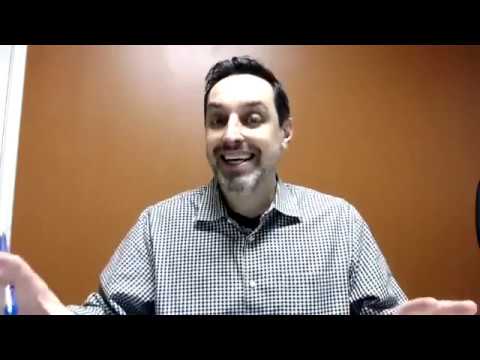
In this 30‑minute video Dr. Vince Leone continues his Content Marketing Week series, focusing on steps 4‑6 of a 12‑point content‑marketing plan for chiropractic (and other small‑business) practices. He explains how to (1) identify what the ideal patient (avatar) needs or wants and shape content around those needs; (2) craft and share the practice’s story using a hero‑journey framework, emphasizing authenticity and integrity; (3) organize content into three buckets – value‑based posts, patient testimonials/social proof, and personal anecdotes – and (4) deliver that content in multiple formats (video, audio/podcast, and written text) to match different consumption preferences. Throughout, he intersperses personal anecdotes, examples of his own practice’s growth, and a call‑to‑action to a free “12 Ways to Bulletproof Your Practice” training at chiropracticconsulting.co. The video is instructional, conversational, and aimed at motivated chiropractors seeking to grow their patient base through consistent, audience‑centric content marketing.
Chapters
What's up guys, Dr. Vince here. Welcome to day 2 of content marketing week. It's Tuesday and I apologize for my voice. I think I got, or I'm getting what my daughters have had and they were happy enough to pass it along to me. So there you go. But Day 2 of Content Marketing Week. We're gonna go over the next 3 of the 12 ways, or the 12 kind of bullet points or strategies or actions in your content marketing plan. And again, excuse me, again, I created this for a client out in Ohio and he's just going all in on this. What's fortunate for him is he has a physical therapist in his office. He has an associate. So he obviously has staff assistants. So we're able to spread it out because this is a lot for one person to do. On Friday, we'll get through all 12 things by Thursday. Friday, we will talk about, okay, now that we have all these things, What's the best approach for a clinic like his where you have people so you can delegate? And then what's the best approach for a single doctor clinic? So without further ado, and by the way, without further ado except for this, sorry. If you're in— if this type of information is interesting to you, Please check out, and if you're a chiropractor and specifically a motivated chiropractor, a motivated chiropractor to grow your practice, check out chiropracticconsulting.co. There's a 30-minute training there, 12 Ways to Bulletproof Your Practice. It's information like this, no cost, low cost, kind of medium cost stuff, but mostly no cost and low cost takes time, right? That's your investment. If you don't have the money to invest in advertising, then you have to invest your time, your effort, your energy, your, your mind, right? Because you have to master your marketing, okay? And I'm not saying that you have to learn Facebook ads, though that wouldn't be the worst thing in the world. I'm not saying that you have to learn copywriting, though that wouldn't be the worst thing in the world. I did both. I learned— I'm not gonna go into all that stuff. Point being, you know, when, when I, I've, I've struggled and I've been at 7 figures. So when I was struggling, what got me out of that hole was learning marketing and then, uh, specializing in a niche. So, um, if you're not reaching your goals, right, so if your revenue isn't where you want it to be, you need more people, you need more You need new blood, you need new patients, you need to help more people, you need to reach more people. The only way to do that is through marketing. And marketing isn't necessarily just running an ad, right? Or just Facebook ads. It could be handing out business cards, it could be doing a community event, it could be a patient appreciation event. There's tons, tons of marketing ideas. I'm actually right now creating a course and a book, The Ultimate Practice Marketing Machine, and it's gonna cover everything. Because I've been in a practice that has no money, I've had to invest sweat equity, and I've been in our practice that is continuing on where we pay $20,000 a month and we do TV, radio, digital, and print. So, um, and that, by the way, is $20,000 of a total of $60,000 a month. So we're, we're spending in the neighborhood of $700,000 a year to advertise for practices in Western Washington. And we absolutely dominate our niche, right? We do decompression and neuropathy. But the point being is we didn't start there. You know, I started learning the fundamentals of marketing. And what I'm telling you is if you're not where you want to be, one of the core things you have to wrap your head around and then wrap your energy and your focus and your effort around is marketing. And regardless of whether you feel it has a bad rap or not, the only way someone's gonna know about you is if If you learn marketing. Okay, so that's what we're talking about today. And specifically, we're talking about content marketing, right? So in other words, we are putting out useful, valuable content through social media channels. Okay, so we're going— we're talking about 4, 5, and 6 of the 12 strategies here. So number 4, you have to determine— And by the way, number 1, 2, and 3 were Determine your goals, right? Know your audience, and then brand your content. Number 4, 5, and 6. So number 4 is determine what your target audience needs or wants, right? So you have, and then give it to them, and then give it to them. So first you need to determine what does your target audience want? What does it need? So if you're, and in the last video we talked about, well, our target audience, our target, our avatar, right? We create this, you know, in marketing terms, an avatar is your ideal patient or customer. So we talked about this Molly Smith, I think, did we call her Molly Smith? Something like that. Anyways, she's 42 years old, she has 2 kids, she's married, she doesn't work, but she has a side job. She's very health conscious. She does yoga and she's very involved with her kids. And here's the deal is, So if that's our avatar, if that's our ideal client, patient, customer, whatever, right? I mean, I'm talking to chiropractors here, but this applies to all small businesses. If that's your ideal client, I mean, sorry, patient, what does she need or want, right? So that's what you need to determine, and then you're gonna shape your content around that, right? So what type of information would best serve him or her? What products or services from your office can you talk about? And show your prospective patient what it's like to be an active practice member, right? So what type of information would best serve Molly Smith, right? A mother of 2, wife who is health conscious, you know, so it could be all types of things. You know, it could be Well, let's not get into that. I don't wanna do the work for you here. I'm just telling you, this is what you need to do. So I'm gonna give you the principles and the strategies. You need to then take them and implement them, right? So that's number 4, determine what your target audience needs or wants or both, and then give it to them. Next, what is the doctor or the office's story? What is your story? Okay, why did you get into chiropractic or open your small business or your practice? Why did you decide to be a chiropractor? Why do you want to help people? Because that's what you do, right? I mean, it's one of the greatest jobs in the world where you get to actually help people improve their quality of life and you get paid for it, right? And the more people you help, the more you get paid. So that's why I have no problem with doctors getting rich, is because that means they helped a lot of people. Now, if they've screwed over a lot of people, they'll get their due. I've seen it time and time again. And I've seen them come and go where they're overcharging or they're marketing crazy promises. They always get caught, okay? They always get caught. So don't worry about that. Live with integrity, deliver excellent clinical outcomes, and then you'll never have to worry, okay? But what's your story, right? Because here's the deal, this content marketing that we're doing, a lot of other people are doing it too. And that is just in addition to all the other marketing messages. Guys, at a gas station, there is now little TVs on the dang pump thing. So it's like people get tons of messages sent at them. You know what they respond to? You know what they invest in? Story. They invest in story. That's why the movie industry is at an all-time high right now. Because even with all this content out there, the movie industry is doing better than ever. And it's been around and it's never ever really done that bad. Ever since it's created back in, I mean, I don't even know what it was, 1905 is when they first had the little nickel slot things where you look in and there's like a 10-second little movie clip or whatever the heck it is. People respond to story, okay? A beginning, a middle, and an end. A hero's journey. You had a desire, you decided to set out on this journey, right? You encountered obstacles, you got through the obstacles, and you reached your destination. Hooray, guys! Go look at any Hollywood movie. The hero's journey, written by Joseph, uh, Campbell, it's all based on that. It all, 98% of the movies in the Cineplex have that structure. Why? Because it works. Because it works. It's because that's what people, A, they want a happy ending, and B, they want to see someone struggle to get it. They want to see you fall down a couple of times, right? So what is your story, right? And if possible, put it in that format. For me, I started out in the movie industry. I was in the movie industry for 8 years. I worked for Ron Howard and Steven Spielberg. I met Matthew McConaughey and Woody Harrelson. I had a great career in the movie industry. I had some health issues, right? That's why I got out of the movie industry. I got thyroid cancer at 30. Go figure. I felt that God was telling me very pretty clearly, hey, this is not where I want you. I decided to change course, and that's why I went into chiropractic. When I went into chiropractic, I was an associate for 2 years for my father, thought I knew everything, decided I'm going to go start my own practice, open my own practice. I almost had to close it in 3 months. I struggled. I mean, I literally almost had to shut the doors. I had a wife and our firstborn at home, right? That's why, you know, that I was, I was desperate. I had to do something. I had to figure out something. That's why I went to Half Price Books and bought all their marketing books. That's why I invested my last little bit of money on my credit card to buy this neuropathy learning program through Dr. DeDuro out of Arizona, right? I learned neuropathy, I learned a niche, I specialized, right? And then it was, and then just took off from there, right? So I did neuropathy for 2 years, then my dad was like, why is the parking lot so busy? I see your ads in the paper, what are you doing? What is all this stuff you're doing? My dad. Decompression is like this, you're doing this. And then we joined practices, right? Then we started doing radio, then we added some newspaper, then we joined with 2 other practices, then we hired a marketing agency or an advertising agency, right? And then that's when we started really investing heavily, and now all practices are 7 figures where there's 4 clinics. So that's my story. What's your story, right? Share that in your content. Because when you do posts, right, and we'll talk about the, um, you know, some of the, um, different types of posts or, you know, um, you know, content that you should put out, obviously. But like, I, I usually group them into 3 categories, right? Uh, value based on what you do, so some type of value video or message about what you Do in your office or what you offer, your products or services. That's one. 2, testimonials from patients. Gotta get social proof out there so that people know that what you do works, right? And they believe other people more than they'll believe you until they start to get a relationship with you and get to trust you, and then they'll start believing you. But at first, you gotta show testimonials, right? And then you just continue to show them because it continues to add on to social proof. And then 3, personal testimony, personal stuff, right? What's your story? What happened today in the office? You know, did you get stuck in a snowstorm last night? Is that why you were late to the office? And everyone was laughing or angry or whatever. What happened? Tell a little story, right? That's what people respond to. So those are the 3 buckets, right, for your content on it. And you can do it on a daily basis or weekly basis, whatever. But the point being is, what is your story? And that's what people respond to. That was number 5. Number 6, what's up? Um, use different content formats. Why do we do this? In other words, different formats like video, audio, so like a, you know, podcast, whatever, written testimonials. Why do we do this? Because people like to consume content differently. Some people love to sit in front and watch a video like this and look at my ugly face. Yeah, for 20 minutes. Some people don't want to look at my face and yap for 20 minutes. They'd rather hear me yap in their car, right? So you want to provide video, you want to provide audio, you want to provide text, right? So just deliver it in different formats because different people consume content differently. So, and then, you know, obviously whenever you put up something like a video, obviously you'll have the video going in your feed. Whatever it is. And then if you're doing text, you would want to add a picture, an attention-grabbing picture. Or if you're doing audio, same thing, an attention-grabbing picture. Because you just got to think, people are scrolling in either Twitter or Facebook or Instagram. This is what they're doing, right? You got to stop the thumb. You got to stop the thumb. Does that make sense? So how are you going to do that? Well, you got to do something that's going to grab their attention. Okay, so that's today's episode on content marketing. This is Content Marketing Week Day 2. We covered 4, 5, and 6 of the 12 principles or strategies that you can utilize in your practice. So number 4 was— well, let's go start from the top. 1 was determine goals. This is what we talked about yesterday: determine your goals, know your audience, and brand your content. And then today we covered Determine your target audience needs or wants. What is your story? And then use different content formats so people can consume your stuff differently. Okay guys, I hope that was helpful. If this resonated with you, if this is something that you feel like is helpful and you want more information like this and you are a chiropractor, you are a— goodness gracious, can't talk. If you're a chiropractor, go visit chiropracticconsulting.co. Awesome. That is it. There's a free training there. Toss your name and an email, and it's the 12 Ways to Bulletproof Your Practice. We go over this type of marketing, we go over some other just internal stuff to differentiate your practice and grow your practice in 2019. So check that out at chiropracticconsulting.co. I'm Dr. Vince. Thank you so much for tuning in, and we'll see you tomorrow. I always come on at right About 1 PM Pacific, Monday through Friday. Thank you so much. Take care. We'll talk to you soon.










