ChatGPT Unleashed: The Future of Generative AI for K-12 and Higher Education

The webinar, hosted by the Center for Digital Government and the Center for Digital Education, provides a comprehensive overview of the rapid emergence of generative AI—particularly large language models such as ChatGPT—and its transformative potential for K‑12 and higher‑education institutions. After a brief introduction and audience poll, the presenters trace the current AI landscape, citing market surveys (e.g., Walton Family Foundation) that show a majority of teachers already experimenting with AI tools. They explain core technical concepts (LLMs, GPT, GANs, DALL‑E) and differentiate between text‑centric models (ChatGPT, Bing Conversational Chat, Google Bard) and multimodal generators (DALL‑E, audio, video, 3D). The session highlights a growing ecosystem of applications (SlidesGPT, Future Tools, EdTech Navigator) and notes a surge in AI‑related procurement activity across colleges and school districts. Three primary augmentation categories are outlined: people augmentation (administrative assistants, grading, personalized lesson‑plan generation), knowledge augmentation (capturing institutional knowledge, collaborative learning, low‑code analytics), and experience augmentation (virtual teaching assistants, gamified adaptive feedback, immersive XR content). Ethical, privacy, equity, bias, and emerging regulatory concerns are discussed, with emphasis on prompt engineering, human‑in‑the‑loop governance, and policy guardrails. The presenters share how institutions are responding—ranging from proactive policy development and pilot programs to cautious risk‑mitigation—while recommending concrete steps: establish task forces, define use‑case roadmaps, prioritize training/reskilling, partner with industry, and embed digital‑equity and algorithmic‑transparency principles. The webinar concludes with an invitation to a follow‑up Q&A session and resources for continued learning.
Chapters
Hello and welcome to our webinar. on ChatGPT Unleashed: The Future of Generative AI for K-12 and Higher Education. My name is Teri Takai, and I'm a Senior Vice President at the Center for Digital Government and the Center for Digital Education. And I am so excited to officially kick off today's webinar. We're going to discuss the potential of AI, particularly ChatGPT, in education. Now we have a few poll questions because we want to hear from you. So please take a minute to answer those poll questions. Give us a better idea of who is in our audience and what are some of the things that you're interested in hearing about today and in the future. Now, some of you may have joined us a few weeks back for our webinar on generative AI technology for state and local government. But if you missed it, don't worry, we're going to include a link to that webinar as well as this webinar in our email follow-up from today. Now, as you've seen from headlines across the country, generative AI has the potential to offer groundbreaking solutions for education, from personalized learning experiences to bridging language barriers. However, we must also address the ethical considerations and the potential challenges such as equitable access and data privacy and accuracy. Our mission is to empower educators and administrators with the knowledge and tools needed to navigate this exponentially changing technology landscape. But before we begin, let me turn this over to Brian Cohen, who is our Vice President for the Center for Digital Education. Brian, over to you.
Thank you, Terry, and hello and good afternoon, everyone. As Terry said, I'm Brian Cohen, and in addition to being the Vice President for the Center for Digital Education, I'm also the former Vice Chancellor and CIO for the City University of New York. It's great to be part of this webinar today and to be in the forefront of this growing importance of artificial intelligence in technology and education. Throughout my careers, I have had so many interesting and innovative conversations, but none more as exciting as the AI conversation I've had this past year with leaders in K through 12 and higher education. I've talked to presidents and chancellors and superintendents, chief academic officers, CIOs, CTOs, directors of technology, and many in the teaching profession. all of whom are enthusiastic about the potential AI offered and interested in learning more about the opportunities and challenges of these technology and tools ahead. So let's dive into today's program. I'm delighted to introduce our Chief Strategy and Innovation Officer, Dustin Haisler. Dustin is our center's foremost expert on generative AI, and he is here to provide an overview of what you need to know about its potential in K-12, and higher education. So over to you, Dustin.
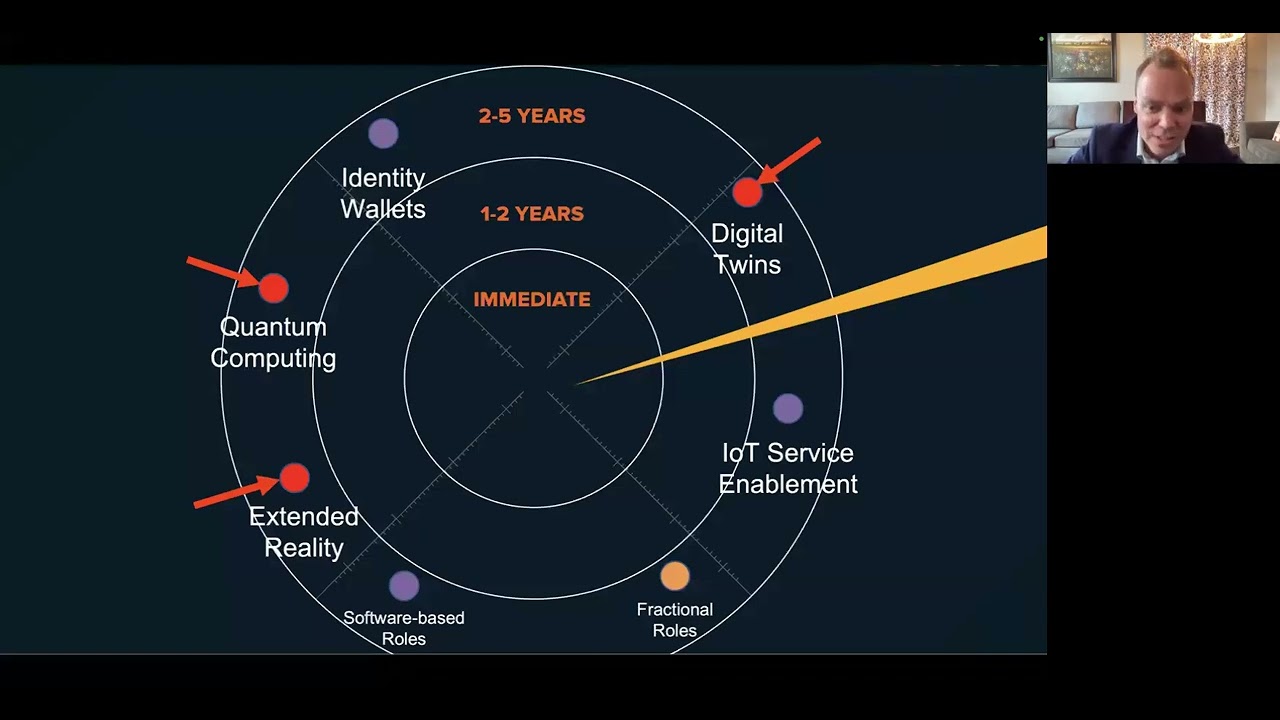
All right. Thanks, Brian. And thanks, Terry. We've got a lot of ground to cover today. But I'm going to answer one of the questions that we're already getting. And that is, will you get a copy of today's recording and presentation deck? And the answer is yes, you'll get an email follow-up from us after the webinar is completed within the next couple days where you'll get a copy of the deck and a recording that you can use. So hopefully that will save your note-taking hand as we go forward. So let's dive into what's happening with this generative AI landscape. So Earlier this year, we rolled out what we called our 2023 Public Sector Technology Radar, and we wanted to look at what technologies were starting to work their way into state and local government and education and having the greatest impact and potential disruption. And so we saw a lot of really interesting themes here, you know, things like technical debt and data management, but also cybersecurity and this fact that we've got all kinds of new applications that have been put in our environments, sometimes by teachers, sometimes by other faculty members. that are creating kind of this need for a greater sense of enterprise management. You know, going out one procurement cycle, we started to see some really interesting things. We started to see generative AI popping up, things like workforce augmentation to address some of the skillset gaps that exist, things like AI and ML data insights from reporting and understanding student progress and personalized learning and, and all of these really interesting nuances. But that kind of brings us to where we're at today. And as Terry mentioned, you know, ChatGPT is trending. in the public sector, but it's part of a wave of exploding activity and converging exponential trends, both from a technological standpoint and a behavioral standpoint, that have created the perfect storm for new innovation within K through 12 and higher education. And really, it's going to change all domains and all industries together. And this is just a snapshot of some of those headlines that we're seeing across the country. Many of you who are dealing with this now, You know, kind of where we're at as we take a step back, there's been some interesting research actually done on this. The Walton Family Foundation put out a pretty comprehensive survey to almost 2,000 education-oriented respondents, some students, some faculty and administrators. And what they found is that 64% of teachers plan to implement this technology more often and that there was a high degree of people within the first 2 months, over 50% of teachers that were already using it to some capacity. So whether your institution bans it or not, there's a lot of people that are using it. And of course, we know the students have have founded and are already using alternative versions of some of these technologies. So it has reached kind of this critical tipping point that is continuing to drive a lot of really interesting use cases and challenges. But what is it? So let's talk a little bit about generative AI, because when you look at artificial intelligence as a domain, there's a lot of different kind of subsets there. We can look at things like machine learning and deep learning and natural language processing. And what's interesting about generative AI is unlike, you know, traditional systems that are pattern recognition based or even systems that have to be trained by humans. You know, we've all had to do the CAPTCHAs and other things. This is one that sits at the intersection between deep learning and natural language processing. And it's AI that has the ability to create. And it's not just what we see with ChatGPT with text, but also to create audio, to create video, to create other forms of immersive media that will start to change the way that we experience and consume content. But also it raises questions as to what content was created by AI and humans. And so it's at the intersection of these domains and uses some very interesting advancements in the underlying technology that has allowed this domain to expand. And we're gonna talk a little bit about that. Now, looking at this industry as a whole, you know, we go like Web 1.0, you know, traditionally this is a heavy consumption model, right? We remember logging onto the internet, not really knowing HTML and being able to add anything to it, but just being consumers of the web. Then you get into Web 2.0 and, you know, we're accessing information, have limited degrees of ability to kind of write information back. And now this generative web landscape is really about hyper-personalized experiences that are going to be built around each of us. So rather than, you know, going to a website and seeing all the same links that everyone else sees, imagine information anticipating your need. Imagine being able to converse with information. So we kind of call this the, the beginning of the post-search era, where today you go to Google, you go to Bing, you go to different search engines and query information, and you develop a point of view from that information. And use that as a basis of whether you're trying to plan where to go eat or what curriculum to put inside your classroom. Now, in the future, those experiences are augmented by generative AI, which instead of you curating all of these results, you get a point of view as a result. And so this is kind of that explosion that's happening right now that will start to change the way that we experience and interact with data and applications, and even the way that we search in the future. So let's talk about kind of the 2 big buckets here. We'll focus on text just because, as the title of this webinar alludes, you know, ChatGPT is definitely all the craze and, you know, reached over 100 million people the quickest than— quicker than any other application in history. And this is an application that was put out by OpenAI. So, you know, this is an organization that has been at the forefront of a lot of the generative AI advances. And so, you know, this was put out as an application in your browser that you can use. And there's a whole underlying infrastructure that we'll talk a little bit about as a part of that. But what is ChatGPT, actually. This is what is called a generative pre-trained transformer. So that GPT, that's what that stands for. But it's trained on a large language model. So let's talk a little bit about what those are. So basically, a large language model is a body of, of language, of natural language that's been assembled, where this technology has been trained on it to, to derive patterns and to process natural language in a new way. Now, GPT is basically just a specific type of language model that's been pre-trained on that text. And so that's why you're seeing a lot of GPTs for specific domains and specific functions. Now, ChatGPT is based on a large language model that OpenAI created, but there are a lot of others that are out there. We'll talk a little bit about some of those now as we look at even Bing and Google moving into this territory. Bing, through their Bing Conversational Chat, allows you to now chat your search, and it leverages an underlying OpenAI API, GPT-4, as a basis of giving you information back. What's interesting about this model is it is connected to the internet and does provide attribution of results. Like I asked it this morning, you know, what are upcoming webinars focused on generative AI and higher education and K through 12? And it spit that out because, unlike the ChatGPT model today, this is connected to the internet and has the ability to query information. ChatGPT as a consumer application had its knowledge base severed from the internet back in 2021 just to prevent some of the off-rail things that we've seen with some of the traditional models that have launched online. Now, there are a number of new entrants into the market. We've got Google Bard, which is kind of the Google version of this. AWS yesterday announced their own take where they're going to create an ecosystem of different third-party applications to kind of come in and do that. So all you need to know here is the net-net is there's an explosion of capabilities largely fueled by the initial movements of OpenAI and ChatGPT that are making use of that infrastructure to create new ways to interact with data, information, and experiences using text. Now, this is a snapshot of that generative AI landscape from Sequoia Capital. And as you can see, these are just the ones that are focused on text today. So there's a lot more happening when we look at more of the rich media side of things of this space. And so let's talk about the generative AI on the media standpoint. And that's where we start to see things like DALL-E, which we're now at DALL-E 2, also an application created by OpenAI that allows you to create images from using natural language text prompts. So for example, I prompted here, show me images of a futuristic classroom with VR headsets for students. And this is the AI-generated images that were created to match my prompt. And I could regenerate this. I could, you know, have a more accurate kind of specific prompt, and it will change accordingly. And this kind of gets into that area where, as we've seen even the last few weeks, a lot of deepfakes online. How do you know what's real? How do you know what's fake? And now everybody, you know, has access to this because one thing that's interesting about generative AI is it's not just large-scale data centers that are enabling this infrastructure for people that have the capital to do it. It's been commoditized and democratized to where anyone can go online in their browser and they can create in a new way using a lot of these new technologies. Now, DALL-E, unlike the generative pre-trained transformers, uses something called a generative adversarial network, which is a really interesting and clever way to allow AI systems to train themselves. So traditionally, we would have to have, you know, humans in the loop that would take a look at, you know, we've all been locked out of our account. It's like, find all the fire hydrants in this image and find all the, you know, whatever it might be in this image. Well, now we've created interesting scientific advancements that allow these systems to basically try to trick themselves and discriminate to determine whether or not something is real or not. And so it's a really interesting network. That's kind of the adversarial side of things is trying to, you know, have it basically train itself and categorize whether or not something is real or not. leveraging this new approach called a GAN. So fascinating advancements there. But here is that landscape. I mean, when we look at, you know, this, it's not just images, but it's, you know, code, it's speech, it's, you know, 3D modeling, it's music creation. I mean, all of these things are embedding themselves into the fabric of the consumer landscape, which we know will gradually condition more of our audience to expect that, both from a learning standpoint in the classroom, but also faculty standpoint. This is going to become commonplace as we start to look at that, but we have to make sense of all of this craziness. What's driving this landscape forward? Well, what's interesting is traditionally disruptive applications and technologies, there's been either an application that has made use of advancements in architecture or an underlying piece of infrastructure that's enabled exponential growth. That's happening simultaneously. You have applications and you have underlying infrastructure that are basically simultaneously advancing this space forward along with new clever approaches and training and And that's given rise to all of this, what we kind of almost call an AI arms race just here in the United States between companies and between different types of capabilities. There's gonna be a pre-trained transformer model or a GPT for everything. And it kind of is reminiscent of when we talked about how there was gonna be an Uber for everything in the future. We're going through that very pivotal moment right now. Now here's some examples of, you know, that GPT for everything. This is something called SlidesGPT. You may have people that are using this if you're an educator that's on today. But it might also be a great way to get some ideas. This morning I said I want a slide deck on using generative AI in K through 12 and higher education. I promise this is not the one that you're seeing right now, but it spit out a design deck with images and attribution and speaker notes within about 2 minutes from my browser using that prompt, also leveraging that same backend infrastructure. Now there's also a curation. This is one that our Deputy Chief Innovation Officer Joe Morris found called Future Tools, where there's just hundreds of applications that are emerging every day. Another great place to go and kind of curate what the GPTs are for various domains that are there. And of course, these links we'll send to you. Now, what are education institutions doing? Well, they're moving on AI, and they were doing it prior. So this is a tool that we have called EdTech Navigator. It's a part of our Industry Navigator suite. And as you can see, this is a snapshot of some procurement activity that's open right now as it relates to artificial intelligence procurements within education institutions. And so Really fascinating to see a movement on there. And these education institutions are procuring direct AI tools. So like in this case with this county community college, they're looking for, you know, conversational agents to deal with student interaction. But there's also more procurements that are related to this being embedded into an existing application and in, you know, education institutions that are looking for that. So it's wild to see, but they are procuring more, 97 open opportunities now. If you're interested actually in more information on EdTech Navigator and how we, how we slice and dice that universe and seeing that, let us know and a staff member will follow up. But let's dig into some of the use cases right now for generative AI as it relates to K through 12 and higher education. So really 3 different areas here that we're focusing on: people augmentation, knowledge augmentation, and experience augmentation as a part of this. So let's go through it. So when it comes to people, we're entering this point in time where everybody will have, in essence, an administrator in their pocket, the ability to have an assistant that can help them, that can find information, that could bring a point of view to the table, and that can do work for them. And so we see from a people augmentation standpoint on the education side, this is going to help immensely with augmenting existing staff with everything from the, you know, mundaneness of grading assistance with more qualitative things that technology hasn't augmented already. Personalized learning, you know, developing really customized lessons plans on the fly for students. This is going to be a fundamental aspect of just overall curriculum development. As we know, the world is moving so quick. And so now you have ability to create content and curriculum on the fly. It also raises questions with how do we validate that said curriculum is accurate and that it's contextual to the individual. So, you know, the need for these types of training systems will be really, really key here as an aspect of that. Now we kind of move on to the knowledge augmentation side of things. There's so much institutional knowledge in our education institutions across the country, and when staff, you know, turn over and they retire, that is often lost. And so how do we enable and kind of learn from this body of institutional knowledge so that as new people come in, we're able to kind of continue to refine and adapt the systems? And this is where generative AI can help because you can enable new forms of collaborative learning, leveraging generative AI as a basis and a starting point, new types of content creation as a part of this. And even, you know, getting into new forms of predictive analytics where we can analyze data in new ways. And no longer is there an expectation that you need to have a data scientist in order to interpret results. But now data itself becomes accessible and queryable, just like you're talking to an individual. And so it's going to lower the barrier and the data literacy challenges that we have sometimes with interpreting results. And so we see significant opportunities here from a knowledge augmentation standpoint. And then experience augmentation, which is really around how do we take the experience, the classroom experience, the back office experience, the parent experience, the higher education learning experience, how do we take all these experiences and leverage generative AI as a way to augment them. And that's where we see, you know, force multipliers with people. So, you know, virtual teaching assistants, things like gamification, which we've talked about for a long time now, but really working their way into a scalable, hyper-personalized way of delivering that at scale. And then adaptive feedback systems that are able to adapt and change based on output of results and learn from that. And it's not in a classroom setting or in a district setting or a campus setting. This is on an individual basis. So this is why this is such an interesting technology is you can now have hyper-personalized content that allows you to teach in a completely different way and allows you to analyze and to interact in a way that's comfortable with the, the end user. So every user will have their own personalized experience. So what does this mean for students? Well, tons of things. You know, if we— as we look at those same 3 buckets, you know, the ability to understand technology intimately, to focus on critical thinking leveraging this. So it's not just going to write papers for them, but the notion of engineering you know, prompts to get information, ways to validate that that's accurate is going to be key here. You know, looking at that personalized learning path as a way to curate relevant content for them and, and to anticipate what they may struggle with to kind of serve up better things. And then, you know, as we think about, you know, extended reality and a lot of the new domains that we talked about, this is going to be a fundamental aspect of how we create those experiences because what often held back VR and AR applications within education has been someone's got to create them. And so now we can leverage technology as a mechanism to create and to personalize. Now what about, you know, information Well, there's a ton of different applications here as we think about, you know, the management of IT infrastructure in the future, how we even budget and plan for infrastructure investments, doing scenario modeling and other things that you would normally hire, you know, someone to come in and help you navigate from a consulting standpoint. Now you can leverage some of these new models to help you do that all from your browser. You know, IT support can now scale as we think about some of those common things. It's not just a chatbot that connects you to an FAQ. It's a chatbot that can help you This is really something that has the ability to do transactional-level changes. So if someone's locked out, you can leverage generative AI front ends to not just personalize the communication response, but also deal with the service and the transaction itself. And then, of course, you know, new ways to manage and optimize hardware. This will be a new era of information technology management. Now, as we look at all of this, you know, we also like to kind of look at this in the context of our experience model that we created through the Center for Digital Government and Education. You know, we for the longest time have focused on backend infrastructure and then application modernization on top of that. And all that really means is we've taken things that, you know, were in a technical debt locked-in environment. We put them online, we modernized them, and now they're accessible. And so now there's a lot of things that people could do, but how do we abstract that complexity? How do we make it easier for us to anticipate the need that's there? And that's where we see the potential for this experience layer really becoming a generative AI layer. So kind of back to my SlidesGPT example, you know, I use that as an application to interact with a backend piece of infrastructure. It's abstracting complexity of the infrastructure for me and creating the slideshow based on my prompt using an API. But the future is you will have your own GPT that will interact. So rather than going to another application site or a third party, you know, maybe it's the upcoming Apple Play in this space, but I'll ask new Siri to go create a slide deck for me. It leverages that application on the edge and leverages that backend infrastructure in order to generate and return a result to me, basically abstracting that entire process of having to find something to do it. So it's kind of this agent-based model of delivery, a super, really fascinating way to kind of look at that future. Now, how are education institutions today responding to this? Well, there's a lot of different examples here that we've been covering through the Center for Digital Education, and I won't go through all of them, but I do have examples. And actually GPT-4 summarized examples for you with key takeaways as it relates to K through 12 and higher education. You know, we've seen institutions leaning into it and embracing these AI tools to do new work. We've seen others that have approached it with more caution, thinking about the guardrails that need to be in place and trying to identify how to mitigate potential risk, especially with personally identifiable information that may be on there. We've also seen, you know, an emphasis on how does this fit in with digital equity, and how do we ensure that, you know, we're not leaving anyone behind, and that we're really thinking thoughtfully about change management. And so, you know, a lot of really interesting feedback and approaches here that we have summarized here for you. We've even seen, you know, some universities and some K-12 institutions stepping up and, you know, issuing proactive guidance on it and policies and, you know, conditions for using to say, hey, we're kind of trying to understand this moment in time. Here are the guardrails that we want to put in place on that. We've also seen, you know, mixed reactions, both negative and positive, from university faculty on this where It's here, it's a reality, students are using it, faculty's using it. So how do we incorporate this into the enterprise? Similar to like when the cell phone basically made bring your own device a norm for a lot of these institutions. And, you know, this is just across the country, so many different use cases where this is hitting all of you right now simultaneously in different ways. And it's not just ChatGPT. There's so many different implications of this, even on the media side of things. But a lot of education institutions right now are kind of in this, this phase of studying and analyzing and, you know, like in San Antonio, launching workshops and trying to understand it, trying to identify ways that they can encourage collaborative use of it, reverse mentorship from students that may be using it, and really understand what are those guardrails that need to be in place. And I think this sums it up well here as we think about, you know, it's basically that initial fear wave of block and ban and suppress has been given way to optimism about how can we leverage this to redefine that learning model in a way that is transparent and that balances bias and all the other things we have to consider as a part of the way. So what do you need to consider along the way? Well, there's kinda 5 main things that we look at here that I'll kinda grow— go through really quickly here for you. Number 1 is prompting. Generative AI is all about the skill set of prompting. It's such a prominent skill set that it's actually given rise to— you can go to a lot of job marketplaces— the prompt engineer or prompt engineering as an aspect of a job description, which is basically How do you ask generative AI solutions to give you information in a way that it maintains accuracy and is relevant for the request that you have? And so, for example, if I ask, you know, ChatGPT how schools buy technology, I get a very general response. But if I filter that request down to say, you know, what about in the context of K-12 institutions in the state of California, I start to get far more specific information here that's related to even like the California Multiple Award Schedules program and and the very specific procurement information that might be helpful. So again, the prompt and the art of the prompt is everything as a part of that. And, you know, I can change the persona too. So if I say, hey, I'm trying to sell into this market, what do I need to know about that? I can start to see that information from different layers, different viewpoints. And so it's interesting, you know, that role-playing dynamic. You can have these types of generative AI solutions take on those roles as your CFO or as your chief risk officer or cybersecurity officer to kind of do that. So, you know, key here is be specific, use natural language, provide context. But now we've got transparency and policies for use. And so this is really, you know, where you want to get ahead of it. And this is an example. We've got actually policies on our own company's AI utilization here. But make sure that you get ahead of it with some initial guardrails that are in place. And ours have focused on human in the loop and not, you know, rogue having AIs automatically email and do your bidding for you, but having human in the loop dynamic as an aspect of how you use it and whether it's used for promotion and when it needs to be cited and when you need attribution for it. So those are all things you want to confront and at least have a starting point there as a part of this. Now there's also those potential negative uses. So if you think about things like disinformation and misinformation, and even, you know, cybersecurity attacks and social engineering, you know, that Nigerian prince email that you get with bad grammar that you know your staff will see through, all of a sudden is going to look a lot different when generative AI is being trained on the exact way that key executives in your education institutions speak and talk and mannerisms and, you know, commonalities that they have in their language structure. And so social engineering is going to have a whole different life with this that we need to be prepared for in training our institutions. Now, ethics is a huge part of this because there's so many what-ifs. I mean, you've got the bias, the privacy, transparency, accountability, the human in the loop and human oversight, and the safety dynamic that we have to consider collectively together. We're definitely capturing laws and rules and policies and regulations as it relates to this. But it is something that we want to make sure we start with and that we don't consider this as an afterthought and come in later. Look at what happened with facial recognition and a lot of these other disruptive technologies. If we don't confront some of these things up front, it will create challenges for us down the road with the positive use cases. And that kind of lends us to the emerging regulation side of things. And, you know, we have a great partnership with Quorum where we looked at curating, you know, who are the states that are talking about and moving on this. And, you know, we've seen bills that have been filed that are actually being read in committee related to generative AI regulation that will have impact on education institutions. And the map on the right-hand side, these are just legislators that are talking about generative AI and ChatGPT. So this is not, you know, a bucket of just, you know, students and your early adopting teachers. This is happening across the country, and the regulators have caught note, and they're looking at what are the safeguards we need to have in place on this. So for those of you that are on today might be asking, give me a fire hose of all of this information, but where do I start? Well, some of the common approaches that we've seen is, you know, really starting with that foundation from a regulatory compliance standpoint, thinking about those predefined conditions. And so you also want to think about having a task force or group that can help you manage and really think about best practices, that's watching the landscape of regulations, they set guidelines, and they adapt, because the key is adaptation right now. You know, defining those initial use cases, phasing that rollout, focusing on training and reskilling, because there will be individuals that we want to make sure that we optimize these solutions for. And then work with your industry partners. I mean, a lot— there's a lot of industry partners on today. You know, this is a great opportunity for you to partner with education institutions on helping them understand how to make sense of this moment, and then focus on digital equity, inclusion, algorithmic transparency. All those things that I talked about is really going to be key here. This is our next Uber moment, and you know, I want to to kind of take that in because if you think back to when Uber started disrupting the public sector, agencies approached it one of two ways: they either banned it and restricted it, and and didn't capture any economic value from it, or they let it operate, studied it, and figured out what box it fit in, or maybe they needed a new box from a regulatory standpoint altogether. And that is kind of the optimistic route that some of the education institutions that we're watching very closely are doing. They're looking at it, they're analyzing it, and responding accordingly to that. So, so much ground here to cover. I do have some direct links here to all of these solutions. All the links within this deck are also going to be live as well. Now, I know that we've been getting a significant volume of questions here, and so we're going to do a special part 2 where we're going to dive through all of these questions that we had as it relates to this webinar today. But we wanted to give you kind of a high-level overview initially of some of these major kind of macro things that you need to consider as a part of this. We will be doing a significant number of events on this going forward, so we'll follow up with that as well. If those of you— if those of you on the industry side are interested in actually being a part of that, let us know because we'll want to tackle that and kind of capture that as much as we can. But I really appreciate everyone's time today. Hopefully today has been helpful. And, you know, definitely connect with us on LinkedIn, plug into the Center for Digital Education and Center for Digital Government and keep up with what's going on. And then we'll follow up with our part 2 discussion where we can, you know, really just focus on questions that you have related to this. But I do want to be respectful of everyone's time. Thank you, Dustin. So we'll, we'll begin our wrap-up here. And thank you for joining and have fun out in the wild world of generative AI. And Brian and Terry, thanks so much for, for hopping on and joining us for, for today's webinar.
Thanks, Dustin. Great job.
More from Dustin

The Center for Public Sector AI: 2024 Generative AI Update for Education Leaders