The Center for Public Sector AI's Q1 2024 Generative AI Update
In this Q1 2024 webinar, Terri Takai introduces Chief Innovation Officer Joe Morris, who delivers a comprehensive update on the rapid evolution of generative AI in the public sector. The presentation outlines four AI deployment models—stand‑alone (e.g., ChatGPT, Bard), embedded (AI copilots in productivity suites), abstracted (consumer‑facing bots like Siri‑GPT), and autonomous (goal‑driven agents such as AutoGPT)—and explains how each is emerging in state and local government workflows. Morris then walks through the Center for Digital Government’s Technology Radar, highlighting accelerated priorities such as legacy modernization, low‑code/no‑code, AI/ML‑driven insights, data compliance, managed services, and the new “bring‑your‑own‑AI” (BYOAI) trend. He showcases concrete government use cases ranging from licensing and permitting automation, benefits administration, citizen‑facing chatbots, to developer copilots for code validation. The discussion shifts to policy and governance, emphasizing the need for clear guardrails, internal task forces, data‑foundation readiness, KPI frameworks, and copyright considerations. The Center for Public Sector AI is launching a new website with a policy repository, tool inventory, and ongoing webinars to support agencies. The session also surveys the broader AI market—closed‑source versus open‑source LLMs, funding flows, and vendor activity—while noting the massive productivity potential (hundreds of billions of dollars) and the parallel surge in state/ federal AI legislation. The webinar concludes with a Q&A on enterprise licensing, maturity levels, and the experimental nature of current deployments, reinforcing that agencies are at the early stage of a transformative AI wave.
Chapters
Hello and welcome to an exciting webinar this afternoon. My name is Terri Takai, and I'm a Senior Vice President for the Center for Digital Government and the Center for Digital Education and our newly formed Center for Public Sector AI. And I am so excited to continue our series into 2024. For those of you that have been with us before, you know that we did a series of webinars in 2023 to really talk about how AI was emerging, the impact in the public sector, and what state and local governments were doing. And we want to keep that going because the pace of change is so dramatic that, uh, we have a series of webinars lined up for all of you just to keep you up to date on what's going on and really help you get your AI strategies together. So I'm really excited today to introduce Joe Morris, who is our Chief Innovation Officer. And Joe's going to share with you an update on what's happening in AI today. So Joe, take it away.
Well, thanks, Terri. And you're right, I mean, that pace of change has been unreal. You look at the earlier sessions and our discussions last year, we're talking about building a foundation of generative AI and, and what may come to the public sector. And then we've seen this crazy pace of technological change and advancement and adoption in the public sector. And that's why we're so excited for the Center for Public Sector AI. And Carrie just told me before we, before we came here in live that we're going to have a new website for Center for Public Sector AI coming live here probably in the next 30 days. So keep an eye out for that. It's going to be exciting with a lot of really valuable resources for those of you in the public sector. But when we talk about this generative AI evolution, in the public sector, what are we seeing? What are we talking about today? Well, I think what you've all seen is it started on kind of what we call standalone AI, and that's the generative AI in an existing standalone application. So think of ChatGPT, Google Bard, you know, Bing Chat, these solutions that exist, you know, by going into that domain, this tool that may be, you know, often a website that people are bringing it into the workplace, whether there's policies or not.
Yeah.
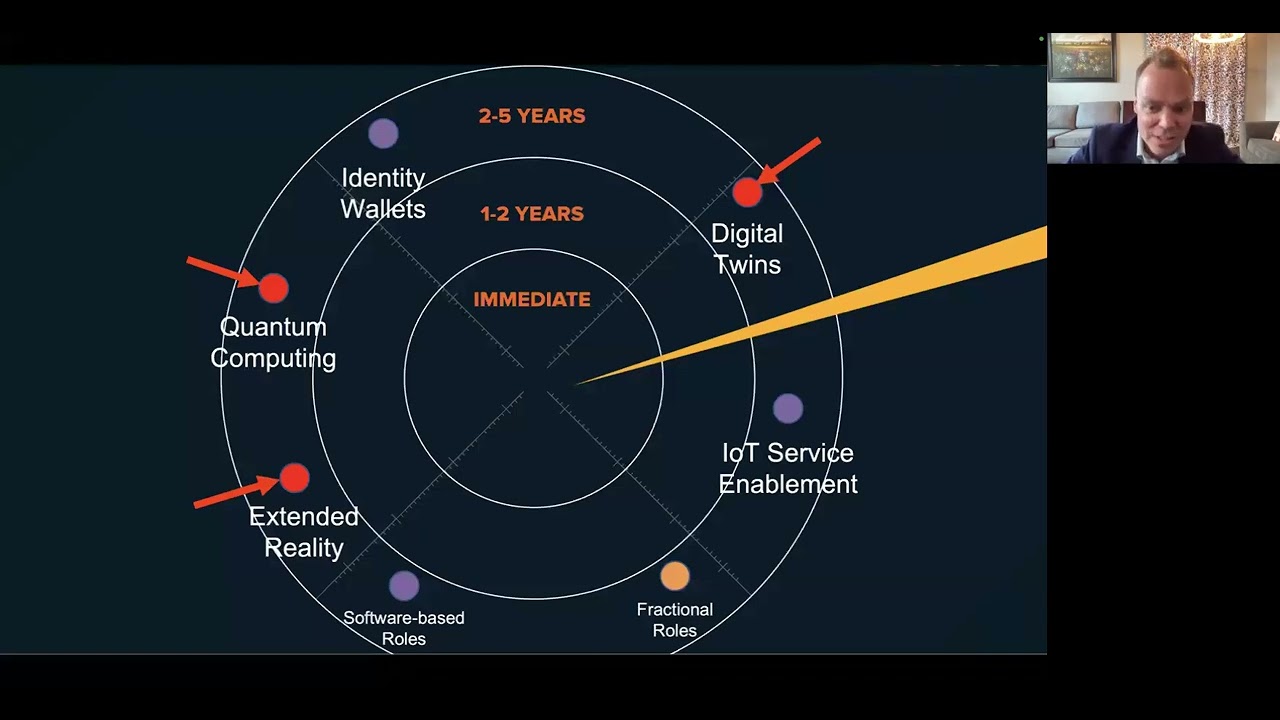
You know, kids, your, your, your, you know, students, your family members, uh, logging into these accounts and, and testing it out That's what we saw a lot of last year, experimentation. You know, it was a new shiny object, a new toy that we were all playing with last year. But now what are we starting to see? We're starting to see embedded AI. That's where it's integrated at the application layer. And if you think about your Microsoft Office Suite, your Google Workspaces, and these Copilot tools, it's coming now into our environments through these solutions that we're using day to day for our productivity tools. And now you've got tools that help you, you know, write documents quicker, that optimize and speed up the creative process. That may remove some, some friction from the email and all the, the administrative tasks that we do in, in a, in a typical office environment. And then we have abstracted AI, and that's generative AI at the edge of the consumer experience. So that's where you're interacting with AI bots. So if you haven't played around with these, I'd highly encourage you to. Siri GPT, Google Assistant GPT. You can download the apps on, on, on your phone as well. And then finally, you've got some of the really interesting— and if you haven't played with these, another thing that I encourage you to do is autonomous AI. These are where you can give an AI bot a goal. Now, as a former researcher here at the Center for Digital Government, we spent a lot of time building out go-to-market strategies, figuring out market sizing. Hey, how large is the Chromebook market in the K through 12 in the US? Well, you can assign that task to an agent AI, to an AutoGPT now. And not only does it get you the answer, it automates out all of the subtasks underneath it, and it shows you the process for how they get to that final result. So it creates that— starts with that final, you know, goal, and then it completes all of the tasks and subtasks underneath that, and doing all of the research that's core— that is necessary to get you to that end goal. And it's fascinating to see. If you're ever in need of maybe you know what the goal is, but you're not sure how you even wanna walk through that. It's a great tool to use to kind of see what the process may be to get you where you want to get to. So let's keep moving through, through here. Now, Terry talked about this fast pace, and it feels like while we're doing these quarterly webinars, you could probably talk about this every week. It seems like if you disconnect from the internet for a week, maybe you're off on a family vacation, all of a sudden you come back and there's a whole new suite of AI tools that are out there, new applications that are developing. But when you look at this, you can kind of break it down this landscape by looking at it through these buckets. Now you've got, you know, text, code, you know, image, speech, video. You can see many of these broken out here from, from left to right, but you can see all of the application layer and mo— and model layers that are here, whether that's OpenAI to Midjourney for, for imaging to, you know, all of the tool— tools that exist. We're kind of keeping track of, of this landscape. So you can look at this from, from what you may be able to do around administrative tasks, what you may be able to do around design and marketing, what you may be able to do to support and augment your IT organizations from a code and development standpoint. For what we're seeing in a lot of the early research is these paired alongside a human, humans always in the loop, can really bring substantial productivity gains. And I'd be interested to hear from you in the chat if you're experimenting with any of these tools. Are you seeing any of these productivity gains? Are you seeing any, you know, Opportunities where you've been able to optimize any of your processes, or maybe even just give yourself back a little bit of time in the day. And if you're looking for a landscape of tools, and this is some of the stuff that you'll begin to see on that on our new Center for Public Sector AI website, is we're not just going to be you know providing you the policies that we see across the state and local landscape, the executive orders that you see across the landscape, the next you know the wave of legislation that we're we're tracking, but also kind of give you an inventory of the various tools that that exist out there, whether those are are again for text and copy or low-code, no-code tools or tools that you can use for design. Really trying to keep our finger on the pulse of where some of these tools are that may be able to be incorporated into your environments to hopefully kind of give you that, that next level of productivity gains. But we're not just here to talk about the landscape. We're not just here talking about this conceptually. 2024 is already off to a pretty rapid start, and we're not only just seeing, you know, we're looking at AI as this, you know, nice shiny object that may have an impact or this thing that we're going to kind of play with and experiment with. We're already starting to see it having an impact across the government technology sector, and we're seeing that GovTech is already increasingly AI-driven. I don't know if many of you have seen this, but last year we launched the Center for Digital Government's Technology Radar. This is where we look at all of our information across the technology opportunities that we're tracking, across the wonderful information that we have through our digital states, cities, and counties data, through the quantitative surveys that we're doing, and the fact that as a team we're keeping our ear pretty close to the market, wanted to understand, you know, what is in the immediate investment path for states and localities? What's 1 to 2 years, or what we call 1 procurement cycle out? And then you can see the other bands here. And if you look at the legend on the left, we've got things that'll be purple. Those are unchanged for this year. And then we've got things that we've rapidly seen accelerate from where we had them the year earlier. And in orange, things that are new. So I'm not going to walk you through every single, single thing here, but the things that we saw in the, in the immediate, and you see this through all of our data clearly, and many of you probably feel that, or I've seen this and are prioritizing it, you know, the legacy technology modernization. How do we modernize and, and eliminate all of that tech debt that we're experiencing? Uh, you know, low-code, no-code, workforce augmentation. Workforce is going to be a big thread, and that ties into AI, obviously. But what are we seeing that's rapidly accelerated from where we had it earlier on the roadmap? Well, All the AI/ML data-based insights and how do we leverage these tools to drive better decision-making. Obviously, a renewed and accelerated focus on data compliance and privacy. We've seen the largest share of the opportunities that we track right now are around managed services and managed service delivery. So that's another one that's accelerated. But then obviously, if you talk to us maybe January of last year, December of the year prior, we didn't have generative AI on the roadmap. It popped early last year, and it's rapidly accelerated now into the immediate ban. And if you're all familiar with BYOD, bring your own device, and all of the conversations that we had around that in mobility and remote work in the public sector, now we're seeing BYOAI in the public sector, bring your own AI tools. And obviously, that's where the policies and guardrails come into place. But that's what we've seen a lot in the second half of 2023 and what we're still seeing here in the first quarter. of, uh, 2024. So as we look out 1 to 2 years, uh, broadband and connectivity— no surprise there, tremendous amount of funding from the federal government to accelerate that. The full experience of that resident and experience across government identity and access management. But the things that accelerate out of that outer band are data service, data science as a service. And, and that goes back to all of that discussion many years ago of data scientists and big data in the public sector, that contextual and personalized service delivery, and it connects in with that full experience modernization, and then AI-driven workflows. And a lot of conversations started to really sprinkle in in Q4 of last year around workflow optimization and automation holistically. So that absolutely, you know, moved into that band that we put in at roughly one procurement cycle out. Then finally, as you look at that outer band, identity wallets, IoT service enablement, software-based roles, all there. But the things that accelerated out, quantum computing, extended reality, and digital twins. The big takeaway here from beyond the specific technologies is what we are seeing across all bands right now is that rapid pace of technology adoption and consideration that Terri hinted at in her opening remarks here. Is we're seeing a lot of acceleration, both, you know, enabled by AI, but even beyond that. And I think that's what makes it such a fascinating and exciting time to be tracking the technology trends across the public sector. Now, we will look at that, you know, beyond— but beyond 5 years. So I'm not gonna spend a lot of time here because this is where we're gonna see the most amount of change, right? And sometimes it's a little hard to predict exactly what things will look like, but we anticipate a lot more autonomous Fleet use cases, more consideration around Web3. We're tracking a lot of interesting use cases around satellite and space-based applications, particularly in that critical infrastructure marketplace, government as an API, and of course edge AI compute. So what the heck has changed, right? I think we, we've, we really drove home the point about how fast the pace is, and I think McKinsey refers to it as the quickening. We saw some of that quickening, and I'm sure you all agreed during the pandemic, this rapid influx of change. And that was coming at a time when we had critical, you know, emergencies going on, and we were grappling with remote work. But it seems like that pace has not really relented at all, and certainly not so much in relation to AI. There's a great article right now. We have the link here down below, and if you haven't read it, we'll make sure that you get it. where that explores how we believe generative AI and custom GPTs are going to impact government this year. And if you've heard, whether it's myself or Dustin Haisler, our president, speak, we've talked a lot about GovTech's App Store moment. And if you think about the iPhone, the iPhone launched initially without an App Store, but was once the App Store came to life, that's when things really took off. And now we are starting to see that App Store moment. Come to life with AI. It's not just OpenAI, go to ChatGPT, go to, go to this tool called Bard, whatever, or Bing, ask a question and, and get a generative AI response. We've now seen an emerging marketplace of AI solutions. And again, if you haven't messed around with these or experimented with these, we'll, we, we have the link in the, in the presentation too. But you've got all kinds of, of, of plugins now. You've got plugins that are government specific as well. So you can see we got one here out there. In Elgin, Texas, GPT, you can go in there and get explanations on an ordinance. You can tell me about zoning laws. We've seen these types of solutions exist across the entire state and local landscape that leverage generative AI and these plugins to help people solve licensing and permitting challenges, to help reduce some of that complexity and confusion around some local government ordinances. And just make it smoother in terms of that resident-to-government interaction. the government experience. And it's not just the explosion of this app marketplace. The underlying technology is also rapidly evolving. So we've got now more large language models than we had, obviously, you know, last quarter, or certainly even last year. So the pace, the change, the variety of these tools, and the sophistication of these tools is rapidly evolving as well. And I think that one of the biggest takeaways that I hope you're going to walk away from this presentation is that we've moved beyond that shiny object in a rapid point in time. And even as we look at where we find ourselves today in Q1, or almost, you know, towards the end of Q1 in this year, we're already starting to see how generative AI is and will make an impact in government services. And these use cases are rapidly emerging. And you don't have to look much further than these administrative functions that you see on the screen. Whether that's improving programs and benefits administration, removing some of that complexity around eligibility and benefits determinations, to the policy design, to rapidly speeding up licensing and permitting like I was talking about, to a copilot for your programming team to validate code, to accelerate code development. We see a lot of experimentation and use right now In everything around citizen interactions, next-generation chatbots. We'll see a lot more in the regulatory space, and then we'll start to see government experiment more around content generation, and that's going to be an exciting space to watch. And obviously, in past presentations, if you haven't seen them, we've already outlined a variety of use cases. We've bucketed those use cases from resident experience to internal, and we can make sure we provide those to you as well. But you don't have to look much further than going to govtech.com, and it seems like a continuous stream of where we are seeing AI take action today. You don't have to look much further than New Hampshire right now and how they're using generative AI to augment and improve city planning. And these solutions now are baked into a lot of these govtech platforms. We've seen a wide swath of vendors that I'd say that are either entirely or predominantly GovTech-focused or state and local government in the US-focused, and they've got AI built into their tools around code enforcement, licensing and permitting, procurement, you name it, all again to hopefully increase your capacity and, you know, remove some of the complexity from processes. You look at the overall marketplace right now, and there are 2 different approaches. So closed-source LLMs, that's going to be more like your OpenAIs that you see in Anthropic. to your open-source LLMs. And you can see, you know, a bunch of those. Obviously, one side of this chart is getting a lot more funding and investments and attention. And you can see that by the, uh, by the teal-colored bars here and the, the amount of billions that are adding up. Um, so it's no surprise that those are, you know, where you may be seeing a lot more attention and a lot more discussion amongst your teams and in your organizations is probably coming from some of those solutions there on the, on the left-hand side. But, uh, Where we find ourselves in rapid time is we're already starting to understand the potential impact that generative AI can have on our productivity. And there's study after study— this is one here done just by McKinsey— that looks at the overall impact of productivity. And you can see that here on that blue band, $100 billion in potential impact just in the public and social sectors alone, another $180 billion if you factor in education. some healthcare there gets us to a total of about $480 billion. But so the great thing is rapidly so far in Q1, we're not only seeing validated use cases, potential use cases also emerge, we're seeing it being put into practice, and we're starting to better understand its potential impact to our operations long-term. Now, what are we not fully grasping yet? Well, I think if you've been paying attention in 2023, In response to all of that rapid pace of technological development, we saw legislation trail just behind them. We saw a lot more activity around AI legislation, putting guardrails in place, trying to put in the privacy and compliance regulations. Now, whether that's a legislative standpoint, whether that's an executive order, whether— we've got a whole landscape here. But you can see from the orange and yellowish kind of gold colors here, those are states that have either introduced or enacted bills around AI. So a tremendous amount of activity, and it absolutely is not slowing down as we look into 2024. Now, what are we— with that all said, we have a challenge around definitions still. We don't have common definitions. We don't quite have 31 different flavors, but there are some unique variances between states and localities, and there certainly isn't a full consensus. We've seen a lot more work now being done at the federal level as well. So You know, this is an area we're gonna, you know, continue to see a lot of activity and hopefully see a lot more progress. I, you know, we kind of hinted at this throughout, but we're also seeing best practices, you know, starting to emerge around adoption. So as we keep our ears to the ground and are talking with state and local leaders, it seems like this is obviously the hottest topic in the room at our events. We've compiled a variety of recommendations to help you be AI ready. Now, I've hinted at it throughout, but you got to set the proper guardrails. You got to have the right policy foundation. That could be around what your acceptable employee use is around use of AI in the workplace. You want to make sure that you've got general guardrails and transparency around that initial utilization and experimentation. And if you're looking for examples on that, we've got a compendium of those policies. You want to ensure that you've built the proper internal governance. If you haven't already, look at potentially creating a task force. Make sure that's got representation from different business units, departments, and that they can surface those relevant potential use cases and provide feedback. That's certainly one. And then where we found that is once you've got those guardrails in place, experiment and empower your team. Create that culture of experimentation, the training, get them the necessary license. This is a game-changing moment, we believe. So you want to make sure that you have a strategy to empower, equip, and learn from your employees. And that can't just be at the top level. So it's got to be down there, down in the trenches. And that's where organizations are going to have to embrace it. And then connect the dots. At this point, you're going to start to see, hey, for us to fully embrace the potential power of AI, we got to address some gaps in our data. You want to make sure that you've got ways that you're going to be able to break down those disparate data silos, So you can fully embrace AI, generative AI. And the only way to do that— and we've, we've been talking about this, Terry, going back to 2019— is you want to make sure that you've got the right data foundation in place so you can have that actionable intelligence, whether that is generative AI or, you know, AI holistically. And then learn and learn quickly what's working, what's not working, and then how to, you know, continue that adaptive and agile environment. So What are the key KPIs that you should have to make sure that you are evaluating these tools for their long-term use, sustainable use in your environments? And how's that going to enforce and evolve your AI strategy as these tools continue to be developed? For us, I mean, to put it simply, we believe that the generative AI moment in the public sector, this is our uber moment. Remember, if you go back to when Uber first, you know, hit the streets and how transformative that felt and how we all of a sudden stopped going in cabs and now we're just getting, getting into people's cars, and it felt like that whole industry got turned on its head. That's the kind of moment that we are seeing right now with generative AI, and we don't want any of you all to, to feel left behind, get left behind. And that's why we, we, we are so passionate and excited about the, the opportunity that we have with the Center for Public Sector AI that we can shine a bright light. On some of these best practices and, and use cases for generative AI, and then we can help accelerate your potential adoption or consideration of it. And that's what we're going to continue with, with this series. It's not just today. We got future episodes coming on June 4th, on August 8th, on October 8th. We're tracking this all the time. You'll see it in our editorial. You'll see it on the Center for Public Sector AI website here real shortly. And there's just going to be a wealth of phenomenal information coming. So I want to thank you all for your time, and I'll pass the baton back to Terri. Terri, you're on mute.
We have a couple of questions, and we have a little bit of time. So first of all, you know, we have— I had a question about a certificate for participation. So just to let all of the attendees know, you will be receiving a certificate for attending. And then secondly, since you registered for the webinar, you will be receiving the slides that Joe has shared. So a really great question, Joe, that's come up, and that is, you know, what are we actually seeing out there across the country in terms of being able to— well, 2 things. There's a question around kind of OpenAI Being able to provide enterprise solutions. But I think that it— we actually found that it took a while for us to get an enterprise license with ChatGPT, right?
Yeah, yeah, it did. It did take a while. I mean, I think we just got in there right before things got real crazy, and they had to slow down there for a moment when they had all that CEO transition and everything. So, well, we lucked out. You know, Terry, I had the, the fortunate experience late last year to go to, uh, Georgia and do our AI summit, and we had great representation there from, from state and local leaders. Um, and while it's fascinating to be in that place, it really— what stuck me was like, you have this like community that's embracing this moment and understanding what lies ahead. And I know that it's not just Georgia, right? We're seeing this everywhere across the country. So the question is like, you know, what are we seeing at the county level? It's counties, it's cities, it's state agencies. And there is a mix trying to do things at the enterprise, trying to experiment with these tools. A lot of the conversation in the room was like, hey, how do— is this baked into my Microsoft suite? Or hey, how can I do— how can I take advantage of AI to improve my caseload? caseloads, but the federal guidance for my programs won't allow it. So that we're walking through a landscape in real time, and the places that are doing it— you, like, we— I shared a couple articles through here— are doing it, and they're just like, hey, we'll figure it out as we go. Others are trying to make sure that they're, you know, they're not stepping on any landmines, but everyone's oriented towards potential experimentation. And if you're looking for more use cases, we can make sure that Hey, GovTech.com's got a wealth of it. You can probably don't have to go any further than the front page today. But it seems like every day you're seeing this city in California, this city and county in Texas is doing licensing, permitting, resident experience. It is a constant stream right now. And I can tell you from looking at our GovTech 100 list of those companies, and that list came out in January, there is a lot of activity on the industry level to bake these things into their solutions. So it's not just the AWSs and Salesforces and IBMs that are doing tremendous work. You are seeing this across the board. So it's coming fast and furious right now.
Yeah. And I would add to that, Joe, you know, we've had a question from someone about, you know, saying, hey, I'm just getting into this. Everybody's just getting into this. You know, the maturity level is all different levels. And the other thing that I'm finding with the case studies and the use cases, Joe, as I'm sure you are, Is they're all still kind of in the experimental stage. I haven't found anybody that says, man, this has just changed the absolute way I'm doing business yet. But they're trying different things in order to kind of see what might be possible. Yeah.
And I think that's a great point, right? Hey, we're all true beginners. And I think we're all at the very beginning of this wave. So You're joining at the right time, and we're gonna, we're gonna see this entire landscape evolve together. And I, I know there's other questions in the queue that kind of hit on the same thing, right? Does it make sense to do things at the enterprise level? Does it make sense to tap into these existing tools? And I think that's exactly the kind of conversations that you want to start having as part of those committees.
Right.
Look, there's a swath and a wide landscape of existing tools that you don't have to build that may provide you with some very quick and important wins. But you want to also make sense of like, hey, where is my data going? Right? There, there are proper guardrails in place that keep your stuff where it needs to be kept, but not all these tools are built that way. So you really want to make sure that you understand how some of these tools work. And that's why you've seen some of those horror stories, not necessarily in the public sector, but it wasn't— it was pretty early in the generative AI days, remember, where it may have been a technology vendor. I'll, I'll, I will not say their name, but their, their developers dropped a bunch of code into an LLM and then all of a sudden it was out in the, in the public, the public space, right? So you really wanna understand those types of gotchas, if you will, and the use cases. There, there's easy things that make sense to do in ChatGPT or, or Bard or, you know, improvement on any, in email. But there's other stuff that you, PII and, and code that you might not want in certain areas. So you want to make sure that you have those guardrails. And there's phenomenal examples— City of Boston, Seattle. I could rattle off a whole bunch of places that have built policies. Hey, you should just go out and steal them, frankly. Like, that's the great thing about the public sector, that have already taken into account and kind of laid that landscape. So if you have those types of questions, the good thing is there's people that have already done that work to kind of give you a little bit of a head start.
Yeah. Well, and I think that applies, Joe. You know, there's a question around, quote, copyright issues. And I think even for us with our— AI policies. We've been very clear and careful about wanting to make sure that, you know, we were using the right data, we're using the data correctly. So I haven't heard of any particular issues per se, but it is a part of the policy piece.
And then I think— I'd add to that, I mean, we're, you know, we're a large media organization, so we've had to confront all of these. So We've built the necessary guardrails for our internal team, but we also have AI policies regarding the use of what we would do externally around images. So if you're looking for a sample policy, hey, we've got one. So we can provide that to you.
Exactly. Yeah, Joe, one of the things that we'll have actually when our new site for the Center for Public Sector AI launches is a repository of existing policies from around the country. So we're gathering those now, and you'll be able to get to them on our website. There's, you know, several questions about the policies, and we'll be continually updating that because the types of policies and what the policies cover are still evolving. Well, Joe, I can't thank you enough for this fantastic update. I know we've got tremendous set of questions and a lot around policy. So it— I'm really excited about a repository that's going to be out there. And as Joe said, I just want to mention to everybody that this is one of 4 that we'll be doing this year, and Joe and Dustin will be back to keep us updated. So Joe, thanks again, and everybody, thanks so much for joining us, and have a great day.
More from Dustin

The Center for Public Sector AI: 2024 Generative AI Update for Education Leaders