Eckhart Tolle's Guide to Becoming an Authentic Life Coach
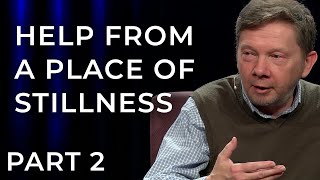
This is a YouTube video titled "Eckhart Tolle's Guide to Becoming an Authentic Life Coach" containing a detailed monologue by Eckhart Tolle recorded in November 2024. In this spiritual teaching, Tolle discusses the concept of being a "frequency holder," the challenges and paradoxes of stepping into life coaching, the importance of presence over modality in therapeutic and coaching practices, and the risks of ego interference in spiritual teaching. The content is a single-speaker presentation focused on spiritual guidance and coaching authenticity.
In following the teachings of presence for 10 years, primarily as a frequency holder in my life situation, I have recently embarked on a program to be a life coach in a helping capacity. I hope to focus on segments of the population who need guidance and attention. This is totally new for me, and I am feeling at times anxious and nervous in stepping into this new field. At the same time, I'm deeply grateful and joyful to be doing this. Can you speak to this paradox embodying inner and outer at the same time? Much thankfulness. Well, that's wonderful. So in case people don't need. When he says I have been a frequency holder, some of you may not know, although I mention it somewhere in a book, Human being have different callings and different destinies in their for whatever they do as a person. Frequency holder, I call somebody who is not called upon by a desire or a destiny to do something big, to create a big enterprise, to have a big impact on the world, to set up some big structure to manifest something big, but somebody who is happy doing small things with great care, love, and most importantly, doing small things in a state of presence. So a frequency holder could be somebody who mainly does gardening or does a handicraft job and gives it. And he. This person then embodies the presence in his or her work or might come into contact with people in a limited capacity. And whoever this person comes into contact with comes into that field of presence. So this person holds the frequency of presence. And these people are very important too. There are a number of you who perhaps could consider themselves to be frequency holders. Frequency holders have a hard time in this world because our civilization is not geared towards giving them an officially recognized place. In medieval times, Middle Ages, of course, a frequency holder would become a monk or a nun or a hermit. And that was to be. There were millions of them. And so it was a very recognized calling. But nowadays it's not most. Many, many monasteries are closing down. So frequency holders have to kind of carve out a niche for themselves where they can hold the frequency of presence. And a human being who is present affects not only those humans who come into contact with him or her, but a human being who holds that frequency of presence, Even if it. What he or she does is no longer important, the consciousness behind it is what matters. And this human being affects far more people than is obvious on the surface of things, because whatever happens to one affects the totality, because all humans are connected at a deeper level. There is such a thing as a collective human consciousness. Oh yes. What was the question, oh, yes, he's becoming now a life coach, which is a step. He can still be a frequency, but it's a little bit of a step beyond being a frequency holder and is a little anxious and nervous, but at the same time also grateful and joyful. The question often that arises, am I ready for this? Am I ready to help these people come with problems to me? And if you think you are ready, you probably are not. And if you think you are not ready, you may be ready if you know how to step out of the way, out of your own way, become an opening and pure awareness. When you sit with someone, I assume you sit. When you sit with someone, you become pure. You give total attention to that person. You become pure awareness. Now, you might have learned certain approaches in your training, becoming a counselor or a life coach. You've probably had training. And they. There are certain modalities. They vary. There are different modalities of psychotherapy and counseling. So whatever modality you were taught, of course you will attempt to apply this modality. But if you only have that, you're not going to be very effective. You may have some limited success. And the question, am I ready? If it refers to have I mastered the modality that they taught me, then that's a justifiable question. And you might say, bob, I am ready because I know exactly how it works. But the real thing in a situation like that is not the modality that you have learned and you applied. Not necessarily saying that you should not use it at all, you can use it, but realizing at the same time what is much more important is what underlies the modality that you use. And this applies even in highly structured and intellectual and mental modalities like psychoanalysis, which is very psychoanalysis. You analyze the part, you take this and this and this and this. And it goes on for years. And even there it happens that certain psychoanalysts who start off by practicing their modality, and then the years go past. And then gradually the good ones gradually, without knowing it, they develop the capacity of just sitting there and giving complete attention to the others. So becoming, they gradually step out of being totally identified with the modality. And sometimes they might not even use it anymore. And so they become truly effective the moment they become a field of awareness or presence rather than a person sitting with the other. So that needs to shine through the modality that you use. And you may find that after a while, you use relatively little of what you have learned and you realize that you don't have to do it. If you are fully present, the right words will come up, you will ask questions. Just like Socrates always started with asking questions not because he already knew the answer. It was a beginning of the an attempt, a joint attempt to find the answer through accessing the dimension of presence or awareness. So if you can be there as a pure awareness while you sit with this, some people call it client, some call it patience, some don't call it anything. So you sit and then you listen, then you ask a question, and then you listen and then it can happen, if it works, that the other person can join you even without you actually explicitly stating this. There's no need for that. The other person, without knowing it, joins you in the state of presence and then you share this field of presence while you sit there. And out of that, healings and the answers, if answers are needed, realizations, healings arise out of that. And this is why I said, if you think you are ready, you probably are not. Because then you think it's now, I know enough and I can do it. No, I can't. That sounds great that you have this self confidence. But no matter how much you know, no matter how much you know, this does not make you into a great counselor or therapist. Knowledge alone does not do that. It can be helpful, but the true transformation and the true healing happens through embodying presence. And yes, it can be helpful to know a few approaches. There are certain modalities that actually make presence, or they may not call it that, the main part of the modality. And those are very spiritual approaches to psychotherapy. It's been many years since I read these books, but I believe, for example, the modality created by Carl Rogers is one of them. Where the main work with the patient is to give attention and unconditional acceptance and unconditional means. You don't judge, you don't put labels on the person or their condition. It's all based on attention. Now, I have met a few people who have gone through Rogerian, I think might be called therapy. And some of them said it was very boring because the therapist never really said anything. So that seems to show that even though they can, even you can't really teach it as there are, I believe there are some Rogerian therapists who do embody it and others learn it as give. You have to have conditional exceptions. They still are not able to enter the state of presence while they're with someone. And then of course, the heavy modality, you just listen, okay? And you don't judge, okay, okay, time is over. When is Our next session. This is also of course in any capacity, then you and quite a few of you are already spiritual teachers in your own field. Maybe not formally or in your own field. You're already spiritual teacher and many others probably will become spiritual teachers in one form or another. And so it's important that the no matter through what kind of form you do your spiritual teaching, whether the entry point is bodywork or the entry point is counseling or something else, or nutritional advice be given. Even there, that can quickly become spiritual teaching. Always realizing what the foundation for it all where the power you need to access the power of consciousness while you are with someone. And you don't need to be fully awakened or enlightened in order to be effective. It helps, but you can be effective. I've met quite a few people who are effective in the situation, in the helping situation. They are totally present when they go back into their normal private life, less so. And sometimes the people who work with them, when they happen to observe these people or accidentally overhear something, they on the telephone talking to their bank manager or something and getting really upset. And then there's, oh, this great person who I thought was so enlightened and is giving me all this advice, gets so upset when he talks to the bank manager, just only a tiny example. He gets upset in many other situations even more. And yet in the teaching situation it can be very effective. So there are people, many who in that area they can enter presence and then in their daily life, sometimes they can and sometimes they can't. The ego reasserts itself. There are spiritual teachers also who do spiritual teaching. Sometimes even on a large scale can be very effective. But if you saw them in their private life, you would say, oh my God. And now the only danger in that case is that the ego at some point does not remain confined to their private life. At some point in the teaching situation, let's say the teacher is there present and doesn't realize that, so to speak, the ego is walking up from behind him or her, and then it creeps up the back and into his head or her head and suddenly the beautiful pure teaching gets contaminated by the ego. And that's very dangerous because then the disciples or whatever can no longer tell. They know that there's some deep truth that's being uttered. But. But then it's mixed up with this strange egoic stuff and they can't tell which is which anymore and they get very confused. This is not unusual. It has happened several. I'm not mentioning any names, of course, but there were one or two teachers who actually admitted they said, I'm no longer teaching because I realize now that my ego has been interfering a lot in the teaching. But to do that, that requires a considerable degree of presence. So it did come in and realized, there's the ego. I'll let go. So as a little thing, when, if you hear me say, if you leave me and don't come back to the next retreat, you'll be completely lost, then you might think, oh, this could be an indication that the ego has crept back in. And if you hear me say, I am the greatest teacher who has ever lived and ever will live, then you will know what happened to me. And then it's time to leave. Sam.
More from Eckhart







Why alcohol feels like relief, and what it is really giving you | Eckhart Tolle


