Ego Identity & The Path To Inner Peace
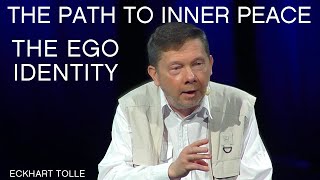
A speaker explores how ego and personal identity create suffering, and how recognizing your deeper self beyond personality leads to inner peace. The talk examines why we chase external fulfillment and what happens when consciousness shifts beyond the stories we tell about who we are.
So it seems we are going to spend the afternoon together, most of us, that is, for some of you, a few. It may at some point get too much, and you might feel the urge to remove yourself from here and go to a more stimulating place, such as the beach, or even more stimulating, such as the adjacent expo. The primal urge will have been stronger than the urge towards higher consciousness. But most of you will probably stay here. And to the extent to which the. What I sometimes call the new consciousness has already arisen in you, to the extent of that, you will actually enjoy being here and listening for the whole afternoon, with a short break, listening to a man sitting on a chair talking, which seems a little strange. How could that be interesting? There must be something extraordinarily important in what he has to say to keep you here. And that is true. But of course, there needs to be something in you that recognizes that there's something extraordinarily important, not in the person speaking, but ultimately in you. So that recognition needs to be there in you. And that's nothing to do with how much knowledge you have, spiritual knowledge or accumulated education or PhDs or degrees. Nothing to do with that kind of mental faculty. There is another faculty in humans that in most humans on the planet is as yet dormant. And in some, a growing number of humans has awakened. I call it faculty, something, a dimension of consciousness that's different from the prevailing ordinary dimension of consciousness on the planet. So that's a spiritual awakening. That is the next step in human evolution. Because humans have not come to the end of their evolution. Humans are a work in progress. It's not finished yet. It would be terrible. Imagine that humans, as they are now a finished product. Crazy. And that's why some people, because they have misperceptions about humans and they have misperceptions about God. And then they say, how could God allow all this to happen? All this. This is based on two misperceptions. That humans are a finished product created by God a long time ago. And that God is a patriarchal figure controlling things from above, or has lost interest completely and walked off, maybe somewhere else, because he realized that he didn't do a good job. So the. Our afternoon here works on two levels. There's the level of words and thoughts, and that is necessary. But more importantly, there is that to which the words and thoughts that underlie the words point. And that is the essence of our gathering here. And that to which they point is the essence of who you are. And the purpose of our afternoon is to either awaken or in the case of many of you, to deepen the realization or the connectedness with who you truly are. And when I say truly, I mean in the depths of your being. And I mean a dimension that is deeper than your personal history. And most humans are completely unaware that there is a dimension of consciousness in them that is deeper than their personality, their personal self. So they are trapped on the surface level of reality. And that is not a pleasant place to be. You are basically then trapped in your conditioned personality, the person, the egoic self. And you know, somehow, you know that there is something not right. You know, somewhere, instinctively, you know, there's something so important that's not here yet, that's missing in my life. There's something wrong. And how humans interpret that mentally, what they perceive or feel to be wrong varies from person to person. One person might say what's wrong is that all humans don't have the same religion that we have. There's something deeply wrong. So we need to either convert them or kill them. Or other humans say there's something deeply wrong about society, they project it outward. Of course there's a lot wrong with society, but there's. What is society? It's the sum total of the individuals. There's something deeply wrong with what I. With my personal history. It's so unsatisfying. Why did so many things go wrong in my life? Things that weren't supposed to happen. I imagined things going very differently. Not all these failed marriage and divorce and all this dreadful suffering. And then there was the illness, and then there was that. And then there were great achievements. And then there were again the opposite. Something is looking for the next thing to feel fulfilled by possessions, recognition, something missing. There's always something missing. What they don't know is that what is missing? What they look for outside. Or they blame others for preventing them from finding it. You can blame entire groups of people for making you feel unfulfilled. It's a very common thing these days and very satisfying to the false sense of self. Because if you can see yourself as a victim, either on a personal level or collective level, that gives you a somewhat satisfying sense of identity. Satisfying in a completely non satisfying way. It's a paradox. You feel good about feeling bad. The more you can complain about others, the better you feel. But it's bad. But the ego thinks it's better. And you feel now you know who you are more fully. It's a fiction. So you can emphasize your victim identity on the personal level to give you some kind of stronger sense of Self. Or you can emphasize your identity as the one who is victorious in the world. Me. The ego doesn't mind which one. They're both equally strong and equally false. Usually the egoic self is interpreted by people as people who have a high sense of exaggerated sense of who they are, who think they're better than others. And that is one aspect of ego. But there is another aspect of ego which is equally strong. And that is people who have a self image, a self identity of being more of a victim than somebody else or others. Oh, that works too. So whichever is most convenient to you, you can use that people. So people use all kinds of things to create a more satisfying sense of identity for themselves. But it's all in the head. It ultimately all consists of the structure of thought. And that is what I call to be trapped on the level of the person or the personality. Another way of putting it is to be trapped on the level of form, the form of who you are, which is the physical and the psychological form of who you are. The me. Me and my story, me and my personal history. And then all the conditioning, the opinions and viewpoints and convictions and through which you interpret everything according to the conditioning of the personality. Then you look at things and you immediately have immediately labeled things and situations and people as they come into your perception. There's the immediate labeling and you think it's all true. You don't realize that you are looking at reality through a veil of your conditioned mind. And really what you're seeing is the veil of your conditioning. And there's something there behind it, but you can't clearly see it at all. It's a dreadful state to be in. But it's normal. This is why I sometimes say normal equals insane. So you and this is such a fundamental question. The question of identity is the most important question in your life. Who am I? And you know that. You know that it's important. But you don't know where your true identity is. Because at school nobody taught you should be the most important thing that children are taught. Discover your essence. Identity. Is that a subject at school? I haven't heard of it, never come across it. So your form identity relies on external things. You compare yourself to others and according to what is most appropriate, you emphasize those aspects of your form identity where you are a little bit superior to others. And that's where the ego gets in and forms mental construct. It could be the history of your family as you come from a family. Not so much in the new world here, but in the old world. To some extent, a little bit still in Europe, even more so in some more traditional cultures. You think back, you have your family history, your ancestors, and you have this long line of your ancestors going back and they're all more important than the rest of the population and you have come out of this long line of ancestry and that gives you your identity. You might even have a title. In some countries they still have titles. So you grow up and your 10 year old girl is told, oh, your name is lady so and so. Oh, now if you're trapped in that, to get out of that, not easy, you've been given that sense of specialness. So the main, the core of your identity lies then in your ancestry and it can have you in its grip until you on your deathbed. And you never know that you are trapped in an illusory sense of identity. Now, most people don't have that, but they may have other things. They may have more possessions than others, their family, or they may have achievements in that they came out of nothing and then they achieved this, that and that, and they, and they identify with the material achievements and so on. Possessions. And that can give you great sense of identity too. Never satisfying for long. That's the thing. There's always this element of unsatisfactoriness, of something really important is missing. And even if you have an aristocratic title, Lady Diana, for example, going back, she was not fulfilled by her title and her ancestry, which goes back hundreds of years, but was very unhappy. And this is quite normal, you have that identity and you are trapped in it and there's always in the background the unhappiness. And then of course you might have a body that's more beautiful than others, then you can focus on that and that gives you a sense of superiority towards others. So, and that's temporarily a nice thing. And then as the years pass, a day will come when you look in the mirror and something has changed. That beautiful body has shrunk or expanded, whatever the case may be. I saw the other day in Sydney, walking along the harbour front on a beautiful sunny morning, pleasant, not hot, less warm than it is here, people walking. And there was one man who probably who had taken off his shirt and he was walking through these crowds of people. And the strange coincidence is that this man of course must have been so hot in this weather that he felt compelled to take off his shirt. But by strange coincidence, he had the most wonderful physique, extremely masculine, just very impressive. And many, and many people looked, and some tried not to look and just glance and you could see how satisfying it was for him to walk through there. So he was lucky that he felt so hot that he had to take off his shirt. And of course there will have been other egos, ego identities, walking and looking at him, who felt diminished by looking. It's normal for the ego. It felt diminished and so. And then looked the other way. I'm not going to look at him. So it's normal for the ego to feel diminished because it always compares itself to others. And then the ego sometimes tries to compensate again. You have to arrange your identity somehow. Then he tries to compensate for this diminishment, for example, by saying, just a few thoughts compensate for the diminishment of the ego. And they're all, it's all unconscious thinking. For example, the thoughts go, oh, look at that beach bum there. I bet all he does is hang around the beach every day and having not a thought in his head, okay, that makes you feel better for a little while. If you're in your big car, you can feel superior towards others and then others will look, but then there may be a man on a bicycle, he's looking at you in your big car, say, look at this materialist. Whereas I am completely non attached to these things and I'm totally happy on my bicycle because I'm beyond these things. That's a very subtle, so called spiritual ego. You can feel superior because you're more spiritual than others. Not realizing that also is a mind made sense of self, a mind made identity. Amazing. And many people carry a very unhappy or predominantly uneasy, unhappy, complaining, insufficient personality with them. And that's who they think they are. And it's an awful way to be. And nobody has taught them that that ultimately is not who you are. That's the conditioning of your mind and that is the emotions that also accompany the conditioning of your mind. And so the question arises, well, if I'm not that, if I'm not that, who am I? And that is the most important question you can ask yourself now in our mainstream culture. They will tell you that that question makes no sense whatsoever. Because they believe, obviously you are your past and you are who you are as a person. They deny that there is anything else. So as you are here, I would suggest that that which is beyond the personality in you has already awakened and that has brought you here. And that goes far beyond a personal thing, that which is beyond the personality, a dimension of consciousness in you, in the human, that is deeper. You could say higher, but I prefer the term deeper than the personality. And Then the continuous stream of thinking which is the basis for the personality has already awakened in you and has brought you here. But that goes something beyond the personal. That is something. What has ultimately brought you here is the fact that human consciousness is evolving. And the evolving human consciousness through you has brought you here in order to deepen the awakening. With a few exceptions, there may be some who didn't come of their own free will. They were dragged here by somebody. And then they reluctantly agree to, okay, I'll come along and listen to this guy for four hours. Oh, my God. And then they sit here and think, what's he talking about? It just makes no sense whatsoever. And because the words get. The words are being perceived by this person, this imaginary person, which may not be imaginary, the words are being perceived, but they do not go beyond the clutter of his or her mind. So they get trapped in the clutter of the mind. So you listen to the words, but there's nothing in you that recognizes that to which the words point. And so all you have is they get trapped in the clutter of your mind. And so it's completely meaningless. And so there needs to be a little opening in the stream of. In the mind stream. There needs to be a little opening, a little crack. And most of you, that's there. And in some of you, there's more than that already. And in that opening, then the words can go in, and then that to which the words point is recognized. So when I say, for example, the essence of who you are, when I say, beyond the personality, beyond your personal history, there is a deeper essence of who you are. And for a moment, you can sense the recognition within you of the truth of that.
More from Eckhart







Why alcohol feels like relief, and what it is really giving you | Eckhart Tolle


