The Hidden Blocks Keeping You From Abundance
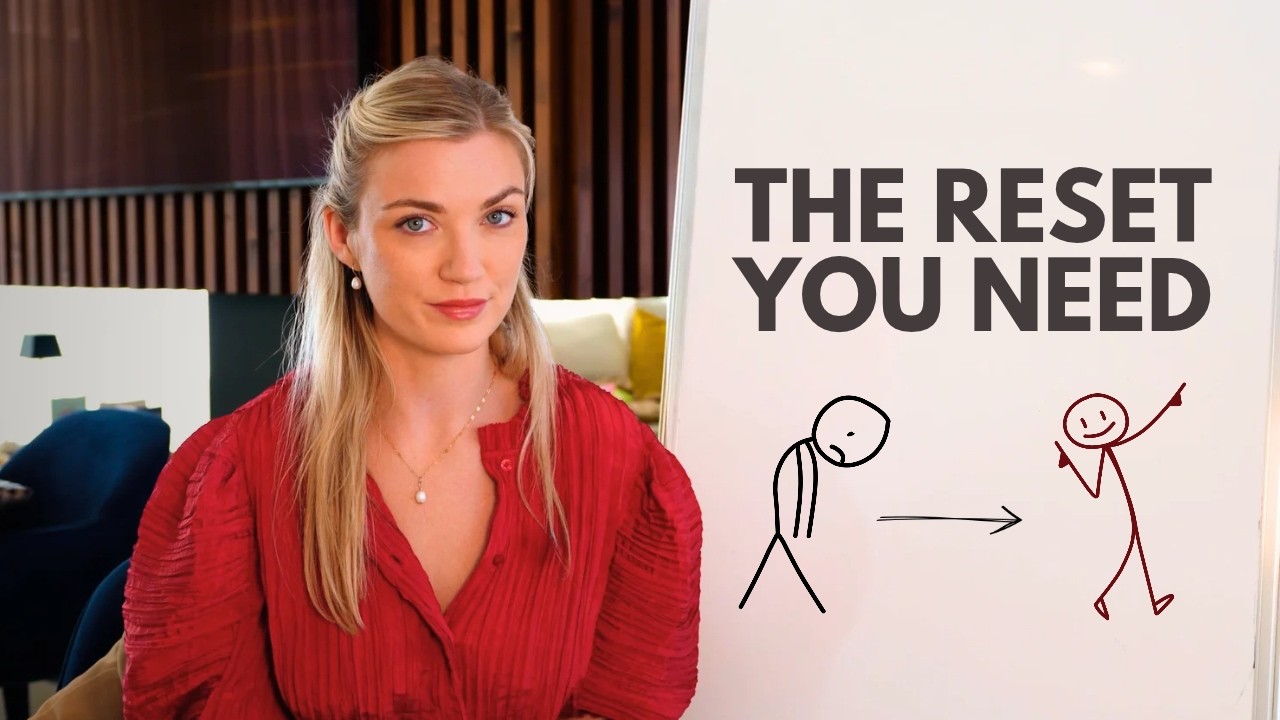
In this two‑hour live workshop, the facilitator guides participants through a series of grounding meditations, conceptual clarifications, and experiential exercises aimed at uncovering and releasing subconscious blocks that prevent the experience of financial abundance. The session begins with a brief breathing exercise to bring attendees into the present moment, then defines "abundance" as a state of having more than enough, distinct from money, which is described as a masculine, transactional medium of exchange. The core of the workshop is a systematic exploration of five major blocks: 1. Religious and cultural programming that labels money as evil or dangerous. 2. Money‑related trauma stemming from personal experiences of scarcity, debt, and chronic anxiety. 3. Early family‑origin money stories that were adopted for survival and relational alignment. 4. Misperceptions about what money actually is—its function as a neutral store of value and exchange. 5. A misaligned self‑concept that limits one’s capacity to hold larger income levels. For each block, participants are prompted to journal, visualize, and perform guided visual‑meditations that separate negative emotional “clouds” from the imagined "green stream" of money. The facilitator also introduces a practical identity‑re‑authoring exercise called the "Abundant Avatar," where participants sketch a stick‑figure version of themselves who already lives in the desired financial reality, then detail the beliefs, habits, boundaries, and self‑image of that version. The workshop concludes with a call to action to continue the work in a paid three‑day immersive program, and a reminder that abundance is an innate state. Key takeaways include: (a) recognizing that money itself is neutral; (b) identifying and releasing inherited or trauma‑based beliefs; (c) aligning one’s self‑concept with the desired level of wealth; and (d) using concrete journaling and visualization practices to rewire the internal relationship with money.
Chapters
Okay guys, and before we drop in, I just invite everyone who's here, unless you are driving or doing something that needs your full attention, I'm just going to invite everyone to close down your eyes for a quick minute and just tune in and choose to just arrive here. Okay, so we're not going to do a full meditation right now, but sometimes we can come into things with a very active mind. We're carrying our day into the call with us. We're worrying about what's to come afterwards, and we don't really soak up everything that takes place in the training or in the lesson. So I invite all of you to just really tune in, close down the eyes, and really choose to arrive here and now. Bring your awareness to your body, to this moment, and together we'll just take 3 deep breaths just to ground into this space and this container. So when you're ready, take a deep breath in through the nose and a long exhale out through the mouth. Take another deep breath in through the nose, all the way into the stomach, and a long exhale out through the mouth, letting go of any tension. And take one more deep breath in, inviting in openness. Breathe in deeply to the stomach and exhale any tension, any expectations, any resistance through the mouth. And just set an intention to surrender to whatever comes up, to stay open-minded and to be willing to let go of what no longer serves. And just know that you are here in this community, on this call, with some powerful individuals who have very similar mindsets, goals, intentions as you, and that is powerful. You're not alone in this journey, you're not alone in this space. We are on a very powerful collective mission, so you can relax into knowing that as well. Okay, when you're ready, start coming back slowly. Open your eyes. We have grounded into the space, everyone, and now I will get the slides, so bear with me. Okay, everyone, let me know if you can see my screen. Okay, please. And in case I need to draw, I don't have a whiteboard, but I have paper. So don't worry, there might be sporadic drawings. If you're here for the art, there might be art. Don't worry. Okay, amazing, you can see. So today we are diving deep on some of the hidden blocks keeping you from abundance, right? Abundance and money. So we're just going to get into some basic definitions first before we go deep into the blocks. Abundance. What is abundance? Abundance is a state of having more than enough. Okay, that's abundance. So for a long time, I thought that abundance was just directly linked to money. It's not actually just about money. Money is a component of abundance, but abundance itself is actually just a state of having more than enough. So when we desire to feel abundant, what we really want is the feeling of having more than enough resources to meet our needs and our desires indefinitely. Okay, so that really— when we think about, I want to be an abundant being, and we're saying our affirmations and doing our vision, of being abundant, what we're really looking for is that feeling of like never having to think about or worry about whether our needs and desires are going to be met again, right? So for example, if you have a need to get some groceries, you can pay for that. If you have a need for a new car, you can pay for that. If you need to go on a trip, you have the resources to do that. If you need to launch a new project, you have the resources to do that. If you need to support your family, you have the resources to do that. That is from what I see, that is what abundance means to most people. It's being resourced, more than resourced, okay? And so abundance can look like having your needs and desires provided for without money getting involved at all. For example, you might always get gifted certain things right when you want or need them. So some people— and let me know in the chat if this is you, I know there's a few of you on here— some people are doing inner work and they're shifting their state. They're realizing they can manifest things, and they're starting to manifest things like maybe gifts. Maybe they're gifted coffees or just random items. Like maybe they need, I don't know, I don't know why coffee's in my head, but like a coffee machine. And they're thinking, I need a coffee machine. And somehow someone gives them a coffee machine that they didn't need. They didn't have to pay for it, but they were given it, right? So that's an example of someone stepping into the energy of abundance, but they might still have blocks around money specifically. Quickly. If that's you, then you probably still have some resistances to the actual energy of money. Okay, this is really common as well because abundance is a feminine energy, uh, and then money is a masculine energy. So this is really common when we look at the masculine and feminine imbalances as well. Money— what is money? Money is a medium of exchange and a measure of value. You guys, I'm going to be blue in the face saying this today. Money is a medium of exchange and a measure of value. That's all that money is. Okay, so money is the primary medium that we use to exchange value in the world. It is therefore the most desired resource when we think about abundance. Okay, it's the universal store of value. And so if you have an abundance of money, then you are extremely well resourced in this world because we've all universally agreed that this is what we are going to use to exchange value. And I will be talking about this in a little while, but if we think about even where money came from, we brought money in thousands and thousands of years ago because the trade system had so many limitations, right? So if I have apples and I want you to, if you have, uh, let's think about this for a second. You have wheat, right? And I'm like, right, I'm gonna give you some of my apples in exchange for some of your wheat. Then you might say, okay, yes, let's trade that. That's how you got things. But maybe I went to somebody who was selling Um, let's think of something bigger. Maybe I needed like a horse or something, right? And I go to someone and I'm like, I want one of your horses. And I don't have enough apples to give that person for a horse. This is a really basic example. Therein lies the problem and the limitation with barter and trade as a means to exchange value, right? So because of the limitations that that caused, we as a collective thousands of years ago said, okay, let's come up with something that can be a universal medium of exchange and a measure of value, and that's where money was created. So money, you know, we have a lot to be grateful for with money. We would be extremely limited if money as an entity, as an egregore, was not ever created. Okay, and when we look at the energy of abundance, so abundance is a feminine energy, it's a flowing energy like water, okay. And so even when we look at like the language around money, it's really interesting because we have banks that store money. We have currency of money. It's all connected to water because the flow of abundance, the flow of money in abundance is just like water. Okay. It flows freely unless a constraint or a barrier blocks its path. And we restrict the flow of abundance. When we hold internal resistance to money and abundance. So in its natural state, abundance wants to flow to you, through you, into your life, into all of our lives. Naturally, that is the state of abundance. But when you, in your energy, in your energy field and in your belief system, when you hold resistance, resistance to money, that blocks and restricts the flow, so it can't flow to you freely. Okay, and a restricted money flow looks like constant stress and anxiety around money, living paycheck to paycheck, overworking from fear and survival mode, feeling guilty spending on yourself. Money comes in and leaves quickly. So like, no matter how much money you make— this was me— no matter how much more money you make, even if your income is going up, you still— it still disappears quite quickly before the end of the month. Constantly checking your bank account, fear of not having enough in the future, undercharging or settling for less. This is a really, really common one because you're just scared that you won't get more, so you just settle. Avoiding finances— this also used to be me because they feel overwhelming. I think there was at one point I didn't check my bank account for like 2 months straight because I was just like, uh, no, I'm an abundant being, I don't want to look at that. But that avoidance is also fear around money, and that restricts the, the flow of abundance to you. And feeling like financial freedom is always far away. Okay, so that is what a restricted money flow looks like, because all of these point to resistance internally to money. And if there's resistance, then the flow of money to you is going to be restricted. Okay, I'm seeing in the chat some of you guys— yes, yes, yes, do not fret if this is you. You are here, you're doing the work. Okay. Oh no, don't look! All right guys, so this is a harsh truth. If you've seen my videos, which I know you guys have, you're going to be familiar with this, this kind of truth. Believe it or not, a part of you loves being in your current financial situation. I know you're like, no, I don't. Yes, a part of you does. A part of you loves your current financial situation, especially if you've been in that situation for a really long time and you're not breaking beyond a certain threshold or a certain level. You would not still be in the situation that you're in if it didn't serve a part or numerous parts of you. And the quicker you accept that, the quicker you can get the awareness as to what those parts are, and then you can start to release them. Okay, so your behavior in general, but your behavior around money, is not random. It is always driven by your beliefs, by your perception, and by your dominant emotional state. Always, always, always. So action is the last step of a physical outcome unfolding or a manifestation unfolding. What precedes action is your energy, is your identity, is your belief system, is what you're focusing on, right? So you're embodied in a particular energy, a particular identity. You're holding particular beliefs, you're generating particular emotions. That's creating a perception which causes you to focus on certain thoughts, ideas, things, opportunities more than you would focus on something else. And then you take action based on that. Okay, so you guys know this, but everything that you do is driven by your internal world, because as within, as without. So knowing this, right, knowing this, then isn't it worth it to go within and start looking at what are the actual blocks, resistances that you have to money so that you can stop aligning where you currently are right now and start aligning with the financial reality that you prefer. Because no matter what your goal is in your finances, like, you can think logically, that would be so much better, I would love it there. But there are parts of you, there are parts of your beliefs that wouldn't love it there, okay? So we are gonna be diving into what some of those could be today. And the biggest block on your abundance is your paradigm. Okay, what's a paradigm? A paradigm is a set of beliefs. Okay, so you have a certain range, a certain set of beliefs in relation to money, and that is typically— there's, there's a whole range of blockers on abundance in general, from masculine to feminine energy to loads of other things. A couple of them we're going to touch on today, but in my, in my experience, the biggest one is your set of beliefs that you hold about money specifically. Okay, so when we think about your money paradigm, maybe you've journaled on this, maybe you haven't thought about it much, but I want you to just reflect right now. And if you have a piece of paper and a pen, you want to get that on the go. And if you don't have one, get one, because we will be writing some stuff down together today. It will be a lot more powerful if you can follow along and actually write as we're doing it. I want you to just have a little think about what— how do you feel about money? How do you feel about money? And write down, money makes me feel blank. Don't think about it, just write down immediately the emotions that come up. How do you feel about money? Money makes me feel blank. List everything. You might have some positive ones, some negative ones. It could be all negative, it could be all positive. I'm seeing a mix in the chat. Free, happy, stressed, secure, safe, fearful, worried. Yeah, whatever comes to mind, don't judge it, just write it down. And then the second question is, what do you think about money? Money is blank. So write down The end of that sentence for you. Money is blank. Somewhere important. Hard to get. Yeah, difficult. Okay, so everything that's coming up for you as you're writing this stuff down is pointing to your paradigm, your money paradigm. Okay, okay, if we look a little bit deeper this is kind of how the energy of money is existing within the collective today. So we don't exist in a vacuum, okay? We're very relationally dependent beings. We incarnated here into this, into this 3D world, but we are very connected with everyone else on this planet and the experience that they are having, and also the consciousness that they are operating within, the state of consciousness they are operating within. And so it's really important to also look at the collective money paradigm because that's something you were born into. So by default, you naturally, as you, as your soul incarnates into this physical experience, you are going to pick up some of the remnants of that paradigm of other people. So as a collective, we have experienced a lot of pain and suffering in relation to money. So the way I see it, it's like money is a flowing green stream of energy that is surrounded by darkness and negativity because of these painful experiences in relation to money. And if you look here, this is almost like, okay, this is how money actually looks as a stream, but this is how the collective paradigm around money perceives money. Okay, so money is just money. The energy of money is just the energy of money. But because of everything that we've experienced in relation to money and all the associations, the trauma, the attachments that we have to money, this is how it's perceived by the majority in this, in this collective. Okay, and so what someone just said— I was just drawing that. Wow. Oh my gosh, you're psychic. So what we're going to do today, we're going to unwind some of those negative associations that you've either picked up from the collective or your own individual ones so that you can stop kind of tainting or polluting the energy of money with your perceptions and experiences and with the beliefs that you might have inherited from other people or the ones that you might have created on your own. Okay. So we're trying to basically restore our internal relation to money so that we see money as just what it is without anything else skewing it or causing us to resist it. Okay, so we're basically doing a cleanup operation of our internal relationship to money so it stops looking like this and it starts looking like this. And this is, this is a tall order, guys. It's not a simple thing, but we will do our best today. So block number one— this is a collective block, but you probably have it individually as well, even if you don't consciously think you have this. I didn't think I had this, but I actually did. Block number one is money is evil or dangerous. So how does this come into play? Number one, religious programming. Okay, so wherever you're living in the world You might be in the West, you might not be in the West, you might be in the East, but you basically are coming from a line of people who grew up in times where religion was a lot stronger than it is today. And because of that, there were certain beliefs, certain paradigms programmed into your ancestors based on the ideology of the religion back in those times. So some of that is literally in your DNA when you incarnate into this lifetime, even if you don't consciously think that it is. It is a part of you when you come into this physical reality. It's there in the sub-sub-subconscious, okay? Like everything in your lineage. So in Christianity, for example, we see it in the scripture, for the love of money is the root of all evil, which while some coveted after, they have erred from the faith and pierced themselves through, through with many sorrows. In Islam, we see that too much wealth will lead to forgetting to prioritize Allah. So there's a lot of warnings against putting wealth on a pedestal. And then in Buddhism, it's— wealth is seen as temporary, so it cannot lead to happiness because it is a form of attachment. Okay. And so even if you're looking at those scriptures right now, you're like, okay, I can see here the meaning of that. But the issue is when people take scripture and they run too literally with it, and as a collective over decades and decades and decades, things like this can take on a different meaning than maybe how they were intended, right? So money is evil is not actually an accurate interpretation of the scriptures. Money in and of itself is not evil or bad. What this is alluding to here is that the love and worship of money is what can become dangerous or harmful. So when a person prioritizes money above everything, above God, above their faith, above themselves, above their connections, above their health, that will always end in suffering. And so even if you're to look at the scripture, if you really break it down, that is the kind of core meaning of it. So you looking at that and knowing that, you can see, okay, money, money is not evil inherently. It's how a person interacts with money. It's how a person prioritizes money. That can be harmful. Okay, so that is the first one. And, um, it's interesting because there's other scripture that say that a wise man is a rich man, right? So what happens is the institutionalization of religion can take certain things that had a particular meaning and twist it and change it, right? And then a lot of shame comes in and da da da. But if you come back from that, come back from that, come back from that, and just know, okay, this is not going to be my money story. I'm not going to take on this false belief that money is inherently evil or dangerous. I'm going to see it for what it is. It's an energy, it's a tool, it's a medium of exchange, and I'm not going to prioritize it over everything else. That's how you can apply the actual meaning of the scripture. Okay, okay. The second, the second thing that causes the belief that money is evil or dangerous, or that like, even evil or dangerous, those are strong words, but even just the feeling that money is dark or negative, right? This is really common. Money kind of feels like it's dirty, right? And that's not random. That's not random. That's a real thing that is existing in most of our energy fields and most of our belief systems. Because of the corruption and misuse of wealth. And that is a real thing. Okay, so some of the most powerful individuals and corporations use wealth in ways that hurt people instead of helping them. This is not news. Okay, if it is news, then I'm sorry to break it to you, but this is going on and we see it all the time that companies are prioritizing profit over people's well-being or over ethical practices. So for example, marketing is exploiting people's insecurities to sell their products, right? Fast food companies are engineering addictive foods to keep people addicted to the food and buying stuff instead of, instead of thinking about people's health, right? Or social media companies. Social media companies are capitalizing on us being distracted, on using our attention to get us to spend all of our precious time and life force on these apps, right? And instead of pushing us towards more positive uses of our time. And so, and we can also see governments wage war for power and control, for money and resources. So that's just, that's just like a very small handful of examples, but we see it all the time. We know it deep down inside, even if we don't look at it. Some of the most powerful people in this world are the people who have the most money. And the people who have the most money often are not using that money for good, for the collective good of humanity. And so our brains are like association machines. They do this subconsciously. They'll just go, okay, if, if the richest, wealthiest people are corrupt, then wealth equals corruption. And that's what creates that negative association to money internally. 'If money corrupts people, then having more money could make me bad too. I don't want to be in that club. I don't see myself as that type of person, so I don't want money.' Now, that's not something you consciously say, but deep down inside it is happening in your unconscious, deep in your subconscious, right? And this is why money can feel icky and we don't know why. It's because of all of this. The truth is that it's not the money. Once again, poor money. Oh my gosh, money is just getting scapegoated here. Like, once again, it's not the money that does the corruption, it's the people. Money simply amplifies a person's already existing qualities. So you may have heard that before, but If a person is inherently good, if a person has inherently good intentions, if a person is, let's say they're not making a ton of money, they're making kind of, they're kind of making like a good amount, but they don't have that much extra. They can afford their life. They can afford their bills. They might afford one holiday a year. They can afford their car. And then when they have extra money, they give that to a cause that they care about. And they're just a really pure-hearted, good person. If you were to give that person a lot of money, it wouldn't make them suddenly corrupt. No, no. It would make them more of what they are. They would probably give more to the causes they care about. And so I think sometimes we also can see in examples of people we know when they get rich and we feel like they've changed, what happens in those cases is the money has activated something that was dormant, maybe something in their shadow that we couldn't perceive before, but now because the money is amplified, it. It's come to the surface, okay? And the other thing also, you don't need to worry about that being you because you guys are here doing the inner work and you guys know how to do shadow work. So if anything does come up that is a little bit ugly or a part of you that you don't necessarily vibe with, you all have the awareness to work and integrate that part, okay? So not one of you on this call needs to worry about this. I can safely say that, right? The other thing that we can see where money changes people is— it's once again, it's not because of money itself. It's not money's fault. It's because of the way that people start treating them sometimes when they get money. Okay, so sometimes when a person comes into a lot of wealth or a lot of money, the people, people around them can start acting different. So they can start asking for favors, or they start having not the best intentions. They might be a little bit fake. Suddenly they want to hang out all the time, and it's because they are in a state of lack and they want to get that money off that person. And again, that's not money's fault. That is not money's fault, okay? So it's not the money that does the corruption, it's the people. The other thing to know about money, and this is one that's kind of hard to sink in with— some of you might have skipped ahead and read this and you might be in shock at the moment, I'm sorry— money doesn't care. If you're morally good or bad, okay? It cares about whether you are in energetic harmony with it. That's it. That's it. It doesn't have preferences. You can be a bad person with bad intentions, but if you have an aligned paradigm and frequency towards money, money will come to you regardless of your not-so-great intentions. Okay, so all of this, I almost want you guys to like write down a stream, a green stream or a dollar sign, and I want you to really start— you're really getting to know what money isn't here. It's not all of these associations that have been built up over decades of programming that we have inherited, and it's not all of the stuff that happens when people get money. That's to do with people. That's to do with the dominant state of consciousness of this world. That's to do with human nature. That's to do with people's trauma, etc., etc. It's nothing to do actually with money. Think about it like this: if money were to disappear but we had something else that was like a resource of some kind, the same corruption would typically exist. Corruption would still exist. Human beings treating human beings another way. Would still exist, unfortunately. But we're working on it, guys. The level of consciousness is shifting. We are moving, we're going in the right direction. However, if we were to remove money from the world, the corruption and all of that stuff would still exist. So you can see it is not money. Yes, it's an amplifier, but money is not the cause. Okay, so how's your stream looking? Is it getting lighter? Is it getting brighter? And you should be really picturing, okay, this idea that money is evil or dangerous, like, you almost want to see it and feel it like you're pulling these negative, dark, dirty associations of money, you're pulling them out of money. Those aren't money's to carry. Those were never money's fault or responsibility in the first place. So pull them out, pull them out of the stream, pull them out of the stream. Okay, now this one, we could have done a whole training just on this, you guys. Money trauma. Money trauma. This is block number 2. Okay, so there's a lot— there's many, many forms of money trauma. And we could have gone into a lot of them today, but we don't have time to go into, go into a whole range of them. So I narrowed it down to the one that I think is the most prevalent. Now, second most prevalent is going to be trauma that happens actually from having money, but the first most prevalent is the trauma from not having money. Not having money is a trauma experience, you guys. It's traumatic. I know it is. I have lived it, okay? I get it. The stress of not having money is uniquely torturous. Okay, so not being able to pay your rent, the stress over an unexpected bill, people losing their houses, needing medical care, not being able to pay for it, feeling trapped in a situation without the resources to leave, your credit card getting declined buying groceries. Oh my God, have you ever gone to the supermarket and when to pay for something with your, like, with your friends. I used to do this after the gym back when I did powerlifting in Ireland. You're with your friends and you're sweating because you can't remember if you have 30 quid left in your account or 3, and suddenly you're like, oh, my car's gonna get declined, my car's gonna get declined. That's a trauma experience, guys. That is trauma, right? Uh, having to borrow money off loved ones or banks Okay, being in debt is traumatic, and not being able to afford basic necessities to the point that it's impacting perhaps your family or people around you, or if you have children. I know a lot of people struggle with that as well. Okay, so let's give this the weight and gravity that it deserves. Not having money is traumatic, and all of those times throughout your whole life— maybe you're in this experience right now but all of those incidences where you felt like you could not support yourself, where you could not meet your needs because you didn't have money, each and every one of those times is a trauma experience that creates a negative vibration and a negative emotional state towards money. Of course it is. It's like, okay, if you think of money like a person for a minute, it's like you're in an hour of need and you're asking this person to come and help you. And they're just not there. Of course, over time, you're going to build up this resentment, this mistrust towards money, right? Of course you are. You can't experience that much pain and suffering around money and maintain a completely peaceful and harmonious perspective on money. It's not possible. Okay, so the shame, the embarrassment, the frustration, the anger, and the fear— the fear that, like, bone-chilling fear of, like, am I going to be able to pay my rent next month? All of this is wrapped around the energy of money, and it creates really negative beliefs about it. Because remember, you guys, a belief is just a thought backed by intense emotion. That's how something becomes a belief. So if you're experiencing really intense negative emotions, or you have done in the past, around money that are accompanied by thoughts, which they usually are, it creates beliefs like money is stressful, there is never enough, there is never going to be enough, I will never have enough, I have to struggle, I have to fight to survive. Money creates pain and fear. I don't deserve to have my needs met. That is, if you're struggling to have enough money, that is something that could be deep, deep down in your subconscious. I don't deserve to have my needs met because you've never had your needs met easily. So that creates this belief within you, or I'm bad with money, I'm just not the type of person who's going to ever have money, etc., etc. So this all naturally leads to disliking or hating money as a concept because money is so linked to pain. Again, we've got that green pure stream of money energy, and then you've got all your experiences wrapped around it like this dark, dense, painful energy. Those are separate energies, but they're linked together, okay? When we dislike or hate something, we push it away, we resist it naturally. We don't have to think about it, we just do that. So we avoid thinking, talking about it, those are two of the same things, talking or speaking about it. We dismiss it. We claim superiority to it. Okay, so I see this, my spiritual friends. We claim superiority to it. So we say, oh, you know what? I don't need money anyway. I'm happy without money. It's fine. I'm above money, right? But anytime you claim superiority to something, it's because a part of you actually doesn't feel deserving of it or feel good enough for it. It's another form of resistance and avoidance. We distance ourselves from it, we speak negatively of it, and we just try our best to separate ourselves from it. Or we overly control it. That's another way we do it, right? So why the heck would money flow to you in that state? It can't. It cannot. That is a repulsive state to the energy of money, okay? And here's the truth, you guys: your trauma is actually not money's fault. This is another thing that's also not money's fault. So again, as I'm talking here, you're pulling any of this dark suffering, pain experiences, that energy, you're pulling that out of the stream, the green— I keep really calling it blue— the green stream of money. It's not money's fault, it's not money's responsibility, it's not on money to carry all of that. Money is just money. It's not good, it's not bad, it's a store of value and a medium of exchange. Your trauma is due to the social and societal consequences of not having money. That's, that's what your trauma is actually about. That's who you should be pointing the finger at if you're gonna point the finger at anyone. Okay, so in times that you have been in lack or haven't had money, those circumstances have existed in your life because of your energy, because of your belief system, because of the way the world is set up, and because of the family environment that you were born into. That's why you've had circumstances of lack, okay? Not because money decided one day to take its journal out and say, okay, we are just not going to flow to Louie, we don't like Louie. We're going to make Louis suffer. Money didn't do that. No, money is just a store of value and a medium of exchange. So the circumstances of lack that have caused your suffering, you've got to look at what actually caused those circumstances. It's been your energy and your belief system and what you've inherited from the world and from your family that's caused you to have a particular relationship with yourself, with money, with work, with success. That's what's caused your financial circumstances, not money itself. Okay, and I have a really fun analogy for you guys. Hating money because of experiencing the lack of money is like hating temperature because of experiencing cold. You can't hate the entire energy of temperature just because you experienced the unwanted intensity of it. What you desire is to experience the opposite polarity of that energy. So heat in the form of temperature or abundance if we're talking about money. It's not the energy's fault that you're in the intensity of it that you don't prefer. Okay, are you with me, guys? Are you with me? So we are going to do a quick money cleanse, and we're going to do this in a meditative state. So I invite everyone to get comfortable, get comfy, and just start tuning in. Okay. And gently close down your eyes if you can, if you're not driving of course. Close down your eyes and begin to go within, lengthening your inhale and your exhale. And just bring your awareness to your body. To your breath, and allow this awareness to begin to soften any tension in your shoulders. Let your shoulders drop down. Let your chest soften. Unclench your jaw. Release any tension, any gripping. Relax your arms, relax your legs. Just settle fully into this moment. And now I want you to call to mind some of the times that you experienced suffering due to not having enough. So this could be times where you were worried about paying for something. This could be times where you maybe had to cancel something or send something back. Maybe some sleepless nights. This could be moments where you were anxiously checking your account, waiting for a payment to come through. Just connect back to these experiences where you experienced the most suffering. From not having enough money. Maybe you had to borrow money, and maybe you have a lot of shame around that. Let whatever emotions come up, come up. Maybe you wanted to pay for something for someone, and you just couldn't And as you connect to these different experiences, just see the version of you who's living each of those experiences, almost like they're all standing in front of you, and above them is this gray-black cloud. So each of them has a different cloud, a different ball of energy, and that is the pain that they experienced in that moment. So this could be fear in one of the moments, this could be shame, this could be embarrassment, could be frustration, sadness, anger. And I invite you to just gather up all of those clouds, those gray dark balls of energy, and pull them in front of you so that you're looking at one big dark blob of energy. This is all of the pain and suffering that you've experienced from not having enough money, and I want you to just notice that intertwined in the middle of this dark ball of energy is green. There's little specks of green. Maybe the green is really visible, maybe it's not so visible, but money, the energy of money, is enmeshed and tied into this pain and suffering that you had in these experiences, in these moments in your life. It's tangled in there, inside this web, frozen in time within you. And as you realize that money was not the cause and never will be the cause of your pain and suffering, I invite you to begin to separate out this darkness, this dark energy this negativity, this pain you experienced from the energy of money. So you can imagine that you are pulling— so there's a stream of green energy underneath all of the suffering, that you are just pulling this dark cloud of energy away from the stream, the green stream of money. You're pulling it away you're pulling it out, out, out, out, out, and you're beginning to separate the energy of money from your pain and suffering, knowing that it is not the real cause of your pain and suffering, knowing that to keep pointing your finger at money is to scapegoat what the actual cause really is. It's to point in the wrong direction. So pull all of that darkness, those dark blobs, all the grime, all the dirt, all the pain, all the suffering, all the anguish, all the fear, pull it away out of the green stream of money. And it's okay that that cloud of suffering still exists, just leave it there for now, but just separate it out from money. Until you have a gray or black cloud that's floating above a totally clear, crystalline green stream. And you might want to say out loud or in your mind, I forgive you, money, for any painful experiences I had in the past that were related to you. I am letting go of any grudges that I hold towards you, money. I see you for what you are now. And I know my pain and suffering was never your fault, so I allow you to be as you are, and I no longer attach any negative connotations to you because they're not yours to carry. And once your stream of abundance, or your stream of money, begins to return to its original form and its pure state unaffected by any associations, you can move over now and start to work with the gray cloud. We're not just going to leave that there, we are going to work with that. So all of this pain and suffering experienced from not having enough money We are going to walk right into that cloud, and we are going to meet the part of you that was most hurt from not having enough. So when you're ready, please know you're safe in doing this. Begin to walk forward into the gray cloud. And as you walk in, you see a figure in front of you, and you know this is the part of you that experienced the most suffering from not having enough money. Notice what they look like as you come closer to them. Notice their demeanor, their posture, their facial expression. Maybe it looks like you, maybe it looks like a younger version of you, maybe it doesn't look like you at all. Please know that this is a representation of all the parts of you that have suffered from not having enough money. You walk up to this part of you and you take their hands and you let them know that they can share whatever pain, whatever worry, whatever fear they have openly with you. Let them know it is safe for them to open up. And just let them speak. So let them say anything they need to say to be heard, to be seen fully by you. And whatever emotions come up, let them come up. they might just finally need to share how it felt to be unresourced, what they've been through, what they've been scared of, what they've been ashamed of. And please know you don't need to make sense of it. Just allowing them to speak and be heard is healing in and of itself. And when you're ready, when you feel like they've gotten everything off their chest that they needed to say, you say to them, I'm here for you, I hear you, I understand you, I see you, and I love you. I will never leave you alone again. I promise you that the past is not the present, and it does not define our future. And now you can say whatever you feel is right to say to this part of you to comfort them and to help them feel reassured and safer that there is going to be enough going forward. So you might let them know that you are working on your beliefs, you are working on your habits, you are working on your internal state of abundance, and because that is changing, your financial situation will never be the same again. Whatever else they need to hear from you to feel safer and more comforted that they will have enough going forwards, you can say that to them now. and now this part of you has been so fearful and so focused on not having enough, they've been so worried about it that now they're going to need a new role. Now that you've told them that you're going to look after that and you're going to make sure that they're safe and they won't have to worry about that anymore. You're gonna have to give them something else to focus on. So you can let them know that they can stop focusing and worrying about how there's not enough, and instead they can focus on, for example, ways that you already do have more than enough. For example, ways that you are strong and capable and deserving of money, or whatever else feels good for you. And as you tell this part of you that they can change their focus and let this go, you begin to notice that the air around you is less gray and more light, that a lot of this pain and suffering is reduced, maybe not all of it, But the cloud has shrunk pretty dramatically. You might notice the demeanor of this part of you is different now that they feel seen and heard and reassured. And now you thank this part of you and you embrace them and they absorb into your body. And shrink down, and they settle into a part of your body. It might be your chest, your heart space. They turn into just this ball of energy, and they might want to reside in your solar plexus, in your stomach, in your hips, in your legs. Wherever this energy needs to go, let it go there in your body and let it settle into its new home. Make space for it. This is a part of you. It's a valid, important part When you're ready, take a grounding breath in through the nose and start to bring your awareness back to your body in this present moment. Breathe in deeply and exhale gently. Begin to wiggle your fingers and toes. You might want to have a stretch, and when you're ready, you can open your eyes. Let me know in the chat how everyone is feeling. Let me know what came up for you. We'll take a little minute. That was a, that was a journey, you guys. You just did shadow work. So you are all so brave. Thank you for coming on that journey with me. If you've never done shadow work before, congratulations. We just did shadow work together. That was so uncomfortable. My makeup is now ruined. I'm sorry, Jessica. I cried. Yeah, good, good. You've got to let yourself release. Think of how much that, that whatever it was, sadness or whatever it was, shame, think of how that's just been living inside you and now you've let it out. That's what crying does. So congratulations if you cried, that is really powerful. If it was uncomfortable and you let yourself feel it, congratulations, that is really powerful. Because that was all unconscious. But now you've made the unconscious conscious. You've worked with that part of you, and so your consciousness has actually just expanded, because the more unconscious parts of you become conscious, the more your consciousness expands, the more your consciousness stops being distorted by old experiences. Oh, a lot of you saying you have so much compassion for your younger self. Yeah, so that's the beautiful thing about, um, doing inner work like that, like shadow work or inner child healing, um, is when you go back to that version of you, or when you visit that part of you— we don't know consciously what parts of us we've put in the dark, right? We unconsciously push them into the shadow, into the unconscious, automatically as a form of self-protection because they're experiencing pain. We don't want to feel pain, so we just shove them into the dark. But that alone creates shame around that part, and it causes that part to stick and to remain a part of us unconsciously. And they're never able to process the pain because we've put them in the dark and they don't feel seen or heard, so they can't finish processing whatever the emotion is. And usually we can have a negative assumption about these shadow parts of us that are in the dark because we don't really know what they are. But when we go in and we look at them, usually what happens is we have so much compassion for those parts of us. So as soon as you take them out of the dark and you see them, you accept them, you say, okay, this is here. The moment you accept it is the moment that you start to gain actual awareness as to what that part is, what they were dealing with, what emotions were going on with them, etc., etc. And that's when that can finally integrate and release. And that is where all that compassion comes in. So that's really healing for that part of you. Yeah, I didn't realize how traumatized by money I was. Yeah, me too, Nikki, me too. I didn't realize how traumatized by money I was until I started doing stuff like this. So if you felt a lot of relief and release with that— and another thing you can do after this call, we won't have time today, but you've already done a lot. And if you're, if you're feeling like, wow, that was a lot, and you're drained, leave it there. You don't need to go much deeper into it. But if you want something to do after this call, um, if you found that really releasing, is you can just take a pen and a piece of paper and write at the top of the page, 'I forgive you, money,' and then list out everything that you're letting go of your resentment to money for, everything that happened, and you just let it all go. And you might have to release a lot of emotions while you do that as well. Someone said, I realize how much my younger self just needed reassurance and a hug. Yes. So all of these unconscious parts of you, no matter how ugly or scary or bad or negative an unconscious or hurt or shadow part of you seems, typically at the end of the day, they all just need your love and attention, and that integrates them. So that's the beauty of this inner work. Okay, yeah. And I invite you guys, before we move on from here, because that was, that was quite deep, I invite you guys to just make a note of anything that came up. So some of you are saying, I wasn't expecting, um, like to connect with my teenage self. I had associations with betrayal and abandonment due to the divorce. Um, I feel like I need to ask money for forgiveness. That's another really powerful thing you can do, by the way. So it's not even you forgiving money, you actually should also be asking money for forgiveness because it was never money's fault anyway. But whatever's come up for you, just make a little note of it in your journals on paper because you might want to go back and go deeper on that, whatever comes up. Someone is drawing on the screen, you guys. This happened last time I did a live, and I don't know how to not— I don't know how to turn that off. Wait 2 seconds. I mean, you've just underlined the topic, so that's fine. Yeah, so this— some of you might have just found release in that. Some of you, this might have been like a thread, and now there's loads of stuff coming out. Perfect. Make a note of anything else, anything it links to. I'm seeing a lot of it in the chat and just realize that there might be a little bit more inner work to do with those things that have come up. But now you're aware of them, you can start setting yourself free from them. Thank you, James, for the smiley face. I need to figure out how to get rid of that. I'm really trusting you guys as a community to not draw crazy stuff on the screen. I don't even know where my settings are. One second. Um, oh, annotate. Okay, sorry, James. Sorry, guys, I'm just tweaking my settings. And by the way, you guys, when you do something like that, It's normal to be tired. It's normal to need a minute to process whatever came up. Okay, so let yourself have space and time to integrate and process whatever came up and whatever was released during that session just now. I'm just looking at where I can turn off annotations. Bear with me, guys. Disable. Oh, here we go. I'm getting better at this Zoom stuff. Amazing. Oh, now I've drawn something. Okay, I got it, I got it. Okay, my loves, we are going to move on. Let me know what your, what your green river, your green stream of money looks like. Now? Now that we've removed the dirt and debris of the ancestral religious corruption, all of this stuff that was tainting it, and your own personal traumas with money, how is the energy of money looking to you now? It's clear and it's flowing faster. Let's go! And if it's not perfectly clean, that's fine. That's just feedback. Okay. I want it crystal clear. Okay. Amazing. Amazing. Okay, guys, we'll move on to block number 3. And this is one that you're all going to recognize pretty quickly. Early money beliefs. So we won't go as deep into another journey like that today. So do not worry. We're going to come back out now and, and discuss some early money beliefs that we have inherited from family and from parents, because this is a really, really important one as well. We're just steamrolling through the big pillars today. Okay, so money stories from our early years. You have money stories that you're holding on to in a backward sense to remain on the side of your caregivers. So I think Teal Swan talks about this a lot, and it blew my mind when I heard her say this years ago. But a lot of the beliefs that we have, we are unconsciously holding on to those beliefs so that we can stay in congruence and alignment with mom and dad or with our caregivers or with our loved ones. Because there's this thing, I forget what she calls it, I think it was her that spoke about it. There's this thing where if we have this like embedded sense of survival where we think if we change our beliefs dramatically so that they're no longer aligned with our family or our loved one or our parents, we're going to lose those people. Okay, so this is deeply unconscious, but it's a very real thing. Your sense of survival and well-being is linked to your level of closeness to people in your life. So believe it or not, you guys, we need connection more than we need money. Okay, if you were a newborn baby, you just came out into the world, and I handed you a million dollars, but I took your mother away from you, and I took any, any being that could nurture and raise you away from you, you would not survive. You would die. Okay. And us as human beings, we are more relationally dependent than any other species. It takes us forever to get on our feet and get moving and grooving and independent in this world. But if you look at a horse, a horse is up on its feet and outside immediately. It's eating grass. It's fine, right? It probably needs its mother's milk or whatever, but it's much quicker than a human being. Okay. So that is why this is so innate and so intrinsic. And that is why the beliefs that we adopt from our parents specifically can be really difficult to budge, to the point that it's almost difficult to see them because they're such an integral part of us. It's like a survival mechanism that we can't even see them, and we definitely find it hard to change them. Okay, so we keep beliefs that keep us close to others for this very reason, even if they're beliefs that don't benefit us or empower us. So What stories around money did you adopt in your early years? And to break this down more, again, guys, paper and pen for this. What did your mother believe about money when you were growing up? What did your father believe about money when you were growing up? Answer whatever is applicable here. What was commonly said about money? And if any of you feel comfortable sharing in the chat, I know some of you're saying work hard, you have to work hard. Yeah, money doesn't grow on trees, money's hard to get. It's hard work. You have to save every penny that you get. Yeah, spending is reckless. I don't need money to be happy, just my family. That's not for us. I have no money for you. Yes, we can't afford it. Live within your means. Yeah, these are money stories. That were programmed, literally typed into your system, boopity boop boop, press send, done, installed into your hardware. Software. Software? Software. What was the attitude towards rich people? This is something that I had to unpack. We didn't have a great attitude towards rich people in my household growing up. There's specific moments that I can recall of seeing rich people and the negativity towards them. Oof. All that projection. But that was a belief that I had about rich people, that they were bad or negative or stuck up or whatever else, and that I was separate. I was definitely different from them. Maybe I was better from— than them because I didn't care about money, right? All of this stuff. They think they're above everything, they're in a different ballpark. Yeah, someone said, I don't print money. Ouch. Yeah, as one of the things that was said about money. So a really difficult thing about if you were in a household where there was something you wanted or needed and you were told, we can't afford that, we don't have enough money for that, that's a tough one. To grow up with. I grew up with that as well, because actually, as a child, you don't really under— you don't really get money. You're like, what the hell is money? I don't even know. But you begin to learn early on, and what you begin to believe is, I don't deserve to have my wants and needs and desires provided for. That's the belief that that can create if you were very commonly told, we can't afford that, no, you can't have it. We don't have enough money. Someone said money actually does grow on trees, it's literally paper. I've always said that, it doesn't make sense. Yeah. Do you know something crazy, you guys, as well? I was always told that like we can't afford it. Like, if I remember really clearly, if we were to go on like school tours— I don't know if any of you can relate to this— but whenever we had a school tour in secondary school or high school, um, my friends would bring money to go shopping. So if we went to like Dublin or one of the big cities, they'd bring money to go shopping and get things because there were a lot more places to shop in those places. Compared to where I lived. So they would bring like, I don't know, €50 or something. And I would ask my parents for money and the answer was always no. And so that obviously started to develop a belief in me that I'll never have enough, that I don't deserve to have nice things or spend on myself, or that that's just not going to be available for me and blah, blah, blah. And I found out later on that they actually did have enough money. They actually did have enough, right? So that was hard to unpack. But again, I started to realize it wasn't about me. It wasn't about my needs. It was just about my parents' attitude towards money. That was the real thing that was hindering me from having the experience I wanted. They were scrimping and saving and they wouldn't spend it on themselves. So why would I get to go shopping? It wasn't that my needs didn't matter. It wasn't that I didn't deserve to have nice things. It wasn't even that the money wasn't there. It was that my parents were in fear and scarcity. They weren't swimming in money, don't get me wrong, but they could have given me €50 to go shopping. That's what I found out years later. So that was a tough one. That was a tough one. Like, I told someone else in the family about this. Like, there was never— I was never able to get anything. And they were like, wow, I know that they had this amount of money set aside. That's really strange. Anyway, and another question you can ask: where did money create disconnection or suffering for your parents? And this— someone just said in the chat, I was given money but no emotional support. Yes. So this is going to be like the opposite end of the spectrum. Some of us in here grew up with money in the household, but it was money at the cost of connection, right? So it was money— like, money was prioritized over closeness, over time with family, working instead of being with children, etc., etc. All of that stuff going on. So that's where this question comes in. Where did money create disconnect or suffering for your parents or within your household? Yeah. So if that's the case, and, um, if that's the environment that you grew up in, what story do you think you created in your young brain about money from that experience? Money causes disconnection. Money causes conflict. Okay, so these are some examples. You guys gave this already. You have to work hard to get by. Money doesn't grow on trees. We can't afford that. Rich people are greedy. They think they're better than us, blah, blah, blah. And then off the back of that, we can create subconscious beliefs within us. Okay. And some of the most common subconscious stories or beliefs that we gather through our experience, childhood of money, through our parents is if I become wealthy, people will judge me. Okay. So if you grew up in a family household where they judged rich people, what if you become rich? You're going to be judged not only by your parents, but by everyone is the belief that comes in. Because that's what you experienced. Um, if you grew up in a situation where money was prioritized over family time or connection, you might have a belief that money causes conflict or separation in relationships. So if I have more money, I will become more disconnected. Another one. This is a really unconscious one, but this is really common. If I surpass my parents financially, I will betray them. Yeah, ouch. Because of this whole thing, right? So just by changing the belief so that your belief is dramatically different to that of your parent, you're subconsciously creating space and separation. And that threatens your— threatens your base of survival, essentially. And then another one is, I need to sacrifice all of my energy and time and well-being to deserve or earn money. That's another one that we can adopt from the stories we heard during childhood. Yeah, yeah. So just becoming aware, you guys, all we're doing here is becoming aware of the stories that you've wired in because of the experiences that you had growing up around money. Because you don't realize these unconscious associations that you have towards yourself getting rich, and then you wonder why you're not rich. You're terrified of being rich because of this stuff. Of course you are. Parts of you are in strong resistance to becoming wealthy for good reasons, or so it seems. Okay, so how can we get around this? Okay, first of all, you're becoming aware of it. That is the biggest and most important step. Now realize that you will not lose closeness with your loved ones if you develop different beliefs to them about money. You will not lose closeness with your loved ones automatically if you become wealthy or rich. So repeat after me, or write it down, or repeat in your head: I can have my own beliefs and remain close and aligned with those I love. It is safe for me to let go of and any old beliefs that I've been holding on to just to maintain a sense of connection. Okay, and now You want to rewrite your stories. So if you think money will make you a bad person, rewrite that. Money will just make you more of who you are. And if you know you're a good person, it's just going to make you more of a good person. Congratulations. The next one: being rich will make me— that should say different— so I will lose my close connections. My family won't want to hang around me anymore because they'll think that I'm better than them. Rewrite that into what you want it to be, because you are living in a box of your beliefs. Your beliefs are your reality. They are dictating your perception, which is dictating your entire experience of reality. So you get to write your own story. There are people who are extremely wealthy and they are extremely good people. There are people who are extremely wealthy and they are extremely close with their loved ones. If anything, they got closer with them when they had the resources to support and empower them as well. And if that can be someone else's story, that can be your story as well. You get to write your story here. Another one: if I make more money, I will feel guilty toward my family for being better than. No thank you. Remove it. Pull it out. It's old, it's dead, it's gone. I am at peace with being the cycle breaker who can bring abundance and resources to my bloodline. How about that for your new story? Okay, so we are moving out of disempowering limiting beliefs and narratives from the past and rewriting them into the empowering narratives that we wish to define us into the future. You're the one who gets to write this. You're the scriptwriter here. And automatically, as you're rewriting these, notice how differently you start to feel around becoming wealthy, around having money. And how that feels in relation to your family as well. Someone asked me in the chat— I can't find the question now, it's gone— but how has my relationships been with my family since earning money? Um, I'm closer with my family than ever before. In fact, members of my family have started to heal their own patterns. And I'm saying that to you guys It's gonna make me emotional, but I'm saying that to you guys to let you know that this is a path that is available to all of us. Now, you're not responsible for someone else's healing. I've never tried to take responsibility for someone else's healing, but when you lead by example and you bring in a new energy to the people around you, that alone can be transformative. Very transformative. Okay? And so I'm able to help out family and siblings if and when I need to, which is a big desire that I've always had. I recently got back from a 10-day trip to Japan. I brought my grandmother to Japan. So my grandmother, when I've been in times of need and I've needed to loan money off people, which I've been there quite a few times, it was always my grandmother I would call. And I always felt terrible because I was like dipping into her savings. And it was, it was such a pain point for me. I had to do a lot of shadow work to work through that. But I always said through all the years, every single time I was like, as soon as I have money, I'm taking her on her dream trip to Japan. And when everything took off and I started actually making good money and everything started changing, that was the first thing I invested in, was a premium, all-expenses-paid trip to Japan. And we went a few weeks ago and it was incredible. And we became a lot closer. We had deeper conversations than we'd ever had before, and it was amazing. Okay, so I'm just letting you guys know that to remind you that there's so much beauty and closeness and intimacy that can come as a byproduct of becoming more abundant. You can support the people you love even more when you are more resourced. And you're also not responsible for your family's reaction, okay? So if you're still feeling this resistance, by the way, okay, some of you in the chat are saying your family will punish you or judge you or whatever else. I want you to realize that's their stuff. That's not yours, that's theirs. So pull that out of you, whatever that is, whatever guilt-tripping or judgment or like insecurity that they're projecting onto you, pull it out of you. Pull it out of you and give it back to them. That is theirs. That is not yours to carry. Okay, you cannot keep dimming your light and reducing your power just because you're carrying stuff that doesn't even belong to you in the first place. That's not what your soul came here to do. So give it back, give it back, give it back. You don't need to carry that. Someone said work on boundaries. Yes, boundaries. You do not, you are not responsible for someone's reaction. You are not responsible for managing people's emotions. Okay. Right. Let me see where we are. I'm like, are we okay? We're making progress. We're making progress. I was like, this would be an hour tops. No. Okay. For block 4 and block 5, they're not going to be as long so that we're going to just blitz through these. And as you guys know, on Monday we are doing a 3-day event. It's gonna be very intensive. We're gonna probably be going for 3 to 5 hours a day, and we're gonna go deeper on probably this, this one, and on the next one, on all of them, but much more into these last two as we will have more time to do that. Okay, block number 4. So this also creates resistance to money now that we've cleared all of the stuff that's been tainting it, or a lot of it. Block number 4 is misperceiving what money really is. So now you're starting to know what money isn't, but do you know what money is? Money is a medium of exchange and a measure of value. I've said this before, I'm gonna keep saying it. It's a medium of exchange and a measure of value. So as we spoke about before, it was created to replace barter and trade. So that we had something that was universally acceptable. If I give you this thing, I can take goods of value or services in exchange for this thing, and you can exchange this for anything that you value or that you desire or need, and so on and so forth. So it makes life a lot easier. And when we think about wealth, wealth is the ability to generate value. Okay. What is value then? Something is perceived as valuable when it solves a problem or a pain, or creates a solution, or creates pleasure, that's worth more than the price. So I'm just giving you guys the kind of bare bones of this, just so you have some awareness going away from this around how money flows, how money actually works, okay? In order to have money flowing into, into your life, into your reserves, you need to understand what it is and why it moves in the first place. Okay. And so essentially, because money is a medium of exchange and a measure of value, and wealth is the ability to generate value, so the wealthiest people in the world have generated the most perceived value. That's not saying the thing is actually valuable. I know you're thinking about like McDonald's and you're like, what? But according to the marketplace, McDonald's is valuable because it's fulfilling a need and a desire. Maybe it's been generated by the chemicals in the food. Who knows? Right. But it's perceived value. Okay. And something is perceived as valuable when it solves a problem or a pain or creates a solution or pleasure that is worth more than the price. And so how you can actually start to act in a way that's aligned with what money actually is, which is a store of value. Is you have to generate value and exchange value. That's all that making money is, okay? So how you generate your maximum value— generating value requires your energy. So you are essentially life force energy. It's what money is actually really cool because money is essentially kind of a store of life force energy if you think about it. Because it's essentially a medium between a person and something that someone created with their life force energy. So when you're creating value in order to receive value in the form of money, essentially you have to pour your life force creative energy into a creation and give that to a customer or somebody who can use it, and then you receive value in the form of money or other resources or opportunities from the back end of that, because that is the law of reciprocity in this universe. That is how money flows on like a fundamental basic level, unless you're in a special circumstance where you were born into money or wealth, in which case your soul chose that. Okay, amazing. But if we bare bones boil it down, this is how money is generated and how money flows. Okay, now how you can start to generate the most value into the marketplace so that you can exchange the most value back in the form of money is not by doing something that you have low interest in. Okay, so let's say this is you here. You're this orb of life force energy. You are pouring your energy into a creation, into a product, into a service, into a job, into something, an activity. The amount of energy that you are able to pour into that thing will be limited if you have low interest in it or low passion in it, because you're not gonna be inspired or motivated intrinsically, intrinsic motivation to spend that much time and energy on this thing, 'cause you don't care that much about it. So this is what it looks like when you're just doing something you're kind of interested in or you're just kind of doing it for money. You're capped at the amount of life force energy you can pour into that thing naturally. And so the amount of value that you can create in what you create is capped because the amount of energy you're pouring into it is capped. And therefore, the amount of value that you generate for the customer is also capped. And therefore, the amount of value that you receive back from the customer, whoever's consuming this in the marketplace, whoever the end product in the marketplace is, the amount of value you can receive back from the marketplace is capped because the initial energy that you were able to pour into creating this form of value is limited. Whereas when you do something you have high interest in and passion in and commitment to, You're able to pour more of your energy into it. It makes it bigger, more valuable, more of your energy is in it. There's a caveat to this. You need to be able to communicate it, etc., etc. We will go deeper on that at some point. But you are able to funnel more of your life force into this creation. So you're able to generate more value. Therefore, the customer derives more value from this thing that you've created. And therefore, you are able to receive more value in the form of money or income. Income from this creation. Okay, are you guys with me so far? And this is how money is exchanged. Someone asked trading and financial markets. Yes, I knew someone's going to ask this. With trading, the form of value is the value of whatever currency or stock you are trading at that moment. Whatever value that is, that's the value. That's it. So it's a very simple demonstration of this in real time. It's valuable to the marketplace. It's valuable to, um, it's valuable to the, to the markets. So you are essentially pushing, you're pushing money, you're pushing liquidity into the market so that it can continue to move and fluctuate. What about having a corporate job? Do I have to be an entrepreneur? Absolutely not. This applies in any circumstance, okay? And so I'm just showing this to you guys to get you really thinking about the way that money flows. If money is a store of value and wealth is the ability to generate and exchange value, then this is how you tap into the flow of money. This is how money will start flowing to you. You channel your energy, your life force, into a creation. The more passionate and interested you are in that thing, the more you're going to be able to put your energy into it because you'll start getting a feedback loop as well. When you create something you're really passionate about and you're in alignment with, it actually gives you energy as well. So it's like— that's what intrinsic motivation is. It's like a self-recharging battery when you do something you're really interested in. And then when you figure out a way to create something that's in demand, in the marketplace and that people actually want or need more than they need whatever it costs in terms of price, then you receive money on the back end from nothing. Okay, so when we break that down even more— we don't have time to go into the full, the full whack of that— but this is like, whenever you start thinking about money or thinking about, you know, chasing money or anything like that, I want you to remember this visual. It's an exchange of value. That's all it is. It's all it's ever going to be. So there's no point attaching anything else onto it. And when we think about the concept of value, there are ascending levels of value. So value is very intrinsically linked to money, because if you first value yourself and you have a strong self-concept by being very authentic and knowing yourself you will then be able to value your creations, your ideas, your passions, your interests, your talents, and you will then be able to create the maximum amount of value that you can to others in the marketplace. Okay, which brings us to block number 5. Block number 5 on abundance. So now you understand this flow, just let yourself sit with that and journal on that for a while. You'll get more awareness the more you think about this and the flow of money. But we talked— we spoke about here a strong self-concept, a misaligned self-concept. So I'm gonna just take out one component of this: a misaligned self-concept will block money and abundance because I want you to just ask yourself right now, do you see yourself as abundant? Do you see yourself as valuable? Do you see yourself as good enough? Why are you not able to have what you want? Do you deserve to make your desired income? Answer these really honestly. And are you truly the version of you who has your desired income? I'm just getting you to tune into how you see yourself. Okay, and just notice any misalignments in your self-concept and in relation to money and being abundant. And now I want you to imagine that you're making 5 times more than you are right now. So imagine your income just exploded and it's increased 5 times more than it is, than it has been. Can you hold that as this version of you that you have been up until this very moment? Can you hold that comfortably? Is there space in your body for that? Does it feel like a stretch? Is there any part of you resisting that? Is there any part of you that's nervous? Okay, now how about 10x? Picture making 10x more than you do right now. Can you hold that? And even if you dial it back, okay, so dial it back for a second, okay? Think about the income you're making right now. Your identity, your self-concept corresponds with that income, okay? It does. They match, they match up, they always do. Okay, now think about 2x the income. Can you hold it? 3x the income. Can you hold it? 4x, can you hold it? 5x, and just keep going. Multiply it, multiply it, multiply it, multiply it until you feel resistance. That is where you're limited by your self-concept. Okay, so one of the biggest tickets to any desired reality, but to your abundant reality, is to stop worrying about the how, stop worrying about the money, stop worrying about the perfect landing page, stop trying to force actions as the old self, and instead create— write down and literally get on a piece of paper the version of you who's already abundant and who already has your desired income, and focus on showing up as that version of you, because that is the way. That is the path. Okay, so right now, this is going to be the last thing we do together today. I want you to create the abundant you avatar. Okay, this is what I did. So in the community, we call this Create Your Avatar That Has Achieved. This is what I did when I started on YouTube. I wasn't making that much money. I wasn't getting that many views. Everything was kind of not going well, was flopping. I took out my whiteboard and I was like, right, I've been trying to force this new reality from an old identity, and this version of me is just not it. She's not going to get me there. I know she's not. So I wrote down a stick figure, and you guys, when you're answering these questions, I invite you to write a stick figure. The stick figure has magic powers. If you know, you know. Write a stick figure on a piece of paper like so. It wouldn't be a Katie training if there wasn't a stick figure. And this is the abundant you avatar. So this is the version of you on the parallel timeline that already exists that is making X per month, that is whatever abundance looks like for you, whatever that desired reality is for you. This is the version of you who is there already, who it's natural and easy for. This is what I did, you guys, and I wrote YouTuber Katie, YouTuber Katie, I wrote on my whiteboards. And I answered the following questions. And this is how you start to break it down. So as you tune into this parallel reality, okay, because there are infinite timelines happening simultaneously right now, all at once. If you're desiring this new financial reality, this new income, whatever it is, whatever your abundant timeline looks like, it's because you're experiencing the emotion of desire as a spillover from the parallel reality where this thing is already happening. It's a nudge. It is a cosmic nudge this is possible, this is happening. The vehicle to that desired reality is your frequency, and the dominant kind of component of your frequency is your identity, okay? So the moment that you become that version of you who's already living in that timeline is the moment that you start living in that timeline. And this is how you get there, okay? So think about, tune in and think about that desired reality. Think about what it looks like, what it feels like. What do your days look like, what your bank account looks like, what your emails look like, what your friend group looks like. Everything, everything. What your car looks like, your house, everything. Tune into it. Tune into it. And now I want you to look at the version of you who is there already. Okay? And then I want you to put your conscious awareness inside the body of that version of you. So just drop your consciousness into the version of you who's there already and feel into how do they feel, what do they think, what are they focused on, how do they view themselves, what do they believe. And now, as you're connected to their consciousness, go to your sick figure and write down the answers to these questions. What do you believe about yourself, about money? What do you think is possible? How would you describe yourself? So what are your characteristics? Are you more confident? Are you more loving? Are you more bold? Are you more consistent? Are you more patient? Are you more grateful? Are you more joyous? And even if you're not able to connect to your most desired reality, or you don't really know what that is, just think about a next level, any next level where you feel a little bit better financially, where you feel there's a little bit more consistency, where you feel a little bit more empowered and aligned, and just connect to that for now. That is perfectly fine. It doesn't have to be your big 10-year vision. It can be anything that you can connect to right now as your desired reality. Okay, writing all around the stick figures, what are your standards as this version of you? What are you— what does this version of you do in your desired reality that you now doesn't do? Okay, what are your habits? What are your routines? How do you speak to people? How do you dress? What are your boundaries? And is there anything that you're doing now as this old version of you that this version of you in your desired reality doesn't do, that you need to cross out out from your daily routines. Okay, once you've written that all down, I'll give you another minute to do it. I want you to just know that so long as you go all in on becoming this character, this version of you, the how will take care of itself automatically. And let me tell you, any goal that you have, anything, thing materially that you desire in reality, it only has meaning because of the journey that you go on to get there. It only has meaning because it represents the development in your character. So go all in on that. That's the most magical, enjoyable part of this process anyway. You wouldn't appreciate, you wouldn't appreciate hitting your first 5-figure month in your business if you didn't have your 0-figure months. Okay, you can't appreciate winning if you don't first lose. So it's the journey that you go on and the character that you become in the process that makes the goal meaningful in the first place. Someone just handed you a trophy and you didn't have to do anything for it or develop at all for it, it would lose its meaning. So this is the character development. So as you guys are writing all that stuff down, there might be some stuff in this version of you, this, this abundant avatar, that you're thinking, that's too far away, I can't do that right now. Don't start with that stuff. Start with the low-hanging fruit, the stuff that you can implement now. Today. So maybe you're switching up your diet a little bit. Maybe you're switching up your sleep cycle a little bit. Maybe you're changing how you're speaking a little bit. I want you to just know, and I'm getting full body chills saying this, that stuff immediately is shifting your frequency and putting you on the trajectory to this desired reality. I know it seems insignificant, but it's not. You have to first crawl as this new version of you before you can walk, Then you will walk as this new version of you, and then you will run as this new version of you. And all of a sudden, you'll be doing, seeing, perceiving, living things that the old version of you could never have. But it started with the baby steps, with the small steps, because in any path of transformation, you have to take the first possible step that you can take before the next step becomes clear. Okay, so the path to your desired reality will illuminate as you walk it, and not a moment before. And so the first step on your walk on that path path. Could be something that's just like, I don't even know if this is going to make a difference. You will step on that first step. You will do that first act. It will slightly shift your energy and identity and vibration. That will shift your perception. And from there, you will see the next step, and then the next step, and then the next step, and then the next step. And then all of a sudden, you started off by, I don't know, eating more vegetables, and now you're launching your dream business. This. And you're like, wow, I, I— how did that happen? That's how it happens, because every step shifts your energy, shifts your identity, shifts your self-concept. And then before you know it, you're a new self. And when you're a new self, you're in a new reality. That is how it goes, okay? So focus on showing up, going all in on this version of you, and trust the process, you guys. Anything is possible. Like, my first avatar that I made when I first came up with this, into this exercise, I called her YouTuber Katie, and she was reading more, she was meditating more. I was really inconsistent with all of that beforehand, and I knew, I was like, wow, this version of me does these things like 100%. And so I just started doing that stuff. And I'm telling you now, that version of me, I had to do the reading and the meditate, all that stuff, that like low-hanging fruit that didn't even seem that important at the time. If I hadn't done that stuff then, I wouldn't be who I am now. It was the foundational stuff that started changing my self-concept and identity so that I could actually become the person I had to become. Okay, and I'm going to leave you with this fun fact: money is going to continue to exist. It is going to keep circulating. Okay, money is going to stay around for quite a while, and so where that money flows to will shift depending on people's alignment with it. Do we want the money pooling in the reserves of those whose intentions are not for the greater good, or for those that are for the greater good? The more well-intentioned, aware people are materially abundant, the better it will be for the world. So I'm inviting you to even step outside yourself. If you know you're a good person and you've got good intentions, then open this up to beyond you. Open this up to something that's actually bigger than you. It benefits the world if you get rich. So don't forget that either. Okay guys, that is all for today. How are we for time? We're almost 2 hours in. Love it. Amazing. Thank you all so much for coming on this journey with me. Um, I'm so grateful for every single one of you. Thank you for coming into the, the shadow with me and doing that. It took a lot of courage, took a lot of commitment to actually show up and do this work together. As you may or may not know, on Monday, May 18th, if you are looking to continue this journey, I am doing a 3-day immersive experience called Aligned Abundance. So that's going to be 3 days of teaching, activation, and live coaching. So obviously it's going to be a much, much smaller room than this So we are going to be doing group coaching, live coaching. If you have a question or you need work on a block specifically, hands-on, that will be available to you. You'll get lifetime access to all the replays. There'll be a private Telegram group for support, and you'll also get journal exercises and guided meditations afterwards as well. Okay guys, so that is Monday at 7 PM GMT+2 Madrid time. Okay, you can find the link to that in my bio on Instagram or on YouTube if you want to see all the details. You can find them there. And this recording is going to be posted live on YouTube as well, so if you need to watch it back, if you want to redo the meditation or redo some of the journal prompts, you can do that as well. Okay everyone, have an amazing week. Thank you for joining me on this Wednesday evening. Remember, you are naturally abundant beings. You were born rich. You just have to tap back into that. So much love for you all. I will see you all soon.