Biology to Counter Climate Change
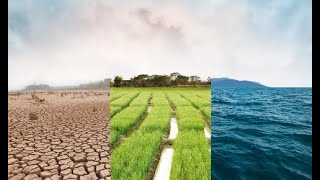
In this virtual Director’s Dialogues panel, moderator Ruth Lehmann interviews three Whitehead Institute scientists—plant epigeneticist Mary Gehring, plant metabolism expert Jingke Wang, and cell‑biologist/tool‑builder Jonathan Weissman—about how fundamental plant biology and biotechnology can address climate‑change challenges. The conversation covers (1) how climate change threatens food security via drought, salinity, and unstable growing conditions; (2) Gehring’s work on seed genetics and epigenetics, including the creation of clonal (asexual) seeds to preserve hybrid vigor and the development of orphan‑crop improvement programs such as pigeon‑pea. (3) Wang’s exploration of plant‑derived small peptides (leuciomines) for soil‑microbe communication and potential medical uses, the discovery of plant metabolic pathways for sustainable chemical production, and engineering of decay‑resistant polymers (sporopollenin, lignin) to trap carbon in biomass. (4) Weissman’s focus on building and applying cutting‑edge tools—CRISPR, dead‑Cas9 epigenome editors, molecular recorders—and on transferring algal CO₂‑concentrating mechanisms (pyrenoids) into crops to boost photosynthetic efficiency. The panel also discusses collaborative science, regulatory and containment strategies, public acceptance of genome‑edited crops, and the vision of nonprofit, globally accessible solutions for carbon sequestration and resilient agriculture.
Chapters
Welcome to Director's Dialogues, our virtual conversations with visionary leaders of science, education, and the biotech industry. These dialogues offer an inside perspective on the emerging opportunities, challenges, and trends in biomedical science and and biology-based technologies. Our guests share their most meaningful experiences and observations, tell us what excites and concerns them most about the present and future of biosciences, and describe innovations that could dramatically affect the future of human health. You can participate as well. Through the questions you submit via question and answer box at the bottom of the screen, You can send us those questions at any time during the discussion, and we'll answer as many of them as possible at the end of the dialogue. Tonight, our topic is climate change and the significant role foundational discovery-driven biological research can play in mitigating some of its most detrimental effects. We'll talk with three Whitehead Institute researchers Mary Gehring, Jingke Wang, and Jonathan Weissman, who are also all professors in the biology department at MIT, and how their work could lead to practical solutions for problems such as food insecurity and the need to sequester atmospheric carbon. Let's start with my guests introducing themselves and their fields of research. Mary?
Hi, good evening. Thanks for inviting me to do this, Ruth, and thank you all for joining us. So my name is Mary Gehring. I've been an Institute member and a member of the biology department at MIT since 2010. I'm a plant biologist by training, and I study the genetics and epigenetics underlying how seeds form and grow. And so one goal of our lab is to understand the processes that are required to make viable seeds and then learn how to alter or edit those processes. The hope is that this research can be applied to creating or enhancing food crops such that they retain beneficial characteristics like more nutritious seeds for generation after generation.
Good evening, everybody. My name is Jingke Wang. I'm also a plant biologist and have been at Whitehead Institute since 2013. In the same time, I'm also a professor in the MIT Biology Department. So for millions of years, plants have been creating metabolic compounds that really give them evolutionary advantages. Many of these compounds have also proven to benefit human health and are just so useful for almost every aspect of human life. So in my laboratory, we pursue these mysteries about plant metabolism and trying to define the genetic basis underlying plant metabolism, and trying to utilise that knowledge to synthesise useful compounds to make them both more effective and more sustainable.
Hi, I'm Jonathan Weissman. I am not a plant biologist. I returned to the Whitehead after many years at UCSF just last year in the middle of the pandemic, but very glad to be here. I'm a cell biologist by training, and I've studied how cells respond to stress as well as how cells make proteins, very basic questions about how cells work. But I'm also passionate about building innovative tools for driving discovery and for creating biotechnologies. And I hope that some of these tools my lab has created may enable us to bioengineer plants to better sequester atmospheric carbon.
Thank you, Mary, Jinke, and Jonathan. These three are at the core of the growing program of research at Whitehead, where our scientists are applying their collective knowledge and cutting-edge tools to mitigating biological climate change. Tonight we'll explore some of the very exciting projects that they are leading. Mary, I'd love to hear about your work on food crops. But could you first explain in basic terms the challenges that climate change creates for food security? Sure.
The challenges are really enormous. Climate change is the biggest challenge humanity has ever faced. And like the current pandemic that we're in, it's a global one. And so there's not one of us, there's no country that's not going to experience the effects of climate change. And many, of course, already are. In terms of food security, one major impact of climate change is that it causes less predictable or less stable environmental conditions. Some of the challenges for agriculture are drought, increased soil salinity, and the continued reduction of arable land, both through environmental degradation and through expansion of human populations. Plants are really exquisitely sensitive to the environment. They have to be because they stay in one place, they don't move. And so a plant will incorporate information about day length and about temperature and patterns of temperature that tell it when to make various transitions, for example, when to flower and when to make seeds. And so if something like temperature is no longer constant, a plant can be tricked into beginning reproduction at the wrong time, reducing yield. And so these are some of the challenges that are going to be faced over, over the coming years and are already being faced.
So to help ensure against problems in the global food supply, we need to create a wider range of robust, nutritious, and self-perpetuating food crops. What are the biological hurdles that keep us from doing that right now?
Well, we do, we do have a lot of tools in our arsenal already, and if you look at data over the past 50-plus years, there really has been amazing gains in yields of major crops from efforts in academia, in international nonprofit research centers, and industry. And so there are success stories out there, but, you know, the, the process of growing plants in high density in a monoculture has at times led to loss of traits that we might also, that are also very desirable, like disease resistance or nutritional complexity. And so we still lack, one of the challenges, we still lack a lot of basic knowledge about how plants grow, develop, and respond to the environment. So there's a big need for fundamental research in plants, from the molecular to the organismal to the ecological level, and for new approaches in order to synthesize that information. I think we're also going to need to expand the plants that we consider staples and consume regularly beyond the major crops like rice, corn, wheat, and soybean. And so this is where the importance of maintaining biodiversity comes in. We need to be able to take advantage of biodiversity that exists, of the traits that are already out there, like drought resistance or disease resistance and be able to bring them into food crops.
So bottom line, your goal is to make the fundamental discoveries in plant biology that will enable scientists to create the biotechnology tools needed to breed climate change resistance or adapted food crops. How are you pursuing this audacious research program?
So I want to, I want to tell you about two things. So much of my research has focused on seeds over the years. And so the first thing I want to tell you about is the potential to create clonal seeds and what the advantages of that are. So as I mentioned, we're going to need more robust and vigorous plants to meet future needs. We know that one way to make a really robust plant is to make a hybrid where you take two inbred lines of the same species, you cross them together, and the resulting progeny are more vigorous. They're bigger, they're more resistant to stress, and they have higher yield. However, this hybrid vigor, as its term, is lost after a single generation because the combination of genes that made that are then shuffled. And so we'd like to use our knowledge of the genetics and epigenetics of seed development to be able to maintain that vigor by making seeds that are asexual, that are actually clones of that that hybrid vigorous plant. And so in this way, the progeny of, of that hybrid plant will have the same genotype and the same traits as the parent. And so in projects that are just starting in my lab, we're trying to figure out how to initiate seed development, which we've been working on for many years, without fertilization, basically without DNA from the sperm. And if we're successful, this approach will both hasten breeding programs and it'll give us this ability to maintain desirable plant traits from one generation to the next.
This is fascinating, reproduction without sperm. Are there other ways how you could use your research to directly address food security?
Yeah, we, I mean, we're starting some other efforts as well, so A lot of the work that we've done so far in my lab is in model species, but ultimately we'd like to apply it to plants that people consume and are more stress-resistant or able to grow in degraded environments. And so I mentioned before that we've had over the past 50 years these really dramatic gains in yield in the staple grains, but this has really been accompanied by homogenization of the global food supply. With only about, basically there's about 50 crops that are responsible for providing 90% of the calories that we consume globally. Yet there are estimates that there's at least 3,000 species that can be grown and consumed by humans. Many of these actually thrive in more marginal soils and with fewer inputs at higher temperatures with less rainfall. I've become interested in these so-called orphan crops. These are species that are grown locally, and are essential food sources, but they're not internationally traded. Most of these have been subject to, you know, very little molecular research or breeding programs, and so there's a lot of potential to take the desirable, you know, take these plants which have very desirable properties locally and really enhance them for production. And so we want to take what we've learned from epigenetic engineering, for example, in Arabidopsis seeds, which is the model species we work on, and take that into some of these orphan crops to see whether or not we can manipulate epigenetic marks to turn genes on and off at certain times during seed development to alter seed characteristics. So one of the, one of the species that we've just begun working on is a legume called pigeon pea, and this is a major source of protein across South Asia, Africa, and the Caribbean. And so we're really excited to actually start taking what we've learned from model species and seeing if we can apply these lessons to crops that may be more successful in a changing climate.
Thank you, Mary. That's a great example of drawing from your basic science knowledge to develop new types of nutrition. Fascinating. Jingke, in your introduction, you talked about the many medicinal compounds we derive from plants. What are some of the unusual, less known compounds you're studying, and what are you trying to do?
One big part of fun for my life is to actually think like a plant. So I know many of my colleagues at Whitehead actually work on animals. So animals really actively go hunt for their food. Evade from danger. But for plants, once they're seeded, they have to deal with all these challenges around their environment for the lifetime on that spot. So then they eventually became the ultimate chemist. So the plant kingdom is so full of amazing species that with remarkable chemical traits. So we had a lot of fun studying them. So for now, I just want to talk about one particular case It's a class of small peptides. So when we say small peptides, you can think about very tiny proteins that plants make. We initially discovered them in the roots of goji berries. So goji berries are very tasty fruits. Very few people know they actually produce these remarkable small peptides in the roots. They are made in very high amounts and secreted into the soil. And recently, we're looking into the role of these peptides in mediating plant-microbe interactions. What we're thinking about these peptides are essentially these chemical languages that the plants use to manipulate the microbes living in the soil to fix essential nutrients for them. In the same time, these small peptides, actually, there's a name for them called leuciomines. They're also drug-like. There are specific chemical modifications to them so that they can be taken by humans and used for medicine. So one of the potential target proteins for them are ACE2 proteins, ironically also the receptor proteins for SARS-CoV-2. So we're thinking about a new potential utility for this class of peptides for treating COVID.
Interesting. Now people are going to ask us if they should eat those berries, right? Tell us why this work's so important in the context of climate change, or asking differently, what are the risks you're hoping to mitigate?
Yeah, so plants are really at the base of the global food chain. They use CO2 as the raw material and they use sunlight as their energy input and to generate a huge array of products, and they're self-sustainable. So in my mind, plants are ultimate mentors for us. We really have to learn from them so that we can live a sustainable life on the planet Earth for many years to come. So there are two lines of work in the lab that, that are really related to climate change. So one is what we really want to understand, what are the molecules that plants are making, how they are making them, and why they're making them. So we now use the materials coming from the ground, essentially the fossil fuel industry, to derive most of the materials we use. Plastics, even the medicines we use, use synthetic materials coming from that industry. So if we're entirely going to ditch out that, we really have to develop a totally new sustainable chemical industry. So by learning plant metabolism, how they make different kinds of discrete small molecules, and also macromolecules like the wood, the materials, cellulose, lignin, and other polymers, I think that's one very important line of work leading us towards a sustainable industry. So the other very important line of work in the lab that's relevant to climate change is to try to engineer plant material to be decay resistant. So actually, we're now talking about carbon removal from the atmosphere. Plants fix over 100 gigatons of carbon every year. Unfortunately, 98% of that biomass is released back to the air as CO2 through microbial decay. So now we think we can actually tweak the way plants make these biomolecules so that they are slower in decaying. So by doing so, maybe we can have a new strategy of removing significant amount of carbon from atmosphere.
Would you drill down a bit and give us a few examples of the specific questions that you're hoping to answer?
Right, so if we're thinking about plant biomass, right, a tree, um, 70% of that is cellulose. So cellulose essentially is pure paper, that white paper is cellulose, and 30% of that is lignin. So you think about lignin as wood. So cellulose is readily usable by many organisms, animals, microbes really use cellulose or polysaccharides for food. Lignin is much more durable, but over time, it can be degraded, especially by, by rot. White rot fungi and some microbes living in the soil. So we want to build in much stronger bonds in these polymers, so that once the plant die, they may no longer decay. So there are some less known polymers. For example, my lab is very interested in this polymer known as sporopollenin. So this polymer is known as the most inert material in the biological systems. So it is only accumulated at outer shell of pollen grains and spores. So in terms of the amount of the biomass, it's probably only, you know, 0.1 or 0.001% of the total biomass produced by the plant. But what if we could use the genes for making this polymer, transplant these genes so that they are expressed in other parts of the plant, let's say, in the trunk of a tree, or produced in the roots that can be secreted into the rhizosphere, then this can be a very useful technology for permanently trapping carbon into the soil.
It's very interesting. And how are you going to use genetics and biochemistry to do that?
Yeah, so one of the challenges is the lack of understanding on how plants do that. In terms of sporopollenin, because it's so inert, that for decades, people had challenges really to understand even the structure of this biopolymer. So it took us multiple years to figure out the structures. And also before us, the whole field has taken decades of work mapping the genes involved in making this polymer. We're still faced with a gap of knowledge, understanding the cell, the cellular organ organization of the pathway. But once we have a decent understanding of the system, then we can start to take the genes out of the system, and then start to manipulate this so that these genes are no longer expressed in the answer, but in a different tissue. And many of the technologies are already available. And also we had my colleague Jonathan Weissman, the world-leading expert in CRISPR technology, that will be tremendously helpful in this exercise of engineering these decay-resistant plants.
Great transition. Thank you, Jingke. Let's turn to Jonathan. Jonathan, as you noted, you are not a plant biologist, but you have an amazing track record of collaboration and innovation across across fields. Before we go deep into your climate change-related work, would you take a moment to talk about why collaboration is so important to you?
Happy to. So collaborations are essential to my work in two critical and distinct ways. First, they allow us to ask better questions by bringing in new techniques and approaches that we just don't have the expertise to do. So we're there, we're really sort of the consumer of other people's approaches. A really nice example is my recent collaboration with Brenda Schulman, who actually was a graduate student with me in Peter Kim's lab at the Whitehead, now a number of years ago, but she's, like many of us, she's done very well on her own. She's a director of a Max Planck Institute in Germany. A few years back, my lab discovered a new protein machine we called the EMC that we realized was critical for the folding of a special class of of proteins called membrane proteins. These are proteins that allow cells to sense and respond to their environment, among other things. But we were really stuck in our efforts to understand how the EMC worked, so we teamed up with Brenda, who's a world expert in the method called cryo-electron microscopy that is especially well suited for determining the three-dimensional structure of membrane proteins. Together we determined what ended up being a beautiful structure of the EMC, and with that we were able to push forward our understanding of how the EMC works as a specialized factory for folding of membrane proteins. So the second way that collaborations are critical is that as a tool builder, it's essential that we work with experts in key biological questions so that we make sure that the tools we build are actually helping to solve important biological problems. Otherwise, we might be building beautiful, well-engineered bridges that take you to nowhere interesting. So for example, my lab recently developed a molecular recorder technology that allows one to write the history of a cell in its DNA, in analogy of how a flight recorder on a plane records the history of the flight. And so we then teamed up with Tyler Jacks, our neighbors at the, at the Koch Institute, Cancer Institute, who incidentally I first got to know when we were both training at the Whitehead, to use our molecular recorder to understand how tumors evolve and spread. It's a second type of collaboration. That's why I'm so excited to join Mary and Jean Kate's efforts.
That's great. Some of our— some in our audience may know you have a longstanding collaboration also with Jennifer Doudna, the 2020 Nobel Prize winner, focusing both on development of research tools and the translation of those tools into new diagnostics and therapeutics. Would you tell us just a bit about that collaboration? Because I think it leads nicely to products you're pursuing with Mary and Jingke.
Sure. Jennifer has been a dear friend and colleague for many years, and our discussions on how we might apply bacterial CRISPR systems to develop new tools actually began well before her seminal discoveries in gene editing. So in 2012, when she and Emmanuelle Charpentier showed that CRISPR-Cas9 could be easily programmed to cut any DNA in a, in a designed way, a group of us at UC, including Jennifer, myself, Wendell Lim, and Stanley Qi, began brainstorming about what we could do with this new tool, and we realized that there'd be many applications beyond genome engineering. So we used a version of Cas9 that we call dead Cas9, in which the scissors that cut the DNA were broken. With this, we had a new tool where we could deliver a payload to any place on our chromosomes or DNA without causing actual damage to underlying DNA structure. And this has ushered in a new set of tools for engineering the epigenome that allows us to tune up or down the expression of any gene or sets of genes. These epigenome editors are now widely used to drive discovery and increasingly as therapeutics in their own right. It also quickly became clear to Jennifer and me and, and others around us that CRISPR was going to broadly transform biology in ways that would extend well beyond our own expertise. And this led us to create what became the Innovative Genomics Institute, or IGI, whose goal is to simply advance genome research for a better world. The IGI seeks to develop new genome editing tools, apply them to drive discovery, and to treat human diseases. But also, CRISPR has the— we realized CRISPR had the potential to transform our ability to improve agriculture. So a key aspect of the IGI focuses on food security, and it's that where I really got familiar or educated in the potential of CRISPR as a tool for engineering plants.
Okay, now to the climate change work. The projects Mary and Jinke discussed focus on ways to mitigate two of the very concerning impacts of climate change: food insecurity and CO2 levels in the atmosphere. Your collaboration with them focuses on reducing the long-term driver of climate change, carbon dioxide in the atmosphere. Would you describe how ultimately your expertise could enhance this project?
Sure. So I'll let Mary and Gene Kay talk in more depth about the science behind the project, but the essence goal of this work is to build plants that are better at permanently capturing CO2 from the from the atmosphere and sequestering it. Plants and other organisms capable of photosynthesis are the ultimate carbon scrubbing machines. Collectively, they're responsible for having removed the vast majority of the CO2 from the atmosphere and creating the oxygen we breathe. As we continue to burn fossil fuels, we're releasing this captured CO2 back into the atmosphere. I'll give you a concrete example of how some of the approaches my lab has helped to develop can be applied to this problem. But this is not at all my work. It's actually the work of a former student of mine, Martin Yanikas. So Martin was an aero-astro engineer as an undergraduate at MIT who came to UCSF to study biology. Actually, when I was on the admissions committee and we thought this is either gonna be a disaster or spectacular, 'cause he was so bright, but he had no idea what he was getting into. That naivete, which is terrific. But he had enormous enthusiasm. So he and Martin ended up joining my lab, and he did beautiful work developing general tools for understanding how cells respond to stress. He actually discovered the EMC complex as a graduate student. But rather than doing a traditional postdoc, Martin took on an independent fellow's position at the Carnegie Institute for plants at Stanford, very much like a Whitehead Fellow. And as a fellow, Martin developed functional genomics tools that are revolutionizing our ability to study the green algae Chlamydomonas, which is amazingly effective at capturing CO2. What makes Chlamy such a powerful CO2 scrubber is a specialized organelle, a structure within the cell called the pyrenoid, that actually concentrates CO2. Allowing the enzyme RuBisCO, which is the workhorse for capturing CO2, to work much faster than it could at atmospheric CO2 levels. Martin used these functional genomic tools to dissect the structure and mechanism of peranoids, and has now organized an international consortium to try to transplant these CO2-concentrating machines from algae into plants. If successful, one could imagine this could also help our own efforts to reduce CO2 levels from the atmosphere by increasing the rate at which they capture CO2, basically feeding more of the raw materials that will go into these stable biopolymers that can act as long-term storage.
So you're thinking of using the fundamental biology to develop a better way of capturing CO2 in a more original way, right? Transferring from one organism to another. Maybe you or Jinkyu or both of you can tell us more about how that could work. You know, kind of what Jinkyu was talking about, what you were talking about, how concretely can that work?
Yeah, so maybe one thing I can comment about this climate change challenge, it is gonna be a collaboration of many researchers coming from using different strategies, and we all have to work in a very collaborative way. I think sometimes being in academia, part of that is a competition— who wants to discover something first? But when entering climate change field, one thing we realize, this is really a responsibility. If we're receiving grants from potential donors or government funding agencies, it's a huge sense of responsibility because we, we need to deliver the result in a relatively short period of time. So we're at a relatively dire situation right now, so there's no time to be wasted. So the, the strategy that Jonathan was mentioning about increasing photosynthetic efficiency through paranoid engineering starting from chlamydomonas is definitely going to be a very useful strategy when we think about holistic engineering approaches of multiple plant species that have the capacity to fix CO2. So I can speak a little bit about lignin. So this is a polymer dear and near to my heart because I worked on this during my PhD. And this is also very familiar for people. So it's essentially wood. In the past 20 years, especially from early 2010 to maybe afterwards, there was a big drive of engineering lignin chemistry. So the idea at that time is to loosen up the polymer so that the cellulose portion of the biomass can be released. So at the time, people were really thinking about biofuel. How do you easily release biomass to produce simple alcohols? Much of the research was dedicated to that, and we had a lot of tools of engineering ligand to make it weaker. But in the same time, we actually found a few approaches we can make ligand stronger. Just 10 years ago, we were not thinking along the line of trapping carbon into the biomass. Now we can recover, we uncover those strategies, now use that for the purpose of carbon fixation. So that's just another example where we can really harness plants for the purpose of climate change remediation.
Great, thank you. Thanks to all three of you to get us set up for understanding some of the biology that we can use to address this urgent challenge. We've got quite a lot of questions, and so let me start reading you some of the questions. Quite a few, I think, for where we go back and forth for Mary. Lots of interest in seeds, Mary. You'll like that. Many years ago, there was an effort to improve standard crops such as maize to improve the nutritional value. For example, modifying corn to produce lysine and tryptophan. Are the efforts of the Whitehead Institute similar in effort Or is the intent to improve crop drought resistance or resistance to other global warming effects? Mary, you may want to—
Yeah, I mean, I think defining the scope of the problem is part of the challenge because there are so many aspects to responding to climate change. So ideally, we would be able to make plants that were more drought resistant, but also made seeds that had greater nutritional complexity than what exists. So the questioner referenced efforts to improve maize. I think, you know, where I would like to make an impact is in those species that haven't already had, you know, decades and billions of dollars put in. Well, I don't know if it's billions, but a lot put into them. And so this is why I'm interested in developing some of those approaches for what I referred to as orphan crops. So some of the first things we are— so we're trying some new mutagenesis approaches in some of these orphan crops to generate additional genetic diversity by creating, by changing the dosage of many genes at once. And so one of the first things that we do want to screen for is, for example, drought tolerance and improved heat resistance. Those are things I think that are fairly straightforward places to start and where we can probably expect to make discoveries fairly rapidly.
Another question to you, Mary, is if you make the optimal food plant and most farmers adopt it, couldn't that lead to a monocrop vulnerability to a parasite, virus, or fungus, as in the potato blight that caused the Irish famine? Can diversity and robustness be built into staple crops? I think you were almost addressing that before.
Yeah, and I think this question probably arises from— I was talking about creating clonal seeds. And so I think the questioner brings up a very good point. You know, one current issue, not only in the potato famine but now, is monoculture. So when we think about— so I talked about, you know, being able to stabilize what I referred to as hybrid vigor, and so those hybrids are generally more disease resistant. The idea isn't that there would be one one genotype or one genetic composition that would be grown for a species, but you would really want more adaptation to local conditions. So in some places on the planet, there will actually be more rain than there is now and more flooding. And so in those places, you know, you'd want to build in fluttering tolerance for a particular species. And then for that same species, you might want in another part of the planet more drought tolerance. And so I think it's really understanding, you know, local conditions and then trying to use some of this technology, like the development of clonal seeds, to be able to hasten the breeding of plants that might meet those conditions.
Thanks.
Yeah.
For Jinke, will permanently trapping carbon into the soil also trap other elements like nitrogen, phosphorus?
Yeah, it's a great question. Actually, plants have figured this out. Because as you all know, nitrogen, phosphorus are essential elements for plant growth. Just happens that all the biopolymers made by plants only have carbon, hydrogen, and oxygen, three elements. There is no essential elements trapped in these biopolymers. So making these as perfect target trapping materials if we were trying to engineer them.
And a really practical question: if the plants don't decay, where do you put all this material? In landfills or converted to strong construction material for new structures?
Yeah, thank you for asking this and also partially answering this. We're, we're thinking along the line of using these engineered materials as building materials or pavement. So, but that's just one of the possible utilities for that. One strategy as for our, this team is thinking about is not to compete with the farmland, because farmland should be reserved for crop production. So we're really thinking about stress drought and water-efficient plant trees so that we can grow in marginal lands and also around the deserts, so that the plants can be left there for many, many years. And sometimes the plants do live for hundreds of years and trapping carbon. So the other idea we had is to really to engineer the secretion system in the roots. So for example, I mentioned this spore pollinin, its natural synthesis involves secretion. So it's made in the cell type called tepidum, which is part of anther, and being secreted to coat the pollen. So what if we could engineer the same process to occur in the roots, so that the packets of spore pollinin can be just secreted into the rhizosphere to remain in the soil? So that would also be a very interesting strategy.
Now we come to some more sort of philosophical and policy questions. Actually, I'm going to start asking Jonathan the first part of this question, and that is, how have you been thinking about containment of engineered organisms?
I think this is a really a serious, a serious issue because as we know, there have been many examples of foreign invasive species. But I think Gene Kay also gave a bit of the answer, which is to try to go after areas where, which would not be the most terrible or suitable for food crops. So have plants that would be able to live more on the margin. But for sure, if you're going to be doing this at this scale, it is a major engineering of the ecosystem and one that you wouldn't really consider taking on except for the scale of the problem that we're trying to face.
For you, Mary, do you think that the manipulation of food crops will meet the resistance due to the backlash against GMOs? So with your—
Yeah, I mean, absolutely. You know, in this country, there, you know, we grow a huge amount of GMOs. In Europe, it's not really allowed. So we are thinking about approaches that, you know, don't involve transgenics. And so in, in some of the work that we would like to do with creating genetic diversity in orphan crops. You know, we're thinking about creating this genetic diversity not through transgenic, but through chemical treatments that would sort of alter the epigenome and release transposable elements as mutagens within the genome. So you're accelerating genetic change, but you're not doing it through a transgenic approach. And so that is definitely something to keep in mind.
I don't—
it may be that we don't know if the regulatory landscape that exists now will be the one that's there in even another few years. I think this question of whether something that's been CRISPR edited, even if the Cas9 or the dCas9 is not there anymore, is it a transgenic or is it a is that GMO? That's, you know, as a scientist, I say no, it's not. But from a regulatory perspective, in some places that is considered a GMO. And so I think it's something we have to continually, you know, be aware of.
One of the, you know, we've referred to this, but the epigenetics, so these are things that change the regulation, which genes are being expressed and how strongly they're being expressed, is a powerful approach for modulating behavior of plants. It's actually already been implemented where you can sort of dial up or dial down the expression of a gene and get more or less larger tomatoes is just one example. And one of the tools that we've been building that we we just actually developed was a way of epigenetically, permanent, in a permanent heritable way epigenetically modifying chromosomes. And we've done this in human cells, because that was our model system. But in principle, this can be done in plants as well. And that could allow for quite complex engineering without the risks or concerns associated with engineering the genome. And it's, you know, part of this is about, uh, about acceptance, which is a critical thing, as, as we certainly have learned seeing, uh, the vaccine rollouts. Uh, but part of it's also there could be real science. When you start to make many, many edits to the genome, it's very hard to control all the outcomes and to understand what you've done, whereas at least in principle, some of the epigenome engineering could be could be cleaner and better understood.
So what you mean here by epigenetics is that it's inheritable, but it is not in the DNA, correct?
It is often chemical modifications, small chemical modifications to the DNA, things like methylation, but sometimes just self-propagating networks of proteins that keeps the DNA folded up into so-called heterochromatin, the parts of the DNA that don't get expressed. As you know well, every cell in our body has the same DNA, and you get the diversity of cell types by the cells turning on and off the appropriate sets of genes. And we now can do this in a controlled way at a scale and precision that would have been hard to imagine a few years ago.
So there's one more question for Mary. Will future agricultural plants be grown in different ways that use less land? 40% of non-barren land is currently used for agriculture, like indoor agriculture. Do you see a massive scale in that being reliable?
Yeah, I think, you know, as, as Jinka mentioned, sort of all, you know, there's going to have to be many tools and many approaches. I personally don't know that much about indoor agriculture. It's a question of scale and the inputs to that. Are those inputs using more energy than is being— Yeah, I guess how much energy is being used for that. I think to the first part of the question, we are going to have to do this with less land, absolutely. Really trying to come up with integrated systems where you're growing your crop and the crop just isn't depleting the soil, you know, but it's also replenishing. And so things like, you know, intercropping legumes which fix nitrogen with non-legumes is really, really important already. And those sorts of agriculture that can replenish soil rather than just deplete it is going to be important as we use less land.
So there's a question from Phil Sharp who asks, you know, another big problem, a major future problem, is water quality for human consumption. Are there approaches to this problem through plant science?
Jingke? Yeah, I would give a shout out. Sure, climate change definitely presents a huge challenge for water availability for humans consumption. And I would argue agricultural use of water is the major use for water. And with the climate change, where we have less water to use, for people who garden, last year or the last couple years in Boston area, we definitely feel the difference. I had to water more because there, there was less rain in the summer. And we do see the change. It's, it's coming up in a very dramatic pace. So one approach we could contribute as plant scientists is to engineer more drought-resistant plants. So as a field, we have understood a lot about regulation of water retention in the plants. So for example, my laboratory studies a molecule called abscisic acid. So this is a classical phytohormone that regulates the retention of water within the plants under drought conditions. So we found there are multiple approaches to manipulate pathway so that the plants can become water efficient under drought conditions. The other huge area to explore is the biodiversity of drought-resistant plants, which in the natural habitats. So there are plants live in the desert, around deserts, can really use water very efficiently. If we can discover the molecular mechanisms underlying these traits, we could really engineer better plants to use water much more efficiently.
There's another question for you coming back to the plants that are resistant to decay, but that decay contributes also to soil fertility. So will creating plants that are resistant to decay not affect soil fertility?
Yeah, that's a great question. So when we talk about engineered plants, we're not talking about replacing 100% of the forestation with engineered plants. So we have done the calculation. If you just replace 20% of the forestry industry, you can balance out the utility, the usage of fossil fuel industry. So that's about 8 gigaton carbon fixed or utilized or emitted by human beings. And also, when we're doing the engineering, we're just making the biomass decay slower, so there would not be a perfect inert material being created. And as I mentioned, the polymer would only trap carbon, so all the essential elements will be returned to the soil if we manage in a comprehensive way. So the concern you have here should not be a real concern.
Good. So maybe we leave it with this last question, which comes up a lot and is coming up a lot now with the COVID vaccine, and that is the disadvantages of genetically modified, in this case, crop, applied to crops, is the cost of intellectual property, the financial costs of using licensed crops exceeds maybe the value of the crops. So will your research be able to be used globally and universally, or will there be a group of lawyers following each planting and harvest? Maybe Jonathan, do you want to take a— your thought about these kinds of questions?
And I think we have I think for sure this would have to be done through a nonprofit effort, and it's not trying to— certainly the sequestration is not— it's trying to do a common good. It's not going to— there's almost no way you can imagine a structure that would try to make a profit out of it, nor would it really be appropriate. I think the issue with the genetically modified plants is a more complex one because it— and I think very much at the bottom of the line, it is that a lot of the reason there was so much pans around is because it was hard to modify plants. It took— you had to start, find a trait even when you knew it and grow up to a very large scale. And that meant you needed you need to put a lot of money in R&D to develop it. But if we democratize that, we make it faster and easier to do these types of modifications or improvements, then a patent isn't going to be worth much because someone can go around and develop this in their own way. So I'm hoping that as things become simpler, it will— these issues of the commercialization will go away because They certainly have done a lot to undermine more than the cost, just the public trust. And it's understandable when you have a single corporation, a small number of corporations, you know, controlling the seed crop. In some sense, it's not really a tolerable situation.
I think we could go on and on, but I think we should come to a close. I, I thank Mary, Jinky, and Jonathan for a really wonderful presentation of this direction that the Whitehead is taking, a very exciting direction and very urgent direction. And I thank everyone for really a wonderful discussion at the end of this session as well. And so thank you all till next time. And we will be back for the next Director's Dialogue with the amazing MIT bioengineer and cancer researcher, Sangeeta Bhatia. Sangeeta will tell us about when miniaturization meets medicine., and that will take place on Thursday, May 27th at 7:00 PM. And until then, thank you all for listening. Thanks for participating and stay safe and be well. Bye-bye.
More from Joshua







Scientist Stories: Hans Waterham, The value of phenotypic assays in peroxisomal disorders




Scientist Stories: Joel Zlotogora, Genetic carrier screening programs for reproductive purposes