Founder Stories: Anne Wojcicki - Co-Founder and CEO of 23andMe, consumer genomics
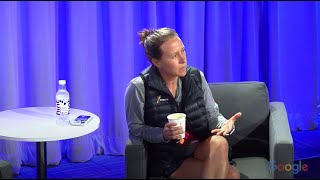
In this interview at a Google event, Anne Wojcicki, co‑founder and CEO of 23andMe, discusses the company’s origins, culture, and the evolution of its consumer genomics business. She explains how 23andMe leveraged its early ties to Google to build a data‑driven platform, navigated regulatory hurdles with the FDA, and expanded its product suite from ancestry reports to health insights and drug‑discovery collaborations. A significant portion of the conversation focuses on the company’s research pipeline: conducting in‑house genome‑wide association studies, applying machine learning to predict ancestry and health traits, and ensuring high‑quality data through massive participant engagement. Wojcicki emphasizes the mission to empower individuals with genetic knowledge while maintaining privacy, offering genetic counseling resources, and addressing psychological impacts of test results. The interview concludes with her vision for future growth, open‑science initiatives, and the broader societal benefits of accessible genetic data.
Chapters
I'm Jonathan Rosenberg and I ran product management here for 10 years. And I don't usually come and introduce speakers, but Anne is special. And so I came to tell you why. Since 2002 when I joined Google, my favorite days were Mondays. For 10 years, Monday morning was Eric and Larry's staff meeting and I was surrounded by smart people with a mission that mattered. And in the afternoon, I would run my staff meeting. And my staff meeting was Sundar and Salar and Marissa and the second smartest Wojcicki sister. Is this being recorded? Susan, I love you. And In 2011, when all of that ended and I moved out of an operational role, I thought I'd never have exciting Mondays again. Then Susan introduced me to Anne, and I started going to 23andMe's staff meeting and helping over there. So now on Mondays, once again, I'm surrounded by smart people, and I'm in a company where the mission matters, bringing personalized medicine to, like, make us healthier, like we care about being healthier. So the mission is terrific. The team is brilliant. It's a little bit different because more than half of the faces in the room are women. And the CEO is a woman. And Katie and Jessica are here, some of the people who are in the staff meeting. In fact, more than half of the faces in the room are women even when I'm there. We're doing pretty well. So rather than kind of go through all the yada yada of a traditional introduction, you know, like Anne is special, and she went to Yale, and she spent 10 years doing, like, medicine and healthcare investing. Anne is very Googly. Look at the way she's dressed for her Google Talk. So, listen to Anne. Listen to her vision. Listen to them talk— Anne and Jordan talk about some of the great challenges that she's faced building 23andMe and many of the Googly values that she's infused in this wonderful company. And Anne, you're the reason I get out of bed on Monday mornings. I love you. Okay, I'll turn things over to Anne and Jordan.
All right, can you guys hear me? Okay. Thank you for joining us here. I really appreciate it. Anne, thank you for joining us.
Of course. After an intro like that, it's great.
I know. Can't beat that. So for the first 45, 50 minutes, I'm going to go with questions that I took from the Dory. So thank you all for submitting Dory questions. And then for the last 10 minutes, we'll do a mixture of live questions and Dory questions. But I wanted to start off first with your relationship here with Google and your story that you were telling me about you and the cafe.
Yeah. So I obviously— I've known Google since the very earliest days. It started in my sister's garage. So it was one of those things in the early days, we'd be doing dishes and we could see Sergey and Larry coding in the other bedroom. And I used to always say, I was like, it's really weird that you have these guys just sitting in the other room coding while we're doing dishes. It was really unusual. So obviously, I've spent a lot of time at the company. And I was saying how— 23andMe used to have an office on Shorebird, so just around the corner. And we're a startup. We're scrappy. And so it was very apparent that Google had a lot of food. So we used to make our way over here. And back when there was burritos right downstairs— there's great burritos. And so they're easy to carry. So I would walk over every other Thursday. And we'd have these team lunches. And I'd just get like 10 burritos. And so I was walking out carrying like my, all my burritos, and I open the door and I look and it's Eric Schmidt and Steve Jobs. And I was like, oh, hi you guys. Like, what are you doing? And Eric's like, what are you up to? I'm like, oh, just getting lunch. And Steve had just launched the iPhone and was like, have you seen the iPhone? Do you want to see it? I'm like, yeah, great. So I've had a lot of great experiences. I'm obviously such a huge fan of Google and in a lot of ways it's had a huge influence on 23andMe and I think a lot of the values that I saw especially in the early days have really influenced how we've run the company.
Now you're mentioning about your values in 23andMe and you were telling me about your relationship with your grandmother and her experience with healthcare system. Can you talk a little about that?
Yeah. You know, I think— So as a background, I used to invest in healthcare companies. And healthcare is a really complicated industry, and it's not necessarily always doing the right thing for the consumer. And I used to always complain. Like, I actually— the last hedge fund I was at was a fund that we nicknamed Death Watch. And we used to just short everything, because it's really easy to predict failures in biotech, but it's hard to predict successes. And so I was kind of just like this really negative, like, everything sucks in healthcare. It's all bad. It's all failing. It's all about how do I just take advantage of the consumer. And I remember Larry turning to me one day and he's like, Anne, you're either part of the solution or you're part of the problem. Right now you're part of the problem. I was like, oh, like that's true. Like in some ways it was a good slap of like you have to— when you see problems, you need to do something to change it. And one thing that we've always— my family has always been really passionate about is healthcare. And part of this came from the fact that my mother was, you know, she was very poor growing up and she had a little brother and when he was 18 months old, he got into a bottle of aspirin and he ate that bottle of aspirin and he was clearly lethargic. They took him from hospital to hospital to hospital. My mom was 5 at the time and they were refused treatment because they couldn't show proof of payment. They finally got some hospital to take him and they took him and then when my grandmother called in the morning, they said he was dead. And it had a huge impact on my mom as it would have on any family. And my mom at this time was like, you know, very clear, if you don't take care of yourself, no one will. And you have to be responsible for your healthcare. So when I pulled my Kaiser medical records at some point, my sisters and I discovered that our records actually had an asterisk at the top that said, as all of us in pediatrics know, this mother can be very irrational at times. And as Jonathan has had some lovely times also working with my mom, my mom is a force, and especially in healthcare. Like, we routinely get fired from doctors. We routinely are told people don't wanna work with us. And I think it's one thing I've learned is like in some ways good healthcare comes to those who complain, and you have to be really proactive. So it was one of those things like we were always a super proactive family, you know, understanding our health. And it was one of the things that I think really bothered me when I was investing in healthcare is I realized how much the system is not set up for your success. Like no one makes money if you— if you live to be 100 and you never are sick, no one makes money. And healthcare is 18% of our GDP. Clearly lots of people are making money off you being sick. But it's a real problem. And so a lot of my passion for 23andMe when I started the company came from how much I said like, I want to do something that's genuinely right, that allows people to be active in their health and proactive the way my mother has always been proactive for me and that she's taught me to be proactive with my health.
Can you talk about the first years of you building 23andMe, the challenges you went through?
So we got lucky. You know, I think a lot of founders like Sergey and Larry used to say this, like they got lucky, they had the right place, right time. I happened to be— when I was investing on Wall Street, I happened to realize genetic information, it was suddenly cheap to get access to a broad amount of information on your genome. And I was really lucky noticing, like, one, you could get— suddenly individuals could access to your genome. And then there was this whole convergence of Web 2.0, like there's gonna be social networks and You're gonna find each other and it was like hot, it was so interesting and it was MySpace. And it suddenly realized one of the things that's a big issue in healthcare is there's a lack of data. So I routinely, my sister, other sister does nutrition research and routinely you look at those studies and it's like 200 patients here, 200 here and my dad who's a particle physicist would be like, anyone who knows about statistics knows you can't find anything in this. You need lots of data. Clearly the Google world had taught me the value of lots of data and what you can do. So I got lucky with this idea of why do I need Stanford, why do I need Pfizer to go and do all this research? I can just allow all these people to learn about their genome. It's so cool, learn about your genetics. And then we're going to bring everyone together in this whole new research model. It's going to be like crowdsourcing. We're going to have the world's data. I don't need Stanford and Pfizer and all these other people. I don't want you to be a human subject. I want you to be a live participant excited in research. So we had this idea really marrying like this idea of cool technology with like this concept of like health, you know, Web 2.0, and we launched the company. And, you know, initially I had this enthusiasm, like I think genetics is so cool. Like I think there's nothing cooler than the idea is like you have a genetic code, everyone in this room is 99.5% the same, yet we clearly have all this diversity. And we don't understand it. It's like the— it's like it's a code. How do people sleep at night? It's so interesting and we don't understand it. And so I had this enthusiasm, but I started to realize that the rest of the world's not quite as passionate about genetics as I am. And so we launched and we had this big spit parties, we had all kinds of press, and then we sold probably 1,000 kits the first day. And then we were selling like 15 to 20 kits a day. And as everyone realizes, like 15 to 20 kits a day is not a lot of money. Like that is— that's not even going to be a ramen profitable company. Like that is— that's rough. So it made me realize like we have to do a lot to help people understand like what are genetics. Like most people— like really smart people would come to me and be like, oh, I don't want to know my DNA. I don't want to know the day I'm going to die. And I was like, if I could tell you the day you're going to die, I'd charge you a lot more. Like, what are you, an idiot? I was like, no, it's like risk. And you realize most people don't understand risk. And so the thing that I've been lucky with is I have a team of people who joined 23andMe because they're really passionate. And my love for science— like I said, my father's a particle physicist. And as kids, my sisters and I grew up always realizing— like we tell people, like, oh, my dad is like, he studies neutrinos. He's searching for mass. And people are like, what? Like, what is he doing? And I just realized, in some ways, it always bothered me. I think physics is the most beautiful science out there, but most people don't understand it. And genetics is similar. I really didn't want the fate that my father went through with physics of like, lack of funding and all this, like I wanted the average individual to like see the beauty of DNA and see it within their own lens and capture this idea of like we're all most interested in ourselves and so your DNA is really interesting to you. So the people I hired in those early days, a lot of them are still at the company and they're really passionate about this idea that like you want people to see that beauty and so I'm lucky because The fact that it was hard those first years and we didn't have huge sales, it didn't deter people. 'Cause they're like, again, scientists are used to failure. They're like, well, we just have to try this, we have to try that, we have to try other strategies. So it was, I'm lucky with that. And also the science, one of the things that we did with the company that was unusual is we weren't excessively marketing because we decided we wanted to really make sure that we had the science science down before we did a lot of marketing. And the one marketing thing we did— this is another funny story— Sergey at this time— I don't know who's been here for how long— Sergey was really interested in zeppelins, blimps. And so there was a zeppelin for a while. And Sergey didn't want to stick a Google sticker on it. So he's like, I don't know, you could put 23andMe on it. Because he wanted to sell advertising on it. So we put 23andMe's sticker on it. It got a lot of press that there was a giant zeppelin flying around town. TechCrunch had all these articles. So that was my one attempt before we had a marketing team. I had the blimp. I'm no longer part of the marketing team. But we really focused as a company too in those early days. We recognized we have no business if we don't have a scientific foundation. And at the core of the company, I needed to win over the scientists and make sure that they understand what we're doing and that they're supportive of what we're doing. Before I go big and start going on TV and start advertising. And in some ways that also really benefited the company because when there was controversy, I never had to worry about my core. Like I always knew the foundation of the company was really strong. I didn't have to worry— like I understood it was misunderstood in all these ways, but scientifically I was always solid and I knew that.
Excellent. And when you proposed the Blimp idea, did you have to bring it up to your board or something?
No, I think I just did it. You know, that's the beauty of a startup is like you don't even think about these things. I don't know, like I just put it up there. No, I mean my board has always been pretty small and I just like— again, when you're a 10-person company or a 15-person company, you just like do things all the time that are kind of crazy. Like when we launched our spit party in New York, we had Barry Diller host and Rupert Murdoch, like all these people host this spit party. And it was on the COVID of the style section, on the Sunday style section. And I remember people like Eric Lander, like serious scientists who were like, "It is so disrespectful to have science on the style section. This is not appropriate." And I was like, "No, more people read the science sec—" or "More people read the style section than they read Science Tuesday. This is great." So we were always kind of doing things that were a little bit different. Like we wanted to do things, not to say like the blimp, but the blimp was fun. But we wanted to do things that were going to be atypical of what the traditional scientific world does. 'Cause like most people are not out reading New England Journal and Science Magazine. Like we wanna bring science to the masses. Excellent.
When I had Ben Horowitz here, we talked about the struggle that CEOs go through through where it's just a really challenging time. And you have to really fight through it to survive. It seemed like the struggle for you was during that whole FDA period. Can you talk to us about that, and then also what kept you going during that time?
I think I've had two struggles in the company. So the FDA one was clearly an important one. And it was, in some ways, it was the most public. And it forced us to really change our strategy. What happens, we got the letter, we got the FDA warning letter on a Friday and I was at a team offsite. We were at a strategy offsite, we were talking about we have massive growth, we were really excited, we were going for a million people and my assistant at the time texted me and she said, you got a special, the FDA is trying to courier something to you. And I was like, well, don't sign for it. And she was like, I already did. I was like, oh. Oh, why'd you sign for it? And then I was like, bring it to me. And then we read it, and we'd gotten a lot of warning letters in the past. We were kind of used to it by then. We were like, eh, whatever. We get them all the time. But this one was a lot more serious. And to be honest, Silicon Valley is not known for its interaction with regulators. So I was like, I think we were relatively naive. I get this question a lot, like were we just so arrogant we'd kind of given the finger to the FDA or were we just incompetent? And I think it's that we were just uneducated. It took me a while even after getting that letter, 'cause then it was made public on Monday morning, and people read it and they're like, wow, this is probably one of the most serious warning letters that's ever been put out there. And it was actually one of the former heads of the FDA who called me and was like, "Anne, they're not messing around. You have to stop." And it definitely halted a lot within the company. And that first week, I think I just spent the entire week in my pajamas calling lawyers. I didn't move from my desk. I just called. And for me, I've always been very data-driven. I just wanted all the information. So I was just pulling information, like what do I do? And we've always historically been really good at finding loopholes. So for instance, in New York where we were not allowed to sell, we discovered that it wasn't that you weren't allowed to sell, you just weren't allowed to physically spit in the state. And I was like, that's great, people can spit in New Jersey. And so we'd found kind of this loophole, like customers used to have to attest that they had not physically spat in the state. And so I spent a lot of time figuring out like what's the, like how do I work around this? And to be honest, like one of the workarounds today is that you put what we call sort of a doc in the box. Like you have a telemedicine doctor where you just can call, or sorry, it's just like they are kind of like on the backend, like you not even necessarily see it and they order it for you. And when you have that, you can kind of circumvent, you can become a laboratory developed test. And there was one regulator in particular who I met with, and she goes, you know, Anne, like what you're trying to do is fundamentally really disruptive. Like you're trying to allow consumers to get direct access to care without having to go through a medical provider. And if you succeed in that, you can really have an impact, a real positive impact on the system. But doing that is not a workaround. It's hard work. Either you decide you want to put your head down and you want to just really get that work done, or you find if you want to sell this company in a couple of years, you do this workaround and you're just whatever. You're just circumventing the system. But you can change the system. And that conversation had a huge impact. And I said, look, I'm in it for the next— I'm in it for life. So I'm willing to do the hard work. And so from that moment, it was a couple of years before we actually got our first approval. And the way we did it, people always ask, what'd you do? And in some ways, when you're in a hole like that, the regulators did not trust us. And so the way that you win back trust, especially with an organization like the FDA, is they speak in data. You guys probably all work with people who they understand data. Show us the data, and then we can make a decision. And so we did, you know, one of the other things I learned with the FDA too, I always tell my kids this, I learned obedience. I learned that when you go to the DMV, you know, you don't argue about standing in line or you don't argue about doing a vision test, you just do it. You don't try to say like, oh, I just had one last week, here's the report. You just do it. And similar to the FDA, you have to recognize they sometimes know more than you do because they're seeing the whole picture. And you just do it. You negotiate, but you do what they ask you to do. And in some ways, by showing that we could be obedient and we could follow directions and that we had the data to prove it— and we had to change a lot of things within the company to be a regulated company. And there's a lot that we had to do from an engineering and product and design perspective to document how everything happens. And so again, it's been a ton of work, but it's fundamentally made us a much better company because our processes are much stronger. So it definitely was rough, and there was a lot of controversy within the company about whether or not this was the right path. And I think as a leader of the company, one of the most important things to do is to allow controversy, allow people to voice their questions and voice it. I think Google is one thing I learned with Google is like, You want to let people debate. Debate is really good. But once you make a decision, everyone's on board. And if you don't agree, then it's not the right place. But we had— we have a fair amount of debate. And before, like, we— I encourage that as a leader. I encourage that debate. And then once we make a decision and you can set a vision for the future and say, look, like, we're trying to fundamentally change the system. We're, like, trying to empower consumers. Like, my next thing, like, why do you have to go and get a doctor's order to get a blood test? Do you always need it for a prescription? Like all these, like the whole patriarchal system, like why do you actually need, like why do you need this physician or medical involvement before you can actually get some of this information? So we're really out for that bigger picture of like trying to change the system.
So for your current offerings, you offer the ancestry test and then you can get the health test?
Correct. So for 2 years, we just kind of, all we did was offer ancestry and we focused on pulling out the health information. We've gotten— we have 3 FDA approvals now, or authorizations. So we have carrier status, we have genetic, which is things like cystic fibrosis, we have genetic health risks, which is things like Parkinson's disease and Alzheimer's, and then we have now the breast cancer variants, the 3 most common in Jewish women, or Jewish individuals that we test for those variants.
Planning to offer more extensive testing, like such as metabolic imbalances and enzymes? Like what? Like— Because I have a Googler asking. His family member has chronic pain.
And I think— so no, I mean, we're focusing on DNA. Like if it's a genetic variant of a test that we could detect, like we're focusing just on DNA right now. So we definitely think about partnerships that we could do that would have especially anything that we could do that's potentially at home, where we could allow you to have at-home collection and think about other tests that you're getting. But right now it's just focused— we're definitely looking to expand the tests that we're offering, but everything will be just based on genetics. Excellent.
So given the large corpus of data you're putting together, how have you been able to use this for promoting cures or new developments in the field? We do—
so that was part of the hypothesis of the company, is that if I collect all of this information and all of this data, can I then more effectively make discoveries, academic research discoveries, as well as can I translate this information into drug therapeutics? So the drug industry, again, when I was running this, when I was investing in companies and running that fund that I called Deathwatch, part of the reason why I could do something like that is to statistically 90% of everything fails in biotech. So if 90% of everything fails, like you just short everything. Like there's like, you don't have to do that much math for it. Like it was just like you can predict failures. So in the drug discovery business, the pharma lobbying group is the only group I know that like would actively promote every year how it's more and more expensive to create a drug. So like when I started investing, it was $700 million to make a drug and today it's close to $3 billion. So it's only getting worse. So the idea with all this data is, can I in some ways more effectively use this data to translate it into drug hypotheses? And then do I have a higher success rate for making therapeutics? So we are doing that now. We hired Richard Scheller, who was the head of research and development at Genentech. We have over 10 programs in development now. We've been doing this now for 3 years. We work with a ton of pharma partnerships. So we are actively trying to say, can you turn data into curative therapeutics? So we are actively working on that now. And my hope is, like, again, because we're a scientific team, like, I can say this is my hypothesis, and I— but I can't make any claims yet. But my hope is in 10 years I can come back and say, like, look, here's our success rate compared to industry averages, and we believe that that success rate will come because We're starting with something that's data-driven based on genetics.
Now, is that possibly a new business model for the users of 23andMe also? Like, if I provide you with health data, it leads to some type of cure?
It's hard to translate. The reality with drug development is that drug development is— it's a really long and complicated process. So at what point in time can I identify that like your participation made such a huge difference. So, what we try to do is say like we're learning from our customers. So, for instance, in depression, we did a study where we had 400,000 customers participate and thanks to the participation of so many individuals, we were able to make discoveries in depression. And then you potentially can analyze all those genetic variants and say these are— this is one where we think this is potentially a druggable target. So it's really hard to do the micro-attribution to say, hey, these individuals. And plus it's like a 10 to 15 year process. So you might come back and say, hey, 15 years later. What we have found is what people really care about— like we had a community of individuals. Actually, it was someone from Google actually who we worked with who had sarcoma. She's like, I don't care. What I care about is a cure. I have sarcoma. I have a lethal disease. I would like to live. And I find people with serious illnesses like that, they care about two things, like, does this impact my children, and I would like to survive. But me coming to you and saying, here's a check for $100, I'm sorry, you're gonna die soon, like, is not, it's like, we wanna do the right thing. And everything at 23andMe, all of our decisions that we make are about what is in the best interest of our customers. And my customer is always the individual's, who've signed up. And so we always think about everything from the perspective of like, you just participated in research, like what is it that is in the best interest for you? And if you tell me, for instance, that you have migraines and you have Crohn's, it's our job then to help you figure out the best ways that you can participate in research or for us to actually move those things forward to have some kind of impact in your life. And then you could potentially help be a control. There might be somebody here who's like, oh, I'm high, I have a family history of prostate cancer and we have depression. And you can say, I can be a control for you. And in that way, everybody's actually helping each other. So it's hard to then point to, well, who exactly is responsible? Because the reality, it's really a community asset.
That makes sense. For the survey aspect, when you're a member of 23andMe, they ask you questions. Sometimes you probably might get data that is just erroneous. Do you use multiple data points to figure We do.
One of the things we found— so this is a good example. We put out questions to our customers. So we have a pretty comprehensive survey that we first ask everyone to take. And sometimes you have to refine the question. So in this day and age, everybody thinks they have celiac disease. But very few people have actually gotten a biopsy. So if I ask people, have you had celiac disease, the genetic associations known, previously known to occur with that, don't replicate. But if I ask you, do you have celiac and have you had a biopsy to confirm it, then I can actually hit the replication. I get the— I can find in the genetic studies the known findings. So we do find that we have to triangulate questions quite a bit. Again, it's one of the things that I learned from Google and sort of like big data people is that it's much better to have like massive amounts of dirty data. And for us, we have now 5 million customers. We have over 1.5 billion data points on those customers. We have the potential to do a lot of research. It's without a doubt, it's not perfect. Not everybody reports everything perfectly, but it's pretty good. And if I ask you, for instance, like, do you have epilepsy? You can probably report that pretty accurately. And so what we find is that there's almost, you know, it's almost a false truth that like, oh, a clinical trial is perfect data. It was one thing I learned when I was on Wall Street is how much when you have a multi-center trial, if you have 20 different centers, trying to diagnose a partial response in cancer is really controversial. So, a lot of aspects of medicine like defining a phenotype is controversial. And in some ways, the best thing that 23andMe does is we have it all in a very standardized form. And we always have the ability to go back to our customers and ask and say, OK, if you said you had asthma, now we're going to go back and ask you and ask you more about your medications, when does it occur. And you can start to weed out when something doesn't look real.
Now, I'm sure people have seen the information and they might have overreacted or whatnot. Have you considered connecting 23andMe to genetic counseling or providing people information on how to talk about these results with their primary care physician? [Speaker] Right.
We do actually connect people. So we don't, the main thing that we try to do that we feel really strongly about is that healthcare, like a physician involvement or a genetic counselor is up to you. And so we never use that as a bottleneck for access to your information. But if you find out, for instance, that you're positive for breast cancer, the BRCA mutation, you know, you wanna follow up with a physician or a genetic counselor. And so we have had partnerships in the past, and we look at doing that more and more, is where we might at least give you advice, like, hey, here's resources where you can go to. But we don't ever— we feel, again, philosophically as a company, we feel really strongly that it's never a bottleneck for access. But we do provide resources for people so they know how to follow up.
For my friends who I've convinced to try to use 23andMe, Some of them have told me, well, the reason why I don't want to do it is because if I know that I could be susceptible to a heart attack or some other health problem, I'd rather be left not knowing the situation. And then I've heard people who have said, well, now that I know I could possibly have a health issue, it might stress me out or something. Have you done any research about the psychological aspects of— We have.
We have done a lot of research. And actually, one of the best studies that was out there— there was a guy named Robert Greene who who's at Harvard, and he did the original studies on Alzheimer's and looking at people. It was a series of studies called REVEAL where he was able to see that people, like Alzheimer's is one of the more extreme. So people find out they're genetically high risk for Alzheimer's, what do they do? And he found that initially there is anxiety, but after 3 months you return to baseline. And for a lot of these individuals, they already know there's a family history. So for instance, for people who have, again, the Alzheimer's variant, if there's a high genetic risk factor, like you probably have someone in your family network who's had Alzheimer's. So you know that you have some kind of genetic risk factor already. So what we find, and for me the story of genetics, the reason why I was so interested in genetics is that you do have genes and environment. So your genetics are not, unless it's Huntington's, like it's not deterministic. It's not 100%. You have this whole beautiful world of your environment. And so to me, the environment is your responsibility. Like, that's what you can do. Like, you can do something every single day to influence your environment. So without a doubt, there's people who are genetically high risk for Alzheimer's, but they don't get it. And so why? Like, that's one thing I'm really passionate about personally is looking at who are the people who are genetically high risk for diseases who never get them. And what was it in their environment? And the reality is, it goes back to the original premise of the company. One of the issues is being really healthy doesn't make money in the system. But 23andMe is really uniquely set up in many ways to do research on prevention. So it's one of the things we're really passionate about is look at the people who have Alzheimer's and say, OK, is it interval training? Is it extreme exercise? What is it that really has an influence on your life and can we then help people take responsibility on a daily basis to try and actually help prevent diseases. Everyone knows you're— everyone gets sick of something. Like, it's one of the things I always say. People would say, oh, you're just gonna have all these healthy people. And I was like, there's no such thing as a healthy person. Everyone has something. It's like, it could be depression, it could be migraines, it could be stomach problems, celiac, like anything. There's no such thing as someone who's like 100% healthy. For me, part of it was like helping people realize that your health is really a sum of your actions every day. And for us to be able to do that research on what is it in our environment that we can really do. And the thing that I take most pride in is rather than us creating any kind of anxiety or other issues, is what people do is people are looking to make change. People get their genetic information and it's something in black and white and then they're looking to make a change. And I think the number one disservice that the healthcare industry has right now is there's not great support for changing your behavior. And people don't know how. So often, like we heard this with Alzheimer's, I had one doctor, he stood up at a conference and complained. He goes, you know, one of the biggest problems with 23andMe is you generate non-billable questions. And the reality is like you show up and you say, oh, I'm genetically high risk for Alzheimer's. And they're like, well, come back when you have Alzheimer's. Like, that's what we do. But the reality, like, when you think about where do you go to prevent, the number one place where people go to prevent any kind of disease in this country is realistically Walmart. Like, it's a behavior. Like, the average American goes to Walmart 3 times a week. Or in this day and age, it's gonna be Amazon. Like, it's your shopping. It's your consumer. It's like how you are living your life every day. And one of the things I really try to hone in on on our customers, hammer in our customers is like your health is a sum of what you do every single day. And so again, going back to the gene and environment pitch, like it is like you can control your environment. You can't control your genes, but you can control your environment. And we are trying to make those discoveries about what in your environment is potentially going to influence your genes the most.
So for those people who are fearful about putting their information into the system, one thing I keep on hearing is How do I know that my genetic information will not fall into the wrong hands? Like recently we heard about another genetic company, I guess they were hacked or whatnot. So for someone who's fearful about sharing information to 23andMe, like what would you say to them?
It was one of the things early on for people who are privacy— we spent a lot of time with privacy experts in the early days. And it was one of the things I concluded early on, I was like, for people who are like really care, I was like, don't do it. Just don't. Like spend the time, like get comfortable with it. You know, what we can do as a company, 'cause there's a lot of irrational fears and that's why we used to say that. As a company, we have to do everything we can to protect privacy. Like there's fundamentally no business model, like I'm totally dependent on my customers' participation and their trust in what, to do the research and to do the types of things we wanna do. So I have no business model if I can't protect the privacy of my customers. So we do a lot, like from a database infrastructure, how we set it up, to even the fact that it's not a swab, it is 2 mL of saliva. We reject samples if we don't get enough saliva. So you can't be accidentally swabbed while you're sleeping, like it's a lot, you'll never drool that much in your sleep. And so we've set up the company and also we don't have what we call like the legal chain of custody. So if you order 5 kits, I have no idea if you spat or if you gave them away to 5 random people in this room. So I don't have the direct tracing back to individuals. From our terms of service as well, we've specifically said it's not to be used for law enforcement. And we've set up the company in such a way to make sure that it is really hard. Like we have not gotten a subpoena on this. We've put out a transparency report. We would do everything we can to fight a subpoena. It hasn't happened for us. But those are the types of things where for people who are really, really concerned, just don't do it. For people who are comfortable with being on the web, we do everything we can to protect their privacy. And one of the core elements, one of the leading privacy experts, one of the things he taught me was, look, Anne, what privacy people really want is they want choice. And they want transparency. They want to know. So if you're on 23andMe, and you don't want to share your data, like, don't share it. And we have to respect that. So if you don't want to participate in research, you don't have to participate. If you don't want to share your genetic data with me, don't share it. If you want to share it with, you know, 5 people in this room, we allow you to share it. So we've given you a lot of controls, and that's also one of the things that's relatively atypical in healthcare. Like, if you wanted to share your medical record with me, it would be almost impossible. So we do a lot to make sure that we're empowering people to have that privacy and then have also the ability to compare when they want. One of the things I just say about there is when people in general talk about privacy, if I picked anyone randomly in this room, I'm sure your genetics would be really interesting and I would love to see them, but your bank account is always much more interesting. And so from a desire to hack into one or the other, your bank is just a lot more interesting. And so when I look at everyone's DNA and when I think about privacy, it's significantly less on a mass area. But what you see is within a family, people will say, I want to see if my brother is really related. Is he really my full brother? And so you get some of those intra-family privacy questions rather than necessarily a broad sweep.
Now on a policy level, are there things that 23andMe, are there policies or legislation that 23andMe is backing on the federal level?
We backed, in the early days there was something called the Genetic Information Non-Discrimination Act and it passed unanimously, bipartisan. It is a, it prevents insurance companies, health insurance companies in employees from using genetic information for discrimination. So that was a huge step for us. It does not— it leaves health insurance outside. I'm sorry, it leaves life insurance outside. But that was a pretty significant step forward in terms of giving federal protection to help people feel comfortable that they can keep their genetic information to themselves.
Regarding the life insurance aspect, is there other legislation that's that's gonna be proposed in the future?
[Speaker] I haven't seen anything now, and it's interesting to me because it's been 10 years and there hasn't really been any movement or any interest necessarily from life insurance on it. The reality we find too is genetic information is complicated. Like, it's not well understood yet. So exactly how would you— like, we already know, like, some of the biggest risk factors, obesity, smoking, you know, like, those are the biggest out there. So other than like, okay, you're genetically high risk for a condition that we just don't fully understand yet, like I'm much more optimistic about like in my dream world that we would actually have insurance companies embracing it and says, okay, you're genetically high risk for a blood clot and you're a woman, you potentially are higher risk than for miscarriage in pregnancy. We're gonna try to like mitigate those risks by X number of measures. Like there's things I wish the healthcare system what the system would adopt with genetic information rather than being reactive. But that hasn't really happened yet.
So going forward for like the next 10 years of 23andMe, like where do you see yourself as a company?
I think one of the most interesting things I see happening finally is that there is an interesting world of virtual healthcare. So, you know, like Vic, who used to run Google+ here, who's now at a company called AliveCore. My dad has AFib and he has a little device on his phone that measures your EKG and it will tell you whether you're in atrial fibrillation. That's amazing, it's totally amazing. You don't have to go in, you can get instant real-time information. We were on the beach in Hawaii and he's like, oh, I'm in AFib. It's utterly amazing and I think that there is, There's genuinely a world that is coming where you're gonna be able to get a lot of your healthcare on your phone. And is it taking a picture of your mole and then sending it in and you get multiple opinions? Is it someone like Grand Rounds where you get multiple opinions online? Like, there's like one of the things I'm really hopeful for is that healthcare becomes less about the art of medicine and much more data-driven where you get some, you know, a number of people, a number of opinions looking at a case. And you can have, like again, on the thing like a mole, you can really apply machine learning to that. And so what are ways— like I see a whole new world that is really cropping up. And whether it's gonna be some kind of chatbot that's telemedicine, there's a lot that's happening there. So when I think about 23andMe's role, I think that we become the hub in a large part. Like your genetic information is the core. It's like the genetic code of you. It's the digital representation of you. And so we're the epicenter of it. And then helping you figure out all the different ways that you can navigate that information and what can you do with that information. And we can't do that alone. Like that's where we need partners. Like I need ways that you can potentially analyze your blood at home instantly or that you could get, you know, you could— you know, take a picture of your mole and have it analyzed. Like a whole way that you can actually start to think about measuring yourself at home, not in like— like the quantified self movement is more extreme, but like ways like the average individual wants to just like be healthy and proactive. So I think that there's a whole new world that is coming up, which is almost virtual healthcare. And I think the brick and mortar is— you know, we'll always have hospitals and we'll always have brick and mortar, but— You know, the same way there's Blockbusters out there still. There's not a lot. And I think that more and more you're gonna see that. Like, I don't think that you— doctors' visits are gonna be very different in the future. And I think that's where my hope is. Like, the research that 23andMe can do is that we will make a number of discoveries about, you know, what does— what is the meaning of genetic information? And then also, what are really meaningful ways that you can prevent. And that's like— when I think about my ultimate success, it's I would like to have cures. I'd love to have a cure for Parkinson's and other diseases. And that is a high priority. And we're working on that. But I'd also love to be able to tell a 20-year-old, this is what you need to do to be able to live to be healthy at 100. And to me, that's real success.
So this kind of goes into life extension and longevity.
I think life extension— life extension is like— It's, again, there's a lot of Silicon Valley discussion of like, oh, I want to live to 500. I think it's like my goal is like very like, I would just like to be healthy at 100. Like when I read stories about, you know, like 100-year-olds running the marathons and like doing things, like that's what you want to do. I don't want to be like in a critical care unit, like supported at 100. Like, no, I want to be healthy. Like I don't want to be diabetic and I have congestive heart disease. Like, no. Like, just let me be healthy and tell me how. And again, it goes back to this mantra of like, health is what you do every single day. Like, I dress like this because I'm Googly, but also because I exercise all the time. Like, I biked here. I'll bike back. I'll bike home. I'm always like, I love to humiliate people in the office when they take the elevator. I'm like, why? Like, why would you do that? Why would you do it in front of me too? So I think it's really important to like get some of those types of messages out. Excellent.
So now we're gonna go to audience questions. So if anyone has a question, please head over to the mic. There's a mic right there. You can just—
Yeah.
I'm gonna check for online questions too. Okay.
Hello.
Hi.
Can you hear me? Hi.
I'm from Argentina.
There, when I go to the doctor with the Tony Frieren report, the doctor typically, they tell me something like, hey, why did you do this? As if I did something wrong. Like, why did you do this without asking a doctor first? And so one of my questions is related, is if you are doing something to educate them in that sense. And also, when I see the possibilities to get a disease, They are all taken into account, compared with people, Caucasian people in Europe, because most research is done there. But I'm from Latin America, so I don't feel represented. I know that— but my question is, if you're going to do something to have more samples from that region, so I know that my test, the results are more accuracy. And also, for example, in Argentina, you don't have that. I mean, you can't use 23andMe. You have to come here.
So that's the question. Yeah, so first question on physicians and second on international. So physicians are definitely the last mile. It's painful for us. And it's disappointing to me, because we get a lot of people who take their reports to physicians, and the physician says, this is not worthwhile. So you're not alone in that. And we've tried some initiatives, early initiatives to work with and educate doctors. And I always joke, if I took 1,000 kits to Stanford Shopping Center and I was like, "These are free," they would be gone in 5 minutes. If I took 1,000 kits to ASCO, the big oncology meeting, I would come home with 990 of them. Like we've literally tried to give away kits to doctors and they're like, "Oh no." I think there's a lot of work that we have to do to engage the medical community. One thing that I have found is that there's like, there's a new crop of physicians, like a lot of doctors who are online in the telemedicine. And it's something that we're thinking about is how do we cultivate the physicians who are trying to embrace a world of prevention and like what could you do with this? And it's hard because like it's not a big reimbursement. Like any, you can go to any dermatologist and get Botox. "Today, in the next hour." And if you said, "I want to get a mole check," they'll be like, "Oh, in October, I have time at 9:00." So, and that's because a mole check doesn't reimburse, but Botox is, you know, $300 in 15 minutes. So I think that's where like we have a lot to do to try to work with the physician world. We're hiring someone, like that's like a big initiative for me on the team is how do we engage the medical world. Second on international, The same way we had regulatory issues here, the rest of the world is pretty complicated, and there's a lot of misunderstanding about genetics. So each country has laws about how to enter into those countries, and they're pretty complicated. It's almost like we just haven't had— I think a lot of startups fail because they try to do too much too early. So we think about international, and honestly, again, going back to the love of hacks, One of the ways I thought about just hacking it is just like, just be in like JFK in Miami and like try to— because then you can actually pull a lot of diversity in without necessarily having— so, or like, and the reality is like the US is this like beautiful melting pot where if I want, you know, instead of going into China, which is really complicated, like I can go to San Francisco. And so like for me, part of it is making sure that we're recruiting the right populations. And so we are looking specifically at targeting different groups. Like we have a big African American initiative. We have a whole global initiative of countries where we're trying to get specific populations, both for the ancestry testing so that we can improve our product, but also then for having the diversity in health research. Thank you.
So I'm gonna take an online question. Who owns the IP produced from an individual's genotyping data when they use I use 23andMe.
So there's no IP in that capacity. So like if you own— what happens like if you spit, you own your data. If you consent for research, you're consenting to be part of this aggregate. So for instance, if I discover that, you know, here's a gene— like I talk about 400,000 people participated in the depression study. And so there's not IP on on genes. So we're not filing patents, for instance, on like, oh, this genetic association is part of, you know, depression. So there's no IP on that. We might say, oh, this mutation looks like it's potentially in an area where it's potentially druggable. We then make a small molecule or an antibody and we're gonna target that. That is our IP because like in some ways it's so far downstream from everything Our hope is like we are publishing and putting out into the public world like all of the genetic associations that we're finding. So we like to publish a lot. We have over 100 publications out there. But we really look at like the long-term downstream, like we're owning that IP because we're putting in like again what's going to end up being hundreds of millions of dollars of work into trying to make successful discoveries. That will be cures.
Hi, and thank you so much for coming. I'm really inspired. I'm Noga. I'm the Google Doodles PM. I wanted to ask about how you attract and retain so many women. From everyone I talk to in your company, they're so happy there. How do you do it, especially now— really, especially now that so many women are feeling like they can't stay in tech long-term?
We had a problem for a while where we were trying really hard to hire a man for the management team. It was like they were looking for a head of engineering at one point. I remember we just like, we had this woman and we're like, no, no, no, we need a man. Like we need at least one. So I think, I mean, I think it's like all aspects of diverse. Like I think we've tried really hard to have a supportive environment. And for me, like I've worked, I always say, I was like, I've worked for really bad people. I've worked for like some really complicated, funds. Like, I was like, who in the room has anyone who's been in jail? Like, I have bosses who've been in jail. So like, I've worked for like some really challenging individuals, so I know what it's like. And I'm trying to do the exact opposite. Like, the first job I ever had, the Wallenberg family in Sweden, they were amazing. Like, I've never— like, they treated me so well. So I know what it's like to have a bad job in a bad environment. I know what it's like to have a great environment. And In Sweden, for instance, like this woman showed up one day and I was like, who are you? And she was like, oh, I'm newly promoted partner. I've been on maternity leave for 2 years. And I was like, what? So it was one of those things like culturally it's set to me like here's a group of people, the Wallenberg, like who promoted this woman who's like been on maternity leave for 2 years. It was amazing. And so I really try to create a culture where we support people through their life cycle.. And a lot of people have been at the company who they get married, they've had kids, they get divorced. There's a whole life cycle and not everyone is awesome every day. And so you could be awesome for a while and then you have a kid and it's like, and the kid's sick for a while and you have to take off time. I can't be the asshole boss that's like, oh my God, you're out. I have to support people and I look at people for the sum of like, I hope people stay for 10 years. And I look at people for the sum, like what can you contribute in that period? And like how do we also support you? We're really very much like your family is your family, but like we're your family away from home. And so like I have to support people in a good way and I have to listen. And I think it's like there's a level of humility. Like the number one thing we have for hiring is humility. Like, you need really smart people, but like, I just— culturally, like, you got to fit in with the humility, and we have to support people. Thank you.
You're welcome. Hey, thanks for doing this. Of course. So I know there might be some liabilities associated with the idea I'm about to mention, but is there some time when this would be an opportunity opportunity finding tool as well that your DNA seems like you would be perfect for pole vaulting, so, you know, practice away.
Whether it's an MBA. You know, I don't know if we'll ever get down to those types of specifics. Like, I think, you know, I think that there's like for sprinting, you know, there's genetic variants associated with like, do you have the double twitch? Will it ever refine enough? To be able to say like, "Oh, you know, you're really great at this specific sport." I think again it goes back to the world of genes and environment. Like you need passion. To be great at anything, you need passion. Like the most important aspect for me out of that movie Gattaca was that this guy has a genetic— like he's genetically not likely to survive for some reason, but he has the passion. And like passion accounts for so much. So I think without a doubt you'll hear things like if you are— we did some research at one point on like being toned or like having a musical ear. And you know, you could imagine at some point like would you say, okay, like hey, you know, you're just not like— you just— if you want to be a pianist, you're going to have to work that much harder. So I think it's, you know, we— and we're doing— like we did a study for instance in weight loss. Like we— my hope one day is to be able to say, If you're overweight, you, it's only gonna take you 4 weeks to lose weight. You, it's gonna take you 7 weeks. Like you're just genetically more likely to not be able to lose that weight. And I think that's where it will help people not say, not know like, oh, you're not gonna be great at this, but like you just might have to work harder. Instead of the famous 10,000 hours, you need 12,000 hours.
Thank you. Hi, thanks for coming. This is very interesting. So I was wondering, I noticed that, I mean, so there's 23andMe, but there's also lots of other, lots of other sort of similar companies. So if you're looking at sort of ancestry, you get to link and find out your relatives who are with 23andMe, but then there's people who are with other companies. It seems like everything's kind of siloed. Have you thought about talking to other companies and seeing if there are ways that you can connect across each other's databases to help people find Relatives? Yeah, I think—
Competing with other companies? We did a promotion, for instance, on DNA Day where we allowed people from ancestry.com to upload their data. The companies are pretty competitive right now, so there hasn't been any specific initiative to try— you can always download and I think upload. So no, I mean, it's a problem. It's not in the best interest of customers for sure to not allow— like, I would think that that would actually be something that's great, but like, I think there's a lot of competition right now, so that hasn't happened. But without a doubt, like, we know that people who are looking for family members oftentimes will do both services. Yeah. Okay. So, and again, we might do more in the future, and in some ways this goes with some of the privacy issues. Like, we had— so again, you talk about the Golden State Killer. Like, one of the things that's important for us to do to do from a privacy perspective is not allow relative matches from DNA that's uploaded. Right. Because if you allow that, then you open up the door for things like the Golden State Killer. And so we had, like for instance, when we did this promotion with anyone could upload their DNA from other places, we would tell you if there was someone within your close circle, but we wouldn't identify who it is. And we did that, and you would have to spit again then. And we did that specifically so that you like from a privacy perspective. We think a lot about privacy. Cool.
Thanks.
You're good.
Hi.
So say I submit my spit and then I get it back and then it tells me about like my ancestry and, well, my health prospects.
Say I have like a— like what would be like—
is there a way I could prevent myself from having like cancer in the future?
Like just off of that? We don't have— so the cancer report we have right now is the breast cancer report that is associated with typically Ashkenazi Jewish descent. And it does have a high penetration of cancer. So meaning like those people are likely to get cancer. What we found people have done is they go and they get either a mastectomy or they take out their ovaries. So there's ways that you can potentially like it's extreme to prevent. The other thing that's out there is there are, for instance, there's people who are genetically high risk for colon cancer. And in that capacity, right now I think the recommendations are colonoscopies at 45. In that case, you could start having colonoscopies earlier. So a lot of it, there's not necessarily known specifics about, okay, if you wanna prevent cancer, these are the things that you do. In every disease area, you can say, don't smoke, exercise, and eat better. And what we find that having something that is a risk factor in black and white in your DNA motivates people to actually do all those things. But those are the biggest swing factors you have always is your exercise and your diet and your environment. OK, thank you. Welcome. Hi.
Hi.
My name is Yulia, and I'm an intern in Google Brain Genomics. And looks like Google is also looking into genetics and predicting disease from genetics and also connecting it to healthcare. I know that also Microsoft is looking into healthcare and genetics. So what do you think about this? Do you think that you will collaborate with Google or Microsoft at some point, or you will be competitors, or 23andMe is so far ahead in this research I think, so I've spent a lot of time, like in the early days, like back when we were starting the company, like Google, Microsoft, others.
Like Microsoft had RFPs out for a while doing genetic research. They've had a great, they had a really great team. Google Brain team is amazing. I know Jeff Dean well. It's an amazing group of people that are there. The number one problem in healthcare I find is nobody has the data set. I love going to big data meetings and everyone's talking about big data and I'm like, but you don't have any data. I mean, it's fascinating. It's like the emperor has no clothes, people. There's not a lot of data out there. So I mean, there's some of these big initiatives and my whole goal was like, I want the data. 23andMe's initial premise, I was like, you need to generate the data first. And so the number one thing that we have is we have a massive living dataset where when I can go back to my customers and say, okay, do you have migraines? Can you tell me more information? And for those customers who want to participate, they can tell me more. And so it's one of the things like there's the UK Biobank and there's all these other biobanks out there, but they're static. Like we did this project with this one group in the UK and I requested sample. It was a recontactable database. I requested samples. 3 years later they called me and they're like, we have the samples. I was like, who are you? Like, what is— I was like, oh yeah. Like, that's their definition of recontactable. Like, in this world of like the internet age, like, just text me or like send me a message. Like, have it like show up as an alert on my phone. So that's the main thing. Like, the key that we created, I needed to first create the data before I can solve the problems. There's amazing people out there who can solve the problems, but it's really hard. There's no one else out there who has the amount of data we have. We'd love to, like I said, I know Jeff Dean, I know that team well. If you know Lizzie, like all, like we love that team. We're always open to working or just join us.
And another question. Oh, we'll make this the last question.
Okay.
So can I?
Yeah, just go ahead. So, I saw that 23andMe is hiring machine learning specialists. So, to which extent does 23andMe use machine learning or is it mostly looking into literature and see which variant is connected to which disease from literature?
So, we do a lot. We have a pipeline where we're doing our own genome-wide association studies quite a bit. We are starting to do a fair amount of machine learning and thinking about. So, for instance, one of the first applications probably is in ancestry and helping people and predicting ancestry. We have a number of initiatives in-house, and those are the types of things we've thought of. But again, with all of the data that we have, we're ripe for all those technologies now, like all the applications. So again, my job is being somebody who's not technical is I'm trying to create first this massive enthusiasm from the world to participate in research and to learn about their genetics. And then create data that has the highest data quality that we need to do that research, and then to empower everybody with all the different techniques and skills to then analyze the data and what can we do with it. Thank you. Thank you.
Well, Anne, thank you very much for joining us. Let's give her a round of applause. Thank you.
Have fun.
More from Joshua







Scientist Stories: Hans Waterham, The value of phenotypic assays in peroxisomal disorders




Scientist Stories: Joel Zlotogora, Genetic carrier screening programs for reproductive purposes