Founder Stories: Bill George, Former CEO of Medtronic
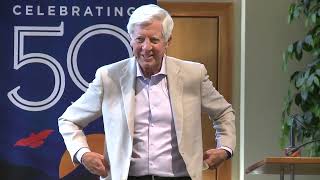
In this Vail Symposium event, former Medtronic CEO Bill George discusses his philosophy of authentic leadership rooted in a personal "True North" purpose. He shares stories from his career, including the importance of crucibles, emotional intelligence, and generativity. George addresses audience questions on leading through COVID‑19 challenges, fostering hope in a growing organization, integrating emotional intelligence in hospitals, and the role of incentives in health‑care delivery. He critiques the current health‑care reimbursement model, advocates for whole‑person care, and highlights the incentive‑free model of the Mayo Clinic. A detailed case study of Rajat Gupta’s ethical lapse illustrates how even great leaders can lose their way. George emphasizes the power of small groups to effect change, the need for gender diversity in leadership, and offers guidance for emerging leaders, tying his insights to his upcoming book "Discover Your True North – Emerging Leader Edition." The session concludes with reflections on purpose, community impact, and a call to action for attendees.
Chapters
Good evening.
Good evening.
For those that don't know me, I'm Chris Sable, Executive Director for the Vail Symposium. On behalf of Dale Mosier, our board chair, and the entire Vail Symposium board, welcome to tonight's event. The Vail Symposium has been offering affordable, thought-provoking programs for the community since 1971. I'd like to take a moment to thank some of the individuals and organizations that help make Vail Symposium programs possible for our community. Our presenting sponsors are the Town of Vail and the Frischette Family Foundation. Our event sponsors are Vail Resorts Epic Promise, the Vail Daily, and the Antlers at Vail. The summer season is underwritten by Cindy Ingalls, and tonight's program is presented in partnership with the Vail Alliance for Purposeful Living. And the program tonight is underwritten by Pam and John Horncates and Holly and Buck Elliott. Tickets cover less than 15% of the cost to operate the Vail Symposium, so donors at every level make a difference. Let's give all of them a round of applause. Our next program takes place next Thursday, July 28th. It's presented in partnership with the SummerVail Arts Workshop Legacy Project. That's a mouthful. And the program is called Christo and Jean-Claude, Reflecting on the 50th Anniversary of the Valley Curtain and the Artist's Legacy. So that project 50 years ago in Rifle Gap where they put up the big orange curtain, SummerVale was part of putting that together, and so we're collaborating with them on that. We've got an incredible panel of people that are part of the Christo Foundation, the original photographer that was there when that happened. It's going to be a really interesting program. And then on Wednesday, August 10th, we're honored to present co-founder and chairman emeritus of the Rocky Mountain Institute, Amory Lovins, and his program is titled Disruptive Energy Futures: The Economy and Resilient Energy Supplies. A mouthful again, but a very important topic for our times, and Amory is, I think, a genius. If you haven't had the chance to see him, I hope you will. Now I'd like to introduce our moderator, Greg Vanarack. Greg is an award-winning author, executive, and speaker on leadership and personal development. He's co-founder of the Vail Alliance for Purposeful Living. He's a co-author of 3 influential books, including Life Entrepreneurs and Triple Crown Leadership, which was a winner of the International Book Award. We actually did a program many years ago on that book, and I think, is your dad here tonight, Greg? He's not here. I thought he might join us tonight. Anyway, Greg's writing has appeared or been reviewed by the New York Times, U.S. News and World Report, Businessweek, Fast Company, and more. He teaches at the Stockholm Business School Executive MBA program, and he's taught for the University of Denver. He was also a tech startup executive at K12 Inc., chairman of the board of SE Forum, and Senior Vice President at the Thomas B. Fordham Foundation. He graduated from the Yale School of Management, London School of Economics, and Claremont McKenna College. And he lives in Lakewood, Colorado with his wife and two daughters. I have the pleasure of working with Greg on a regular basis for this alliance. We really appreciate working with you and with the team. And now please give a warm welcome to Greg Van Ryck.
Good evening, everybody. Thank you, Chris. A warm welcome. It's really great to be with you. I'm very excited to be with you tonight, to have Bill George speaking, and we appreciate the Vail Symposium, our partner on this. As Chris mentioned, I'm a co-founder of the Vail Alliance for Purposeful Living, and before I introduce our featured speaker, I just wanna give you a sense of where we're headed tonight. So after I introduce Bill, he's gonna give a talk for about 30 minutes on Discover Your True North: Purposeful Living and Leading. And then I'm gonna engage in some dialogue with him up here with some questions to talk more about that topic and his book and his new book that's coming out, which he'll mention. And then we're gonna open it up to questions for you and a discussion with you. There is a handout that came with every book tonight And on the back of it is a notes page. So if you want to take notes on Bill's talk and maybe note some questions that you want to ask, that'll be great so we can engage. And then I'll close out, Chris will close out, and then we'll have a book signing out over there in the lobby. So that's the plan for today. I'd like to introduce Bill George. So Bill is a senior fellow at Harvard Business School. He teaches leadership. Former chair and CEO of Medtronic, previously a senior executive at Honeywell, Lytton Industries, served in the United States Department of Defense. Best-selling author of many books including Discover Your True North, Authentic Leadership, 7 Lessons for Leading in Crisis, and several more. Served on the boards of Target, Mayo Clinic, World Economic Forum USA, YMCA of the North, and many more organizations. Bill was named one of the top 25 business leaders of the past 25 years by PBS, Executive of the Year by the Academy of Management, Director of the Year. He's a CNBC contributor and is often on radio, television, podcasts, you name it, you probably see him there. Bill received his bachelor's high honors, Georgia Tech, Harvard Business School, also honors Baker Scholar. He has an honorary PhD from many universities, professor at IMD in Switzerland, executive in residence previously at the Yale School of Management, and he and his wife Penny reside in Minneapolis. Bill, is Penny with us tonight? I did not see her. So there you are. Hi, Penny. And I just, on a personal note, I'm so glad that you're here. And I had the great honor of interviewing Bill and Penny for the Life Entrepreneurs book, and they are real exemplars individually of people who live their life, they integrate their life and work with purpose and passion, but also, and this really struck me personally, as a couple who support each other in living their dreams and their values, which is one of the themes tonight. So I'm so glad that you're here, Penny. And Penny, of course, has a distinguished career herself, philanthropy and in sort of holistic integrative medicine and mind, body, and spirit. So it's really incredible work. And, but speaking of dreams, when I was young and thinking about my career, I had some skepticism about business. I was young and idealistic. And then I read this little book called Authentic Leadership, one of Bill's classics. And it really opened my eyes personally to a different form of business leadership that is, of course, authentic, that is values-based, that is heart-centered. And of course, it's really relevant in this age of what is the purpose of business and all the issues that's going on. So he has had a deep influence on me. And, you know, Bill, of course, has had a very successful career in many, you know, leadership roles, and he could have stopped there, but Bill continues to grow and give, as our colleague Richard Leiter talks about, through his writing, through his teaching, through his mentoring, and through joining events like this tonight. So please give a warm welcome to Bill George. Thank you, Greg.
I'm thrilled to be here with so many friends.
Almost embarrassing to talk in front of friends like this.
I hope I can add something, but I'm pretty I'm particularly pleased that we have the last 30 or 40 minutes to have a dialogue about issues that I think are really important, or we— I hope many of us think are important. And that has to do with leadership, because if you think about it, all of you have been leaders, and when you can impact other people through your leaders, you have much greater impact than you do in any other way. And so I want to thank Greg, and I want to thank Chris Vail Symposium and Vail Alliance for Purposefully, for sponsoring this, because I think it's really great that our valley has opportunities for people to come together and talk about important subjects. But is there anything better than Vail in July? I mean, come on, it's got to be the best place on earth. We always spend the whole month of July here, and it's very, very special. And I want to thank a number of you who sponsored tonight's event also for doing that. Well, let's be blunt. The world is facing enormous challenges right now. It kind of feels like we're careening from one crisis to the next. When CEOs call me, they say, Bill, our people are so tired. It's been 2.5 years of COVID They've been pushing, pushing, pushing. They're exhausted. I'm worried about their well-being. And now we're going to have— we have this war in Ukraine, and, you know, that's causing huge problems in pricing with 9% inflation. And supply shortages. We can't get the products we need to build the components we need to build our products. We know there's going to be an enormous wheat shortage coming up this winter. It's going to be— we'll probably get the wheat we need for the bread we need, but it's going to be tragic for people in developing countries, particularly in Africa, where there won't be any bread. And besides that, it looks like we're heading into a recession. So we're still growing, but do we now anticipate that? So we live in a very different world, and I feel like it's time for a new generation of leaders to step up. You know, we're in the silent or baby boomer generation. We've had our shot. We have our role to play, which I'll cover, but I do feel like it's time for a new generation of leaders to step up, and by that I mean Gen X, millennials, and Gen Z. To take leadership roles where they can have huge impact. And I think we need to give them that opportunity to open the door and give new leaders that opportunity. Let's be honest, I'm going to stay way away from politics. If you ask me about political leaders, I'll cop out by saying I don't know. But the reality is politics all over the globe is gridlocked right now. And it's interesting, Edelman Trust Meter which comes out every year with their annual trust survey. I remember back in 2008-9, business was rock bottom. After the global financial crash, they were at the bottom. Today, business is on top. Now, why would that be?
I think—
and why is it people are looking to business, to nonprofits, social service organizations instead of governments to solve problems?
I think it's because they decided we're not getting a solution from the politicians.
So that's why I think leaders in all walks of life need to step up and interact and come together to do this. And I think we'll see a big difference. So, and the other thing too is that most of us were raised in an era, the '50s through the '90s, let's say, reasonably stable area. There are always some crises up and down, reasonable stable time. We came into the 21st century, all kinds of expectations. It only didn't take till September 11th, 2001, 'til we got shock, that our own country was attacked. And then we had the dot-com collapse. We had Enron and we said, what's happening to our companies? And that got me involved. I would say that I came out of Medtronic, I put a 10-year limit on being CEO of Medtronic because I felt that's the right time. In a creative company, you need to do your thing, do the best you can for 10 years, move on, let the next generation take over, bring new innovation, new energy, new creativity. But I was hardly done. I was in my late 50s. So, I took a period of time to kind of kick around. I went to Switzerland to see if I could learn how to teach, but I always wanted to live, spend time in Switzerland where I love to go. But, you know, about that time, Enron and WorldCom and all these companies turned corrupt. And I must admit that there was a period of time when I was CEO that I really felt at variance with my fellow CEOs, when I watch CEO salaries escalating rapidly, meanwhile in post-inflation or after inflation adjusted, the people doing the work were actually sliding. And I've always felt countries are built on their middle class. And here was the middle class in this country which had flourished in our lifetime. You think way back to the '50s, the '60s, the '70s. That was the era, '90s of flourishing. But it changed, and it became very concerning to me. And I said our leaders were much more interested in charisma, which I've never been charismatic. They're interested in how much money they made. We honored people for their net worth, not their self-worth, and I felt something's wrong. So I wrote the book that Greg showed you, Authentic Leadership. I felt like a voice in the wilderness, and people always said, what do you mean by authenticity? I said it's being real, it's being genuine. Why is this hard? Well, if I'm real, I'll be rejected. I couldn't possibly be real. I couldn't admit I made mistakes. I couldn't say I don't know. We're expected to know everything. I just felt like leadership was flipped upside down. And so that's why I started to get involved. And then I decided, what am I going to do? And I'd been questioning, what am I going to do? And John Kotter, who was a leadership guru for many years at Harvard Business School, said, can we have breakfast? I said, sure, John. And he said, look, I wanted to say something. How old are you now? I said, well, I just turned 59. He said, well, next year you'll be 60. He said, you got about 30 years to live, 30 good years. He said, think back to when you were 30 and all the things you've done between the age of 30 and 60. Aren't you a lot wiser now than you were at 30? Think about what you can do for the next 30 years. And so I've often thought about the period from 60 to 90 as the wisdom period. When our role changes, it's one of generativity, as Eric Erickson said. It's one of giving back. It's one of mentoring, coaching the next generation of leaders. And so I really think that our roles shift a bit in terms of what our role in contributing is. And you can't hang on forever. You see what happened when Jeff Immelt hung on at GE for 16 years. He should have packed it in after about 4 years because they lost more shareholder value than any company in history. There is no GE. My father used to say, "Son, this is the greatest company in the world." Yeah, it was, but, and so I think it's always time for new leadership to come on. So what do I mean by that? Greg held up the book Authentic Leadership. What is an authentic leader? I think it's going beyond being genuine. It's knowing who you are, and I think we can't go out into the world and try to change the world until we're willing to know ourselves and change ourselves, and this is a long process. This is not something that just, "Oh, I know myself." Most people who say that really don't. It's rubbing up against the world, seeing where do I fit, where can I use myself. But it's also when you know who you are, then— I used to do a thing with young students and say, "Okay, what's the purpose of your life? You want to be a leader. What's your purpose?" They didn't really know. They give you some euphemism, "I'm going to change the world." Well, you know, we know how easy that is. So they they really had to go through the process of discovering themselves. And they had to really open up and realize that, hey, they had weaknesses and they had vulnerabilities and sharing those. And they'd gone through difficult experiences, which we call crucibles. And in processing those, they really learned who they are. Because, you know, when things are going well and it's up, up and away, you start to think you're better than you are. It's when things don't go your way You know, maybe as a youth you got rejected by a boy or a girl. Maybe your parents got divorced. Maybe there was a death in your family and you didn't really process that until later. Or maybe you went out into the workplace and you got fired from your first job or your fourth job for that. Or, you know, you really realize this is not what I want to do with my life. And those are what I call crucibles. Those are difficult times when Everything, all the pretense is stripped away and you're standing there and you look yourself in the mirror and say, "Who am I and what do I want out of my life?" And I think in doing that, you gain this knowledge of your true north, of knowing who you are. And then that can lead you to saying, "Well, what do I want to do with my life? What's the purpose of my leadership?" And if you're going to be a leader, I think understanding your purpose is so essential. But I think you only do that when you've had a good sense of that. And then I think the nature of leadership is changing. I'm talking about that tonight because, you know, the old days it was power over people, command and control. You do this, you do that, do that, and then I'll judge how you do. I'll give you an evaluation of how you did. It's not that today. And I'm going to go into this in much more detail about what the leader means to be a coach, to coach other people. In their leadership. And I think we learn through our cruelties, we learn about ourselves. But here's how leadership has really changed. David Gergen once told me, "You know, when I was in school, I used to think—" You know, he went to Yale and then Harvard Law School, but he said, "You know, we used to think the smartest person in the room is the best leader." Simply not true. In fact, they may be the worst leader because they try to impose their views on everyone else rather than listening. But I think we've realized today it's not about IQ. It's about emotional intelligence, which Dan Goleman talks about. It's about EQ. And leadership has gone from, and I picked this up from Dov Seidman who runs the Moral Leadership Institute. If you think back 100 years ago, it was about leading with our hands. You know, we were building things, we were shoveling mines, we were working on assembly lines. I was an industrial engineer and we were trying to show people how to be more efficient with their hands. Then it moved to leading with your head, starting at about the 1970s, ever since. And that's when we got this idea that IQ is everything. Larry Summers at Harvard used to personify that. He was not a good president, but he's a brilliant guy, a lot smarter than I could ever be. But now, today's leadership has gone leading with your heart. And I can tell you, unless you lead with your heart, you can't be a great leader today. And so, yes, you have to be smart, you have to make tough decisions, you have to be analytical, You have to know how to handle the numbers. But at the same time, leadership is about leading with your heart. And what do I mean by the heart? The heart is where qualities like passion reside. Like, do you have a passion for what you're doing? If you don't, I always just say to people, if you don't have any passion for doing it, if you're working in the back room pushing numbers and that's not what you love to do, you may make a lot of money, but you won't have a fulfilling life. Go out and sit on the beach and figure out what you want to do. So it's about compassion. Do you have compassion for the people you serve? Are you a true servant leader and you have compassion for people? Do you have empathy for the people who are going through tough times? Everyone's going through tough times. We hardly know anyone who hasn't, particularly during this COVID period. And most of all, do you have courage? Do you have courage to make the bold decision? Would you stand up and put your job on the line, risk everything you'd built, for a moral issue that you felt was really important. If you think about those qualities— passion, compassion, empathy, courage— these are matters of the heart, okay? These aren't matters you're born with. Now there's good news and bad news. Your IQ, as Penny tells me, really doesn't change between the ages of 10 and 60, okay? But right now our ability to be brilliant with numbers is not what it was when we were 30, okay? But we develop our EQ. I didn't start out with a lot of EQ. I had to learn that, becoming self-aware and learning who I was. And so, one of the most important things I ever learned— Penny and I were doing a walking meditation with the famous Buddhist monk Thich Nhat Hanh out in San Francisco, and he said, "The longest journey you'll ever take is the 18 inches from your head to your heart." Let me repeat that. The longest journey you'll ever take is the 18 inches from your head your heart. If you reside in your head, you'll never be able to lead people, you'll never be able to connect with people. Isn't that what we want? Think of the best leader you ever worked for. Isn't that someone who led with their heart? Didn't they have those qualities I just mentioned? But these are all qualities we can develop. They aren't things that are fixed. And in fact, we know a lot about this, how through a lot of the research that's done now about neuroplasticity, that these qualities also can be developed and it makes us, I think, more real and more human. So let me talk a little bit about our path of life because I kind of, in the book, talk about dividing life into 3 portions. If you think about it, the first 30 years is really preparation for what we're going to do with our lives. And it used to be, when I came out of school, boy, 22, you go right to work, you take a job, start making money. Today, most people are kind of kicking around, figuring out what it is they want to do. Maybe they want to travel overseas, maybe they want to take a job, maybe they'll change jobs. They didn't like that particular organization, so they change jobs, change organizations. But that first 30 years is preparation, and then you move into leadership roles. Often it's that period in which people go through significant crucibles because they say, "Where am I? Is this what I want to do?" And then, as I mentioned, the 60 to 90 period is that period of giving back. It's a wisdom period. When you take your wisdom accumulation. I know when I was at Medtronic, I saw everything through, almost like through a lens, a telescope, and I could hone in on everything we needed to do at Medtronic. And you know, you walk out of there, you think it's the greatest company in the world. Then you start opening your aperture up like a camera and you start to see the world much more broadly. You have an appreciation for people in different walks of life, different forms of leadership. And that's the time you can really spread your leadership over much more, many more people and many more groups of people. So I think, but it's that first part that you must discover who you are, or if you don't, you gotta go back and do it, 'cause there's no getting away from that. But in that second phase, let me talk about crucibles people have to give you some illustrations. I'm gonna give you 3 illustrations. The third one is myself, 'cause I think I need to share, I'd like to share my story with you. So I met a young man, I actually, I didn't even know I knew about this person. I had a call and said, can you get a friend of mine into Mayo Clinic? Now this is a very confidential thing. I said, sure, give him this number. If he calls this number, he'll get in. By the way, I'd make the same offer to you. And his name is Kabir Bhardi. And he was an Indian. He was not an immigrant, but his parents were. And he was totally driven. He created the number one most rapidly growing company in the Inc. 5000. So of the 5,000 companies that Inc. Magazine follows, he was number 1. His growth for 3 years, a company he founded called OneTrust had grown at 48,000% over this 3-year period. And, but he was driven. He said he was so driven that when Thanksgiving came, he didn't want to take Thursday off and be with his family, which is, he had a nice family he came from. He headed to London where they don't practice Thanksgiving, and so he went there to work. And so he gets there and he starts having excruciating pain in his stomach, and he goes into the local hospital in London. They say, you better get into the hospital, this may be cancer. You've got real problems, young man. You get in the hospital. We've done some blood tests on you. Get in there. And he said, no, I'm going to Belgium and work the next day. So he gets to Brussels and he is just in terrible pain in the night. He's walking around in the middle of the night looking for a hospital in Brussels, not even speaking French or Dutch, or Flemish, that'll take him in. And so again, they tell him the same thing, we're checking you into the hospital. They checked him in overnight. He left the next day, caught an airplane back to the United States, but eventually he got into the Mayo Clinic. He spent 3 months there. No one spends that kind of time there. They did over 300 tests. And you know what they finally concluded is he had a case of extreme stress where his body, he was pushing so hard his body, he was 30 years old, had literally shut down. Now from that crucible, which I think we all admit was pretty extreme, and they never discovered a specific thing, it wasn't cancer, but they did say, he decided, and the doctor said, "You're going to have to change your lifestyle. If you do this, you will kill yourself, you'll have a heart attack." So he did, and he totally transformed his life. And he said today, you know, he has a child now, he's a much better father, a much better person, he says, and he's a much better leader for his people because he finally learned how to delegate. As an entrepreneur, he thought he could do everything himself, and so he wasn't really a leader, he was just driving his people. His company's flourishing because he now can be a much better leader for his people. Second story: Corey Berry. Wonderful woman who is CEO of Best Buy. She took over from a friend of ours, Hubert Jolie. She was 44 years old when she was elected. Hubert came to her and said, "Kori, I think you could be my successor." Now, her ex-boss was in line to get the job. And he said, "No, I think you ought to do it." She said, "I can't do this." So he said, "You go home and think about it." So she goes home. The women will get a kick out of this. She writes him a 10-page letter, typewritten, about why she can't do this job with all the reasons she can't do the job. And so he said, let's have dinner. And so they went over each individual point and said, you can do this, you can do this. Here's why I think, I believe in you, you can do it. So she takes the job. Her successor said layoffs, you never lay off people, it's the last resort. She's in the job 6 months and COVID hits. And remember, Best Buy gets all their products from Asia. Most all their products come from Asia. So they worry about supply chain. But all of a sudden she realized, I have to close 1,026 stores and I have to lay off 52,000 people. Even though my predecessor said you never lay off people, we have no choice but to furlough them. So she announced in March we're gonna lay off 52,800 people. And, but we're gonna stall it off till April because then the stimulus package came along so they could go from no salary stimulus and they said when are we gonna call back? And she said I honestly can't tell you. She took a 50% pay cut. She, all her executives took a 20% pay cut. The board cut its pay, which, you know, is modest compared to the executives' 50%. But the point was, she prepared for the long haul and they actually came out of it and flourished. But for her, that was a real test as a new CEO following someone who'd been wildly successful. Could she do it? And she had to go a whole different direction because she had to take what was a store showroom and turn it into a warehouse. And they had to do in-store pickup or out-of-store pickup or no-touch pickup as they called it. But the point is, and really beef up their online, but the point is she faced this crucible and she did it well because she was willing to face herself and say we have to make significant changes. Now my own case, my father thought I should be a leader. I'm an only child of older parents. And he thought he was, I thought he was a good consultant as a little boy. He said, "Son, I failed. I have never become a leader. I should have been a leader. So I'd like you to become the leader I never became." So when I was 9 and 10, he's telling me, you know, I'd like you to be head of a major company. He even named the companies. One of them was Coca-Cola, another one was P&G, another was IBM. It's kind of a heavy trip for a 9-year-old kid. I drank Coca-Cola, but I never heard of any of these companies. But I get this back in my mind. I'm pushing my father away like this, but subliminally I'm taking his messages in. So I join a lot of organizations. I'm never selected to lead anything. And I didn't even make it, I wasn't even elected to student council. I was a good enough tennis player to play college tennis, but I wasn't even co-captain of my tennis team. So finally my senior year, I throw my hat in the ring and say I'm gonna run for president of senior class against one other guy. When the votes came in, I lost by a margin of 2 to 1. So you can see the kids in my school didn't think I was much of a leader, 'cause I wasn't. So I went off to Georgia Tech, which I would tell you is a great school. I wanted to do engineering work, and, but the real reason I went there, I wanted a fresh start. I didn't want to go to Michigan where I knew everyone. I wanted no one to know me, but like a glutton for punishment, I joined a lot more organizations, ran for office 6 times, lost all 6. So now I'm 0 for 7. I feel like a real loser. True story. So some of the seniors that I had gotten to know took me aside and said, Bill, let me tell you something. No one's ever going to work with you, much less be led by you, because you're moving so fast to get ahead. You never take time for other people. And that was like a blow to the solar plexus. I'd see all my leadership dreams collapsing. They were right. So I spent like a year kind of processing, going back to talk to people that rejected me, because I hadn't learned leadership is really about relationship with people. And if people don't think you care about them, they're never going to follow you. And I had a lot to learn, but I did, and I was fortunate to lead a lot of organizations in my junior and senior year. Then I went off directly to business school, was fortunate then, but then I went directly into the U.S. government as a civilian during Vietnam War, worked for the controller, the CFO of the Defense Department. And 4 months after I got there, my father— I got called out of a meeting. My father was on the line saying my mother had died that morning. And I was closer to my mother than anyone else in the world as an only child. My father traveled all the time, 4 days, 5 days a week. But my mother was the epitome of love. And I'd never realized that she was the real leader in our family because she had stopped work, as many women did in those days. You probably remember it from your parents. She stopped work when I was born. But she led every nonprofit organization, every social service organization she was in. And we just discounted that. It was kind of a sexist thing in those days. But so I then recovered from Mother's death, fell in love with a woman who lived about 3 blocks away in Washington. We were engaged to be married. And I got a call. She had gone back to Georgia to prepare for the wedding. We talked on a Saturday night. The very next morning, 3 weeks to the day before the wedding, her parents called to say that she died in the middle of the night of a malignant brain tumor. She'd been having headaches. They were undiagnosed. They were checked out. And I was just devastated, because I could explain my mother's death in the natural order of things. Parents die. Most of your parents probably have deceased, or many of them are. But how do you explain a 25-year-old who has so much to give to the world Even though I'm a person of faith, that being gone. But you know, in life, I have to say the things that made me, really helped me in that time, the words of St. Paul, "Now we see through a glass darkly, but then face to face." There are things in life we just don't understand. And a few months later, I met a woman at a dinner party, and it turned out to be my wife of 53 years. So, you know, sometimes in life, And what a blessing Penny was, but sometimes in life, one door closes and another door opens. And so I'm still thinking I'm going to be CEO and I'm on my route to Honeywell. I spent 3 years as head of Honeywell Europe, had a great experience, came back, got thrown in a series of turnarounds. I love being with people, with customers, with the employees. I was just chasing numbers. And once I get one set of turnarounds done, then there's another one, then I get another one. Finally, one day, I'm going home and, you know, my goal is close. I'm, you know, I can see that I'm one of the leading candidates to be the next CEO, and I was actually changing. I was wearing cufflinks, which I don't wear. I was trying to say just the right thing to the board of directors, just the right thing to the management. I was faking it, you know, trying to be the man. And I look at myself in the mirror, and by the way, Penny and I have now been married about 15 years. We have 2 sons we're proud of, lots of friends. I looked at myself in the mirror and I was miserable. How could I be miserable like that? Because I was losing— I didn't use True North in those days. I was losing sight of who I was. And so in that instant, I realized I'm in the wrong place. I have no passion for this business. The purpose of the company, Greg, is making money. And yeah, we know how to make money, but that's not a purpose. That's not why you spend your life. You know, you can't take it with you. And so I went home and told Penny what I was feeling. She said, "Bill, I've been trying to tell you this for a year. You just didn't listen." And she was right. But my men's group the next day, I've had this men's group that meets me tomorrow morning, met for every Wednesday for 46 years. And in my men's group they said, "Well, you've turned down Medtronic 3 times. Why'd you turn down? Why don't you go back?" And I thought, hmm, my dad said I should be head of a big company. Well, Medtronic's kind of a mid-sized company. So I called the CEO back and I thought about it. And I remember walking into the company and feeling I'm coming home because here's a place we had a purpose or everyone shared a purpose, restoring people to full life and health. And that was something I could really get passionate about. I very much values we talked about all the time and we had shared values. So I must say sometimes you get off track and you'll have a shock or a crucible or an awakening like that. That'll bring you back in to say, "What do I want to do now?" So I do think following your purpose is really essential to having a fulfilling life. And I'm so glad that I had that awakening because that was the best 13 years of my life. So another colleague, I mentioned Hubert Joly, and he talks, he's written a book on purpose and he talks a lot about purpose and he asked me to review the book and I challenged him to put more things about himself. And so he said, "In my mid-40s, I reached the top of the mountain, and it was desolate. I felt hollow inside. I realized I was going the wrong way." And then he went on and did a whole series of things with some monks in central France and realized that leadership was not— he thought he was the smartest guy in the room, but he realized he was on the wrong track, and he now has become, I think, a truly great leader, taken over all my classes at Harvard. As I move on. So I think finding our purpose, which we call our North Star, it's that fixed point in the sky that'll guide us to— so think about what is your purpose? How have you devoted your life? What is the thing— what would you tell if your favorite granddaughter was with you and you had but a few days to live and she asked you, "What is the most important thing in your life?" What would you tell her you devoted your life to? What was your sense of purpose? And I think that's why living a purposeful life, and that gets into really the idea of, you know, life is not just about making money, certainly not. It's not just about work. It's about having the fulfillment of life, having your family, having a personal life, contributing to your community, being there for your friends who are going through difficult times. I remember John Donahoe, who is now CEO of Nike, is a friend of mine. And he talked about his story and when he actually, when he was with Bain, he actually said he was going to quit because he had to take his children to school because his wife had a job and his boss said don't quit. But then he went and when he was head of Bain, he had a period where he wanted to take all his kids to Europe. So he just took months off and did that even as head of this great consulting firm because that's what he needed to do for his family. And when he then went on to eBay, did a great job restoring eBay, but when he left eBay, he went on what's called a wisdom tour. And John was in his, oh, I think mid-50s then. And he went around and talked to a lot of people to say, "What do I want out of life?" He went up to Spirit Rock with Jack Kornfeld and did a couple of weeks up there in a silent meditation that changed him. Now he's gone on to— he was at ServiceMaster, now he's gone on to his fourth CEO job at Nike. But he is an incredibly involved leader. Evolved. Why? Because he has really thought through how do you live that integrated life. His wife, by the way, while he was CEO, was appointed by President Obama to be ambassador to the United Nations in Geneva in terms of world health. And she did an amazing job.
But he had that kind of fulfilled life.
So I would just hold John up as an example. And of how important that is in thinking about what's really important in your life. And so thanks to Penny, we have really talked about the kind of life we want to lead, the kind of family you want to leave, and also how can you contribute more at this stage in life. We were blessed at Medtronic that we did well financially because the stock did well. Trying to put that back, Penny, since she had breast cancer, has tried to transform healthcare and we're doing this through our family foundation. And so, you know, the only— the bad news I got for you is you can't take it with you. The good news is you can do things to really help the world flourish. And so sometimes difficult times in life get you to think about what's really important. So I want to just— I don't want to take too long here because I want to get Greg up here. Just a couple more comments. I think leadership today is much more about being a coach than it is a director. And the first, it's an acronym, but the first C stands for care. Because people will not follow you unless they know you care about them. And particularly today, we're going through a revolution, employee revolution, where employees say, if I don't think you care about me, I'm not gonna give you, I may come to work, but I'm not gonna give you my heart. I may give you my brains, but I won't give you my heart. And no one understands this better than Mary Barra, the General Motors chair, CEO of General Motors who's transforming in real time that company. But I think really if you think about being a coach, what does a great coach do? They organize to get everyone in their sweet spot in the field, then they align people around a mission and values, they challenge people to do their best. It's not soft leadership, it's challenging leadership, but they want people to reach their full potential. And then they help show them how to do that. And so I think leaders need to follow much more of this model. And at the end of the day, I think what we really need to have is leaders with moral courage. That's not a religious statement. It's the courage of their convictions. And no one represents that better than my friend Ken Frazier. Ken just retired as CEO of Merck. He stayed a year as chair of the board. Ken is the grandson of a slave. His grandfather was in South Carolina. He got his father out of South Carolina to move to Philadelphia. His father moved to Philadelphia, never rose above the level of janitor, never made more than $20,000 a year, lived in what you would call the worst area of Philadelphia in those days, around 3rd and 4th Street. And Ken's mother died when he was 12. And Ken's father said to him, Kenny, You have to do what you know is right. You don't have to please other people. And Ken said that was the most important thing I ever learned. I don't have to please other people. And so as CEO of Merck, he went against the guidance. He stood up to his stock market. He said, we're gonna invest $8 billion in research when Pfizer and everyone else was cutting back because that's what we need to do. And he had the courage of his conviction to do that. And then You're all familiar with Charlottesville. It came along 2017, and Ken said, this is not right to say that there's equivalence, people on both sides. He said, this is wrong. And so I talked to him 3 times that weekend, and he came out on Monday and he talked to his board and he said— he didn't ask approval. He said, I'm going to make a statement tomorrow, and I'm going to withdraw from President Trump's council, but I'm going to do it very publicly. And I'm going to say that America is based upon all people are created equal, endowed by their creator with privilege of life, liberty, and the pursuit of happiness. But that means everybody, and we cannot maintain prejudice against people based on their gender, their race, their religion, their national origin, or their sexual identity. And he put this out there, and of course then he got blasted by the former president, and he was putting everything on the line, see, because Merck Prices can be controlled by the federal government. Every new drug has to be approved by the federal government, and we know how the FDA works. If they don't like you, they just move your application to the bottom. They don't reject it, they just stall it out. Or they can recall anything. They already recalled a Merck drug called Biox because it was harming people. And so Ken put everything on the line. And I remember talking to some people from Merck that came to my class, and I said, "So what was the response? Weren't you scared that—" You're gonna— he said, "No." Every person in that company united behind Ken because he stood up for Merck values and his own values. Now to me, that's moral courage. Today he's speaking out against Georgia voting laws and I heard him, talked to him. He said, "You know," and I want you all that have been in business to think about this. He said, "Without democracy, capitalism cannot survive." Those of you in business, do you want to take your business and be a businessman or businessperson in Russia where you have to be an oligarch? Do you want to go to China where Jack Ma, one of the great businesspeople, greatest businessperson in China, just disappeared for 2 months because the government thought he was getting too high on himself and getting too powerful? So we have the freedom here to be who we can be. And so I want to urge all of you to think about how can you be that wisdom leader for the next generation or the younger leaders. I want to encourage you to step up and lead now. Because now is your time, because the best thing we can do is to have leaders who will address the great challenges we face in our day. And if we can get more leaders to do that in all walks of life, we're gonna have a much more flourishing country, a much more flourishing globe, and we can address the really tough issues. And so as a moral leader, what issue are you gonna focus on for the rest of your life? Is it healthcare? Is it climate change? Is it income inequality? Is it peace? Is it poverty? Is it— what is it going to be? But I say you can't change the whole world, but you can have an impact. As my wife Penny has said in healthcare, you can have an impact by taking on that great challenge and helping other people step up to join with you in really making a difference in the world. So I just want to make this a clarion call to everyone to what we can do to use our resources to make this world a better place for everyone. Thank you.
Okay, well, thank you, Bill. And while Bill catches his breath after an incredible talk, let me set the frame here. The Vail Alliance for Purposeful Living, one of our core practices is dialogue, where we get together in small groups and we get real, just like Bill was vulnerable in sharing some of his personal stories, crucibles, etc. And the frame that we want to invite you into in our dialogue before we open it up, and I hope you're writing down some questions because we want to hear from you, is purposeful living and purposeful leading. So just on purpose, we think of purpose as why are you here? What's your reason for being? Right? Why do you get up in the morning? But we can also think about small p purpose of what feels meaningful to you, what gives you a sense of significance where you connect or contribute to others. And when we talk about purposeful leading, it doesn't have to be an example of a CEO, we can lead ourselves, right? We can lead our families, we can lead communities, we can be in a dance of leading and following. And so I want to open it up more broadly. And with that in mind, Bill, so you talk about crucibles and how the problem of people and leaders losing their way in life. And I just wanted to ask you, what are some of the most common reasons why people lose their way And are there any kind of root causes there, anything sort of beneath some of the issues?
You know, I think it's the striving for external validation and measuring ourselves by how the world measures money, fame, and power. You know, as I said earlier, you can't take it with you, so just being the wealthiest person is not going to get you there. You know, I was reading a story the other day—
by the way, in terms of philanthropy, and all of you, or most of you that I know are philanthropists, it's really striking. Bill Gates just said they were going to increase their annual giving from his foundation to causes from $6 billion a year to $9 billion a year. And he's committed to put ultimately $113 billion more into the Gates Foundation. And it's really striking.
Warren Buffett has put in $45 billion So what an impact he's trying to have on healthcare. Now we don't have that kind of money, but the point is he's doing that. Now Jeff Bezos is one of the two richest people in the world.
I was reading the other day, now don't get angry about this, but I just saw it as an example. He's got, he just had, you know the Dutch are great sailors, right, for centuries.
And he had the Dutch build a $500 million yacht for him.
The problem is the mast is so tall It's built in Rotterdam and it can't get under the famous bridge that goes back to the 12th century. So he has asked now the Dutch to remove that bridge so his yacht can go through. Now, I happen to be of Dutch descent, so if you know anything—
I don't know about Banerjek, is that Dutch? Czech. Czech, okay, well, it's close. But I can tell you, the Dutch don't think much of that.
Anyway, what could be done for $500 million? How many people could go to a trade school or to a college for $500 million? Just think about that.
How many people who are homeless could be helped? How many people who can't put bread on the table at night could be helped by $500 million? So I think you really want to think about what is your purpose and how do you use it. But I do think people get pulled off by money, fame, and power. I think he loves being glorified as he was great at first. He created a brilliant Brilliant company in Amazon, but the whole idea that you kind of lose it and you get into what I call the adulation trap and people kind of idolize you because of your title or your money or your fame.
Fame is a fleeting thing.
They'll take you up like this and take it down like that.
And so I think you need to, like Ken Frazier, you don't have to worry about what other people think if you're doing the right thing. And then you'll build those kind of relationships.
And I think that's what happens to people who lose their way. Thank you.
So Bill, we got a sense of the arc of your career from what your father said to you, expectations, you wanting to be a leader, to becoming, getting into business, becoming a business leader, and now the teaching and the writing and all the mentoring that you're doing. How do you think about what your purpose is and how has it changed over your life?
Well, as I thought about it and reflected, it sounds like it's changed because I was in microwave ovens at the first, and then I was at Honeywell and a lot of businesses, and then I was at Medtronic.
But my purpose really hadn't changed. I, going all the way back to college and high school where I was trying to help people, mentor them, help them to solve problems. I was tutoring when I was in high school, but in college, trying to help people. Realize their full potential. And that has really been my purpose all along.
I'm not a medical expert. I'm not a— I have an engineering degree, but hardly a technologist.
I'm not a brilliant guy like Elon Musk, but my whole goal all along has been to teach each individual to help them realize their full potential. And I mentor a lot of people now, from people just starting out to CEOs, about how can they reach their full potential. Potential. So I think that's been my purpose. And in a real sense, what's changed is where I'm applying that, but it hadn't really changed. I could never say, oh, I was great, I invented these things at Medtronic.
I didn't invent anything, you know. And I didn't—
when I went there, I didn't know anything about medicine. But I think if we can build a team around us where everyone on the team— that's what a great coach does. He allows everyone on the team— coach never gets on the field, but he challenges people to reach their full potential. And it is challenging. And I think if we can do that, that's a gift we give other people. So that's where I'm devoting my time right now. Very good.
So in your book and your teaching, you talk a lot about the importance of self-awareness. And that story you told earlier about when you just were moving around so fast when you wanted to be a leader in high school and whatnot, and getting this gut check of that you weren't aware of how you're being perceived. So talk about the problem of lack of self-awareness. How does that impact us? And how— what do you recommend for developing your self-awareness?
Well, the first thing you have to do is process your life story and understand what's important. Me understanding my mother's role in helping me understand she didn't care if I got A's or C's, she wanted me to have good values. You gain that But I think you process, you process your crucibles. A lot of people cut themselves off at the neck and say, "I'm not even going to think about that." Well, you actually need to think about its impact on your life. But then, we have, really have two practices we developed in recent years, or thinking about the importance of that. One is an introspection practice. So I would recommend to everyone in this room, and everyone you work with, take at least 20 minutes a day, set all the electronics aside, Set your task list aside, forget about what you want to get done today, and just reflect. How did I show up today? We have— Penny and I have meditated, we've been meditating for 40+ years, but maybe it's a mindfulness practice, maybe you go for a long walk, maybe you take a jog, maybe you ski down a beautiful mountain, maybe you sit in just a beautiful place, but the point is you think about, was I the leader I wanted to become? Was I doing what I wanted to do? Did I help other people today? At the end of the day and reflect for 20 minutes without any interruptions. And I think it will help you a lot gain self-awareness. The other half of that though is the opposite. You need truth tellers in your life. You need people that'll tell you the truth about how you showed up.
And did you appear to be arrogant?
Were you out for yourself? You need to have truth tellers in your life. So you need to surround yourself not with people that tell you how great you are, But people will tell you what you don't want to hear. It's painful. I never teach a class at Harvard where I don't get written evaluations from every participant. And some of it's painful, but that's how you learn. And I think we learn from how we come across to people. It's the hardest thing we have to do is see ourselves as others see us. We know how we want to be seen, but I don't know how you're seeing me. I know how I'd like to be seen, but that doesn't necessarily mean how you're taking doing it. And so I think having those practices can enable you to gain self-awareness, which leads to self-acceptance. And before that is self-compassion. You have to accept yourself as you are.
I have lots of flaws. I'm too impatient.
I lack tact. I sometimes say hurtful things when I don't mean to. But if you can accept yourself, then you can have that compassion for yourself. Then you can accept yourself as you are, and then you can you can find, you can reach fulfillment.
One of the things that we, many of us struggle with these days, I think, is work-life balance. There's so many inputs, we're so busy, and certainly for you with a very high profile, a lot of responsibility. So, and then you talk about leading an integrated life. So how have you approached those and What have you learned, or what are you doing differently now from what you used to do on that front?
Well, you know, our life— I used to have students say, "Oh, I work 100 hours a week." You don't want to sacrifice your life for the company. I had a boss who died at 51, and I remember his brother-in-law standing as we were looking at his casket, and he said, "Bill, what he's telling you now—" He was my mentor. He was a great mentor in my first job. At Littman Industries, he said, "Don't give your life for the company." So, you know, you can't— you've got to have— and I think you have to nurture all aspects of your life, whether it's your family, your personal life, as we've described, or whether it's your family and— excuse me— your friends and community. And a lot of people are neglecting that today. It's really important to get out and work with the community, work with people who whose socioeconomic position is very different than yours, so you understand the lives of people. But I used to compartmentalize my life, and then Penny and I went to a retreat for 3 days, and I came back and said, look, I can't be a different person at work and in the community and at home and with my family when I'm playing with our kids. I have to be the same person. So I came up with the word decompartmentalize my life. But I had to knock down all those walls, I'll be the same person. And to me, that's leading a life with integrity, if you can be that same person. And there are times in your life it's not in perfect balance, but we have to nurture all aspects of our life. I remember hearing a friend of my father say to him, you know, my daughter graduated from high school last week, and I realized I don't know my daughter. I never really talked to my daughter. Can you imagine that today? You know, we have to take time. And young people, you want to take the time when they're still young. You can't go back and make it up when they're in their 30s and 40s.
Bill, you've mentioned several times Penny, and then I was also— a lot of us noted your men's group and how long you've been doing that. Can you just say about how Penny and/or your men's group have impacted your life or your leadership?
Well, Penny's the most important person in my life. But she's always a person that's there for me, whether I'm going through tough times, she'll give me a hand and pull me up, or whether I get a little high on myself and try and impress all of you, she'll say, "Why are you doing that? You don't need to impress people anymore." And that's very good advice. And she's been a great counselor. And so I feel very blessed to have her. You need at least one person in your life who you can tell everything, everything, and be totally open.. And I think that's essential for all of us, whether it's your spouse or your best friend, your mentor. And if you don't have any of those people, you can hire a therapist and tell the therapist everything. But, you know, I think you need someone like that. It's really critical. And Penny's been that for me. Now, we did form a men's group. It came out of this same retreat Penny and I were talking about. She formed a women's group. I formed a men's group. We've been meeting every Wednesday morning from 7:15 to 8:30. When we're California, it means getting up at quarter to 5 and getting ready for a 5:15 meeting. And we've had 8 people, 2 of the people have passed away, one last fall, very close friend. And we had a couple of guys sick right now, but we're there for each other. And we've been through rough times, children getting divorced, difficult, challenging things. But having a group like that, and the thing that's made our group go is that there's a card that one of the people puts out, has his assistant put out a card. And every 2 weeks someone has the program and we rotate it around. And so there's a substantive program. So maybe the first 15, 20 minutes will be a check-in. And then after that check-in we'll say how you're doing. Then we take the program. And typically people send things out in advance. Last week's program was on hope. And, you know, another one was on well-being. Another one was on legacy. But really important issues. And those, we find that the questions don't change, only the stage of life when we're answering the questions. So some of the questions, you can't come up with all new questions for 45 years once a week, but we do find some of that, our stage in life causes us to think differently about those questions. So that's been a godsend. We also have a couples group that's been meeting once a month since 1983, traveled the world together, many trips together, and that's been wonderful as well. Very good.
Well, thank you, Bill. And we talked about— we had a brief dialogue here, the two of us. Now we want to open it up to you. So I want— Chris has a microphone, so if you could raise your hand and we'll try to pay attention to who's got a question. I want to invite you to ask Bill questions, also to make any comments of things that struck you, um, and— but just please keep it a little brief just so we can get, um, around to a lot of people. We want to hear from a lot of you, okay?
Don't be shy, and Greg's prepared if you don't. One back there.
Yes, thank you, our first questioner. That's always— let's give her a hand. That's always the brave, the bravest thing here, the icebreaker. Yes, thank you.
Um, that was wonderful. Thank you very much. So I'm a new CEO, 4 years, 2018. Things were going at a rapid rate, had incredible growth, have had incredible growth. COVID had hit, obviously, labor shortages, lots of challenges. We're now in future growth. We're looking forward to giving hope back into all of our employees. We have about 1,500. And so what would be your advice to me to give hope back And let's look at all the bright things that are happening and getting into more proactive versus reactive mode.
Well, it's a very—
congratulations on what you're doing. It's a very tough time in the last 4 years, been the roughest time of just about everyone's life going through this COVID period. People are saying, I don't want to work remotely and I'm never coming into the office. And I remind them that 60% of the workforce has to be there every day. All the people that provide food for us, to provide healthcare, and the frontline people that are manufacturing things. But well-being of your employees is critical, and I think make sure you take care of your own well-being and ensure that you're doing well and that the team around you that's guiding your organization is as well. But then make sure that there's a real sense of care of caring for the people in your organization, and you realize where they are. And I think you have to be very honest, face reality. It's going to be a rough time. No one can tell you— maybe your business is going well now, but what if there's a recession? You know, are we going to see a big fall-off? If you work here in the Bay Area, you know, are we going to see a fall-off in tourism? You know, just as we think we're recovering after we went through a tough period. So it is a tough time, but I think being realistic with people. And facing reality and helping them cope with challenges. But then remember, why are you in business? What's that purpose? And bring them together as a team to try to solve the challenges you face. And I think when you ask them for help rather than saying, I've got the answers, you know, then they will all step up and help you. And you'll find people will give a great deal to you when you do that. So congratulations on being CEO, by the way, a little statistic statistic for you. 3 years ago, 5% of the Fortune 500 were female CEOs, or, in other words, females, and only 5%. The last 2 years, the percentage of female appointees has been 26% and 25% the last 2 years.
So it's slow progress, but we're getting better.
Um, I met Penny and Bill at the Bravewell Collaborative at NIH in— I don't know when, but through Mimi Guarnieri. And so my background's exercise phys. I've evolved into integrative medicine. I'm now in healthcare trying to change hospitals with emotional intelligence. So I commend you both for doing what you've done. To change, especially in healthcare. And my question to you is, I meet with leadership, I'm in the hospitals all day long trying to change employees, nurses, doctors into understanding what emotional intelligence and how impactful it can be on their lives because they have this image that they've been defeated. They, they don't know where to go now and they're lost. And so we are constantly trying to create programs that can support that. So if you have any suggestions— Thank you.
But thank you for what you do.
BraveWell, by the way, is something Penny formed in a group of philanthropists, foundations, about 25, maybe peaked at 30, of trying to transform medicine to look at the whole person— mind, body, and spirit. Not just to look at you as a disease type. And she said when she had breast cancer, don't look at me as a person with breast disease, but I want to be a whole person. And I think that's the way that people heal. And by the way, I think that's the only answer to our healthcare problems. It's the only answer that is looking at the whole person and helping the whole person in healthcare. But in many ways, there's a lot of dysfunctionality in the way the government reimburses us, and it's cause— it passes down to the hospitals and to the employees, this dysfunctionality. So we're not reimbursing to keep people well, we're reimbursing them to do procedures and tests and get them out of the hospital. And we can make more money if we do more radiation, if we do more chemotherapy, if we do more this, more that. Who's going to take care of you? Or Medtronic's in the heart business. Yeah, you can put You can get stents, you can get cardiac surgery, open up your arteries, great. But what about rehab? Who's paying for that? Who's going to pay for prevention so maybe you have a healthy diet? You know, food, food is health, guys, whether you like it or not. Just, there's no pill to keep you healthy. Food is health. So if you don't eat healthy, why do you think you're going to stay healthy? Now I think in general, and I'm not speaking of your hospital, hospitals have not done a good job nurturing their employees. Employees, okay, to make sure they're healthy. How can you be a caregiver and be a nurse in a hospital where the nurses are the ones that carry a lot of the human side, if you will, the heart side of care? That neurosurgeon might be in there, might see you 5 minutes before the procedure when you're probably in la-la land, and then see you for 10 minutes after where you're still coming out. But it's that nurse that's with you all the time. But what if that nurse is not— whether it's a male or female— is not being— doesn't feel good, that they aren't having plants. You know, if you're with people who are sick every day, you have to have something to nourish you, to make you feel good. And so I think it ought to start there. You know, what is it, Penny, the statement about put on your mask before our own mask for helping others? What are we doing to help people in that? And I think we've lost sight of that. And then I think— I don't understand it. At Medtronic, we would bring patients back to tell their stories. Why don't hospitals do that? You know, thank you, you helped save my life. You helped restore me when I was at the lowest point in my life. You gave me hope when I thought I was going to die. Why are we not bringing people in to have that story be told so we can realize there's a higher purpose? We're saving lives. We're keeping people healthy. We're allowing them to flourish. We're allowing them to go back and be with their families and lead full lives. Earl Bakken, the founder of Medtronic, said, look, We're not in the business of installing pacemakers. He invented the pacemaker. We're not in the business of installing pacemakers in people. We're in the business of trying to restore people to full life and health. So when you get one of our products, he had a picture of a person on the operating table and they were there, and he said until they're walking away to full life and they can lead the fullest life, they can run marathons, they can be great athletes, they can play with their grandchildren. Until you can do that, our job is not done. And so I think if more hospitals and healthcare organizations could look at that, and look at people over their lifetime, how we're storing them, and help prevent disease. The biggest savings in healthcare is preventing disease. All of you are out here, you have the chance to be healthy. You know, you're not overweight. Well, look in, that's not true of the lower socioeconomic bracket. Just looking at what's going on. You say you ought to exercise. Guess what? It's not safe to step outside my door. That's not safe. And the only food I have, and I go to the 7-Eleven to get food for dinner, and I don't have any money, so I have to feed my kids at Burger King. And I know it's not healthy, but I don't have any choice.
I can't afford to go to Whole Foods.
You know, or, you know, I don't— I'm so stressed out, no one's helping me with my stress. And thinking about that, how we help people. People be nourished. And I think healthcare's got to move in that direction. It's the only solution. Let's be blunt and be very— maybe you guys are going to get very upset with me and I don't want to offend you, but I can tell you for 25 years the cost of healthcare has been rising inexorably and it's kept us alive, so we're living longer, but the state of health in this country has been going down. That's not true all over the world. The state of health has been going down. Now why is that? We have the best doctors, We have the best healthcare in the world. Why is it going down? It's because we're not enabling people to prevent disease and helping them flourish and then helping them with rehab and all the things they need to do after they've been sick to allow that full life. And I think we've got to rethink this. But boy, I'll tell you, it's hard. The policymakers are not with us.
I'm— times you felt like a voice in the wilderness. I know Penny did.
Because we just need to get out there and I try to help people live full, healthy lives. That's the only solution to our healthcare problem.
I can tell you it's not doing more, it's not putting in more stents, it's not having more procedures.
The only solution is— and I think you're going to find that there is a very strong mind-body connection. If you feel like you have a purpose for living, back to your work, your odds of healing are much greater. If you have family and support structure around you, your odds of healing are much greater. If you can be in a place where you can lead a full life and get reinforced for that, your odds of living are much greater.
And the cost goes way down, by the way. Prevention is cheap.
Be honest, procedures are not.
Very good. Hello.
As you were talking, I was thinking about, of course, you know, the purpose of my own life. Am I holding— there we go. And this past— I feel like I have a pretty balanced life. I have a lovely grandchild. I've been retired 2 years. And, you know, there's a lot of parts of my life that are going just very well. However, this past July 4th, as I sat and just contemplated— it was sort of a quiet day, and I contemplated the state of this country, which as you began your talk, is in terrible shape. And, you know, I just felt that one of the purposes of my life would need to be to do what I could to possibly change things, even though I'm not well-connected, we're not millionaires, you know, I mean, we're middle-class people. And as I contemplate working to try to do what I can politically, politically, where there are, you know, so many people who have obviously garnered power who are greedy, who are selfish, who are liars, who are just fundamentally corrupt without any kind of moral compass. It just feels like as I approach work in this area, I also have a substrate of despair about it in terms of whether or not the purpose of my life will bring forth any real change. And so I was wondering if you could reflect on the issue of when the purpose of your life seems to be— have a substrate of despair.
What was the last few words?
Have a substrate, or there's an element of despair about— that's embedded in the purpose of your life.
Well, it sounds like you're focusing on helping people in your immediate environment. You know, we can't change everything in the world, but I think the things we can change are things right around you. We can see need and help people that are in need. And if collectively we do that, we'll be a lot better place. Look, I'd like to get rid of all the toxic leaders in business and other places that are out for themselves, that are only interested in money, power, and their own fame. I'd love to get rid of all of them. And stop promoting them. I talk to CEOs all the time about that, but there's still a lot of that out there, and that is kind of the way of the world, and I'd like to call them back, but I think right now we have to do what we can and take that place where we can make a difference, and again, you just say, here, I think I can, here's an organization I think I can help, and I'm proud helping that. My former CFO went, who happened to be black, He helped a woman that was— her husband had died, and they were losing the only African American funeral home on the North Side. And he helped her, because he had financial skills, rebuild that into a place where when George Floyd was murdered, that's where the funeral was. Okay, that's just one thing, one funeral home. But, you know, it's like the starfish story, you know. Why do you keep throwing the starfish back in the ocean? There are thousands of starfish out there. You can't ever throw them back. I said, well, I helped that one. So if you can do that, and particularly the people closest to you, and I'd like to think that everyone here is really helping their children. I assume most of you have children, many of you have grandchildren, to really be those kind of leaders that can make a difference in the world and realize there's a greater purpose in life than just living for yourself. Look, we like to have nice lives. It's a privilege to live in this valley. It's costly, as you know that. There are a lot of people people, frankly, that are serving us that are not here tonight. They don't live here. They live down in Gypsum or farther away because they can't afford to live here. We need to honor those people. Those are the frontline people that are making our lives possible. Who are the people standing out there in the cold at the ski lifts, making sure our grandkids can get on the ski lift? You know, who are all those people that are— and I think we need to honor people that are doing the work, and we've lost sight of that. So I think each in our own way, we can appreciate what people are doing. We couldn't live out here without all the people that support us. And we're blessed. But then we take our blessings and try to share them with other people. So thank you for what you're doing.
I have a question about your book. Can you stand up, please?
Yeah. Thank you.
I have a question about your book. I read the inside flap, and you talk about firsthand stories, both true leaders and those who lost their way. And one of the ones who lost their way that you talked about— is that better?
Okay, good. Thank you.
One of the leaders that you talk about who lost their way was Rajat Gupta. And 8 of the 10 years I worked for McKinsey, Rajat was managing director. And he was an extremely thoughtful man to everybody and very much lived out the mission, serve your clients well, hire the best people, you know, not profitability. So two questions. One, can you talk a little about Rajat losing his way? And second, for the book itself, how did you get get the information? Was it interviews, research, a combination of both?
Well, I've interviewed now, with the new book coming out, 220 leaders, about an hour, 75 minutes average per interview, and so we've got many thousands of pages of transcript. So everything is personal, so I think these people are incredibly open. Nothing ever gets published without their approval. Now in the case of Rajat Gupta, he and I served on 3 boards together. He got me on the World Economic Forum board. I helped recruit him to the Goldman Sachs board. Fantastic leader. He lost his way, as you said. A great tragedy. Head of McKinsey, first non-American ever elected head of McKinsey, elected 3 times. Obviously he had the support of his peers. But he lost his way because he had a vulnerability. And many of us have that. In his case, his story was that he had his mother— his father died when he was 16. His mother died when he was 18. He was on the streets of India. It's not a very pleasant place to be, and had to raise his daughter, his sisters. And the only way he got ahead is he tested number 1 in the country in the, in the test and got into IIT, Indian Institute of Technology. But he never lost this feeling of financial insecurity. Now when he was 60 years old, he was worth $120 million. Now most of us can kind of get through to the end at that point, one way or the other. But he wanted to be a billionaire. And I sat next to him on the Goldman Sachs board. I was in the meeting when he went and called a well-known inside trader and told him that the Warren Buffett deal is done and you can trade now. And it happened to be the meeting was supposed to end at 4:00. It got over because everyone agreed at 3:52, and this person traded $90 million of stock. And went to jail, and unfortunately, Rajat went to jail for giving him inside information. A great tragedy, but there's a deeper tragedy there, you know, and this is where I'm really sad, is that he won't acknowledge he did something wrong. You know, if you do something wrong, the first thing you have to do is to say, "Alan, I made a mistake. I'm sorry." Okay, will you forgive me? Would you forgive me if I said I made a mistake? We all make mistakes. And I think being vulnerable to acknowledge that he wrote a whole book about how he didn't do it. We know the facts. I had to testify in the court in New York. It was very painful to me, very high-pressure situation. But I can assure you I didn't go into that courtroom without the best lawyers in New York and the prosecutor of the United States Justice Department telling me the whole story. So I had a lot of facts that the judge never brought in the courtroom. But I just wish he could acknowledge that. You know, because if he did, Michael Milken has, he did some terrible things, but he went to jail, he did his time, and now he's out helping healthcare. He's holding healthcare offices, really trying to give back. So I think Rajat could do the same. And we have a lot of Indian immigrants at Harvard Business School, my closest friends are Indians. So there's been a sad situation, a separation there, and I just feel bad about it. But I think we have to I tell the story because I think it's a very sad story and it shows how even a great leader can lose their way. It's easy to pick on somebody that you think is a, you know, everyone picked on Jeff Skilling and Ken Lay. They deserve it, but you know, they probably were like that all along. Ron Chau was not like that. So it just shows any of us can lose our way if we don't stay clear on what is our true north and what's our north star. Why are we in business? Because he did great work.
Okay, we're going to take one last question. We're going to try to keep it a little brief to respect everybody's time, and then we'll close out. Go ahead, sir.
Bill, this is a simple question, but I—
in your talk, you omitted your work at being on the board of Mayo Clinic, which I was a beneficiary of, as you know. But I'd like to have you remark about what you learned many years being on the board of Mayo Clinic.
Well, as Penny says, I'm biased, Doug, because I think Mayo's the greatest healthcare organization in the world. But why? There's a dirty little secret. It's the same reason Warren— how many of you would agree Warren Buffett's the greatest investor of our time, or one of the greatest? Anyone disagree with that statement? Well, they're both great for the same reason. Warren never takes he takes 20%, you know, out of the gains, you know. He doesn't have the incentives. Mayo, the doctors at Mayo, there's not one person including the CEO that makes $1 of incentives ever. You get a salary. You're paid against national average. And if you're a primary care doctor, you're paid against national average for primary care. If you're a neurosurgeon, you're paid more because you're paid against the national average. But no one gets any incentives. No one is measured by how many procedures they do, how many tests they have. There are no RVUs measured at Mayo. My son has RVUs, my daughter-in-law does, they're both surgeons. They have no measures like that. So I went there once, I was over-jogging with an MBA student of mine on hard surfaces, and I had a herniated disc, a bulging disc in my back, and I was scared to death I met Tronics in the spine surgery business. I know spine surgery is the only surgery that causes more surgery. So if you, if someone recommends you have your first spine surgery, think twice before you do. And so I went to see this surgeon and I said, I really don't want to have surgery.
He said, sir, read my card. I am a preventive spine surgeon.
If you have spine surgery, Mayo has failed you. Now, you're going to have to give up jogging and hard services. You're going to have to go into heavy-duty physical therapy programs, you're going to have to change your ways. Okay, great, I'll do it, which I have tried to. But the point is, no one gets incentives. So you don't want to have incentives for people who are doing more. One of the hospitals in Minneapolis, they finally got rid of them, but they had a chemotherapy— they had an organization of oncologists who were getting paid to administer chemotherapy. They got a fraction of the profits off about the chemicals that they sold. So if they gave you heavy-duty chemotherapy, it was a light-duty, maybe they'd make 3 times as much. So these incentives in any organization, you follow the incentives, and you find they can lead to wrongful behaviors. And so I would say watch the incentives. You know, when that hedge fund person wants 2+20 or 3+30 when you go up, and they don't take any of the downside, and we've seen a lot of people lose money on that. You really be careful the incentives. And I think Mayo then is only concerned about your health. And they have a standard of practice, so whether you go to Jacksonville or, or Scottsdale or Rochester, Minnesota, it's all the same practice. And, and it is— they have a standard of care, and I have great admiration for what they do. But there are a lot of great centers, I can tell you, a lot of great medical centers. They're not the I'm not the only one, but you always want to know, does the doctor first have your best interest and they're motivated by making you healthy, and maybe telling you you can avoid surgery when you don't want to have it.
Very good.
Greg, before you make your comment, I just have one comment here.
Hi, Bill. I'm Piper, Buck and Holly Elliott's daughter. And before we close, I have a ton of questions for you, as with the future leader, and My brother is here, or my sister-in-law here, my sister's here, my husband's here. And I think in the beginning of the talk you talked about the future leaders and future leaders stepping up to claim that next level of leadership. And I just want to say that your book, your work is such an inspiration out there. I use it all the time and all of the executive coaching and teamwork that I do with organizations. So I just want to applaud you and thank you for being a leader, living your legacy, and inspiring so many of us. Thank you very much.
Yes, thank you, Bill.
Yeah, I have one more thing to close with.
Penny, for her BRAVIL organization, had a saying that they went by.
It was Margaret Mead who said, "Never doubt the power of a small group of people to change the world. Indeed, it is the only thing that ever has." So you can be that small group of people to have an impact.
And so never underestimate what you can do to have a positive impact on the world. So thank you.
Thank you, Chris.
Thank you, Bill. Shower him with applause, please. Thank you. I'm going to mention this. Yeah. So just to close out with— before we go to the book signing, book signing. We've got a couple of things, and some of you might have some follow-up questions for Bill, and so maybe during the book signing you can engage with him briefly, though, although a lot of people want to talk to him. But tonight there are two hosts of this event, and Chris from Vail Symposium is going to close us out. But before he does that, I just want to thank you on behalf of the Vail Alliance for Purposeful Living. We are here. Our co-founders are Buck Elliott, who's right over here. Wave, Buck, if you would. We've got Terry Minger there in the back. Terry, wave. John Horancates in the back, if you could wave. Art Currier, myself, Sarah Smith, or Richard Leiter. And we inspire purposeful living and help people navigate life and work transitions. And so you might ask, what does that have to do with you? So we have all been through a brutal couple years, right? With the pandemic, the great resignation. And as you think about people, you know, who are maybe early career, who don't yet have clarity on what to do with their lives, we help with that. If you think about people who are in midlife who are thinking about maybe I need a change, or maybe I need some more meaning and connection in my life, we help with that. And if for people who are in retirement or thinking about retirement, who aren't sure about the next chapter, the third third, that Bill was talking about, we help with that. We help with small group dialogues, café conversations, events like this. And this September, we're going to have a purposeful living experience for 2 days with Richard Leiter, Chip Conley, 2 bestselling authors, here in the Valley with Vail Symposium, and we're going to do it in Denver with a partner at the University of Denver as well. And so we invite you to join us. We are at vailalliance.org. You've got the handout there. Join our newsletter, etc. We'll keep you in the loop. The last thing I have to mention before I bring Chris up real quick is that Bill and Penny were really excited to be with us. We thank them for their time, but they felt bad that you're getting Bill's previous book, but he's got a brand new book that's about to come out. It's— these are the galleys. It's not out yet. It's coming out in what, September? August. Thank you. It's Discover Your True North. It's True North Emerging Leader Edition. So the Georges have said for all of you who bought tickets, they were going to email you and ask you, do you want a digital version ebook or do you want a hard copy? And they are going to get that to you. So they just wanted you to have that. So thank you very much. Thank you all.
Chris Sable, Executive Director of the Symposium, please. Thanks, Greg. Bill, thank you so much. It was such an inspiring conversation. I really want to thank all of you. Most importantly, everybody did a great job, but you showed up, and that's really the most important thing, because we do the work to make this happen. If nobody shows up, it doesn't matter. My request to you is tonight when you go home, tomorrow, think of somebody that you think would have enjoyed this. Say, I went to a really inspiring program. It's going to be available for free online at the Vail Symposium in a week, but you should check out what the Vail Symposium is doing because your word of mouth will do more to get more people to pay attention to the great work that we're doing. Thank you for that. Be careful going home. I'm going to bring Bill around the back way, so don't try to talk to him here. Come to the table over there. Thank you all, and we'll see you next time.
More from Joshua







Scientist Stories: Hans Waterham, The value of phenotypic assays in peroxisomal disorders




Scientist Stories: Joel Zlotogora, Genetic carrier screening programs for reproductive purposes