Founder Stories: Carl Djerassi, Syntex and Pioneering the Birth Control Pill
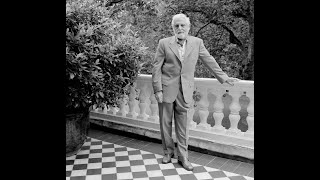
In this extensive interview, Roger Kornberg converses with Nobel‑winning chemist Carl Djerassi, tracing his journey from a Viennese‑Bulgarian childhood through wartime emigration, a patchwork American education, and early work at Ciba where he co‑discovered one of the first antihistamines. Djerassi recounts his graduate research on steroid chemistry at the University of Wisconsin, his pivotal move to Syntex in Mexico City, and the rapid synthesis of cortisone and the first oral contraceptive. He describes the creation of the Syntex Institute of Molecular Biology, his subsequent academic appointments at Wayne State and Stanford, and the building of a world‑class chemistry department. The conversation shifts to Djerassi’s critique of the modern pharmaceutical industry’s shift from scientist‑run to business‑run models, the rise of biotech firms, and his own entrepreneurial ventures—Zoëcon (insect‑growth‑regulator products), Synvar/SYVA (diagnostics and later topical steroids), and the eventual sale to larger corporations. Djerassi reflects on the centrality of chemistry to modern science, the need for interdisciplinary training, and cultural differences between European and American education. He also discusses his parallel career as a playwright and novelist, the outsider status he feels in both chemistry and the literary world, and his desire to communicate scientific ideas to the public. The interview ends with a personal note on his age and well‑wishes.
Chapters
So today we have the privilege of interviewing Professor, also author, Carl Geraci. I am Roger Kornberg and have known Carl since childhood. I knew him as a child. I knew him as a student in his laboratory, and then I've had the privilege to know him as an adult, which I have most of all enjoyed. There are many things that I'm dying to know about Carl's life, his career, his thoughts, his opinions, his interests. I'd like to begin by asking you, Carl, Why chemistry? How did you begin? How did you conceive an interest in chemistry? How did you pursue it? What are your thoughts about that trajectory?
I think it's like so many things in my life. It was a complete coincidence. I had no interest whatsoever as a kid in chemistry. I didn't have any chemical set at home. I didn't blow up any basement. Both my parents were physicians, but in the classical European sense of treating patients. In each case, their office was in the home, so I lived, you might say, in a physician's office and was brought up. My parents divorced very early. My mother was— I was born in Vienna— Viennese. My father was Bulgarian. They met in medical school in Vienna, which at that time It was one of the greatest medical schools in the world. The Austrians still think it, maybe with justification, was the greatest around 1900.
I imagine staffed mainly by Jewish professors, most of whom were then banished.
If they didn't die before.
They didn't die before.
Yeah. But that's absolutely true. Absolutely.
And which has never been reconstructed.
So I lived there until age— 14, and essentially had no chemistry in school as yet. Although it's quite interesting because I went to the gymnasium, you know, high school, it was 4 years grammar school, 8 years gymnasium, so the first 4 years gymnasium I had Latin for the first year and things like that, math, chemistry I may have had a little bit but I don't remember. Anyway, it all had no impact on me, and I guess I assumed that I would probably go into medicine. I couldn't even think of anything else. But then, of course, the Nazis Nazi Anschluss came and we emigrated immediately. And my parents married again because my father was Bulgarian and therefore came to Vienna, married my mother so she could get a Bulgarian passport. We could leave immediately. And she went to London to wait for an American visa and I went with my father to Bulgaria and went to an American school there and learned English in Bulgaria. At what age? 40 and a half, and so on, went for 1.5 years to school in Bulgaria, in a fabulous school called the American College. But of course it was called the American College but it was a high school. But that's an important point, it has something to do with chemistry. And I then realized that getting good grades and doing well is critically important, you know, if you have to to flee a country and immigrate, came with $20. You know, with my mother. My father stayed in Bulgaria because, A, he couldn't get in— as a Bulgarian citizen, couldn't get into the United States. The Bulgarian quota was very different from the Austrian quota. But besides, there was no obvious reason to leave Bulgaria, which was really not an antisemitic country or at that time no Nazi history. And so we came here. My mother could not practice because she didn't have a license, so she worked as an assistant to a physician in upstate New York. And I arrived in December, and one of my American teachers in the American College in Sofia said, "I have a friend at NYU. Why don't you go there, and he'll give you advice where to go to school," meaning where you should do your last 2 years of high school. And so I went there. But I had my certificate. And of course I had a great advantage to the other refugees. It was in English. You know, everything was in English. They didn't have to translate from German or whatever the language was. So I went to this man in December, I still remember, just before Christmas, NYU, and told him who I was and so on. He was very nice. He said, you know, I'm sorry, but we really can't they're not taking any students right now in December. Well, I immediately realized he thought that I came from an American college where I graduated and that I wanted to go to NYU, where in fact the reason why I came there was to find out where to do my last 2 years of high school. And I didn't let on. I didn't let on. And he said, but I'll tell you, I know someone at Newark Junior College in Newark, New Jersey. Why don't you go over there? Maybe they're willing to take you for January. Semester, and I did this without letting on and went there one week later to Newark, New Jersey, and this was Philip Roth country. I can tell you right now, at that time, Newark was exactly what Philip Roth had been writing about, and it took me immediately because, you know, the gymnasium was so much, you know, so much more advanced than the high schools here, and I had first-class grades in Bulgaria at that time. It was all in English. So I never went to high school, never finished high school. I went to New York Junior College. Well, I immediately thought, you know, eventually I'll take a pre-med and I'll go into medicine. But then I also realized that I need to transfer eventually to a 4-year college, and I wrote a letter to Mrs. Roosevelt. That again shows the naivete. You know, "Dear Mrs. Roosevelt," I thought she was the Queen of America, says, "I need a room, board, and tuition scholarship. And you won't believe it, but I got an answer." I didn't get it from her, but I got it from the Institute of International Education. She sent it to them. And they wrote me a few months later, said, "Dear Mr. Girassi, you have a room, board, and tuition scholarship in Tar-Kyo College, Tar-Kyo, Missouri." T-A-R-K-I-O. Never heard of it. I barely knew where Missouri was. But of course I went there, and that was then the beginning of my sophomore year in college. And I stayed there for only one semester, and that is a college that since then went bankrupt. But it is a college where Wallace Carothers graduated, inventor of nylon. So there's an interesting chemical thing, and he's certainly their most prestigious graduate. Very small Presbyterian school. And in the summer, I visited my mother in upstate New York and passed through Kenyon College in Gambier, Ohio. And I fell in love with that college and asked them whether I could go there, and they offered me a room, board, and tuition scholarship, and I went to Kenyon. And that's where I really became a chemist. Although I think I probably became a chemist even at Newark Junior College, because the man— there was only one person, a man named Nathan Washington, who then became professor at Queens, who taught chemistry there. I had to take freshman chemistry as a pre-med, and I loved it. But then when I went to Kenyon College, it was a 2-man chemistry department. But Kenyon was a small college, but a first-class college. They had a 10-man English department, you know, that's where the Kenyon Review was published. This is where people like Robert Lowell were there. John Crowe Ransom was a chair, and Doctorow graduated from places like this. It's a marvelous tradition in English.
Did you become interested in literature at that time?
Well, I always was because I always read. I was brought up— the gymnasium instruction was really much more in the humanities.
Was that being a Kenyan influence then?
I think it did because I remember one of my favorite courses actually then was Victorian poetry. Furthermore, Kenyon at that time was a men's college full of fraternities. I didn't belong to any fraternity. And there was a small house called Douglas House, which 10 students stayed. 9 of them were English majors. And these were the fanciest of the fancy English guys who were way beyond fraternity jocks and so on. And I was sort of the token non-chemist— non-English major. In Douglas House. That may also have had something to do with it. But you know, I had this two-man chemistry department, Baze Norton and a man named Kulich, who were absolutely first class, did undergraduate research there during this one and a half year that I was there. Again, I was lucky it was during the war. I couldn't get in the Army, I was 4-F because of my injured leg. They had these expedited courses. You could go also during the summer, so I was finished before my 19th birthday— my 18th birthday. By that time, I was a chemistry major. Of course, I took chemistry, biology. I took the pre-med curriculum, but I was a chemistry major who intended to go to medical school. Couldn't, of course, afford it. Had to go to work. Look for a job in the pharmaceutical industry, most of which were in New Jersey at that time. And I remember looking at the blotters and calendars that the pharmaceutical companies sent to the physicians, because my mother worked in a physician's office. I wrote to all of them, applying as a junior chemist, and Sieber, that then became Sieber-Geigen eventually, Novartis, hired me. So I was— It was in late 1942, so I was just about 19 years old. I worked at Ciba and worked on antihistamines and worked with a senior chemist who accepted me as if I were his equal, a man named Charles Hutterer, himself a refugee from Vienna. In that year, we discovered one of the first two antihistamines, pyribenzamine. The two first antihistamines were Benadryl and pyribenzamine. So there I was, I was on the patent, on the publication. After one year, you know, I was very, very stimulated and decided I couldn't afford to go to medical school anyway, and then got a scholarship, fellowship at University of Wisconsin. I wanted to then work in steroid field. Why? Even though I was working on antihistamine. Because I read this fabulous book by Fieser, The Chemistry of Natural Products Related to Phenanthrene, which eventually, second edition, called Steroids. This was the Bible of steroids, one of the most brilliantly written monographs I've ever read. It really turned me on to steroid chemistry.
This was Louis Fieser?
Louis Fieser from Harvard. And I then looked around who did steroid research in American universities. There weren't many., and the University of Wisconsin was one, where two young assistant professors, Bill Johnson and Al Wiles, worked on total synthesis. And so I applied to them. I got this fellowship there.
So what year are we speaking of now?
We are now speaking '43. I graduated from college in '42, worked one year at Ciba, did the antihistamine work. 1943, went to graduate school at Wisconsin. They offered me a W.A.R.F., Wisconsin Alumni Research Foundation fellowship, so I didn't even have to do any teaching. I immediately went into research. I remember going to Wiles. They were both quite young, Johnson and Al Wiles. I said, well, I think I can get my PhD in 2 years, because it says that you have to do 6 semesters. "and at that time we were still doing the war, you could also do it in the summers, so that's 2 years." And he sort of smiled benignly and said, "Well, you know, you're talking about the legal aspects, but there's also PhD thesis, etc., etc." But I got it in essentially 2 years.
And what did you do during that time?
And then I worked on steroids. I worked on a very tough problem, the conversion of the partial synthesis of estrogens from androgens. So basically you would say converting testosterone into estradiol, which chemical was a very tough problem.
And you succeeded?
Well, I succeeded, and not only that, but you see, I had much more experience because I worked for 1 year as a junior chemist at Ciba. I brought chromatography to the University of Wisconsin. No one had ever chromatographed. Well, we did that at Ciba because they really used it in Switzerland. This was the time when Rüdiger and Reichstein, these people working in chromatography, column chromatography. Was really essential for that. I still remember using UV. There was no UV back at my GU in the chemistry department. There was one in chemical engineering, and they permitted me to use the one in chemical engineering only if my professor accompanied me there and stood behind me as I was doing this point-by-point UV measurements. It was, but it was, and my best friend Gilbert Stork was, who became my best friend, was a graduate student there at the same time.
Also with Johnson?
No, he worked with McIlvaine and I worked with Wilds, but I took organic chemistry courses with Bill Johnson, and of course, as you already know, Bill Johnson—
So then 17 years later, you joined Bill Johnson at Stanford, something like that.
Yeah, well, it was actually quite interesting. Bill Johnson By that time, I was at Wisconsin, and then I decided I'm going to be a chemist. I walked into chemistry with emphasis on medicinal chemistry, organic chemistry, medicinal chemistry, biological things. And I probably, even if I'd gone to medical school, I would have become the sort of physician that your father was, for instance, not treating patients, not the sort of thing that that I would have become if I'd stayed in Vienna. If the Nazis hadn't come, there's no question I would have gone to medical school in Vienna. I would have become a practicing physician. So I really walked into chemistry backwards, and of course, never regretted it without any question. But the interesting part is, you know, might as well just finish it. So then Ciba, who really appreciated me, treated me very well, they actually paid part of the fellowship at Wisconsin, immediately said, but come back after you get your PhD. And then I came back to Ciba and worked for 4 years as a senior chemist at Ciba, which was one person in the lab. And that was just then when that explosion with cortisone occurred. But Ciba did all of their cortisone research, and they did a lot, in Basel in Switzerland, not at the American branch in Summit, New Jersey. So we were not permitted to work on this., and I really wanted to work on this, and one day I got a letter from someone saying, "Would you like to come to Syntex in Mexico City?" I never even heard of that. I'd never been to Mexico.
And who wrote to you?
Was it Zaffaroni or Rosenkranz? No, no, Zaffaroni joined Syntex after I did. And Rosenkranz? It was George Rosenkranz. And, you know, I never heard of the place. It sounds like utter madness, but they said, "Come to Mexico for an interview trip." I was 26 at the time. I had already 5 years in industry, 1 before the PhD, 4 years afterwards, so I was a senior chemist with some experience. I said, "Sure, why not go to Mexico?" No, I mean as a visit. I had no intention of going there, but Rosencrantz absolutely charmed me. The idea of learning a new language, you know, and I figured I'd spend a couple of years there, but what they wanted was to try and work on synthesis of cortisone from cow's tannin. Well, that's what I wanted to do, and I could have assistance and so on, so I decided to do this. People thought I was utterly mad, utterly mad, because no one did any research at that time in Mexico. And then I stayed there for 2 years, and during those 2 years, it was perhaps the most productive years of my life, because during these 2 years, 2 years, Mark, we published about 60 papers during that time, We were the first to synthesize cortisone in competition with Woodward at Harvard and Fieser at Harvard and Tishler at Merck and the people at Oxford and ETH. And then 4 months later, did the first thing, the oral contraceptive. I mean, this was really, and this was with young Mexican chemists.
So this was new.
Was Rosenkrantz also an organic chemist? Oh, absolutely. Did he work with you? I think it was Rosenkranz. Rosenkranz got his PhD with ��użyska at the ETH in Switzerland. In other words, he knew—
And then he was in Mexico to escape from Nazi occupied—
He escaped. He was a Hungarian who escaped from— Hungarian Jew who escaped from Europe to Cuba, and it is the Mexican syntax— that's another story because a man named Russell Marker founded syntax with these people in in Mexico, and then he left a year later and they needed a replacement, and they brought the Rosenkrantz from Cuba to Mexico City, and he then brought me down there. We stayed very good friends. And Alex Zaffaroni joined a few months later.
He was also a biochemist by training, right?
He was a biochemist. Alex was a biochemist, got his PhD in Uruguay, and got his PhD at the University of Rochester, and he worked at that time on paper chromatography. And paper chromatography was really quite important for another aspect of corticosteroid research, namely at that time the other approach to corticosteroid synthesis at that time was through adrenal infusions. And for that you really wanted to analyze things with paper chromatography. So Alex Zaffaroni came there a few months later after I did to head the biochemistry department. So the three of us George Rosenkranz, Alex Safra, and I were in a way a trio, and we stayed friends now, well, since 1949, 1950. So that's 60 years, over 60 years.
Then the decision to move from Mexico City— was it Mexico City?— to Palo Alto was motivated by what?
Well, no, there was an in-between because I, of course, wanted to eventually go on to university.
You wanted to leave in any case.
Oh, I was going to leave. I left 2 years later in 1951 because as a result of these publications and everything else— You moved to Wayne State. Wayne State University. They offered me then a tenured associate professorship. By that time I was, what was I, 28. A year later promoted me to full professor. And it was— Wayne was a terrible department university in the context of physical facilities, but it was a first-class place in terms of the university was really motivated to help and really the will to spend money on physical instruments. Organic chemistry was very cheap at that time. I mean, most expensive thing was the DU It was a DU Beckman and a Baird infrared, and we had one of the first infrared. These were the only two physical instruments. Otherwise, it was basically hot plates and test tubes and Erlenmeyer flasks.
And blow your own glass and purify your own reagents.
And do your own analysis. And purify your own reagents. Do your own elemental analysis.
There were no research grants then either.
Absolutely. Well, it's actually true. I sort of remember I got money because of my contacts with industry. I got money from Merck, from Siebel and so on. I remember my budget was about $15,000 or $20,000 a year, with which I had a research group of maybe 12 people. Wow, that's a lot of money. I'm sure that was a large budget for the time. Yes. But so I was then at Wayne State University and consulted for Syntex. So I flew down every few months, consulted, and then—
When did Syntex move to Palo Alto?
Well, that came out because of me, because then I I had my knee injury, which now is— I can do it this way. I now have a completely stiff leg. You see, I could sit there like this all the time and I could have some advertisement on my sole. I was in such bad shape with my leg. At that time it was not yet fused, but I was living on 24 aspirins a day. They concluded I'd have to be in braces and so on, and then persuaded me in Detroit while I was a professor at Wayne State that I need a knee fusion. And I decided on this, and then told me that one of the greatest surgeons for knee fusion was a Mexican in Mexico City who himself had a knee fusion. And that convinced me. And so my friends at Syntex interviewed him, and then I arranged to go to Mexico, return as a vice president to Syntex, not a consultant, on leave of absence from Wayne, and have my operation, which was 6 months in a cast, so I couldn't really move. But I had my graduate students, and I used to have these monumental telephone calls with all the students. Yeah, it really worked. And then when it worked better, I came back and forth between Wayne and Mexico, but stayed there for 2 years, and I was asked, going to return to Wayne State University because my condition was we gotta get a new building. And they were willing to build a new building for me. And it was underway. And while it was underway, Bill Johnson, my former professor— Moved to Stanford. No, he didn't move to Stanford yet. He came to me. He was asked by Stanford, by Fred Terman, the legendary provost, to be the head of the search committee for a new chair in the chemistry department. He wanted to buy himself a new chemistry department, duplicate it, so to speak. And they looked for a chairman, and I still remember, and asked Bill to be the chair of the search committee, an outsider. And I still remember who, one of the persons was Gutowski, the NMR guy from Illinois, but he wanted too much money apparently and didn't come. And then they wanted,— I think it was Libya, it makes no difference— against someone they couldn't get. And then Terman turned apparently to Johnson and said, "How about you? Would you want to come to Stanford?" But at that time, Bill Johnson had visited me in Mexico because he also gave some lectures there, wanted to bring me to Wisconsin. And he said, "Look, there's this business now at Stanford. How about this?" "We go together to Stanford, and if it does not work, then you come to Wisconsin." Well, the Wisconsin thing never came up because the Stanford thing— and it worked very well because we did it— so Johnson told Terman, "He only comes if I also get a professorship." So they had to deal with me separately. It was not as a package. We both knew we'd come together, but we decided we each have our own conditions. Which of course made it much more expensive, and the condition was we had to have a new building. Before, they were squawking at paying $50,000 for a new chair, and suddenly they had to have a new building, which cost them, I still remember, $800,000. And Terman was so convinced he wanted to do this, said, "We'll do it in 2 or 3 months." He persuaded Stauffer of the Stauffer Chemical Company to give him the money, and the first building was the Stauffer Chemistry Building. But Bill and I both said we only come when the building is up, not until then. So I will officially then join Wisconsin and told Wayne regretfully I won't go back, which was unfair in a way because they treated me very well and were building a building there. But I stayed another year in Mexico and transferred my graduate students from Wayne in the meanwhile to Palo Alto, but I was not going to move. Until the building actually went up, so 1960 is when Bill Johnson and I arrived. And it was a building where I had the ground floor because of my stiff leg, and Bill had the second floor. And the following year, I decided to approach Paul Florey, again a Nobel laureate subsequently, to join. He moved down into the basement, and the next one was Henry Talbot. The following year, McConnell, Van Tamerlen, it was unbelievable. Dick Holm, who then however went back to Harvard. Became a world-class chemist. Inorganic chemist. It was really—
and Coleman from North Carolina. One of the best. Certainly they used to say when I was a graduate student in chemistry, which was some years later, they used to say it was the second best chemistry department in the world after Harvard, but I'm not sure that that would be a fair characterization.
It was competitive. But it makes no difference whether it was the best or not.
It was very good.
The point is that it became in a short space of time became a world-class department. And I think, no question because of Bill. Bill, because he was head of the department. It really showed the benefits of benevolent dictatorship as compared to anything democratic, because he basically could do this with Terman. He wanted to hire someone, he called Terman and said, you know, I'm going to try and get Flory, and I'm going to try and get Taube. There wasn't a search committee, and it wasn't a question of advertising it.
So then you moved syntax.
Syntex after you moved to Stanford? No, no, I moved to Stanford and then Syntex. I continued as consultant. Actually, I was nominally a vice president of Syntex. And then Syntex, by that time, we of course had really— during the 3 years that I didn't mention when I was vice president with my stiff leg in Mexico City, we did all the work on corticosteroids, on topical corticosteroids and anabolics and so on, and developed a whole series of new drugs. Drugs, market under our own name. And the answer was we have to establish something in the United States. And they had intended at that time to do it in New Jersey, which is where most people— and I said do it in California. And I said, look, you have some of the top universities there, you have top graduates there, and these poor people all have to go to New Jersey. If there were a pharmaceutical company to speak of on the West Coast, there was not. The only one was Cutter Labs, and this was not really a research organization, we really could do something. That's when we had only a 5-man board of directors, and Rosenkranz and Zaffaroni were 2, I was the 3rd one, then we had a lawyer and a banker. They were easily convinced to do it at Stanford. That was really why— Terman was so interested in getting me to Stanford because he wanted to get something, some chemical presence in the Stanford Industrial Park, which at that time was entirely electronics and— But now Zaffaroni moved. No, and then Alex Zaffaroni decided he would move with this and establish a branch in the United States. And Rosenkranz remained in Russia. Rosenkranz remained there. I felt really very Mexican, but in the end it was very interesting. All his 3 sons, those grandsons, came here to the United States. To California and went to graduate school.
But now then, at some point you then moved from— left Syntex and created a new company.
Zorkon, is that right? No, no, that came in between. What then happened a year later— Because one other person, another key person, was Joshua Elkington. Because it was your father and Joshua Elkington and Henry Kaplan, the three people who really were totally persuaded to say I should come to Stanford. You know, I was not convinced that Stanford was going to be necessarily the place to go to. This was not a hot chemistry department. It was a lovely place, but it was— They had no chemistry department, to speak frankly. Well, yeah, but Terman said he's going to buy himself one, and he really did this. He met all the conditions. And so then the year after that, it was really with Josh, we said, how about Syntex establishing a small place called the Institute of Molecular Biology? And we were probably the first pharmaceutical company in the United States before Roche, for instance, who then established their big place in Nutley, who really established an Institute of Molecular Biology. And I was running that with Josh Ledeburg, and then John Moffat, for instance, was brought here, and Boris Rotman, and we had that was the first instance, and then the year after that, they said, well, we'll move some syntax research here, and Alex Zafarone was going to head this, and then I became really an operating vice president of that, but still doing this as a full-time professor at Stanford, because remember at Stanford, maybe even now, you could consult one day a week. Well, that's 52 days a week, and since I'm a 7-day-a-week worker, I figured I didn't have to reduce anything at Stanford to do this. Did this for a few years until— and Alex Zaffaroni was the president of Syntex Research, and then he left to form his own company, and I took over as president of Syntex Research. But that was when Terman really encouraged me to do this and said, why don't you do this 50-50? And so that's when I decided—
So I'm appreciative, so you started at Stanford as a full-time faculty?
Oh, yes. And only later changed to the university? When Alex Zaffaroni left in 1968.
Now, just for my interest, during that period, after you arrived at Stanford and before '68 when this transition occurred, were you working on ORD, on optical rotatory dispersion?
Oh, yeah. I was working on mass spectrometry. Actually, ORD already started at Wayne State, but then of course we went full blast at Stanford and moved into circular dichroism. But it was the big new thing they did was mass spectrometry, optical rotatory dispersion, circular dichroism, and then a lot of natural products chemistry, chemistry of alkaloids, of terpenoids, of antibiotics. We were the first ones to establish the structure of a macrolide antibiotic, methimycin. Then I had a large research group. It was a lot of fun, and all the teaching I did was graduate teaching, just like Bill Johnson did, because we were brought there to really upgrade the graduate PhD program.
That was— So then when did the move from syntax to zoonchon occur?
Well, in 1968. Actually, it's funny, the number of things I did at the same time was sort of absurd because at that time we were working at Syntex on ectodysone. If you think about it, the 1930s were really the explosion in vertebrate endocrinology with all the discovery of hormones and so on. Really the explosion in insect hormones. And this was first of all ecdysone and then juvenile hormone. And we really—
Are these also steroids? Pardon me?
Are they also steroids? Ecdysone is a steroid, a molting hormone. And we immediately brought in as consultants some top people, Herbert Rohler, who was really the discoverer of the juvenile hormone from Wisconsin, and Williams, who was professor of biology at Harvard, who did work on the juvenile hormone. As consultants to Syntex and decided to do that at Syntex. And then very quickly decided we'll form a separate company, and I decided to be the— initially just did it on the side, and then decided in 1972 I'll leave Syntex and start Zoecon as a completely independent company and run it as CEO and chairman of the board. Because Sinterkamp was getting quite large and I really wanted to see whether we could do it all over again, again on the Stanford Industrial Park. And that turned out to be scientifically a wonderful thing. We were the first people to introduce a juvenile hormone in insect control. We really educated the EPA because they didn't have any experience in this, this new generation. These were insect growth regulators and not insecticides. Compounds in which you could not establish— the first product was that you couldn't establish LD50 because it was so nontoxic. This is something that was really basically a terpenoid that got biochemically degraded into carbon dioxide, acetic acid, and water, and you couldn't really establish a classical toxicology because By the time you gave gram quantities to the mice, they just came out the other end without killing them. That turned out to be very exciting research. Then we formed another company. We first called it Synvar, and again I was the chairman of the board. That was a joint venture with Syntex and Varian. That's an interesting story because one of our colleagues at Stanford Bill Little, I don't know if you knew, he was a professor of physics and he had a fantastic theory of superconductivity, quite different from the other theories where he really felt there were certain organic superconductors that did not exist.
I was aware of that because Hardin McConnell got involved.
Well, that's how we got Hardin McConnell involved. And so that was, but they had to be synthesized, they didn't exist. So he came to me as a professor in chemistry and said, "Would you be interested in working on this?" I said, "Well, A, it's not really my field, and secondly, I'm not sure, but I have an idea. Why don't we— the people who really, after all, could evaluate this would be people at Varian. So why don't we do something jointly with Syntex and Varian in this field?" I knew the people at Varian, and we had a meeting, and Alex Zaffaroni joined. And we decided to form a joint company, 50/50, called the Synvar Institute, which was put into the building where the Syntex Institute of Molecular Biology used to be, which then had moved into a bigger building. And we decided to do this again the same way, have just mostly post-doctorate fellows, but have some consultants from Stanford who would be doing lunch come there. You know, we just have our lunch breaks there every day. And then Hartmut Connel became one of them because he was interested in superconductivity, but in a very different context from the theory that Bill Little had. And so we hired a spectacular organic chemist, Ted Ullmann, from the East Coast to become the technical director of that. And Ullmann came, but he said he's only willing to work on this mad thing if we can also work on a third topic, which was his specialty, which was photochemistry. So we were starting out on photochemistry, and we were starting to work on Bill Little's approach, which in the end did not work, and then work on McConnell's free radicals, who was interested in stable free radicals. And that paid off enormously in terms of becoming a diagnostic method, actually for opiates in urine. This was during the Vietnam War, and then from one day to another, the US Army decided to use that, what we developed, that method, which was an electron spin resonance method for detecting stable free radicals for urine. And there were probably hundreds of thousands of American soldiers who were screened in Vietnam with the ESR machine that flew over from Varian and using the SYNVAR thing. So that became, and then became a very successful company very quickly. And then we discovered that SYNVAR, you know, the initials of Syntex and Varian, were the trade name of a varnish company, synthetic varnish company in Delaware who were not willing to sell us their name, so we changed it to SYVA, S-Y-V-A.
And that itself became a And Siva made Synalar, is that right? Pardon me? Synalar, the very successful topical steroid? Yeah, but that was Syntex.
That was Syntex, okay. And Siva worked in the diagnostic field, so that was a diagnostic one. By that time, I had then left Syntex altogether. And Zoicon had been sold? And Zoicon was flourishing, and then Zoicon was acquired by Occidental Petroleum, and so I then became a president of a Occidental Petroleum subsidiary, but Occidental Petroleum after a few years realized they didn't understand at all what we were doing, so they decided to sell it, but didn't know how to sell it, so they asked us to sell ourselves, and we went around shopping and eventually found Sandoz, the pharmaceutical company, who were very interested in new approaches to insect control, so we became the insect branch of Sandoz. So then I was an employee partly of Sandoz, a chairman of the board of that subsidiary, and then Sandoz became Novartis, but by that time I had left.
And where is Zoicon now?
Zoicon is a part of that— It's still functioning? Well, but not under the name Zoicon anymore. Of course, but that research direction is still in place. Well, we really developed an extremely effective material for flea collars in dogs and for cockroach control. You know, these were all then based on analogs of juvenile hormone, but making it much more powerful than a natural juvenile hormone. In other words, exactly like human birth control, except you could say birth control for insects. You know, human birth control based on the lead from progesterone, they're making an analog, a steroid. That is not progesterone anymore but has the same biological properties, orally active, that were the basis of the pill. Well, in insects, the juvenile hormone keeps insects at juvenile stage so they never mature and could not reproduce. So after one generation they, they would be gone. But it decomposed so rapidly, the terpenoids gets degraded, very biodegradable, which is wonderful from an ecological standpoint but very bad from a economic standpoint. That's where, of course, DDT and other things are so useful because they do not degrade readily. So we worked on modifications of that, of compounds that turned out to be hundreds of times more active than the natural juvenile hormone, and active for days rather than just hours. And that was good enough with certain formulations as mosquito control. Or cockroach control or flea control. In other words, these were public health nuisances rather than agricultural pests. And that was the success of Zoicam. We became the first company to get all these EPA approvals, and even though they were not sold under the Zoicam name, all the flea collars in the United States at that time—
And why not the agricultural application?
Why has that not progressed? Because from a practical standpoint, For that, it would be too expensive, because you would need—it would basically have to be sprayed. It would have to stay around long enough.
It would be too expensive. I see. What is your—looking back and forward, what is your view of the state of that kind of use of chemistry, also the future of academic chemistry? I mean, you have an unusual perspective on the history of the subject, on its relationship to industry. It seems the pharmaceutical industry is in a troubled condition today with apparently no success in developing new pharmaceuticals, where in contrast I would say with the extraordinarily creative career that you and your colleagues led in Syntex and in these other ventures.
We had it, I think we had it, Syntex was successful up to a certain stage. You know, in the end it was bought in 1992 or 1993 by another giant, but by that time Syntex— Which destroyed it.
Roche, which destroyed it.
Which destroyed it, but you see, even that is not fair. Syntex already in 1992, 1993 was not anymore the company it was before. Alex Zaffaroni had left to form his own company. I had left, you might say, to form my my own company, our own company, Zoëcham, because I think the problem with the pharmaceutical industry as such is not pharmaceutical industry that they have no ideas, that they're jerks or anything like that, which would be nonsense. But if you think about where the action now, or where was the action, let's say between late 1980s to now, it was the so-called biotech companies, the small companies, which which were flourishing all over, of which Syntex was a typical example. You could say Syntex in a way was the first biotech company. It was even the first in that its Institute of Molecular Biology was the very first one. But in terms of mode of operation, Syntex was run by scientists. It was done— the focus was on research, and you didn't spend an extraordinary amount of time on the selling practices of the pharmaceutical industry, of which I disapprove enormously, always did. I mean, the way it is done through detail men and so on, the amount of money that is being spent in selling drugs and the enormous amount of me-too research. But it is the huge size of the companies where, of course, then anymore the small interaction doesn't work, it cannot work anymore, and you pay the penalty of huge sizes, and the real innovation, that needs a small, really needs a small, I don't mean a dozen people, but not really 5,000, 10,000, 20,000 people.
So what I was saying was just because what worked in the past is what's going to work in the future.
Well, it really does, because in a way that is what do the large companies doing. It is not that they don't have ideas, but The way they operate, they really cannot foster this type of research. So what are they doing? They're buying these results from the small companies or acquiring them. So they're marketing organizations. But I really think it's the science part that is the issue. And of course it's not run by scientists anymore. That is the other really quite striking thing. The pharmaceutical companies in the past were all run by scientists. Syntex was a good example. It was really until the 1980s, and then it became business people who ran this, salespeople. And lawyers. If you look at the large companies like Merck, well, Merck, Vagelos was probably the last scientist to run it, but before that it was people like Randolph Major, Take Abbott, which was run by, by scientists. Lilly and Son, Parke-Davis, way back. In other words, the history of the American pharmaceutical companies and certainly of the big ones in Europe where scientists were running them. This is not the case anymore. It is now, because it's become entirely business-driven and science, even though it is important, plays financially and otherwise a relatively minor role.
Pfizer was run into the ground by lawyers. Zaffaroni, who ran the company. I suppose in the end you trace the fault to the boards, which are not scientists either and don't know better.
They are appointed by— Boards are appointed in the end by management, whether they like it or not.
What struck me was the board of Syntex as you described it. You, Rosenkranz, and Zaffaroni.
It was 5 people and the majority were the 3 scientists who all used—
who at one stage or another were research directors. And so, as I've understood from you, and it's clearly the case, the way people think and work hasn't changed, and so the same mechanism will be the only one that is the generator of significant new pharmaceuticals in the future.
It is now. It is now. It's a small company.
What about the state of academic chemistry?
After all, your primary career— Well, the state of academic chemistry is a curious one. On the one hand, there's no question that chemistry is the central science. Hear, hear. There's absolutely no question. Your father was not a chemist, preached that gospel 30 years ago, if not more than that. I evidently learned it very well. But there are other people, you know, if I take for instance Conrad Bloch, I'd use as an example. I often spoke to him about this because— Conrad was a chemist. That's right, but then he certainly became a biochemist. But the point is, I think you cannot become a great, a significant biologist in the context of molecular biology or neurosciences, the cutting-edge area. In other words, I'm not talking about the traditional biology without denigrating it, the standard botany and zoology. But for the type of the biology that's really the driving force now, you have to know chemistry. And it isn't just taking an organic chemistry course, I don't mean that. I mean, much of it you could say is chemistry, if you wanted.
And the fact that the properties—— pardon my nerve, but I always thought it struck me greatly that the two best physicists I know, knew and know, Francis Crick and Aaron Klug, were actually brilliant chemists, and what they practiced in their careers was chemistry.
So it's to second and to support what you've just said. But it is very interesting if I started my career all over again as a scientist. Just what would I become? I would not become a chemist. I would not be a chemistry major. We have very few chemistry majors. I'm surprised to hear you say that. We have very few chemistry majors. I would study chemistry without any question, but my focus would be what eventually became anyway, because if you think about it, pure chemistry is a discipline, but the really exciting parts of chemistry are, and that's what makes the center of science, is a connection to, on the one hand, physics, material science, biology, you name it. It is always the chemical, the collaboration between them. So the recognition of large chemistry departments like Harvard or Cornell, who even changed the title of their departments, in that case with a focus on biology, but there are other places, I don't know, let's take Northwestern. That really focuses a great deal, yes, right now, on nanotechnology and so on. But again, I feel it is— you absolutely have to do a lot of chemical research, but the intellectual driving force, the ultimate aim, is not necessarily the pure chemistry. It is that other. It's biology, material science, physics, you name which other area it is. You do chemistry.—
and you have to be first-class in chemistry. Isn't there a risk? I mean, the risk is that the chemistry becomes superficial, and there's a loss of the more difficult—
No, I don't think it becomes superficial. It's just that it's called something else. I think it is just— and the reason why I think I'm going in the direction, because I'm really quite critical of my own tribe— chemistry is a tribe— —like any other. And I'm inside of that tribe. And that chemistry has departments in many places. And Stanford is changing now, but much later than some others. It's built high walls around itself, even though it is an interdisciplinary one. And these high walls, you either had to climb over them or you had to get some tunnels through this, but the deep, instead of being wide open and just having things flowing back and forth between chemistry, biology, material science, physics, and so on here. And there are still many chemists who are being trained in the image of the pure chemist and who feel that they're really deserting their field if they become biochemists, biological chemists. Whatever next thing, immunologist, geneticist and so on, but chemical geneticist.
I'm surprised to hear you say that because that was once an indictment of chemistry departments, especially as the very first vestiges or indications of what you said began to occur. But I thought nowadays that that had passed. It's passed in some places, but it has not passed in other places. Stanford is an example where it hasn't?
Stanford is an in-between example in that we have faculty members, among the young ones I think almost all fall into the category of that new discipline. Some of the veterans, and they will remain unnamed here, in my opinion are not that at all. And I'm critical in another way, although that's probably true also of many other scientists, but because I I see more chemists here. I think not the work ethics, but the mode of operation is one which really dehumanizes you. I, who have become a writer of fiction, of plays, but of intellectual ones, find that To give you an example, among my colleagues, we have a department of 20-some people. Well, I would say maybe 3, maximum 4, have read the books that I've written, have gone to the plays that I've seen. If I, as a chemist, if I were not an emeritus now, but still the chemist in my department, I learned one of my colleagues had written a play, I would go to the premiere. If someone told me he had written a novel, I would want to read it out of curiosity, if nothing else. That curiosity, cultural curiosity, absolutely does not exist. And it does not exist out of a very simple reason. We're all workaholics, but workaholics now to an extent where— and graduate students are trained that way. If you don't show up in the evening, if you don't show up for weekends, It doesn't cut the—
But I don't think the kind of narrow intellectual horizon to which you refer is limited to chemists.
No. I don't know exactly that, but I have to tell you, as I have now decided almost out of self-defense to spend more and more time in Europe, and I sort of commute triangularly San Francisco, London, Vienna. I find there's much more reading, cultural exposure going on, certainly in Central Europe in the German-speaking areas than there is in the American, with probably the English somewhere in between. But I would say there's a striking difference, in my opinion, in terms of that type of cultural engagement. And intellectual interest or depth or what have you. But why is that? Well, it's complicated. In part, it is the nature of our high school education, still as compared to the gymnasium or the French lycée. I mean, they are just— it's just much tougher that, you know, they all have— let's say they all have calculus. But here, you're going to say every high school student has calculus? You're lucky if some of them know algebra, something like this. Any language? I mean, most of them take a year of Spanish or, you know, many high schools now don't have any German, they don't have any French. You may have actually here in this area, maybe Chinese and Spanish, and there's nothing wrong with these, but it will be trivial, 1 year or 2 years. We are monolingual. I thought my late wife was one of the most— sophisticated women I knew, the professor of English, Diane Middlebrook, but she was monolingual.
As am I. Yeah, yeah.
Much to my regret. Yeah, but I'd say here that's impossible to find among the—
But the reason for that in Europe is simple. I mean, if you're surrounded by it, I mean, if the proximity to other languages is so close.
Yeah, but you know, it isn't anymore. There used to be where the Hungarians spoke 3 languages. They don't anymore. There are many Hungarians who don't speak German anymore. Used to be that, but English, of course, at the very least, not because only— Is the second language for everybody. Not only lingua franca in science, but really in business and many other things as well. And it's taught in a very different way. If I look at a graduate in an Austrian or a German gymnasium, which I see now quite a number of students, I mean, their English is far, far superior to any Spanish or German or French or Russian or Chinese that an American student would use in that kind. Mathematics, the same thing. The amount of math they get in high school, except some very special ones, or when people take advanced training, that's not the case. I think in that case we have— It's the imperative of use. Well, that I think is part of it. But from a cultural standpoint, I'll give you an example. If I am— well, I take London and Vienna, of course, but it could be Berlin, other places. Or, you know, if you take Germany, although I don't live in Germany, but, you know, almost every small town has a theater. Because of course the government supported. Well, here, I remember last year coming to San Francisco, which supposedly is this sophisticated city, and I arrived on the 15th of December, and I am now a widower, and I want to do something myself before Christmas. I want to go to the theater. Well, between the 15th and the 20-something of December, I tried ACT, the American Conservatory Theater, The Berkeley Rep, the Magic Theater, they're all closed. They're all closed for Christmas. You can go and buy tickets in January.
And these are the 3 theaters. Or else they're playing what they do every year, The Christmas Carol. Well, they don't do that anymore.
They don't even do that anymore. Yeah. Or the ballet only does it.
Opera is closed.
And the ballet is doing The Nutcracker every year. So you could go to a symphony and symphony was sold out, but there's one symphony. Well, you know, if I'm talking about in Berlin, there are 3 opera companies. In Vienna, there are 2 or 3 of them. This is main opera plays every day, every day, Saturday, Sunday, holidays, except for July and August. In London, you know, I could go to 27 plays in one day if I wanted to at that time. So, I mean, that permeates not just so-called cultural elitists myself, but at a really considerably lower level as well. At least the opportunities are there. The opportunities are not here. I see, you know, I am now teaching a Stanford seminar, it's an undergraduate, although there are even some graduate students, called Science in Theater. Well, where we really do in a very sophisticated way analyze certain plays that deal with science in part, and not just my own but also others. And the first question I ask these students, now these are elite students in an elite university, most of them, not all of them, affluent, and said, you know, "What do you know about theater? How much have you gone to the theater?" Well, you know, I would say half of them have never been to a theater, and those that have, you know, they've been to, you know, I don't know, Hair or, you know, some—
here and there you find one, but very few. And I suppose you could say that the theater in New York is supported by tourists, so even there—
Yeah. So I am unhappy about this.
Yeah, no, but I don't know what the solution is. I mean, certainly it's a failure of the system of education, but it also connects to tradition. I mean, in Europe and in Central Europe especially, you know, I think what you're speaking of is something that has roots that go far back. I don't know how you establish them. Let me— because we have to conclude at some point, and in that regard, ask you about something else on which I think you have a very— probably a unique perspective. You've written, you created a genre of literature that draws upon your experience in life as a scientist and especially upon the, as it were, the human side and the personal interactions, the politics of science and so forth. But now you have also got a window on another human activity which is inevitably also political in nature and which has all of that that goes along, namely the literary world. What has it been like for you to penetrate and to try and become a personage in that world?
It's very tough. It's very tough. But it's tough in its— and it'll be ironic— same sense As I found it also in chemistry, because I have been successful in chemistry in terms of criteria, and I don't mean just quantity where I've overdone it, no question, but in quality that I've done some important things. I don't have to brag. I think they've had an effect on my discipline. Yet I've always in chemistry been an outsider, no question, not a self-appointed outsider, but treated as an outsider. I mentioned I'm a well-known organic chemist, and I've spoken in many places all over the world, still do. But for instance, we have so-called organic symposia, the Division of Organic Chemistry of the American Chemical Society. That is the professional section of the discipline in which I'm working. They have annual symposia. People, there are always a dozen people speaking at them. Colleagues of mine have spoken there sometimes, maybe during their lifetime, a dozen times. Well, I've been invited once, and that was in 1958, before I even came to Stanford, which I find both shocking and in some respect not only dismissive but disgusting. But it is also typical because, you know, I worked in areas of chemistry, which were in between. I worked a lot on physical methods of organic chemistry, and I've had a real impact in things like optical rotor dispersion, circular dichroism, mass spectrometry, things like this, you know, that had methodological advances. I did a lot of work on natural products chemistry, which was not fashionable in the United States, which first was physical organic chemistry and then synthetic organic chemistry. Until about 10, 20, 15 years ago. Now going to literature. I've written now 9 plays, and they've cumulatively been translated into 20 languages. Well, that's a lot for someone who only started playwriting 15 years ago. And yet, most theater people treat me totally as an outsider. They always start out in programs, announcements, "The chemist who is now coming there, but that always meant, look, they're now butting into our field. There is no review of any novel of mine which doesn't always start first referring to me as a chemist who did certain chemical things, and the underlying thing is, they are okay, so, but maybe he should have stayed in chemistry, and why does he come into our field? Why doesn't he follow our rules? Because they are in fact rules of the game. And one of these rules is under no condition, under absolutely no condition, should there be even a whiff of any didactic motive in fiction writing or in plays. But in fact, you can go back to the Greeks and there's plenty of didacticism. Horace was the first one to even say you should both be able to teach and amuse people at the same time. Well, I went into literature first into fiction and then theater, not only to satisfy myself intellectually and do something else, but because I wanted to become an intellectual smuggler. I wanted to really try and communicate with the general public about issues that deal with science that scientists themselves either don't know much about because they don't spend much time talking about the behavior and culture of their own tribal culture, or they don't have the time, take the time to really talk to the general public. "The general public can't do anything for us. We don't get any brownie points for that. In the contrary, you'll never get tenure if you're a young assistant professor and you spend your time talking to the public." Absolutely. There are senior people like Carl Sagan who learned that lesson, you know, never got elected to the National Academy because he was so popular on TV and so on in a very effective way, but it was held against him by many people. I was at a meeting of the National Academy where he was blacklisted when he would have gotten elected. Some colleagues, including a very well-known chemist, got up and said, "Why should we give him that?" He eventually did not become a member of the National Academy. I'm giving you an example of that here. I decided that the genre that I really worked in was called science in fiction, to differentiate completely from science fiction. Everything I describe is real. Is plausible and even has living scientists as minor characters under their name. I'll give you an example. Harden McConnell is in one. I bet you that Harden does not know to this day that he is in one of my novels. I'm sure not. Because I think Harden doesn't read fiction. But I'm giving you the example. I'll give you the opposite example because it's not true of everyone. In my first novel, which was very which is still in print. It's, I don't know, in its 28th or 29th print around Kantor's Dilemma. Well, it's a novel that talks about academia, about the problem in academia. I wrote it for general public, but it now, the reason why it's still living, it's used in universities and colleges for courses that we didn't use to teach. Ethics in research, sociology of science, science, technology, and, and society and things like this. Well, in it I invariably talk about women. I talk about the role of women in male-dominated disciplines. I used to teach in our feminist studies program. I feel very strongly about this. So the main character in this one is a woman gets her PhD and then she goes on an interview trip and she goes to Harvard and she goes to Caltech to interview. And I describe as she goes there and she gets interviewed by George Whitesides and by by E.J. Corey, and she goes to Caltech and gets interviewed by Harry Gray and Jack Robinson. So I mention all their names because I don't malign them. I even take a biochemist, Maxine Singer, you know, and talk about her son. Well, you know, I call him Garbler instead of Singer, but it's the same one. I have Zaffaroni in a novel. I call him Zaffanori, and Zaffaroni is a Uruguayan. My— in the novel, he's Zaffanori, a Paraguayan. But, you know, everyone knows who we're talking about in this case here. Well, to give you an example, so my character decides to accept a tenure-track position in the chemistry department at Caltech and turns it down at Harvard. Why? Because at that time when I wrote this, Harvard was very unfriendly to women and Caltech already had started to make a real effort. And I say that. I see no reason why I should hide this. This is not incidentally true anymore with Harvard, but at that time there was no woman faculty member. This was now 1990, roughly, at Harvard. Well, because it's an amusing story, so I have Harry Gray there and she goes to, eventually, to Caltech in my novel. 3 months after this book came out, and essentially no chemist ever wrote to me about the book, I get a letter from Harry Gray. Oh, I need to mention, and I have also a woman in there called Paula Curry, who is a non-scientist, because I always need some non-scientist to whom my scientists can explain the science, which of course is the general public, but I need to use that as my didactic operation. So he writes, and she's a cello player and a very attractive woman in my novel., and Harry Gray writes to me 3 months after the novel comes out, says, "Dear Carl, I've just read 'Cantor's Dilemma.' How can I meet Paula Curry?" So you see, that was to me one of the most wonderful letters because it showed he actually had read it and he focused on something attractive in there, yet he got the message also across. I'm using an example. Very clever. This happened also in some plays of mine. And the same thing with plays. I feel very strongly that one can get, one can do— well, a good example is a play called Oxygen, which I wrote with another chemist, Roald Hoffman, a very distinguished chemist, Nobel laureate from Cornell. Well, that's a play that deals with the discovery of oxygen, but also with Centennial or the Nobel Prize, and really the juggling and manipulation for Nobel Prizes.. And goes back and forth between 1777 and 2001. 2001 was the centenary of the Nobel Prize, and part of the action is in the Nobel Committee. We both know what is going on in the Nobel Committee because we both happen to be foreign members of the Swedish Academy. The one privilege you have is you can not only nominate people for Nobel Prizes, you could actually be present at the sessions.— although you cannot vote. And, well, that has been translated now into 17 languages. This year it was translated into Catalan. Well, and yet major theaters would not— they would still gently pooh-pooh it, although the BBC broadcast in the world service and, you know, other broadcasting companies. But here it's— the NPR did not do it. It's a mixed bag and it is not easy. And the trouble is that as a writer, playwright, and so on, you're subject— that's part of the game— to critiques, to professional reviewers. We don't have this in science. In the end, that cannot happen to you in science. In science, really, a paper is either good or bad, important or unimportant. And even if the referee wants to screw you, but another one won't, and even if some journal editor says no, you always find a journal to do this, you know, in some extreme important things. At a certain level, it's ultimately objective.
Yeah, ultimately, the results will make it.
And literature is another story. Nevertheless, it seems— But that is not true there, because they're relative matter anyway, and there you can really get shafted.
But if I may say, having gone— your first novel having gone through 28 printings, and with so many of your works having been published in so many languages, one can hardly count it for your career in literature anything less than a remarkable success.
Yes, it is in many respects— but not in the conventional respect of that. You know, I write long sellers. I do not write bestsellers. And you know, two people are real successful writers: Danielle Steele. I have not read anything of Danielle Steele, so it would be unfair to critique it, but, you know, but she writes romantic stuff. That's not my cup of tea. But she's aware, you know, millions of people read hers, and in my case, it would be tens of thousands of people.
And is she any better respected by the literary community than you? Maybe not. Maybe even less so. That's a different community. So let me say by way of conclusion that it's a pity we can't go on for many hours, but it's been for me both remarkably informative and an enormous pleasure, and I can only wish you on what may be the eve of or shortly after your 88th birthday? Did you say 80 or 88?
88. You are now 88.
I wish you had said 80, but it's 88, yes. So I can only wish you what a well-known Hebrew expression that I'm sure you've heard, Ad mei avei asrim, may you continue to 120.
Thank you, Carl. Well, it was a pleasure to, as you know, to do it with you.
It was a good reason to meet, to get together again.
Absolutely wonderful. Amazing, eh? What an incredible story.
More from Joshua







Scientist Stories: Hans Waterham, The value of phenotypic assays in peroxisomal disorders




Scientist Stories: Joel Zlotogora, Genetic carrier screening programs for reproductive purposes