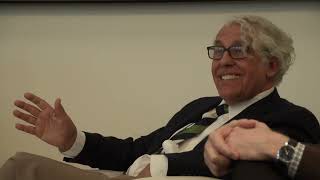
In this panel discussion, founders and key figures recount the formative years of two pioneering biotech companies—Cetus and Chiron—and their lasting impact on modern medicine and the biotech industry. The conversation highlights Cetus' landmark achievements such as the discovery and commercialization of PCR, the development of interleukin‑2 as an early immunotherapy, the multiple‑sclerosis drug Betaseron, and the agricultural spin‑offs that seeded Monsanto’s plant‑biology platform. Chiron’s contributions are detailed, including the first recombinant hepatitis B vaccine, the discovery of hepatitis C and the creation of viral‑load testing (branched‑DNA and quantitative PCR), the production of recombinant insulin in yeast via the Alpha Factor system, the wound‑healing product Regranex, and pioneering work on cloning human Factor VIII. Panelists draw lessons about the importance of scientific excellence, focused strategy, and the evolving difficulty of target discovery. The discussion also traces the explosive growth of biotech financing—from modest early raises to today’s trillion‑dollar capital market—highlighting innovative funding structures such as R&D limited partnerships, tax‑advantaged vehicles, and junior stock. The session concludes with gratitude to the early pioneers and sponsors, underscoring the need to preserve this history for future generations.
Chapters
Just a note about what these companies have accomplished individually and together. In the case of Cetus, best known for the discovery and the practical use of PCR, and Tom White played a crucial role in all that, and Tom's here to describe some of that and other aspects of the company. Interleukin-2, which had a checkered history But, you know, to this day is still one of the very few molecules which will actually cure a cancer. And now that all this interest in immunotherapy has emerged, a key molecule in the beginning of that field. Betaseron, which was developed within Cetus, and today Bud Colby reminded me it's the 20th anniversary, not specifically today, but this year, 20th anniversary of the approval of Betaseron. Hundreds of thousands of people with multiple sclerosis. Something people don't remember, but maybe you do, Steve, AgroCetus is actually the foundation of most of what is currently Monsanto's plant effort. It evolved into a number of different things but started within Cetus. And then Frank McCormick developed first at Cetus, passed through Chiron briefly, and then on to Onyx. Frank was the first, I think, to recognize the value of molecular oncology and developed the first kinase inhibitor that's widely used in the cancer field. In the case of Chiron, the development of hepatitis B vaccine was really the first recombinant vaccine, came early in the company's development. The discovery of hepatitis C, of course, transformed blood screening and diagnosis of this terrible disease. The invention of viral load testing occurred To some degree, mostly at Chiron because we were developing something called branched DNA, which was inherently quantitative in its approach, so you could actually test how much virus was present in the patient sample. But Cetus played a key role in the use of quantitative PCR later in measuring viral load. Everybody thought we were crazy to waste our money on this, but now it's, of course, a key part of every diagnostic procedure for many infectious disease. The production of insulin and yeast— about two-thirds of the world's insulin today is made using the Alpha Factor system, which was built by Pablo and his colleagues at Chiron together with a number of academic collaborators— Ira Herskowitz from UCSF, Jeremy Thorner from Berkeley, Randy Sheckman, etc., all skilled in the yeast area. Commercialized a product for wound healing called Regranex. Actually did a lot of pioneering work on Factor VIII and was, believe it or not, the first to clone any part of human Factor VIII and has now licensed several of the current producers. So in aggregate, these two companies I think have had an enormous impact on medicine, and we're here to sort of describe how those things came about.
So we had a group of people that were waiting for us to set up a company and they will join. The leadership. And we had a project, a high visibility project that wasn't done like the hepatitis B vaccine that we had to be finished. And fourth, we had a place. We were already looking for a place and we have Emeryville already. At 3 cents the square foot.
That's a true story.
I think if you kind of look back at the history of these two companies and you say what really happened here, it's the best science. Really, the story is the best science that you could possibly have. And I think that's still the message, I think, for this industry is even though we don't have the low-hanging fruit of some of the things that we worked on, it's more complicated today. But we're just still at the edge of understanding human disease. And we've got great tools now to work on PCR and a lot of other things that actually allow us to understand what's going on in human disease. And intervene. We don't know what targets necessarily to work on, so it's tougher. I think that's clearly one of the lessons for me anyway. And I think the other lesson for me is really focusing. As a small company, focus in what you do best. Don't try to do everything. I think there were times when we tried to do too many things in the Swiss days, for sure. And applying it to the Onyx, we adopted a vision there to say, We're going to just basically change the way cancer is treated. That was our vision. And we did nothing other than that. And so we felt like we were always the best at that. And that was sort of, I think, a lesson that came out of where we had been in the CETA states, where we were trying to do a lot of things, or maybe too many things, that didn't differentiate ourselves.
Yeah. 1953, Watson and Crick got at the structure of DNA. It was roughly 20 years later, the early '70s, that these companies got started. It was another 20 years, early '90s, that the industry that we then created became profitable. And now we're 20 years later, 60 years from Watson and Crick. There are now over 10,000 biotech companies in the world today. We have hundreds of products that are in the market today as a result of what we all did in building this industry a long time ago. Interestingly enough, we crossed the $1 trillion mark this year in terms of capital that we raised in this industry. That capital we raised to finance the dreams and hopes of guys just like this. It's absolutely amazing. Today, we are still raising capital. We, the industry, raised some $70 billion last year. We were raising a million at a time a long time ago. We created along the way an enormous array of financing tools. We created R&D limited partnerships and we created some fancy accounting and tax maneuvers. We created junior stock. The industry was as creative in its ability to attract capital as it was in its ability to move science. And so on behalf of all of us, we want to thank these pioneers for what they did and what they continue to do to build this incredible industry. So, Ed, for your inspired leadership of the panel, and Frank and Hollings and Bill and Pablo and Tom, thank you very much for doing this. I also want to just quickly thank the promotional partners for this. We had some support from BayBio, from UCSF, from QB3, obviously from Ed and Hollings and Bill. We have a tremendous amount that we want to thank all these. It's a good story. It needs to be told. And we're just honored that we could in part reflect on it tonight. So thank you very much for coming. We have a reception, I think, in the back of the room. And continue to support the activities of these individuals and the foundation that's trying to make sure we've recorded the history accurately. Thank you very much.