Founder Stories: Clay Siegall, Co-Founder and CEO of Seattle Genetics
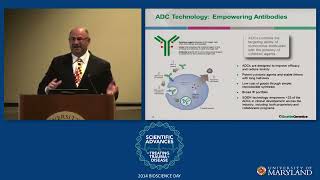
In this extensive interview, Clay Siegall, co‑founder and CEO of Seattle Genetics (now Seagen), recounts the origins and growth of the company, the scientific rationale behind antibody‑drug conjugates (ADCs), and the development of its flagship product ADCETRIS (brentuximab vedotin). He explains the early challenges of raising capital, the decision to spin out from Bristol‑Myers Squibb, and the milestones that led to the 2001 IPO and subsequent financing rounds. Siegall details the chemistry of ADCs—linker design, payload selection, and target selection (e.g., CD30, CD19, CD33)—and how failures such as SGN‑15 informed later successes. He describes clinical data that earned FDA approval based on Phase 2 results, the commercial partnership with Takeda, and the global launch strategy. The conversation moves to the current pipeline (over 30 trials, multiple indications, and next‑generation site‑specific conjugates), collaborations with major pharma, and financial health (revenues, cash, market cap). Siegall shares lessons on data‑driven decision‑making, the importance of addressing unmet medical needs, payer dynamics, and the need for continual innovation. He also answers audience questions about regulatory pathways, front‑line versus relapsed use, tumor heterogeneity, delivery to hypoxic regions, and blood‑brain‑barrier considerations. The talk concludes with personal reflections on patient impact, philanthropy, and the future vision of fearless, target‑driven drug development.
Chapters
Thanks to everyone for being here, and thanks for the invitation to come back to my home state and tell you a little bit about me and my concept of treating cancer and the company that I have built. So let me start with telling you a little bit about Seattle Genetics. The, the concept of Seattle Genetics is really to make a difference in the life of cancer patients. And we use antibody-based therapies. And I'll explain all about this during my talk and give you a concept of what we are doing. Now, we are the leaders in the world for something called antibody drug conjugates, and we have a product— our first product is called ADCETRIS, and that was approved initially by the FDA in 2011. It's now available in 47 countries, including 11 in the last year. The most recent country was Brazil. And we expect another probably 8 to 10 more countries that will get approved— will approve this drug. We have a very big pipeline, and I'll share with you a little bit about our pipeline. I'll mainly talk about Etcetris and how we made Etcetris. The pipeline is addressing many different types of cancer— solid tumors, leukemias, lymphomas— solid tumors including breast cancer, kidney cancer, colon cancer, bladder cancer. And the company, as Bill said, was founded in 1998, and we're located just north of Seattle in a suburb of Seattle called Bothell. And we are publicly traded on the NASDAQ market and have about 650 employees, but that should rise pretty dramatically over the next year. Now, cancer therapy really started decades ago with cytotoxic therapies. These are cytotoxic or cell-killing therapies. It's traditional when you hear someone say, "Oh, that person got chemotherapy," that's what they're talking about. And these are very potent poisons, and they really kill any cell they come into contact with that is dividing. And cancer cells divide, but so do a lot of normal cells. So there's a lot of side effects that you've seen with cancer patients. Now, the kinds of cells that divide that are important are bone marrow cells. That's an example of a type. And so you try to kill the cancer in the patient with chemotherapy, and you kill as many cells as you can, but you don't want to kill the patient, so you have to back off. And then the cancer cells also come up with a mechanism of resistance, so these chemotherapies start— stop working. So it does help some patients, but not all patients. Then there was a technology which Michael Potter participated in discovering for NIH, where I did an internship, and it's called monoclonal antibodies. And these are proteins, they're targeted, they're very well tolerated, they're targeted to cell surface structures that could be on normal cells or cancer cells, but you could define those. And they're, they're really great in finding cancer cells, but most of the time monoclonal antibodies don't kill cancer cells very well. They can decorate cancer cells, but they can't kill them. A few of them can kill them on their own, but the vast majority don't. So we reason putting together a cytotoxic therapy on the vehicle, on an antibody, and making an antibody-drug conjugate could make an effective drug. You have the vehicle of the antibody finding the cancer cell, and then you have a cytotoxic agent to be potent and kill the cancer cell. So monoclonal antibodies were first discovered in the '70s, and the Nobel Prize was awarded to Kohler and Milstein in '76. And then there was genetically engineered forms to allow them to be given to humans over and over and over without rejecting them. And then the first antibody for cancer called Rituxan, and it came from a company, largely from a company called Genentech, which is part of Roche.. And that was the first approved antibody for cancer, and that was 1997. Today, antibodies are one of the most fastest-growing segments of the pharmaceutical industry. In 2013, there was $62 billion of antibodies sold. This year, they expect $71 billion. And if you look only a few years from now, the expectation is for more than $100 billion in sales of antibodies. And I put this up not to show you about the money, but pharmaceutical drugs are not prescribed and are not used and sales don't go up unless these drugs really work and help patients. So starting— I was starting— I was asked to tell you a little bit about myself. I was introduced, so you've heard this. I went to University of Maryland undergrad, George Washington for a PhD in genetics. I did postdoctoral training at the National Cancer Institute. Cancer Institute at the NIH in Bethesda. And I started working on targeted therapy for cancer. And then a number of years after, I joined Bristol-Myers Squibb, first in Connecticut. Now, Bristol-Myers Squibb was a great company to work for. And they really entered the antibody field in the late '80s, but had a lot of trouble with making decisions of putting them into place and getting them to work. 'Cause they were hard. It was really ahead of its time. We didn't know how to manufacture them. We didn't know the right targets. Bristol asked me to move to Seattle. They had bought a biotech company out there called Oncogen and they renamed it Bristol-Myers Squibb Seattle and asked me to move out there and bring my entire team from Connecticut, which I did in 1992. And then by 1997, Bristol-Myers Squibb grew— they grew tired of all the money they were putting in, the hundreds of millions of dollars into antibody therapies. Interestingly, now Bristol-Myers Squibb, many years later, is now back in monoclonal antibodies and very big in monoclonal antibodies. But they made this decision in late 1997, and sometimes you're thrown a curveball in life and something happens that you weren't expecting. And I loved working for Bristol-Myers Squibb, but all of a sudden they weren't going to be working on what I wanted to do and what I believed in and I had passion for. So the choices were to stay with Bristol-Myers, who asked me to move back to the East Coast where I came from, this time actually to Princeton, to their headquarters, and with a great job there. But I decided instead to start a company to follow my passion and my dreams. So instead of looking at Bristol-Myers Group closing the Seattle facility as a bad thing. I looked at it as an opportunity and co-founded Seattle Genetics in January 1998 and worked with my co-founder for a few years before he went on to do some other things that he was more interested in. So what do you need when you start to say, you know, I want to build a biotech company? It's a little daunting. What do you need? Well, you need lab space. It's extremely expensive. You need a pipeline of products. So you have to start thinking about whether you want to discover them or in-license them or both. You need to recruit talent all around you. You need to build labs that are really state-of-the-art, or you can't get scientists to want to work in them. You need to understand all of the clinical and regulatory work that's required by the FDA to even attempt to treat patients, because there's a lot of regulation. You need to make sure that investors are aware of what you're doing. And oncologists know the drugs you're doing and want to test them. You also have, once you start raising capital, a board of directors. So a lot of people have one boss, but I have 8 bosses. We have 9 people on the board of directors. I'm one, but the other 8 are my bosses. And they know it and call me 24/7 whenever they want. I have to answer. And you have to raise capital often because building cancer drugs is a very cost-intensive business. So raising capital comes from a lot of different areas. One, private investors and Wall Street. And you can raise capital from them, but it dilutes shareholders. So every time you raise capital, it dilutes the other shareholders and they're not happy. You can make products and then partner them with big pharmaceutical companies that can provide you capital and pay for the development, but you're now giving up a lot of your product and you only own a piece of the product by selling off a product to company. And you could also develop technology, which we did separately from our products. We're largely a product-based company to make products for cancer, but we also developed and discovered a lot of technology that other people want licenses to. So that can give you a non-dilutive approach to raising capital. Now, just starting with financings, the first financing I ever did was in April 1998 for Seattle Genetics. And that was $7 million. Now I started about 9 months before. And with venture capitalists or VCs, you need a lot of capital to do a biotech company. So it's really hard just to go to your own bank account unless you have many, many millions of dollars. And so it took 9 months to tell people, hi, I've never made a company before. This is me, this is what I do, and I want you to write checks to me and I might blow the money and you might get nothing for it. So it's hard to do that. So it took 9 months to raise $7 million, and so from a number of very good venture capital companies. And then about a year and a half later, we had started to really get things rolling and get things, get things moving along. So it only took 3 months this time to raise $30.5 million from venture capitalists led by Bank of America Ventures. And we had competing term sheets for who would be in the lead position. So now it's a little bit easier to raise capital. We also got money from Cascade, which was Bill Gates' personal investment company, and Vulcan, which is Paul Allen's personal investment company. They're the co-founders of Microsoft and very prominent in the Seattle area. They didn't lead the transaction, but they put money into the transaction. And then I took the company public in 2001. Now, in '98 and '99, the stock market was hot, the dot-com era. It was rolling, a lot of IPOs. But by 2000, it really started to close. And in 2001, and this is before 9/11, the stock market was really shut down. And we were the only biotech company to go public. And it was a tough time to go public. We went to 91 meetings and 17 cities over 3 weeks. JP Morgan led the financing from the banking side, and we raised $51 million. And we were publicly traded on NASDAQ. The reason to go public is access to capital. It's not to look at your stock ticker in the paper every day or on the internet. It's to raise capital and have access to future capital to build. Now, this is a list of all the financings we've done at Seattle Genetics in our history. There's a couple things you'll notice here. One is we were doing it almost every year or every other year just to sustain the company because we were spending money, not making any. So we did one in 2003, 2004, 2006, 2008, 2009, 2011, and then you don't see one since 2011. It's been, oh, it's been about 3 and 3/4 years since we raised a nickel because we have strong revenues now. So we don't need to raise money from Wall Street. In fact, we have more cash now than we've ever had because we do have revenues. But you can also see that generally, not perfectly, it was always raising capital at a higher share price. The last time we raised capital was at $15.50 a share. Today we closed at about $36.50 a share, roughly. So everyone that I ever sold stock to, as far as a transaction like this, the stock price is higher than where it is. So I feel good about that. Now, ADC technology— I told you a little bit about antibody drug conjugates. These are antibodies that are empowered, and linking a drug onto an antibody sounds simple. Take out some super glue, attach a potent drug to an antibody, and let her go. It's not that simple. The linker that you attach the drug to the antibody has to have two properties, and those two properties have opposing forces.. You want to have a small drug, tiny dot, onto a big antibody, which is a big glob. It's a big protein macromolecule, and the very potent cytotoxic agent's tiny. It has to attach, and it has to be stable in the bloodstream. Now, the opposing force is once it gets inside a cancer cell, it has to be released because it's not active if it's not released. So you have to have something that's stable and labile at the same time. And what we did is we developed a broad IP, or intellectual property, portfolio of how to make linkers that have these opposing properties. And we came up with one that uses an enzyme called cathepsin. And the enzyme is stable in the bloodstream, but inside of tumor cells, in the lysosome, it allows cleavage through its substrate to release the drug. So it's more like an on-off switch at the right place inside the cell. Now very early, before we developed this cathepsin cleavable linker and were able to make second-generation ADCs and products that really worked well in people, we had an early-generation ADC we called SGN-15. This is a project we probably put about $50 million investment to and it failed. But we learned a lot, and I would encourage all the students here that if you do something and you fail at it in science, which happens all the time, if you don't learn anything from it, then that was a failure. But if you do something and you learn why it didn't work and fix it, then it's not a failure, it's a step— it's a step along the way. And we made a drug conjugate called SGN-15. We put it in clinical trials for breast cancer and colon cancer. And preclinically it worked really well, but we needed a very high dose to make it work— way too high for a human being. And we went into humans and we tried dose escalation. We couldn't get there. So it was ineffective. It was just— wasn't— it had weak activity in clinical trials, and we halted development in 2003. But we learned what we needed, that we needed a better linker, and we developed that. So we also needed a different potent toxin to attach to the antibodies. And we looked at hundreds and hundreds of different toxic drugs around the world, and we found one called oristatin. And we made a derivative called monomethyl oristatin E, MMAE. Now, oristatin was originally purified from the Indian Ocean sea hare called Dolabella auricularia, and auricularia is where the name or where statin came from. And so it was a natural product, and then a synthetic form was made, because while I would love to have a business with trawlers in the Indian Ocean picking up little mollusks, that's not a really good business to be in for a scientist. Instead, we have a synthetic product that you could have a building in New Jersey making as much material as you want rather than going to the Indian Ocean. So we have a synthetic drug, and we tested lots of linkers and we ended up with a linker that was fantastic, which I explained, that is cleaved by enzymes. We decided to target a number of targets on cancers. The first one I'll tell you about is CD30. CD30 is expressed on virtually all Hodgkin lymphoma cells. It targets the defining cells of Hodgkin lymphoma called a Reed-Sternberg cell. It also targets the malignant cells in various T-cell lymphomas such as anaplastic large cell lymphoma. It binds to almost no normal tissue. So what you have here is a target that is expressed preferentially on tumors but not on normal cells. So it's a real opportunity to say, "Can we use that as a delivery system for something potent to knock out the tumors and not kill the normal cells?" Now, our molecule we made, We called it SGN-35. And as you can see, the numbers start going up. We're making— we've made quite a lot of molecules and failed with a number of molecules. And SGN-35 used this protease or cathepsin cleavable site to release the drug. And here's a picture that's actually completely backwards. The antibody, which is the Y over on the left, is a massive molecule, and the rest of this is a piece of chemistry which is tiny from a, from a size. But just to blow it up and see what it looks like, our linker and our attachment site is really where the business is done. That's where the drug is cleaved and released. Without that, this wouldn't work. So we took this new molecule with brand new drug linker system and we put it into a mouse that had a Hodgkin lymphoma or HL xenograft on its back. So we put it artificially, we put a tumor on the back of a mouse and said, does this work? And we did it at 1 milligram per kilogram and 2 milligrams per kilogram. You could see at 2 milligrams per kilogram in the red triangles, the tumors were completely regressed in the mice. And we said, okay, this could be something interesting. And you have to make sure things are safe and you can scale them. So this is only one step along the way. And then we did a Phase 1 clinical trial in patients. And the results of the Phase I trial were so spectacular that we were able to publish it in the New England Journal of Medicine. And this drug, SGN-35, or the generic name brentuximab vedotin, really was able to do a number on Hodgkin lymphoma in patients. Now, the pictures here are scans of a patient, a 37-year-old man who was riddled with Hodgkin lymphoma., and you can see them on the left, the scan, and then on the right. Now, the two spots on the right that you could see that are dark is really where the contrast stain goes, and that's, um, in the heart and the bladder. That's what you normally would see with the contrast stain. But you can see all the speckles on the left side, as well as the tumor right below the shoulder, and it's complete remission and gone. And so this patient did extremely well. Now we treated over 100 patients, and this is what's called a waterfall plot. It's how you plot— each line is an individual patient. And this was in the New England Journal of Medicine paper. We treated patients, and 94% of these patients— and what we were getting were Hodgkin lymphoma patients that had been given every possible drug known to mankind already. So we got the late-stage patients, the ones that had failed everything. The hardest to treat. And we have a waterfall plot that is amazing, and this is the kind you want with any new experimental drug. Now, what I want to show you here is how we had to learn on this drug from a predecessor drug. Not only was the drug conjugate technology developed on a different drug, but we had started— if you look on the right, SGN-30, that was the naked antibody. We had this antibody by itself. We knew it bound to tumors. And a number of years before, we took this naked antibody and we put this into patients—SGN30—at up to 12 milligrams per kilogram weekly. Notice the dose versus the dose of the drug conjugate of 1.8 milligrams per kilogram. Because costs in patients and what you want to charge people is also measured in cost of goods, because if something's very expensive to make, you have to charge even more money for it. So with the naked antibody that targets CD30, we treated 35 patients and we had no objective responses. None. We had some stable disease. There was some activity there. To get an objective response, you need to get rid of at least 50% of the tumor. That's called a partial response. And up to 90— and when you're over 99% of the tumor, that's called a complete response. So we got some 30 and 40% regressions of tumors. But nothing over 50% to get an objective partial response. So we knew we had a good target. We knew it was safe— delivering this antibody was safe. It didn't hurt patients. So we took the same SGN30 antibody, we empowered it with our technology we developed, and you could see a 73% objective response rate in 102 patients at a relatively low dose. And giving the drug only every third week, patients could come in to get the drug— and it was 30-minute infusion, outpatient therapy, and they didn't get sick. And these are patients that usually would come in, and they were used to chemotherapy that they got that failed. They'd come in, they'd get chemotherapy weekly. They'd get so sick, they would throw up, they would lose a lot of weight, they couldn't eat, they would go to bed, they couldn't work. And they would just go home, and it would be difficult. And by the end of the week, when they first started to feel better, you had to do the cycle again. It's really hard with chemotherapy. We were able to make something that was targeted, that patients came in as outpatient therapy. You weren't in there for 5 to 6 hours in the oncologist's office getting chemotherapy and having a crash cart nearby. You had outpatient therapy. It was 30 minutes. We had some of our first patients would come in, and this one woman would come into her major city. She lived in the suburbs. And she came into a major city and the doctor told us the story how she'd come in initially with her husband to drive her because she was used to her chemotherapy and the chemotherapy, she couldn't drive home. So she came in with her husband the first time. Second time she came in by herself, drove herself in, came and got it, but told her husband that she had to be there all day and spent the whole day in the spa and shopping because she lived out in the suburbs. She called it her spa day. When she came to get treatment. This is a second disease. This is anaplastic large cell lymphoma, which simply is a T-cell lymphoma. We treated patients, and 97% of patients had tumor reduction. So it was even better than Hodgkin lymphoma. So what happened is we took these data and a plethora of data of hundreds and hundreds of patients we treated, and we brought it to the FDA And the FDA approved ADCETRIS. We now have a fancy name. ADCETRIS starts with ADC, which is antibody drug conjugate. And what I had done was we hired a company to help us with a name, because you have to be careful with naming pharmaceuticals that it doesn't mean something bad in a different language. And there have been examples where people have a name, they launch it globally, and they have to pull the name and change it because in some other language it denotes something that's not pleasant. So we hired a company called Brand Institute to say, can you test names? And I wanted the drug to start with ADC because it's an antibody drug conjugate. And I said, I don't care what other letters you put there, make them sound nice. So Adcetris, it sounds like dessert. And, and nobody in the world seems to not like the name, so that's good. Now, uh, we've treated more than 15,000 patients, and I really don't know, we could be over 20,000 now. Because we treat it globally. And we decided to keep the drug and launch it ourselves as Seattle Genetics. We had never launched a product before in the United States and Canada and build a commercial team. And then we decided to partner it with Takeda, a very large global company. Over 200 years that company's been existing. It's based in Tokyo, but it's global. And they would launch it in the other countries, of course, with our participation. Right now, we have a very broad program. We have more than 30 clinical trials with Etcetris to try to broaden its use out in many other indications. Now, the timetable to make a drug— this doesn't even show the cost, but we started operations at the beginning of '98, and without going through all of this, you could see that we didn't even start clinical trials until November of 2006. With Etcetris, which we called initially SGN-35. So November 2006. So we had 8 years of spending money, building scientific lab, getting doctors hired before we started this specific drug. We had started with other drugs that had failed. And then we did a number of trials, and we did Phase 1 and Phase 2. Now normally you have to do Phase 1, 2, and 3 to get approval. But in Phase 2, the data were so special that the FDA approved us based on Phase 2. And, and so that happens sometimes. The FDA has an awesome task to protect us from bad medicines and to provide approval to good medicines. And most of the drugs the FDA gets to look at are incremental and toxic, and it's hard. How do you know how the FDA make a decision on, well, here's a drug that helps a few patients here and there and it's really toxic? Hard to know what to do.. But when the FDA sees a drug that has special activity— and I can give you many examples— the FDA moves quickly, even though they're accused of moving slowly. They're only being accused of moving slowly when they have difficult decisions, but when the decision is obvious, they move quickly. So our launch of ADCETRIS has been strong on a worldwide basis. This year, uh, we're going to approach close to $400 million in global sales. In the US and Canada, where my salespeople sell this, we just reported the last quarter almost $50 million in sales just in the US and Canada. We're now selling the drug a little bit more globally than in the US and Canada, and that's a very good sign. Our partner, Takeda, has the right through contractual right to sell to about 7 billion people globally.. And we sell in the US and Canada to 350 million people. So if they can't sell more to 7 billion people than we can sell to 350 million people, that's bad. And there's a lot of cancer drugs that are not very good cancer drugs where the sales in the US are actually bigger than global because of the pharmaco-economic pressures globally. If the drug is not very good, it won't sell globally even if it sells in the US. And so drugs, the best cancer drugs in the world, always sell more outside the US than they do in the US. Um, one more comment. In the 3 years we've been approved, we have not been turned down by one reimbursement group globally. When a patient has disease, once the drug was approved, once it's called on-label— before it's approved is a different story, but once it's been approved in a country, US or wherever, no country has ever said no to a patient after approval of this drug, which does happen with certain drugs that don't have demonstrated benefit. I put these pictures up just to show you one perspective. There's a guy named Ethan Zahn. I don't know if any of you know Ethan. So one day I was in my office and my head of public relations comes and says, Clay, Clay, you have to hear this. We saved Ethan's— Ethan Zahn's life. And I said, wow, that's fantastic. Who's Ethan Zahn? And He evidently won Survivor year 2 or 3, and so a lot of people knew him. And he has a TV— he had a TV show, or still does maybe, uh, and he became a personality. And he had Hodgkin lymphoma, and he was treated, and it initially worked, but then it failed. And he had another treatment, and it worked and then failed. And then he had a bone marrow transplant, and it worked and then failed.— and he was in a bad way. And he got treated with ADCETRIS, went into complete remission. It's been a couple years now, and he has been clean of cancer. I've met him now a couple times. He's a wonderful guy. Now, what's the key to commercial success for an oncology product? You need to bring products that have real value to people. If they're incremental products and nobody wants them, no one will care about the product. You have to address unmet medical needs. You also have to have, in this era of payer pushbacks, you have to have a payer value proposition. The payers are the insurance companies, countries, depending on how medicine is run. And you have to have— you have to make it so patient outcomes are easy to predict. What we have here is a drug that works in the majority of patients, and we could tell if a patient's going to respond because they have the target, CD30. Payers or countries who are paying for medicine like that. They don't like when you say my drug works in 15% of cancer patients, but you got to use it in all of them. They view that as an 85% failure rate. You also have to have good programs. We started something called CGEN Secure, and this is a patient assistant program because in the United States, for instance, there's copay, and copay for a cancer drug could be $5,000., and the insurance company pays the rest, but a lot of people don't have the money for copay. So we started a program to provide patients with assistance to get the drug because our goal was that whether you could afford it or not, we wanted every patient that needed Etcetris in the United States and Canada, which were our territories, and I know Takeda was doing the same thing internationally, to get the drug. So we shouldn't have anybody based on financial need not getting the drug. So like I said, we had a global collaboration with Takeda. They have done a fantastic job in the rest of the world. We've been hand in hand with them going through with regulatory approvals around the globe. And they paid us a fair amount of money up front. So to get the rights to do this, they wrote us a check for $60 million. Then as they get approvals, they pay us more money. Up to about $230 million more in milestone payments. And then they give us royalties that are depending on sales. They start in the mid-teens and they go up into the mid-20s in percentage of royalties. So it was a very financially good deal for us and actually really good for them too. They get to put a lot of money into it and, and get sales. So going forward with Etcetera, we're approved only in a few indications.— and that's what I have in green there on the green bar on the left. But as you can see, there's many other types of areas where we're interested in. And I'll just highlight one or two. The tallest bar is frontline Hodgkin lymphoma and frontline MTCL, or mature T-cell lymphoma. So just talking about Hodgkin lymphoma in frontline, the standard of care globally for Hodgkin lymphoma— if any of you know someone or were diagnosed with Hodgkin lymphoma, About 9,500 patients annually in the United States get it, about the same amount in the European Union, 27-member countries. And so globally, you have about— I'd say it's almost 40,000 people globally that get Hodgkin lymphoma diagnosed each year. The standard of care is called ABVD. It's 4 letters, and it's adriamycin, bleomycin, vinblastine, decarbazine— 4 very toxic cytotoxic cell-killing drugs that are not targeted. And you combine these 4 and you get the patients extraordinarily sick, but it works pretty well. It's really, really toxic but works pretty well. So our goal was to say, let's make Hodgkin lymphoma therapy better in frontline and safer. You know, going back to this, you may say, well, you already got approval for Hodgkin lymphoma. Our approval was only for relapsed Hodgkin lymphoma. So our goal is to get approval and redefine frontline Hodgkin lymphoma for the next 40 years, like ABVD defined it for the last 40 years. Now, we have used ADCETRIS as a single agent in many different disease settings, and we've used it in combination with chemotherapy in other disease settings. And as you can see from this chart here, our overall response rate and our complete response rate, or CR, are extraordinary in some of the different disease types. So we really have a very active drug that helps patients. We're in 4 Phase 3 programs. One of them was unblinded only a few months ago after 5 years of trials from 2009 to 2014 and about $35 million, we unblinded a trial we called AETHERA, and our data was— hit our primary endpoint. Primary endpoint was progression-free survival, which was agreed upon with the FDA, and we had a p-value that was very low. The statistics showed it was really strongly powered to hit its primary endpoint, and we are going to be presenting this in about 2 weeks at the American Society of Hematology, or ASH conference, for its first public display of data. So we, we had to put out a press release because this is material to the company with the top-line data saying it works, but the actual data will be presented in about 2 weeks at a medical conference. And then right now we're taking the data, we've requested meetings with the FDA, and we're going to be talking to them about a supplemental label. It's called a supplemental BLA, or biologic license application, to add to our existing approval.. So when you have a drug that's approved, you can add additional uses to it, and that's really important. And that's what we're doing with ADCETRIS through all sorts of trials, over 30 trials. We expect that ADCETRIS will get approved in many more indications and earlier lines of patients, including frontline, in relapsed patients, as well in maintenance, in consolidation. And we expect that ADCETRIS will probably become a global brand selling somewhere between $1 and $3 billion a year when we're done with all the development of it. But it takes a lot of work and a lot of money to get there. Now, our pipeline also has 7 different clinical stage programs, and they range to different diseases with different names. 2 of them are in collaboration with Astellas, which is a big pharmaceutical company, and that's why it's ASG. And A is for Astellas and SG is for Seattle Genetics. But the other ones are just Seattle Genetics products. One that I'm very excited about— or I'll tell you about two, actually. The first one targets CD19, and that's on certain leukemias and some B-cell lymphomas, so a little different than what ADCETRIS targets. And the other one I'll tell you about targets CD33 for the worst leukemia there is. It's called acute myeloid leukemia. Where survival has been— is measured often in terms of months, not years. So our CD19 drug for B-cell non-Hodgkin lymphoma and leukemia, it's active. It's a very active product. You could look at the Phase 1 waterfall plot. Now, in Phase 1, you're doing dose escalation at different doses. You start at very low dose, you go higher, higher, higher. And this is a plot of basically all the patients. So some of the dose— some of the patients are probably underdosed, but you don't know. You have to learn the safety profile first. So this is a Phase 1 plot. What I showed you earlier with Etcetris or STN35 was Phase 2 plots of only the active dose we wanted to use, the most active dose. So this is actually a very strong plot from a Phase 1 trial. So this drug that we're probably going to break to Phase 2 sometime in the next year. The second drug is targeting AML, acute myeloid leukemia. You get diagnosed with AML and you're in the vast majority of cases, 95% of patients, you don't live very long. It's one of the most devastating cancer types. I would say the two most devastating cancer types are pancreatic cancer and acute myeloid leukemia.. And there's really— the therapies for AML are scant. You just don't find— they're measured— there was a drug approved for AML by the FDA because it had a 6-week survival advantage. So instead of dying in 4 months, you died in 5.5 months. So that's just not good. It's not acceptable. And we need to stand up to that challenge. So we developed a new generation. And one of the things I like about this drug is I told you we started with a first-generation ADC technology, and the first-generation ADC technology failed. So we made a new linker. So now, then we made a second-generation technology which was in Etcetera, and that one worked. And we have been— if you want to be a leader in anything in the world, you have to continue innovating because other people around you will out-innovate you if you sit still. So we like our technology that's in Etcetris, but we've spent years to develop a third-generation technology to continue leading the field. And we developed it, and we have now site-specific conjugation, and we re-engineered the antibody. We have uniform drug loading because Etcetris does not have uniform drug loading. We've increased the stability. We have a new drug we attached that's called a pyrrolobenzodiazepine dimer, or PBD. It's 200 to 300 times more potent than what we have in Adcetris, monomethyl orstatin E. It's not sensitive to the standard multidrug resistance pathways, so it's really got everything. So it's like we built a new car with all the gadgets on it. It took us about 5 years, about $25 million to just redo the technology. It was a very good investment. So we've now put it into clinical trials.. And for the first time, after about a year and a half treating patients, we're going to be presenting the data at the American Society for Hematology conference in San Francisco in about 2 weeks. And the abstracts from the conference are now out, and we have— in about 47% of patients, we could completely clear the leukemia blasts. That's what leukemia cells are called, they're called blast cells. And we could clear in almost half the patients At 40 micrograms per kilogram— that's an error there— at 40 micrograms per kilogram, we can almost completely get rid of, in half the patients, the tumor blasts from the bone marrow. Now, we're still dose escalating. We haven't hit our maximum dose. But that's an impressive number. So I'm really excited with our chance to treat AML patients. Now, like I said earlier, we do partnerships with other companies. A lot of companies have come to us and said, we like your ADC technology. Can we license your technology and pay you for that onto our own antibodies? And so we've done that. We've generated more than $300 million in payments to date, upfront payments and milestone payments. We have the potential for over $4.5 billion in milestone payments based on success that these other companies are doing with our drugs. And then we also get royalties.. And some of the companies that we've done work with are Bayer Pharmaceutical, the big German company, uh, Daiichi Sankyo, uh, from Japan, GSK, which is a British company. We have a number of U.S. companies like Pfizer and AbbVie. AbbVie used to be Abbott Pharmaceuticals. They split into two arms, and AbbVie, or Abbott for Life, V is life, is their new pharmaceutical name. So we're very excited to work with these other companies and allow them to use our technology. And this is a chart of what some of the drugs that other companies are putting in clinical trials. These are not my drugs. I own a piece of these drugs. They pay the drugs and they pay me for my company for the technology. And you could see that a number of companies— Genentech alone, which is a division of Roche, has 7 drugs in clinical trials now at different phases. So we're real excited with the work that our partners are doing. Now the company is in Seattle Genetics is in a strong financial position. The last quarter we had a little over $75 million in revenues that annualizes to about $300 million. And the revenues come from ADCETR sales, collaboration revenues, and royalties. The company has $340, roughly, million in the bank, and we have no debt, which is really clean and enables us not to have to go to Wall Street and beg investors for more money. Now, this is a chart from inception to where we are. When you started in '98, you could see in the green line, we call that market cap or market capitalization. That's what we were worth as a company. So we start the company, we're worth zero. And over time, we've added value and added value, but you'd see a real inflection point in 2003. And then you see another one in about 2008. And right now the company's worth about $4.5 billion. And so, and the blue bars, the up and down bars, you could see that's when we raised money. You could see where the IPO was in 2001, and that's where we raised money. You could see at the end, like I said before, the last 3 years we haven't raised a nickel. And we make money now. We have revenues now. Now, this is all of the biotech companies that make therapies, all of it. And whether it's cancer or cardiovascular or diabetes, it doesn't matter. This is all the companies that are publicly traded that exist out there. And a lot of companies used to be on this list, but they got sold. And that's what happens in this. There's a lot of— in this business, there's a lot of consolidation. So there, um, we're the 18th largest biotech company now by market value. We're at— we're the top one in the $1 to $5 billion category at $4.5 billion in market cap. But you could see the names here, and some of you may recognize some of the names. They're, they're big names. This is biotechnology of the world. Now, our headcount growth is now 650 people, and we're adding 100 people this year. So we're continuing to grow a lot. I don't know everybody's name, but somehow they know my name. They all walk up to me in the hallways, "Hi, Clay." And I'm like, "Hi." You know, I, I wish I knew— when we were 20, 30 people, I knew everybody. When we were 50 people, I started to get a little fuzzy on a few. When we were 100, there's no way. I'm sure the professors here know every student in Maryland, right? This is our internal product pipeline. It's very robust. We're excited and proud with it. We're helping cancer patients. Now, I wanted to tell you a little bit before I finish just on the challenges of drug development. To develop a drug takes 8 to 12 years cycle, but as a public company, Wall Street values you once a quarter, and every quarter you have to report. And so there's a disconnect there— 8 to 12 years, and every quarter you have to tell Wall Street what you're doing. So it is hard, and it's a really hard thing.. And you need to have long-term vision. You can't just follow what Wall Street's telling you— go make money now, sell everything off, do what you can. You have to actually give Wall Street some short-term catalyst to be happy, but also you have to keep your long-term catalyst for yourself. You have to have a balanced portfolio because— a diverse portfolio— because a lot of things fail. And you need to embrace change. Medicine is constantly changing, and I don't care what business you may be into, But everything changes all the time. The only thing that stays the same is change. And payers push back harder on drugs. Drugs need to be more and more effective now for our payers to pay them. Now, the lessons I've learned along the way is that the best science that you could do results in great products. There's no substitute for the best science. You could try shortcuts and you could try things, but at the end of the day, they don't win. Best science does. Make your decision-making by data. People lie, data doesn't lie. Data is data. You look at it and you make your decisions. And you can't— don't be afraid to close the program that's not working. You make something that's not working, take something you learn from it and build and move on. You need teamwork, collaboration, because to develop drugs or any business you want to do takes a ton of people.. And as you get bigger, it's easy to sit back and relax and say, oh, I've accomplished this or that. No, no, no. You have to stay flexible, passionate, driven. You have to continue to build on your success. Our goal at Seattle Genetics is really to make a difference in the life of cancer patients. And we're very excited to be harnessing the power of our ADC technology to do this across different tumor types. What really drives us is patients. Each of these pictures are people that we've treated. I have many of these. I get so many pictures sent to me with letters and notes thanking me for stuff. I get grandparents sending me notes about their kids with Hodgkin lymphoma that are 14 years old that have no evidence of disease, thanking them for— thanking me for their children's or their grandchildren's lives. It's really very touching. I put up One card I got from a young girl in her teens, Stephanie Loaiza. She was interesting because she lives in Argentina, and in Argentina they haven't approved the drug. And she had relapsed Hodgkin lymphoma, and she was— the doctors thought she was going to live about 8 to 10 months. And I don't remember how old, I think she was about 16 years old or so. And so her family had enough money And her family came up and brought her to relatives that were in the Colorado area. And she was treated at Rocky Mountain Cancer Center by a physician that I know well. And, but they had no insurance in the United States and no way to pay for this drug. And so we get asked all the time for free drug, but in, and you have to be careful with providing it. And there's a lot of legalities to it and regulations, but we were able to provide to provide free drug for this young girl, and she went into complete remission. It's been a couple years now, and she wrote me a very lovely letter. So I wanted to finish up with saying that your fearless idea could be next. I will run around the campus and Fearless is everywhere, in every sign. And I'm very proud to participate in the future success of this school. Initially, I participated in an important way in the William J. Higgins Distinguished Scholar Teacher Professorship. Recruitment is underway. I was going to say to replace Bill, but there's no replacing Bill. Just as an alternative to Bill. He's a one of a kind. And so I was very proud when Andrea Morris asked me to participate in this twice, I think. And initially it was, well, can you donate to this fund? And I was like, of course. And then it was a number of months later, she goes, we're so close to the end, could you finish the fund? And I'm like, how close? It wasn't that close. But fortunately, in honor of Bill, who is a fantastic professor in person, I was delighted to participate. And so today I would like to announce that in addition to that, I am going to start a Clay B. Siegel Scholarship for Life Sciences.. And I will cover— I've been working on this with Angie— we'll cover for an outstanding undergraduate student that also has demonstrated financial need, and we'll cover full tuition, room and board, books, fees for 4 years. So it's for their whole education. And we're going to work— I'm going to work with the Dean's Office to identify an incoming freshman for next year that has the passion to work in or be in biomedical sciences and help people. Hi, Dylan. My question is, if, you know, the drug has— the data has shown to be so effective, then how come it's only being approved— for relapse cases, I mean, wouldn't it make sense where, you know, people would rather try your drug before they try drugs that are highly toxic to them? Yeah, it makes a lot of sense. But the way the rules and regulations are is you could get approved where you test it. So initially when we started, when we developed this drug, we didn't know if it worked at all. We knew preclinically it looked good. So we tested it in patients where you had— they had tried everything else but failed. And that's very standard in the cancer world. So you test it in patients because you want to give conventional therapy that you know has some activity of working in when you're first diagnosed. You don't want to get first diagnosed and go into the doctor's office and they said, here's some experimental drug, we have no idea if it works. So you start in the worst patients, the ones that have failed, and then you get— you prove it there, and then it has more— it's more morally feasible to test it in frontline patients. So we have now, like in Hodgkin lymphoma, we have a trial running right now in 1,040 patients. Which was sized to that number by statisticians, with two arms. One is the standard of care that's been around for almost 40 years, and the other is a, a regimen with Etcetris. And so it's 520 patients and 520 patients, and it takes years to accrue the patients and then to follow the patients. So we're about 4.5 years into a 7-year, $75 million trial to change frontline Hodgkin lymphoma. And we're doing that with other diseases as well. But you have to prove it. So it's a great question. Now, once your drug is approved, you get what's called off-label sales. It's where you're not approved. And so there are doctors that are using our drug that buy the drug or get a reimbursor to fund it without approval. And if a drug is good and it's a good cancer drug, that happens.. Now, we can't— my salespeople cannot promote to that. It's illegal. You can't go around and trying to sell off-label use. But it's a reality that it can happen. Once a drug is approved in some area, doctors can write prescriptions on it and somehow get the money from somewhere to buy drugs. Congratulations. Quite a story. Okay. The question I have for you is, when you started out, the first round you're going around pitches doing it for the first round of a money raise. What was the vision you sold? Was this the vision, or— I'm just curious. Yeah, you know, it's, it's a good question. Um, our vision and the first business plan that I wrote was to make targeted therapy for cancer patients, so that were empowered antibodies. And I had 3 different technologies at that time, uh, and one of them was antibody drug conjugates, one was antibody protein toxins, and one was antibody enzymes. And I knew I wanted to make empowered antibodies. So from the first business plan till now, we've had the same vision. And so many companies start out with a vision, raise money, then change to change their vision and change their vision. And that happens with companies, sometimes successfully, sometimes not. I think the best companies are the ones that start out with a vision and stick to their vision. Clay, is there any thought that this technology might go into antibiotics? You know, antibiotics is an area that I'm not an expert in, you know, antibiotics and infection. I don't know if targeting the cell surface— what we do is you could target the outside of the cell or the inside, and that's the way to target cells to make it blunt. And I think with antibiotics, you might need to target the inside of the cell.. So I just don't know if this technology would work for infection. But we are going outside of cancer now, and we have our first trials. We have 3 trials now in autoimmune disease, which I didn't mention at all, but we're now expanding. And now I have hired not just oncologists, but I have rheumatologists who are autoimmune disease specialists on staff.
And we're going after diseases like scleroderma and inflammatory bowel disease and other things like that. Yeah.
Hi, I don't know if I missed it, but why did you choose Hodgkin's lymphoma to start with instead of other kinds of cancer? Well, we actually chose quite a few types of cancers. Our very first drug went into breast cancer and it failed. I now have a new drug in breast cancer that we started only a few months ago that I'm very excited about. So we're in cancer and we had different drugs and the first one that actually made a big made a difference in people's lives was one that targeted CD30 in Hodgkin lymphoma and T-cell lymphoma. So sometimes your first drug is not necessarily— you know, my dream has not just been I want to make a drug for Hodgkin lymphoma. It's— I want to, you know, my passion is I want to make new drugs for cancer.
And so that's why right now we have a very big pipeline across different types of cancers. Yes. Thank you very much for sharing very inspiring successful story. My question is about tumor heterogeneity. How do you address it, meaning that different types of cells express different target which cannot be targeted with only one antibodies?
And second question, actually, how would you deliver drugs or antibody-linked drugs to non-perfused hypoxic or necrotic areas in tumors. Okay, I think there was a couple questions there. Don't run away because I, I don't know if I got all of it. One first question you asked was about immunogenicity.
No, heterogeneity of the tumor, meaning— got it now, the heterogeneity.
Okay, and that was the heterogeneity. And the second question was about delivering treatment to non-perfused hypoxic areas. Okay, I got it. So, um, tumors largely are heterogeneous. So you have a mass of a tumor. In some tumors, they're homogeneous and almost every cell looks alike. But in most tumors, that's not the case. So in most tumors, you have a mixed bag of cells. And in Hodgkin lymphoma, certainly that's the case. In Hodgkin lymphoma, only about 8% of the mass of the tumor has what's called Reed-Sternberg cells, and those have CD30. But what happens is when you target and kill cells in a mass, a tumor nodule, if you will, and you target and you can really affect the structure of the tumor itself, and then you start to get necrosis. Sometimes you're targeting the cells that are the driver cells, and they're the most important ones that keep that tumor growing. And then also with an antibody drug conjugate, we get something called bystander activity.. And where we're releasing this small molecule, we have a big antibody to bind to the cell, it gets in, and we're releasing a small tiny cytotoxic inside the cell. That's so small that it can leak out. Now you don't get much of it in the bloodstream, it's only in the local tumor microenvironment. You could get some of the cytotoxic cells, and we've shown that there's bystander activity for cells that are close by. So if you could get it to a tumor It's like, you know, you drop a bomb on something, you're not killing only what's there, you could hit the area around it. And so our drug, if you could get it there, you could hit the cells around it. And the second thing you asked about was necrotic cells that are hypoxic and how can you treat those. And it depends on the drug, the chemotype that you're bringing in. Some kill only dividing cells, but other ones can affect cells that are not actively dividing.
And I'm not sure if that addresses your question.
Actually, it was about the areas, the 4 areas which are not perfused, so there are no blood vessels, no way to deliver, actually. Right. But the areas, generally the areas where they're not blood vessels and they're necrotic, a lot of times you can tell. You could do a regular CAT scan and then a PET scan. The CAT scan will show you the region of a tumor. The PET scan shows you what's metabolizing or what's living. And so the contrast between the two can tell you, because you can have a ghost of a tumor and you can see this cell or this, this ghost of a tumor nodule. But then if you look at a PET scan, which shows you what's living and dead, you can know if you've actually treated it. But usually the necrotic cells are not the ones that are causing the problems.
It's the actively metabolizing cells that are causing the problems. Yes. So for one of the last slides that you showed, you had listed a number of different drugs and the phases of testing that they were at. I noticed for some of them it listed more than one cancer type. So currently, the— these drugs, are they being developed on like one drug for one like cancer type. Yeah, that slide.
Yeah, so are they being developed as like one drug for one type of cancer, or are you looking into ones that could target more than one cell type? Yeah, the answer— that's a good question, thank you. The answer is both. We, we make drugs to targets. We don't make drugs to cancer. Some companies decide, "We're going to work on lung cancer," and that's what they work on. But we're a target-driven company. So we define targets that we think are preferentially expressed on cancer or cancers versus normal tissue, and then we try to make drugs to target the receptor, if you will, that we're targeting. And so that's what we do, and because of that, So some of our targets go after one disease and some of our targets can go after a couple of diseases. Thanks for noticing that.
Yeah.
Hi, beautiful talk. I'm just wondering if your drug is neuroinvasive, meaning it can cross the blood-brain barrier? Because that seems like it would open up a number of more targets for you. Yeah. So it's kind of interesting you talk about the blood-brain barrier. Most times drugs, you put them in, if you have a brain tumor, it's hard to get the drug to the brain because there's a blood-brain barrier. And so if you— but if you have brain cancer, you're often treated with chemotherapy and radiation. And what that does is it damages the blood-brain barrier and you can actually get in. Or you could use a sugar like mannitol and you put mannitol in the bloodstream and it opens the blood-brain barrier for around 30 minutes and then it shuts it. So it kind of fools it. So if you want to get a drug into the brain to treat brain cancer, you can open it temporarily and close that. And treat through the carotid artery. So, you know, treating brain cancer is something that's important. And actually, in talking to doctors, they worry about brain metastasis. So like if you have lung cancer, you know, a surgeon will say, well, I could cut out the lung tumor, but if you're already too late and the tumor has broken off, got in the bloodstream, got through the blood-brain barrier and lodged into the brain, you can't treat them. And so a lot of times patients that have lung cancer die because they have a tumor in their brain and not because of the primary site. So that's something that we think about a lot of how we could go after tumors in the brain. And I lost my father when I was 24 years old to brain cancer. Thank you.
More from Joshua







Scientist Stories: Hans Waterham, The value of phenotypic assays in peroxisomal disorders




Scientist Stories: Joel Zlotogora, Genetic carrier screening programs for reproductive purposes