Founder Stories: Dan Lynch, GV and ImClone leading one of the best turnarounds in biotech history
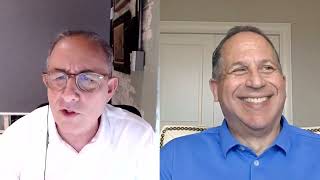
Dan Lynch, a biotech veteran who led ImClone's Erbitux launch, explains why he chooses companies based on patient impact, not returns. He stresses that biotech is a team sport and warns first-time CEOs against neglecting culture and people for science. His core advice: talk less, listen more, and stay humble.
Chapters
So Dan, thanks so much for taking some time to talk today. As you know, everybody at GV is just so absolutely thrilled that you've decided to join us and join the life science team at GV as actually our first executive venture partner. And as most people don't know, but you and I know, we've known each other longer than we're probably willing to admit. Most people don't know that you and I overlapped at college, although we didn't really know each other. We were in different parts. But we really started working together, I think, when we were on the founding board of Blueprint Medicine about almost 10 years ago. And it's just been so exciting to partner with you all these years. But there are a lot of people who will be watching this who don't know your background. And so maybe we can start with telling us a little bit about yourself.
My career, just to give a bit of it in a snapshot, I spent the first 15 years of my career at Bristol Myers Squibb. Actually, I joined Bristol Myers even pre-Squibb merger, just to now truly show my age. And that's really where I learned the business. I was in the finance function, but I was exposed to pretty much every aspect of the pharmaceutical business supporting commercial R&D, tech ops, etc. After 15 years at Bristol, I went and spent 5 years at ImClone Systems, which is a company that came up with an important drug, Erbitux, which originally was approved for colorectal cancer. And I would say over the last 12 or 13 years, I've been involved with upwards of 15 or 16 different companies in the biotech ecosystem, mostly as executive chairman of the board. And that's really an area that I've enjoyed quite a bit, which is not only helping the companies grow and succeed and get important drugs to patients, but also working oftentimes with first-time CEOs. And that's a bit of a snapshot on my background and career.
You're being very modest, obviously, because the impact you've made on patients around the world through not only your time at BMS and ImClone, but through all these companies has been extraordinary. And we'll come back and we'll talk about that, but very modest there. So, You know, as we've talked about in this new role at Life Science team as an executive venture partner, we're going to keep you really busy. I don't know if you knew that, but we will. And, you know, some of the things that we're excited for you to do is really to really help our GV portfolio companies be as successful as they can be, helping their CEOs as a coach, as a mentor, as an advisor. Helping identify new investments, participating in all those investment decisions that we make, and importantly, mentoring our team, which, as you know, is growing. And we have a lot of young team members who could benefit from your experience. So you're going to be busy. There's no question about it. But I think it's fair to say, and again, you're too modest to say it, that in the biotech community, certainly in the Boston community, You've been sort of the most sought-after executive chair of biotech startups out there. You've been on a lot of them. I think you've been on 11 or 12 boards at least. You and I have been on 2 boards where you've been chair or executive chair, and I've watched you in action. And so everybody wants you to chair their board, which is amazing. I'm curious on how you pick those companies. Now, you could say it's just because you picked the two that I was on as well, and I'll take that. But there must be other reasons. So are there common themes that have attracted you to these companies? Because I think that would be useful, particularly for first-time CEOs and founders who may be listening to this, who want to attract someone like you to be their executive chair.
Yeah, I would say there are several components. The overarching driver for me is to make as big and as broad an impact on patients as possible. And that doesn't translate to just the number of patients, it's the impact per patient. So you and I, while we're on the board together at Bluebird, really focused on a very rare disease, ALD, which afflicts young boys. And the progress that was made at Bluebird to impact the lives of these boys and their families was just incredible. And that to me is the most amazing feeling. And so there are plenty of companies that are terrific companies that probably generate great returns but may not have the kind of broad impact on patients. And to me, that's the starting point. Um, and if I don't see the potential for that, generally I'm not going to get as excited about it.
I, I know from my personal experience with you on the two boards that we've been on together you create just an incredible environment for the board to come together as a team. And I wonder whether that has something to do with the fact that you played a team sport in college. And I've always thought that what's special about our industry is that it is a team sport. Is that the way you see it as well?
Yeah, it's so important, David. There are so many bright, talented people in our industry, but it truly takes a village. And it goes back to the culture that I referenced a couple of minutes ago, surrounding yourself with like-minded people who realize that as smart as they are, as talented, as experienced as they are, they simply can't do it alone. And that to me is the fun part, is to accomplish great things, but to do it with a team. And, you know, the board is a team. Senior management is a team. All employees comprise a team. I felt it was really important to your point about, you know, boards and bringing them together as a team, that the culture that the CEO and the company have get ported over and are shared by the board. And I think it's really important. A lot of, I think, boards and board members really view their role as just providing input, being an individual contributor. But the trickiest situations that companies face are when the board and the management team need to really work hand in hand together to figure out how to deal with challenges, how to set strategy. And if you haven't developed a team feeling across the board and allow the board to mesh with management, that becomes very difficult to accomplish. And so you're right. You know, I played a couple of team sports in college, and to be honest, at the time, I didn't realize how important it was, the lessons that I learned there. It was only after that I reflected on those lessons that it really dawned on me that whenever you have a success on a sports team, it rarely has to do with one individual. It's how the team comes together. And it's no different for a biotech company. So those lessons, I reflect and think back on that quite often, in fact.
Yeah, I know it's really interesting. When I interview people for positions, I ask them if they play sports, and if they play sports, did they ever participate in a team sport, and how did it feel? And if I don't get a warm fuzzy answer there, I get a little anxious. So, Dan, I know this from our work together, and you mentioned it already, how passionate you are about working in companies that are going to make a big impact on patients. But you and I have also talked about changes that need to happen in our industry. And I know you've already mentioned equity, diversity, and inclusion. And I'm just curious on your thoughts about what kind of changes you think we need to make and why do you want to focus on that?
A lot of why we're here, frankly, is probably a function of a lot of unconscious bias. And because I've observed this and because I've been in a position as chair of the board, I've been able to really focus on it and really drive it as an important agenda item, not just at the board level, but a lot of the coaching and mentoring of first-time CEOs is to focus squarely on this topic. I'm a true believer that not only is it the right thing to do, but if you do it well, you will have a better company. You'll have diversity of thinking. You'll have viewpoints that, you know, you wouldn't have otherwise considered. I think all of those components make for a better company. And, you know, we've seen over the last 2 to 3 years quite a bit of social injustice. I think that's awakened a lot of us, and I think it's incumbent on us to do the right thing and try and make a real difference in our industry. And it's not easy to do, but I believe, you know, as long as we keep on focusing on it, we can and will make strides.
I'm sure, and I know this is a fact, that in your experience being an executive chair, you've had some challenges every once in a while with either founders or CEOs or boards. Not to name names, but any themes that stand out as the most difficult thing you need to do in that role as executive chair?
Yeah, it's a tricky role. A lot of times, a founder, particularly a first-time CEO, they've experienced a lot of success to get to that point. And oftentimes their view is that they can figure it out. It goes back to it takes a village. And a lot of people that I've observed don't really understand that. And you can try to tell them, but in my experience, what I've found is they need to, they really need to learn that on their own by observing the importance of having other people around them. You know, one of the common themes that I've seen is that people get very focused on the science. And of course, in our industry, the science is paramount. But where I've often made mistakes, and unfortunately I seem to make this mistake over and over again, is where the focus is solely on the science. And so I've actually tried to train myself not to make the mistake yet again, but I've come up with a new motto, which is the science is necessary but not sufficient. And what is required in addition to great science, and I'm not suggesting that's unimportant, it's critically important, but I mean, you know this well, David, if you look at the history of Ageos, some of the original science and programs were not the ones that really made it to the finish line. Companies succeed because of people. And it's a hard lesson to just tell somebody. They have to experience it firsthand. And so one of the challenges I've had over the years is when founders, particularly scientific founders who take a lot of pride in their science, think, gee, I've made this discovery, that's the hard part. It's an easy road from here on out. Well, I've never seen the easy road yet. I'm still waiting for it to happen. There is no easy road. There is no straight line. And this is such an important learning. And if you've heard the adage, I'd rather have the A-team with the B science versus, you know, the B team with the A science. I think there's a lot of validity to that, but it's difficult. And, you know, you don't want to preach to a founder or a first-time CEO. You really want to help them learn that lesson so that, you know, they and their companies don't suffer down the road.
You know, many times if you're the executive chair, the founder may be there, but you're bringing in a first-time CEO or bringing in additional founders. And there are some that have done better than others in your experience. And I'm curious, is there a common trait among the quote-unquote great founders or great CEOs? Or common traits on the ones that don't do so well?
Yeah, it's a great question. I actually went back and looked at the number of CEOs with whom I've worked over the last dozen or so years, and I think I'm approaching statistical significance here in answering your question. And I do view you, David, as the poster child to answer your question. And one of the traits that I've observed, and this one trait actually does, I think, separate the exceptional from the great, and that is the ability to remain humble. Even after having significant success. I think it's human nature for most people to be challenged to maintain that level of humility. It's something I've always admired about you. And the reason why I think that's so important is that that trait is a trait that really attracts people to you. To a CEO or founder, whether it's an employee or a board member or an investor or a KOL. It's a very important trait to have. I would say another common theme that I've observed, particularly in first-time CEOs, is that most CEOs grow up within a particular function. Whether it's clinical or medical or research or business. And all of a sudden, as CEO, you're now responsible for all functions. And what I've observed is that some first-time CEOs feel the need to almost overnight become expert in all of those other functions where they didn't grow up. And obviously, that's pretty hard to do. And so the concept of a CEO as a conductor and really finding the best talent, creating the best culture, and providing a runway to allow people to do their jobs and not micromanage is really, I think, a key to success as a CEO, particularly a first-time CEO. And it's hard because many CEOs want to dive in and be part of every decision. And there's nothing that demoralizes one of your team members is if you get into the weeds too much as the CEO. The implication is that you don't trust that individual to manage and make key decisions within their function. Say the other thing that I've observed is that some of the key attributes that I think make great CEOs frankly have little to do with functional expertise. And they have to do with creating a great culture, being a great communicator and motivator, strategist. These are traits that folks, in my view, don't really focus on sufficiently. Historically, I've seen people look to hire first-time CEOs where the focus is, if not solely, primarily on their functional background and experience, which isn't to suggest it's unimportant, But if that's the sole or primary focus, by definition, you're not paying enough attention to some of these other attributes, which I think are really what make great CEOs and founders. And so in my role as exec chair, I've tried to share some of those learnings over the years and try and help CEOs who have a tendency to fall into some of these traps. And to me, that's a lot of the fun, is to work with first-time CEOs and help them in this regard. And I get a lot of satisfaction out of seeing CEOs develop and being a small part of that development. And selfishly, the development of these first-time CEOs and founders ultimately help achieve the principal goal, which is to get great drugs to patients.
I'm curious, particularly in the current environment where there's a lot of capital out there, any advice that you would give founders who are starting a new company or raising money for the first time, how they should think about raising money in the current environment? Any tips to, or pitfalls to watch out for?
Yeah, it's a great question, David. And you're right, it's amazing to me the amount of capital that's out there that wants to be put to work in our field, which I guess in one sense shouldn't be surprising with interest rates where they are. The increase in allocation to healthcare and biotech in particular has gone up dramatically. And so there are new sources of capital. And so one of the CEOs with whom I work at one of the companies over the past dozen years, first-time CEO, indicated to me that, you know, as long as they get X amount of capital, it really It doesn't matter who the investors are. And that was at the beginning of our working together. By the end of our time together, I asked the CEO, do you still feel that way? And the answer was absolutely not. Yes, all the money is green, but the difference between certain investors I think is really important. And part of it is perception. There are a lot of well-known investors out there that once they participate, you have a bit of a cachet and others take note. But at the core, the real question is how much do these investors add value beyond providing capital? And it's not the same across all investors. And so I would tell people, don't focus on your investors just based upon the amount of capital that they're putting in today or they can put in down the road. It's, do they fit from a cultural standpoint? Do they add value that's going to help you and the company be successful? And again, I think that's a lens that very few people historically have taken. And, you know, I advise a lot of people who are in the fundraising mode, and that's probably the single biggest comment I'll make. And, you know, a lot of times if you haven't had the opportunity to work with a particular investor, I'm sure there are people within your network who have, and I would spend a lot of time doing diligence and referencing what's it like to have, you know, Investor X come into your company, serve as a board member or observer. You know, the culture and the fit becomes critically important. And, you know, over the years as I've helped evolve many boards, that's been a key focus of mine. And that's the area that I would say, you know, most founders and first-time CEOs should focus on.
Yeah, I couldn't agree more. And from my own personal experience, and I'm completely aligned with that. So, Dan, you've been on the side of giving advice for so many years. I've been on the receiving end of some of your amazing advice. It's been important to me in my career choices that I've made. Anything that stands out in your mind, the best advice that you've ever received? And feel free to share who it was from.
Yeah, I had a mentor back when I was at Bristol, when I was still relatively early in my career. This was the CFO at the time. And again, I was in the finance function and I was working closely with him for a couple of years. And I think he saw some potential and he wanted to mentor me. And I'll never forget, he took me into his office and he said, look, I think you're very talented. I think you have a lot of potential, but here's something I think you need to do. Talk less and listen more. And I hear that, you know, there are a lot of times where I'm about to dive in and make a comment, and in the back of my mind I hear that it's not about the quantity of your comments, it's about the quality and the timing of those comments. And the other piece of advice that I've received goes back to something we talked about earlier, which is this is a very challenging industry. We all know the odds are very low. And so when you're fortunate enough to have some success, you have to recognize that that's not guaranteed in the future. And you have to stay grounded and humble in this industry. And that's the other piece of advice that I've gotten over the years. I'd like to think that I've heeded some of that advice, but, you know, I do on occasion have to remind myself on both fronts, you know, just stay humble, stay grounded, and just sit back and listen. Sometimes you can have a lot more impact by listening than talking. I'd say those are the two pieces that I've reflected on over the years.
I love the talk less, listen more. That also became an important line in Hamilton. So it's been well used. So listen, Dan, I really appreciate you taking time to chat today. And as I started with, you know, and everybody at GV is just unbelievably thrilled to welcome you into GV. And we know the impact you're going to make within GV and with all the companies that we will have the good fortune to work with is going to be tremendous. And that will flow to an impact on patients around the globe. So thank you. For joining us.
Thank you.
More from Joshua







Scientist Stories: Hans Waterham, The value of phenotypic assays in peroxisomal disorders




Scientist Stories: Joel Zlotogora, Genetic carrier screening programs for reproductive purposes