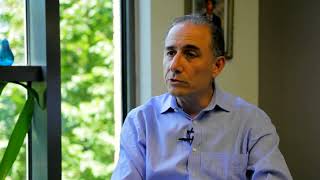
In this segment, David Schenkein, CEO of Agios Pharmaceuticals, outlines the company’s core scientific premise: targeting cellular metabolism to develop novel therapies for both cancer and rare genetic metabolic diseases. He explains how cancer cells consume and process nutrients differently from normal cells, creating an exploitable “Achilles heel” that can be selectively targeted without harming healthy tissue. For rare metabolic disorders, Agios has created a platform to develop small‑molecule pills that correct single‑enzyme defects, restoring normal metabolic function in affected children. Schenkein then shifts to organizational culture, emphasizing patient‑first decision making, high‑quality science, and a collaborative, non‑hierarchical workforce that spans functional lines. He stresses hiring exceptional talent capable of cross‑disciplinary work. Finally, he articulates Agios’s broader vision: to deliver transformative medicines that profoundly improve patients’ lives, to impact families and society, and to become a leading, future‑oriented biopharmaceutical company built on innovative science and culture.
Chapters
So at ADIOS, our approach is how to develop novel therapies both for cancer and rare genetic diseases based on metabolism. Metabolism is your cell's ability, every cell in your body, to take in nutrients and break those nutrients down. And what we know is that cancer cells do that very differently than normal cells. Cancer cells take in hundreds of times more nutrients than a normal cell and break them down in a very fundamentally different way than normal cells. We can exploit that to find the Achilles heel, that point within the cancer cell that we can cripple the cancer cell and not touch a normal cell. In the rare genetic diseases of metabolism, these are children who are born with a single defect in a normal metabolic enzyme that allows and prevents that child from converting one metabolite to another. We've created the technology that will allow us to develop a pill that will correct that metabolic defect, restore the metabolism in those cells, the ability of that child's cells to take in nutrients and break them down, that we think could have a transformative effect on those children. When we think about innovation, one of the things that I think a lot about, and we think here a lot about, is culture. How do we build a culture within the organization where people can do really extraordinary things? And one of those things is to make sure you're focusing on the right things. And so we make sure that all of our decisions are based on what's good for a patient and how good is the quality of the science. And then of course, one of the most important things as you're building a great company is the people. What kind of people do you hire? Really hiring superb people in their technical area, but also people who have the capacity to work across lines. We don't believe in silos, we don't believe in hierarchy, we believe in creating a group of individuals who are inspired to really do something special. You know, one of the things we think about at Agios when we think about what kind of impact can Agios have on not only our field but on the world in general. We look at the impact that we could potentially make on patients' lives, and we look at the ability to create cancer medicines that are truly transformative or transform the way children with rare genetic diseases are treated. And by doing so, we can have an amazing impact not only on patients but their families and society in general. On top of that, Agios is looking to become one of the next great biopharmaceutical companies of the future, really building that next wave that has taken an entirely novel approach to not only the way it creates medicines, but the way it builds a company, and hopefully be one of the great companies for the future.