Founder Stories: Farzad Mostashari, Co-Founder and CEO of Aledade
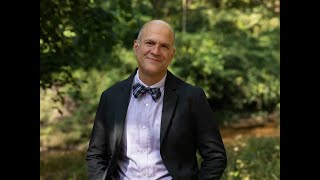
Farzad Mostashari, CEO of Aledade, spent 20 years chasing Michael Bloomberg's question: how to save the most lives. His answer: control blood pressure through data, workflow redesign, and coaching, not just drugs. Aledade now serves 1.2 million patients across 800 practices in 35 states.
Chapters
We're in the midst of a healthcare revolution. Digital health is breaking down barriers for patients and providers, changing the way we do business, regulate healthcare reimbursement, and deliver care. From telemedicine solutions to medical devices to AI to innovations we can't even name yet, it's taken years of dedication from innovative leaders to pursue healthcare progress. How did we get here? What's around the corner for digital health? Let's find out together in Trailblazing with Digital Health Pioneers.
Welcome to Trailblazing with Digital Health Pioneers. I'm Jen Geeter, and I'm a partner of the digital health practice at McDermott Will Emery. Joining me today is Dr. Farzad Motashari, the co-founder and CEO of Alidate Inc., a company that supports primary care practices with scalable compliance, strategic, and other tools and insights. Farzad, you are the former national coordinator for health IT at the Department of Health and Human Services. And prior to your work there, you co-founded NYC Primary Care Information Project, which equipped, as I understand it, over 1,500 physicians in underserved communities with electronic health records. We're so pleased that you could join us today. So first, I'd love to just hear about what you are doing now and how you came to decide to fund Adélie.
So it feels like my career has been a 20-year journey to figure out how to answer the question that Mike Bloomberg asked Tom Frieden when I was at the New York City Health Department. I was there for 10 years, and he asked this question that changed my life. And he said, Tom, how do we save the most lives? And the clarity of the question is just incredibly powerful to say, what are the tools that we have that can extend life for the greatest number of people? And my first, you know, our first cut at that was around public health measures like the smoking crusade really in New York City that I was proud to be a part of in the early 2000s. But then we asked the question, What can healthcare do to save the most lives? Like, we're spending trillions of dollars on this thing. Like, what— what surely everybody knows, surely everybody here who is listening, who's part of a healthcare institution, who's been to a board meeting, surely there was a discussion of what can our institution do to save the most lives. And we actually realized there's nothing. There was no— there were hundreds of thousands of papers published, and there was not a single paper until we published it that that said, what can healthcare do to save the most lives? And it turned out to be blood pressure control. And we are terrible at blood pressure control, not because we don't have the drugs that work, that we don't have the research, that we don't know how to do it. It's just that we're not doing it. We're waiting until people literally have strokes and heart attacks and kidney failure, and then we're saying, how can we best serve your neuro ICU care? Right, right. And so that's been the— like, that's the mission. That's been my mission for 20 years, is how do we make it so that we can prevent those strokes? And my first answer to that was, can we use a computer for that? You know, surely it's a measurement problem, it's a data problem, we need data-driven healthcare. My next thing was like, well, okay, but it's not enough to have the technology and the data. You actually need to change workflows. So let's bring— this is the Primary Care Information Project— let's bring people to help manage that transformation, that transition. Let's have people at the shoulder helping practices change their workflows, establish new habits. And that didn't work. Well, it wasn't enough. And so this is my third shot at it. Hopefully this time it'll work, which is to say, OK, no, you need the data. You need the software. You need the workflows. You need the coaching., but you also need a new business model where preventing a stroke is more profitable than treating a stroke. And that's what we do is we help independent primary care practices who are in the best position, right? They have the most to gain, the least to lose. They're in the right position. They're upstream of all those strokes and hospitalizations and upstream of the heart attacks, upstream of the kidney failures. Can we give them not just the tools, the coaching, the data, policy advice, but actually the, the financial incentives to, to prevent those hospitalizations. And if they succeed, the Medicare is happy, the health plan is happy, the doctor is happy, the patient and their family's happy, and we get a share of the savings. And that's the business model for Aledade, which we started 7 years ago now.
It seems like public health is having its moment. A lot of us who are not in the healthcare field don't think a lot about public health or didn't think a lot about public health before COVID What are some of the challenges within public health, and do you see the pandemic changing the public's perception of why public health matters and perhaps changing how we see primary care and having a really healthy relationship with your primary care physician in a way that we, we maybe didn't see it as vividly really almost a year ago to the day, as I, as I think about what I was doing exactly a year ago.
You know, I started my career as a medical epidemiologist at the Center for Disease Control's Epidemic Intelligence Service, and one of the first One of the things I did was work on systems for better surveillance of infectious disease outbreaks and pandemics and bioterrorism outbreaks in New York City. So this has been a poignant reminder, and I've been engaged on some of the national activities around improving surveillance in particular and data for the COVID response. I think a couple of thoughts. One is, like public health, we tend to pay sporadic attention to primary care and public health, and it tends to fall behind. It tends to be neglected until we realize we need it, and then it's like, oh, let's pump some money into it for a short time period, and then it's forgotten again.. And that's actually not how those things work.
Like, you actually—
well, it's not how they work well. Like, what you actually need is sustained longitudinal support for both public health and primary care. Um, it's not like you can wake up one day and be like, quick, let me take like a month's worth of statin pills, right, if I didn't take them all along, right? It doesn't work that way. Uh, so you really need to have those systems in place. The other, the other, um, point is that if you want frontline institutions who can participate in prevention, in diagnosis, in treatment, and in vaccination, one of the things that we found here is that trying to stand up these like mass testing sites doesn't work as well as actually integrated into clinical practice, integrated into the frontline diagnosis treatment. And I hope vaccination soon will be able to be extended. I think Primary care is on the front lines of population health and public health in this country. And like public health, both have been neglected. We spend more on ICU care than we do on public health in this country.
And I think what you're describing is it's also monumentally expensive in dollars in healthcare, but also in lives and hardship and suffering and outcomes.
Exactly.
All of those stresses in our system that maybe we sort of papered over and now are, I think, are really visible. I'm struck by your comment about the financial incentives because I have found myself saying that our healthcare system has itself preexisting conditions. We have problems in our healthcare system that digital health, that precision medicine, that new technology, they can't fix on their own. They're tools. But we have some underlying challenges in our system. And one is that we really don't— we don't focus on keeping people well.
I was the regulator for the health IT industry in the US. We rolled out $34 billion of payments for people to make the switch from paper to electronic health records, created the opportunity for a digital infrastructure for healthcare, but by itself, that's not going to get you better blood pressure control if the incentives in the system are not to prevent the stroke, or if you do it, you'll do it in a very checkbox compliance-oriented way. You know, quality measurement for the sake of box-checking. Whereas if you switch the incentives and if you tap into— and I just want to be clear, 70% of what happens in healthcare is the right things to have. Like, we don't have 0% blood pressure control, we have 65% blood pressure control, even though it doesn't make financial sense for a primary care doc to spend a whole lot of time talking to a patient where they're going to get paid for that visit whether or not the, the, the whether or not the patient put the pill in their mouth, whether or not they discussed with them the importance of the silent killer, right? And yet professionalism and love and the ethos of medicine carries us that way. But you can't rely on that relationship when the organizational incentives are get 'em in, get 'em out. Wait till they have the stroke and then we'll throw money at it, right? So one of the things that's been most gratifying to me has been seeing that when you even crack the door open to a halfway sense possible financial alignment between what's good for the doctor and what's good for the patient and what's good for society, the doctors walk through that door and it works incredibly well. We can— we don't need to throw away all of the primary care practices in this country and say we need to start with a fresh sheet of paper and we're going to create a new model for primary care that has nothing, no connection to today's existing infrastructure. We're saying we can actually transform existing practices. You don't have to set up new practices, and the implication of that is that you can scale incredibly quickly. So we have gone from, you know, zero to $12.5 billion under management, 1.2 million patients, 7,000 clinicians, 800 practices, 90 different EHRs, right, um, 35 states within, within 7 years.
It also sounds like a big problem that requires lots of different stakeholders attacking it from different angles. So let's just focus a little bit on the angle that you're focused on, which are preexisting practices. Yes. Who want to transform how they're doing care and need new, essentially, payment models to do that. So how do you help them? How do you help them do that generally? And how did you help them do that this year?
Yeah, it's a great, it's a great point about this year in particular. So they need an easy button, right? And when I was at the Brookings Institution before I started Allidaid, we started a learning network for physician-led accountable care. And I saw the incredible power that these kind of the paradox, we called it the paradox of primary care leadership, that the organizations with the least resources were going to be the most effective at actually reducing hospitalizations, right? Like hospitals don't really know how to reduce hospitalizations. They're not set up to reduce hospitalizations, whereas primary care could be. But they didn't have the tech, they didn't have the data, they didn't have the regulatory understanding. It cost a ton of money to set up one of these accountable care risk-taking, risk-bearing entities for a small group of docs, and it was a, it was a high-risk endeavor for them. So the, the really obvious, obvious, obvious insight for me was, well, let's give them everything they need, right? Make it really turnkey that a doc just hits an easy button, and that easy button is called Alidate. And they can participate in value-based contracts.
I have that red button in my mind.
Big red button, right? Like, easy. It's easy, right? Yeah. And we will come in and we'll— we have an actual playbook, okay? Right? And, and it's like, okay, here's what we're going to do the first month, you're going to do the second month, here's the third month. There's a curriculum. If we call it the core four, right? We're going to get really good at these four things that everybody would agree are, like, better for the patient., right? So it's, it's access, it's wellness and getting ahead of problems, right? Uh, um, it's when the patient goes to the emergency room, you know, when my mom ended up in the emergency room and, and they sent her back home after, you know, terrible overnight whatever, her primary care practice didn't call her. It was in the same institution and they didn't even have a system for calling patients afterwards. And why would they? They make the same money whether they call the patient or not, whether the patient bounces back to the emergency room or not, whether the problem that took her to the emergency room was fixed or not. They make the same amount of money, and some might argue they make more money if they wait until she has a complication and then they hospitalize her and then they treat her. That's the fundamental, not just irrationality, but immorality of the system we have. Our practices call their patients after they've been to the emergency room, right? And they have the data to do it, they have the workflows to do it, they have the financial incentives to do it, right? And that's what, you know, that's what we do. It's like, that's when you join Alliday, that's what you get. Now, how, as you said, how has it changed in the past year? We couldn't visit our practices. Our, our staff, our coaches A year ago, we shut it down. We said, we're not going to put the practices in harm's way. We're not going to put their patients— we're not going to be spreading it. We're not going to get our own staff ill. We're going to switch to a fully remote interaction with the practices. And Jen, we had our highest net promoter scores from our practices ever in 2020. How do you explain that? It's because in their moment of need, Nobody was there for them. And, and like, they needed to communicate with their patients and tell them what they should do to stay safe. We sent 100,000 postcards and over 100,000 text messages. They needed to have a way, some way, of continuing to deliver primary care to those patients. So we integrated telehealth into our app. We didn't used to have telehealth integrated into our population health tool. Within 12 days, we integrated it. Over a weekend, we stood up 150 practices on telehealth so on Monday they could see their patients. We helped them survive financially by helping them navigate the PPP and the advanced payment programs and all that. Then in the middle of the fall and the worst of the outbreak, most of them got hundreds of thousands of dollar checks. Not for fee-for-service, but for their— what the work they had done on the value-based care. So, um, that's why, that's why they— we had our, our highest growth year ever in a year we couldn't visit practices, our highest net promoter scores. And interestingly, in terms of like our identity as a company, really, really solidified around this is who we are. We serve When there's a fire, we run to the fire to support our practices.
Actions speak louder than words. You could have said to the practices, we'll be there for you when you need us. But seeing that in action in ways that honestly none of us, I think, in our wildest imagination could have anticipated.
They couldn't get masks. Their supply chain was completely broken. We became experts in importing masks and donating it to our practices.
Well, it sounds a little bit like you're able to scale these solutions. So rather than scale small practice having to figure out how do I find masks, you have created, you know, safety in numbers and you've created a community.
Got it. We are, we are a scaled solution for independent practices. We don't want to say like, oh, now it's— this is under new management. No, this is— these are the same docs who've known their family in many cases for generations. I don't want to take the name off the door. I don't want to own that practice, like we want that practice to retain the strength of their linkages to their patients in the community. But now when you go visit the practice, they're going to have more information that knows that who are the specialists you've seen, what are the emergency room visits you've had, has someone else done a mammogram, have you not been able to pick up your medications? When you visit your primary care practice, the doc will know those things as they talk to you, which you might have expected them to know anyway, but they didn't. When you go to the emergency room, you'll get a phone call. When you're sick, you're going to be able to get an appointment the same day at your primary care office. And the net result of it is in 2019, we saved 10,000 hospitalizations. Just imagine like the suffering that goes with and the needless cost that goes with 10,000 hospitalizations of seniors.
It's almost like you've brought what we now call concierge medicine back to what it always should have been, right? So we've said short waiting times, responsive physicians, same-day care, wraparound care. Those are extras, you know, that we need to have in high-end practices. And you're really turning that on its head and saying, this is just, this is primary care, but we have to not punish primary care physicians financially for doing what they want to do and what probably led them to primary care or family medicine to begin with. You got it. What do you see coming around the bend? I mean, my feeling is there's no going back to February 2020. Whatever we're going to be, it's going to be something different, not what we are now, not what we where then what do you see in your line of sight?
I think we're going to continue to see a push to move away from fee-for-service because not only have the payers seen and the employers seen the folly of a system where just when you need the practices the most, they shut their doors and go out of business., but also the practices have seen that, you know, fee-for-service is not, is not safe. That in some ways taking risk, and, you know, the term of art, right, of taking risk is actually like the more risk you take, the less risky it is, right? It turns out the least risky thing might be to actually join with, with a group like Allidate and, and be able to take on accountability for total cost of care. So I think that we've seen, as I said, our biggest growth year ever last year. I think we're going to see even bigger growth here this year. On the technology side, I think telehealth becomes a core part of how we deliver care. I don't think it's telehealth only. I don't think it's virtual-only primary care, but I think ideally it becomes just part of, you know, some of your visits are by phone, some are by video, and some are in person according to the needs of the visit. It's just healthcare. It's just healthcare. Yeah, it's like, exactly. It's not— the tools don't make the experience.
So this is a tough one. I'm putting you on the spot, but what's the next big question? So, you know, Bloomberg asked you, how do we save the most lives, what's the next question that I should be asking you to puzzle, you know, that you can puzzle over that we need to solve?
I think a big question for our country to figure out is, is the market working? For us to— the job of policy, as a policymaker, this is how I thought of the job of policy. The job of policy is to align private profits with public good. Do we have that now? Do we have the right policies so that every competitor in this wonderful, you know, innovation space, market-based world, everyone competing fiercely and wanting to maximize profits, is the end result of that better for society as a whole or worse? How do we align? To me, it's like the magic of alignment of financial incentives and incentives in general. But do we have the right alignment? One of the big questions that we need to ask is, is the market working to yield private profits and public good? And if not, what's the solution to that? Do we just regulate the heck out of it and set prices for everything?
Centralized decision-making, or do we actually work to repair competition in the healthcare provider space? I did not see that answer coming, so I'm glad I asked the question. This has been such a pleasure. Do you have final thoughts that you want to share? Something I didn't ask that you think would make an impression on someone thinking about digital health, thinking about healthcare delivery, thinking about primary care?
I think to come full circle, I started off saying how the efforts that we'd done previously around the digitization of healthcare failed, but they also succeeded. We could not do what we do today at Allidaid if our doctors didn't have electronic health records, if we didn't have health information exchanges, if we didn't have electronic lab data, if we didn't have medication histories that could move, if we didn't have cloud-based software, right? If like this is, if we didn't have the predictive models that we do on the ML AI models that we have. So, you know, I think it's Amal's law, right? Which is people always overestimate the impact of technology in the short term. And they always underestimate the impact of technology over the long run. And I think we are in that gap between the short term and the long term where there's a lot of, I think, disappointment and discontent. And I just gave voice to some of it that our technology alone hasn't fixed our problems. And yet we see that technology has been the precursor and the predicate for being able to solve our problems in combination with new business model innovation, delivery innovation, workflow innovation.
Thank you for spending some time with us today, and I, I look forward to talking again. For our listeners, to learn more about Farsad or Alidate's mission, we welcome you to visit www.alidate.com.
Thank you.
More from Joshua







Scientist Stories: Hans Waterham, The value of phenotypic assays in peroxisomal disorders




Scientist Stories: Joel Zlotogora, Genetic carrier screening programs for reproductive purposes