Founder Stories, Fiona Marshall, President of the Novartis Institutes for BioMedical Research
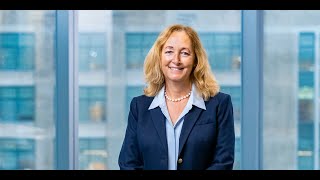
In this BioCentury Show interview, Novartis Biomedical Research President Fiona Marshall discusses the recent rebranding of Novartis’ R&D unit from NIBR to Novartis Biomedical Research and the cultural and strategic shifts that accompany it. She explains how the organization is moving from a siloed institute model to a unified research group aligned around four therapeutic pillars—oncology, cardiorenal‑metabolic, immunology, and neuroscience— and how a new incentive system now rewards projects that transition into development rather than merely achieving proof‑of‑concept. Marshall describes the Therapeutic Area Leadership (TAL) teams that embed commercial, strategy, and research scientists to create a two‑way dialogue on product vision, while emphasizing that the success of the R&D model hinges on people and collaboration rather than structural titles. She outlines Novartis’ scientific focus on durable, functional cures, highlighting emerging modalities: low‑dose CAR‑T (the T‑Charge platform) for autoimmune diseases, expansion of CAR‑T into solid tumours, scaling of radioligand therapy (RLT) with automated manufacturing and global hospital networks, and the “surfosome” project that maps cell‑surface proteins to enable targeted delivery of siRNA, gene‑editing and other payloads. Marshall also notes Novartis’ external collaborations and the acquisition of DTX, a company that uses lipid‑conjugated RNA to achieve tissue‑specific targeting, with early projects in neuromuscular disease. Throughout, she reflects on her own career path, the importance of aligning research and development leadership, and the excitement and challenges of pioneering new therapeutic platforms.
Chapters
This is the BioCentury Show. Brought to you by the 24th BioEquity Europe, scheduled for May 2024 in San Sebastian, Spain. Join BioCentury, EBD Group, and regional host committee chair Isios Capital for biotech's premier CEO and investor conference. In one of the culinary capitals of the world.
Hello and welcome to the BioCentury Show. I'm Simone Fishburne, editor-in-chief at BioCentury, and I am delighted to be joined today by Fiona Marshall, president of biomedical research at Novartis. Fiona took the role heading Novartis's research arm one year ago, November 2022. Before that, she'd been SVP and global head of discovery sciences, preclinical development, and translational medicine at Merck, called MSD in Europe. And before that, she was founder and CSO at Heptaris, which is a UK biotech focused on structure-based drug design. Fiona had previously been director of Millennium Pharmaceuticals and spent 10 years at GSK. And watchers of the show will know that I introduce all of that background because it will be relevant to our conversation. But Fiona, I want to start with where your organization is now. I recently sat down with your CEO, Vas Narasimhan, for a very interesting interview on how Novartis is reconfiguring, let's say, and refocusing— I think the word is focus a lot— the structure and the pipeline. And here I want to sort of do a dive into your R&D and get some of your thoughts more broadly after that about where innovation is headed even outside of Novartis. Let's start with this. Most people forever basically know the unit that you had as NIBR, right? It is now called Novartis Biomedical Research. What is the significance of that?
Well, hello. First of all, hello, Simone. Really nice to speak to you again and delighted to be here with my first anniversary here at Biomedical Research. So you're absolutely right. NIBR has a very longstanding reputation as being sort of leading science within the pharmaceutical industry and was very much set up as that innovative research, a series of different institutes that would really pave the way in different areas. And that's really evolved over time. And really, before I came, even was becoming more aligned and integrated. So rather than standalone institutes, there was a lot of cross-activities, multidisciplinary teams that went across the different groups. So evolved into being one research group. And so this name change, I think, is really— it's a natural evolution, actually, of where NIBA was going anyway, but the timing seemed right in the context of exactly as Vas has told you about, uh, with the Sandoz spin-off becoming a sort of focused innovative medicines company and being really connected. So we actually took the opportunity to rename all of our what were divisions, if you like, of Novartis, so we have consistent naming across. And Biomedical Research seemed to be the natural evolution of, of NIBA into the research and what we think of as the growth engine of Novartis.
Well, let's get into some of the nitty-gritty of the changes you're implementing. And I want to start at a cultural level, in fact, because Vas talked a lot about that and about focus, as I said, and he talked about a new incentive structure. So can you tell us about that and the thinking behind it and what it means, this culture change?
Yes. So the focus is really about both focus and alignment. I think they're the two key things that as a one united company, we want to have agreement and alignment on our strategy. Which disease areas are we concentrating on? So we have four disease areas that we're really focused on, as you know, oncology, cardiovascular, which actually now includes renal, so cardiorenal metabolic disease, immunology, and neuroscience. So Within those, we have priority areas, priority disease areas within those therapeutic areas, priority platforms, modalities, and this is all agreed and aligned between what we call the RDC continuum. So research, I think you spoke to Shiram, our head of development, development, and then through to commercial and coordinated by our strategy and growth team. So now within biomedical research, rather than going off and working on multiple different diseases where we think there's very exciting science. We do do that, but we make sure that that exciting science actually has agreement and alignment with our colleagues so that they have an open door and there's not just us sort of pushing to them, look at this cool new thing. They're actually saying these are the areas of unmet need that we all want to work in, and then we have a pull as well as a push for the portfolio. Now going back to the, this new incentive scheme, we The success of NIBA was previously measured by what we called a POC. So a POC was a proof of concept of the early science. Could it deliver what the science had we expected to deliver? Now that was a sort of end in its own right. Now some of those POCs would go forward into the later stage development, but not all of them. And what we wanted to do was to have a much higher percentage going through to later stage development. So the success measure, rather than the POC, is now actually the transition, if you like, from biomedical research into development. So it's that first patient in the pivotal enabling trial. So it's a measure of transition and uptake by the, you know, later stage development, which I think is a really— is the right endpoint for us to be aiming at and shows that, you know, our colleagues are excited about the science that we're bringing forward.
So, so what that means, if I get this right, is that, you know, your, your researchers are rewarded when, um, the work they do actually translates into a program with commercial relevance. And as I understand, you also bring in commercial considerations very early now. Now that, throughout the industry and companies small and large, is always a hot button issue. Like, how much do you let the money people come in and tell you what you're going to do in research. So what's sort of been the— again, I'm kind of going to go with a vibe or the cultural, you know, feedback. How are people responding to that?
So it doesn't happen how you just described it. You're absolutely right, I don't think that would go down very well with the money people telling research what to do. So it's done in a much more collaborative way. We have what we call therapeutic area, the TAL, therapeutic area leadership teams that include people from commercial They include people from strategy, but importantly, they include 2 people from biomedical research. The early research scientists are translational clinical medicine people, as well as development. So these people all come together. There's one for each of the therapeutic areas, and that group thinks about what is the strategy, takes perspectives from commercial, certainly. But then, you know, that commercial discussion isn't, as I often tell my scientists, it's not a one-way thing. Commercial tell research. It's actually a dialogue because we have to communicate what's our vision for this new product, how do we think this is going to change medical practice, and why is it going to be different. And if we can really communicate what the vision is that we have in research, that allows commercial to frame the opportunity in a much better way. And it's not just about how many patients and what's the competition, it's really What's the vision for this new, what will become a product? So it is a dialogue. And of course, there isn't always alignment either. That's the interesting thing. But agreement with that, that there is some flexibility, that we do have a sort of broader, wider aperture within research to look for new areas, and we can bring those forward even though they may not be completely aligned right now.
I mean, it's interesting because, you know, we always, you know, hear about the serendipity cases, right? The company that tried this and it just turned out. But on the other hand, you can't build a strategy out of serendipity. And at some point, you know, cottage industries just sort of don't work. So, you know, I can understand that sort of interplay. And I wanna bring in now your background, which you, you know, you have a very strong background in pharma. You even started your own company, um, which I guess helps, you know, also in terms of sort of partnering discussions or whatever. You understand it. Now, looking across other pharmas, some other research heads have come straight from academia, and some other pharmas have chosen to— I mean, they have a single head of research and development, and Novartis and a couple of others Biogen recently, you know, have a head of R that's separate from a head of D, right? And how much do you think any of this matters to success? In your experience, what are you drawing from in your past? Or is it just you kind of understand science and know how to work with people and programs? How do you think about all of that?
Yeah, these are all good questions. I, I don't think it really matters. What matters is the actual people and how they work together. Um, and I think if you've got— what's really important, of course, in R&D is how well R works with D. And, uh, I of course absolutely love working with Shiram, and that close, uh, you know, way of working that we have together, an alignment is that's what I think makes a successful R&D organization. And sometimes, you know, if you've just got a single head of R&D, then there can be more separation between R&D because the two R&Ds sort of go to the R&D head to sort of get agreement that you've got 3 people to get aligned. That's interesting. Rather than 2 people.
Okay, that's interesting, right? Because like in, in your structure, the head of research has to align with the head of development. But if you have a single one, there's sort of like a bit, you know, there's more people below that are all sort of fighting to get that.
Yes, I think so. Because of course, you know, Shiram and I, to get agreement, we're not always going to Vas to involve him. He's got a lot of things that he needs to be focusing on. So I think we sort a lot of things out between us and that saves a huge amount of time and we can get alignment and, you know, Vas trusts us to do that. So, and for me personally, it was one of the reasons I also took this role, because as, uh, I like the earlier research and translational medicine, that's the piece that I love doing, and I'm quite happy for somebody else to do all the late-stage development, go-to-market. But I also like being on the executive team and having that role holistically across the company, hearing from commercial, what's our launch strategy. And, you know, I love hearing about that at the, you know, team meetings and being on that, that sort of top team where you hear about the whole company strategy. And that helps me go back— when I go back to the research group as head of research, I can communicate in a much more educated way about why commercial have this perspective and why this is really important for the company strategy. And when I was in a role where it was the head of R&D was between me and all of the understanding of the company finance. I don't think I was as good at actually explaining because I didn't understand it as well myself, the finances of the company. So I think this is a really good model and can really see the benefit of it.
Right. A seat at the table. So in a minute we'll go for a break and when we come back, we'll talk a lot about science. But before then, I just want to ask you, you're a year in. Um, how's it compared with what you thought? Any surprises?
Look, it's— I'm loving it, and, uh, every day has a surprise, usually a good one, um, but also the challenges. I mean, one of the things is all the new modalities, the CAR-T and RLT, and maybe we'll, we'll talk about that in a bit more detail, but you know that these are the fun things to be working on.
Absolutely. So we'll talk about that when we come back in just a moment. We're going for a break right now. Thank you.
For more than 20 years, Bioequity Europe has been where CEOs and investors gather to network, partner, and debate critical issues facing the biotech industry. In 2024, Bioequity heads to San Sebastian, Spain, in Basque Country, May 12th to 14th. Join BioCentury, EBD Group, and regional host committee chair ESEO Capital in one of the world's Culinary Capitals for a destination event designed for CEOs, investors, and decision-makers across the global biopharma ecosystem. In 2023, 300 VCs and 330 biotech CEOs joined BioEquity in Dublin, Ireland. In San Sebastian, the program will feature more than 100 emerging biotechs that will present their story to investors and potential partners. Don't wait, last year's BioEquity conference sold out. Visit bioequityeurope.com for more information.
We are back with the BioCentury Show, and I'm here with Fiona Marshall, who heads up research at Novartis. Fiona, let's talk now about science, and I'm gonna stay for the minute with Novartis and ask you, you know, we talked about focus. You're doing many things and focusing it down. So if I was to say to you, what are the areas you want Novartis to dominate? You wanna be— Novartis is the X company, the Y company, what, what are the top ones there?
So the, the overall top one for me is how we can really provide a long-lasting treatment for patients, durable treatment. And we're doing that in multiple ways, so approaching a cure, or essentially a functional cure, not just the tablet you always take every day. I mean, the For me, the idea that we— a patient can just forget about their disease, that they just feel like they don't have it anymore. And that can be done in a number of different ways. One is to genuinely deliver a medicine that cures a disease or puts it into long-term remission. And I think you've got opportunities there, for example, with CAR-T going into autoimmune disease, or some of the oncology strategies like RLT we're hoping can give very long, durable effects.
And that's just, just for everybody, that's radioligand therapies.
Oh yes, radioligand therapy. Yeah, so, you know, durable efficacy, that's what we're trying to get in oncology, especially with, you know, very good tolerability. So you don't even notice, you know, the adverse events or side effects. And, and also in our siRNA in cardiovascular disease, so we have Lekvio, which you probably know is lowering cholesterol levels. So siRNA is going now to be very long-acting, you know, maybe once every 6 months or even once a year, a single injection, you know, managing your cardiovascular risk factors. So you don't need to be worrying about your cholesterol levels, your blood pressure. All of these components, uh, you know, are managed by, you know, a very infrequent injection. So that's where I think Novartis can really change medicine, change people's lives, because because you basically forget that you're ill, or maybe you're not ill anymore.
So I'm going to dig into each of those a bit, and I want to start by picking up on the use of CAR T-cells in autoimmune disease. Now, we wrote about this recently, and of course Novartis is a big but not the only player there. And, you know, just to remind everybody, you know, CAR Ts have been successful, let's call it, in blood cancers and liquid cancers, but not without issues there. I mean, there are a lot of logistical problems, but using them in autoimmune disease seems to be accelerating. And you know what I want to ask you, a couple of questions like what are going to be, I talked about some of the issues for CAR-Ts in cancer. What do you see as the major hurdles for using these therapies in autoimmune disease, which is, you know, a lifelong disease. It's not threatening in the same way as many cancers. And secondly, in your mind, is this now ahead of trying to make CAR-Ts work in solid tumors?
Okay, well, there's lots to answer there in separate sections. So first of all, I think I wouldn't underestimate the debilitating effects of severe autoimmune disease. Like refractory lupus, for example. I mean, these are very life-impactful disease areas. So I think patients do want to have this type of therapy if it gives the opportunity for very long-term remission from the disease. And we've learned so much from the oncology setting about how to deliver CAR-T, how to manage it, how to manage adverse events that you can get as you're giving the treatment. So our ability to manage those effects is much greater than it was in the early days of first coming in. And one of the things, for example, we've done is our new, what we call the T-charge platform, where we give a very low dose. We used to grow up the CAR T-cells ex vivo. Now we've realised that you actually get much better balance of T-cell types. So more stem cell-like T-cells, if you actually deliver them at a low dose into patients much more quickly, that speeds up the manufacturing. So some of the logistics have now been, you know, made much easier. But importantly, then you're giving a lower dose to the patients, and that means that that reduces side effects in itself, but also then gives a hopefully a longer duration of effect there. So we're learning a lot from the oncology setting. It's one of the advantages I think we have of having been first into CAR-T, really understand that technology, have evolved the technology, understand how to manage it. We can now, you know, bring together our immunology team with the oncology team to take that forward. So what are the— I think the big questions that you're asking is, first of all, about the safety. That's going to be a key thing in this population. So how can we make sure that this is as well tolerated as it could be? That it's safe for patients, but it has then a durable, long-standing effect. So it's not just a sort of incremental benefit, it's something really different from what has gone before. And actually, I'm pleased to say, we're about next week to— we'll be presenting at ACR, American College of Rheumatology, our early patient data just coming out with our YTB, which is our CD19 CAR-T using this T-charge platform. And we've seen, I mean, I can tell you the abstract's actually out now. So we have seen, you know, favourable safety profile and importantly CAR-T expansion, but B-cell depletion. So really trying to remove the B-cells that are driving the autoimmune disease. And then, and we've seen, you know, efficacy already, good signals of efficacy. So very much building on the original academic publication. Which is now 2 years out, you know, more than 7 patients are in remission now. We've been able to show that we can, you know, essentially get the same type of effect. So I think this is hugely promising. And of course, there's so many diseases we know are driven by B cells. We know that from our own work in B cell biology, in immunology, and we can build on that.
So that's why I wanted to ask, because, you know, the B cell centrality makes so much sense with this. But do you think that that means that it's an easier path than, for example, trying to make CAR-Ts work in solid tumours? Is this now a higher priority for you?
No, I mean, actually, we are taking CAR-T into solid tumours as well. And I think, you know, one of the things about many of the new approaches in oncology, so not just CAR-T, ADCs, and what you're trying to find is the right way of delivering these drugs to tumours. And it's sort of easier in a B-cell, because you know exactly, these are B-cell-specific antigens that you can use for the CAR-T, or you can use it for, you know, other modalities. So what are— it's more difficult to find the selective antigens on the solid tumours. And a lot of work has been done, and this is what we're also doing a lot of work on, identifying tumor-specific antigens that you can then use to deliver either a CAR-T, or we're also very interested in the radioligand therapy. So again, we're looking for opportunities to deliver targeted radiation to tumors.
All right, I'm gonna ask you about radioligand therapy in one minute, but I just wanted to clarify, when you talk about the solid tumor antigens that you're looking for, is this sort of one of the things that goes on inside Novartis Research, or are you sort of using external innovation looking for assets or targets from the outside in that?
We, we do both. Uh, so we have our own, uh, a lot of work focused on what we call the surfosome. So mapping the surface of cells, either the tumor cell— the new—
oh, I didn't know about—
okay, yeah, the surfosome. Uh, so it's, it's very good biochemistry actually that we're doing it, but, and informatics. A lot of it can be done through in silico work, but, uh, We have our favorite cell types, and we're trying to identify what are the surface proteins. Also, this also is relevant to delivering siRNA, by the way. So it's a very useful exercise. There's also well-known surface markers that are out there in the literature that have been used to deliver other modalities. So, you know, we can leverage some of those. And we also have collaborations because, first of all, you've got to find the antigen, then you've got to find the the ligand that is then the vector that's going to deliver the modality, whether that's RLT or siRNA.
And then you've got to use that to show proof of concept. But let's go to radioligand therapies, which, you know, Novartis has obviously made a very important sort of footprint or land grab, as you like. There's also a nice deal from Lilly recently, a $1.4 billion takeout of Point BioPharma. And I think that gets Lilly into the field. My previous guest on the BioCentury Show, Gil Barnaham from Jefferies, he highlighted radioligand therapies as an area to watch. So tell me what, how you think this is gonna unfold. We've had so much activity in ADCs this year and even last year as well. So do radioligand therapies sit alongside, compete with, or displace them? How should we be thinking about that? That space and their relative merits?
Well, the first thing is RLT. Although it has actually been used for quite a while in the past, it's not totally new. What's new is how we can really scale up. That's one of the new things that we put a lot of effort into, but the recognition of how we can focus on specific tumour types and the sort of poster child, if you like, is PSMA, which is the prostate-specific membrane antigen. And we have Pluvicto, but the many different components have to come together to make the RLT work. You've got what is the tumor-specific antigen, PSMA in this case. Then you need the ligand, which is the vector, as we mentioned. Then you have to attach the radioisotope to that through, again, a particular technology. So all of these things have to come together ADCs also work. ADCs are very similar. ADCs again were around for years. In fact, people tried to target PSMA by an ADC and it never really worked.
So the question is, you talked about scale-up and manufacturing. Are there similar challenges, or is that an area where one has an advantage over the other?
There are actually different types of challenges with RLT. Of course, you have a radioisotope which has a short half-life, And that means in terms of— you have to manufacture it in time, just in time, so the patient is ready for the therapy, then you make it and you have to deliver it to the patient in a small timescale, actually 5 days, with the half-life meaning that you can't stock up the drug substance. So it is— there's a high barrier to entry for RLT, and we have really put a lot of commitment into automating the manufacturing, scaling it up, having multiple manufacturing sites around the world so that we can have more local— what you don't want to be doing is flying things all over the place when you've got a short half-life and you could have delays. So a lot of logistics have to be thought about with RLT, which does make it, you know, I think a higher barrier to entry, especially for smaller companies coming into the area.
And what about also for sort of community hospitals or therapies outside of the major medical centers? Is it sort of excluded from that then?
Because, well, this is a very important thing. So we're really excited that we're really building the numbers of hospitals that are now able to deliver RLT, and many hospitals are very excited about getting into nuclear medicine, and we're, you know, enabling their setup. We know what works for RLT, and we're working very closely with hospitals, you know, in many different countries that will allow us to, you know, provide drug to as many patients as possible. So a lot of barriers, we're gradually sort of removing them, but it is— it will, I think, make it harder for a lot of other companies to come into the area.
Okay, um, I've got a lot still to get through in little time. We could probably do this for days, but I do want to Talk about something that, you know, we had spoken about this recently. It's a topic that's been top of mind for me for a while, and that's tissue targeting. You know, we all know that if you could really efficiently— like, to some degree, I think about this as an engineering problem— if you could really efficiently target nucleic acid therapies like siRNA and gene therapy and antisense oligos to any tissue you wanted, any time you wanted, the target space you'd unlock would be phenomenal, right? That would benefit the whole industry. There is obviously not an industry-wide effort for this. It's going on inside companies and you tell me it's going on inside Novartis. So tell me what's going on there and what progress you see across the field. And is this the most efficient way for this field to move forward?
So, you know, there's— I totally agree with you. This is a very important area and something we are putting a lot of effort into. As I mentioned, the whole Surfer Zone project relates to delivering different technologies, including siRNA, which is a high priority for us, to specific cell types. And each of our disease areas sort of nominates cell types that they're interested in, that we then, you know, try and find ways to deliver their preferred modality. So we are working on it, but we also do work with a lot of partners in this area, whether that's academic institutes or biotech companies, whether it, you know, it could be an area for a public-private sort of collaboration. Uh, I think where that has— there's more effort has been done, for example, in terms of delivering things through the blood-brain barrier. And, you know, coming from the neuroscience area, again, that's the sort of holy grail of neuroscience. How can we— neuroscientists feel we're missing out a bit on all these wonderful therapies because of the blood-brain barrier is stopping that entry. And especially if you could then even target specific cell types, even better, not just into the brain, but can we get cortical neurons, can we get microglia or astrocytes? That would be the ultimate aim here. And so I think that there are collaborations in this area, but each company is going in a different direction, which is actually good because, for example, one is to take a protein and then you just have a ligand and you deliver it through that route. Another way, we have a collaborate— well, not a collaboration, we've actually just acquired a company called DTX, San Diego company. The approach that they've taken is to attach different lipids to the RNA, and those lipids then actually target different cell types differentially. Probably through active uptake of lipids through lipid transporters. So we're pretty excited. We have a project which is on delivering to sort of neuromuscular tissue and Schwann cells for Charcot-Marie-Tooth syndrome. And so that's the first project we're working on there. So the whole area is exploding. Lots of people have got different strategies, and in a way, I think just sort of allowing people, because nobody knows what will work. I don't think there's going to be a single answer, and it's actually, you know, really interesting to see how this field is evolving over time and what's going to be successful.
Well, unfortunately we have to end there. I think it's a very positive place to end. You'll have to come back another time for my other 35 questions. Fiona, it's been great to talk with you. Look forward to continuing the conversation. Thank you very much.
Thanks, Simone. Really enjoyed talking to you. Goodbye.
Bye.
Brought to you by the 24th BioEquity Europe, scheduled for May 2024 in San Sebastian, Spain. Join BioCentury, EBD Group, and regional host committee chair Isios Capital for biotech's premier CEO and investor conference in one of the culinary capitals of the world.
More from Joshua







Scientist Stories: Hans Waterham, The value of phenotypic assays in peroxisomal disorders




Scientist Stories: Joel Zlotogora, Genetic carrier screening programs for reproductive purposes