Founder Stories: Founders of Regeneron, one of the world’s greatest drug developers
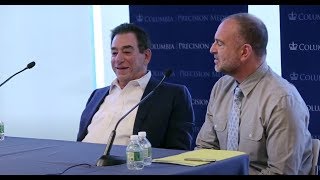
In a moderated panel, Regeneron co‑founders George Yancopoulos and Leonard Schleifer explain the company’s core philosophy and how it has shaped their success. They argue that the most effective clinical strategy is to develop drugs that work dramatically, using genetics‑driven targets that allow small, fast trials and clear payer value. Early “killer” experiments are deliberately run to terminate non‑viable projects before costly Phase III. The founders contrast this science‑first approach with traditional business tools such as NPV calculations, insisting that scientific logic and ethical patient focus should drive decisions, even at the CEO level. They describe how their complementary founder skills, long‑term leadership stability, and a culture that rewards deep expertise have allowed Regeneron to scale from a handful of scientists to a 6,000‑person enterprise without major turnover. The panel also covers the role of physician‑scientist CEOs, the importance of academic partnerships, and the criteria for moving ideas out of academia. Precision medicine is highlighted through examples of monogenic diseases with 100 % response rates and emerging biomarker‑guided oncology therapies. Funding dynamics are discussed, including the cyclical “pendulum” of biotech investment, the limited impact of the 21st Century Cures Act, and Regeneron’s strategy of building a self‑sustaining pipeline machine that funds repeated failures to achieve long‑term breakthroughs. Finally, they touch on how the internet and digital patient communication are reshaping compliance, sales force practices, and drug pricing philosophy.
Chapters
So I'm Tom Maniatis, Director of Precision Medicine at Columbia, the Precision Medicine Initiative. And I'm delighted to welcome you today to the first in a series of 4 interactive lectures conceived as a part of the Columbia Precision Medicine Initiative that is designed to expose life scientists to the entrepreneurial world. And I'd like to start by acknowledging 2 people who really brought this idea to us and made it happen in the front row, Lorraine Marchand and Tig Conger, who are both graduates of Columbia Business School. And they've really worked hard to put together in a case study business school format. So we're going to talk today about Regeneron, which is arguably one of the most successful companies in biotechnology pharma, which went from biotechnology to big pharma, if you will, in terms of the size size and impact of the company. And we're gonna talk to George Yancopoulos and Leonard Schleifer. They, their description of who they are and how they got here is a part of the handout. And I'd like to ask both of them to come to the table and we're going to do this in a sort of moderator format. There's not going to be a formal talk, but we're going to ask questions. I'll start it off with some questions, and hopefully the rest of the audience will engage and ask questions. We have a real treat today because these guys took an idea a long time ago— what, 29 years ago— and really made it happen through ups and downs. And I think the really important issue here is how they were successful, I'd say, as much or more than any other company of bringing basic science and entrepreneurial activities together. I mean, the fundamental strength at Regeneron is the science. And you'll see that in various ways that are described. So without further ado, I'd like to get started. So I'd like to start— it would be interesting to have each of your views on the vision of the company as it started, how it got off the ground, how science was brought in, and what, you know, looking back 29 years ago, Where did you see the company going?
Thanks, Tom. Let me just— I want to make a disclaimer. My memory is terrible long-term. George is much better. So you're going to hear maybe facts and alternate facts about what actually happened historically. George keeps notes, and he actually has gone to his archives. So I'm going to let George start.
Well, let me just— it really started a long time before Regeneron. Just to make a couple comments, at least for me, how full circle this is. Len and I are both New York City kids from Queens. OK, we were both interested in science. An amazing thing that really had an impact on us, and we just had a full circle experience just last week, was— how many of you guys remember what used to be the Westinghouse Science Talent Search? Which became Intel. Hands in the room, any of you guys ever hear about this? Okay, decent number. It's sort of the junior Nobel Prize for high school students. So Len and I both competed in this as high school students. Len was a semi-finalist. I was a winner.
Hence the expensive suits.
So one guy runs the business, one guy runs the science. Luckily, we got the right guys in charge of both parts. So that really, obviously, a lot of us started experiencing that, some amazing teacher. In terms of full circle, last week Lynn and I were thrilled and humbled to be part of this year's Science Talent Search. We just took it on. It's now the Regeneron Science Talent Search.
That's wonderful.
So that's, you know, we started, we started as New York City public school kids who were interested in science. Another— I got to say how it started for me also, just to come full circle and acknowledge some people personally. So when I was a winner in the Westinghouse Science Talent Search, I went home to my dad, who was a Greek immigrant, and I announced to him that I decided I wanted to become a scientist. And he was destroyed by that because he wasn't promoting education and all that in order to make me become a scientist, because even he knew that scientists back then, laboring in labs, didn't make much money. He thought I was going to become something like a real doctor. And literally the next day, he cut out an article from the Greek newspapers because he didn't read the American newspapers, and he said, well, if you have to become a scientist, at least become like this scientist. And it was an article about Roy Vagelis, first major academic scientist ever to leave academia to go into the pharma industry, at that time as head of R&D at Merck. So for me, my dad gave me, at an early age, Roy as a role model and a hero. And just, third point about how full circle this is. So then I went on to Columbia where I was trying to become a scientist. And I became interested in, at the time, what I thought was the hottest thing of all, which was X-ray crystallography to get protein structures. And I was a really bad X-ray crystallographer. I was very good at the math, but I couldn't get the crystals to form. And after 2 years struggling, figuring my career was going nowhere, the cloning of the first cDNA paper came out. It was literally the cloning of the first cDNA gene ever in history. And the authors on that paper were— Ephstradiatus, Maniatus, Gekisim, and Photiscephatos. And I said, wow, maybe I'm Greek. I'm in the wrong field. I shouldn't be in crystallizing proteins. I should be in cloning, like, genes. And that's my founder tale. That's how I got into it until I got a random phone call from this guy one day.
Well, so we do have a lot in common, George and I, being from Queens. And in fact, I was lucky my dad believed in education as well. He used to say, "Your education is your weapon to fight the world with." He was dirt poor, but was lucky enough to go to Cornell on a Latin and Greek scholarship. So many—
Always comes back to the Greeks.
So many of the same proverbs that George heard growing up, I heard as well in both Greek, ancient Greek I guess, and English. At any rate, I also wanted to be a scientist, disappointing my family and my future father-in-law that I wasn't going to be a practicing doctor. And I decided to pursue a scientific career by combining that and was in the MD-PhD program at the University of Virginia. My mentor was— the late, my best friend from those days, Al Gilman, who had just passed away this past year. And Al was an amazing scientist, tremendous influence on me. And he went on to win the Nobel Prize based on the work that I was watching and playing a bit part in as a graduate student. And when I left his lab, rather than staying in science, I decided to go into clinical medicine. I could have come to Columbia, but they had a better program at Cornell. I'll just say that in clinical neurology.
Back in those days. It's no longer true.
Right. So we're going to have a lot of Cornell-Columbia debate, I think. But I will say that I do have a son that went to the law school here. So at least I feel good about coming to Columbia. Relatively good. At any rate, to really short, so we have some time to talk about some things that are useful to the audience rather than just of interest to George and me perhaps, is that when I had finished my training in neurology at Cornell and I was on the faculty there doing the usual thing, getting grants, working, trying to get some ideas going in the lab, I started reading papers. And at that time, this was in the mid-'80s, all the interesting papers seemed to be coming from Genentech. And I wanted to find out who the heck Genentech was. How could it be that they were dominating all these cloning papers in the mid and late '80s? And I realized that they were what I'd never heard of, a biotechnology company focused on growth factors. So I had this notion that they were focused on growth factors that affected red cells and white cells and growth hormone and things like that. I was interested in the nervous system, and I thought maybe there'd be a bunch of growth factors that affected the nervous system, and why not set up a company? I had a lot of business experience in that I had a very profitable snow shoveling business in Queens and a few other enterprises of that nature, delivering drugs for a drugstore and things like that. But I thought I could— why not start out Genentech? That would turn into be a powerhouse for nerve growth factors. Because my idea was there was only one nerve growth factor called NGF, but there should be more because the brain is more complicated than the immune system, I thought, or the hematopoietic system. And to shorten it up a little bit, Al Gilman thought this was the worst idea he'd ever heard and said forget about that. I would call him and ask him, and he would say, would you just do something so you don't waste all that, those difficult years I spent trying to train you to do something? Would you just please do something? But I wasn't to be denied in this notion. And I convinced Al that we should try and do this. And so Al said, OK, if you're going to do this, we better get a bunch of smart people around the table to help. And he lined up a couple of his buddies. He lined up Eric Schutter, who was the chairman of neurobiology at Stanford, Arthur Kornberg, also from Stanford, a Nobel laureate, Mike Brown, Joe Goldstein, a couple other Nobel laureates, and a whole bunch of high-powered scientists because Al really bought into the notion if we're gonna do this, let's do it in a science-driven way. We were lucky enough to get a million bucks from a guy named George Sing, who's still on our board of directors today. He was a venture capitalist with Merrill Lynch at the time, and we got started. And the problem was— is what we realized very quickly is that all those years that I had spent becoming a neurologist, the world of molecular biology was coming out in unbelievable force. And I knew how to purify a protein and do an enzyme assay. I knew nothing about molecular biology, and since the idea was to do molecular biology, somebody on the advisory group of these esteemed people said, well, maybe we better find somebody who is really talented, and so to join up and help us build this enterprise. And I think this is actually sort of a fun story. We decided that the best young not only because he was young, but the best molecular biologist around was young George Yancopoulos, who was working with Fred Alt. I guess you had finished your postdoc and were getting ready to embark on a faculty position. And the idea was, well, could we get George to actually make all this happen? And so being impatient, We were meeting on a Saturday afternoon, and George's name came up. And I said, well, let's get George over here. And they said, well, you're not going to get George to come over now. And maybe George can tell the story of how we actually got him to come over.
Well, you guys all know the Hammer Health Sciences Building right over there. So I had gone from all my interests in crystallography to cloning and so forth to be working with Fred Alt for many years.— and finding myself there where I had actually just accepted a faculty position. But this becomes part of the story. And I actually heard some remarks about the speed at which things happen in industry and academia. And I want to get back to that in a second. But basically, so I was working in the Hammershøl Sciences Building, waiting for my lab to be built, which was supposed to have been built by now. Let's say this is— I don't know when it was, September, October of 1988. And I get a phone call on a Saturday afternoon. And it's this guy. And he introduces himself. And he says he's interested in starting a biotechnology company. And they really are interested in somebody who's really good at gene cloning and so forth. Would I be interested in talking about it? And I don't know. I was sort of somewhat intrigued. And then he said, "Well, we're having a meeting right now at the Plaza Hotel." And he says, "Why don't you come on down?" And I said, "I'm in the middle of doing experiments here. I got important stuff going." He goes, "Well, how about this?" There was some hot play on Broadway at the time. I don't know what it was. And Phantom of the Opera, I don't know what it was. And he goes, "We got tickets." He goes, "Are you married?" And I said, "No, I'm not." He goes, "Well, do you have a friend?" I was insulted by that. I said, "Of course I have a friend." So he goes, "Well, why don't you bring your friend and we'll have tickets to this hot play and we'll take you out to some really fancy dinner at some really fancy restaurant." So that's what it got me.
[Speaker] Wait, wait, wait, George is leaving out a very important part. And he was gonna get to meet 3 Nobel laureates. —at dinner.
I have to say that also was an attraction to me, that I meet all these famous scientists that I'd only heard about. And in fact, in the first year of the MD-PhD program at Columbia, which had been for me almost 8 or 9 years before that, the thing you have to do is you have to write a thesis on some famous scientists and so forth and their work as a prelude to writing your own thesis. And I wrote mine on Brown and Goldstein, who are actually on this board. So I decide to go down there. Hang up the phone. I said, oh no, like, who do I invite to this thing? So I had this postdoc who was working for me, Gene Ault. I considered him a friend. So I said, Gene, you want to come down with me? He goes, I'm busy. I'm working. I said, well, you know, free dinner, free play tickets. So he goes, OK. I said, OK, just meet me in the lobby of the Plaza Hotel at 6:00 PM because I have to go meet these guys. And we'll be done at 6:00 PM. And then we'll go. To dinner and the play. So I go to the meeting. I meet all these famous guys. It's actually a great meeting. And I have to say, a bunch of key things about it, and about Len, who really was the force and the personality behind this in terms of getting me interested. People say, I had grants. I had supposedly a lab, which we'll get back to in a second, and all this. And they say, why did you leave all that to, like, join up something that wasn't even in existence at the time? Why were we taking all that risk? And people talk about, hey, embracing failure and embracing risk. I wasn't really looking at it as embracing risk and embracing failure. It was just a really exciting adventure. I mean, Len got me really excited at the possibilities. And I also thought, hearkening back to his dad's proverbs, Right at the beginning, he started talking about some of the attitudes that we would have, why we were doing this. And I always got into science, and I'm sure many of you guys did too. I got into science and I was so enthralled by science because I loved science and I loved the idea that you could actually understand enough about a disease with science that you could eventually design a treatment or a cure.. And that's what I wanted to do with my life. Now, of course, I never actually thought I would actually do that. I just thought I'd be sort of a step in the process. So when I met Len, he was all about that we could do it this way. We could build— and he had a proverb that his dad used to say that I was also sort of raised in the same way— that we would build this company based on the concept of doing well by doing good. We would do good for patients, we would do good for the world, and we would do well for us as a company. He really had me with the force and the power of his personality, the two aspects. One was the excitement of the possibilities. I wasn't thinking about the risk and the failures and all that. I was just thinking about the power of what we could possibly do. Two was that we were going to do something that was truly noble, that was good, that we were going to do good and as a result, we were going to have a successful company.
So can I just say one thing? As I recall in a previous conversation, your father re-entered at this point as well, and that was, according to this earlier conversation, was very important for your decision.
All right, I mean, we could fill up the whole time with our various stories, but I will tell you this short story. So as I said, my dad was all about being successful. A good man and all this, but it was— and Len knows all about this— it was all about pushing you and pushing you to succeed. And from his perspective, a lot of it was, of course, finance, because we were dirt poor, okay? And he was, you know, a child of war. He fought in two wars. He came here with absolutely nothing, and he thought education was a means to that. So of course, once I talked about becoming a scientist instead of a real doctor, he started pushing me in the, in, you to follow in the footsteps of somebody like Roy Vagelis and get involved in business. Two was right before, literally, and I probably would not have been as receptive to the call from Len if literally a week or two before that I had gotten a big award for my future lab at Columbia that was going to fund me for actually 8 years. At the time, this is 1988, it was $2.5 million. That was a lot of money back then. I would always go home on Sundays. Greeks in the story, they go home to their parents and have dinner on Sunday night. And I would— literally a week or two before Len's call, I went home for dinner on Sunday, and I was going to spring this news on my dad. I thought he'd be so proud. He would realize his son was actually a success. He had gotten this award for $2.5 million. And so I go home, and I tell my dad this great story. And he says to me— Let me just try to remember the exact words he said. "Alathelon akatalavo akri vos apta theomisi e katomiri dolaria, pos apiennon syndikasu tinsepi?" Anybody got that? So he wanted to know, out of this $2.5 million, exactly how much was going into my pocket.
What I heard in that story was, it was something akin to, well, you graduated number one from Bronx Science, you graduated number one from Columbia, you've got an MD and a PhD and all these awards, and if you're so smart, how come you make so little? And that was sort of one of the reasons I think George was maybe open to a small raise that we could give him at Regeneron. The other, now to accelerate the story a little bit, because otherwise if we take this, we'll be here till, next year. But to very rapidly accelerate now, what really nailed George is that by the time— there was still some predecessor dean to the dean that's here, but probably not that different in time, the way deans work, you know, not to blame any particular dean. They're all the same all around the country. He said, oh yeah, we're going to have this done right away. And after a year or two, they had a lot of plans. And after about 3 months, I had actually built out some labs. And they were ready to go. And so we opened the labs together.
That was a really— I mean, because like I said, he got me excited about the excitement about the power of what we could do and that we could really do something noble and good. And then the first example that I saw of this, like I said, I was literally— my labs were supposed to already have been done. And then they were supposed to be done in another 3 months and another 3 months and another 3 months.. And in the meantime, from talking to Len, let's say September or October, by February, March, the labs were ready to move in. And at the Columbia Labs, we're still another 3 months away. And I said, wow, I mean, one can really move a lot faster. One can get things done. And also, I got to design the labs. We got to decide what we were going to do. It wasn't this sort of faceless sort of thing that just happens behind who knows what doors, and you don't know who you're really dealing with. You know exactly what you're doing. All the people that are involved are right there, and if you want to make a change, you can do in business that allow you to move faster.
But the real fast movement of Regeneron— and by the way, here's now the vision. Let me give you at least my version of the vision. We got this really smart guy, Encopolis. The idea is a good one. He's going to clone half a dozen neurotrophic factors. We're gonna figure out how to make 'em in recombinant technology. We're gonna grow 'em up in some sort of a vat. We're gonna spritz it on a patient with Lou Gehrig's disease. The patient's gonna get up and walk. We're gonna get box seats behind first base at Yankee Stadium because Lou Gehrig's disease, having cured that, and we were gonna do well and having done good and sail off to the sunset. And I figured maybe, I don't know, 2 or 3 years is about what it would take.
Let me interrupt at this point, 'cause Len doesn't know this since he's not a true Columbia man, but for those of you who might not know this, we are right around here, we're somewhere near home plate of the original Highlands Park, which is where the Yankees used to play, is right here in the Highlands of the Upper West Side.
Well, you forgot, and Lou Gehrig went to Columbia. So there are a lot of connections. But at any rate, so what happened? Everything except the last part came true. George took the world by fire in neuroscience. He was not a neuroscientist, but he had some incredible, incredible insights, which to this day I think are one of the most important insights in neuroscience to me as a quasi-neurobiologist, if you will, which was that he realized that there is nothing special about the signaling of nerve growth factor or brain-derived neurotrophic factor or any of these neurotrophic factors. It's just the context that they're signaling. Because he took the receptor for BDNF and BDNF and put it in a fibroblast, and it didn't make a fibroblast grow neurons, it made a fibroblast do what a fibroblast does. And if you put it in an immune cell that was gonna die, that could be kept alive by a tyrosine kinase growth factor, It did that. And to me, what he basically did is said that everything he did in immunology was 1,000% relevant to neuroscience because it was all the same principles. And so he took the field of neurobiology by storm, did everything that we had hoped for, cloned a whole— and just at the time, I think one of the first people in the companies after, I forget the name of the guys at Cetus who had discovered PCR, who was that? Kary Mullis. Yeah, that George and the gang were using PCR and cloning all these neurotrophic factors. And we were spritzing it on mice, and by the way, if you got any mice that don't walk so well or have something that looks a little bit like Lou Gehrig's disease, we have a cure. And we haven't been able to sell that product, so we would like to sell it. But it didn't work in patients. And therein was the real, real, real hard aspect of this business, in that in academia you always write at the end of your grant the relevance to human disease. Everybody wants to know that you've got some relevance to human disease. Well, it turns out that this— we couldn't just have a throwaway line if we were gonna— the measurement of how well the company did Unfortunately, had we been measured on, well, the science that George and the team were now doing, we'd be the number one company in the world in the early '90s. But if we were measured on number of products we came out, we'd come in last with a heap of thousands of other companies because this is a very hard business. Making a discovery that actually treats a disease is very hard. Idea number 2. Idea number 2 was maybe we better get somebody who actually knows just a little bit about going from the science stuff to making drugs. Because people were running out of patience with us, and we can talk about the strategy and where we got the money and how you do this, but I just want to get to this landmark point, which was, We were sitting around in the office and talking, and I said to George, George, we're desperate here, okay? Science may be going great, but the patients aren't living any longer. Maybe we better get this guy Vagelos to help us. And George told me his story about his dad, and wouldn't believe it and all that. The people on our board laughed at me. Roy Vagelos runs Merck, he's now the CEO of Merck. After having been the head of R&D, he's now the most admired CEO in the world. And why is he gonna come to this tiny little failing biotechnology company run by a couple of nice kids from Queens? But nevertheless, we need a little help, and enter Roy Vagelis after he retired from Merck. And we reinvigorated, Roy allowed us to stay on what our mission was to science to lead to drugs, but we did get to drugs.
And so maybe I can pause for some more questions. Yeah, so I think this would be an important point to discuss financing because, so you raised this initial round of funding.
But maybe one thing, because I want to add to the vision thing, because I do think it's really important. You ask about the vision, and I do think there's a lot of components. To the vision, okay? And for sure, and Len touched on some, not all of them, but I think it is important to sort of, 'cause I do think sort of the vision, the fundamental principles of a company and so forth, and I think many of them are still with us. So I think Len touched on one important commitment, which I think we, and I think we can honestly say that we've stayed true to almost all of them. So one was this, this vision or this commitment that science will rule, okay? That we're going to be driven by the science. We're going to be as scientific as we could about it. And we were going to try to build a company like Roy had built a company at Merck based on the science. And that's, believe it or not, a lot of people say that, okay? But not a lot of people do that. I think that that was really one fundamental principle. Another one, you sort of see an example of it here, but it extends way beyond us. This notion of partnership, you can't really do anything in this world, I don't believe, maybe some incredible geniuses can do it all by themselves and so forth, but in our world, it's so complicated, I really do think that you need to work together truly in partnership fashion. I mean, it's not all about just ordering people and telling people to work harder and do things. It's about getting people to really feel like they're partners. And certainly, we're an example of it. I think we've really been I could not have done anything without Len. I'm sure he thinks he could have done some stuff without me, but partnerships are really important and extends down the line. We have a lot of key senior people that we brought in in the very early days, the Neil Stolls, the Drew Murphy, who's also from Columbia, and the names go on and on, who really are partners with us on all this. And I think that that sort of commitment, and Len can talk about how it's not only from the, theoretical and the scientific commitment goes down to the financial commitment to everybody at the company. I think really having everybody engaged, being— everybody's part of the same effort, the same team, we're all co-leading this, that's key thing. I think that in terms of— I think scientific strategy is important, and you heard one key component was this focus on cloning neurotrophic factors. But I think from day one we had two other really deep fundamental principles that we were committed to that I think maybe we were the first companies that really were committed to these. And I think, once again, we still remain as loyal and true to those principles as any others. We felt like the key to biology—surprise, surprise—is genetics. And so from day one, we were committed to genetics. And at the time, it was all about mouse genetics. And as some of you may or may not know, for the younger of you, the first mouse knockout work was done here at Columbia. And I was involved in some of that. So we brought that to Regeneron. So our commitment to mouse genetics as a foundational pillar of the company was also key, as was also a real commitment, I think, early on to biologicals and a certain kind of biologicals that we started working on, which were orphan receptor proteins. But the point is, is that everything that we work on now, I think, has remained true to those principles. Those principles about building and running the science based on— the company based on the science, number one. Two is that it's really a team and it's really a partnership among a lot of people. We're totally committed to that. Genetics and our initial experiments with knockout mice have led to everything that we do now in in genetics and in knockouts, and now we have human genetics and all this stuff that we were really early leaders on. It really has built every platform that we now have, has directly tied to those first experiments that we were doing in those early days. And this belief in a certain kind of biological, which has led to our early products, but it really has given birth to all of the drugs that we're really working on now. Really, our roots are what we formed the company on. Not to say we didn't reinvent constantly around problems, around failures. When we hit situations, we engineered. But we never lost, believe it or not, this is an industry that's supposedly about genetics. Very few, if any, other people made that bet and stayed true to the bet on genetics. And very few also were so committed to the principle about optimizing and perfecting biologics as a class of drugs. And I think those four real principles are something that we really have stayed true to.
So actually, with regards to that, I think the idea of teamwork in science, not just in business and so on, is really important. And I think that is a big difference between biotech startups in academia is that even within academic labs, people compete with each other, labs compete with each other. And I think that what I could see with Regeneron is that you generated a culture in which everybody had the same goal. They wanted to develop a drug for a disease and therefore would work together in ways that didn't impede progress as happens in very competitive situations. And so I think when people think about working in biotech companies, that's a real difference I think you see.
It's a different world in that sense. Yeah, I think Len is going to make a comment maybe on how maybe we financially structured the company to incentivize for that sort of behavior. But from day one, we also did this really in terms of how we did the science. And once again, hearkening back to my Columbia roots, right around that time, I mean, obviously there's a lot of things that contribute to why you do certain things in life, but there's something else that happened here at Columbia which speaks exactly to your point, which was, as I said, I had accepted a position here at Columbia and I had been here already for a long time. In fact, I was Fred Alt, who became a well-known scientist when he was working here, I was his first graduate student here. And as you say, people competing in the same lab. By the time I had been with him for almost 10 years, there was now 30 postdocs in the lab. And I could tell that every day I was coming in, they were rooting against me. And that turned my stomach, that I would come and I had started in this great environment. Fred and I were like brothers. We're working side by side on the bench. We're trying to do things because he depended on me totally. Now to a point where, as you said, in the same lab I have these new postdocs and there I knew they were rooting against me because there was only one job. That everybody was vying for.
That's, that's the point, Tom, is that I really do believe in the principles about genetics that George has taught me. And one of them is you, you get what you select for, which is sort of a, I guess, a good genetics principle, but it's also a good business operation principle. If you— or a management principle— if you select for success of the individual, you will breed competition amongst individuals. If you select for success of the organization, I believe you can breed cooperation amongst individuals. And it's just what you kind of, whether people feel or not that they are incentivized for the organization to succeed or the individual to succeed. And for the, we wanted obviously them to be value that the organization should succeed. That happens in two ways. One is you have a leader like George where if you hang on to his coattails, you're sort of incentivized that everybody would be successful 'cause he's so good at what he does. And there was the business and compensation element. To this day, Regeneron is an outlier, which is that we give out more stock to more employees more often than any company that I know of of our size. And everybody who walks in the door becomes an owner through our stock option program. And I think that that's incentivizing organizational success rather than individual success. It is somewhat hard to do in academia because of the system incentivizes individual success. We've been very lucky. George has kept the same team for decades. I mean, there's a group of, a core group of people, obviously we've grown, now we're 6,000 employees, but there's a core group of a dozen or two dozen people that have been with George from the very beginning, and we've all felt the organization's success is what motivated us. But I did wanna address your financing question if I could.
Yeah, so the question is, here you are, your first project was a great basic science success, it wasn't a clinical success, you're probably running out of money at this point, you're trying to make your employees happy, you don't want them to leave because you can't pay them. So what do you do in the next step? How do you raise the money and actually do that continuously as, you know, most things are failures in this business.
So how do you continue to keep the company financed? Yeah, it's very hard, and how well financed it is There are some people who debate that companies that are startups shouldn't be that well financed. I think they should. One of our directors, Mike Brown, always likes to say that George and Len are at their best when they're running out of money. I'm not really convinced that that's true. He always says that there's nothing like a hanging to focus the mind.
But— I'm going to make a comment on that in a second, but keep going.
But at any rate, Here's the fundamental problem in our business. You have a time horizon for ultimate success, and once Vagelis got on board, he annoyingly used to tell us the only real success in our business, whether we like it or not, was how many people were taking our products and benefiting from those products. And so if that's the ultimate success, The time and the chances and the resources to go from a green field to a product like George has invented, one that can give people sight back or prevent them from going blind or dramatically lower their cholesterol, or next week we hope a product that will get approved for that will change allergic diseases, the first one being atopic dermatitis, that's a very expensive high failure rate, long horizon. And how do you get people to fund that? That's a hard task. Somebody very clever, I have no idea who it was, came up with a concept on how to do this. And what they said, they made up, this is kind of made up, it works. It's like stop signs. If everybody agrees to stop, they work. If people don't agree to stop, then there's chaos. Well, somebody made up the concept that there would be fundable milestones in our business and financeable milestones. And I see there are a few investors in the room and they understand this concept. So in our day, the first fundable milestone was if you had a great scientific advisory board. We actually got some funding around that. The next fundable milestone is if you had a great scientist. So we actually could get funding around that. Then if you could get some, a product candidate, that became a fundable milestone. If you could get it into a patient, that became a fundable milestone, and so on and so forth. And so the way this business worked, you couldn't— there's no such thing as patient capital. Patient not in the sense of patients in the hospital, but patient and willing to wait such a long time. Very few people other than George and I and Roy and others, we, and we've we profited well by holding on for the big dream. Most people won't hold on for that long dream, and they're not that patient. And so we kept funding by creating new milestones, even though at the end we would have a failure. There were always new things. The prolific nature of the research was creating all these opportunities, and we went wherever we could, wherever the cookie jar was open, we went. When Wall Street was passing out money, we raised $99 million in our IPO. When corporate people were interested in partnering with small biotechs, we raised millions, by the scores of millions that way. Wherever people were interested in, we had to go. And to give you an idea how hard this business is, labs have been open since 1989. Anybody wanna guess what year it was that we actually took in more money than, that we took in more money from product revenues than we had actually spent over the prior years? When did we cross that line of long-term cash flow? Anybody wanna guess? 2012, okay. In 2012, we finally took in more money, more money than we had actually spent. That's a staggering statement. I don't think if we actually thought that was gonna be the case that we would actually, maybe George did, 'cause he tends to be, every organization needs a pessimist and an optimist. That's my perspective. That if we actually knew, it would be too pessimistic even for an optimist to wanna wait from 1989 2012. And just shows you how hard this business is. And we can get in towards the end some of the greater issues facing society, which is how do we incentivize people to take these 20-year risks to come up with drugs that really make a difference?
I like to consider myself a pessimistic optimist, but that's OK. I want to relate it to this, but I want to get back to this point that Lynn made that Mike Brown in particular says, There's nothing better to focus somebody than like a hanging. You guys are best off when you only have 2 months of money to go. Also harken back, Len used a line that was actually coined by one of our fellow almost 30-year guys at Regeneron. Like Len said, we've lost one key member of our scientific team in the almost 30 years that we didn't want to lose. Only one. Who left despite the fact that we wanted them, which is amazing. I think it's a testament to the culture and what we've sort of built here. But, um, Len said, you get what you select for. That's a, that's a, a line that was a quote from Jim Fandel. Every time we'd have a meeting and, and, you know, you're trying to make a cell line, you're trying to select for this or that, and it goes awry, and, and then you, you know, you'd say, you get what you select for. We didn't select right. Okay, so, and it's true for human behavior as well. So despite all the credit that our board members deserve because they're science-based and all this, just like almost everybody else in the world, in our industry, and in business in America, everybody just focuses on the next thing, which has a time frame that they can see within the next few months. There was really only 3 people at the company, there's only 2 major people on our board who had a long-term vision. Everybody else was only looking at the next thing, hoping to get the next thing approved. Just like the outside world was thinking about it, so were board members and so forth. And the one thing that distinguishes Regeneron really, and it's this protective environment that these guys sort of created, Len and Roy, and I think I was involved a little bit of that too, to protect our environment against that meaningless noise about just trying to come up with something to hit these sort of milestones that every VC is always operating for, which is exit strategies. How are we going to make our money? OK, now you're in the world of earnings per share every quarter and so forth. That's meaningless stuff. As Roy has taught the world, and nobody listens, it's not about what you're doing today for tomorrow's sake.
Since this is being recorded, I would advise all people not to take George's investment advice about me.
Okay, it's what you're doing today, you should be thinking about how that's going to impact your business, not even 5 years, but 10 years from now and 15 and 20 years from now. And we're the only, you know, leadership group in the entire industry that's ever around since the Merck days, where you have a single management team that's around for this extended period of time so that we actually think. Len and I, we still think. We argue about things that are not going to impact us for 10 and 20 years down the line because we still plan on being here. If we're not here, Roy's going to be there. We're thinking long-term, and that's a key thing. Even though the Street is worrying about that, the stock price depends on that in the short term and so forth, if you run your business worrying about the fact that you're going to run out of money in 2 months, you'll never build a real business. And so we were protected from that, which is a real—
The best example, very quickly, is George and I, we discuss things a lot. So some people say we argue. Euphemism, discuss. And when we're doing it, I always like to say in the heated moment, if 2 people are banging on the door to interrupt us, and one person has last week's sales of George's latest breakthrough drug, and the other person has the results of an experiment that can't possibly lead to a drug for 10 or 15 years. If we're not more interested in the latter than we are in the former, it's time for us to leave. Because that, we have to, you send a message. People do look towards leadership, and if we only care, you know, the problem I think with so many enterprises is that management teams aren't around for a long time, they don't care about the long term, There is an advantage we have as founders that we feel a stake in something that we want to last, but we really are somewhat different, I think, and there's been a lot written about this time, and the business school probably could study it, but short-termism is really bad for American business. We need long-termism.
Yeah, in fact, I was going to ask about that, I would say that the majority of the biotech companies these days are looking for a buyout. So they make their first product, their first drug, they have value, and they exit. And I do think that that is due to combination of the types of investors that you attract. You pretty much know from the beginning what their investment philosophies are. And secondly, I think the most important point you made is the board of directors. That they really determine, if they execute on the vision you have, you can sustain multiple failures, multiple opportunities of being bought out and so on. And so it would seem that for people who are starting companies, those two elements, the nature of the investors that are going to back you initially and the nature of the scientific advisory board and board of directors.
I mean, I really think that guys here deserve a lot more credit on the overall board, because you'll never get 12 guys, no matter how smart they are and all that, to really see the long-term picture. And even in our world, where we had great scientists, they were taught by the environment everything that everybody else was taught. And it was really Roy and Len, and like I said, a little bit of me, who was constantly thinking of the real long-term. Because if you don't have really— it's the leadership. That determines how a board moves.
[Speaker] But I would disagree slightly with George. I mean, we have a pretty unique board. We have a board of directors that the majority, this is unprecedented. We are now a big company. We went from a company worth nothing to a company worth about $40 billion. B with a billion, billion with a B. I like to say that just 'cause it sounds good, but the fact of the matter is it makes us one of the largest companies in the world. Yet we have a majority of the members of our board of directors are members of the National Academy of Sciences. And I'm on the board and I'm not a member. So George, Roy, Mark Tessier-Levine, Bonnie Bassler, Huda Zoghbi, Mike Brown, Joe Goldstein, and so on, that's pretty unique that we've been able to let, 'cause the easy out was, or scientists don't know anything about running a business. And so I actually think that the board having that kind of weight sent a big message to the people who want to come to work for the company that science was important, that science was the most important thing. But Tom, if you don't mind, I would love to ask you, you were involved in starting a pretty important company.
Can you tell us, are we different? We're going to talk about that in a couple of weeks. Oh, all right. No, in fact, I should say— I think you're talking about like Genetics Institute. Yeah, so many— exactly. I mean, it was started at a similar time. There are same issues. And I think we created something really special for basic science. But I guess we'll talk about this next time. But it leads to an important question that relates to that company, and that is the importance of intellectual property. And so I'd like to hear from you your views on this, how you succeeded, how you negotiated licenses from universities to succeed, how you patent your own discoveries, and how that fits together, because it seems to me that for your company that was fundamentally important. I mean, you really had to do that right.
If you don't do it right, it doesn't work. It's funny, Arthur Kornberg had told us that the first person we should hire that's not a scientist would be a patent lawyer, 'cause he had experience with DNAX and he felt that patenting all these factors and receptors and what have you was gonna be important. Well, just a quick lesson in history. Does anybody in the room know where the concept of getting a patent comes from? Take a guess, somebody. They said Greece. Greece. Okay, other than Greece. Where in recent history? Okay, it's an ancient concept actually in many civilizations, but in the United States, believe it or not, it's in the Constitution. Article 1, Section 8 of the Constitution says, where it delineates the powers of Congress, somewhere up here it has the right to levy taxes, And somewhere down here, it's the right to declare war. And somewhere in between those two awesome responsibilities is that in order to promote sciences, they have the right to grant patents to people who, they call it exclusive rights, to people who made useful discoveries. But to just show you how damn smart the people who framed the Constitution are, They said, but they could do it for a limited time because they didn't want people resting on their laurels. So we are big believers in patents. We subscribe in many respects to what the only president who had a patent was. Trump, no? What do they teach you in business school here? Who's the only president who had a patent? Jefferson. Who? Jefferson. Jefferson, no. I went to the University of Virginia. Jefferson did a lot of things, but he never got a patent. It was Abraham Lincoln. Abraham Lincoln got a patent for ballasts that you could let air into if you got stuck on the side, your riverboat got stuck on the side of the Mississippi. Rather than having people sort of use levers, which somebody in Greece did invent, he invented ballast where you filled it up with air, and you floated yourself back into the channel. He built a replica and got a patent, but never sold it. But he has a great saying, which is, if you go down to Washington, is on the facade of the Patent Office, and it says that patents provide the fuel of interest to the fire of genius. I love Lincoln. That's a great saying, right? The fuel of interest to the fire of genius. So the short answer to your question is we believe greatly in patents to true inventions, okay? We don't like people who try and overreach. We've been in some fights recently where people really overreach in what they do. But we need patents and we have to navigate. Sometimes you have to get licenses or grant licenses or what have you. But without patents, We've got nothing in this industry because it is not hard to copy our drug Eylea.
We've written it down and everybody knows the formula. Being done in China right now.
Exactly, it's being done in China. And it's helping hundreds of thousands. Where they don't respect patents. I think there were several million injections, several million injections into people's eyes to treat blindness last year. Of the drug that George discovered called Aaliyah. Now, if we didn't have a patent on that, there could be any one of 100 people could just piggyback on all the hard work. So we really believe that you need exclusivity to, to provide that fuel of interest to the fire of genius, um, because without it, our system will break down. Nobody will invest billions of dollars. Why bother? Just sit back Let George put in all his sweat, his genius, and then we'll just copy it. So yes, we believe in patents. We don't believe in overreaching on patents, and we've tried very hard to protect our patent rights when appropriate, license them if necessary, and so forth.
And to Len's point, there's a sort of Goldilocks sort of effect here, which he was alluding to about patents, which We like to think we're trying to respect the middle ground. You need patents, 'cause you need to protect your innovation so that you'll be able to profit from it, and that's huge incentive to make that innovation. But you can't allow patents that are too broad, because that will do the exact opposite of what the spirit of the law and our constitutional fathers wanted. If you essentially own and patent everything, then there will be created no competition. So you have to have that right middle ground. Where you're allowed to innovate, you're allowed to patent that innovation, but you can't claim all possible innovation. Okay, you can't like sort of say, hey, I wanna patent everything that flies if I've just invented, let's say, a helicopter. You know, you gotta leave like an airplane for somebody else to invent.
And so you gotta have that middle ground. Patents are probably the bane of Dean's existence because what happens is that one patent at universities makes it out of zillions. And the big— the two biggest, I guess, were the Conan Boyer on the West Coast and at Columbia, who was the Axopar— the Axopar for DNA transfection. And so then everybody else thinks they're going to make a billion dollars, so we spend tens of millions of dollars most of the time just flushing it down the toilet, like I did with some of the people I I supported in last year's election. So the money gets flushed down the toilets and it doesn't do any good. But real patents, you don't have anything to, you know, it makes a lot of sense. I don't think there should be any debate that legitimate patents that protect your invention but allow for competition and have a limited lifespan which forces you not to be able to sell Tide, you know, every time they want to get more sales they just call it new Groove Tide. They haven't invented anything except a new cover for the box. And so real inventions should be patented for a limited amount of time.
So one of the remarkable aspects of Regeneron's history is really characterized by the fact that 2012 was the first time you sort of broke out. So during that time, the level of science, the quality of science remained the same. How do you keep that fresh? How did you attract new young people into the company? And what is your— what was your policy on publication? And what was your policy on people attending and presenting at meetings?
We still occasionally argue about this. I mean, we're fundamentally in agreement. It's once again just sort of the degree. But exactly to your point, I mean, I think we were all united at the beginning, and that's actually one way that, you know, Len attracted me to the effort, is not only would we do great science, but we'd be free to publish because of exactly those reasons. Because we know, all of us scientists, I mean, you know, we like to get a little bit of credit for what we do. And if you're not known for it, then, you know, nobody knows that you've actually done it. So from day one—
You don't attract good people.
Yeah, well, that is the whole point. So the whole point for publishing was to build our brand to the point that every young scientist had multiple reasons to come. Not just because they could get perhaps a lot of money, not just because they could be involved in an effort that could actually lead to the cure of a disease, but if they were really interested in the science, they could do their science and they could publish their science and they could be just as well known for their science as if they were at Columbia or Harvard or anywhere else. So then you got it all. You're doing the great science, you're allowed to have the freedom to do really fun science, you get to publish it and get all that well known, and you have the possibility that if what you do leads to something and actually helps patients, then you can get well rewarded for it. So it's like hitting the trifecta. So there we see that there's no downside. Every once in a while we make an amazing discovery and we say, wow, maybe we should like keep this to ourselves a little longer. So we argue just around the edges. Of like how much we should publish.
But we've been pretty united from the very— We do what every academic does. We write the paper and submit it when we think someone's getting close. But the truth of the matter on publications and openness and how we were different was, to me, brought to light— and I'll tell the story publicly because I like to embarrass people if they're not doing the right thing— was we were with Francis Collins, the head of the NIH, and I was sort of giving him a little bit of a poke in the side that I said, you know, you should have went with George because you guys are still talking about sequencing people and we're—
how many have we sequenced so far? Almost 200,000. And we're going to do another large similar number this year.
So, and we said you could have been halfway done if you had just listened to George. And he said, yeah, but you guys would never have made it available. And he said, yes, we would have. And we told them we would have. If they wanted, if they would have funded it, we would have done it and made it available because we think we have competitive advantages in other ways that could have, we would still be ahead of the pack. But there is one thing people should know. If you're going, you gotta have a thick skin. If you, think about this. The burdens we have. Most of the time in academia, all you have to do is make sure you can get it past a bunch of reviewers and get your paper published, get enough published, get it past your dean or your department chairman, and you're on your way. In our world, first of all, anything that we try and publish is a huge bias. I think at one time the New England Journal wouldn't let us submit a paper— I think they still don't. —unless we had an academic co-author. Does that make any sense? We, we actually live to a much higher standard. If we do some fraud or bad data or misstate, our lives are over. We got the SEC, the FDA, the investors suing us. I mean, it's a catastrophe. And so we actually have to live to a much, much higher standard, and yet we are burdened believe it or not, with a bias that people in industry can't do good research. And they're biased in what they do. We're totally biased, as if people trying to get tenure aren't biased. I mean, we're held to a much higher standard. So we do have a little— I have a little chip on my shoulder about that, that if you're going to go into a company, realize that the world sometimes, the academic world, isn't kind to you sometimes. And they do sort of want to put you down.
So it would be very interesting to know how your recent blockbuster drugs evolved, how you decided to do this, how it was put forward as a scientific project and development project, and how you commercialized that. I mean, at some point before 2012, you had to establish a commercial group, a sales group, and so on. It'd be interesting to see how you accomplished that. And then maybe as a final question is, what is your vision of your current program, your genetics program, connecting that with the clinical data?
Well, like I said, it all started in the beginning with a belief in genetics. And in the early days, human genetics were really slow, and mouse genetics were also slow, but we saw the opportunity to speed them up. So in fact, for our first two approvals, they were both based on mouse genetics findings to do what you call validating a target. So up until even now, there's a lot of targets. There's, there's stories that you read in in nature and science and cell, and you don't really know if they're true or not. And this was even worse 10, 15, 20 years ago when everything was more nebulous. And we came up with this decision that we were only gonna really pursue targets that we really validated and believed in genetically. And our very first disease, it was a very rare genetic disease. We worked with some outside people, which took many years to map the disease, and then genetically verify. We actually put the mutation in mice and recreated the disease, and then we came up with the drug to treat the mice, which we then put into humans, and it treated the humans, and, and, and it gave us our first approval. There's only a few hundred people, didn't really make a lot of money. Our next drug, it was the same sort of thing. We validated a pathway genetically, we knew it was the pathway that we wanted to go, we designed a drug around that, and eventually, due to one of its indications and applications in the eye, it really became a major blockbuster. But essentially all of our programs are essentially following exactly that formula. You start with the genetics. Now the human genetics discoveries are coming faster, and in a second I'll tell you we've decided to invest a huge amount in that and we very much believe in that. You still need the mouse genetics to reproduce, to be sure you have the right mutation, to create an animal model, to show you can treat that animal model. And it's somewhat formulaic. We think we have some of the best people in the world at combining the two, the human and the mouse genetics, creating the biologic solution, and then putting it into patients. And for example, our recent cholesterol approval was based on that same sort of premise. We have 15 drugs in the clinic like that. And just hopefully in the next 2 weeks, we're hopefully going to get an approval for, I think, a really important drug in allergic diseases in general, but the first approval is going to be in atopic dermatitis, which hopefully will be approved by the FDA in the coming weeks. And basically, it has really unprecedented results in this disease. There is no other real drug that makes a difference in these patients. These are people, the moderate to severe patients, who have really bad eczema or atopic dermatitis. More than 50% of their body is covered with these horrible, itchy, oozing rashes. It's like having poison ivy over 50% of your body all the time. You can't sleep. These people, I mean, it's heart-rendering.
We've gotten to meet so many of these people. Can I just interrupt for one second, George? Because I think, Tom, there's a big picture thing that we've neglected to say, which if we don't say it, people wouldn't maybe benefit from this. Of all the different— George, you heard it. He's got several blockbusters that are approved or about to be approved, 15 different drugs. In development, mostly based on genetics, et cetera. But not a single one of them ever started by saying, let's see if we can come up with a drug for X, which is fundamentally the way that big companies tended to do research. That is, they say, well, we're a diabetes company, I want you guys in the lab to cure diabetes. And of course the head of research says, okay, I'll do it. I like my job, I'll do it. But there may not be a good idea in diabetes for 20 years, or the science isn't just ripe. And I think the remarkable thing about the way George has approached this is he just goes where the data and the science and the genetics take him. And I think that's just a fundamental difference. So you might ask, well, we got to have a drug for macular degeneration, a drug for this rare autoinflammatory disease, a drug for cholesterol lowering, a drug for the treatment of atopic dermatitis, not connected in any focused way. We're not focusing on diseases. We're following genetics and science. And that was one of the early principles that I think the team put forth that's really, really important. It is very, very hard, very, very hard to come up with a cure for a specific disease. How many people are trying to get a cure for Alzheimer's disease? A lot. How much money is being spent? A lot. Maybe the science is starting to get ripe there, and maybe some people now can think it's tractable.. But it's better to say, hey, we've got this genetic insight, and if you can attack this gene, you're going to cure heart disease. OK, let's go.
I mean, that just makes so much more sense. Sorry to interrupt. But as you said, I mean, these are the approaches heavily based on genetics. We go where the genetics take us. Like I said, hopefully our upcoming approval is going to really make a difference in these people's lives who really, I mean, if you talk to them, they're basically at their wit's end. I mean, they describe the fact that life's not worth living when you're constantly in itch, you can't sleep, and so forth. And this drug is like a miracle cure to them. So we're really hoping it's going to get approved and really make a difference in these people's lives.
Could you just tell them, George, about what database you've created in genetics?
Right. Well, I was going to come around full circle to this, which is that When we started out, genetics was so hard, and we were going, as Len said, where the best genetics was. We weren't necessarily creating that genetics. But I think as many of you all know, and certainly Tom does because he's been one of the biggest proponents of this, is that if you really had an incredible genetics database, it would allow you to maybe ask in every single disease known to man, are there genetics available to you? And so towards that end, what Len's referring to and what Tom's referring to is that we started this effort to essentially do what the government also said that they were going to do about 3 or 4 years ago, which is gather about a million people that have really well-characterized detailed electronic health records over many years, sequence these million people, and then look at how genetic variation is linked to their risk degree, propensity to either get diseases or respond to certain treatments and so forth. And as Len said, when, um, when the president and the NIH announced that they were going to do this, we are already well on our way. We offered to give our database to the government. And as Len said, we were somewhat shocked when, after we offered doing this along with our partner Geisinger Healthcare Systems, who's an incredible partner in this effort because they're bringing the patients with the average of 15 years' worth of medical records to our collaboration. The NIH said, "Wait, what are you guys talking about? You're talking about upstaging the NIH. We're not really interested in sequencing a million people. We're just interested in the NIH getting credit for it." Which was astonishing to me. So they haven't sequenced a single person, by the way, in terms of the NIH presidential—
—database. Hundreds of thousands of medical records, anonymized, so we don't know who these people are, but somebody at Geisinger can figure it out if we find something that we have to tell them about. There are certain genes that if you discover, you gotta tell the patient about when they sign the consent. So hundreds of thousands of patients with their medical records, and now hundreds of thousands of DNA, these individuals now sequenced, And think about the questions that you can answer. Anybody who's interested in that, they should call George, come spend the summer or do something. The questions are unbelievable in terms of, okay, what does a mutation in this gene associate with? Or what mutation does this disease associate with? Why is it that this group of people are morbidly obese and don't have diabetes, but the other group of obese people do have diabetes? Why do some people age to 100 and are not demented? There's so many questions you could ask and get genetic insights from that this is definitely— if you're going into something, this is definitely the place to be, in my opinion, for the next 10 years.
And big surprise for those of us who believe in genetics and all this, it really does work. I mean, we're doing exactly what Lynn said. When you get to these big numbers of hundreds of thousands of people, you can say, wow, this sequence variant is protective against this disease. This one is causative of this disease. And to Geisinger's end, I mean, they're really forward-thinking about this, and I know that you guys, I know Roy and Tom have been very involved in getting Columbia involved in these sorts of efforts. It really can make a difference in a healthcare system. So what Len is referring to, the fact is that there are actionable genes today, and Geisinger's interest in this is in doing what they call anticipatory medicine. So they actually, when we get results for genes that are actionable where they know, like a BRCA gene or a gene involved in cholesterol or a variety of other genes involved in certain kinds of arrhythmias. They already have examples where they've literally saved people's lives and saved whole families. So for example, they have commercials that they run in their area where they talk about this, where a young woman comes in playing softball in the heat of the summer, Looks like she's dehydrated and she's, you know, passed out. Normally they just rehydrate her and send her on her way because they just assume, you know, she was dehydrated and lightheaded. They know because of our database that she has this arrhythmia that can lead to sudden cardiac death. They, they catch it, they put her on, um, they put in this, you know, implantable pacemaker device to save her life. But then they also contact all of her first-degree relatives. It look— it seems like 13 of them shared the same high-risk mutation. And now they are doing anticipatory medicine. Instead of having to deal with these events after the fact and deaths or horrible events, they can preemptively save these people's lives based on these high-risk alleles. They've done the same thing. They have these heart-rendering commercials in cancer. Where they've saved people's lives who had undetectable cancers. They just had exams and they brought them in because of these alleles. And what they want to do now, which I think is a great initiative, one of their bigger cities, it's not New York, but it's Scranton. And now they want to work together with us to try to make Scranton a cancer-free zone where they want to literally sequence the entire population and take all the people who have high-risk alleles and now target preventative methods and detection methods specifically on these people. I'm not saying ignoring everybody else, but to take the high-risk people and give them the efforts they, they need. And they've actually calculated— this is already working for them— that this is actually giving them a more efficient medical system where it actually is cost-saving by doing this, by putting the resources where the genetics actually demand. And they are right now one of the more profitable healthcare systems, and I think it's because they've believed in these approaches. They believed in digital records before everybody else did and these sorts of things. So, so the point is it does really work. It's what we all need to be getting into, both for discovery purposes but just for normal, you know, healthcare practice.
But the environment at Regeneron is really special in that respect, because if you think about it, if you're a young scientist and you're working on some project, you call up the people in the Regeneron Genetics Center and say, what do you know about this, the genes in this pathway? And and you can then go to the mouse genetics and say, can you knock out these genes? And you can go to the protein group and say, listen, I need an antibody so I can test this gene that they've knocked out or knocked in or humanized or what have you. I mean, you can only do that— maybe some medical centers are aiming to have these sorts of resources available to all their scientists, but in some respects that's science fiction. But we're living that. All these resources are available to our scientists. So when we're recruiting people, and of course you have to have a good place to work. One little commercial is that Science Magazine has ranked every health company in the world, what's the best place to work, and for the last 6 years, 4 times we've been number 1 in the world and twice number 2. And we're very proud of that because people understand what the purpose is about, how great the environment is, how they feel the shared— that organizational success is so important.
So anyway. But like Len says, I mean, right now we are actually limited just by our thinking power and our human resources right now, which is a recruitment plea. So basically, just imagine this. We now have knockouts. Human knockouts with detailed medical records for 90 to 95% of all human genes, and we also have a knockout of that gene in mice. And for most of the mice, we've already characterized the phenotype. So it is just like Len says, it's a matter of connecting the dots. And computers can do this, but people actually have to look at all the data that we're creating. And we're literally more limited, I think, by human beings being able to really do a good job of of going through the data than just making the discoveries.
So I was gonna ask about that, but you put a huge investment into developing this technology, and it wasn't obvious to the outside world where that was going and what benefits it would accrue. And obviously you knew exactly where that was going. So rather than pursuing that direction, I'd like to open it up for questions.
Since the audience has not participated so far. While we're waiting for folks to raise their hands, do you think that you could comment on your clinical strategy? So how you think about clinical development and especially in the environment with the need to think strategically about the payers as you're going into the clinic and thinking about outcomes, maybe you could just Give us a little business sense of that.
You know, there's a lot of time and effort, and Al Gilman used to tell me this. He was on the board of a very large pharmaceutical company, and they brought in a consultant and asked them, how do I do good clinical trials? How do I know the payers are going to pay for it? And they gave them all these, these algorithms and your health economic research and build it in early and all this sort of stuff. And he told me, he laughed after listening to this for 3 or 4 hours and people wanted to spend fortunes of money on it. He said, guys, there's a lot simpler way. Start with drugs that really work. So our clinical strategy is to start with drugs that really work. And Roy taught us this pretty early. And he said that the problem with most people is that they don't, in our industry, see if I don't get this right, Roy will frown and I'll rephrase it. I think I got it right. But the problem with most people is they don't want to kill their project. And so they do everything but the experiment that could actually kill the project. And our view is to try and do the experiment as soon as possible in clinical development to kill the project. And it's understandable because the world incentivizes for projects that are hitting milestones, not for dying, and rewards. And in many companies where you only have one idea, it's not surprising that people wanna keep it alive. Roy sort of insisted that the right way to think about this is do the killer experiment that kills the project early. It's cheaper, it's better, and why have a big messy funeral at the end of phase 3 if you could figure that out Phase 1.
I thought Len was going to go in a slightly different direction, and he just touched upon it, which is it's also really good if you start out with a drug that really works. OK? And so what does that mean? And we learned the lesson, and once again, we lived through it with Roy as well. If you're dealing with these diseases where you're having a really marginal effect and it's going to take you thousands of people to sort of figure that out, you could spend a lot of money and end up failing. So for example, in our first success with that genetic rare disease, the amazing thing was that we improved symptomatology. So this is a terrible disease. They have a lot of symptoms from swollen joints to even swollen meninges and so forth. We improved overall symptomatology by more than 85%, so that basically their symptoms normalized. They were like normal people who didn't have the disease. Disease. Our latest drug that we're hoping to get approved this week, on average, on average, improves the symptomatology and the disease by, on average, 70%. Okay, when you think about just like the TNFs in rheumatoid arthritis, one of the biggest drug classes, you know, they have these ACR20 scores. That's the number of people who have a 20% improvement. So 60% of people have a 20% improvement. And that's considered a great drug, a big drug. I mean, that does not sound like a great average improvement. So whether it's that genetic disease, whether it's our eye disease where people are getting on average an increase in about 2 lines of vision, or whether it's this new atopic dermatitis drug, on average people are improving by 70%. What's the advantage to have drugs that really have big effects? Usually driven by the genetics that you know the genetics tell you that you're in the driver of the critical pathway, you're not on some fringe leukotriene pathway or something, you're really at what's driving the disease, okay, is that you can do clinical trials with much smaller numbers of people. And then ultimately, hopefully, you know, the payers and the world also appreciate it because when it comes down to number needed to treat and the effect size that you have per patient and so forth, it's pretty substantial and the numbers can all sort of like work for themselves. So it If you start with really good biology, which in our world means it's really grounded on the genetics, you can end up with drugs that really make a big difference. And when they make a big difference, to Roy's point, you don't have to study 1,000 people for 5 years to look at your effect of your drug. You can try 10, 20 people.
We knew the first patient who took our PCSK9 antibody, we knew the drug was working just like the genetics told us, the mice told us. Because the person's cholesterol just dropped by 60%.
So we were literally looking in real time at every single patient, and like Len said, the first couple of people, it was done deal.
But I will say, to just be fair to your question, we do live in a different world. And that world— let me explain to you the world we live in. That, that world has walls. Yeah, let me— we live in a slightly different world, which was if you had let's make a number, you had $10 billion in sales, right? And you wanted to grow your company by 15% a year, and you were losing 10% a year from, let's say, attrition because of obsolescence, patents, competition, or what have you. Now you've gotta gain 25%, which means you've gotta come up with a new drug every year that sells $2.5 billion. Now, there aren't that many drugs that sell $2.5 billion, and to get one of those, you know how much you have to invest? You know, many, many orders of magnitude. So what do you do? As the commercial goes, you know, you do that because you have short arms, you don't pay for the bill. Well, you raise the prices because it is the easiest thing to do, and a lot of companies were able to do it because the hardest thing to do is actually to discover all those new drugs. It's very nice if you can do that, but the world has changed. It's not the right thing to do, and— but it's a business savvy, if you will. I don't believe in it. Roy didn't believe in it. We don't believe in it. But people raise their prices by 10 or 15%, sometimes twice a year, to get the growth that they had promised. To the world because it was so hard to get it out of actually discovering new drugs. So our view of that is that we're trying to do something different. We've said publicly that we've taken a slightly different approach on how we're going to price this drug in terms of how we came up with real value for patients, talk to payers, and you'll hopefully learn more about that if the FDA approves it, uh, next week.
So, yes, very exciting. I'm Dieter Egli. I'm here at Columbia. And so what can academia— you mentioned a few differences between academia and the way you work. And what can academia learn from you? And when is it time to move an idea outside of academic environments?
And how would you go about it? So I would say if you have a really good idea, time is now.
We'd like to hear from you. Well, with all the things that Len said about academia and so forth, I do like to point out that we do believe in the ecosystem. There are a lot of things that you can do in academia that you can't do at a company. And we do have had historically, and still to this moment, we value the relationships we have with academics. Because there are certainly certain kinds of experimental medicine, certain kinds of access to patients, certain kinds of things, and even ideas because of that kind of world that you guys have that we could never have. And so I think the perfect world is where we just extend the team to include people from our company, people from academia, and sometimes people from other companies as well. Because we do believe the ecosystem is important. There's a lot of things that can happen in academia that can't happen at a company, and I think we need both. And certainly, I know Roy's been the biggest proponent for this forever, though we like to think we do basic research. I mean, the most basic of research can only really be done in the academic environment because it is impossible to really justify it in the applied world that we live in.
The worst thing that could happen, because remember, you get what you incentivize for. So when the big companies come around and the deans and the presidents want you guys to be taking the money from the big companies and doing all this translational crap. Somebody has to have the spine to say no, because you guys in academia have a different role. Your role is to pursue science in its pure sense and give us one sentence for the granting organizations at the end why it might be relevant. But most of the great advances in drugs started from really fundamental insights in science. I think our company's a little bit unusual in that George is unusual and has made lots of fundamental insights. But for the most part, it'd be terrible if you guys, because of the allure of this entrepreneurship and what have you, the last thing I think that should happen here is I don't think we should be encouraging you when you're working in academia to think about translational research. It'd be great if you want to do it and come to Regeneron or go to Merck or someplace else.
But academic research is really important, and it should be fundamental. And the other side to that is, if you really have what you think might be a great idea, what you have to realize is there's 3,000 to 5,000 biotech companies in America alone. Each one of them was founded on a great idea. There's only 20 approvals a year. Yeah, you can come up with intermediate exit strategies of how you can fool people into thinking that there's value along the way and sell out, but most of those ideas are going to fail. So if you really want to take that idea somewhere, you really do need a partner probably, and you want a partner who's going to work with you on the science. Because even if it's a great idea, the final idea is probably going to be quite a bit different than that initial idea. So that A lot of people think they have a great idea, they start a company. Yeah, there's one of these 5,000 biotech companies that's never going to lead to anything. I think that there's a great rationale for having great partnerships. And this is what we like to do. We find the academic situations here or there, or the teams that we really respect and value where they have good ideas. But in partnership, I think we can do a lot more. We can offer a lot of the translational aspect. We can modify it in more practical ways. And make it a reality, as opposed to a model where everybody thinks that they can start a company, everybody thinks that they can translate an idea and so forth. And the truth is in the numbers. OK, 20 approvals last year, only 8 first-in-class medicines by the entire country. I mean, that is such sobering. 8 first-in-class medicines, 5,000 companies trying to do that. That tells you that your odds are almost 1,000 to 1. Everybody has a great idea. OK, making it a reality is very, very, very difficult and challenging. And I think there's a real role for partnerships in turning things into reality.
Hello. So I'm also a Columbia alum. And I actually did work for one of the big companies.
Can you talk about how the internet has changed communicating the success of your drugs to doctors and patients?
And how the internet impacts getting drugs to market. Roy, you want to answer that? I call this Vagelos' folly. Roy believed and has prodded George and I for 20 years that this arcane way that we communicate the advances of what we do to doctors needs to change. How is it done? Well, we hire people who used to be hired because they were the queen and king of the prom, in my opinion. Those were the people who were the salespeople in sort of the '60s and '70s. Then people, Roy tried to say, well, let's make it a science-driven field force. Where we can actually communicate useful science and promote drugs actually on label, not in an abusive way. But salespeople being what they are, sales forces are actually the cause of a lot of angst for a lot of companies because they sell and they don't always do what they do. And we work very hard to make sure at our company they do it compliantly. But Roy's folly was that He thought that, well, with the internet, you could just get rid of all these salespeople, let them sell iPhones or something else, and not sell drugs, and that the high and mighty Columbias of the world would shut down their campuses so that our salespeople couldn't pollute the minds, your minds, 'cause you were very tender minds, the treating doctors who could be highly influenced by the pizza that we would bring. Roy and others actually believe in, and as he points out, we probably wouldn't bring the pizza. We can't do that anymore, but we probably wouldn't bring it if it didn't work. But it actually seems to influence some doctors. But there's a problem, which is communicating in a compliant way. You know those TV commercials where you have, and by the way, don't take this drug because your leg might fall off and you might go blind and you won't have sex sex and you're not going to ever procreate. And by the way, you're going to die maybe 1 out of 6 times. All those warnings are hard to put into the communication that you might push out through the internet. So if you've got a clever idea on how to do this, Roy Vagelis is your man because he's collected all the clever ideas and we have not figured out, and I don't think he has, but I'm sure he'll tell me when it's over, how to implement the age of communication and tweets and internet and Facebook to marketing?
Well, and it's somewhere— One case where being able to communicate quickly with patients is to have patients agree to receive notes or emails when they're given a prescription. And so that they can be followed up and asked weekly whether the drug is working, whether there are side effects, and be reminded to take their drug. And those people who have tried that have actually shown that you get much better compliance and much better results in the patients who, especially if they're given drugs for a disease that is asymptomatic, such as high blood cholesterol, you don't have symptoms. So people tend— in fact, the statistics would show over long terms that half the people who are started on a chronic drug stop by the end of the year, stop taking the drug. And so by having these messages that people agree to receive, you get much greater compliance. But that doesn't speak to the original idea, and that is that we could replace all salespeople which I had preferred and failed.
I have a quick question. It actually has 2 or 3 parts to it. It depends on how it evolves. But one thing that stands out about the Regeneron story is the fact that you have the stability at the top, that you guys stayed together almost for 30 years. And this stands out because it goes against accepted mantra in life science business where you, as a firm evolves from a startup to something that is going through a growth phase or something that is more stable in the pharma stage or whatever, you will change the management team because you need different kind of people to run a company. Now, you're pretty unique in the fact that you haven't done it and you've been successful in not having to go through that evolution. But also means that I think you have a very, you're on a very special perch where you now can look back and say, well, Because you stayed there and you went through all these phases, what were the main challenges? So first, how did you have to evolve as a team? Because obviously you have to think different now and act differently from what you did 30 years ago. You also probably were faced with a lot of challenges that those new teams are supposed to always deal with. How did you deal with these? Which were the most salient ones to you? And some specifics, for example, something that works very well in startups is communication. It's a handful of you and you know exactly what each of you is doing, thinking, going to do next, and where you're going and how you're feeling. Once you grow a thousandfold and you're 5,000 or 6,000 people, no matter how great the culture is that you try to put in place, this is not possible. You need to have other ways of doing this. So I would just be very interested in hearing how you have dealt with all of this, at least part of these aspects.
You know, these are great questions, and I don't know whether you can engineer the kind of partnership that George and I had. I mean, I think that what we realized almost from day one is that we had overlapping but really complementary skills, and that were we to survive, we had to be interdependent on each other. And that there was just no, we had no choice. Companies fail when there's one founder who thinks they can be the chief scientist and the chief business person and the chief finance person and the chief head of the sales and all that kind of stuff. But the other thing I think that was critical is that you need a vision. And stability is really important when the horizons, we touched on this earlier, when the horizons are decade to decade and a half for product cycles. If you don't have stability, I don't think you have much chance to— because we've seen it all. And of course, we've watched it grow from a couple of guys, a small group opening up a lab, to a 6,000-person enterprise. I'm not sure, but the only thing I am sure of He says it's got nothing to do with communication because George doesn't read emails, so it's got nothing to do with that.
Emails will be the great downfall of Western civilization unless you can control it. But I think that there's really— I think to your question, there's a couple of really important points to make, which is one is— and once again, Roy proved it. It's just that the rest of the world somehow didn't catch on. Is we deal with the CEOs and leaders of all these companies in our industry. Okay, and you know, I hate to say it, most of them are like commercial guys and sales guys and this guy's— and they might be pretty smart, but they don't think scientifically. They don't think logically enough. And even though we do have somewhat overlapping but different expertises, I can tell you that every time I see Len think about some business thing. He is thinking about it rationally and logically and scientifically, which is a much better way to think about it than the way most of these other bozos think about it. It's because it's scientifically trained. And I do think that when you're in a science business, it makes enormous sense to have science leadership and to think scientifically about these things, because most of these issues are best dealt with, I think, logically and ethically rather than the way most other people think about it. So I think that that's one key thing. I mean, if you manage it using high intellect, scientifically driven method of thinking, it actually works. Okay? Roy proved it, and I think we're proving it. I think I can't understand why the rest of the world— maybe it's because other people want lawyers and commercial guys and so forth to run the world. Okay. And I don't think it should be that way. Point number 2, when you talk about the growth of the company, I think this is key, and we touched upon this before. We have not lost one senior person over the course of almost 30 years that we want— one person who's— Steve Squintell. Another Steve guy's name here, I'll mention that name. But we've never lost anybody else. So what does that mean? Is that as we were learning and growing— He's dead to me. We were growing that infrastructure. So now almost each one of those people who've been with us for 30 years or 28 or 25 or 24 or 20 now or 15, Those are the future leaders. They're all coming up and nobody else has this. You go to Pfizer, you go to Merck now, you go anywhere else and you ask, "How long you been here?" "Oh, I was 3 years here. Before that I was 4 years at Pfizer. Before that I was 2 years somewhere else. And then I was at a startup where I got a lot of useful experience." Before that, no, you didn't get any useful experience. In a business where it takes at least 10 to 15 years to actually develop anything from beginning to end, if you haven't been anywhere for 10 to 15 years, you haven't learned jack. Okay? And that's the thing is we have Hundreds and hundreds of people who learn with it, and they're all still with us, remarkably enough. We don't have as much of a problem. Yeah, it is harder. We worry about this every day, managing the growth and so forth. But we have this incredible infrastructure of people that we all learn with. They're all our partners. They learned all this together, and we together— I know, Len knows, we can predict what certain people are going to think and how they're going to respond to things and who we can trust on these things. 'Cause we've watched them in action for 20 or 30 years. And so it's much easier to do that than you bring in a whole different team from the outside. This is not to say we don't bring key people in from the outside, but they can be brought into our world and our environment where we can bring them in, they can sort of learn what we do, we can learn new things from them, but it's incorporated as opposed to starting from scratch each time. Which is what do the big companies, they drop this business unit, they start another business unit, all new people all the time. They don't know what they're doing. With us, it's like one living, breathing organism that's evolving and growing together.
And I think— My own belief is that large companies and small ones in our industry should be led by physician scientists because they understand that a patient is the most important customer we have. And it's far less likely, not impossible, that what do George and I lose sleep over the most? Is it God forbid we would do something and somebody might get sick or even die from some experiment that we're doing or drug that we've given them? And we really, really, really worry about that. And I think that if you've been trained as a physician scientist, there is an advantage to the enterprise. It's not to be said that it couldn't be done. And the bias, of course, was that it couldn't be done by physician scientists. And our standard answer was— before I met Roy, the people involved when we started Regeneron, they said, you know, Len, we're going to have to get a real CEO. And I said, OK, what does that mean? He said, well, you know, a real CEO. I said, well, what does that mean? And they said, well, somebody who, you know, doctors don't make good CEOs. And I said, what about that guy Vagelis at Merck? I didn't know Roy.
I never met Roy.
And say, you're no Vagelis. Exactly. You're no Roy Vagelis, Len, which is true. But nevertheless, that's what we aspire towards. And we think that companies that succeed, also the ones— I think there's data on this that people won't accept. Companies that do the right thing actually have a better chance of succeeding. It's just because you don't spend as much time worrying about what the hell you're really doing. You just know what to do.
You do the right thing. —But like I was saying, I think it's pretty simple. I mean, I really think the scientific method of thought is key to any business, and I don't think we have enough of that in this world. I mean, I open up the newspaper and realize there's nothing scientific about any survey I read about in the New York Times or anywhere else. OK, we need science and we need ethics. And like Len says, who are better than to try to meld and put those things together and lead enterprise than the scientists?
I'll give you an example where the scientific method is valuable. When we negotiate with people on deals, they have this thing called NPV. Anybody here in business school? Anybody know what an NPV is? It's a net present value. Means if you take all the sums of the cash outflows and the intakes over the 20 years and you discount it to the present time, for, in terms of some risk-adjusted interest rate, blah, blah, blah, blah, blah. You come up with an NPV, and if it's positive, you should do it, and it's sort of a negative, you shouldn't do it. And if you're going to do a deal, you should be splitting up the NPV in a certain way. That is by far the stupidest thing I've ever heard, okay? And it's the stupidest thing I've ever said. Because We've actually done this. We have looked at the formulas, okay? And people come up with this number, they say, well, it's worth $172 million. 0.3. 0.3, yes. And if we add— this is the one that I love— if we add 42 salespeople, we can increase the NPV by $6.95 million, okay? Now, If you have half a scientific brain, or half a brain, and actually look at all the errors that go into that calculation, and so, and here's the little dirty secret, okay? Roy had a very capable CFO who invented Monte Carlo simulations to determine whether they should do something in business. And one day I asked Roy, He drinks, I don't occasionally. So I said, Roy, tell me the truth. How did this stuff work at Merck? How did you make a decision? And nobody should repeat this outside this room. Hold the cameras just for a minute. Roy said, if I thought it should be done, I told them to make the NPV work. And that was sort of the lesson that you can become— these things become religious, these business tools. Become religious, and if you approach it in a scientific way, you realize you can't subscribe to that particular religion.
And this is why scientific thinking is really what should be applied to a lot of businesses, I think. And just to crystallize and make some concrete points, and it gets back to a point that somebody brought up before about how do you decide what to work on and how do you build a business and all that. These companies that have $10 billion in sales, they'll only work on something that is gonna bring them billions in sales because nothing else is worth working on. Which means that they're driven by future sales projections as opposed to good science. Which is just, it's sort of like starting having lost the game. And we'll give you several examples. Roy's famous example is when he discovered statins, okay, and was thinking that this could be a great drug to lower cholesterol and save many lives by lowering cholesterol. What did all the business and commercial people say? Why would anybody take a drug where you could just instead modify what you ate? They had zero sales projections for statins. When we did it for ILIA, which is now more than $5 billion worldwide, we lived through this. We got rejected over and over and over because everybody did their NPV calculations and they kept coming under less than $100 million total worldwide sales.
The first year's projections were $80 million. And we say we sold $800 million in the first year.
So they make decisions based on that, and it's wrong. We would never— if we had done an NPV calculation according to other people's NPV, we'd never be working on atopic dermatitis. Because up until recently, in fact, our partners didn't even believe that there was a market for it. I mean, it's just incredible how if you run your business based on trying to make these— I love our partners too, but it doesn't mean that they're always right. And luckily they have us to help make some of these decisions. Because you can't just have calculators making these decisions.
We have time for 2 questions, Tom.
One here and then here. So you all are sitting in front of where it says Columbia Precision Medicine.
And I'm listening over again about the value of good science and how important it is and how to make sure you've got good science. And in there somewhere is the selection of which patients get the good science and the matching of that.
And I was just wondering if you could comment a little bit about the development of diagnostics and how that fits into your thoughts on how we'll be moving forward to the future.
Well, so there's no question— and George is more the expert on this— but there's no question that there are lots of examples. And the best example of precision medicine— there are other best examples, but the very best example is that our patients with a certain genetic disease, 100% of them respond to our drug. You can't get more precise than 100%. Now, in most diseases, which are not monogenic determined phenotypes, you don't get so lucky. So what is the goal of precision medicine? Is to find either some inherited aspect which makes you more likely to respond or less likely, or some acquired aspect, like your tumor is making more of PD-L1, and so you're more likely to respond to an antibody that blocks PD-L1. I think that diagnostic tests that are based upon an individual's genetic makeup or tumor makeup or biochemical state, looking at what their proteins might be doing, is the holy grail. It hasn't been realized as broadly as we like, but the examples that I give you, purely genetic diseases, its precision doesn't get much better. Some cancers now we're beginning to understand, like if you have HER2 overexpression or if you have a certain, you know, PD-L1 overexpression, you're more likely to respond than not. They're still qualitative and not quantitative. We haven't really got 100%, but But diagnostics are accompanying lots of therapeutics. We're very lucky. The most recent drugs that George has put over the line, Praluent for cholesterol, every single person, it's a virtual certainty if you take the drug, you'll have a major lowering of your LDL. Our drug for atopic dermatitis, 75% of people have a very large response. We were all prepared. We had collected the baseline data. We had collected the genetics. I don't know if we even sequenced it because everybody responded.
And I think the flip side of it is, because we very much believe in doing this type of medicine and this type of science and collecting all this, this is where a lot of the discoveries come for us. And in some cases, we come up with a drug that treats only those very rare people that are identifiable by a test. But as Len says, The dream is you come up with a genetic insight, as you did with PCSK9 or in the IL-413 pathway or whatever, that the genetics define very small numbers of patients, but the insight is applicable to very broad numbers of people. But I think medicine in the future is going to be a balance of both. Hopefully drugs that will broadly have effects on lots of people, and then the drugs that are going to be geared and given to the people who have the highest chance of doing the best on those drugs.
Obviously, we still think there's a lot to learn from genetics and these interactions with response and non-response and disease and non-disease states. So my question is also about looking to the future. So this is really— we're here in a very, you know, it's a success story basically. So moving forward, how do we keep the story? And are we looking for more unmet medical need? We're looking for what? Unmet medical need in any specific area? Because what we hear is that a lot of the low-hanging fruits are gone. What is your thoughts on that? Or are we looking for a new technology that can revolutionize maybe the next batch of discovery and development? The true genius of my partner George is the marrying of biology and technology. Whether it was the way to industrialize the knockout of every gene in a mouse or sequence— we sequence 100,000 people. George, does a human hand actually touch the sample after it's put into a closet? No. I don't think they do.
The robots work all night and they're cheaper than the people in that respect.
After it goes into our biobank, it never has to be touched by a human being. They always vote. The robots always vote. That we're the best company to work for in the world, which is how we won this contest every year. But the— All 100,000 of them. Yes, exactly, all 100,000 of them. I don't know, George, maybe you can give a little better insight, but I think that's marrying technologies and biology. If you can put, I think the secret of the success to my left is the marrying of those two things.
Yeah, we've had, like I tried to articulate before, we've had a few, just a few fundamental principles that we believe in, starting with, you know, the foundation of life is in the DNA, right? So we all believe in it now, right? And we based all of our efforts on that. We continue to do so for sure. We're always on the lookout for what are the game-changing technologies. Yes, when the abilities to sequence many, many people came on board, we, like a lot of other people, recognized that this was something that you had to be doing. Some other technologies, maybe at least industry-wide, weren't as acknowledged, like how valuable manipulating the mouse genome would be. But we're always looking for the technologies that we think really address the true bottlenecks of our industry. We're always looking for that. What's the bottleneck? So that's the first thing I would say in any business, okay? And I talk to my kids about this all the time. One of my kids is in the audience right now.
I always say, hey, everything that you do in life, okay, look around. She'll be the one standing and cheering at the end.
No, she's the last one that'll be standing and cheering. She's gonna critique me to death, literally. But, you know, what I tell them is, Look at everything that you do in life. You know, what's wrong with it? What could make your life easier in this regard? Okay? What's the bottleneck? Okay? You've come up with an invention. Okay? You can come up with something to make it better, to make it easier. Okay? And that's true in science, but it's true in when you're trying to fill your car with gas. Okay? Isn't that annoying? Can't you think, if you thought hard enough, a better way to do it? We've been doing it the same way for 50 years. You know, if I wanted to do it, I could invent something that would replace that. So everything that we do, there's better ways to do it. You gotta find out where's the problem. Most people just live life and don't even see the inconveniences and the problems and the bottlenecks. And what we try to do at Regeneron, what the scientists try to do is, what's the limiting thing that is keeping us from making a big breakthrough or from realizing what's the cause of the disease? Coming up with a drug to cure disease. What's holding us back? What's the limitation? Let's invent or find the technology that gets around it. And I think that's basically the future of science, but it's the future of medicine. That's all what we're all trying to do. And frankly, once you articulate it that way, I think it's empowering. Once you say, hey, what I'm really looking for is what's holding us back? What's the limitation? Why can't we do what we want? Why can't we treat these people? Well, why can't we understand what's wrong with them, then invent a way to get around that?
One final question. Yes, I'm interested in knowing, like, many traditional pharma use target profile to get investment, while you let— well, you were truly interested in science and let science let go the pathway into the final drug. How did you convince different VCs or investments to really fund your research based on that? And my second question is, there is the 21st Century Cures Act. What do you think, or how do you think that this new act will accelerate funding into biotech companies? The second question is, there is the 21st Century Cures Act. The Cures Act. And how do you think this act will accelerate funding to research in biotech companies? OK, I'll tackle the first one. Maybe you could deal with maybe the second one. But the way you— I think of funding, unfortunately, as this giant pendulum that swings across the spectrum of what we do. So you form a company. You get advisors, you open the labs, you bring in world-class scientists, you get some insight, you get a lead, you do some toxicology, you put it into the clinic, you do a Phase I, you get a proof of concept, you establish safety, you get it approved, you negotiate with the payers, you actually get reimbursed, and then you actually sell a lot of products, and then it gets taken off the market because of some toxicity. That's the life cycle of the whole gamut. And there's this giant pendulum that swings to the sweet spot of where people think the sweet spot of investing is. In other words, people, everybody wants to invest just before the giant increase in value, right? And it used to be you didn't need very much. When you opened the labs in 1989 and went public in 1991, raised $100 million, the largest IPO at the time. We didn't have any drugs and patients. We had some ideas. We were getting closer. Today, I mean, 5 years ago, biotech was so out of favor that until you had the payers paying and hadn't had the drug taken off the market, you couldn't get any value. 3 years ago, it shifted to, oh my God, there's a company a week getting funded because people think that there's value creation now just because you have a good idea again. And you have to be cognizant of where you are in these funding cycles. And you do have to be willing to jump on opportunities and be— willing to accept the fact that they can change under your feet. You know, you might be worth X today and nothing has changed, and you might be worth 2X or half X tomorrow. And so how you, how you do all this is really dependent— unfortunately, there's no formula because you have to find out where this pendulum has swung to. It, about a year ago, was as good as I've ever seen it in biotech. Everybody could just come up with an idea, they could start a company. Hundreds of new companies were started. And now it's swung, in the last year it's swung down. Payers, there's talk, all that has to happen is a presidential tweet that I'm gonna lower drugs, and I know our stock is down 5% the next day, and there's one less company that's being funded. And so there is a really important aspect of knowing where we are in the cycle. As far as whether some piece of paper written by a bunch of congresspeople called a Cures Act could really change anything, I doubt it. But a realization that our system is working and the danger of mucking around with it, of trying to tell basic scientists to do translational research, or making it so that nobody can pay for— nobody will pay any reasonable amount for innovation, You won't get good basic research, and you won't get people investing billions of dollars to make drugs, because there'll be no reward. We have a system that is working. There's some bad actors and things have gotten out of line, which we have to suppress. But we have to be very careful not to ruin the system.
So let me just add to that, because Len just gave you the formula that we sort of followed.. But all these thousands of biotech companies that I told you about all follow. And what you know is it's the worst formula in the world. And people only look at the winners, which are 1 in 1,000 who followed that formula, and think that that's the right formula because those winners use that formula. Well, we failed at that formula. The formula exactly that Len said. OK, you start a company. You do all this. You have something that you can put in the clinic that you can show has value. So you can raise your IPO, so that you can test it in the clinic, so you can fail. That's the actual end of the cycle. Everybody fails. 999 out of 1,000 fail at that point. And if the one take-home message that you guys should take— and I don't know if it'll ever be reproduced— is that we did follow that formula, but we sort of had a backup formula. And the backup formula was not to say, hey, we need to come up with the drug that's going to cure people, you know, today or in the next 5 years. No, we're going to come up with fundamental approaches that we're going to invest in behind the scenes for the long term. So when formula fails, and then actually when, you know, the second thing following that same formula fails, and then the third thing, and then the fourth thing, and then the fifth thing, okay, you've actually are actually doing what nobody else does anymore. You've built a machine that produces a pipeline, okay? A pipeline that is now cranking things up. So it's— the formula failed completely, just like it fails for everybody else. But then we essentially recreated and reinvented a machine that nowadays, I don't know if anybody is going to be able to take the time, the effort, and have the long-term view to allow it to happen and also figure out how to fund it while everything else is failing.
That's the problem, is how do you fund failures, um, is, is a real challenge because nobody likes failures and you have to fund them because, as George says, most of these things are failing and the only successes come in a very long time.
And after you failed the first time, can you believe that you can get somebody to help fund you the second time and then the third time and then the fourth and the fifth time and then pay you money to go away so you can keep going? I mean, it's an incredible story if you think about But the real story is the story behind the scenes, which is how did we keep this operation going so we actually built something of value, which nobody strives to do anymore, OK? Because it's too hard, too long, and they can't even imagine it working. And as Len said, if we really are honest with ourselves, if we really thought it was going to take this long and be this hard to build it, would we really have committed to it in the first place? I would have, because I believe that this guy would have kept the money going for that long.
But it is a real question.
So George kept doing the experiments. All right. OK, so before I forget, there are refreshments and drinks served on the fourth floor, so those stairs right there. I'd like to thank both George and Len for this spectacular insight into this amazing company. I think it's been extremely fascinating and interesting for all of us. And we really appreciate your coming here to share this with us.
I hope you guys all wrote down that formula. Thanks for having us. I just want to— one of the fruits of our labors is that Dr. Vagelis and his wife, Diana, can build a building like this, and even a guy from Queens could put a lounge up on the 10th floor somewhere. Or wherever it is. I'll build the floor. So, uh, we're proud of that, and thank you. Okay.
More from Joshua







Scientist Stories: Hans Waterham, The value of phenotypic assays in peroxisomal disorders




Scientist Stories: Joel Zlotogora, Genetic carrier screening programs for reproductive purposes