In this keynote-style presentation, Rocket Pharmaceuticals CEO Gaurav Shah outlines the company’s core values, strategic vision, and recent clinical progress across its gene‑therapy pipeline. He emphasizes a single message – “gene therapy really works” – and walks the audience through data from four proof‑of‑concept programs (Danon disease, Fanconi anemia, LAD1, and IrvA kinase deficiency) plus a brief mention of an osteopetrosis program. For each, Shah details disease biology, the therapeutic approach (AAV9 in‑vivo for Danon, ex‑vivo lentiviral for the others), dosing regimens, safety observations, biomarker and functional outcomes, and regulatory feedback that suggests viable approval pathways. He also announces the construction of a 100,000‑sq‑ft manufacturing facility near Princeton that will support both AAV and lentiviral production. Finally, Shah shares the company’s target‑selection criteria – on‑target mechanism, clear and achievable endpoints, rapid development timelines, and being first‑in‑class – and invites partners to collaborate on the “tip of the iceberg” pipeline. The talk ends with a brief Q&A invitation, underscoring the optimism and collaborative spirit driving Rocket’s gene‑therapy efforts.
Chapters
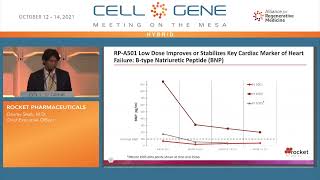
Hello, friends, partners. Great to be here in person after such a long time. I forgot what that was like. And this has always been a very special meeting, and we're honored to be able to talk today a little bit, a little bit about gene therapy. I'm Gaurav Shah. I'm honored to serve as CEO of Rocket Pharma. I've been in this role for over 5 years. We've learned a lot and, um, want to share some of those learnings today. My key message today is only one: gene therapy really works. Here's our experience. First, we start with values. The values for a company last way beyond the years the company exists, and It can transcend time. Trust, generosity, curiosity elevate. We're very proud of these values. Generosity is a very interesting word, and it has the same root if you go back to Proto-Indo-European 6,000 years ago as gene. Gene, G-E-N-E, in Proto-Indo-European meant to beget. Gene therapy is the right to beget. The right to be healthy. Generosity is everything. We need to be generous with our ideas. We need to learn from one another. As gene therapists, this is a core value for the field and for Rocket Pharma. Very proud of this leadership team that we've been, been able to assemble over the years. My former job before Rocket was at Novartis. I had a chance to work on CAR-T very closely. I think what I'm most proud about, about this leadership team is that folks have the experience. For example, Dr. Rao was the head of the Orphan Products Division at the FDA for 7 years before coming to Rocket, but are also highly entrepreneurial and action-oriented. Of course, this room is full of so many amazing partners. I just saw Ramin from AGC, used to be MolMed, that we worked with. And so many others. And I look forward to meeting all of you today and tomorrow. But we are generous with how we interact. And I think meetings like this bring that to the forefront. I didn't realize this is here. So this is our pipeline. 4 of these 5 programs here work. We've reached clinical proof of concept—Danon disease, Fanconi anemia, LAD1, and pyruvate kinase deficiency. And osteoporosis. This is the rocket pipeline as it currently exists. Let's start with Danon disease. Gene therapy for Danon disease could end up being the first potential cure for any monogenic heart disease of any kind. Danon disease is a disorder of autophagy. What is autophagy? Autophagy is the vacuum cleaner of our cells. Without autophagy, debris builds up in cells, especially heart, muscle, and brain. And disrupts the natural processes. Primarily in this disease, it leads to heart failure, which leads to early mortality. This is X-linked, affects both boys and girls, but mortality is earlier in boys. LAMP2 is like the on switch of the vacuum cleaner. Anand patients lack LAMP2. What does gene therapy do potentially? We reinsert LAMP2, we turn on the vacuum cleaner, and potentially clean up the debris from cardiomyocytes, allowing the heart to contract meaningfully. There we go. 15,000 to 30,000 patients in the U.S. and EU have Danon disease. What we've learned from the natural history of these patients— and we're tracking this very closely based on a literature review as well as a retrospective and now a prospective natural history study— is that there are some predictors of decline that start way ahead of time before a patient has to go to heart transplant. In this disease, boys either pass away by the age of 19 or need a heart transplant. In the years prior to that time point,, we see worsening of several parameters of function such as this. And in the fourth quarter, in a few weeks, we hope to present more specific data on what the natural history of this disease looks like. We ran an AAV9 in vivo trial in Danon disease. We presented the latest update at HFSA in September. And at that update, we showed that we have treated 5 patients, 2 at the high dose, 1.1 E14, and 3 at the low dose, 6.7 E13 vector genomes per kilogram. This is a standard natural AAV9 capsid with a LAMP2B transgene. LAMP2B is the most important isoform within the LAMP2 complex. This is a phase 1 trial. The low dose was well tolerated, had a manageable safety profile. In the higher dose cohort, one patient experienced thrombotic microangiopathy. This was discussed at a recent FDA adcom, and that resolved with a couple of rounds of hemodialysis. And we decided to remove the high-dose cohort from this trial for a couple of reasons. One, benefit-risk already supports the low dose, as I'll get into. And second, there's no need to further subject patients to events such as TMA if not necessary. I want to talk about the 3 low-dose patients who are treated. The first patient did not take steroids as instructed, had limited compliance. The second 2 patients, number 2 and 3, took steroids as instructed, so really got the full experience of gene therapy. Protein expression in the first patient was between 10 and 20%, and the patients who did take steroids and were definitively compliant, protein expression was north of 50%. Even at 6.7E13. And this is because AAV9 loves the heart. The tropism for the 9 capsid to the heart is very strong and much stronger than it is for muscle or CNS. You see the IHC data here. Remarkably, we saw declines in BNP, even in some cases from above 900 to almost normal. All 3 patients, the BNP declined. This is a biomarker that has been used for approvals in the past. And is one that we may consider. So I talked earlier about the vacuum cleaner of the cell. The left slide is at baseline. You see all these vacuoles that are building up. Even at 8 weeks, but certainly long term, you see a clearance of these vacuoles with the AAV9 therapy. And in fact, you can see the muscle architecture emerging from underneath. It's like if you're cleaning the floor from a spill, the underlying carpet starting to be revealed. So the muscle is actually starting to work in a very visible way that's histologically proven. We also saw improvements in cardiac output in the two patients who did take steroids as instructed, and improvements in stroke volume between 30% and 60% in those two patients. Can't go back. So all in all, the low dose in Danna disease works. We had extensive discussions with the FDA over the summer, and we believe that there is a path toward approval in Danon disease using a low dose and based on early evidence of biomarker improvements. Also on the clinical outcome, that the slide that was skipped, we saw improvements in New York Heart Association class from 2 to 1 in those 2 patients that took the steroids and stabilization in the other patient. So a combination of a biomarker and a clinical outcome could be an approvable endpoint per discussions with FDA. Now, our other platform that we work on is an ex vivo lenti platform. Fanconi anemia is our furthest developed clinical program in this— with this platform. Ex vivo lenti, of course, is what I had started to learn in, in the CAR-T world at Novartis and was happy to bring some of those learnings here. Fanconi anemia is different from other bone marrow-derived diseases. Why? Because in this disease, we don't necessarily need conditioning because the marrow conditions itself. You don't need to use busulfan or Flucide or other conditioning regimens to wipe out the diseased cells because they die off on their own if you give them enough time. So the innovation in the field here was that we tried to do gene therapy in Fanconi anemia with zero conditioning. With the thought that as those diseased cells die out over time, the good cells, the gene-corrected cells, could have a proliferative advantage and take over. And this is exactly what we've seen in 6 patients that have been treated with a commercial-ready process, which we call Process B. Where did I learn Process B? I learned that at Novartis. This is the generosity. We learn from one another. So these patients, 6 out of so far 9 patients treated to date, some of them just don't have long enough follow-up, have improvements in vector copy number over time. And in 4 of those patients' cases, we see improvements in mitomycin C resistance in the bone marrow. And why is that important? Because that's how you diagnose Fanconi anemia. You subject the bone marrow to mitomycin C. If the cells survive, then the patient doesn't have Fanconi. If the cells don't survive, they have Fanconi anemia. We're finding that in several patients without conditioning, just with gene therapy, we see improvements in mitomycin C resistance over time. In fact, in some of these patients, if you put their marrow side by side with the normal person, you can't tell them apart after gene therapy. So some of these patients are no longer Fanconi anemia patients diagnostically. We only need 5 out of 12 treated patients to meet our primary endpoint in this Phase 2 trial, which we have agreement with FDA and EMA can be registration-enabling. We're excited to present those top-line data in the months to come. LAD1, third program where gene therapy works, is a disorder of neutrophils. And CD18 is on the surface of neutrophils. Without CD18, the neutrophils can't get out of the blood vessels and into, into the surrounding milieu to fight infection. These are very sick patients. This redefines what we consider the meaning of devastating. These patients often don't live past the age of 2, and when they do, they have recurrent frequent infections. Our pivotal trial here will treat 9 patients. We have 4 patients treated with some degree of follow-up between 3 and 18 months, and in all 4 patients we have reconstitution of CD18 using ex vivo lenti between 25 and 80%. All patients are off prophylactic antibiotics, have had no recurrent infections, and in some cases have complete resolution of long-standing skin lesions. This is exciting for us because it might be our first approval and, and a chance to get this therapy to a much wider audience of patients versus the clinical trial alone. IrvA kinase deficiency is our fourth program. This is a red cell disorder. It's a hemolytic anemia. These patients need frequent blood transfusions. They need splenectomies, and they have a very poor quality of life. We have so far shown data in two patients. Amazingly, these patients had a hemoglobin of 7 in the years prior to gene therapy, and Not just a 1 or 2 point rise in hemoglobin was the outcome, but a 7 point rise in hemoglobin that sustained over time seems to be durable so far. A doubling of hemoglobin. This is what gene therapy can do when we talk about being potentially curative. All 4 of these programs, we anticipate having further updates this year. I'll skip osteopetrosis at the moment. We're building a manufacturing facility. Actually, we have built a manufacturing facility near Princeton, New Jersey. Got— we're on the West Coast here, it's far away now. And this is a 100,000-square-foot facility. One half of this will be dedicated to AAV manufacturing, the other half is dedicated to R&D efforts. We anticipate that for Danon disease, we will source the clinical material and potentially the commercial material from this Cranberry facility. Several milestones to anticipate in the remainder of the year. We'll have updates in Fanconi anemia, as mentioned, longer-term Phase 1 data, and also new data in high dose for Danon disease, as well as some understanding of what the natural history of Danon disease looks like. We'll have updates in LAD1 PKD and osteoporosis as well. An exciting end to the year, and certainly a lot of milestones for next year to look forward to for us. I'll stop with this slide. Gene therapy works. If we know how to find disease targets where you can have an on-target mechanism of action— what does that mean? You hit the cell of interest and the protein of interest directly. No chaperone proteins, no workarounds. You hit the protein in the cell that matters for that disease. You can change the spectrum of that disease completely and transform lives in a way that confers longevity and in some cases enormous improvements in quality of life. We want to pick diseases where we can have clear and achievable endpoints. It doesn't take 10 years to get there, but takes 1, 2, at most 3 years to get there. And where we can, we want to be first and only in class. And why is that important? Because drug development takes time. These are complex therapies. We don't want to rush things. So being first and only in class allows us to do it the right way with the long-term view in mind. And finally, the pipeline you see at Rocket is the tip of the iceberg. There's an enormous mass underneath the surface. Our team, some of whom are here today, are looking voraciously at new targets. We have our eye on several of them, and I'm sure several in this room have their eye on targets too. And we look forward to being generous together with you. Thank you for your time. Actually, you have 10 seconds for questions. One question. I love questions. Ah, right there. Okay, no questions. Thank you. Thanks for your time.