Founder Stories: George Hatsopoulos, Founder of Thermo Electron
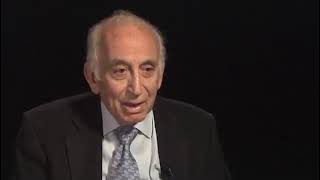
In this extensive interview, George Hatsopoulos recounts his upbringing in a politically active, academically distinguished Greek family from the mountain town of Karpenisi, his wartime experiences under Nazi occupation, and his early fascination with tinkering—building a projector at age six and a short‑wave radio to listen to the BBC despite German prohibitions. He describes how these formative experiences fostered an entrepreneurial mindset, leading him to study at MIT after winning a scholarship, where he received unprecedented institutional support for his thesis on thermionic energy conversion—a concept of generating electricity by boiling off electrons from heated iridium. Hatsopoulos founded Thermoelectron in 1956, initially developing the thermionic converter, securing a NASA contract for space power, and later pivoting to artificial‑heart technology funded by NASA revenues. He explains Thermoelectron’s unique corporate structure: nurturing young engineers in a shared culture, spinning out ventures while retaining majority ownership, and emphasizing culture over size. He contrasts American entrepreneurial culture with European conservatism, discusses his long tenure teaching at MIT, his philosophy of rule‑breaking for purpose, and reflections on leadership, mentorship, and maintaining a balance of fun and work. The interview also touches on later challenges, including market fads, personal health issues, and his ongoing commitment to founding new companies under the same model.
Chapters
Can you tell me first where you were born and what it was like growing up in Greece?
Be glad to. I was born in Athens, and— but to get the— a lot of the things we're going to talk about, it would be useful to give you some background. The— my family there's an extended family that is very close. The extended family includes my, the cousins, the brothers, the cousins of both my father and my mother. And it is very typical of some traditional families in Greece to be very close. Knit. And the reason this is particularly important for me is that that extended family has had a very important influence in what I've done in my life. And I'll give you the background. For instance, a little bit, that first of all, the— my— both my parents and the ancestors behind my parents for the last few hundred years came from one place in Greece. A town, a small mountainous town called Karpenisi. And that town was built after the fall of Constantinople, particularly designed to be not— to have a chance to be not found by the invading Ottomans. So they chose a place in the mountains where the mountain goes up, up to a certain height, and then there's a depression in that particular mountain. That mountain is called— I'll spell— I'll pronounce in Greek, Timphristos, and it's very close to mountains that people around the world may hear, may know, like Parnassus or like Olympus, where the Olympian gods from. These are— this mountain range and their various mountains, and this town comes from one of those mountains. And The town is at an elevation of about close to 1,000 feet— I mean, to 1,000 meters, which means about 3,000 feet. And it's in a depression in the mountain. Around it, the mountain goes much higher. So it's very hard to anybody that doesn't know that the town exists to find it. And that was the purpose of building that town there around the middle of the 16th century when Constantinople fell to the Ottomans. And both my parents came from there. The parents— my parents came from two families that were at odds with each other for at least 100 years, maybe even longer. In fact, for the last 100 years before I was born, my— both my grandparents, my grandfathers, the two grandfathers, one is my mother's father and my my father's father, were members of Parliament from opposing parties. The one party was kind of the Republicans, the right wing, and the other one's like the Democrats, the left wing. And they were for at least 100 years, if probably more than that, even though maybe 200 years, they were at odds with each other. But finally a miracle happened and one of their descendants, namely my father, married one of the other people's descendants, namely my mother, and the two families got united. Now what's that got to do with me? It has to do with me in various ways. And let me tell you one of the principal ways. On my father's side, there were a lot of cousins of my father that were engineers. And 4 of them were professors in the most prestigious university in Greece at that time called Athens Polytechnic. The prestige in Greece of Athens Polytechnic is very similar to the prestige in France of the École Polytechnique in France. If— to give you an idea how important that was during my teenage, we all knew that anybody that graduated from that institute probably would have employment for life. They, because that was the top, it was considered the top. 4 of these cousins of my father were professors and 3 of them over time, at some point became, were elected presidents of Athens Polytechnic. Now what's that got to do with me? It has to do that the family was kind of not committed, kind of thought that they should develop the new president of Athens Polytechnic among the young generation. And there were many kids my age. I was a teenager, and there were some that were younger. Actually, that whole thing started when I was 7 years old, and I was told that I was a candidate to develop to be the the president of Athens Polytechnic.
No pressure though.
A lot of pressure. Of course, I had to live up to that objective. And over time, I became the leading candidate of all the probably few, many dozens of second cousins I had, and so on and so forth. Partly because many of them were women, and of course that disqualified them. But even those that were young men, the family didn't think they had the talent to become a great engineer, a great scientist. But because I was tinkering ever since I was 3 years old with machines. And instead of playing with the kids, I was always tinkering with machines. For instance, to give you an idea, at a big party at our house back in 19— 1944, '34. 1934, I was 6 years old. And I was, my father said to some of his cousins that were at the party, why don't you come and see what my son has done. And what I had done was I wanted to build a projector that will show pictures on the wall like a movie projector. And it took me quite a while to figure out that I had to find a way of of finding a lens, a source of light, a lens, and then focusing that lens on something that had a picture but was transparent. So I used cellophane paper and wrote and drew some drawings there. And I finally made a projector at about the age of 6 or 7 that would project on the wall. And my father was very impressed with my achievement. So that in his mind made me the premium candidate for president of— future president of Athens Polytechnic. And from there on, the pressure was on. I had to live up to that picture that everybody expected. And that continued to influence me, except over the years I developed another liking. And it happened as follows. They— you have to understand, and this is difficult for Americans to understand at this time, in Europe, In the 1930s, and I know that because there were a number of my uncles that brought friends from France, from Germany, and other countries in Europe. In Europe, it was— they thought that Europe was the ultimate in science. And for their opinion of America was in some ways in science was very low. They thought that Americans had great inventors. They all had heard of Thomas Edison and many others, but not scientists. And therefore, But you see, I got thrilled with the idea of learning more about Thomas Edison. So when I— at the age of 14, I was in high school. I was a sophomore in high school. And at that time, everybody that saw me do various mechanical and electrical developments that was instead of playing ball with the other kids, They kept saying, you know, you're Thomas Edison. That's what you are. You're Thomas Edison. And that's fine. That's great. In fact, the combination of Thomas Edison with a good scientist, because they didn't think that Thomas Edison was a great scientist, but he was somebody that would translate science into something useful. And of course they knew that one of the greatest things they knew about Thomas Edison is that he invented the light bulb. And so I started studying Thomas Edison. And I had plenty of time to do that. Because in my junior year in high school, which was 1942, high school was shut down 85% of the year. Why? It was the middle of the war. You have to understand that in Greece in 1942, There was tremendous hunger. The— in Athens, where we were living, there were dead people found in the streets. In fact, they had a truck picking up all the dead people in the streets, dead from hunger mostly. And so it was very hard trouble. There was also a lot of activity against the Nazis. And that activity, the underground activity, was very strongly encouraged and supported by Western countries like England and the United States. In fact, and so the guerrillas, or the, many of whom I knew weren't my age, were older, the age of my father. I've known, I knew them, and of course what happened is that the Nazis, the German Nazis, wanted to, had to do something about this uprising, this potential uprising of the guerrillas. So they instituted a rule that if a German soldier in Greece ever got killed, The next day, the Germans, the Wehrmacht, would pick up 50 Greeks at random and execute them. And not only that, but all the newspapers had to, first page, print the people that were executed. That happened probably at least half a dozen times that I can remember during the 4 years of occupation of Greece. And of course there were all sorts of things that caused the high school to be shut down most of the time. You know, there were riots, there were— every time that things happened like this, and of course the high school had to shut down. So that was very good for me, having the high school shut down, because I spent all my time in the library, and my first objective is to learn more about Who is this guy Thomas Edison that all my uncles said that I may be the next Thomas Edison? Although they would like that of course, but I also wanted to be developed into a good scientist so that I can qualify for professor at the Athens Polytechnic and potential president. You have to understand Athens Polytechnic at that time was semi-private, which was unheard for Greece. Most of the institutions of higher learning, like in universities, were government-run. The Polytechnic was supported by some very rich Greeks outside of Greece and they gave a big donation provided that the Polytechnic would be self-governed. So it was governed by a, what they call it, a Senate of 12 senior professors at Athens Polytechnic and they were, they would run the whole thing. The government had no right to interfere what they decided. And they would select the president as well. You have to understand that 4 of these 12 were my uncles. So it was a foregone conclusion that if I came anywhere near qualifying for what they thought I should, I would be, it had, it was fait accompli that I would become president.
You were also, aside from being in the library, you were involved in some radio activities.
Oh, well, yeah, yeah, that's true. A lot. I was, I had a lab in the basement of my house. Now you have to understand that when the German army came, occupied Greece, the first thing— we lived in a suburb of Athens which was very high up, very beautiful houses and so on. The German army came into all the houses, including my house, including my wife had grew up in a house a few blocks away from there, although she's much younger than I am. And they came into all the houses and said, they came to my mother and the German commandant, commander of the area, came to my mother and said, "Mrs. Atsopolis, we need half your house." And my mother knew that they would take it. I mean, just like this. But we'll give you a chance. We need to house 2 of our officers. And they did that with every other house. They needed to house officers. The soldiers they had were housed in tents, and into— but the officers they wanted to be housed in houses. And said to my mother, says, you know, you can select which part of the house you want to give us so we can make it as rooms for our officers. They were very polite. And so came to a settlement. To give you a sideline of what happened after that was they, the commander said to my mother, they're very good people, these officers that are here, and they're very good gentlemen. You don't have to worry about anything, about they'll keep the house in order, they're not going to destroy anything like that. But one day, one of the two brought a prostitute in the house, and that— my mother got very upset by that. And so she went to the commander and complained. She says, you told me that these were gentlemen, and this guy that in my house, that you put in my house, brought a prostitute and stayed all night with her. So the commander said, don't worry, Mr. Herzog, we'll take care of it. So the punishment was— so he did what that officer, a lieutenant, was ordered to do was, you know, around the house we had pebbles, some of which were very sharp because they were pieces of rock that was broken up. And these pebbles were to— so that the rain doesn't dig into the ground as it fell. So it was all around the house. So this lieutenant that committed that irregularity to bring to our house a prostitute was ordered to crawl on his knees around the house several times. By the time when he finished his sentence, he was bleeding all over. In fact, I felt so badly. I was a kid, you know, I was 14 years old, and I was horrified. This guy was suffering. I'm telling you all that to give you the climate. You know, on one hand, people were dying. Other people were being executed at random. And but even so, the Nazis were also very very rigorous in their discipline of their own people. Anyway.
So why don't you tell me what about the radio activity?
Well, I tell you what, I'm leading up to that. So now in the basement, I have these two officers and my mother said, you know, you should be careful. "Would you do in your laboratory downstairs?" Because I said, "Why should I be worried?" "Oh, I don't know, you know, something that may bother these Nazis." Well, of course, there was something that would bother these Nazis because I decided to do something that was clearly, very clearly punishable by death. And let me tell you what it is. They came in to the house one day, the Gestapo, and says, Miss Herzogel, show us how many radios you have in in the house? And my mother said, 3 or 4. Sure it was. So they went around all the 4 radios and sealed the radio, the dial, in only the German station and said to my mother, we're going to come and inspect all these radios periodically every few months. And if a seal of any one of those radios is broken so that you could hear some other transmission, and not to our liking, you're going to be sent for execution. Not only you, your husband, and your two children as well. So that was the warning. And of course my mother took it very seriously and wouldn't even let me come close to those radios because she knew I was tinkering and all of that. But there was tremendous— I knew as a teenager there was a tremendous demand to hear news from the outside world. So I came up with the idea of building a radio shortwave radio to hear BBC that was transmitting all the news. And I did that in the basement. The Germans were upstairs. And among my buddies, boys and girls, I became famous because I knew what was going on in the outside world. And one day the father, one of the girls that in my— among the group of friends I had, came to me and says, George, I know that you have built a radio that can you can listen to BBC. I said, Mr. Tassos, whoever told you that, that's not true. I mean, I haven't done anything like that. Oh, come on now, George. I know it. And let me tell you, I swear that if you level with me, I'm not going to tell your parents because I know your parents will be very unhappy about it. I don't want to hear that. But I have a proposition to make. If based on you take my word, I'm not going to tell your parents, you build a radio for me and I'll pay you a lot of money and so that you can buy a lot of material to build as many radios as you want. By the way, buying material for a radio was in itself a major enterprise because there was no shops that— see, to build a shortwave radio I needed vacuum tubes. You know, there were no transistors at that time. And there was no place where I can buy vacuum tubes. But there was a junkyard down buried outside of Athens, quite a walk, maybe 5-mile walk for me to go to the junkyard. And in junkyard there was piles of old stuff, and in that pile there was some old radios. And I could— I go in, I pay an entrance fee, and I would find vacuum tubes there, bring them back to my lab, design a radio around each vacuum tube and make radios. And that was my first enterprise, my first venture. I tell you, it was very successful. Very dangerous because if I was caught, I wouldn't be here telling you that story right now. But nevertheless, it was, you know, I have I was born— being an entrepreneur is a bug. It's an affliction, if you want. I mean, and I have that. I always had in my life. I always thought about that. And in fact, it made me very curious to find out the first company, the company, the most important company that Thomas Edison built was called General Electric. He built it, he founded it in 1872 or thereabouts, and it was very successful, but he lost, as I found out, he lost that company 5 years later to the banks because he borrowed too much money. So Then I decided for me if I wanted to do the same thing for my first enterprise I better study finance and accounting and everything, which I did. You know, I was 12 years old and I said maybe I'm not going to be as great an inventor as Thomas Edison but I'll be a better businessman than Tarnas says. And so that is when I came up with the idea of forming a company. In fact, I picked the name, Thermo-Electron, which I finally founded in '56 in the United States.
I want to have lots of questions about that, but Can I just ask, with this family background and this sort of path that was written for you, that you were going to become possibly the president of this Athens university, how did you wind up coming to MIT to study?
Well, I had decided— My design was I wanted to build a company, and I designed my concept of a technology company is pick a lot of engineers and scientists and physicists and chemists and so on and so forth. Have a group of outstanding people, and then look around What is our emerging needs that society has? And see if you can find solutions to that. And dedicate the company not only in any one business there are, but in the business of creating new businesses. That was my model, and the reason I decided to call it Thermoelectron. That was, I'm talking '42, and I finally founded Thermoelectron in '56. So '42 to '56 is what?
13?
Is 15, yeah, years. The reason is that the invention that I came up with for that company is to convert heat into electricity by boiling off electrons. Now, stop me if I go into too much detail. You know, how do we produce electricity in the world right now? The man, humans, they burn a fuel, They raise mostly steam, they run a turbine, and the turbine runs a generator, and they produce electricity. Now there are several other ways, but primarily that's what it is. Or they use a gas turbine, use the fuel that runs, and runs a generator. Okay. My idea was, why don't you make that a much simpler process? Use the heat to, instead of boiling off water, by boiling off electrons. And that was the idea I had, and I studied that, and I knew that there are certain materials, one particular material, by the way, is a very rare material called iridium. Right now, if you— it's on the periodic table, so you find it. If you want to buy iridium, it costs about 10 times more than gold costs. It's a very expensive material. But that, if you heat it up to 2,000 degrees centigrade, it emits electrons. And if you have a plate, a cool plate nearby to collect those electrons, you essentially convert heat into electricity. And since thermo is the word is a word for heat in Greek, electron is a word for electricity in Greek, I decided that the proper name of my, the company based on that invention is Thermoelectron, which is what I did. And not only that, but when I did build the Thermoelectron, I would not stop on that invention only, I would just look at finding inventions, not by myself only, but by getting a lot of people that are very knowledgeable and say, look, for instance, the second device, the second business we did, the boiling of electrons is called thermionic energy conversion. You can look it up in the Encyclopedia Britannica, and at least in an earlier version of the Britannica, it had my name in it under the name of thermionic converters.
Started in a garage in Belmont? Huh? Started in your garage in Belmont?
I sure did, yeah, exactly. So you know a lot more. Where do you read all that?
I researched you.
You did? Right, anyway, so, and that is particularly of interest. You see, I thought it would be broadly used, but it wasn't. It's still not used, primarily because of the expense of the material that is needed. And therefore, there's no way you can compete with the other ways of producing electricity. It's too expensive. On the other hand, in some places, there's no other way of doing it, and that was recognized early years by the space program, NASA, and they funded a lot of our work because we could build a generator that using nuclear fuels to provide the heat, and you could produce 50 megawatts of electricity in a little tank the size of a wastepaper basket, you know, which of course is ideal for space travel, space power. Now the person, however, that really got thrilled with that invention was A man that was brought into NASA by President Kennedy from Germany. Have you ever heard of Wernher von Braun?
And Alma.
Is that right?
His wife is quite famous too. I think she was married to Wagner.
Yeah, yeah, yeah. Right. Okay. Anyway, Wernher von Braun, I remember one day that— and I think that incident describes essentially how I ran thermoelectrons, what the mission of thermoelectrons was. I went to Washington to get— because we were getting a lot of support from NASA. So finally I was invited to meet Wernher von Braun, and we talked about— his dream was to send man— the moon is a piece of cake— to send a man to Mars. That was his dream. But the only way you can send a man to Mars and I don't want to explain the details, is by using what is known as ion propulsion, where you propel back of the rocket material at extremely high speed to give you a lot of push. And you can do that if you The only way you can do that is if you have a lot of electric power to accelerate ions that are charged molecules outside the spaceship. But you need a tremendous amount of power. And the only way you could do that is by using a nuclear reactor, but that would fit in a small spaceship. So the only way to do it is the thermionic converter. At the end of that meeting, he said to me, "I'll give you a contract tomorrow morning for $28 million to start working on my reactor for Mars." And it was fantastic. $28 million for our company was Still a very small company and, you know, probably worth today maybe 5 to 10 times as much. I mean, hundreds of millions of dollars. It was fantastic. So I take the plane back to Boston. It was an Electra propeller plane, so it took a little while to come to Boston. And I was reading the New York Times. And the main article, the editorial of the time was criticizing President Kennedy for spending billions of dollars to send a man to the moon when we have so many needs here in this country and we need that and he's wasting all those billions of government money to a crazy idea to send a man to the moon. So it dawned on me right there that the space program after we land the moon will be gone. So there's no— Wernher von Braun was dreaming that there'd be no, never go a man to Mars, or not in our life, not in our century. Maybe in 2 or 3 centuries later, but not in this century. So therefore, this was not the business we should be in, who has as ultimate goal to make generators, nuclear generators for space. Vehicles. So we have to find another thing that is needed in society. So I hope I turned the pages of New York Times and found that the disease that killed more Americans every year is heart problems. And so I decided right there we That's our next business. We're going to make an artificial heart.
Did you not take the $28 million?
Oh, we did. Oh, we did. In fact, that's how we built our artificial heart, because we had enough profit from the $28 million. All these engineers I had, and you know, in order not to cheat, They were being paid by NASA, and I had them work on artificial hearts. So what I told them, I said, look guys, I'm gonna— I don't have money to pay you. You have to get paid by NASA. So your work week, 40 hours a week, you have to work on NASA. But if you want to work on our new next vision, which right now is the artificial heart and tomorrow may be something else, you have to do it at your own free time. And I can't pay you. But I can give you stock options. So if we succeed, you're going to make money that way, but I don't have the dollars to pay you. And they all said, every uniform, they said, we're on. We'll work at 5 o'clock, we'll finish our work for NASA where we get paid, and then we start working on our new projects, which they did. Not only on the artificial heart, they did it several times because At the end, we built— when I retired, we had built 23 companies, very successful companies, which we own. Thermoelectron owned controlling interest. Most of them had been taken public, but Thermo maintained its majority control of that. So that's how we built the company up. And we used the government to support our engineers, and they donated their free time to do all the new things. And today, by the way, my successor— the reason I left the board of Thermoelectron in 2000. After I retired, I brought a successor, and unfortunately that successor did something that I didn't like at all. He says, we're going to dismantle this whole idea of we're in one business. We'll pick one business. The biggest business at that time was Thermoelectron Analytical Instruments. So we're going to be only analytical instruments out of the 24 businesses we're in. And we sell off all the others. And one of the things he sold off that was the dearest to my heart was the artificial heart project. Right now the company that bought it still has— is a leader in mechanical hearts. They probably have about 2,000 or 3,000 people around the globe that live on mechanical hearts. Now, of course, having mechanical heart, you have to be plugged in, you know, because there's no heart— it requires a lot of power, and there's no battery to do that. So— but you can wear a battery outside so you can walk around, but then you have to recharge the battery every day, you know. So anyway, that is the background how we— I told you the first venture. I tell you my next— I told you the next venture and told you the third venture, right? So we're out of 3 out of 25.
So I want to ask about the structure of how you set up thermoelectron, because it was unique at the time. But I want to go back to get a couple answers about your time at MIT, because we haven't really spoken about that.
Oh, oh yeah. But you see, then— Then in 1942, the next question is, all right, I'll emulate Thomas Edison. But what country I should do that? And I knew that if I asked my father or my uncles, they would say, well, France, Germany, England. That's all they knew. But I got intrigued with the environment in the United States, which is really— and you know, this is the answer that people have asked me, to questions they asked me to give lectures in Europe many times, and I did give a major lecture in 2002 in Germany. And they all say, why is the United States creating all these new enterprises, like Intel, like Apple, like and so on? Do they have better scientists and engineers than we have here in Europe? And my answer is no. In fact, in some respects, the scientists in Europe are better than the scientists, at least before the war. Right now, of course, that has changed quite a bit. I said, why, if we have just as much technology capability, why can't we create completely new enterprises like America does, like the Apple computer, like many other things. And the answer, I said, I've studied that because I would ask myself that same question. And I'll tell you, it's just a matter of the culture. The culture in America is entrepreneurial and risk-taking. The culture in Europe is conservative. And traditional, and that makes a huge difference. I said that in 2002. I am paraphrasing something I said in that lecture in Düsseldorf. It was in Düsseldorf I gave that lecture, in English, by the way, because although I spoke German, by that time I had forgotten my German. But I gave it in English. I'll give you a story. A few years back at that time, meaning sometimes in the '80s or early '90s, we developed a machine, mammography machine, to be used by women to do mammograms.. And that had many advantages. And we went around to the United States various hospitals and we said we have that machine, it has these advantages. They would say, well, give us, lend us a couple of units so we can try it, and if we like it, we'll buy a lot of those machines. And so that business was thriving. And as a matter of fact, in the mammography field, the leader at that time was for mammography equipment was General Electric. And as we introduced our new product, we started taking market share from General Electric. And because I was on the board of the American Academy of Engineering in Washington, with which the CEO of John Lecter at that time— what's his name?
You know—
I only know Jack. Jack Welch. Yes. Yeah. And I met him in Washington one day. He says, George, you are really taking market shares from us. And we started having a discussion. Why? How can you? You have better scientists? I said, no, I don't have any better scientists than you, Jack. I know all your people in Albany in the research center, and some of them are fantastic. They don't have the right culture. You see, I— try it. I said, Jack, go and ask your engineers in Albany what is their dream, the ultimate dream. Many of them will tell you the ultimate dream is to get the Nobel, become a Nobel laureate like Langmuir. Langmuir, you know, was one who was working for General Electric back in the '30s, got the Nobel Prize. I said, ask that question among our engineers and they'll say— I'd say, would you like to get a Nobel Prize? Oh, of course. Why should we get a Nobel Prize? We're not interested. What do we want to build? Is something that is useful to and helps people and become famous for helping people, not become famous for, you see, it's a different attitude. What do you aim for? And if you develop people to aim for what you believe is the objective of the company, then you'll succeed.
Wasn't it also a function of having a smaller, more nimble company?
Well, not— the question you ask is, is that a function of having a smaller company? I'm glad you asked that question because it is not. Unfortunately, it's a function of having a company that is— the people grew together. And it has nothing to do with size. If you have people that grew together, started from young people that just came out of college and worked together and developed that ideal during the years and they have accomplished something, then they maintain that idea, even if they become very big. In fact, they maintain that idea at Thermoelectron even when we had 26,000 employees, which is when I retired. So it doesn't have to do with size. It has to do with culture. And the only way you can control culture is to take young people before their prejudices are set in in their minds and grow with them and help them have visions and aspirations different than others. Oh, by the way, so to finish the story of the mammography equipment, Soon after I talked to Jack Welch about it, quite a bit of time, we decided to go to Europe with that mammography. And we did this exactly the same thing as we were doing in the United States. We go to a hospital and say, we have that thing that does a much better job. What's the name of your company? Thermoelectra. What? Thermoelectron? Oh, get out of here. We only buy things from either Siemens or Philips. Thermoelectron? Don't know. You see, it's a different attitude. You see, not a single hospital director questioned Why would— they could have said, you know, here, you know General Electric. If you know General Electric, you know we know General Electric. And who is Thermoelectron? A new startup? We don't want it. But the environment here accepts new startups. And the environment in Europe does not. And that is the key, the whole key to the development. And I said, if you want— I told that to the Germans in 2002— if you want to change your ways, you have to change your culture, become more entrepreneurial, and help develop brand new companies because You know, right now, if they asked me to run any company, and I thought of that, not right now because I'm too old, but even before I retired, suppose they asked me to— and somebody asked me that. Suppose, George, you become very well known as a manager. Suppose they ask— your company's Well, at the peak, the company had sales of about $4.5 billion and had a market cap of $15 billion or something like that. Suppose that somebody comes in and says, we want to make you a CEO of General Electric that is 20 times your size. And world famous and has many tremendous capabilities, will you take the job? I would say no. And they'll say, well, because you don't like to deal with a company that big? I say, no, no, I don't mind that at all. In fact, I love it. Says, why wouldn't you take a job? Because I didn't develop those people. You see, these people are old people, older people. They're used in certain mentality. How can I— and they're probably going to have 300,000 employees. How do I change the culture of all these people? I can't do it. I have to start from scratch. You see, now that has its disadvantages because then you can't— thermoelectron, for instance, right now is not quite what it was because I made a mistake. I chose the wrong successor, that's all. You asked me, How did it come about with MIT? And that's a good question. And I told you that I have to go a little further than giving you a straight answer to give the background. The first thing that led to MIT was when I decided what country I wanted to build that company. And I gave you a lot of preamble why I decided that the only place I could go and do that is America, the United States. And that, of course, I knew would be anathema to all my extended family, but I had to— I wouldn't tell them. I'm just going to cheat and tell them I'm going to— I'll find a way around it. And I did. First of all, I managed to compete in a major scholarship. I got a tremendous scholarship in February of 1948 that I could go anywhere around the world to continue my studies. I hadn't finished Athens Polytechnic. I had planned to do that after I finished, but I hadn't finished it yet. But it was a unique opportunity. And then I took— I won the scholarship. It was fantastic. Everything paid for 5 years, including travel, including room and board and tuition, everything. I could go anywhere. So I started— I decided to go in the United States. So I started finding out where in the United States., and two institutions drew my attention, MIT and Caltech. And I studied, and I decided that MIT was better, not only because it had grown bigger than Caltech, but also There's another very egotistical reason. It was closer to Europe. You know, Caltech is too far away from Europe. And so I decided I'm going to go to MIT. And I applied at MIT, and it was too late. I missed the deadline, and I had somebody that I knew in the United States to go and beg for me to, for them to accept a late application, which they did. So they accepted me. And in, so I went and told my mother. And my mother says, George, congratulations, that's fantastic. I know your father won't like it that you want to go to the United States, but if that's what you have in your heart, you do your way. But you have a problem. I said, what's my problem? He says, you don't know, you don't speak any English. See, at that time I knew French, Greek, and German. No English. Oh, I knew a little bit, but I never took a study. So I said to my mother, oh my God, yeah, and I had to be there in August. I better learn English between now— it's February, you know. I said, Mother, can you find— can you help me find something? She said, you know, I have a friend that is a professor of biology, and she studied in America, and maybe she has a suggestion. And the suggestion that lady made was that I could go, you know, it's February, I had to learn English by the time I'm leaving for America, which was the end of July. So she says, have your son come in every night at 6 o'clock for 1 hour, every night, Saturday, Saturday, Saturday, every night, and I'll teach him English. And I did. And I came meticulously. I was there every night over that period. And as I came to that house, which was a few blocks away from ours, there was a little girl playing. I never paid any attention to her. Anyway, to make a long story short, In 1956, the year I created the company, I went to a party and I found— and I was at a party, a dinner party, and I had a girlfriend who was bugging me to marry her for several years and I said I'm not getting married at all. But anyway, So I went into that and I saw a very attractive lady. And so I went and started talking to her. I found out she's from Greece. Found out what part of Greece, Athens. What part of Athens, Philippi. What part of Philippi? I said— you know, and it happened to be the Philoctopoulos girl that was there where I was learning English, as it was. And as I was leaving, my date says, George, I have some advice for you. If you— I know, you know, I know you. If you like that girl, you're going to date her. And if you really fall in love with her, marry her immediately. Not tyrannize her as you tyrannized me and I became bitchy. So I told that to Daphne after we got married. I said, you owe that to Dorothy. Dorothy was the name of the girl, who, by the way, has— she called me recently, and she has two grandsons at MIT. She came from MIT, too.
When you first got to MIT, do you remember what your impressions were? How was it different from Athens Polytechnic?
Well, one major difference that I found, which— well, two major differences. One was, which really was very key, is that you could spend time with the professor as a student, with a professor asking him questions in private. And for me, that was very critical. You know, you don't do that in Athens Polytechnic. You know, you listen to the lecture, you get the book, you learn that it's all there. The professor's not going to take time to give you individual lessons. That is very important for me, because, you know, first of all, I don't want to go to lectures. In fact, when I came to MIT, after a while I found out that Attendance to the class is not mandatory. You know, in Greece it was mandatory. Not being mandatory, I wouldn't go to class, you know, because, you know, why waste my time to hear the way the professor— the professor assigned— you know, all I wanted the professor to assign me a problem and tell me what should I read in order to solve the problem. That's all. And you see, my whole preoccupation is to how to solve problems. The only reason you read something that others have done or you study something others have done is because you want to solve the problem. And studying that, why wait until the professor has to expose it at his own You waste my time. I want to take the book. I know what I'm going to have. I go through the book. I find exactly what I want, and I get it done. So that was a huge improvement for me. And in fact, it worked for me very well. I learned a lot more. Much quicker rather than going to class.
How important do you think it is to break the rules?
If you have— it depends on the reason you break the rules. If you break the rules for a very legitimate reason, of course you are allowed. But most of the time people break the rules for reasons that have nothing to do with their purpose. You see, you shouldn't lose sight of your purpose. What is your purpose? Is your purpose going to school to become a better engineer so you can help society, or is it for you to get a degree so that you can get money? Get a better position in your firm. It depends on your purpose. If your purpose is to become an engineer, everybody becomes a better engineer or scientist or whatever, or even lawyer or whatever. Knowing how I know exactly what is the best way to educate myself. As long as my purpose is to educate myself for a good reason, not to educate myself to be a better extortionist or to be a better gangster, because That's not— if I had the ambition to become like Al Capone, that would be a different story. But whatever I decided to achieve in life— and you know, it's very important. It's not whether your purpose is acceptable. It's the purpose— is that what you're committed to? You may be committed to become a better gangster than Al Capone. Why? I wouldn't know why, but maybe you are. And if that's your purpose and you decide that's my purpose in life, then you adjust your education accordingly. My purpose in life was not to become. See, I never had the purpose in life to become a president of Athens Polytechnic. That was— who wants that job? I mean, that's ridiculous. But I'm not going to push it away, because if I fail in my— what I really wanted to do, Maybe I have, let's say, a fallback position. But who wants to do that? I want to build a company that is at least as good as the company that Thomas Edison did.
[Speaker:MICHELLE TRACHTENBERG] So how do you think, because you did study at MIT, how did that affect the way you went on to then form your company? Is there a connection between the two? Did MIT help you do that?
Did it make it— Oh, are you kidding? Unbelievable. You should be present to a meeting I'm having early December with the The current president of Thermoelectron, the last president of Thermoelectron, the president of MIT, Susan Hockfield, is going to be there. Her assistant will be there. And the main purpose of that meeting— it's going to be a 3-hour meeting— is for me to explain why MIT should be considered as co-founder of thermoelectrons.
Tell me why. Not the 3-hour version though.
The shorter version. Well, the support they gave me was unbelievable. Unbelievable. What's your first name again? Toby. Toby. Toby, the support was unbelievable. First of all, when I came in, the welcoming, you know, I always felt that I don't know why there was— everybody, the professors gave, it seemed to me, that gave me preference to everybody else. Preference to American. It could be, you know, I've thought about it. I mean, it's very unusual. I think it had to do with the Second World War. You see, because I was the first foreign-born student to come after the Second World War at MIT. And I think that— and I got fantastic support and attention. All right, that's mine. When I wanted to pick my thesis, and that is probably one of the number one key answers to your question, I was given various opportunities to do a thesis in various things. In fact, 3 professors, I remember, gave me choice. They each had their own ideas what is the best thing to do my thesis. They were all exciting ideas. But I told them, I said, I don't want to do that because I don't— my thesis may take 2 or 3 years to do, and I don't want to waste my time doing a thesis What I want to do is to work in preparing for the creation of my company based on my inventions. So I have to prove that you can boil off— make electricity by boiling off electrons. One of them, and I give you all their names in a short while, the head of the department One of them was Professor Kay. He took me to the head of the department, and I said to the head of the department, I want to do my thesis in proving my invention works. So they both said, yeah, that's fine, you can do that, except that who's going to pay for your experiments? Do you have any money? I said, no, we don't. I don't have any money. He said, well, there's nothing we can do about it, but we suggest, why don't you— this sounds intriguing idea. Maybe the space agency could help you. Maybe the Atomic Energy Commission could help. Maybe the Department of Defense can help you. So we'll set up appointments for you to go to Washington and trying to sell them the idea to finance this idea of yours so you can do your thesis. I went to all three with the appointments they had, Professor Den Hartog and Professor Kaye had arranged, okay? And they kicked me out. They said, this is the craziest thing we ever heard. Boiling of electrons? Are you kidding? Get out of here. I'm not going to give you a dime. And when I reported that to Den Harder, he went to the dean. At that time was Dean Soderberg, Richard Soderberg, who got enough intrigued with the thing that he went to President 1 billion, and they carved out for the first time, at least that's what they told me, first time in the history of MIT that all the R&D at MIT was supported by U.S. government. For the first time, MIT used its own money to support my thesis. And so that's reason number one. They spent $50,000 over a period of 3— well, no, I started that in '53, '54, '55, '56, '55, yeah, about 3 and a half years. And that was Institute money. And then, and of course they owned the patents. And when I went to the Dean Solberg and said, Dean, I'm forming a company— I was 56— called Thermoelectron, and I would like to buy the patents that MIT has because it paid for the thing. I have— you know the MIT, even though MIT has the patents of somebody working, a student, but the student has rights too. So Dick, Professor Sollyberg says to me, I'll talk to the president. Came back a week later and said, you know, we decided to— all you have to do you can have the rights, the full rights on the patent, provided you promise if your business is successful, you endow a professorship. And I said, boy, that's a pretty good deal for you. I did promise. I did endow it as soon as we start— we're successful with the company. And so that's the major— but that was, I would say, 10% of the contribution of that. There were many, many other contributions. Can you imagine— and when I tell that to people right now, entrepreneurs that come out of MIT, do you know what the Department of Mechanical Engineering did? The assistant department head called me in, Professor Carl Svensson, called me in and he says, George, you know, I understand that you started a company and you're now an assistant professor here, and you work only weekends in the company and plus one day, that's what the official, but wouldn't it be easier for you to be connected, your office at your company be connected with the MIT network? So I got an extension, an MIT extension for my office. Now when I tell people that now, they say that would never fly here right now. This would be called completely no-no, conflict of interest, totally inappropriate. But it was a different climate at that time. The help MIT had given me was enormous, final help. And I'm going to tell all that to Susan. In 4 weeks from now. So I got my thesis. MIT called me in. All the deans and so on called me in and said, yeah, congratulations, you got your PhD. You became an assistant professor. And you got everything. And we gave you the rights. And now you can build your company. But no more money. You have to find your own money. And I was trying to find angels, you know, to find some, and it was tough going. And what changed the picture dramatically was something that, the following story.
And again, I'm getting too verbose, and if you want me to, I'll stop right here. I'm very interested in the ways in which MIT helped you.
All right. What happened was that Professor Denhardt, the head of the department— or maybe it wasn't him, but it was Dean Soderberg. I don't know, one of them, say, you know, we can help you there because this invention of yours could very much intrigue General Electric. And for me, of course, General Electric meant a lot because they didn't know that I was— my ambition was to emulate Thomas Edison. I never told anybody that. But, you know, why don't we invite some people from research labs at General Electric to look at your invention, and tell them that you're looking for funding, and General Electric can fund it. I've done that before, funded. So they came in. And in fact, that was, as I found out later from Hayden Library, that was the first time that anybody asked so many— people asked so many copies of one thesis, because they all got copies of my thesis. So I thought they got that, they went along with this. I told them that I want them to invest. They said, we'll call you back. So that's March. March, April, time goes on, nothing happens. Not a word. So again, I was trying to get some people to invest in my company, and I found a couple Angels had to do a little bit of investment. And then what happened in December of— December what year? December, I forget now, 2007 or 2008, '07. 2007, December 2007, sorry. Somebody calls me up and says, read the New York Times in business part, that section, and there's an ad. General Electric invents a new way of generating power by boiling off electrons. A prominent engineer at General Electric, now called Dr. Volney Wilson, invented that and so on and so forth. I take that and go to Dan Hartog, and together we went to the dean, sort of. And they got— they exploded. Because they knew all this history. They knew they had come and they saw what I was doing, and then they— 40 years earlier. And so they start talking about, should we sue General Electric? And then they said, no, no, we shouldn't do that. We will— don't worry, George, forget it. We'll take care of it. And they did a fantastic PR campaign about my invention. I have a whole book that big all over the world. And that was publicized worldwide. London Times, Paris Match. It appeared in Russian newspapers, appeared everywhere, in the United States, all over the place. And MIT invents a way by boiling off electrons. By the way, London Times footnote to that, I'll show you the— I still have the clipping. Footnote: General Electric, a few months earlier, General Electric claimed to have invented that themselves. That's the end of it. Didn't elaborate more. Guess what? I get mail, piles of mail, all from all who wanted to invest in my company. When I tell that to a new entrepreneur that has an investment, they can't believe it that anybody can be so lucky. And on top of it, two of the top-notch venture capitalists in the country at that time, who were Lawrence Rockefeller and General Doria. Have you ever heard of General Doria? Started, wanted to be the principal investors. I told them that I have to decide between the two of them. And the investors start trying to convince me to take their money. To give you an idea, General Doria invited us at his house in Both Lawrence Rockefeller invited us to his house outside New York and Gerald Doria invited— I was married at that time— invited me and my wife to their house in Beacon Hill and in fact there was, they had a whole chamber orchestra. Can you imagine? When I tell that to entrepreneurs, that two principals were trying hard to get for me to convince me to take their money, they can't believe that. How lucky can you, anybody can be? And I haven't ended the thing, and I'm not going to end it because I can go all night, but the kind of people, you know, all the people that really took the culture, adopted the culture, and believed in, like, you know, some analyst in Wall Street said to me one time, Thermoelectron is not a company, a group of people, entrepreneurship. It's a cult. It's a cult. It's like— which was, you know, all these MIT people that came to it, they believed in what we were doing. They believed in the whole idea of serving society by finding ways to solve problems. Not to get Nobel laureates, that's all for— that's look down upon it. Only physicists want to look. Engineers are different. Engineers want to build that to do some results. And getting a Nobel is not a worthwhile objective.
Is it MIT's support over the years that is responsible for you being on the Corporation? Is this sort of a way to give back?
Well, you know, I became very well known among the members of the Corporation, so when I I was a senior lecturer for many years. And when I retired as senior lecturer, I taught— you know, I retired as an associate professor in 1961. I was appointed Senior Lecturer, and that, in fact, I was told— now, I'm glad to have that written because I was told that was the first time that they came up with the title Senior Lecturer. Until then, MIT had the title Lecture. And, but they didn't want me to leave, so they invented the title senior lecturer, which is more or less equivalent to a full professor, but part-time. So provided that I would teach at least one course and also supervise thesis, which I did. And I did that for 22 years. But after I retired as senior lecturer, MIT came up with the idea to put me on the board of trustees.
What is it that— you kept up the teaching for 20 years. What is it that you got out of that experience that kept you wanting to do it?
That's a very good question. What is it that I got out of that experience of teaching that I wanted to do it? I did get a lot of it, but that's not why I wanted to do it. The only reason I wanted to teach is because I— that's fun for me. And you know, my board kept asking me that same question you're asking. George, you're working very hard. The company is doing very well, and you're working very hard. Why on top of it you have to teach at MIT? Especially since, by the way, they paid me to teach at MIT, and every year I would donate all that pay. Back to MIT. It wasn't part of the deal. It was just why I did it. So he said— I said, why? What should I do? All right, so you did— you're working 50 hours a week, 40, 50 hours a week, which is roughly what I was working. Why on top of it, on average, You teach several hours a week. I said, why shouldn't I? He said, well, because you should— if you work 50 hours a week, you have to relax. I said, what do you do? And you have to have fun. I said, all right, what do you have— what do you do do you have fun? He says, that's several members of the board asked specific. He says, we play golf. I said, well, I teach. That's my goal. I don't like golf. You see, that's my problem. But I like teaching. I have fun teaching. And really, I really mean that. I mean, I didn't do it because I'm getting something out, although I You always get something out. You learn a subject more by teaching it than anything else. There's no other way, more effective way of learning than teaching something. Especially if you teach very brilliant kids that ask the most unheard of questions that floor you. That you don't know and you would say, just a moment, I don't know the answer. I'll answer you next week. They forget. I would see the student in the corridor and say, well, I got your answer. He says, you still remember that? I say, of course, you asked me the question. I had to find the answer. That's how you learn, but that's not why I did it. I did not do it because it was useful. I did it because it was fun, and it's a different objective. Playing golf or playing bridge is not useful. It is somewhat useful. Playing golf, you exercise a little bit, and playing bridge, you exercise your brain a little bit. So there's some usefulness there. But primarily you do it because you have fun. And that's why I do the teaching.
I want to go back for a minute to the structure of Thermo. As I understand it, your plan about bringing lots of smart people together and having them solve societal problems. That as that developed, you spun off these individual companies and retained 50% ownership of each one. Can you just talk a little bit about why you approached the business that way and what the philosophy was in setting it up that way?
Well, there were this— first of all, there's the following alternatives. You start a new business, you maintain it as a division. That's one alternative, a wholly owned division. You make it in a company which you can have it incorporated as a private company, or you incorporate it as a company and you take it public and maintain more than 50%, or the The final fourth alternative is to sell it off completely. Okay. Now, what are the— there are many pluses and minuses. The first one is not a good model because you're not going to attract people that have brilliance and imagination and drive want to create their own thing. Being the head of a division of another company doesn't satisfy them. So I would not have gotten all these ideas from people that could very well— they're working for someone very bright, they got an idea, and as we've seen, and that happens to many companies, they got an idea and go and find some venture and start a company. Why don't they start the idea in their own company? Because they want their own thing. So The idea that I said, you stay here as a division, and as soon as you— I promise you, as soon as you're reasonably independent, I'll make you a company, either taking you public, but we make you an independent company. That was key to motivating these people. You see. Now, why not sell it? As a matter of fact, part of the deal, and many times it was the people that requested that, we'll do that and we love that, but you have to promise not to sell us because we don't want to be in a different environment. We love this environment. We want to do our own thing and to be our own boss, but we like the environment. Now that was the negative why I didn't— you see, and I don't know how I would do it in my next life when I— there's no next life, of course, but But nevertheless, if I had to do it again, because we had too many— by the way, we didn't call them spin-offs. The word spin-offs is when you separate completely. We call them spin-outs. We didn't invent that word. That word was invented I don't remember which year, but I think it must have been sometime in the early '90s, by a report in Wall Street Journal that described the structure of— the unusual structure of thermoelectrons. And they said, this is— all these other companies called— if something comes out of them independent, they call it a spinoff. And of course they get rid of it, they sell it, or they give it to the stockholders. Thermoelectron retains it as part of the family, becomes an extended family. So the proper word he coined was spin-out, not spin-off. So it's just a linguistic detail.
Anyway, does that answer your question? Yes, and now I want to know, as that model worked well for a long time, right, and then it got to a point where it didn't work well anymore, do you, do you have a sense for why that was? What was the—
what changed? Well, first of all, Most of the people have the idea that the model didn't work towards the end, primarily because after 12 years of constant rise in Thermo stock prices, Thermo stock price took a dip. I think that— and then of course, soon after that, I retired. Okay? So the world agrees with you. After a while, things didn't go well. Doesn't agree with me. This thing that happened with the stock price was— and I knew it— was completely— had nothing to do with the structure of Thermolign. It had to do with the fad in Wall Street. Wall Street goes through fads. That happened to me back in early '71. And happened to me again back in '82, and it happened in '98. All right. What's the fad? See, Wall Street over— these fads last about 10 or 15 years roughly. Sometimes Wall Street gets enchanted with having— sponsoring a company that has a generic ability to create new ventures, has the technological know-how to create new ventures. Create new ventures regardless of where. They say they have know-how that can apply to medical products and to this and to this and that, and this give a premium price. And then after 10 or 15 years, the pure play concept creeps in. Wall Street likes only pure plays. It doesn't like companies that dealing with their outcome. What happened at Thermoelectron, we hit a predictable, and I knew it fully aware, that we hit a temporary phenomenon of they didn't like this complex structure, which, by the way, 3 years earlier they thought was the greatest thing since— All right. So nothing— So we've done it before. It happened in the '70s. It happened in the '80s. So it happened again. So we're going to— another 2 or 3 years, it'll be over. There's no problem. But there was a problem having nothing to do with structure. First of all, I got cancer. And second, I got old. Now the cancer was— I had prostate cancer. And after a lot of deliberation with my wife, we finally removed it. We didn't know it's going to work. Fortunately, it worked beautifully. And that's been 12 years since, and there's no sign. Everything worked all right. But it did affect that year, and combined with my age and my wife's insisting that, well, you know, you can't go on forever. So basically it was not the— I don't think that I ever considered this was a fluctuation of the market. That I knew would happen, and it would— I knew would pass if I probably— if I didn't have the cancer that disrupted me and affected my wife as well, I probably would have continued another 4 or 5 years because, you know, I did pretty And as it turned out, I was fine after a while. In fact, so fine that I started a new company and went back to work full speed. So there was nothing with the structure. I'm continuing my ideas to replicate the same structure. And it'll take me a longer time, a long, not longer, long, long time. I hope it takes me shorter than The 50 years took me for Thermo Electron, but maybe, I don't know, maybe. It doesn't matter. It's not the end. It's, you know, a Chinese, and I can't tell you who it was, a Chinese philosopher said, when you set yourself to go to somewhere and mount your mule, your donkey, don't keep looking at your product. Just look around and enjoy the ride. It's, you see, it's true that it's useful to have, to set a certain direction you want to go. After you set the direction, don't focus on your goal. Focus on enjoying the ride. And the ride can be very enjoyable. My objective is if I can achieve life being 80% fun and 20% hard, unpleasant work, then I've achieved my goal. That's my goal, 80% fun. And I've achieved it over time many times, not in the '90s. I tell you, in the late '90s I didn't achieve that. But now I'm achieving it, and I achieved it in the past.
Well, I have many questions that we didn't get to, but we're just about at 4 o'clock, so I guess the last question I want to ask you is what that we haven't talked about do you think is important to speak to before we end?
We didn't really talk about Pharos or Well, we didn't talk about Pharos, but it's not important for me to talk about. All I can tell you that my new company is I'm trying to continue what I did in the past, and there's nothing different. Same idea, and it only confirms that what I did at Thermolacton was part of my makeup. That's what I want to do, and I'm doing it. And the only assurance that I'll continue to do as long as I live is as long as I have 80% fun. Now, what we didn't talk about— well, of course, there are a lot of things. First of all, the details we didn't talk about. We didn't talk about The support my family have given me was very important, the support my family has given me. Well, I was— and by the way, all these people that— all these professors and cousins of my father and my mother and so on. That were very critical that I went to the United States. They were even more critical that instead of continuing a scientific career or an engineering career, I did business. Even though that is—
eventually they accepted me. Do you think that part of the success that you've had is because you did make it a point to study the business side and that you aren't just an electrical engineer who started a company?
First of all, I'm not an electrical engineer.
I'm a mechanical engineer.
Mechanical engineer, sorry. But frankly, honestly, I am an electrical engineer. Mechanical engineer too. I mean, I could very easily qualify for electrical engineering, in fact more easily than— why did I— my degree is in mechanical engineering, it's another story. It's due to having to do with my draft and so on and so forth. There are many stories, but anyway.
So your question was, what was it? It's how important, you made it a point to look into the business side when you were very young, and I'm wondering how important you think that was to being a successful scientist.
Well, I tell you, I tell you, very important, but I didn't do it Because people told me, you know, if you want to be a successful businessman, you have to learn all the many things, you have to go to business school, Sloan or Harvard and so on. Actually, I've done much better than going to those schools because, you know, I kept asking myself, I want to create a company. It occurred to me— I remember one of the first times I hired some— an engineer from MIT. I gave him a job to do. It was very small. There must have been 25 people altogether. And we brought our first engineer. He didn't even have a PhD. He had a master's or— I don't remember what department. No, of course it was mechanical engineering. Anyway, I gave him a job and I asked him to analyze what should be done. And he started explaining to me. I disagreed with his analysis. And my first reaction is to tell them, you're full of baloney, you know. But then I stopped. And I said to my mind, why am I doing this? I'm trying to develop that person. And the only way I can build a company is develop people like that. So let's go slowly. Let's not tell him that you're wrong. Let's go around the corner and ask a few questions here, a few questions there. And I did it. And he saw what was wrong with his thing himself. And he was very happy. So I said, gee, you know, that's my job. My job is, if I want to create a company like that, my job is to develop people. You don't have to learn that in business school. It's common sense. A CEO of a new enterprise is not should forget he's an engineer. That should play— in fact, that is a burden. Being an engineer is a burden. It could lead to catastrophe, because as long as you don't control the desire of engineers to say, well, no, this should be done this way and so on. The purpose of a CEO is to develop people.
A lot of people don't know that.
I know. Isn't that— no, no, very few people. So if you were to give me a price, and ask me a major prize. What should I— you think you deserve a prize? I think I deserve a prize not even though I've done some— I've got many prizes in engineering. I'll give you a list of Paul the present. None of them really reflect what I think that I deserve more. I deserve to understand what it takes to build an enterprise, and what it takes is a group of people. So it's, you develop people. And how do you learn how to develop people? By only keep asking yourself, how would somebody influence me? The only advantage that I have by being an engineer is that since I'm trying to develop engineers, And I'm an engineer, I know what will— the tricks I have to use to influence an engineer, you see. Certainly not go up against him because you'll make an enemy out of him. So that's the advantage. Look, I think that I recognized that, you know, I'm not perfect all the time. Sometimes I get carried away and I may start arguing. I mean, I've lost some very fine employees because I failed to recognize that my job is not to argue with them, and prove them they were wrong. My job is to keep them motivated.
More from Joshua







Scientist Stories: Hans Waterham, The value of phenotypic assays in peroxisomal disorders




Scientist Stories: Joel Zlotogora, Genetic carrier screening programs for reproductive purposes