Founder Stories: Henri Termeer, Former Chairman, President & CEO of Genzyme
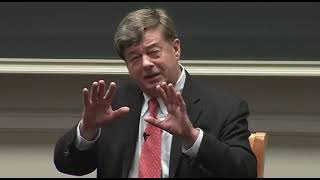
In this Darden‑hosted interview, Professor Ken Eades talks with Henri Termeer, former chairman and CEO of Genzyme, about his personal career path, the founding and growth of Genzyme, and the scientific breakthroughs that turned a tiny Boston startup into a global biotech leader. Termeer recounts the early development of enzyme‑replacement therapy for Gaucher disease— from harvesting placental tissue to creating a recombinant product— and the many scientific, manufacturing, and regulatory hurdles they overcame, including a viral contamination that shut down a major plant. He explains how Genzyme financed its R&D through unconventional vehicles such as private R&D limited partnerships, tracking stocks, and public‑market strategies, and how these financial innovations allowed the company to stay independent. The conversation then shifts to the pressure from activist investors, notably Carl Icahn and Ralph Whitworth of Relational, describing the proxy battles, negotiations, and eventual settlement that led to Genzyme’s acquisition by Sanofi. Termeer reflects on the company’s culture of daring, purpose‑driven entrepreneurship, the importance of staying true to a mission of treating rare diseases, and his vision for the future of personalized healthcare. The session ends with student questions on leadership, the role of public markets, and the ethical stance when dealing with activist shareholders.
Chapters
Good afternoon. I'm going to take the silence in the crowd to mean that it's time for us to start, and I'm happy to do that. My name is Ken Eades, and I teach finance. I teach the Corporate Financial Policies class, which we just had this morning at 10:00 and 11:45. So a lot of my students are here and they're acquainted with Henry Tamir, who's our guest today. And Henry was the protagonist in the case about Genzyme and the challenges that they faced with relational investors as an active investor coming into the company. But there's a lot more to the story about Genzyme that I'm going to have Henry tell you about. So let me just remind you of the highlights of Henry and his career. He was former chairman and CEO of Genzyme, and he did that for 25-plus years. Was at Genzyme for almost 30, I guess, by the time you add it up. Genzyme eventually grew from very small beginnings to be one of the top 5 biotech companies in the world. And since then, since being involved in that realm, And there's so many success stories. Those of you who read the case have that information, but I want, again, I want Henry to tell you a little bit more about that. But he's still involved in world health and in healthcare. He's a member of the board of directors of Project HOPE, which is an international nonprofit health education humanitarian organization. He's also received lots of different recognitions over the years. I have some of my favorites here that I'd like to recount with you. In 2010, he was inducted into the Academy of Distinguished Entrepreneurs, and that was established by Babson College. And he received the Pharmaceutical and Biotechnology Lifetime Achievement Award from Frost Sullivan in 2009. And he was selected by Ernst Young for its Master Entrepreneur Award in 2007 for the role he played in guiding the overall development of the biotech industry. And he's been inducted as a fellow in the American Academy of Arts and Sciences. So we're very lucky to have him here. He actually started at Genzyme as president in 1983. That was 2 years after the company was founded. And he came there from Baxter after being there for 10 years. Turns out he has an MBA from Darden, and so this is a bit of a homecoming. So please join me to welcome Henri Termir. So what I'd like to do is to, first of all, Henry, I want to ask you about your career path and your career choice. You know, there was an inflection point there when you were at Baxter and you go to Genzyme. Obviously that was critical to what we're going to talk about. Tell me a little bit about, so coming into Darden, what were you thinking about doing? How did that play out? And particularly when you get to this choice about Baxter versus Genzyme, how do you make that choice?
Yeah, you ask a question that for the next hour we can have some fun with. But I came to Darden from Europe. I came from England. I grew up in the Netherlands. I went to England and then ended up here in Monroe Hall, very much the beginning. Dean Abbott for the first year, Dean Shepard for the second year, Stuart Shepard. Then after the first year, I wanted to go back to Europe. And there was no reflection on Charlottesville or anything, but I wanted to go back to Europe because I felt very special. I had a very special exposure here. I loved the experience. And the same things we talk about now when we talk about Darden, we talked about then and experienced then, this very the human factor that we work with in this institution so very well. So I want to go back to Europe and to use my experiences there. I tried to explain that experience at The Economist in London, at Unilever, both in London and in The Hague, and the usual firms, you know all of them, that are well known, that I thought would have international exposure enough to appreciate this. No appreciation. I could as well not have bothered. So I decided to take the interview schedule on the campus. And on the very last interview of this schedule was Baxter. Baxter was a young, new healthcare company in Chicago, a very exciting company, had been growing very rapidly, had done some very innovative things. And they wanted to have somebody that spoke European languages, to come there to eventually, relatively fast, make them, make that person a general manager. And that's what I wanted to do. When I came here, I set out really to become a general manager. What I really meant to say is I wanted to run a business. And so started in Chicago with Baxter. They sent me all over to different places around the world where I could learn things, they gave tremendous exposure. I ran the German company for Baxter for a number of years. I went to Los Angeles to run the— or to be Executive Vice President of their early-stage biotechnology effort in plasma fractionation. And I was there for 10 years, and it was a great experience. And I learned a lot of the stuff that I had learned here became very useful. And then one day I got this call from a venture capitalist who had supported the very beginnings of Genzyme. Genzyme was 17 people at the time, they were in Boston, and they had no plan. But they wanted to have a plan, and they said, we'd like for somebody to come to create a plan. And we have great connections with MIT in particular, but also with some venture capitalists who would invest if we had a plan. So come out and see us. And I did, and it was in Boston. The company was located in the combat zone in Boston, the red light district. You know, you would go there in the morning, 7 o'clock, and you walked to work and you get propositioned 3 times before you get there. A live neighborhood dynamic. And it was the very beginnings of a very interesting set of possibilities. So I joined. And then in the In the months that then followed, every weekend on a Saturday, sometimes Saturday and Sunday, we would meet either in the combat zone or at MIT in a classroom like this, and we would talk about what were the possibilities around this technology. What could we create that Genentech, which was a very early stage biotech, had already not done, not covered? What Biogen, another early stage company, had not covered? What could we uniquely do? What was uniquely possible. There was not much we could do with what we had. That was but a very thin starting point. But we could do a lot if we let our minds go a little bit wild. And we set up a plan that came together between Christmas and New Year in '83. Where I still have the documentation of writing that up. It was not a plan. Plan is way too big a description for this. It was more an intent, a direction that said we wanted to do important stuff. We wanted to make a big difference, not a small difference. This was about really treating a disease— and making a very big disease-changing difference rather than a small difference. Not an incremental difference. Not a palliative difference, but more a treatment, a curing difference if we could. And so we set this very ambitious set of goals. And then we set out to execute on it. And through a tremendous amount of good fortune, we started to apply this principle to a very specific disease called Gaucher disease, which is a very, very small single gene disorder that causes patients that have that disease to for lipids to accumulate in their body, particularly in the spleen, the bone marrow, the liver. And a little kid that has this disease, a severe form of the disease, would look like they've swallowed a basketball. And the spleen gets so large it pushes all the other organs out of the way, and the spleen must be taken out in these very severe cases at a very early age. And in severe cases, these patients suffer for 10 years and become very deformed, and they are a matter of enormous pain to everybody that sees it. And there was no solution. It's one of those cases where you say, I hope it is a short time, because we can't help those, nothing. That could be done. In the textbooks, a physician would learn just a paragraph about lysosomal storage diseases, particularly Gaucher disease, and how helpless we were. And if you have it, do the best you can to give everybody some sense of comfort. What's missing in these patients is an enzyme that normally breaks down lipids in the body that are the normal turnover of life. And then if they don't get broken down, they accumulate in a particular— in these spaces that I spoke about. So we set out to reproduce that enzyme and to find a way to deliver it to where it needed to go, where these accumulations take place. And we started with the enzyme that occurs in life, and where we could find it was in placentas. So we collected placentas. I had a little car that during the day was used to drive to the hospitals and to say, can we have your placentas? And of course we said it in a more broader way. We made an arrangement around these things. It is a pretty serious business to work with human tissue. But that's essentially in very short order what it was. And in the evening I would go home and the sweet smell of placentas would still be in this car. And we would lock all these placentas up, and they're very heavy, to the 15th floor in the combat zone of 75 Nealon Street, where we had a few Sharples centrifuges where we would spin the placentas in a way that the fluid would be taken out and we would be having the very dry tissue. We needed the dry tissue, didn't need the fluid. And every time we did that, everybody else, 15 floors, stopped working because the whole building started to vibrate as this was happening. And we produced some of that enzyme, and it was then used very quickly in humans because these were kids, these were very sick kids, and everybody wanted to do something, but it didn't work. Millions of these units were used, units of enzyme were used, but it didn't work. Why didn't it work? It didn't get to the right place. It should work, but it didn't get to the right place in the body. And then this great invention that was made between the NIH and some of our early collaborators to change what's called the glycosylation of the enzyme in a way that targeted it specifically to particular cells, macrophage cells. And then we tried it in '84, that was, late '84, on a 3-year-old who was about to get his spleen removed. His mother was a physician at the NIH. She pleaded to have this kid to be the first kid to receive this modified enzyme. And we gave— it was not our decision, it was the NIH decision. Roscoe Brady, magnificent scientist at the NIH and the PI, gave permission to do this. And the child got this enzyme, and it was a miraculous effect. In 2 weeks, the enzyme was given twice every 2 weeks, an infusion, 4-hour-long infusion of enzyme, In 2 weeks, the child started to change, not necessarily the size of his belly, but he was very anemic. He was getting color back in his face, and he started to behave like a 3-year-old. He was running through the corridors, and if today, even today, when you find people that were there in those very early days, they will talk about this and they will break up, because this kid was well known. Because the mom was working at the NIH, and everybody knew this kid, and they were praying to have this kid— something were to happen in a positive way. And suddenly it did. And when we ran out of enzyme, which did happen from time to time, the kid was his own control. He would get worse pretty quick too. He had a remarkably fast reaction to the enzyme. And we thought, wow, we're there. And I can tell you, of all the things that all of us can engage in, at least the one that I remember of the 30 years that I was there, those are the moments I remember the most. And those motivated me forever the most. That moment of saying, wow, it works. It's a long story that then follows. 10 years. 10 years of ridiculous mountains. And there were many people that would come to see me and say, you are just kidding. This can't work. This was the middle of the HIV crisis. We didn't know how to produce recombinantly these kinds of enzymes. These were mammalian enzymes. We had to extract it. But we needed 20,000 placentas. 20,000 kids needed to be born to treat one patient. For one year. There weren't enough placentas around. This was but a tease. And would this work more than on just this patient? There was a famous meeting that we spent one day with this group of 8 scientists, 7 MIT, 1 Harvard, well-known names. They teach this stuff at MIT now. And they They said to me after a day, he said, Henry, we can't bet the company on this because this patient works, but it is an anecdote. You can't extrapolate it. And on top of that, gene therapy is just around the corner. Now, those of you familiar with gene therapy, it is still just around the corner today. And we ignored them. And there were 3 people that believed: the mother, the scientist, Roscoe Brady, and by some good fortune, my gut told me to believe too, because I saw the kid, and I saw the family, and I saw the difference. And I could see, feel, sense this was not a fluke. They then did a trial of 8 more patients. As you know, clinical trials, clinical experimentation on kids is really tough, and people are very shy about that. So we took juveniles that were a little bit older, and, you know, 15 years, 14, 15 years. They weren't as impacted as the first patient because they got older. The first patient would have died by 10 years. But these patients were also severely impacted and they would get severe problems and have a shortened lifespan. And these patients were given the enzyme and it didn't work after 6 months, which was remarkable. It worked enormously well after a very short period of time for the first patient. What happened? And something as basic in hindsight— and actually that it didn't work was published, and in the literature today we can find very high-level NIH kind of paper that says this first patient was an anecdote because it didn't work the next 8. And of course what they hadn't done was change the dose. They used the same dose on the 3-year-old as they used on the 14-year-old. And this of course worked, but you couldn't see it. The dose was too low. You needed to adjust it for body weight. So we then went out and we figured out a way to raise the money through an R&D limited partnership that I personally raised by traveling around the country to talk to very nice, meaning people, oil drillers in Houston and bankers here, bankers there, all over the place. We sold units, we needed $10 million to do this very small trial. And we intended to sell 200,000 units for $50,000 apiece, and we gave them warrants, and it didn't really work. After 3.5 months, I almost gave up because we had only 4 months before the data became stale. In the last 2 weeks, and this is also a remarkable story that you need to put somewhere in the back if you had, at least for me it was an important lesson. I ended up in secondary, with apologies to Albany, New York, secondary cities. Ended up in Albany, New York. We got a little plane in LaGuardia, flew along the Hudson River, and I brought the mother of Brian, the first patient. But she was 8 and a half months pregnant. I was a little concerned about the flight going like this, but we landed and there was a room, a little smaller than this, of people that were interested in this limited partnership as an investment vehicle. And I asked Robin to explain the story, and she explained the story, like I'm doing here now. And she talked about her kid and how important it was to do something for the other kids and how it worked and how important it was to do it for the kid in her belly because she knew by that time that that kid too had the disease. And at one point she suddenly stopped, went to me like Bob is sitting here, and she said, "Henry, I think I'm—" I'm in labor. So there was a third person with us, and he said, keep talking. And I took her outside. I said, listen, I'm a derailed economist. I can't help you. You're the doctor. And he said, that was probably a false signal. But what had happened at that moment was something brilliant. This was September 1987. Most of you are too young to know what that meant, but in October 1987, the market fell apart, 25% down, and you couldn't do financing if your life depended on it. This was September, the markets were still okay. People in that room suddenly understood this message, and they got it, and they called their colleagues all around the country, and we sold $10 billion worth of this R&D, private R&D limited partnership, in the next 5 days. And we got the money, and we did the work, and we went through the trials, and we were able to show that it worked. We couldn't do a big trial. We had to do a very small trial because we didn't have enough placentas. So we had— I could do 12 patients. The FDA said 214 patients. I can do 12. And there was one patient that was supported by the German government, was flown every 2 weeks to Bethesda. Whole family out of South Africa came and moved, and patients came together, were all treated in the same center at the NIH in Washington, and they all benefited. I told the FDA, they said you do need a placebo. I said no, we can't do a placebo, we have no ethical basis to do a placebo, particularly not with younger kids, because we know what happens. You have this disease, this is what happens. We did it. So we followed 15 patients, 25 patients without treatment, they went to placebo, and we treated 12. And the difference was dramatic. All 12 benefited in a good way, and they all live. And about a year or two ago, we brought everybody back together in Cambridge. And they're all now grown up, and they have their own kids, and they're all being treated every 2 weeks, and they have a normal life. And so we overcame that hurdle. You will ask, how did you overcome the hurdle of the placentas? Now it turns out that the French many years ago decided not to use plasma for the production of blood fractions like albumin or factor VIII or factor IX like we do here, like we do almost everywhere else. They used albumin— they used placenta. So they would collect placentas from all around the world particularly Western Europe and the United States, and ship it to a little town outside of Lyon, France, Massy-l'Étoile, where they would take these placentas and put them through wine presses, beautiful wine presses, and take the fluid into the plant where they would fractionate it into these human proteins that are very strategic. Albumin is used a lot in war situations because it's a plasma expander. And they would take the tissue and discard it, burn it. I needed the tissue. This was the Institut Pasteur-Mérieux. So I went to Alain Mérieux, who then was still running it. And it was then already part of Rompaulanck. And I said, can I have the tissue? And we went through the story, this story that we just heard. And I said, I have no money, I know what the process is, we need your engineers. I said I have limited amount of money, but I have no resources really to build the plant necessary. So what I'd really like to do is to give you the money, you build a small plant, we process the tissue up to some level of purity, we take the protein and modify it in Cambridge in the United States. And we'll give you royalty on anything that gets sold. He declared us crazy, but did it. And it's your $5 million. It was $5 million. These were the last $5 million that we had, somewhat. But that partnership was fantastic. It became a very emotional partnership because it was very successful. We treated about 1,000 kids in the end. In the end, we processed the enzyme from 33%, almost 33% of all placentas from birth in the United States. Visualize the logistics of that. 1 million 1.2 million placentas approximately would find their way to this little town, Massy-l'Étoile, where we would process it. And in the end, we came from many other places, we were able to treat about 1,000 young people, saved many kids' lives. And we overcame all the HIV concerns. In fact, it was then outlawed to do anything else with placentas Other than this product, everything else was forbidden because of the risk-benefit around HIV. We never had an HIV case because we were utilizing some quite remarkable technologies that came out of MIT. And of course, in the meantime, this was no way to live. We needed to get into a normal recombinant situation. We then built a plant. —called the Austin plant, it's well known—and replaced the first product within 3 years of its approval with a recombinant product that did not have the limitations and not the craziness logistically as the first product did, as the first generation product did. Now the meaning of all of this and the reason that I went on way half an hour now way longer than I should have, is that this built our culture. And it built a culture that says, yes, you can do this. No, it doesn't have to be conventional. But you can do this. And even if nobody believes it, if you believe it, you may actually be right. You may have the right gut. Because if you truly innovate, there aren't many precedents. It hasn't been done before because it's not really an innovation if it has been done. If you can do a cookie-cutter approach to something, it doesn't innovate much. And it gave us an attitude of, yes, you can do this. And we then repeated this, and we failed miserably, big time. Much more interesting— many interesting stories. They all had this out-of-the-box kind of feel to it. At one time we were using porcine fetal neural cells in the brains of Parkinson's patients to replace their dying neural cells. This wasn't stupid, this was great, and we thought this would work. We couldn't make it work, but we were trying it because we thought Parkinson's disease deserved the treatment. And in many other cases we were successful. We tried 9 different clinical trials in cystic fibrosis. A horrible single gene disorder. We were not successful. These were all gene therapy trials. But we also tried Pompe disease, Fabry disease, and other diseases where we were successful. And so that's how the company really came about, a way to bring together interesting thoughts, and then also a way to finance the execution of it that allowed the technology to stay within the company. We were never interested to go to Merck or to J&J to say, aren't you interested in this product strategically, and if you pay us, we will try and do it for you. That was part of that very early plan in late '83 where we said, we want to do what we can do, and if we can't afford it, we just don't do it. So we invented many financing vehicles that you may one day want to look at. We did tracking stocks. We had 4 tracking stocks, publicly traded tracking stocks at one time. That allowed us to raise a lot of money. We did public traded R&D financing vehicles. We did private R&D financing vehicles. We took subsidiaries public and brought them back in. Some of them we let float out. But we continuously innovated on the financial front in order to own what we had, or to keep ownership of it. And that's how Gensim came about. Now, if you want me to go to what happened next.
Well, I mean, yeah. So you have that success. You have the science. But you're the business guy in the room among all the scientists. And now we move forward and the company is getting larger, getting more cash flow, certainly getting more recognition. And at some point, you get some interest from active investors like Carl Icahn. Maybe you could tell that story.
Carl Icahn, well-known activist investor, decided that the big pharma companies needed to replenish their pipeline and that the brute force approach that they had been working on for many, many, many decades didn't work. And he was absolutely correct on that. There's nothing brute force about R&D in this space. So he said successful biotechnology companies are ideal merger candidates for big pharma, which was shown to some degree to have actually been true already at the time that he made the decision to put his money in this direction. One day in 2007, in the in October reporting. He reported always his investments, has to, and we found our name on his list. We were well prepared because our cash flow continued to grow and the company was doing quite well, and he was right. There was a big value here for companies that had a lot of cash flow and needed to replenish their pipelines. So we were concerned that one day this would happen. So he bought into Genzyme. And we decided to fight from day one, not in an unrealistic way, but in a well-planned way. So I went to the Wall Street Journal, and I explained to them how It would be good for them to sell their paper if they really adopted this story and helped communicate my side of it. They can go to Icahn, he will help communicate his side of it. And they picked us up on it. And they were very constructive. And we appeared in the journal quite often at that time. And our message was, we can't help Big Pharma, we can't help their suits. Their situation. Because it is much more interesting for, much more pure for shareholders to stay involved in the approach that we had used because the value creation that we had experienced was significant. Undoubtedly way more sufficient than the stalled pharma industry. So why would we dilute that success, that growth possibility by trying to help fill a gap that I don't think we could fill, because what did they know about these rare diseases? How could they really mix something like Lipitor with something like this rare disease, like Gaucher disease I talked about? And generally, that really got good traction. Now, because of all the activity, share price went up. So 3 months later, Carl sold. And we felt, we congratulated each other. Everybody won. The shareholders won, we were out of this predicament, etc., etc. We all felt very good. A year later, we continued to do very well as an organization. Sales grew. It took us 20 years to get from zero to a billion. We were at a billion in 2002. By 2008, we were at $4.5 billion. So the company was really growing. And it was growing not on the basic, on the kind of fluffy stuff, it was growing on products that were being bought around the world by people that were buying the product not once, but many times. It was just a healthy product-based company. And we felt good about that. And the cash flow, of course, when you have this kind of development, the cash flow explodes, because the margins are high in this business. And so by 2008, our cash flow became increasingly visible, and you could start to make the projections around it. So almost exactly 12 months after ICANN, We call him also activist investor. Ralph Whitworth of Relational, a very different kind of investor, different style. Relational kind of indicates a different style, but they're in it because they see a value and they have no intent to build the company. Their intent is to capture the value, not in a nasty way, but in a way that captures the value in a very purposeful way. Not in a way that builds the next long-term opportunity in the healthcare sense, but in a way that captures the cash flow and the product of the cash flow. So taking risk with cash flow is not part of that equation. You try and capture it through taking the cash flow, repurchase shares, as an example, and other ways to increase the return on investment. So this was 2008. In 2009, of course, I met with Ralph, and we had a very sympathetic conversation in January in San Francisco, where he explained his world, and I explained my world, and I I said, you know, doesn't seem like a perfect fit, but we had great confidence that he would do well because the cash flow was real and that we would be able to show that without becoming dislocated. So we were okay with each other in that conversation. A few months later, we got and a first warning that we had stressed our major manufacturing operation in Boston, in the Allston plant, too much. And this was an effect of the success. We had really unusual success with our products. They needed to be produced. We put 3 products in a plant that was made for 1, and with proteins that created complications. We saw that all was well. I was assured all was well. But the FDA came to visit us and say all is not well. And they gave us a strong warning around that, and that we made public. But we were building new plants, and we thought we can bridge this because this new plant in Europe and this new plant expansion in Ireland, they will come on stream soon enough for us to take relief the Alstom plant. Then in 2009, mid-2009, something hit us that was absolutely— you're probably all familiar with the black swan notion. This was our black swan. Something hit us that we had not in our mind, not in our calculation, because we had no way to— we had no experience around it. We got a virus in the plant. These are living cultures that you work with. And products, very large amounts of these products go into patients, including kids. And this scared the living daylights out of us. This was not a virus that was thought to be dangerous for humans, but it killed the efficacy of the cells that were producing our product. So we had no choice. One weekend we got a call on a Sunday, and we said we have to close the plant. This was our major, major plant, and we closed it Monday morning, and we took it completely apart to decontaminate it. Over a period of 4 months, the case that I mentioned to you, Candace, it was such an interesting case. How the vendors, how everybody came together to do this well and as fast as possible was beautiful. We had 70 vendors in that plant. We had all the employees became cleaning employees. This was— we took everything aside. Everything you can see in this room was taken down, replaced if it were replaceable, or cleaned if it weren't replaceable. Every surface area was touched one way or the other. A plant of about 300,000 square feet. Took 4 months to do this, to restart it. But they had no experience where you take something apart to put back together. This is like a massive laboratory. What happens when you put it back together? Things aren't the same when you take things apart. So the startup took away a lot of productivity out of that plant. And it resulted in us not being able to support all patients to their full dose. And that was the most painful thing to recognize. This caused the share price to go down by about 20%. And we found by the end of 2009, Carl Icahn was back, because he knew we would recover. He knew that we would get through this. The products were good. The share positions were good. And he knew enough about it. That once we recovered, value would be created again. So we then went into a proxy fight. He called me in the afternoon, I think it was 4:30, he said, call me back at 8:30, we want 4 people on the board, replacing 4 of yours, otherwise we do proxy fight. And I called him back 4 hours later, said, we're going to have a fight. And we had a fight. Ralph was handy to have because these activists, they don't love each other. They're not in the same business. So Ralph, I put Ralph on the board. And then we went into a fight. And we settled in the end. And we actually kind of were given credit that we won this fight by May of the year following. Try not to get engaged in this. This is so wasteful. This is so personally— hard to manage through that. It's day and night, every hour of the day, and you need to touch all the shareholders in order to do this. The shareholder base did not change materially in this period of time. But then I got a call at the end of May, just before the proxy vote, from Chris Viehbacher, the CEO of Senefee, who one day you ought to invite here, Bob, and he will tell his story. He's actually a good guy. And he said, Henry, we love you. We need what you have, because we have our pipeline issues. It's kind of a long story to explain, but I agreed with him. But I said, Chris, our value is down. We are going to recover. We did find a settlement with ICANN. We are going to create some real value. Once we've done, then I think our shareholders would be more interested. And so minimally, let's not talk before this proxy vote. 3 weeks after proxy was over, which actually never took place because we did the settlement, he called me back and said, we kept studying and we love you even more right now, and we want to talk to you, want to tell you what we think in terms of value. And we said, no, we want to not engage at all. And you may have picked up in the papers in that period of time— anyway, you can look back and you can find the story of 9 months of discussion between these two companies. We got to know each other very well in that period of time. And it wasn't that we disagreed on the strategic principle. We disagreed on value, and we were able to get the value together about 9 months later. It closed in late February, I guess, in 2011. They increased their offer price, and we created what's called a conditional value right, a CVR, that today still trades, that may have an ultimate value of an additional $4 billion. So the company sold without debt for about $20 billion, and then we may have an additional $4 billion that may come to us in milestones as one product that was the center of the discussion in terms of what is its true value becomes available. So I was there for 4 months until the 1st of July. Co-chairing the transition team. And I've been without a job since the 1st of July, and I've never been so busy since that time. It was a magnificent experience, and I have to say, maybe the most powerful part of this experience is the sense of purpose, which allowed I think all of us to stay on a course and to help each other find ways to get there.
A lot of this is the dream and the vision, so if you could extrapolate out, I don't know if it's a few years or how long it is, what would be the perfect outcome in terms of healthcare in your view?
Now, we have— oh, that's an irresponsible question to ask me 50 minutes later. We— there are a few megatrends that will change healthcare. One of them is personalized healthcare. And there are many different ways about this. So long explanations, not just finding the right patient diagnostically, it's also the right way to deliver the service. In healthcare, we insist on a personalized experience. Not being a number. So finding a way to deliver that, and IT I think gives us great possibilities, and the science of the biological sciences give us enormous possibilities to match treatment with the right person in the future. Next 25 years. We are— the possibilities in the healthcare field because of this This is by far the biggest economic equation that we're trying to solve, and by far the biggest growth market in the emerging markets that we're trying to get access to. The possibilities are very fragmented. They're not controlled by any one company like many other industries. They are really the access to entrepreneurs, the access for anyone in this room to the possibilities of the opportunities that are represented by the solutions that we have to figure out, otherwise we will not have the health that we can have. And health is all— maybe the most precious asset that each of us individually have, and certainly that each of us individually think our loved ones should have. This is something that's worthwhile to focus on, worthwhile to work on. But it is worthwhile to work on for not just the reason that it is great to make a contribution here, but for the reason that it is a tremendous opportunity, economic opportunity, that will create a tremendous payback. Because we're already spending the money.
Well, as you remember, part of our tradition at Darden is participation. And so we have a few minutes left, and I invite students to ask some questions.
Thank you for corporate advisory boards. Thank you for sharing the story. I'm not sure this is on. I would imagine in technology fields like yourselves and others, you are probably an exception in terms of not It sounds like you didn't come up, grow up as a technologist scientist itself, but running a highly successful multi-billion-dollar technology organization, are you an anomaly? And if so, what would you notice about some differences in your approach versus some other companies that actually are led more by the scientific chain?
Yeah, I want to be very careful to take credit for anything because This, as I said, is— the most important asset here is that you are very determined and that you stick to not just a single approach, but stick to the effort to get to a solution. And there are no classic ways to any entrepreneurial environment. If there were, it would be occupied by so many people. So it is only the new things that are entrepreneurially exciting and interesting, because that's where the space exists. I'm saying that in this area there's a lot of space, lots of different ways you can find different places where you can create real value. Maybe I'm unusual in that I got the opportunity to sit here to say it, but there's nothing unusual about me to say I'm particularly destined to succeed in it. I think anybody that dedicates themselves with determination, with all the costs associated with entrepreneurship, which means that you have to give up a few things, that you can make a difference that will pay off big time, has the opportunity to pay off big time. Come on, come on. The Darden School has gone quiet.
Sarah. So I was in Ken's class earlier today, and one of the questions that came up in regards to the case is whether or not the public markets were an appropriate place to finance a small company with long R&D cycles. I was wondering if you ever thought about trying to take the company private.
We did. And there was a moment where actually you could do this. There was the moment of craziness. And yeah, public markets take a lot of work to work. I, at the moment— I'm involved in many young companies, new companies. We recently took public a little company called Verastem that's only less than 2 years old, and it works, it has nothing in the clinic, and it works on something. If it succeeds, it will change cancer care, but the chances of succeeding are not very great. But it has a team that is magnificent, so it has a shot. And if you give them enough money, this is public venture capital, then the public will benefit to be able to benefit to this. So I would say that you can't— there are no generalized approaches, but the one approach, the one thing I would encourage when you think about it, it has to be sustainable. Whatever you do has to be sustainable, because you can't do it in a year. You can't execute anything, in particular the R&D cycle takes 10, 15 years. You have to be able to come back to the market time and time again, and if it is private before you have a cash flow, then, you know, that is a particularly complex task. Once you have a cash flow, taking it private becomes a matter of financial equation.
So thanks for coming out to talk to us today. I was also in Ken's class this morning, and we were talking about, extensively about how you deal with activist investors. And I was curious, how did you keep yourself honest throughout those processes when trying to assess whether your decisions were kind of with your own self-preservation in mind versus the benefit of the shareholders long term?
Yeah, honest in terms of preservation, that never really entered my mind, to tell you the truth. It's— and I say that honestly. And it never came in anybody's mind, I don't think. It's not about a job. You can get many jobs. This is about, we had built a company that had productivity, that did things that mattered, that did things in a good way, and produced its own cash flow. It had nothing, now it had its own cash flow. And it had, in the end it had a $20 billion value. That $20 billion value was not given to us for charity. Gave it to us for value, and others saw they could make money on giving us $20 billion by utilizing what we had built. So we had a very effective organization. So when you then have a conversation with somebody that's only after the cash flow, it starts from the notion that because you never had this cash flow, now you have this cash flow, you will become inefficient in investing that cash flow. And there are good publications on how that occurs, right? When you chase the next return, you can become inefficient. And that's what Ralph and his team believed then and today. That's their mantra. And that is fair. These are public markets. For him to come to me is a fair thing to do because he needs to get a return for his limited partners. It is up to me to set up a relationship that allows me to explain to the best of my ability that staying independent is the better course. And we were there had not Sanofi called me for reasons that had nothing to do with an activist. It has something to do with the Sanofi needs, strategic needs. And they called and said, we want to buy the company. So you can't become defensive. It's not personal. It's not personal about your job or anybody else's job. It is about what the company stands for, its productivity, what's best for the value that gets created, for the purpose that it exists. It doesn't exist just for shareholders. It exists for the markets that allow it to create a cash flow, the people that consume the output, the productivity of the company. So it is— and employees, clearly, they are the vehicle which allows it to work. It's not about any of these stakeholders individually. It's about the whole, and it's about your belief. For me, the belief was and is that the company exists, of this nature in particular, for its purpose, for coming up with something that works for a terrible disease. And I have to use all the best things that society offers me to deliver that. And to the extent that an activist walks in to say, this and this is about cash, this is about return, and I see a short-term way to leverage the return given the value that the shareholders, through the share price, give this situation, then I have to say that's how the world works, and that's fair enough. I don't need to give in on that. Then I can explain the other side of the equation. So, the same with ICANN. ICANN came in, in 2007 and say, I see an opportunity here. 3 months later, he got 20% return. And he said, well, maybe it's OK. And he moved on. And it wasn't personal. I got to know him very well, Carl Icahn. He's not my friend. But we weren't hostile. He was living in his world. And he was doing the best for his world. And they're harsh. They feel very, very harsh at the moments that you talk, and the words sometimes are very harsh, and you need to have an elephant skin, etc., etc., etc., in order to make sure that you don't personalize it. Now, when a company doesn't perform, mature company suddenly gets stuck in a way, the circumstances may be very different. And a CEO has to be pretty realistic and say, I tried a lot of things, didn't work. That's not how I felt. I felt we had a tremendous track record as a corporation.
So speaking of performance, so how did relational investors come out of this at the end?
And about Carl, the second round, how did he come out? Now Carl became, because he is a very smart investor, he became the largest shareholder. He owned 5.5% of the company in the end, and he made a material amount of money, many hundreds of millions of dollars in less than a year. Ralph made less because he bought in at the time that we, in 2008, when the stock price was actually pretty high. And then you had the problems that comes— And then we went down, but he bought more, so he averaged out, and he also had a good return. So this is capitalism at its best. This is fine. Capitalism allowed me to start this company, to stay independent, to not become dependent on J&J or Merck, and to use different financing vehicles. And capitalism reacted to the set of circumstances at the end that allowed this chapter to close in the way that it closed.. But the legacy of what we've created is not over. Because Capitalist also allows Sanofi, and if you have the time to read last week's release, earnings release by Sanofi, you can see how central a place Genzyme has in that picture. There's a $44 billion company that is utilizing this opportunity. We had about, at that time of closing the transaction, about 10,000 people. They had 100,000 people, and the 10,000 people, we had some turnover in the leadership, but the 10,000 people stayed behind, are actually having a very, very interesting impact on the 100,000 people.
So I think capitalism there worked as well. I think so. I want to invite, we're out of time, I'm going to invite Dean Cramer from the Institute for Business and Society to come down.
I just want to extend thanks on behalf of the Darden School and the students and faculty and staff and our corporate advisory board that is here. Thank you for sharing your time with us. And more importantly, thank you for sharing your insights, your experiences, and just your inspiration on the power of entrepreneurial ideas and purpose.
So, Henry, thank you.
Thank you so much.
Great.
More from Joshua







Scientist Stories: Hans Waterham, The value of phenotypic assays in peroxisomal disorders




Scientist Stories: Joel Zlotogora, Genetic carrier screening programs for reproductive purposes