Founder Stories: Herb Boyer, Co-Founder of Genentech and Pioneer in Recombinant DNA
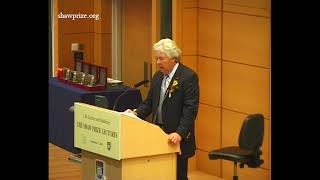
Herb Boyer, co-founder of Genentech, traces his path from discovering restriction enzymes to launching the biotech industry with Stanley Cohen and venture capitalist Robert Swanson in 1976. He describes how EcoRI-generated sticky ends enabled in-vitro DNA recombination, leading to synthetic somatostatin, human insulin, and growth hormone. Boyer credits serendipity, mentorship, and curiosity for a five-decade career that transformed molecular biology into medicine.
Chapters
Thank you, Vice Chancellor. Good evening, my fellow prize winners. Thank you for coming and listening to what I have to say today. What I have to say is primarily for the students out there in the audience, and I I will discuss some reflections I had after being notified that I was getting the Shoen Prize. Very deeply honored to do so. I'm very honored to be here today to share some reflections I've had on the last 50 years. I haven't been an active scientist for quite a few years now. So by necessity, this lecture will represent my recollections, my reflections on what I think has been a remarkable period in the biomedical sciences that began when I was a young man. Fortunately for you and me, I will be very selective on recalling that period, and this lecture is very autobiographical. It's intended to provide guidance and hopefully inspiration for young scientists in this audience and to perhaps help their mentors to also guide them. Along the way. In preparation for this lecture, I realized how often fate played a role in my career. I will use fate quite a bit throughout this lecture. One could also say destiny in place of fate. One could say luck. Chance. But when I think back on my career, there were many instances where, hey, if this hadn't happened, I wouldn't be where I am today. So I want to share some of these with you, and hopefully this will provide you with some guidance for your own career. I'll discuss that later. Let's say my lifetime as a scientist has spanned approximately 50 years, and historians of science generally recognize the years— the year 1953 as the beginning of the biomedical revolution, when Watson and Crick discerned, discovered the structure of DNA. In 1953, I was a high school student, and I was much more interested in sports— playing football, basketball, and baseball— than I was in science. Matter of fact, I had a dismal academic record my first year or two of high school. Fortunately, I had a dedicated teacher who happened to also be the athletic coach. And he was very strict and imposed a lot of discipline, not only on the athletic field but in the classroom. I just might mention that this man taught Algebra 1, Algebra 2, plane geometry, solid geometry, chemistry, biology, physics, as well as coaching football and basketball. And for one reason or other, I found that all the courses he taught were easy for me, and I enjoyed science. I enjoyed chemistry and biology, physics even, and I enjoyed mathematics as well. So it was this individual who initiated me into the beauty of science and mathematics. I was very thankful that this man was there very early on in my career and helped shape my future. So with these interests in biology, math. I enrolled at a nearby liberal arts college called St. Vincent's College. It was run by the Benedictine monastic order, and I still have close contact with them today. And they had a particularly valuable philosophy that that one should have a liberal education, and it's not just sciences, but philosophy, history, and the other liberal arts. And I appreciate their philosophy and how they adopted it. In college, by 1956, 3 years after Watson and Crick had published their papers, found out about this. I had a strong interest in genetics at that time, and I was taking a course, and one of the assignments of that course was that I had to deliver a lecture to my fellow students on a chapter of our textbooks that we're using. And one of those chapters, Chapter 12, was on the discovery of Watson and Crick on the structure of DNA. And I had really not heard about this before, and I do remember in my genetics laboratory discussing with my professor the nature of the genetic material, and he made a very convincing argument that it was protein. And so I thought, well, it must be protein. And then I read that chapter in the book, and as I worked my way through that chapter, I realized how beautiful the structure of this molecule was, how it explained so many things in genetics, which until that time was not very well explained at all. So I finished my undergraduate degree, and having set out at St. Vincent's College to go to medical school and become a physician, I applied to a medical school. One medical school. And I didn't get accepted. I don't know why. I mean, I didn't have great grades, but I didn't get accepted. But I think fate stepped in and played hand. And I thank all the deities that this happened. Not that being a physician wouldn't have been very rewarding and a lot of fun, but I had more fun as a scientist. I remember being interviewed for medical school and I was asked the question, how are you expecting to pay for your education? I said, I really hadn't thought about that. Yeah, okay. So I thought, well, I am really interested in genetics and now molecular biology and genetics, and so I applied to the University of Pittsburgh, which is another 20 or 30 miles from St. Vincent's College, down the road from where I lived. I entered the University of Pittsburgh Graduate School of Biological Sciences in 1958. Vice Chancellor and I are graduates of the same institution, and I was again fortunate to be mentored by several new faculty members who were doing research in microbial genetics, which was the really hot topic of the day. My dissertation research involved the genetic analysis of mutations with the objective of elucidating the genetic code. This was an impossible dream even for Don Quixote. However, being a naive graduate student, which I think most graduate students are, I ventured forth with unlimited energy and managed to obtain my PhD. In most— another one of those fateful events occurred while doing my thesis research. I was developing a procedure for my primary goal, determining the genetic code, which I can't— I didn't do, obviously. And, uh, but while I was doing this, I made an observation that I found extremely interesting and fascinating. And I didn't put this in my PhD thesis, but I took it with my notebooks when I went off to Yale University to, to a postgraduate fellowship. It didn't take too long until I uncovered the explanation for this observation. After a few false leads, I found out that this observation was based on the restriction and modification of DNA. A little bit of jargon which I don't want to bore you with, but that was what it became known as. But at that time, there was a very minor audience of scientists cared about restriction and modification of DNA. But I thought it was very, very interesting because underlying this mechanism was the possibility that we were dealing with proteins that could recognize very unique sequences in the DNA molecule. And the question is, how How could that actually occur? How could a protein recognize a small sequence of chemical elements in this extremely complex molecule? That was one of the guiding principles for my eventual research when I went on to the University of California as an assistant professor. I should point out that at Yale I became quite interested in the recombination of DNA. This is an evolutionarily conserved mechanism that occurs in all life forms. Without it, life would not occur. And it's one way, for example, for cells to correct damage to the DNA by x-ray radiation, chemical damage, ultraviolet radiation. It's how antibody molecules are generated, and it diversifies genetic information that allows evolution to take place. When it was time for me to gain my employment, my mentor at Yale, Professor Edward Edward, identified the University of California at San Francisco as someplace I should think about. It didn't take me long. I made one visit and said, okay, we're going. And again, another fateful event had occurred. I found myself in an environment at the University of California San Francisco that would eventually provide the environment that would provide the encouragement and support for my research in isolating the enzymes involved in the restriction and replication of DNA. I was very fortunate, I was very fortunate to have a talented and hardworking group of students, research assistants, and access to numerous colleagues, to say nothing of their equipment, which I usually used to be eating on the weekend, like in Delaware. After a few years, very frustrating years, we discovered a very unique enzyme. We christened it EcoR1 endonuclease. Once again, fate had intervened. I will tell you just a brief story of how we discovered this enzyme. During the research, I had a graduate student who had experience in clinical microbiology, and he was trying to obtain PhD in my lab and to go on and on a clinical lab. He went on to run a clinical lab in Southern California. I had him go to the clinical laboratory at the University of California Hospital San Francisco and isolate clinical samples from the lab, and we were going to analyze those clinical samples for restriction enzymes. This was part of our project to identify different types of restriction enzymes. The EcoRI endonuclease, which became the first enzyme that was used in recombinant DNA experiments, was derived from a bacterial strain isolated from the urine of a patient at the hospital who had a urinary tract infection. This is— this is— to me, this is fate, okay? This enzyme was very unique in the sense that it recognizes 6 chemical elements, or 6 nucleotides, within the DNA molecule, and it finds them, attacks them, atches, and it cuts the DNA at that sequence. This wasn't the first restriction enzyme or endonuclease that had been identified, but this particular one was a little different. It made what we call sticky ends or cohesive termini. That is, once the DNA was cut with this enzyme, design, they could bounce around in a test tube and their ends would come back into contact with one another and they would rejoin under the right conditions. They would rejoin. Now we recognized that this was a, a rather unique opportunity to pursue something that I had had in mind for a number of years, dating back to my days at Yale University when I was interested in recombination that I had learned about from various colleagues there. And they had isolated mutants that affected recombination and had tried to identify a number of enzymes involved with natural recombination. I had a colleague at the University of California, San Francisco, bright man, influenced many people, not just myself, but many others. His name was Gordon Hawkins, and he unfortunately died in the middle of his career, but we had a number of interesting discussions, among which was the possibility of using restriction endonucleases to carry out the recombination of DNA in a test tube. And there weren't too many people around interested in that at the time, but Gordon had extreme enthusiasm for just about anything anybody was doing, and he would talk about it. He would talk to your encouraged you to belong. And it's interactions like this can influence a career and help a student, help a young faculty member, as I think this is. And so I started a research project in my laboratory to try and carry out the recombination of DNA in a test tube with this Simpson. And at that time, another graduate student from the University of Pittsburgh in the days when I was there, who was a faculty member at Michigan, was doing a sabbatical tenure in my laboratory. And when we were in graduate school together, we talked about recombination of DNA. I was It was almost like a mystical imaginary thing. So we were thinking, you know, well, this is very interesting. It's possible now that we'd be able to do this mystical thing in a test tube with what we have available. So we started this program and we attempted to cut a small but very intractable whole as a difficult DNA molecule from the bacteria with the EcoRI endonuclease and recombine it with other fragments generated by the same molecule. This experiment was doomed from the beginning. We didn't— we eventually found out why, but it was doomed for a technical reason, and also because at that time, even though there was much interest in these enzymes, it was extremely difficult to analyze these enzymes and to analyze the products they made. It was time-consuming, labor-intensive, and it was not easy to get graduate students to work hard on these experiments. But again, destiny came along, and he's sitting right here in front of me. I was invited to a conference in Hawaii that's already been discussed, and this was a joint conference of researchers from the United States and Japan, and it was focused on the resistance of microorganisms to antibiotics. And for the most part, drug resistance resides on a small chromosome in a bacterium called a drug-resistant plasmid. And a plasmid is nothing more than a small DNA molecule carrying a few genes, it's capable of replication, and it can be transferred from one bacterial cell to another. I was invited because several enzymes that we had discovered in my laboratory—EcoR1 enzyme and another one which we very badly we call EcoRI. And these— the genes for these enzymes were on a drug-resistant plasmid, and that's why I was invited to this conference. There were many interesting papers presented. I'll just give you one little side story. I remember listening to the research presentation presentation from a scientist that I had known for some time and enjoyed being with. We both liked to fish blackfish or fishing for trout, and his name was Professor Stanley Falcon, not Cohen, but Falcon. And I went to Stanley after his lecture and I talked to him and I said, Stanley, why do we not have a collaboration and use the enzymes that I had in my laboratory and we'll analyze your plasmids. He says, I'm not interested in that. He's turning down the collaboration invitation. He says, I'm not interested in that. I'm interested in other things. Okay. He says, but you should talk to Professor Cohen. And I said, okay, what And he, I listened to his lecture and I knew that this was the man that would collaborate. When I listened to him discuss his research and he had the most beautiful little molecules that he had been studying as well as several others. And so when I talked to Professor Cohen later, We immediately agreed to do a collaboration and carry out research. And first, just to see if we could cut his plasma DNA, which he could purify, and which he could also put back into a bacterial cell after it had been taken out of the bacterial cell. He could put it back in, replicate, and perform carry out its genetic function. So we hurried back to San Francisco, and before we could get the project started, I had to go to the East Coast of the United States, to Cold Spring Harbor Laboratory in New York, to give a lecture, primarily the same lecture I gave in Hawaii. And I was greeted at the airport, the nearby airport, by two scientists that had invited me there. One was Professor Philip Sharp, who later became a Nobel laureate and president of MIT, and a colleague at the his, uh, Professor Joseph Sanford. And they drove me to their laboratory, and before I could unpack my bag or say hello to anybody, they wanted to show me something. And they took me into their laboratory and into a darkroom, and they showed me a little simple slab of agarose gel. Now agarose is something that comes from seaweed and we eat as soup sometimes, but it can also be used to grow bacteria, and it can also be used to separate the fragments of DNA that have very unique sizes. So you can run— you can put a sample of DNA fragments on one of these little agarose gels, you apply an electrophoretic differential so that the negative DNA will migrate to the positive anode, and these can separate then. And you stain it with a very simple chemical called ethidium bromide. You can put it on a black light, and there you see how these beautiful fragments of DNA reminiscing from the gel. When I looked at that, I knew that this was the key to the experiments that Stanley and I wanted to do. And this technology, very simple, straightforward, became standard procedure very quickly. I thought it was one of the keys to what happened in the next couple of years. What it did is it reduced the time it took to analyze our experiments by at least one order of magnitude so that what we could do prior to this in a day or two, we could do in a few hours with the new technology. Again, Fate had intervened. And so when I got back to my lab in San Francisco, I immediately had this technology developed and we characterized it a bit for our purposes. And then Stan and I got together to do our experiment. So we had two fateful events occur very quickly after one another. Being Stan in San Francisco, going to New York, or being Stan in Hawaii, going to New York, finding this new technology, coming back, and that's when we began the collaboration. We found that this beautiful little DNA molecule, when we treated it with our enzyme, was cut one time one time only, and that we could put it back together again. So we took this little DNA molecule and another molecule that Professor Cohen had, and we cut it, and we knew it was cut up into a limited number of fragments. We mixed them in a test tube together added a little, another enzyme to it, a little magic dust sprinkled over it, medically or artificially recombined DNA molecules in a test tube, first time outside of the cell, and that these could be recovered as viable molecules. When I saw the gel that day, I knew Things were going to be different. You could tell. It had an impact on me that it's hard to describe. Other than I knew things were going to change. I remember running home and showing this photograph of this girl to my wife and saying, "This is going to change the world." She goes, "No, it won't." But I finally convinced her. This, this was very exciting, but what we needed to do after that was the key. We had to show that we could take something other than fragments of bacterial DNA, recombine it in a test tube, and recover them as viable replicating molecules, we had to do this with DNA from a higher organism. Why did we have to do that? We thought there were two reasons. One, we did not know at that time if DNA from a higher organism might contain some sequence, something about it, so that it would not replicate in a bacterium. Biological wisdom at the time was that genetic information from one species could not be put into another species. And we didn't— we took that as a basic rule for biology. It didn't make a lot of sense as a microbiologist this would be a problem. However, we had to demonstrate this. We didn't think this was a big issue, but it was one we had to deal with. Secondly, and most importantly, there was a question of the frequencies with which these DNA molecules could recombine in a test tube. Now let me tell you I'll tell you more. In our first experiments, we were able to select— to select— that is, when we put the DNA back into the microorganisms, we could select 1 in a million cells that had been potentially transformed with a recombinant molecule because we could select for resistance to antibiotics So we knew we could select for this, this beautiful little molecule was called PSC101 that Stan had described. We could select for that, and we could select for a gene from another plasmid molecule by using another antibiotic. And this selection, as we call it, selection by antibiotic biotics would allow us to detect 1 in 50 million cells or more that had a recombinant DNA molecule. However, when we were going to use DNA from a higher organism, we had no way to select for that DNA coming from the higher organism. If the frequency of this event was 1 in 10,000 even, that means we would have had to analyze 10,000 individual cells from this experiment in order to determine if the recombination event had taken place. That's a daunting experiment since we could do— in those days, it would take 2 or 3 days to analyze 10 or 20 such bacterial cells, the colonies. And so one of the things we did was to try and maximize the conditions for the recombination events, and that meant trying to determine how frequently the ends of the molecules— if you cut the little molecule with this DNA this enzyme, how frequently would the ends come together to make a circle, or how frequently would it interact with another molecule versus closing on itself. So it wasn't too difficult to do, and so we carried out the experiment. We used— and people could not understand why we used the DNA from a higher organism organism, which was an African three-toed, three-clawed toad, Xenopus laevis. And the reason we used this was because of all the DNA from a higher organism that we could find, this was the one source of DNA that we could isolate in a somewhat purified form. Phone, and in substantial quantities. And so we used this when we carried out our experiments, and fortunately when we analyzed approximately 12 to 18 of these phones, we found that recombination of frequency was on the order of 10 to 20%. So we knew now that we could recombine DNA in the test tube at a very high frequency, so it was not a very rare event. Soon after we published this research, there was a storm of concern that appeared. About the potential dangers of recombinant DNA technology and genetic engineering. Media, politicians, lawyers, philosophers, ethicists, and others began immediate efforts which put a brake on experimentation for several years. And during these few years, my laboratory as well as others began to improve the techniques to carry out genetic engineering. And we trained— I know my lab and Stanley's laboratory, we trained a lot of students, faculty members, and postdoctoral fellows that came through our laboratory to learn the technology. One of the beautiful things about this technology, it was really very simple. It was very easy to do. And when you have a technology that's easy, progress will proceed very quickly. Another— for my career, another fateful event happened soon thereafter. I'd been given invitations to give seminars at a number of institutions. One of which was in Southern California at the City of Hope Hospital. And one of my colleagues in molecular genetics and biology had invited me there to give a lecture about the work that Stanley and I had performed. And after I gave my lecture, as usual,— the person who presents the lecture will go and discuss the work of other faculty members of the host institution, which I did. And Professor Riggs told me about work he had been doing with a number of other colleagues in which they were examining the interaction of proteins with a chemically synthesized piece of DNA. This is the DNA which is is made by putting chemical molecules together in series and you can synthesize the sequence that is very defined. He was very frustrated with this work because it's very expensive to do this, time-consuming, and once you have synthesized it, you use it up and it's gone, so you have to start start again. And also, it's not extremely pure. It was estimated at that time to be about 9% pure. Things are different today. You can just have a machine do it. But in those days, it was all done by hand. So we quickly realized that if we could somehow take this chemically synthesized DNA molecule put it in a plasmid such as the one that Stanley and I had used, we would have a permanent source of this chemically synthesized DNA molecule. We put it in a plasmid, put it in a bacterial cell, it would replicate, produce many copies of itself, and then we could retrieve it and purify it, and we'd have a very easy, inexpensive source of this DNA for whatever reason. I didn't particularly have any need for it. I just wanted to see if chemically synthesized DNA could be genetically engineered or could be cloned. Now this was very quickly done, and within a few weeks we had carried out the experiment. I think it was the first example of chemically synthesized precise DNA being cloned were used in the problem of DNA research. One of the things we had to do in that experiment was to also establish a technology that had recently been developed by Professors Sanger and Gilbert on the methodology for determining the sequence of DNA. And I had a very— had a couple of young postdoctoral fellows in my lab who were— they were just very anxious to do this, and so they set it up in my lab and were able to show that this chemically synthesized DNA molecule that we cloned had the same sequence as that predicted by the chemical synthesis. Now, at this time people were talking about how recombinant DNA research and genetic engineering could be used to produce useful proteins as a novel application of the technology, as well as for growing a superstructure, supergenetic, superstructure of genetic material, and to be used in other biomedical basic research. Realizing that it might be possible to use this to produce useful proteins for unmet medical needs, I was thinking about this, but I didn't know what to do. I tried to talk to several— I know two pharmaceutical companies— about whether or not they were interested in using this technology to develop some new drones. And they said, well, we really like what you're doing, but it's another 10, 20 years from actually flying it. And they said, we'll check back with you a couple years and see how you're doing. So I said, okay, that's good. I'm looking forward to it. So again, fate And in the late fall of 1975, on a dreary day in San Francisco, which there are quite a few that time of year, I received a phone call. A man was on the phone and he introduced himself. His name was Robert Swanson. And he said he had a question for me. I said, okay. He said he'd been reading about this new technology of recombinant DNA research, and since my laboratory as well as many others had received some publicity, he was interested in my thoughts about whether or not this technology could be commercialize? Of course I said yes and asked him why he wanted to know if this was possible. He said he worked for a venture capital company in San Francisco, and while I searched for a definition of venture capital in my dictionary, he went on to say that he wanted to start a company that was based on recombinant DNA technology. I said, "That's interesting." And he said, could he meet me and discuss this? And I said, "Fine, how about Friday afternoon around 5?" So on Friday afternoon, a very young man in his late 20s came into my laboratory wearing a suit and tie, which was very unusual attire for my laboratory. And we went into my office and began a discussion about his idea of starting a company based on this technology. Later that evening, we went off to have a few drinks, a few beers, and continued to discuss this idea of starting a company. I didn't have any training or background in starting a company. So I had a lot of questions. And so I said, we have to develop a business plan. So we agreed that we would get together after some time, after a couple of weeks, and put together a business plan, which we did. We had— we formed a California partnership, a legal organization, under which we protected our interests. And We took that plan to the company that Bob had— my friend Robert Swanson had worked for, Kleiner Perkins, a venture capital company in San Francisco. We presented this plan to them and they really didn't know that much about what was technology all about. And I could tell just from the looks on their faces while I was talking to them. What we had done, what we might be able to do. But for some reason or other, they liked me. Because as Tom Perkins said afterwards, he said, well, you didn't ask for a lot of money for centrifuges and equipment. All you wanted was a little bit of money for doing some experiments to carry out a proof of concept. That is, we needed to do experiments to prove that it was possible to use the technology to make a human protein in a microorganism. And so April of 1976, we incorporated this idea into a company, the first biotechnology company, which we called Genentech. We had, by today's standards, not very much money. Today, new companies can generate a lot of money from venture capitalists. We got about $200,000. My confidence in the feasibility of success was I thought of it— there were 3 things that I thought were extremely important for commercializing this technology. One was the recombinant DNA technology. Second was having access to chemically synthesized DNA. And third was the ability to determine nucleotide sequences of DNA molecules. Those were 3 things. There were many other challenges ahead, but we were just thinking about the immediate problems. We set up a— between a company, my laboratories, and the laboratories at the City of Hope. We set up research contracts between the company and these laboratories, and we were going to The project was to chemically synthesize the gene, put it into a plasmid, put it into a bacterium, and upon command have that bacterium make a protein. And the first thing we, we put into time was we're going to do this with human insulin. We're going to synthesize a gene for human insulin. We knew we could synthesize. We could take chem— we could synthesize DNA and have it replicate in microorganisms. And now we wanted to take— and we would take this from the genetic code, we'd make a piece of DNA for a gene that would make human insulin. And that was our plan. However, it was not— it was difficult because by today's standards, not very difficult. But then to synthesize a piece of DNA for human insulin was a bit of a challenge and was going to take some time. And thanks to Professor Riggs, my colleague at City Corp, he said, why don't we do a much simpler protein? Let's do another human protein called somatostatin, which is synthesized by the gland, one of the pituitary gland in the brain, the pituitary gland and also in a number of other cells in the body as well. So it's very simple to make this gene. It's only 14 amino acids long. So we synthesized the gene for somatostatin, we put it into the plasmid, and upon command, the bacterium would make this human protein. And this was the stimulant which we used to go to our venture capital friends— they had become my friends by now— and obtained more funding for this small company. And we went to South San Francisco, leased some space in a warehouse there. We hired a few young scientists. I had been concerned about trying to attract right-down scientists to accompany what was going to make human guns. Most of the scientists I knew shunned that sort of thing in those days. But one of my postdoctoral fellows, Herb Heinecker, who's from the Netherlands, had been very instrumental in the cloning of a synthetic DNA at the Stanford project. We convinced him to come and work for Genentech, and then we hired another bright young scientist, David Goodell, who later went on to start his own company but worked for the company for many years. These are tireless, dedicated molecular biologists, and they immediately led their team at the company that they went on to engineer a microorganism that made human insulin, which became one of the first biopharmaceutical products to be used to treat disease. Very quickly, we went on— the company went on, the research team went on to synthesize a gene for human growth hormone, which is second product that the company made and provide some stability in the cash flow. Much better than the dot-com gave me. But this was done very quickly. It didn't require a lot of money. And these are very obvious choices for commercial products, insulin and human growth hormone. Today, development of biopharmaceutical drugs by biotechnology companies takes hundreds, hundreds of millions of dollars in many cases to identify, to develop, and to clinically prove to be efficacious. When Genentech started in 1976, we had about 10 employees. Today we have 7,000 employees and 12 products on the market and 18 compounds in various stages of clinical research. I often use the I amuse myself sometimes by thinking about what it was like when I started as a graduate student purifying enzymes. We would purify— if we had a successful project, we were able to purify maybe 50 to 100 micrograms of a protein. In the biotechnology sector today, 4,000 kilograms of protein will be synthesized and purified and used to treat unmet medical needs. I'll just say a few things before closing. In California alone, there are more than 2,600 biomedical companies, not all of them biotech companies, but related to biomedical sciences, all part of of the revolution that has taken place in the last 50 years, however. About 7— but they employ about 230,000 people. About 77,000 are employed in the biotechnology sector. The focus of these industries today include drugs to treat cancer, infectious disease, including HIV/AIDS, cardiovascular disease, pulmonary disease, respiratory disorders, and diabetes. There are other areas as well. Last year, California alone invested $15.5 billion in the development of new biopharmaceutical products. Research by these companies and, as equally important, academic institutions all over the world have made, in my estimation, very impressive insights into pathological processes and developed new models for the treatment of disease. When I reflect on those last 50 years, I'm truly amazed. In 1958, I was a first-year graduate student. True, the structure of DNA was known, but we did not know the genetic code. We didn't know nothing about messenger RNA. Protein synthesis was an idea by his fellow Professor Francis Crick. Little was known about cellular membranes and structure, cellular interactions, signaling, and so on. Advances in biomedical sciences in the last 50 years have been increasing exponentially, and the recent completion of the entire sequence sequence of the human genome just a few years ago represents a monumental accomplishment, truly unimaginable in my days as a graduate student. So what will be accomplished in the next 50 years in the biomedical sciences? I think they're unimaginable. Just as sequencing the human genome was unimaginable to me when I was a graduate student. So I can't tell you what's going to happen in the next 50 years. You don't know what's going to happen in the next 50 years, but you're going to participate in what's going to happen in the next 50 years. So I hope that some of the things I've had to say will help inspire you to continue with your careers, to maintain your interests, keep a good sense of humor, interact with your colleagues, treat your fellow scientists and students kindly. And you will do very well. I've been truly fortunate to have lived in the best of times. Every man thinks he lives in the best of times. And you will too. I've been very fortunate to have contributed in some ways during this 50 years of progress. And I want to tell you, I never thought of myself as being a genius or above average intelligence. I have worked hard. I have exhibited some creativity. But fate or good luck is important to— was important to the direction of my career. And it will be to yours. Also. I'm just going to work hard on what interests you because that's what the primary stimulant was. That was the primary thing that brought me here today. I was interested in something almost 50 years ago. I did not know what would happen. I didn't know where I would be today, but I was interested in this one little observation I I had made as a graduate student. And with many things happening over the years, that, that brought me here. I hope at some time in your lifetime you will reflect on those fateful events that have influenced your career and appreciate them, which I do. I just have one other thing to I'm going to be very sincere. The most fateful event of my life happened when I was 16 years of age, when I met the young girl who would become my wife. Thank you, Professor Boyer.
More from Joshua







Scientist Stories: Hans Waterham, The value of phenotypic assays in peroxisomal disorders




Scientist Stories: Joel Zlotogora, Genetic carrier screening programs for reproductive purposes