Founder Stories: J. Scott Wolchko, CEO of Fate Therapeutics
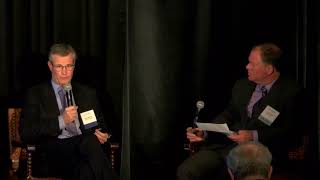
J. Scott Wolchko, CEO of Fate Therapeutics, discusses the company's shift from broad cell programming to focused T-cell and NK-cell immunotherapies. Fate uses small-molecule treatments to reprogram cells and reduce graft-versus-host disease while preserving anti-cancer activity. The company has partnerships with Juno Therapeutics on CAR-T persistence and the University of Minnesota on off-the-shelf NK cells, with plans to bring iPSC-derived NK cells to clinic within two years.
Chapters
My name is Ted Tenoff. I'm a senior biotechnology analyst at Piper Jaffray. And our next presenting company is Fate Therapeutics. Fate has developed an expertise in hematopoietic cell biology and the ability to program cell function, or fate. The company has shifted its focus to T cells in order to develop cellular immunotherapies for cancer and immune disorders. Here to present the Fate story is Scott Walczakow, president and CEO. Scott, thanks so much for being with us.
Thanks.
So Scott, maybe you can start us off by describing really how Fate got started. Tell us a little bit about the underlying science and technology here.
So I helped start the company with 3 prominent VCs in late 2007. It was really this idea that you could— cell therapies as a modality absolutely was a belief that was going to be very important in being able to change the course of diseases. Cells had been, at that point in time, had been delivered. There was medical precedent for use of cell therapies in the world, for instance, of allogeneic transplantation, which is a curative therapy. But we fundamentally had a belief that cells themselves, their properties, their biological properties and therapeutic potential could absolutely be improved. And it was going to be necessary to maximize safety and efficacy. And so our approach from a technology perspective is to really understand the biological mechanisms mechanisms that are important for cell therapies to do the function that they're intended to do. So we use small molecules and biologics outside the body, and we essentially pulse-treat cells with those small molecules and program their biological properties. And we think we can cause pretty profound changes, for instance, using these small molecules and pulse treatments to change gene expression, or cell surface protein expression levels, essentially modifying biological properties before the cells are administered to a patient. And then ultimately those cells in a modified state have improved safety and efficacy potential.
Now you mentioned, so really optimizing cell therapy. You mentioned bone marrow transplant, and I know this is an area where the company spent a lot of time and really was initially focused. And I believe you still have a program in that area called Protamine. So maybe you can describe that.
Absolutely. So yeah, as I mentioned, so in the field of cell therapy, allogeneic transplantation has, you know, medical precedent. It's been used 40 years, curative therapy for hematologic malignancies and several rare genetic disorders. The donor T cells that are given in the setting of allogeneic transplantation play a critical role with respect to ultimate patient outcomes. Donor T cells are important. A patient who is undergoing allogeneic transplantation is immunocompromised. They have very little functioning blood and immune system. So the donor T cells that are given really protect the patient from infection, and they protect patients with respect to wiping out the residual cancer. Some of the challenges, though, with donor T cells is donor T cells have the potential to attack the patient. They're not perfectly matched to the patient. They come from a donor. And so GVHD is when the donor T cells attack a patient. We have developed a product which we call Protimune, where we use two small molecules to program the donor T cells. And through our programming strategy, we essentially seek to reduce the proliferative properties of T cells so they do not attack the patient and cause GVHD. And yet we maintain their ability to respond to viral antigens as well as cancer. So we are developing Protomune, which is essentially a programmed hematopoietic cell graft for allogeneic transplantation. And we are conducting a Phase 1/2 study with that product. And we're looking at two different endpoints in that study. We're looking at a prevention of infection and a prevention of GVHD.
And when could we get data from that Phase 1/2 study and what would be next steps?
Yeah, so the Phase 1/2 study has been cleared by the FDA with respect to the IND. And we are currently ramping to enroll patients in the Phase 1 stage of that Phase 1/2 study. We expect to have data during 2016, towards the later end of 2016, with respect to the Phase 1 study. And we expect the Phase 2 portion to kick off this year as well.
Awesome. So you've really led a transition at Fate to focus exclusively on T cells. What really led to this—
And NK cells. T cells and NK cells.
Yes, pardon me. And NK cells, exactly. What really led to this course change at the company that that you've been behind?
Yeah, a little bit of serendipity, a little bit of clinical data, and a little bit of strategic events. So we were initially developing a product in allogeneic transplantation. We called that product ProHema. ProHema was focused on core blood transplantation and stem cells. In the course of conducting a clinical study with ProHema, we actually realized— and looking at stem cell outcomes, for instance, engraftment, how well do stem cells engraft in the setting of allogeneic transplantation. When we looked at that clinical data, we realized that we were having a pretty profound effect on T cells. So we read out a portion of our Phase 2 study that we were previously conducting with ProHema at ASH in December 2015. And when we looked at that data, the original biological pursuit was, can we improve engraftment? And we were absolutely seeing that. That's stem cell mediated. However, when we also looked at the data, we saw a 50% reduction in viral infections. That's pretty profound. That's T cell mediated. And so we decided to shift our strategy in allogeneic transplantation to focus on T cells and T cell mediated outcomes given the clinical data.
And now we already discussed ProTmune, but you're also now focusing in oncology in a big way and partnered with Juno. So what does that collaboration entail And what are you learning from this industry leader?
Sure. So the Juno collaboration, part of the strategic shift to T cells was born out of that collaboration. The clinical trials that we were previously running were open-label studies. And we shared some of that data with Juno, and Juno was impressed by the fact that we actually could, for instance, influence the T cells. And that we could use small molecules and program the properties of T cells. Juno's been, I think, very public in talking about their, they're interested in optimizing the properties of T cells that are being delivered to patients. They've talked very publicly, I believe, about around, for instance, maximizing persistence of T cells. We believe, as I believe Juno believes, that using small molecules, we can optimize the properties of CAR-T cells CAR T cells. And the collaboration is really around that, where we've entered into a 4-year research collaboration. Our role in that collaboration is to identify small molecules that can promote the desired biological mechanisms, for instance, persistence. And then Juno is incorporating those small molecules as part of their manufacturing process with respect to engineered T-cell immunotherapies. It's a great collaboration for us. It It essentially allows us to leverage our small molecule discovery efforts. We can understand how we can modulate T cells. We can also understand how we can modulate NK cells. The small molecules that we discover, Juno absolutely has the right to use with respect to engineered T cell immunotherapies, but we retained all rights to use those small molecules as modulating agents for all other cell therapies.
So I think that learning is particularly important for Fate as you move forward. Last July, you entered into a collaboration with Dr. Jeff Miller at University of Minnesota for natural killer cell cancer immunotherapies. Your proprietary focus is on allogeneic natural killer cells. So maybe you can kind of walk us through what this technology is. You know, there's been a lot of talk today about CAR-Ts. Maybe we can sort of Expand that a little bit to include natural killer cells. When do you expect to be in the clinic?
Sure. So the collaboration with Jeff Miller again was, was born out of clinical data when we started to see that we were reducing viral infections in the clinic. University of Minnesota is a top allogeneic transplant center. Jeff Miller has a tremendous amount of experience in understanding T cell and NK cell biology, and so we approached him with that clinical data originally to discuss it and get his thoughts on it. Based on those discussions that led to a collaboration, he had discovered an NK cell, a specific type of NK cell that he believed has pretty profound anti-cancer properties. NK cells have been used in the clinic previously as cancer immunotherapies. Jeff identified a specific type of NK cells which he has called the adaptive phenotype, which he believes has some very interesting properties. For instance, the knock on NK cells as compared to T cells is that NK cells do not have the same degree of persistence of T cells. Jeff believes that the adaptive phenotype, for example, and he has shown this, has high degrees of persistence. It also has high degrees of cytotoxic potential. When he's done an epigenetic profile, for instance, of this NK cell population, it looks remarkably like a CD8 killer T cell. So there are some really interesting unique properties about NK cells as compared to T cells that I think provide some advantages. Some of the challenges associated with T cells and why they're used primarily from patient-derived today is T cells, I mentioned, have the ability to cause GVHD. They can attack, for instance, an unmatched donor. NK cells are more histocompatible. NK cells are not believed and have not been shown to cause GVHD. It allows NK cells to be used, for instance, from a donor and enables a more off-the-shelf strategy with respect to cancer immunotherapy. With Jeff, we are developing an adaptive NK cell. It is sourced from a donor. We are using small molecules to program that adaptive NK cell. We are continuing to focus on biological mechanisms like persistence and trying to drive persistence. And we believe we have the opportunity to be in the clinic in the next 12 months with an adaptive NK cell in collaboration with Jeff.
That's really exciting. Now tell us a little bit about sort of the breadth of applicability of these NK cells. So we talked in the first panel today about how the industry has been obsessed obsessed with/focused on CD19 and hematologic cancers. Can these NK cells go broader?
Yeah, absolutely. I mean, so NK cells have been explored clinically in AML. NK cells can work, for instance, in a direct killing fashion. They also have the ability to essentially harness the ability of T cells to respond to tumors as they attack and kill cancer cells. I think one of the really unique features of NK cells, which exists specifically within the adaptive phenotype also, is NK cells have very high levels of expression of CD16. You should think of CD16 as an inherent targeting mechanism. And so one of the things that we are exploring with Jeff Miller, actually, is the ability to program the adaptive NK cell to have very high levels of expression of CD16. CD16 can be used as a targeting mechanism in combination with monoclonal antibodies. So moving outside of blood-borne cancers where most of the CAR-Ts have been explored today and now thinking about solid tumors, we believe there's a potential to use NK cells in the setting of solid tumors and leveraging the CD16 CD16 expression mechanism as a targeting method in combination with monoclonal antibodies. So there's obviously FDA-approved monoclonal antibodies that are used in solid tumors. We believe that, for instance, patients that have progressed on monoclonal antibodies could also be given CD16 in— or NK cells in combination, and that that CD16 targeting mechanism to the monoclonal antibody will enhance responses.
Very cool stuff. Now, ultimately, I believe your goal is to really get to induced pluripotent stem cells or iPSCs. So maybe you can tell us about this, um, and, you know, the underlying technology and sort of what the ultimate clinical product could look like.
Sure. So, I mean, to take a step back, most cell therapies that are used today are derived from a patient, so patient-sourced cells. Donor-derived cells are absolutely being advanced and we're also advancing donor-derived cells. But there's challenges with those approaches, especially when you start to think about not necessarily small molecule modulation, but if you wanna permanently change or permanently express certain targeting mechanisms like CD19. For instance, today on a patient-derived basis, You need to take a patient, apheresis, engineer on a patient-by-patient basis, and then deliver those cells back to a patient. It's challenging. And as we move from blood-borne cancers into solid tumors, there's been a lot of discussion about multiple engineering steps to introduce multidimensional functionality, not just CAR-T expression, but for instance, cytokine expression and what have you. So as you think about multi-engineering steps, we have a strategy and we prefer to use pluripotent cells and cell lines. We believe cell lines will be a much more viable strategy with respect to ultimately engineered cancer immunotherapies. You can engineer one time at a pluripotent cell level, qualify that cell, bank that cell, and then differentiate that cell for multiple patients into an NK cell or a T cell. And so we are pioneering pluripotent cell technology and engineering pluripotent cells and differentiating those cells into NK cells and T cells. We believe this will enable a cell line approach for off-the-shelf cancer immunotherapy.
How far are we from the clinic with that? That's a really cool, interesting product.
It's a little bit of a journey still. We are pioneering it. Our strategy is to pioneer that though with top medical investigators. We've already partnered with Dan Kaufman, for instance, who's done a lot of work with respect to iPS-derived NK cells. Our goal is to put an iPS-derived NK cell. It's an optimistic goal. It's aspirational, but we would like to see an iPS-derived NK cell in the clinic. Within, for instance, the next 2 years. It's probably a 2-year journey, but that is something we're very focused on. We're very focused on NK cells. We also think there's potential to do collaborations with respect to iPS-derived T cells and partner, for instance, with top medical investigators in that area also.
Very cool stuff. So just with the minute that we have left, how much cash does Fate have now? How long will this last to fund the company with so many different programs?
Yeah, so at the end of the fourth quarter, we had $65 million in cash. We are only burning about $7 million a quarter. Some of our burn, and we do get leverage obviously from the Juno collaboration, we receive research funding from Juno. So that does offset our burn and allows us to leverage the findings from that Juno collaboration as we think about applying small molecules to our other programs. So there's a lot of foundational leverage we get there in understanding T cells and K cells and how we can modulate those with small molecules. The burn, the— given our cash position and our burn, we are well-funded into, I would say, late 2017. And we do believe we can reach some substantial milestones during that period of time. Our lead program, ProTmune, I mentioned we should have clinical data on the Phase 1 portion this year. The Phase 2 portion should also start in 2016. And there are 3 conferences coming up in the next 3 months where we will talk more about our specific milestones associated with our NK cell program and Jeff Miller. Our goal is to have a clinical entry within the next 12 months there. And we will also be talking about our iPS-derived cancer immunotherapy program. Programs in June at a conference, ISSCR.
Excellent. Scott, thank you so much for joining us today.
Thank you very much. Thank you.
More from Joshua







Scientist Stories: Hans Waterham, The value of phenotypic assays in peroxisomal disorders




Scientist Stories: Joel Zlotogora, Genetic carrier screening programs for reproductive purposes