Founder Stories: Jacob Glanville - co-founder of Distributed Bio
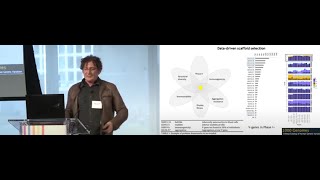
In this talk Jacob Glanville, co‑founder, CSO and chairman of Distributed Bio, recounts the evolution of his work from early antibody discovery at Pfizer to the creation of a cloud‑based, high‑throughput antibody engineering platform. He explains how deep sequencing of B‑cell repertoires revealed that natural antibody diversity is far lower than assumed, prompting the design of the “Superhuman” library series that eliminates redundancy, selects human V‑gene scaffolds with proven developability, and maximizes structural diversity. Using this library, Distributed Bio routinely generates thousands of unique hits against challenging targets (PD‑1, growth‑hormone receptor, GPCRs, ion channels) within weeks, often delivering picomolar binders and novel epitope coverage (cross‑species, allosteric, agonist/antagonist). He describes collaborations that leverage the platform for personalized anti‑idiotype antibodies against B‑cell lymphoma and for rapid generation of broadly neutralizing HIV antibodies. Glanville then shifts to vaccine research, presenting a low‑dose, multi‑variant immunization strategy (concentration‑conservation reward coupling) that steers B‑cell responses toward conserved epitopes, demonstrated in pigs to produce pan‑influenza neutralization spanning decades of viral evolution. Finally, he discusses the company’s self‑financed business model, the decision to avoid venture capital for the antibody platform, and the selective use of grant and government funding for vaccine work. The talk ends with a brief Q&A on financing choices.
Questions this video answers
Because the early software platform could be built on Amazon Cloud with existing algorithms and generated $600 k in contracts without external funding; for antibody discovery the revenue from partnerships covered costs; avoiding VC kept decision‑making focused on hard scientific problems and preserved equity for the founding team. For vaccine work, VC interest was limited, and grant/government funding (BARDA) later provided the necessary resources.
Chapters
So it's my pleasure now to introduce Jake Granville, who is the founder and CSO of DistributedBio, a company with a really cool platform for high-throughput antibody screening, and he'll tell the story of D-Bio. Thank you. All right, good afternoon, New York. So yeah, I'm the co-founder, chief science officer, and the chairman of DistributedBio, and this afternoon I'm going to share with you The story of a slow-burning revolution in biologic therapeutic discovery. And to some degree, based on the history of my company and my work, it's the story of my research as well. So, biologic medicines, it's fair to say, are hot right now. We have benefited from these therapeutics that have been evolved to be compatible with our own bodies. And they're incredibly susceptible to various engineering moieties, allowing us IgGs and CAR-Ts and FAB and single-chain Fe bispecifics specifics and the panoply of various therapeutic agents that let us target diseases and recruit the immune system in our targeting in new ways. The story I'm going to tell you starts back in 2008. And this was a simpler time. I had just joined Renat Pfizer facility. And they had two different technologies that they were using to try to discover antibody therapeutics. Both of them one, the spleen of a mouse you generate hybridoma from, which won the Nobel Prize in 1984, where you humanize a mouse and you recover its antibodies. And the second technology was phage display, which just won the Nobel Prize a few months ago. And what I found kind of remarkable about those two technologies, which they both had in-house at the same facility, and they competed against each other. So I got to see this unique opportunity to watch a program go to both groups, and the groups had this sort of a friendly competition, and What seemed surprising to me was that it would be routinely the case that when you compare the phage display— this is a library of 650 people's antibodies— and you search through that massive army in a bottle, and if you took that same antigen and you injected into a humble field mouse, remarkably the mouse would produce more hits and higher affinity hits than that army in the bottle. And both systems sometimes would fail. And so we, like everyone else in the community, would struggle to produce antibodies against certain spots. The epitopes that mattered on the drugs that they were trying to, drug targets they were trying to prosecute. And that sort of fascinated me. And there were a number of mysteries that were pretty foundational to how the immune system worked that were unanswerable at the time, because we did not have the ability to look at hundreds of millions of antibodies, either in a mouse or in a phage display library, to really understand when things don't work, why is that? And I may have just stayed that way, except that through good timing, there was an arms race going on in the genome sequencing technology field where people were trying to create, since 2000 when we had the first human genome, faster and faster sequencing of more pieces of DNA with smaller instruments. And Pfizer had just taken on one of these instruments. And I was able to ask, well, maybe we can, instead of looking at the 25,000 genes in our body, what if we focus the instrument to look at the hundreds of millions of antibodies? In a person or in a mouse or in a phage display library. And that began a technology that has since spawned a whole cottage industry and is essential to certain areas of adaptive immune research called antibody repertoire sequencing. So it's genome sequencing of large populations of antibodies. And I started pioneering this back in 2009. I've since published about 30 papers on the subject. And the way to think about this is that at the same time If I were to take your blood— no offense— but if I took your blood and spun it, I could run the kinds of assays you've probably had your doctor run before. So we can check to see, are you reacting to certain viruses in your blood, running you can run ELISAs and hemagglutination and Abetsha assays and so forth. The technology I had built let you take the missing part there of the blood, the white blood cells that contain your B cells, and we were able to PCR amplify and look at hundreds of millions of B cells to look at the different receptors that they were creating. And this allowed us to look at a whole bunch of things that were invisible to us when we were looking at the serology. We asked simple questions like how many antibodies are responding to a vaccination, how much affinity maturation was happening or class switching was occurring, and how similar were antibodies across different mice or identical twins, and how well structured were our libraries and where were there mistakes in those libraries. And that really gave us these critical engineering criteria that let us ask and improve on both antibody library discovery, so that phage display library, and on vaccination, the immunization of the mouse. And what I'm going to be showing you today is the pretty remarkable set of improvements that became possible because of this ability to look deeply into the repertoire and therefore give you engineering guidance on how to build better repertoires and control their composition. The core things that we found, and I'm going to start off with our rough slides with apologies, but I think this is the most important thing, and really I think it's really cool. And if you understand this, you'll understand how we're able to improve the antibody libraries and build our radical new technology, and also how we're able to focus the immune response on rapidly evolving viruses. And that was, we were asking, well, how many antibodies are we making when we get vaccinated? And how many different ways can an antibody bind a target? So when we just started doing these de-sequencing studies, we found much to our surprise that there really were only about 100 million different B-cell receptors in a person. That was way lower than most immunologists thought it was going to be, 1,000 times larger than that. And then when we look after someone gets vaccinated, it was really only about 1,000 unique antibodies that respond. It's— that number's even smaller in a mouse, which again was way smaller because people had these unrealistically high expectations of the diversity of B-cell receptor repertoires. And then there was really only about 10% or about 100 unique antibodies that would produce a serological titer. So you get 100 shots on goal. When you are going after an antigen. So then you ask the second question, all right, well, how many goals are there? How many targets are there on an antigen? And that number, whereas the number of antibodies is much lower than we expected, the number of surfaces that could be grabbed by an antibody was much larger than people expected. What I'm showing you there is the hemagglutinin, the influenza coat protein, and I'll get to that later. But you can think of that as pretty much any drug target. And if you dock an antibody in all the ways it could go computationally against the surface, you find about 100,000 different ways that the antibody could bind a set of residues on the surface. And the number is actually even worse than that. It's actually billions of different ways that they could bind, because antibodies will bind and they only grab like 10 residues at a time. So there's this near infinity of possible surface ways that antibodies could capture their target, and we don't really produce that many. And that was the fundamental problem that I saw in both systems, is that we need to find a way to produce many more antibodies and have them be able to provide more focusing towards the epitopes that we wanted. So, that gave us the insights, and with that, I launched my company in 2012 with 2 partners initially. Now we're over 20 people, and we were able to do it without venture capital. And the way we were doing that is that I realized that people were coming to me and saying, Jake, we have the sequencing instrument, but we don't have the analysis. And we built an algorithm-enriched web-based platform that used the Amazon cloud to let people go run this kind of analysis that I was doing in my company, and like 40 pharmaceutical companies wanted to do that also. And that gave us enough money that we were able to then reinvest. And I convinced my partners, they were like, why don't we just sit back on this? I was like, no, no, no, we're going to build really cool stuff. So we got laboratories and we started building up what I'm going to call the superhuman library. And this is a computationally optimized antibody discovery platform that's giving us pretty remarkable inroads into traditionally very challenging targets. And I'll show you a series of case studies. And this also paid for the party for a long walk across that valley of death that the previous speaker just mentioned for us to be able to go prove out an in vivo epitope focusing technology. Technology that I'm particularly proud of and I'll describe at the end. So let's talk about the antibody engineering first. So as soon as I was able to start deep sequencing these libraries, it became very obvious, starting in the 2009 PNAS paper, that these libraries had problems. Like, library technology is amazing, but the libraries were crap. They had huge amounts of redundancy of the same clones over and over again, and they had a lot of V genes that weren't appropriate for making therapeutics. So, if you were lucky enough to get a useful hit out of that library, that molecule may be fundamentally unsuited towards development. Once we were able to start seeing these problems, and the thing that was invisible until deep sequencing was this issue of redundancy, I was able to go through a series of iterations of library designs to get rid of that problem. And so you're seeing here, over the next couple of years of my work, 4 libraries where each library was significantly better than the one before it with respect to the number of hits and the affinity of hits against target. In this case, PCSK9 was the representative hit target. And you can see we're going from like pretty, a population of weak binders of 100 nanomolar or so, down to being able to generate picomolar binders directly from the panning. The continuation of that work is a technology we use now called SuperHUMAN 2.0. And the two types of data that we pulled into building this repertoire was, can be largely grouped into A, A, what is the true nature of the dynamic of diversity inside of human B-cell receptor repertoires, and how can we optimize that? And then B, how can we make all the molecules that are in that library be good choices as therapeutics? Because over and over again, we'd seen molecules that had been generated, but they were not thermostable, or they were aggregation-prone, or they contained a bunch of biochemical liabilities, or they existed on V gene frameworks that were not equally found in all human populations, therefore making it possible you'd make an accidentally racist drug. So, if you're controlling a repertoire, get rid of all that up front and encode that, those properties into your library. So, incredible diversity and good developability, you want to engineer in up front in a controlled manner. So, briefly, here's how we did it. We start by being very careful about the kinds of scaffolds that we build in the library. So, antibodies have 50 different heavy chain V gene scaffolds and 70 different light chain kappa and lambda scaffolds. That's what all of your genomes contain. Pumping through all your veins right now. And they do a good job of protecting you against, you know, whatever you ate recently or, you know, any other bacterial or viral nonsense. But we have a different goal as therapeutic developers. We need a drug which can be concentrated, is shelf stable, isn't going to have heterogeneity of composition, and is going to look equally human and very human in all recipients. And for a combination of these reasons, we've narrowed down the 3,500 combinations of V gene scaffolds down to 16. And the criteria were, A, it had to have gone through Phase 1+ without any known anti-drug antibody response problems or unusual short half-lives. So that's the Phase 1. You can see there on the middle bar that of all the heavy chain V genes, there's a limited number that most people are building their drugs atop. And so, in an act of cowardice, we're just using the V genes that other people have successfully moved into clinic. And we don't want to risk being the first one to try a troublesome V gene. On the bottom left there, I've shown a brief short list of some of the V genes I would never want to put in a library, because they're going to cause me a bunch of problems. One is IgHV4-34. It has an inherent half-life problem, because it is autoreactive to lymphocytes. In fact, B cells that contain 4-34 are systematically excluded from the germinal center in healthy controls. This is actually a marker for lupus. So don't build your antibody on that. The couple people who have, have been, have observe very short half-lives. And this is something that could be avoided by just never having that scaffold exist in your library and never moving it forward. Other issues that I would like to avoid are fundamental stability problems like IgHV2-5, immunogenicity issues. So IgHV4-B or 5-A, these V genes are not found in like half of the people in this room. They're on copy number variant sites. If you don't have this V gene and you receive this drug, it will appear non-human to you and you will have a reaction to it. So don't ever build a drug on that. That's an easy thing to avoid in a library. And yet, these V genes exist in early libraries and in transgenic animals, because people didn't know this, or they weren't paying attention. We've slowly been learning as we go, and this is an exercise of trying to build in our knowledge to de-risk our future efforts. And the list goes on. There's things like IgLV, 6S57, and so forth. Punchline is, has to go in phase 1 with no known issues. You want low immunogenicity, which means V gene's found in all human subjects. And moreover, you even want the allele to be found in all human subjects. So we look at the 1000 Genomes Project data, and that tells us for— hopefully you can read that— Caucasians and Asians, Amerindians and Africans, we look for single V gene alleles that are found in all human populations at a high frequency, because we want to build our drug on a scaffold that looks as human as possible. This is something important to think about. Because traditionally the V gene allele database was IMG-T, which is a French database, and the French are wonderful people, and they deserve good drugs, but so do the rest of us, and so I wanted to be able to extend beyond, you know, Caucasian Gaulish to make sure that we're covering all human populations to the extent possible. Then your other criteria, it needs to display well on your platform. There's certain V genes that I noticed that would always drop out when you looked at the hits coming out of libraries versus what was in the library. 'cause they don't typically fold or display well on phage, or they don't express well in bacteria, so we exclude those. Thermostability is another feature that's important. You want the V genes to be very stable, and we actually heat our library up to 70 degrees while we're building it to get rid of anything that's not thermostable. And that's because thermostability allows your proteins to often express better, it allows you to concentrate them more so you can give sub-q rather than have to do infusion, it makes them more shelf stable, and it makes them less immunogenic. So this is a really easy thing to engineer towards to make better molecules more reliably. And the last bit is structural diversity. I don't just want to pick one perfect scaffold. You could be like, well, Jake, if all this stuff is true, just pick the best and you always use that. And the problem with that is that one scaffold will have a bias towards binding certain sites over others. So if this is my target, maybe this one scaffold likes to grab the corners, but it's not doing so good at grabbing the middle of the screen. And I want to avoid that problem. So, we do all that, but that's not really going to do much good if we don't solve that diversity problem as well. So, to solve the diversity problem, we asked, fundamentally, what is in your blood? What is the diversity pumping through my veins, and if I had an identical twin, how much of that diversity would be shared? So, on the left there, it's showing that the theoretical diversity in the human repertoire is in excess of 10 to the 14, some astronomical and kind of arbitrary number. You don't have 10 to the 14 B cells. You have 10 to the 11 B cells. So about 100 billion B cells. But when I started doing deep sequencing studies, we found that really people had much less than 100 billion unique B cell receptors. It was really more like 10 to 50 million unique B cell receptors were found in the naive compartment. And it was even 100-fold less than that in the memory compartment. So you really had only a few hundred thousand different memory B cells in circulation. But people didn't know this. They were just pulling blood and PCRing out these repertoires from people, and then plugging them into phage display. And we really had no way of telling that we'd actually horribly corrupted these libraries by doing that, because we didn't have the sequencing technology to tell us we've made a mistake. But now that we know better, this provided an easy solution, where I was able to go in, take over 100 subjects, separate out their naive and their memory B cells, and source different diversities from different CDRs, and combine them on those good scaffolds.. And the effect of that was to create a library of unprecedented diversity. So I'm going to show you the last slide of theory, and then we're just going to go into just punching over and over again through a series of really cool case studies on traditionally hard targets. So hopefully you'll find that as enjoyable as I do. So this is showing basically the punchline of this work, that on the left there, this is called a clonal accumulation plot, and it's showing a traditional phage display library library, which is typical of other libraries. One that's published, two other ones that have been generated more recently, and we're comparing that to the Superhuman 2.0 technology. What you're looking at there is that basically on the x-axis, it's the top set of most frequent clones. You're asking how much of the library are they? And what you can see is that for the green line, the top 20,000 clones already represent like 70% of that entire library. So even though the library was supposed to have billions of members, really a few thousand clones were dominating that library and stealing seats from the table that could otherwise be occupied by good clones. And this is a problem that we've massively solved through the methods I just described, using a combination of immunology, good math, and combinatorial diversity. So our top 100,000 clones represent less than 2% of our library. That makes this an unprecedented diverse library. And as you might expect, if you try a very large library, you get a very large number of hits. So in a panel of 10 targets, CD47, growth hormone receptor, PD-1, and so forth, we end up getting between 4,000 and 9,000 hits against these targets. That's crazy good. A lot of technologies might give you 20 or 40 hits. We're getting 5,000. Because you're getting thousands of hits, that means you're hitting epitopes you would have missed. That means you're getting distributions of affinities directly from discovery. Within 3 weeks, we can get a picomolar binder. So we're talking to the DoD right now, and other, and we have, a couple companies have opened up new applications for personalized antibody discovery that would have been impossible without this new technology. And I'm gonna walk through a couple of those case studies to highlight what's fundamentally changed now that we're able to generate this near infinity of hits against a given target. So first off, let's talk a little bit about PD-1. This is a relatively popular target in immune oncology. It was another Nobel Prize that was recently awarded. So we went and panned our library against PD-1. The panning process is done in about 2 weeks, and then we're into screening. We got 6,500 enriched and specific clones against the target. Those are unique antibodies. Now, of those, there was a distribution of affinities, including about 1% picomolar binders, which is basically a picomolar binder against a therapeutic target within 3 weeks. The majority were cell binders. We did this on magnetic beads, but— so they cross to check do they bind cells, and about 80% of them bound the cells. We lose some that— binding the antigen in a way that's not cell irrelevant. Because we had so many hits, we were able to find epitopes that other groups previously were unable to find, like triple species cross-reactive antibodies. We have 25 that hit human, cyno, and mouse, including some antagonists against this target. And that's kind of cool because that opens up new types of safety studies on targets where traditionally you'd have to use a surrogate. In that set, we found functionally active members, including some clones that popped up that were more active than Nevo and Pembroke from the primary screen without modification. Not all the molecules have this property, but we found 40— in the first set, we found 40 antagonists and 30 agonists in the first set of 120 we characterized, and some of them were more active than Evo and Pembrol. And when we compare our epitopes to Evo and Pembrol, we are getting just bombardment coverage of the various epitopes available on the antigen. So, essentially, when you have a huge number of hits like this, you'll start getting weird epitopes, unique biology available to you. So then we started pushing harder, and we went after growth hormone receptor. Here we got like 8,600 unique hits against the target. There were loads of blockers and loads of non-blockers that either blocked or did not block growth hormone from binding, shown in green. And as we looked, we started finding a couple sexy molecules that have this unique property that they're not blocking growth hormone, they're binding remotely, but when they bind, they reduce the affinity of growth hormone, which means that they're quenching an active signaling process. They're able to bind allosteric, and eject the ligand. And that opens up a whole new type of biology where you could give a drug and it doesn't have to wait his turn to start blocking a high affinity interaction. It could actually extinguish it through an allosteric mechanism. Switching now over to GPCRs. At this point we're like, let's try really hard targets, right? And with GPCRs, these are these multipass transmembrane, typically challenging targets that you can't peel easily out of a membrane. Normal-looking antibodies are hard to develop against them, to the extent that people have started hypothesizing, well, maybe human antibodies are just not well-folded to recognize a GPCR. Maybe you need a llama antibody or some crazy structure. And I never really believed that. My hypothesis was that it's just more challenging. You need more shots on goal. A much larger library should allow you to produce a very human-looking antibody against a GPCR. So to attack this, we generated, we took 55 different GPCRs. They're all of therapeutic interest, engineered them all to have a FLAG tag on the surface and a GFP internally so we could select for things which are expressing reliably and making it to the cell surface to make stable cell lines. And then we began panning them using a traditional cell-based panning method. The one trick that we applied is we know when you do cell panning, you often get target, you get antibodies against other target proteins. There's a lot of stuff on the outside of a cell, not just your target. So we do depletion, but we also do a trick where we pan the same target in replicate independently., and we do for a couple— we do this for a couple different GPCRs. So, what I'm showing you there on the left is we have panned CXCR5 in triplicate. Independently, we panned CRTH2, and then at the top, it's CD3 epsilon, and there's other things that we've also panned in a cell-based manner. The little dots represent clones, and they're shown on a log-log frequency scale. These are clones that were found enriched, like, when the target was present, but they were never enriched when the target was absent, and they were reproducibly enriched on two independent pannings. So this gave us a way to use deep sequencing to look through the fog of all the random clones and pull out the ones that were target-specific. Shown on the right is, I think we said an additional set of 18 that we characterized, 14 were binding, so you see a single chain FEs, they have a little bit of a shift. When you convert them to IgG, they have a much nicer shift, so we have a bunch of these very specific molecules that are targeting these challenging class A GPCRs, both in CHO, and an injured cat. When we express them, because of the nature of the design of the library, they have very good thermostability and aggregation resistance, and they express at a very high rate. And then when we've been characterizing them, we've been happy to find that we have functionally active anti-GPCR antibodies coming out of this panel. Antagonists are what we're seeing so far, and as we continue to screen more members, we're expecting to find more hits that could be agonists as well. But the punchline here is that with a very large library and kind of a clever experimental design, we're able to go after traditionally challenging targets. So we're looking at ion channels and stuff next with the technology. This has attracted the interest of another group called Affigen, who came to us and said, hey, if you can produce fully human picomolar binders and you can do that in 3 weeks, that actually opens up a new opportunity for personalized medicine that previously would have been impossible. And that is that when a patient comes in with a cancer, normally the challenge is what is unique on the cancer that isn't on the rest of the body?. But for B-cell lymphoma, there actually is a marker that's unique to that cancer. It's the B-cell receptor. It's found on all the tumor, and it's not found on the rest of healthy tissue. And you can't get rid of the B-cell receptor. B-cells are really good at detecting the absence of their B-cell receptor, and then killing— the cells die if that B-cell receptor is not present. So, what they've embarked on is they've been using our technology to make ultra-specific anti-idiotype antibodies, just against that one antibody, and not against the rest of the repertoire. We've generated hundreds of these. Against multiple different antibodies. And then this is showing in vivo data where our therapeutic is more effective than rituximab at selectively depleting a B-cell lymphoma in vivo. So, their goal is to go take this and integrate it as part of their— they're making an effort to approve a process where people go in, their tumor gets sequenced, and then we produce an anti-B-cell receptor therapeutic specific to that patient in a very fast time to enable them to selectively deplete their tumor. This is something that would have been impossible without these kinds of ultra-rapid technologies. This is another example from Peter Kim at Stanford University. He reached out with a unique and challenging epitope found on the HIV virus. This part of this epitope was conserved, most of it is not, as is the case with HIV. And they tried multiple other technologies to try to make an antibody against that surface. They're very interested in this because if you can prove you can get an antibody against this surface, it becomes an an additional conserved epitope for vaccine targeting. They had set us up with some nice reagents. Within 3 weeks we'd created a panel of hundreds of antibodies against this, including some that were ultra broadly specific against every HIV strain tested. That's, again, that's very exciting because this creates a rapid response technology and enables us to go after these sort of challenging targets. And it's really not possible until you have a very, very vast library of molecules where you can apply a whole bunch of selection pressures to find exactly what you want very quickly. And the last bit is it's quick. So in the interest of time, I won't go into this too much, but we have a collection of— it's kind of like an elaborate restaurant, really. There's a whole bunch of these little robots and automated panning instruments that you shuttle the samples back and forth to. But one of the attractive things about phage display is that it's a 2-week panning process. So we're able to complete discovery and have molecules converting before immunization schedules have even completed on an animal, which means that I've managed to beat that mouse that I was running into 10 years ago. Decisively. So it's kind of sad that my career has been a battle against a mouse for a decade, but here we are. Cool. And then this is sort of our time frames on these kinds of technologies. It means that we're in a position to be able to complete a project in under 2 months. Affinity maturation takes another 2 months if we need it. In some cases, that's not necessary. So that really shows a dramatic improvement in the speed of therapeutic discovery compared to a decade ago, or even now with alternative technologies. We're able to go and create hundreds of molecules, discover interesting biology, and that saves time for companies that are where they have a burn rate. It reduces risk of not knowing whether you're going to have hits and whether you're going to have to restart a program. And so we've been really enjoying our collaboration with CRL to enable the world to have access to this technology and our many partners that have a bunch of exciting success stories emerging here. So now in my last few minutes, I want to shift gears a little bit and talk about the case where a biologic antibody is not the best solution. So, in infectious disease, the fundamental problem of a small molecule is that, or a single agent, is that as soon as you create it, you have now created a single selection pressure, and you're going to immensely reward any version of that microbe that can evolve away from it, shown there at the top. So, within a year of creating a new small molecule agent, or even a new monoclonal, if it was anti-pathogen, there's going to be escape variants emerging in the population. They ultimately will take over. That doesn't really happen with vaccines. There's been almost no cases of broad-spectrum evasion of a vaccine. And that's because each animal produces like 100 antibodies, as I showed you in the beginning, and they tend to be different across the organisms. And that creates a much more pockmarked landscape where there's no single mutation that could cause escape. Which is why, unlike antimalarials and antibiotics and antivirals, vaccines have almost never been rendered obsolete, and they have resulted in anything rendering the pathogen obsolete. So unlike small molecules, which are not going to cause eradications in almost all cases, vaccines can do this. And so, kind of going back to that beginning of me looking at the phage display library that I talked about optimizing, we're now going to shift gears and look about how do we optimize immunization responses, and particularly interested in creating broad-spectrum vaccines against rapidly mutating pathogens like influenza and HIV and the filoviruses and the flaviviruses. So what I'm showing you here is the influenza coat protein hemagglutinin. And for a while we thought, well, vaccines have had their run, but they're never really going to be able to solve the problem of having a good single shot that's going to solve our risk of being exposed to flu. Like we enjoy with tetanus where you get a booster every 5 years. And the problem is that the virus mutates so quickly that your immune response becomes obsolete by the next year. And so you go in, you take a shot, and they're even guessing in that shot composition of what the virus is going to look like in the future. So they could be wrong, which is why you have a mismatch to the season. And for a while we thought we were just stuck with this. We wouldn't have a permanent flu shot for flu, and we will never get a good working flu shot for HIV vaccine. But then researchers started realizing that under some circumstances, some people end up producing these nice antibodies that hit all the strains or many of the strains of flu, and they enjoy broad protection. You all might have those friends, right? It's that annoying hippie friend of yours who's like, "Oh, I never take the flu shot and I'm fine," right? Some of them may be right. They have produced antibodies, and right here I'm showing— this is a heat map of 6,500 different influenza strains. Red is conserved and black is is easily mutated. And what you can see is there's certain patches that the virus can't mutate easily, including down at the stem there's this big chunk there where if it changes that site then the virus is no longer infectious. And so if you can create an antibody against that site or very clever antibodies against other sites, then the virus is unable to escape from you. It's the Achilles heel. And the challenge was always, well, suddenly it went from like, well, instead of despair it was greed. Why aren't we all protected? If that's always there and every time I get a flu shot that conserved site's present, why the hell aren't we all protected all the time? And again, this is one of these questions that the deep sequencing gave us new insights into creating new methods to treat. So people have tried a number of methods to try to focus on these conserved epitopes. Up on the top left, you can see an effort— there's a consensus-based approach. The idea is if we make a consensus of all the influenzas, maybe antibodies against that will spread out and bind to all the others. This didn't end up working very well because the consensus was so different from all the others that those antibodies would not cross. It was just like another strain, except that strain had never actually existed. People had also tried various methods to trim away or otherwise disguise the top, the more mutable part, compared to the bottom, the stem. That stuff helped, but the problem is the stem also mutates, and so most of the antibodies against those sites would also fail. You remember from my presentation right at the beginning, We get about 100 shots on the target and there are hundreds of millions of possible epitopes. Most of those change from year to year. And there are other techniques. So fundamentally, our approach was different. I went in and said, well, if you have 100 shots on the target and there are hundreds of millions of targets and most of them are wrong, then there's no such thing as a perfect influenza. Chopping up the stem isn't going to solve the problem. We need to think about the problem fundamentally differently. To try to understand how B cells actually get rewarded for recognizing antigen. And so the approach was as follows. It's called concentration-conservation reward coupling. And what we're doing is, I analyzed all known influenza sequences that we've accumulated from the past century. And I picked a set of 30 that are as different from each other as possible, using something called hypergeometric triangulation, which is just a fancy way of saying grab one hemagglutinin, "Find me the one that's the most different. Okay, now find me the one that's the most different from those two. Now find me the one that's the most different from those three." What you end up getting is sort of a representative snapshot of the various influenza mutations that we've seen over a century of it trying to evade us. And then what we do is we express all 30, and we co-administer them, each one at an incredibly low dose. So that it's 50 nanograms, which is about 100 times lower than was typical. What that means is that B cells that recognize a single strain are getting exposed to too low of a dose to respond. So they are ignorant of the presence of the vaccine. It's as if it did not exist. Whereas B cells that recognize a site which is shared across many and maybe all of those strains, that B cell is suddenly internalizing up to 30 times the dose. So I'm selectively giving a higher dose to B cells that recognize conserved sites. The core hypothesis here is that the B cells are fighting. The reason we only get 100 responses is the B cells have a negative feedback loop to inhibit proliferation of too many B cells. To avoid an autoimmune response. So we attempted this, and to get around the valley of death that you heard from the previous speaker, I ended up going back to my homeland, to Guatemala, and working with my university collaborators, Erwin Calgua from the University of San Carlos, to set up a pig study where we performed this technology test in sous-crofa. We chose pig because it's much more similar to humans, it can get the same kinds of flus, and it has a similar body size compared to mice, which have a number of defects for influenza research that I prefer to avoid. So those are little piggies. That one's Squiancy right there. Yeah, we had— they named them all. So Squiancy, Squiana, Kim Kardashian Wink, Piggy Azalea, Pink. The list goes on. So we asked a couple questions. First, is it the case that there's a threshold? The answer, of course, is yes, right? So what we did is we administered to cohorts of pigs, we gave them just like 2007 H1 at 50 nanograms and nothing happens. 2007 H3 at 50 nanograms, nothing happens. They look basically like a negative control. Whereas if you give those two hemagglutinins as well as a set of 28 others, even though each one's at a low dose, suddenly the pigs respond to all of them and they actually respond to new things that weren't even in the flu shot. Those are the ones shown in green. So it was part of the smoking gun showing that the technology is this concentration-dependent presence of shared epitopes across distinct proteins. On the bottom left, we're showing, okay, well, what if we give it at a high dose versus as we titer it down? And again, we see this inverse dose response, that if you give them all at a very high dose, then the immune system is sort of, everything's visible and this is crazy free-for-all where all the B cells are fighting to see who can get enough antigen to expand. Get niches in your germinal centers and so forth. Whereas as you reduce the dose, then only B cells that recognize broad determinants get enough antigen to respond. And that causes this preferential favoritism of a massive increase of response to almost all the flu strains. This is showing by binding a normal flu shot, so bivalent in the pigs. I've marked in blue the— or sorry, marked with little stars the antigens that were in the shot. And you can see a couple years around where the the vaccine antigens were present, they have some response, and then otherwise it dies away. Whereas on the right, you're seeing the pigs who received the swarm, and they respond to a century of influenzas, almost everything we tested against, at a very high level. So the next step was we wanted to ask, could this actually predict against the future? So we think we have an insight how the repertoire was responding. We can't really change that 100 shots on goal, but we can create— by concentration, we can manipulate where those 100 shots land. And so here what we did is we reran the experiment pretending it was 2008. And we gave control pigs a 2007 set pair of antigens. And then we gave our pigs information from 2007 or earlier. So a cocktail that only contained components from 2007 or earlier. And then after we gave it to them, we did a viral neutralization assay against future and past strains. So you can see here that pigs that didn't receive a flu shot are unprotected. The viral neutralization assay is— it's this— I have to say the most terrifying biohazard bags I've ever seen, just like buckets of viral-infected egg. But you grow up viruses in eggs and then you take the virus out, you mix it with the pig serum and you ask, does it block the virus from infecting a cell line it's susceptible to? It's the next best thing to spraying the pig in the nose with flu. So in the middle there, you can see the pigs who got this 2007 flu shot, they neutralized 2007 flu. They very weakly neutralized 2009, 2011 H3. They didn't neutralize H1 2009. They didn't neutralize the past or the future particularly well. And this is the flu shots that we all know and love. Whereas our approach was able to neutralize viruses all the way back to 1934. It was able to neutralize swine flu, the pandemic in 2009, the future pandemic, and all the way out to 2015. So this is the kind of thing where we're looking at it and we're like, my God, we're not just talking to vets anymore. We're talking to the goddamn Army. Because this is a technology that can protect against future viral variants. And I'll just leave you with the thought here. So this is ongoing research. We are beginning to expand into other pathogens, because what I just described to you is not specific to influenza. This is saying that any time you have a rapidly mutating pathogen, as long as you can express the variants and you can co-administer a snapshot of evolution, so a bunch of very different variants at a low dose, you can coerce the immune system to preferentially just elicit a response from B cells that recognize shared broad determinants. And there's a large number of pathogens where we don't currently have good vaccines, and such a technology would be quite useful. So there's ongoing research. There will be problems ahead. There's going to be expression problems. There's going to be other nuisances. But in general, I think the deep sequencing has given us insights into the way the immune system really works. They've given us a substantive breakthrough on how to elicit broad reactions against mutating pathogens. So with that, I'm just going to acknowledge my team for a second. The vaccine work, a lot of that came from Sarah Ives, shown there on the top left. Many of you already met her. She's a force of nature in the team. And then for the antibody engineering, that's really the whole group working together. In particular, David Maurer, shown there with the unusually colorful shirt, which I don't know why he wore because he never wears colorful shirts. Yeah, he's been really a force with us since the beginning. So the team's growing. You can see I haven't even got photos for some of the people that have just arrived. And we continue to grow. But it's been a very exciting period in biologic engineering with this abundance of great data that's letting us iterate faster and faster and build better technologies for making antibodies or making vaccines that allow people to elicit antibodies on their own. Thank you. Questions? So my name is Amit, I work for Barclays, so I didn't understand— I'm kidding. I was curious why you decided to self-finance as opposed to seeking venture capital. Sure, yeah, I'm happy to talk about that. So, for the software, I didn't really need finance. I had pioneered those early methods in 2008, 2009, and Pfizer was letting me publish on them. So, I had the algorithms were in the publications, and I knew there was an opportunity to build a software platform. And really it was the Amazon Cloud, so I didn't need to go buy a bunch of servers. And it was algorithms I had written, and my co-founders and I are all programmers. That enabled us to build a business of, you know, a little of making, that first year we brought in $600,000 in contracts and it was the 3 of us. So we were kind of goofing off. We were getting to claim our houses as home offices. Like times were good. And they really wanted to, one of them wanted to keep it that way. But I was like, no, no, no, come on. Let's join the revolution. We've got to reinvest the money. Which is kind of a tough sell. And I think that helped keep us focused as a company. Because literally every time I wanted to go spend $20K, I was having to convince my partners that that's money we weren't just going to spend. Split up 3 ways as checks and put in our pockets. But I didn't really need more money for that. Now for the antibody therapeutic discovery, I did need more money. So initially we were doing partnerships with companies where I would design the libraries, they would build them, and it was profit sharing, but they would get most of the profits. But it was also about the capacity I could work on. But as we got further along, at that point I had the therapeutics built up, we had a revenue stream, so I didn't really need partner, I didn't need a VC partner. And it just kept growing. There was a point where we thought we might need VC money when we were moving out of an incubator into our own laboratory space. Because suddenly we were going to have to buy all of those instruments that the incubator was providing for us so far. But that was right around the time that Pfizer and Boehringer Ingelheim and Gilead and Teva and a number of other companies started doing press releases. So I'd actually been talking to a number of VCs and then we were profitable enough I didn't feel the need to take it. So, there's periods where it's been tight and frustrating, but the advantages are I'm able to work on hard things and I didn't have to explain myself to a financial person. I just had to explain myself to my co-founders and to my employees, all of which have equity in the company. Now for the vaccine stuff, it was different. We actually did try to get VC money early on. And back in 2012, vaccines are pretty popular among VCs right now. I think honestly it's because of cancer vaccines and they just, well, the same word spreads in their mind. They're like, oh, anything vaccine is good now. Back in 2012, I would say that's not really the case. So I went and talked to a bunch of people. And first off, I didn't have my PhD yet. And I was creating a new company. And they're like, who the hell are you? And we don't care about vaccines. So they actually had a very interesting conversation around the valley of death with some VCs back then. So there was an absence of easy funding to accomplish that. I'd also just come out of Pfizer. So I had a very correct, but very expensive strategy where I'm like, look, just give me 3 tranches of $400,000. I'm going to do this, bing, bang, boom, you're fine. And they're like, whoa, hold on, buckaroo. They're like, why don't you go prove this out in academia for a little bit? But if I did that, I would have had to give the idea away to academia. And if I had given it to the VCs, I'd have to give the idea away to the VCs. Whereas instead I got to keep it myself. And so the work with Guatemala, really I think I got lucky. It was, my life had this weird history where I realized I had this like an ace in my back pocket to solve this problem where I was able to go back and we were able to run 3 rounds of in vivo studies for about $180,000. And that would have been impossible. And for vaccines, there's really this critical step function where there's nothing between an idea and in vivo. There's not really— with antibodies, there's a bunch of things you can do to de-risk before you go in vivo. With vaccines, there's not really a lot between the real proof of concept, which has to be in vivo. And this enabled me to go run those studies. I also got to go home and Johnny Appleseed biotechnology back to friends of mine in Guatemala that are in the university there. And I valued that. It put me in a position to have the proof of concept that we're preparing with a publication now and a number of grant agencies that have gained extreme interest in the results. Where if I'd come to them with just an idea, they wouldn't have been interested. So those are all the reasons. At this point now, I don't need VCs because these grant agencies, there's a lot of interest in Influenza. And they're willing to offer a lot of resources to help get it up to Phase 1. And then past Phase 1, BARDA is willing to go pay for this thing to go through Phase 2, Phase 3, and approval. Influenza has this pandemic risk that it could affect the entire population, it could destabilize our army, and people could misuse influenza to cause dual-use style effects, to weaponize it. And for those reasons, there's a lot of resources that aren't necessarily available for other disease areas. And then on my antibody engineering, we're quite profitable because of the antibody discovery technology. I think I showed from those case studies, we can go break into targets that other people miss. And that's created a certain amount of excitement among groups that want to either move fast which everybody does, or they want to go after something that's hard for other people to work on. And for those reasons, I never had to take on VC money, and at this point I'm glad of it because it means I have the freedom to work on hard problems and not be answerable to someone who may not understand the real opportunities as well as I do. Any other questions? All right, well, thank you all very much.
More from Joshua







Scientist Stories: Hans Waterham, The value of phenotypic assays in peroxisomal disorders




Scientist Stories: Joel Zlotogora, Genetic carrier screening programs for reproductive purposes