Founder Stories: Jacob Glanville, Understanding and Engineering Immune Repertoires
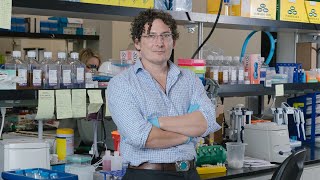
In this episode of the AIR community’s On Air podcast, Jacob Glanville (CEO of Sentivex/Centivax, founder of DistributedBio) walks hosts Ulrik and Qing through his unconventional career, the computational‑immunology tools he created, and how those insights shaped modern antibody‑library engineering and broad‑spectrum vaccine design. He describes growing up in Guatemala, early work in HLA population genetics and phylogenomics, and a pivotal stint at Pfizer where he introduced next‑generation sequencing to hybridoma and phage‑display libraries, uncovering why many libraries are far less diverse and functional than advertised. Leveraging those findings, he built the Glyph/GLIF T‑cell‑receptor clustering algorithm, used it for antigen discovery in tuberculosis, chronic‑fatigue syndrome, and other diseases, and highlighted its current 15‑20 % detection ceiling that could be expanded with larger datasets and machine‑learning models. Glanville then details the “bioengineering toolbox”: natural‑evolutionary guidance, modular domain swapping, high‑throughput sequencing, synthesis, droplet‑based functional screens, and genome‑editing platforms, emphasizing simplicity over unnecessary complexity. He explains how he applied repertoire‑derived insights to create synthetic “Superhuman” antibody libraries with dramatically higher functional diversity, and how he later founded Centivax (formerly Synovax) to develop a broad‑spectrum vaccine platform that mixes multiple, sub‑threshold antigen variants to amplify B‑cell responses against conserved epitopes. The conversation moves to the SARS‑CoV‑2 antibody program: rapid discovery of ultra‑potent binders, manufacturing of a record‑high‑concentration formulation, and the eventual clinical hold after Omicron rendered the lead antibody ineffective, underscoring the need for broad‑spectrum approaches. Finally, Glanville shares his vision for a public database of antigen specificities—an immunological analogue of the Human Genome Project—and predicts that next‑generation sequencing, machine learning, and high‑throughput functional assays will transform diagnostics, vaccine design, and therapeutic antibody engineering, ultimately moving humanity toward a pathogen‑free future.
Chapters
Welcome to On Air, a podcast from the AIR community. The community organizes and coordinates researchers studying all aspects of B- and T-cell receptor repertoires. The podcast is supported by the Antibody Society. For more information, please go to antibodiesociety.org. This podcast has a special focus on clinical use of the adaptive immune receptor repertoires. We will look at how repertoires are currently used in the clinic, and also discuss different opportunities where repertoires can be a great addition, the reasons why we are just not quite there yet, and how to overcome the obstacles. We are happy that you joined us for this episode of On Air. For this fourth episode of On Air, we are very excited to welcome Jacob Glenville, CEO of Sentivex. Hello, Jake.
Hi, Ulrik and Qing, thanks for having me on.
So Jake, I've had the great fortune of working with you in the past, so I know quite a bit about your background. And I have to say, it's probably one of the most interesting career paths I've ever come across. And I was hoping that you could speak a bit about that first.
Sure. So I think what you're alluding to is that I grew up in Guatemala. My parents were innkeepers at a restaurant and a hotel. Um, which I think— I actually think that there was a surprising amount of translatable skills that came from running a restaurant in a civil war when it comes to running a biotech. Uh, you have to track inventory, you need to hire people and know where to place them to be effective, uh, you need to be able to make a product that works so that word of mouth is what drives people, you need to be able to focus but focus doesn't mean one thing and he's balancing what matters on the triage list of things that are working and going wrong. I think those things that I watched my parents do turned out to be very helpful to me in my career that followed. So when I was 16, I came to the United States to do my last year of high school, get in-state residency, and then apply to the UC system. I was studying genetics, genomics, and development, and I was interested in immunogenetics. And I was, as a hobbyist, very interested in computational science and mathematics. I didn't really realize those two things would collide until I started working with two laboratories that were doing computational immunology, and that was the Glenys Thompson HLA Population Genetics Laboratory and then the Kimmens-Schellander Berkeley Phylogenomics Group. And when working in those two labs, I realized the thing I was doing as a hobby was super useful in analyzing the immune system in In many cases where the immune system uses combinatorics as a method to address, you know, the forever war against pathogens that evolve faster than we do. And that's when I think I started really hitting my stride on realizing how these methods could be extremely useful. And this is the early days of like the genomes had just come out for humans. The big data at the time was like 7 million sequences in the NR database, but And we were literally going down to the stacks to go pull out old archival data for HLA and bringing it up and typing it into a super long Excel sheet. But it was enough to start realizing the power of those methods. So after Berkeley, I joined Pfizer. And at Pfizer, Pfizer was traditionally a small molecule company that was realizing that there was a sea change in terms of the power of biologics and they wanted in. And so they just bought a company called Renat Neuroscience., and I was hired into that site. That was a biologic site, one of the first in Pfizer. And it was kind of the perfect place for me to land because they were using the immune system, like through phage display or hybridoma, to generate drugs that would treat the immune system, as well as a number of other indications. And so I showed up there and my involvement was to help the hybridoma groups improve screening through using sequence analysis, to help the phage display groups QC their libraries, but also try to understand in both cases why sometimes it was really hard to produce antibodies against certain epitopes or in certain proteins. And I had come from this background of computational immunology, so using hidden Markov models and Dirichlet mixture densities and a number of methods to help analyze large sets of related sequences, which antibodies fall into that category. And I also had very good timing that I started building these tools right when the 454 Pyrosequencer, so one of the early generation next generation sequencing instruments, had come online and it showed up in the facility. And they were using it to try to discover new targets by doing genomic sequencing. And I asked, because I was confused by why these libraries, the Hybridoma or the phage display library, would struggle against certain targets. And I felt like to really answer that question, I had to look deep. And I asked if I could put some of the material onto the sequencing instrument. And they were confused by the question initially. They're like, "What? No, that's going to be crazy. You're not going to be able to tell the sequences apart." And I was like, "No, I can analyze it if you can generate the data." And so we did so, and that started really the 4 years I was at Pfizer was largely a consequence of that. And that early study of repertoire sequencing of libraries opened up a bunch of reasons why the libraries could be built way better than they were at the time. Techniques we could use to try to answer simple but profound questions of hybridoma, like what happens when you adjust adjuvants? What happens when you adjust the immunization schedule? How many antibodies do you get when you vaccinate an animal? And we could finally answer those things, which means you could apply more rational engineering to try to optimize those systems. And it was also a good time that high-throughput synthesis was also becoming more mature. And so I started developing a number of naturally informed synthetic or semi-synthetic libraries based on kind of the findings of looking at these repertoires and also looking at them after lots of selection pressure. So I did that for 4 years, and Pfizer let me publish quite a bit while I was there. I didn't think I was going to get promoted a 5th time, and I had this idea, kind of, I couldn't help it from seeing all that data. I had some ideas on why the immune system might miss certain antigens, which has profound effects on vaccine design. I also had some other ideas for antibody libraries. So I, in 2012, I quit Pfizer. I did two things. I founded a new company, DistributedBio, and I also applied to the PhD program at Stanford's Computational and Systems Immunology. I was interested in the work by Mark Davis, and I figured I'd just try two things because one of them would work out, but they both did. I got into the program and the company was becoming successful. So I just didn't sleep a lot for five years. And I, work to grow DistributedBio, where we had first the vertical, where the instruments were commoditized to do deep sequence analysis, but the analysis really wasn't. And so we built a software platform on the Amazon cloud and we offered it as service to a number of biotech companies. And then that gave us the resources to then build those better libraries that I knew we could build better because I had been using the sequence analysis to realize there was a lot of redundancy and there was issues with fitness in the existing libraries. And so we built a library and started licensing the library, and then we started doing services. Ultimately, in 2012, the service business was acquired by Charles River Laboratories, and a series of internal development programs that I had been doing in dBio, I spun out to become Centivax. Then in parallel, I completed the work with Glyph and a number of other studies at Stanford. In 2017, I graduated. I managed to balance the two groups by just publishing a lot with a lot of collaborators. I think I had 34 publications out by the time I graduated. That way, they couldn't complain too much if I just wasn't around on campus that much. So that was my strange path. Now I'm working on the broad-spectrum vaccine technology and these broad-spectrum antivenom and antibodies that are all like ultimately a direct consequence of those early repertoire studies and some of the insights that they bring.
Yeah, no, again, that's extremely interesting. And one of the themes that I see kind of continuing on is you speak a lot about bioengineering and sort of if you could tell us a bit more about I guess, what does the bioengineer toolbox look like? What are the ways that you could optimize your antibodies?
Sure. So I feel like I sound a bit like a hippie or a druid, but I think the most important feature is to look to nature. Nature's had hundreds of millions of years of evolutionary optimization on these systems, and like pumping inside your veins right now is an immense library of hundreds of millions of different antibodies. And so The most powerful thing we can do in repertoire analysis, but I think really everywhere in bioengineering, is see how nature does it and learn from that. And the power of homology on any gene is to look at lots of variations of it from different species or through paralogous duplication events, because it gives you free information on how, where you can change it and where you can't and how that might drive functional behavior of those molecules. And nowhere is that more true than antibodies, where you have this immense mutation engine built inside of each of us. And so that's That's the first thing. Once you have looked to nature, the next parts are leverage, you know, the generations that have come before us that have really helped us figure out the Legoland that is bioengineering, where you have modular domains that nature's provided us. We have a lot of guidance and engineering tools on how to jump these domains between them to create new fusion proteins to serve our various purposes. And there's, you know, at this point, there's big data on almost any protein you look at. Someone's done mutational scanning and some other information. So we can harvest that as the, is the, you know, the roadmap on at least some information about any protein system we work with. The other things that have happened, like, in the last 10 years in this, like, revolution of biotechnology we're in is we have high-throughput sequencing to be able to look at libraries of variations you've created yourself, high-throughput synthesis. You have a bunch of powerful techniques now to synthesize libraries to explore exact types of variation on a protein that just weren't possible 10 years ago. And then there's even high-throughput sort of functional screens, these fluidic droplets and other tools. So those all, in my mind, are the critical toolbox. There are also these innovations on cellular engineering, so things like CRISPR and TALENs and zinc fingers and other methods that allow you to manipulate not just the proteins but the stable lines as well. So I think that's your major toolkit. I guess the other part I'd mention would be the computational. There are I will say I'm a traditionalist in this sense, which might sound surprising given what I do, but my feeling is always like, make the simplest possible thing you can work. And if anybody makes anything more fancy, you have to prove to me that that's meaningfully better than the simpler method. And actually we'll get to an area where I actually think machine learning is useful, but I would say everybody just uses machine learning. Oh, we can apply machine learning to this. I'm like, yeah, does that work better than a logistic regression? If not, why are you doing it? It reminds me of this time when I was 4 years old and I was swimming, snorkeling in the Caribbean, and there was this other kid who had this like really complicated, cool-looking snorkel, and I was jealous, and I had like a simple little plastic tube. And I remember my dad told me like, no, Jake, you don't, you don't, you want simplicity. The more complicated it is, the more likely things are to fail. And sure enough, that other kid was sucking water the whole day where I was like looking at fish. And so I think I apply that method to to engineering, and, and simplicity serves us well.
And you already mentioned Glyph, which is one of the first tools, uh, that, um, where TCRs are clustered based on common antigen specificity. Um, how have you and other people utilized this tool over the years?
Sure, so Glyph was, uh, the result of An observation I made when we were looking at identical twin antibody repertoires, that it tended to be certainly with twins that they didn't produce identical antibodies. Almost none of their repertoire was identical. And yet if you looked at their memory compartment and you clustered by similarity, they tended to have an enrichment of more similar antibodies. And that same effect was actually true of unrelated individuals where there was a convergence of some similar clusters of antibodies that seemed like they were being systematically recruited into the, into the memory compartment relative to the naive. And so this caused me to suspect that those represented similar but not identical antibodies generated against the same kinds of common targets that people are exposed to. And so when I was in the graduate program working with Mark Davis, and that was actually the main reason I wanted to work with Mark Davis, is that I felt that this would be better proven in T cell receptors compared to antibodies.. And the reason is that antibodies combine in all sorts of goofy ways against a target. Whereas T cell receptors are delightful from an analyst's perspective, because you have the MHC, which is like a hot dog presenting the, the bun, which is the MHC. And then the, the hot dog itself is the peptide and the T cell receptor comes down and docks it in a very specific orientation. So you have a very like limited, very constrained epitope of interaction with the diversity region being like pretty linear and well-defined.. And that meant that the analysis would be simpler. And so I developed GLIF to demonstrate this. At heart, it's a clustering tool for— it's asking the question, given a set of T cell receptors, if you know where those repertoires came from, like from human, is a set of T cell receptors that you pull that just got activated, do they look suspiciously too similar to each other than you'd expect by random chance from sampling from that distribution and the parental distribution in an unbiased fashion. And if so, then that implies that there's a common target that not identical but similar T cell receptors are all recognizing. So that's the basis of it. The usage is in things like tuberculosis, where we showed that we could identify new sets of immunodominant peptides, and we could use sort by activation. So you could actually say, what are the peptides that are driving the most activation in subjects? So target identification, which is challenging for T-cell receptors, that's the main advantageous approach. There's also ways you could use it. For instance, we used it on chronic fatigue syndrome subjects where we don't know what the targets are, but we do know that chronic fatigue syndromes are responding to some, most of the subjects are sharing some sort of a common immunological insult. And we can tell that that's present at a much higher rate in those subjects compared to unrelated controls. So these are the ways you can use it. I will say that the limitations of the technology is that we're detecting at most 15 or 20% of the T cells you look at, depending on how many you look at, you're able to cluster. And so we know that that method, which is largely looking for small sets of motifs in the CDR3, it's the tip of the iceberg, and there's probably more complex rules that are hidden in those systems that we're not currently capturing with GLIF. I think this is an area where machine learning actually will help quite a bit, where if you have a lot more data, and there are methods now to be able to generate large numbers of cell-cell interaction data, then I think applying machine learning to those systems would allow a larger universe of convergence to be detected than Glyph's able to achieve. But the 15 to 20% is enough for hypothesis generation and for establishing immunodominant clusters.
So you think then, so these limitations, the answers to these limitations are machine learning and simply just generating more data of TCR and antigen interaction?
Yeah, so I think that that's certainly a strong way to go forward. At the time, you know, I used the Nature Biotech method I developed with Arnold Hahn where we were able to isolate single T cells and sequence their T cell receptor plus a series of phenotype markers. That worked, but we were limited to, you know, it would be some effort to generate hundreds of of T-cell receptor alpha-beta pairs. And the— I also was using the TETramer technology from Mark Davis that allowed me to explore, you know, we had used 9 different peptide specificities across 3 different common pathogens, so EBV, CMV, and flu. That was enough to prove the point, but I think there are now better technologies that use cell display of peptides at high throughput in microfluidic drops or other technologies that would allow you to get hundreds of thousands of data points. And with more data points, then you can start applying machine learning. And this is exactly the kind of problem that machine learning is actually good at. It's being able to look for complex rules that if you go beyond the motifs, you can, you can identify potentially some bizarre rules that are somewhat difficult to pull out without a pattern recognition instrument. So that if I were to continue in this space, that's definitely the method I would apply. I'll say the other thing with the, the reason GLIF worked pretty well, like I was saying, was because T cell receptors are constrained and there's this kind of beautiful structural relationship where the T cell receptor docks in right on top of like the hot dog of MHC plus peptide. And the angle of the docking is such that the CDR3 of the beta strand contacts about half the peptide and this CDR3 of the alpha strand contacts about half the other peptide with a couple residues in between being sampled by both. CDRs, and T cell receptors don't have somatic hypermutation, so it's really just V gene variation in those CDR3s. And this is aligned perfectly to provide a very limited window of the peptide to be tasted by those two CDR3s. And my feeling was this was an extremely opportune space to look for simple motif rules, and that turned out to be correct. But like I said, there's probably some additional hidden, hidden more complex patterns, particularly because TCRs, they predicate their interaction based on avidity of a lot of very low affinity interactions. And the lower affinity interaction is, I think, a lot more bizarre, spooky flexibility you have on the sets of constellation of interactions that enable that interaction to take place. And that's why I think machine learning makes a lot of sense.
With identifying these motifs, you've spoken about using the tetramers, there's the cell displays, the peptide MHC. Display technologies, which ones do you think is one of advantage other than size?
Is there more, any other benefits? Yeah, so I think the— because the interaction is so exquisitely specific, like that's the whole purpose of that system is to tell self from non-self and be able to tell single amino acid changes if necessary. I think that means you're better off working with a system which is as native as possible. To what's exposed to on humans. So I was fortunate enough to be involved with this great study by Michael Birnbaum where he was looking at this yeast display library of MHC. I think it was largely translatable and very interesting, but they did have to engineer the MHCs in order to display them as a single chain. And so I think under some circumstances that could slightly alter those interaction interfaces. So for that reason, I do like mammalian displayed MHC peptide libraries when possible because it's giving you exactly what the, the TCRs would be exposed to in a native setting. It also— I like the technologies where you can take natural cells out of a person, um, so immunexperienced cells. You can sort them based on activation markers and then expose them to some library of peptides, so cell displayed library, and then be able to do co- co-sequencing of rosettes, for instance, of a rosette of essentially an engineered APC, which is now being— or MHC displaying cell, which is now captured a bunch of T cells around it, and you can sequence that little cluster. I think those are very attractive technologies. I'm aware that there are companies doing this whole concept at high throughput. So there are definitely advances on generating the data. I think the analysis is going to be the next step. But the attractive thing here is that if you start doing this, you could actually store your results as you learn specificities. You could just maintain a database. And the way GLIF works, and other algorithms could be set up this way, they're scale-free, which means you're just learning an ever larger vocabulary of specificities. And that means that as you go, the more you learn, the more it's going to— you're going to be able to sequence someone's T cell receptor and like learn a lot about the, like, the hidden history of their immunological challenges, of what, what's hidden in their blood. And there's applications there for diagnostics autoimmune recognition, previous pathogen exposure. So I think there's a lot of value in building such a database and an argument for making it public.
Yeah, that's an interesting point that you make, and I'd like to explore that a bit more, which is these motifs. So do you think it's a private motif set, or are there going to be public motifs that are related to infectious disease agents and certain cancers and whatnot?
So the motif sets are going to be public to the extent that they're shared MHC. I mean, that's part of the challenge of creating that library is that there's a lot of HLA or MHC polymorphism out there. And so the things you learn about one allele may not and probably do not transfer to another allele. There are these supertypes. So even though there might be hundreds of alleles for HLA-A, for instance, they actually collapse down to 7 major families that have largely comparable peptide binding capacity. There's going to be little devil in the details here and there, but the problem's not as bad as it looks on first sequence analysis, but it is still a pain. That said, like, my expectation is if you have, if you have a bunch of people that have an HLA, like, you know, HLA-A*01:01 or whatever, and they're all exposed to a common pathogen, then, and they, they have an immunodominant peptide, then yes, you're expected to find a bunch of public solutions against that. There will be some rare ones and public ones, but the way to think about it is not really publicity versus privacy. It's really just a continuum of the probability of that T cell being created. The T cell receptors that rearrange more often that can bind that are going to more likely show up across the subjects. It's just a sampling phenomenon, whereas a rearrangement which is extremely rare to happen which is just less likely to show up in 10 people if it's a 1 in a million chance of occurring. It'll randomly show up in maybe one of them and you won't see it in the others. So that's the way I think about it. The clustering will get you most of the way there, but the truly exotic ones will remain individually. They will appear personal just because you haven't sequenced 10,000 people. If you looked at enough people, you'd see the universe of specificity.
[Speaker] In your previous company, so you also mentioned this, you focused a lot on antibodies. And we will talk a bit about antibodies produced in Centivax in just a little bit. But first, I'm interested in, so what is the problem actually with this optimization of antibodies that you excel in?
Sure. So there's, going back to the story of Ronaut, there's a problem whether you're using in vivo, so in the case of Ronaut Hybridoma, And there's a related but also some separate problems if you're using libraries like phage display or yeast display or whatnot. In the case of the animal being immunized, the, the problem is that of immunodominance and of a limited number of expanded clones. So if you look at a human after a vaccine, they produce about 100 antibodies and maybe 10 times that in B cell memory against the antigen.
It's—
the numbers are a little bit smaller in a mouse but not that different., but that may work pretty well for you if all you need to look at is 20 antibodies, and as long as the epitopes that are active for your needs are enriched, but it's a real pain when the epitope you're interested in is more rare, and each mouse is not giving you that many antibodies. It's the same problem of why there are these broadly neutralizing epitopes on influenza, or coronavirus, or HIV, but most people don't generate antibodies against them, 'cause we're not making that many unique antibodies, and those epitopes are very rare, compared to more common ones. And so that, that's one engineering problem right there, is how do you hit the epitopes that you want to hit, which is really a vaccine question. And that's one of the bases of my company, Synovax. And then on the other side is the library. So now you don't have the, the vagaries of an in vivo system. So you think, oh great, I no longer have immunodominance, I no longer have imprinting. That's not actually not true. You still have immunodominance. Because immunodominance is partially just a function of if you have a library of a billion members, every one of those members has some preconceived configuration of a micromolar potential interaction with the target. When you get up into micromolar, it's just the way with a waifishness, like this mist of slight stickiness is what instigates the next round of interactions. That's what kicks off affinity maturation in vivo. But in a library, that's also true. And certain V genes certain CDR3 links, certain amino acid composition, those will shift that distribution to bias towards certain clones getting an advantage over others. And so you do have immunodominance even in libraries, which depends on how they were constructed. If you choose shorter CDR3 links or longer, if you choose certain V genes, that's going to impact which epitopes you're more likely to encounter. But there were two other like really bad problems with libraries. I mean, that's really where I made my most progress was when we sequenced the first library in 2009. They were claiming this was like a, you know, I think it was a 3.2e^10 library. So, you know, pretty big. You're talking about 32 billion transformants, and they'd measured it by transformants. That's what everybody did. They just counted the number of colonies of bacteria that had absorbed a vector, and they assumed that all of that DNA was unique. And they also assuming all those antibodies work, right? So both of those are definitely false. So when I sequenced the first library, I applied a population genetics method to estimate the diversity. And I was like, hey guys, like, this library is like 1,000-fold less diverse than you think it is. And initially, there was a lot of resistance to that. They were like, no, there's no way, you have to be analyzing it wrong. And I'm like, yeah, I'm pretty sure I'm analyzing it right, guys. And then, then they're like, well, it has to be a PCR error, or like, it has to be— there's a bunch of nonsense. And so I ran technical, biological and technical replicates. And I started tracing back, like, where do these libraries get so much worse. And actually, I started being contacted by other companies that were using the same method, and they were like, our library also has this problem. And the diversity of these libraries was like e to the 7, maybe even to the 5 on the heavy chain. And so that actually was the beginning of me realizing, oh, there's a huge opportunity to improve the quality of display libraries. And the problems were twofold. One was the diversity, and that actually was a problem at every step. And I think partially because people weren't thinking like population geneticists, So, uh, there were certain PCR steps where people are like, well, the protocol says put in 1 microliter, so that's what I did. But if you calculate Avogadro's number of the amount of DNA you put in at a given concentration, 1 microliter, you've dramatically bottlenecked your library. You actually need to run like 40 different PCR replicates to capture the diversity. And there were many steps like that, steps during enzymatic digestions and the amount of vector being generated in the PCR steps. There were problems with amplifying the original material, like people weren't taking out of human samples. What you need to do is harvest all the B cells if that's what your goal is, harvest all the RNA and use all of that RNA in all of your cDNA reactions and then use all of that product in the next step. If you just go, well, the protocol calls for 1 microliter, you've actually left most of your diversity on the bench and people had no way of checking it with Sanger. But then the profound thing was the problem was actually even further upstream. That people assumed, hey, people have 10^11 B cells in their body. This is like, you know, the majesty of the perfect repertoire in a person. And I just was like, I was like, that can't be right, because homeostatic expansion is a known phenomenon by immunologists where a naive cell makes lots of copies of itself. And certainly we know that memory cells make lots of copies of themselves, and both of those functions would serve to introduce redundancy that would shrink the repertoire. And so I did these studies on identical twins and strangers where I took biological replicates. I took two samples of blood, I sequenced them both independently, independently, and I compared them to each other, which allowed me to estimate the diversity. And I further— I separated out the memory cells from the naive cells, so CD27 positive and negative, and I looked at the different isotypes. And when I did that, I, I was like, guys, like, in the memory compartment circulating, you actually have only a couple hundred thousand specificities. I mean, and, and again, people are like, there's no way that's possible, how could we possibly be defended? But the immunologists knew better. They said, guys, like, The immunologists were like, no, most of your B cells are not just constantly circulating the periphery where you guys are making these libraries. They go live in secondary lymphoid organs. So you're, unless you're grinding into the bones of these people, you're missing most of the diversity in the memory compartment. And then in the naive compartment, it still wasn't that good. I was like, guys, it's like E to the 7, maybe E to the 8 on the heavy chain. That's what you're limited to. That's your, your clonal diversity. Uh, the rest is homeostatic expansion. And that means when people built libraries, if you weren't accounting for that, you're going to build a library. It's way smaller than than you think it is, even based on the genetic diversity, before you screw up at all those other steps. So that was kind of— those are the easy fixes, was— and that was the basis of a technology I produced at Distributed Bio, was the Superhuman Library, where I, I calculated the number of subjects I needed to pull blood from, the amount of diversity to pull from the naive compartment for the H3s versus the memory compartment for the other CDRs, and, and, uh, on how to optimize that for diversity. There was a second problem here, which was just, okay, if you can get rid of the redundancy problem, your second problem is fitness. And that was when you took a library and you sequence it, and then you apply it, pan it against a bunch of things, and you sequence all the hits that come out. There's— if your library was perfectly fit and all the molecules were well behaved, you should see the distribution of those two pools to be identical. One should sample without bias from the other. But that's not what was observed. Instead, we saw certain V genes were dropping out. There were certain CDR links that were missing. There were certain residue mutations that even if they occurred in your library, they'd never showed up in binders. And every, every error like that is poisoning your library. So if you had one position at like CDR3L3 where you had proline put in at 5%, but proline doesn't work, so you never see it in a binder, it screws up the fold, you've actually just poisoned your entire library using one position and one amino acid at 5%. And there never was only one error, there was always a lot of them, and they compound. And that also resulted in library libraries being about a tenth of the diversity, that functional diversity, than people thought they were. And that, that, that problem was the really interesting one to address with Repertoire, to learn from nature what the fitness function is elected by evolutionary forces, and then design libraries using synthetic methods or natural harvesting to be able to optimize that, and then also apply in vitro pressure selection techniques to enrich for, for well-folded and expressing proteins. So that, long story short, those were the, the areas where Repertoire really helped identify a problem and then fix it.
That's really interesting. So I guess with DistributedBio, you were more focused on synthetic libraries, but pulling from human nature biology to guide an optimal design. And I recollect, even at that time, as you alluded to, is you had also a passion project of kind of applying these learnings for vaccine development. And I believe that's the genesis of Centivax. And I took a look at your, at the company website, and you have quite a bit of programs in there. SARS-CoV-2 is one of the highlights. Can you speak a bit about sort of that genesis process and then where you're at with the SARS-CoV-2?
Sure. So yeah, the Sinovac, our lead program is a broad-spectrum vaccine technology. This emerged again from the repertoire analysis where I was looking at humans and mice and noticing that there was, once you could look again, there was a lot less diversity than people assumed of how many antibodies you make after a vaccination. And in a mouse, you know, you're talking about, you know, about 50 unique clones that are producing meaningful serological titer, and they're not equal. And in a human, it's about twice that, but it doesn't scale linearly to size. The immune system has like a built-in set point to stop you from making a never-ending runaway reaction of new clones. There's a certain point where the germinal centers say, I got this, stop trying. And normally that's a good thing, but if you're going after a complicated antigen that mutates like flu or the coronavirus or HIV or a number of other you know, annoying mutating or diverse pathogens, that can really bite you because the first set of 100 antibodies you generate might not be against the right epitopes, which— and your body keeps stopping you from searching for more. And so, and it gets worse because now you're imprinted because those memory cells have made lots of copies of themselves and they're all over your body. And so on repeat exposure, the immune system is lazy. A memory cell that's more abundant is going to encounter the antigen faster, it's going to activate more easily, they're more prone towards activating. And even if they don't bind well, they're going to be like, no, no, guys, I got this, I got this. And they're going to waste time affinity maturing every time you get sick and exposed, which— and you're going to be stuck kind of chasing the dragon with these poorly informed epitopes. So I got really interested in this problem where I said, okay, if you make 100 antibodies, like, how many epitopes are there in HA? And I perform these large protein-protein docking experiments to just enumerate all the possible surfaces that an antibody could pop possibly bind to. And it turns out there's hundreds of millions. And if you cross-index that against the evolution of the virus over the last 100 years to ask the simple but important question, which is like, what proportion of the epitopes are ultra broad? Which ones are strain specific? What's that distribution look like? And the answer is about 80% are very strain specific. In 1 to 2 years, you're going to lose those binding modes. Most of the remaining 20% are partially broad or very broad as to subtypes. Like within H1N1, you can get a pretty good spot that'll hold on for 10 years. And then even more, more rare, like kind of very universal within H1N1s. And then those really true B-nab sites are like 1 in 100,000 to 1 in 10 million, depending on your stringency. And what I liked about it was it, it was just a— you don't have to invoke any of the spooky arguments for why immunodominance was happening, and probability was enough to describe the problem of why B-nabs are possible but most of us don't make them., and when I saw that, I realized that there was a technology that I could use to address that. And so what we do at Synovax is that we, uh, take a strategically identified set of 10 very different versions of the target. And like influenza, for instance, we would pick, uh, 10 very diverse versions from across the last century, roughly one per decade, but it's phylogenetically defined. Uh, we then dilute them so that each one is below a sufficient immune activation threshold to cause an immune response. If we injected at that concentration into a pig or a ferret or person, nothing's going to happen if you do the one. But this magical thing happens when you then mix 10 of them together, whether each one is below that concentration threshold and you inject them, then the shared sites are 10 times higher concentration. So a B cell that recognizes a shared site will get 10 times the dose, and therefore you are only activating the B cells that hit conserved epitopes. Groups. And this technology works amazingly well. We've done now 5 studies in pigs, a study in ferrets, live challenge studies. It won the Gates Foundation Grand Challenge Award for— and we are moving that as our first broad-spectrum vaccine technology into manufacture and then clinical development. We have follow-on programs using the identical technology platform to go after HIV, the coronavirus, and then, you know, we've got a hit list of other things we think are interesting. But you can't work on too many things at once. So we're gonna go after those first three first. I think you also asked about the coronavirus program. So yeah, we have some, you know, because of our background, we've industrialized making antibodies and our focus is on bNAbs 'cause they emerge from the vaccine work. And then also we have tools for isolating them. At the beginning of the pandemic, I, right after the Netflix documentary series came out, which was January 22nd, 2020, my next thing that I did was I flew to Washington, DC to go to the biothreats meeting. And I remember showing up and we were already hearing about this emerging coronavirus in Wuhan. And I bring my wife and my new child with me because I didn't want to travel without them. And I go in, they're upstairs at the 5th floor of the conference, and I walk into the room and I see Fauci up there already telling people, we no longer think this is containable inside China. And I'm sitting there being like, not great. The biothreats conference is people who work all around the world around biothreats, and they've all congregated. I was like, this virus might already be in this room. And so I strategically retreated, went back upstairs, and I contacted my team and said, hey, look, we're gonna apply our technologies to make antibodies. Um, and then I met with DARPA right after that. It was a crazy period as like the wave was coming of the coronavirus pandemic., we were, we were able to make antibodies extremely quickly, and within a couple months we had panels of ultra-potent binders. A lot of people were collaborating with us, so we got the confirmation of neutralization, and then the, the live challenge data was generated at USAMRIID. So all of those things moved relatively quickly, and we had our, our best member of a panel of thousands of antibodies that we'd move forward into manufacturing. Um, for a long while things were looking good. We got through manufacturing. It took a long time. We had about 8 months of unexpected delays. We got it complete. The molecule looks super clean. Uh, we had engineered it through some of the methods I was describing where we, we have— we concentrated to 254 mg per mL, which is like the highest concentrated antibody ever for a high concentration formulation delivery. That was something that the Maneval Medical Research Center was interested in, and that's kind of an area that I focus on now with antibody antibodies is like, how far can I really push these systems outside of normal development parameters? And things were looking great. We submitted our R&D and then Omicron hits and we were put on clinical hold because of futility. Like Omicron knocked out pretty much all the antibody programs and us included, unfortunately. So we are in the event that there is a new variant that we're able to hit, we could complete our phase 1. We would still need a cocktail in order to move forward. Um, our antibody is absolutely outstanding. It was like best in class against most of the variants, but it doesn't hit Omicron. So, and unfortunately, that's what you need to hit, uh, because the smart money is that the new variants are going to be sub-children of Omicron. Um, we are exploring, uh, potentially being able to do a Phase 1 where we're just assessing the safety and tolerability of an ultra-high concentration delivery agent. I'm a little skeptical that we're going to be able to pull that off. Just because the FDA's concern, which was frustrating, but I understand their point, was that like if the drug binds the old vaccine components, but doesn't bind Omicron, then there's a risk that you giving it to healthy controls would actually inhibit their ability to receive these vaccines. And so that was their, again, which I get, that it imposes a potential safety risk with no perceived benefit. So yeah, it was, I would have liked to spend maybe 1% of the amount of money I spent to have my team successfully complete GMP and safety and talks and submit an IND and all those steps. So, like, I'm glad that Sinovac has now battle-tested to do that. I would have liked to spend less money to have gotten that lesson, but I think we're— we've proven we can do it. And I think the other, the other thing is it just further emphasizes the importance of broad-spectrum vaccines, which is our workhorse technology anyway, because all the other antibody programs are knocked out. And the power of a universal vaccine or a broad-spectrum vaccine is it's not one antibody. Like I said, you produce about about 100, which means it's the ultimate cocktail. You're producing about 100 antibodies and they're all hitting conserved sites. That's what can actually create broad-spectrum protection that variants can't escape from.
So we're going all in in that direction. So then, is there enough data about the different strains of COVID to generate a broadly neutralizing vaccine?
Yeah, awesome question. So initially there was not, right? So you, yeah, you completely understood the technology. Yes, so that my technology requires a bunch of known variation in order to pick those, those members that are as different from each other as possible. And yet they have certain conserved sites that they haven't been able to change because otherwise the virus doesn't work anymore. And that's exactly what you want for the formulation because you can inject that and say, immune system, go find the conserved sites and hit them all. And I couldn't use my technology when the coronavirus originally came out because there was really only CoV-2 and CoV-1. They're about 74% identity in the amino acid level in the RBD, similarly in the rest the spike. And my tech doesn't work with two because there's not enough of a different concentration between one and two components. For that reason, I just waited. I also felt that it wasn't clear that we'd need it. I thought maybe some of these other technologies would address it. I also thought that the coronavirus, you know, it doesn't mutate as fast as influenza. It's just— but the problem is it infects so many more people that the, the individual mutation rate is counterbalanced by the, the volume of of new infections. Fast forward a year and a half, or two years, a year and a half in, we did have enough data. So we were, I was constantly monitoring the GIS-AID database, and there were also some very elegant studies by a laboratory called the Bloom Lab and some other studies that had applied saturated mutagenesis across the RBD and other parts of the virus. And so those two pieces of information gave us everything we needed to be able to generate that diverse set. That said, unlike HIV and flu, with the coronavirus, we're actually creating new components that are in— we're pushing nature a little further than it actually is to diversify regions that we know are prone towards diversification and leaving alone regions that, that we know can't tolerate mutations. And through that process, we can, we can guide the immune system towards the conserved sites. So that— you're exactly right. That same approach, by the way, is what we'd have to apply when we go after dengue, because there's really just 4 major lineages, and our technology really needs like 8 or 10 in order to really work well. So we would actually computationally bifurcate those branches, those, those 4 lineages to create pretty distant members from each other that would all be able to focus on the shared sites. Sorry, I realized my answers have probably been wordier than you need.
You're asking me about my favorite topic, so it's kind of hard for me to be petty. Yeah, no, this works.
Makes it easier for us All right. They were excellent. You covered basically all of the questions that we have without us asking them. So, yeah, but it's great.
It's a joy listening. Yeah. I guess one question is, where do you see the future of, right, like right now we're using next-gen sequencing, profiling immune repertoires for various diseases. Starting to, at least, you know, my experience is people are starting to think about the antigen specificity side, but not as much. Where do you see the field going and how they might be applying it?
Well, I know where I'd like it to go. I think that a public database of specificities would be a service to research globally. It would be an immunological equivalent of the genome project. I think that we have the technologies to do that now, both with antibodies and T cells. And I think that particularly for T cells, it would be really helpful. Adaptive has started doing this with a limited set of specificities, and I think to their credit, they're making— they're helping potentially unlock correlates of protection in the T cell compartment. And it's complicated by the fact that T cells, it's not just who they are, but it's what they're going to do about it that matters. So the phenotype encoding is important, and it's just hard to get those— extract those easily out of like a laminar flow chip, right? So, but that said, I think I would like to see that happen. I think that that would enrich every repertoire experiment ever done if you're able to run it and then immediately starts annotating the genes. Because that's what we do when we look at genes, right, is that even with a new species, we immediately assign homologs. So, we learn a lot about the potential functions. If I go find, you know, magic purple frog that's never been genomically sequenced before, and I sequence it, it will— I still know what most of those genes do by homology mapping.. And this would be analogous to that. It would be specificity mapping. And I think that would be really powerful for asking questions of like, is an autoimmune disease being triggered by a recent infection? You could look for even shared determinants between those two datasets to be like, ah, that seems like that might be the bridging epitope-spreading trigger T cell receptor. And you could break open some of those questions. I think those are important questions to break open. We've seen some breakthroughs in terms of possible viral origins of MS. That came out recently, and I think we're gonna keep seeing that there are these autoimmune triggers that are driven by infection. I also suspect, much like in the last 10 years we've seen immunology sort of reach its tentacles out into a whole bunch of other disciplines like cardiovascular disease and neurology and, you know, you name it. I think we're, we're also gonna see virology increasingly reach out into a bunch of diseases of unknown cause, including some psychological disorders that they have this periodicity that suggests to me a potential pattern of a relapsing form of some sort of viral infection. So, you know, we'll see where it lands, but I think that would be really valuable. The other, the other side beyond the diagnostics is I think that— and I think we're actually doing a pretty good job at this— people are routinely applying, generating a library of a particular gene of interest they're engineering, then use deep sequencing before and after a selection pressure to learn a lot about the properties of those molecules and how to engineer a best version. And I think, you know, we certainly do that all the time. I know lots of other groups are doing that as well. And I think that is, that's great because it accelerates engineering and it gets us closer towards producing that perfect molecule, the Aristotelian ideal that exists in sequence space. And we don't have libraries big enough to discover it necessarily, but we have libraries big enough to point all the vectors through sequence space to imply where that, you know, that North Star is. And then we can synthesize it and see if it's true that that is like the best of all worlds of that molecule.
Well, thank you so much again, Jake. I hope to see you again in person someday in the near future.
Indeed. I finally got to go to a conference. I went to SynBio Beta and I guess Antibody Engineering. So I finally went to two conferences after two years in my fortress of solitude over here, which is weird but nice. I felt like weirdly like a high school student where I was like, oh, I've I've lost my normal interaction style with people, but you get it back.
Yeah. This is my first in-person conference right now. So, and here I am hiding in a random abandoned conference room, taking calls.
Uh, what, what times we live in. Um, I guess that's the last thing I'll just say. If I looked where I think the future is, I actually think it's bright. I think it's weird that to say this because we're in the middle of a pandemic that seems like it's never going to end. We are in this like colliding golden ages of biotechnology, machine learning, big data, and immunology. And I think that it's created an opportunity for us to create the tools that we've never been able to build before to eradicate pathogens that have bothered us since the beginning of time and create breakthrough new therapies. So I actually think the future is quite bright. I think the presence of the pandemic right in the middle of this set of colliding golden ages is serving as an incentive to dramatically accelerate interest in infectious disease research, and a bunch of technologies to help us refine how do we tackle these systems efficiently. So I actually look at this and I'm like, I suspect that my children and certainly my grandchildren are going to grow up in a world where there are way less of these diseases and we're getting closer to a pathogen-free humanity. And that is inspiring to me and it gives me a sense of progress and hope.
So that's where I think the world's going. All right, Jake. Well, thank you so much. So this brings us to the end of our fourth episode of On Air, the podcast of the AIR community with with a special focus on clinical use of the adaptive immune receptor repertoires. The podcast is supported by the Antibody Society, which aims to bring together everyone working with antibodies in a related field. You can find more information about the society on the website, antibodiesociety.org. If you have any comments or questions, drop us a line at onair@aircommunity.org. That's spelled O-N-A-I-R-R at aircommunity.org.
Or tweet us using the hashtag #onair with two Rs. The podcast will return next month with more thoughts on the clinical use of air sequencing. In the meanwhile, please register for the coming AIR community meeting in California. It's in May. And as always, I think they've put together a very exciting program. There is more information about the meeting on ourcommunity.org, the website. There's also another installment of the iReceptors Plus seminar series coming up. And there will be a presentation using epitope mapping in immune repertoire. So I guess it's an extension of what we discussed here today. And all links and contact information are in the show notes. Knows. The podcast is edited by, uh, Abdulaziz of the comedy podcast Sprout Law. Thank you for listening to On Air.
More from Joshua







Scientist Stories: Hans Waterham, The value of phenotypic assays in peroxisomal disorders




Scientist Stories: Joel Zlotogora, Genetic carrier screening programs for reproductive purposes