Founder Stories: John Evans, CEO of Beam Therapeutics
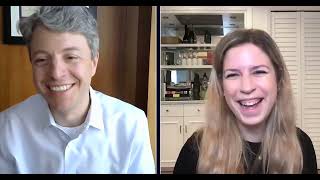
In this FYI podcast episode, host Ali interviews John Evans, CEO of Beam Therapeutics, covering his unconventional career path from English literature to biotech, the scientific and strategic advantages of Beam’s base‑editing platform, and how it differs from traditional small‑molecule and nuclease‑based approaches. Evans explains the speed, cost, and durability benefits of one‑time gene‑editing therapies, the importance of multiplex editing, and the broader vision of programmable medicines. The conversation delves into Beam’s delivery toolbox (lipid nanoparticles, viral vectors, viral‑like particles), partnership models with Prime Medicine, Verve, and Pfizer, and the financial structuring of deals to amplify impact while preserving upside. They discuss the rapidly expanding gene‑editing market, IP dynamics after recent court rulings, and the cultural side‑effects of biotech (poker, Twitter) that shape leadership and community engagement. Throughout, Evans balances technical detail with a conversational, optimistic tone, emphasizing patient‑centric outcomes, operational efficiency, and the accelerating pace of innovation in genome editing.
Chapters
Welcome to FYI, the 4-Year Innovation Podcast. This show offers an intellectual discussion on technologically enabled disruption because investing in innovation starts with understanding it. To learn more, visit ark-invest.com.
ARK Invest is a registered investment advisor focused on investing in disruptive innovation. This podcast is for informational purposes only and should not be relied upon as a basis for investment decisions. It does not constitute either explicitly or implicitly any provision of services or products by ARK. All statements made regarding companies or securities are strictly beliefs and points of view held by ARK or podcast guests and are not endorsements or recommendations by ARK to buy, sell, or hold any security. Clients of ARK Investment Management may maintain positions in the securities discussed in this podcast.
Welcome to FYI, the For Your Innovation podcast. Today, I'm really excited because we're joined by John Evans, who is the CEO of Beam Therapeutics. So welcome, John.
Thank you, Ali. Great to be here.
Awesome. I know you're probably too humble for this, but we're going to do a really quick bio. So by quick wave background on John, he was the Senior Vice President for Corporate Development and Portfolio Leadership at Agios Pharmaceuticals. And also importantly there, John helped lead the alliance with Celgene. He also worked at Infinity Pharmaceuticals, McKinsey, MedImmune. We'll get into all of that. John has an MBA in healthcare management from Wharton, master's in biotechnology from UPenn, and a BA in English from Yale. But most importantly, he is avid on Twitter, and he is also a huge poker player, which I guess we will also get into a little bit later on. But again, welcome, John. We're so excited you're here today.
Fantastic. Well, thanks for everything you do on this podcast, and I'm excited to be here.
Of course. So firstly, anything I missed or anything interesting that you want to highlight about your background or maybe some of the steps that it took to get you where you are here today?
Yeah, no, you've covered all the important points. I mean, it is a strange place to have ended up, I guess, as originally an English major studying poetry, then getting into biotech, which was a tremendous door opening early in my career. I learned that I love pharmaceuticals and life sciences and wanted to be a lot closer to that. But even then, I spent about 10 to 15 years in small molecule companies working on oncology, Infinity and then Ageos. And so, this final turn into gene editing and cell therapy and all the things that we do at Beam has been yet another very interesting twist, but I love it and I don't think I would ever go back at this point. For me, what I tell everybody is really two things. One was the idea of this as the ultimate precision medicine. Where we know exactly who to treat based on their genetics, and we have a drug that can literally reverse it and turn it back to normal permanently. So the power of that is just undeniable. But then the other piece of it, and this is way better than you get with small molecules, is that it's a platform. These are programmable medicines. And so it'll be hard to do, but once we've done it the first time, we can then rapidly do it again and again with relatively low levels of incremental investment. Whereas, you know, small molecule, it's amazing and powerful, but you do it once, that's great. But to do it again, you have to basically start from scratch. And so this sort of platform aspect of how many patients we could potentially impact over time has been really motivating to me. It's been nearly 5 years since I've been a part of helping grow Beam, and I think we're just getting started.
So two very important things to highlight in what you just mentioned. One is, super curious to know who your favorite poet is, if you if that was your major. I am an avid, avid reader. I try to read at least one book a week, which is sometimes challenging given the amount of new academic papers that come out, but I try to read one book a week. So I would love a recommendation about maybe some good poetry.
Sure. I was sort of a 20th century kind of person, so I really liked Auden and Bishop, and I'd say my favorite was Wallace Stevens.
Awesome. And another thing you mentioned that I think is good to highlight is the cost declines. So I know we've had some conversations about this, But at AHRQ, we obviously think about precipitous cost declines and how the technology is going to change the world, but also change the cost landscape. And so I think it's really important to highlight just the idea of this small molecule model versus the gene editing model. So it may be expensive for the first go-around, but then the cost could and should fall dramatically for every medicine after that.
Yeah, I think it's— and I would even answer in a slightly broader sense that I think you have to think about cost. You also want to think about time. Which of course, cost is a function of time, but I think that's a different axis, risk as well, and kind of clarity, when you get line of sight into what you really have. And pretty much on all of those factors, the things that we're doing are better. And they're also more biotech-friendly, frankly. And so as an entrepreneur, I have to think about, is this a great fit for building a new biotech company, or is this a more challenging area? So in the old world, a small molecule, it might take you 4 years to go from a new target idea to a development candidate, file an IND, and then in the clinic, you usually do just safety, then maybe you're testing efficacy in phase 2, and then you do a controlled trial in phase 3, and you don't really know what you have until the end. And then if it's positive, everybody's excited, and then you go into the FDA, you get it filed. But that is a long time to wait for certainty, and the big de-risking event or value inflection point doesn't come until the very end of that long journey. And then you have this other problem that I mentioned, which is then lightning strikes, you know, at Agios. We made two drugs pretty quickly, which was really exciting to see happen for leukemia. And they were these precision medicines. We knew who to target, so they went very fast. To do it again, again, you're starting from scratch. So you go back to the beginning and you start again. So with BEAM and these genetic medicine platforms, and particularly CRISPR, every one of those things is better. So basically, we can go from a target idea to a test in cells in literally weeks. Or a month or something like that. If you have the delivery solved, which is hard, but if you've done that, you can then go from there to a development candidate in a reasonably short amount of time, a year or so is plausible. Then of course, you file the IND. Now you're in the clinic. Every one of these medicines is a precision medicine. We're going to go straight into patients. We're going to know who to treat. And in Phase 1, we're going to test not just for safety, but also for potentially efficacy. And so then you get a much earlier data readout from that program. That could be the de-risking event and the value inflection point for that program. It also tells the regulators that you have something interesting. So you're already working with them on a much more accelerated path to approval than with these other programs. So the total time is shorter. You get an earlier de-risking and value inflection, and then you can much more quickly then create programs 2, 3, 4, 5. Because you just go back to that construct, you just change the guide RNA or you change something about the sequence you're targeting, and now you have program number 2, and all those same benefits accrue again. So we really think of this as a very attractive platform. That's why we're investing so aggressively in it, because we think that the long-term productivity of it, and frankly, again, the impact we can have on many, many patients is really there.
So one thing that I think about too is the efficiency, sort of exactly as you're mentioning, right? There's obviously an improvement in efficiency, but One of the things that we didn't even really get into is multiplex editing, right? So if you talk about the benefit of time, then you'd imagine that if another company or another technology would need to do edits sequentially, one, from an efficiency point of view, you'll have greater cell yield, less cell yield, and so that could be a problem. But then also doing it sequentially will make you lose time, which, as you mentioned, is a function of cost. And so I think actually one of the things I think is most exciting about when I think about your technology, your base editing technology, is the idea that you can actually do these multiplex editing, because I think as we get better and better at gene editing, I think we're going to have more and more multiplex editing that's going to be necessary.
Yes, I agree. So if you think about our system, which we haven't explained much, but I'm sure many in your audience are familiar, you basically have a CRISPR protein, which is doing the work. In our case, it's a base editor. So it actually has some different features. It's got a deaminase on it for the edit, but it's the guide RNA. It's a short little RNA element that's doing the targeting. And that's the thing that if we just change it out, we have an entirely new medicine and all we changed was a short RNA sequence that's about 100 bases long, of which 20 of those bases has the address in the genome I want to go to. And then, as you said, in some applications, we're doing this now in cell therapy, we just add an extra guide RNA or 4 of them. Now, we're going to make simultaneous 2 or 4 edits all at once. And all we did was add one extra little element or a few extra elements. All of the rest of it is identical. And now, we're editing cells that have 2, 3, 4, or more edits all at once, packing more efficacy and functionality into those cells than could be done before. I actually think that same principle will apply in other contexts, including in vivo. If you think about it, I think as we learn more about biology, how to intervene in pathways, it's going to start to be plausible to not just knock one thing out or fix one thing. Of course, that'll be a lot of what we do at first, but I think ultimately, we can think about multiple editing within cells, starting to go at more complex biology, polygenic diseases, and many other similar applications. The other place where there's huge efficiencies gained is the kind of the obvious one up front, which is this is a one-time therapy, right? So, if you think about this from the patient's perspective, right, we live in a world where at best you might have the opportunity to get a chronic drug to manage your disease. You're going to take a pill, or get a monthly infusion of an antibody or something like that for the rest of your life to control something that's with you forever. And by the way, that has huge cost and expense and burden on the healthcare system. We're going to hopefully be offering a therapeutic regimen that is one time and then you're done, and then you don't have those hospital visits, you don't have those doctor follow-ups, and you don't have an expensive pharmaceutical or biologic that you're taking for the rest of your life. So there's almost a systemic effect, I think, to bring costs down, to simplify patients' lives, to simplify physicians' practices as these sort of one-time therapies become more the norm, in addition to on a therapy-by-therapy basis how much more effective they can be.
I have so many thoughts about what you're saying, so I'm trying to think of them sequentially so that it makes sense. But one is I just wanted to show a 3D-printed base edit so that maybe you can explain. So like the purple would be like the deaminase, let's say, just so maybe this gives context to everything you're saying.
Yeah, this is great. So the white blob, for those who can see this, is the CRISPR protein. Okay, it's often Cas9. It can be other types of CRISPR as well. And that's doing the searching of your genome. And the way it searches is that it has in it the yellow sequence, which is the short guide RNA, and that's a little RNA stretch that is held by the white protein. And, it's literally going down your genome and it's testing for a match every few bases and it's looking for a sequence within your genome that matches that yellow sequence. And, when it finds it, it actually literally lands on the DNA and opens it up and binds. And so, I think the darker teal and then the lighter blue, those are the two strands of the DNA that are coming in and they've been opened by the CRISPR and it's matched the yellow strand against one of those DNA strands and it says, "Okay, I've got a match. This is Good. All right. So, that's what happens. Then, the edit happens. And so, in sort of first-generation CRISPR, what happens is the white protein itself, after it's bound, cuts. All right. So, it has nuclease activity, and it creates a double-stranded break in the gene, and then the cell will put the pieces back together again, but it does so with some damage. You'll have some scrambling of the gene sequence at the target site. So, with base editing, we do it more precisely, and we avoid the cutting.. And that's done with the purple element. And so basically, we have turned off the ability of the white CRISPR protein to cut both strands at least, and we've added this deaminase in purple, which is a totally different kind of edit. It's basically a chemical edit, a chemical modification where one of those DNA strands will be sort of exposed to the deaminase from the binding. And then, the deaminase basically will recognize a single kind of base and will change it. And you'll go from an A to a G or a C to a T, and then you let go and you've literally chemically modified that base and you didn't ever create the double-stranded break. And so, that's the big breakthrough with base editing. We get a very precise, very high-efficiency edit. It's active in any cell type because we're not reliant on very complicated repair pathways for the edit to occur. And then, we avoid the double-stranded break, which is a challenging thing for the cell to manage and you end up with a lot more changes at the genome level than you would like.
So that was a really good explanation of base editing.
I don't think I've ever done it with the visual aid before. That was great.
We should do it more often. Yeah, I think sometimes everyone's a different learner, so sometimes if it's more visual, it can help. And I know I love everything 3D printed, so it, I think, helps with the fun element too, maybe. But it's really interesting. So what you were talking about too, as a one-time therapy, I kind of wanted to go back to that for a second because what I think of is when you look at these graphs that companies put out and they say, you know, here's how our drug did in people. And I think about, you know, I'm probably thinking a little bit right now about the PTR data that we saw from Intellia just a couple of weeks ago now. And I started to think about, well, how do I conceptualize what is the threshold for clinical benefit? So, you know, this was my thinking for Intellia, but it, but it really relates to any drug. And the thought was, okay, well, something's 93%, you know, mean total TTR knockdown versus 88% versus 79%. What does that mean? Like, what benefit does the patient get and what's the threshold that's really important? And then obviously there's other factors, right? Is it subcutaneous? Is it IV? Is it every week? Is it every quarter versus a one and done? But then I started thinking about, okay, well, that's really important. But also, you know, the sawtooth graph, right, where you see You see like it goes up or it goes down depending on what you want the therapy to do. And then it goes back down, back up, back down, back up. That's kind of like the sawtooth. And I think that was kind of the idea when people thought about antibodies versus other drugs. And I think one of the things that sort of is highlighted for me is, well, a gene editing therapy should theoretically just look like a straight line because durability should persist. And so I think it's almost not the efficacy that we need to worry about, meaning like total mean TTR knockdown. Part of me thinks, and that's obviously a portion of it, but I think another portion that people aren't talking about as much is for TTR, if it's not curative, and so there will continue to be amyloid plaque buildup if there's a significant increase in serum TTR knockdown. So The question for me is, like, wouldn't it be better to have it just go through this one-time cure, not only for cost, not only for efficiency in terms of, like, the patient doesn't need to go back to the hospital, go back to the clinic, whatever it is, but also just because the disease can't kind of sneak its way back and then come in and then sneak its way back? I think from an efficiency perspective for the patients and efficacy perspective for the patient, That feels like, you know, if you're doing a sub-q injection at home every week, what if you forget one week? Does your progress completely sort of out the window at that point? I don't know. That's kind of what I've been thinking about this past week, just, just with the current data.
It's a totally accurate point. I mean, so, you know, the word we often use for this is adherence to chronic medicines. And it's amazing how bad adherence is to chronic medicines. I mean, You hear all the time about this with things like heart attack, right? So that patients, you know, they don't take really all their Lipitor, right? And it absolutely is causing their cholesterol to be higher, and that's absolutely raising their risk of a heart attack eventually. But, you know, you know, it's hard to focus on it because the heart attack is theoretical. It's far away. It's even worse. I used to come from a cancer field where patients who have cancer and they're taking these small molecule pills to keep it at bay, the adherence is low. They just forget. And this is literally like the disease that could kill them, and you just can't even believe it. So I think improvements in convenience and getting to longer and longer lasting effects is absolutely part of getting to better outcomes. And by that rationale, I think it's very clear that a single one-time therapy that has that flat forever effect is very compelling. You think about I just wanna get you to focus on your disease for this week. I want you to make an appointment. We're gonna do the therapy. And then you can be as forgetful as you want forever, the rest of your life. You've got the benefit. It's not going away. And I think that is very powerful. Now with TTR, it is interesting. I mean, there you probably do need to be competitive on the amount of benefit. I think that's important. And so places like TTR where you're knocking something on the liver, there is a high bar there, and it's a high bar because of the availability of other medicines, right? You've got RNAi that can now twice a year, maybe even once a year, get you that 90% reduction. So I think if gene editing was in the 50% reduction range, I don't know, maybe that's not as effective or competitive, or at best it's a combination sort of idea. But that's why I think it's been so exciting that until it gets to that higher level of knockout where it's at least competitive with what you're seeing from these other modalities,. And that allows you then to get the benefit of this durability and you don't need to worry about adherence. And that I think is going to be compelling for patients. It could lead, it should lead to better outcomes. Adherence absolutely leads to worse outcomes when it drops off. There are other targets, some of the stuff that we do, for instance, where we don't have to compete with that. So some of our corrections, for instance, there isn't a drug that does that. And so we're basically helping a patient go from no disease to some disease. But there are lots of places where editing will go. IntelliA is there, base editing will go there as well, where no, we actually want to compete with other existing modalities and they do set a high bar. So we've got to meet that bar in efficacy and then we can win on the frequency and the convenience and the patient friendliness of the regimen and a little bit on the cost of the system as well when you do the lifetime math.
Right, right. And we actually did that, I think it was in 2018 in our big ideas deck where we talked about it seemed like people were so concerned, and rightfully so, about gene editing and gene therapy and how high the cost would be. And so we looked at it from a per-life-year basis, and it actually appeared to be cheaper than if you'd have sort of this chronic therapy.
So, completely agree with you on that point. There's no question. I mean, it's not to overlook those concerns because they're real. I mean, these will be expensive therapies by definition. There's no other way around that. We need to be creative in how we structure that. So maybe we amortize the costs, there's some risk sharing just to make sure that the benefit is there if you're gonna pay the full amount or something like that. There's lots of ideas out there that I think will be explored. And it creates a logistical challenge. A plan has to suddenly write some very big checks, right? And it's lumpy and it's just, so there's a lot of things we need to work through, but I don't think there's any debate in my mind that if you zoom out, to that systemic level or a patient's whole life level that this is going to create value for the system because you're going to take one expensive therapy now, maybe we amortize that payment over 4 or 5 years or something like that. And that's instead of taking a lifetime of some other very expensive therapy and/or having a lifetime of hospitalizations and medical care required. So I think it was, I mean, the UK of course has been famously tough to get through. Cancer drugs are very difficult to get through there on a pharmacoeconomic basis, but I've seen some of these sort of quality-based estimates out of there on gene therapies and they're positive. And Novartis made a very big case a few years ago for their SMA drug that it had something like a $5 million lifetime benefit in terms of value provided under conservative assumptions, and they're obviously charging too. So I think that was, you know, I do think that will be an important, frankly, tailwind to drive us towards these sorts of therapies, so long as we can solve those, you know, logistical, you know, systemic issues around how the payment gets made. And that's all, you know, really important to focus on. Yeah.
Another thing that I think comes up a lot besides, you know, cost, which is obviously a big one, and obviously the patient experience too, because even when you mentioned that this will save the cost of the hospitalization and other medical care. I always like to highlight that it's also someone's life, and so it also will benefit that patient in terms of not having it. And I know, of course, you feel this exact same way. So just to highlight, but one thing that comes up a lot when we talk about BEAM specifically is the relationship with Prime. So obviously, Prime editing and base editing both originated from Dr. David Liu's lab. And it's interesting, I think, the intersection and how the companies interact and are sort of put in place. And there's been some special care, I think, to ensure that the companies are going to, maybe you can say, play nice together or really work collaboratively instead of kind of not being allies. So one thing I know, I think you, John, were interim CEO of Prime for a while. I think you're on their board, and I think you have certain parameters put in place so that it kind of continues to be a fruitful relationship. So if you could, I'd love to hear more about that relationship.
Sure. I can't help but go back to one thing before I answer the prime question, because you mentioned the impact on patients, and it really triggered a thought, which is we just had some patients in at BEAM from the glycogen storage disease community recently, and just incredible and powerful experience to hear their stories. And one of the things that really comes clear on that is the families, the effect on the families. It really is patients and families. These diseases freeze up, you know, the entire experience of the siblings and the parents, and just managing it is a constant struggle. And so I think when you made that point about we can't forget the, just the moral and life experience that we give back to the patients, I think the families is right there with them. And it goes without saying, but I wanted to say it. The main conundrum in our industry, if you think about it, is we all want to do innovative technology and then move it forward for patients. The problem is that the technology is constantly changing. There's lots of different things out there, and you need so many different things to succeed. You know, it isn't enough to just have an editing tool. You also need the delivery, you know, or you need the CRISPR technology or what have you. And so if we don't work at it, we're going to end up in a world where we have lots of startup companies that have an incredible amount of redundancy in how they invest. They're all going to have to build the same exact things for themselves because it's too cumbersome to do lots of arm's-length deals with other people. Because if the editing company wants to do a deal with the lipid nanoparticle company, they have to come to terms and then you draw that web of all the different interactions you need, then it's just incredibly burdensome. And then, you end up with all these companies that are redundantly investing and then they compete with each other and they all go after the exact same indication. And again, a little bit of that is going to happen. And as I always say, competition is great for patients because it will mean that more, you know, potentially great medicines get developed, and then the best one will win and patients will get it. So that's— it's all good. But at some point, too much competition is going to be, again, inefficient for us to do the maximum good we can for patients. So with the PRIME deal, it was sort of a creative way to try to solve some of these questions as that technology came along. So, we obviously had base editing, and that's kind of a next-generation version of CRISPR that came out of the lab of David Liu. We also have built all of this delivery technology, CRISPR technology, a whole bunch of the basics that are going to allow us to move this into the clinic. And famously, we've done this kind of doing all of the delivery technologies in parallel. So we have ex vivo programs, we have lipid nanoparticles, we have viral vectors. We've built a bunch of that in parallel. So with PRIME, you know, we basically— this sort of new, also, you know, kind of interesting way to do editing came out of David's lab, and it's different than base editing. For those who don't know it, instead of using a deaminase to do a single base chemical modification, it uses a reverse transcriptase to try to write a short sequence of DNA into a local position. And so, you know, we had lots of conversations between David and us about how to optimize this technology moving forward. We landed on this sort of hybrid model where we have this different company, Prime Medicine, which would take the license to this technology, but there'd be a very close relationship with us. So our same investors invested in it. We were the interim management team and got it going. I was the interim CEO, and then now I'm still on the board. And then we have a deal, and basically the deal is such that Beam shares all of this delivery technology, CRISPR technology, anything we have that could be useful, know-how and IP. So we're literally teams of people helping each other and sharing the sort of hard-won wisdom that we've developed. And in return, Beam has exclusive rights to use prime editing in basically any space that is similar to what base editors do. And that's exclusive even as to prime. And so that's really Beam's territory using prime editing. So that includes any mutation that's similar to what a base editor does, A to Gs and back again, or Cs to Ts and back again. It's about 30% of all mutations fall into that bucket. And then also sickle cell disease, the wild type correction, which is an A to T change, that's called a transversion. But given that Beam already had two different programs to potentially cure sickle, we thought it made more sense for that to live with Beam as well. And then Prime goes after everything else. And so it's really a kind of divide and conquer strategy. And I think when, you know, when and if you do see the Prime pipeline chart, I think, you know, you'll see that it did work. I mean, it's a pretty unusual structure, but actually we are indeed focusing on different diseases. And I think that's going to maximize the potential both of the technology so that both parties can use it, but also of the disease landscape that we're covering with our various technology platforms. So very interesting deal. I think one of the rules at Beam, we have a value called fearless innovation, and I think that's really important. We mean that on the science, of course, and on the clinical medicine, but we equally mean it on the business side. We want to be innovative in business, and I think that was a very creative deal. We've done some others that are creative, and I think we'll do more in the future, all to try to continue to get access to new things keep building this integrated platform where we have as many types of editing as we need, as many types of deliveries we need, and of course, manufacturing that brings it all together under one roof. And so that whenever a new disease comes up, we have the tools we need to treat it. Or if a partner wants to do something, we can give them everything they need to do that as well.
So two things come up while you're talking. One is obviously when you talk about interesting deals and innovation and being fearless, it makes me think of your Pfizer deal. And then I think obviously the other one would be the Verve deal. We actually recently had Saik on the podcast, so we got to kind of delve into exactly how that deal is kind of formatted and why Verve chose to use base editing, even though they've done head-to-head comparisons of, you know, other potential modalities that they could have used. So I think maybe it's worth it just to talk a little bit about each of those deals. Just in terms of how strategic it was on your part and sort of the benefits.
Yeah, so those both are, I think, perfect segues from the last conversation. So maybe I'll start with Verve because that came first. And so that was a case where, you know, they are the world leaders in cardiology and genetics. I mean, that is the dream team right there. And so, you know, they were starting up Verve already. They wanted to go do editing, this sort of one-time cure. And again, many of the things I said before about adherence I have Verve in my head. I mean, it's a perfect example. There are other places that'll be important, but preventing a heart attack in 30 years, that is the perfect example where we could really change outcomes and reduce mortality. But it's going to be hard to get somebody to take a chronic medicine for 30 years just to get that. So, a one-time intervention might be very powerful. So, they were really interested in getting all the different tools under one roof for those edits. And obviously, they had nucleus rights, Cas9 doing the cutting. But from us, we actually gave them a different nuclease, Cas12b, and base editing. And they did the bake-off. And just as they would have said, I think, you know, base editing ends up being the winner for a variety of reasons. It's actually very potent. I think that it's something that's quite important to realize. Obviously, a much more pure edit, you know, we're getting just the single base change without the indel pattern, which is more random. And, you know, we believe that could mean that it's also safer over time. But of course, that's something we'll have to learn. But I think generally, lacking the double-stranded break, not having any chance for chromosomal aberrations at the target site, all good. And so, yeah, so they're moving forward with base editing. It looks great. In that case, they obviously weren't going to, you know, pay us a lot of money or equity. They were just getting started, you know, to get to the technology. Instead, we benefit on the back end. And so, we have a basically an opt-in right to 50% of the US, at least the programs that are in that deal, including the first two programs that they're developing. And it's a very close collaboration and they're rocking and rolling. I mean, it looks great. So we're very excited about that. Can't wait to see more of that. We've used that feature in other deals as well, that sort of opt-in structure, because it's a way for us to not have to do the work ourselves, but still participate later in the value with our technology. And that's an important solution to the problem I was saying. You want to unlock as many things as possible with this technology platform, but there's still only so many things that Beam itself can do. And so how do I help more patients? How do I get this moving to more people than we can build internally? The answer is this, but in doing so, I'd still like to have some of that downstream participation in commercial. And so that was a great way to do it. So then Pfizer, sort of even a different flavor. So we really, until Pfizer, had not done, despite doing a lot of deals, we hadn't done the more traditional pharma partnering where you get a lot of cash and you give some programs over, targets over to pharma. We felt that actually some of the Gen 1 companies who had done those deals, they were too broad. I mean, you get a little bit of money, but you give away all of an organ or 10 targets or what have you, and you really don't get a lot of participation downstream. Maybe a little bit, and it can work out. The CRISPR Vertex deal, I think, is a good deal for both parties. That's worked out well. But overall, I think those deals have been expensive, if you will. And so we didn't do them, preferring to kind of keep everything wholly owned within our pipeline. But at this point, we were started again trying to solve the problem of how do I do more with my limited capacity? And Pfizer gave us the chance to do that. And so they were targets that we like, but we weren't doing ourselves. That Pfizer was interested in. And they were very motivated to get into base editing because they had just built all these capabilities with mRNA and LNP for the COVID vaccines. And so, they had already done the analysis that editing was the next place they wanted to be with those capabilities because you have a short-term transient mRNA delivery for a long-term effect now through the gene edit. And then, within editing, they wanted to be in base editing. And so, In addition, that deal takes advantage not just of the base editing piece, but also the delivery side. We have these LNPs. Of course, we can go to the liver. That's happening. We have a lead program for the liver with them. But then the other places we're going to look to go is the CNS and the muscle. And so it takes advantage of this platform we have to screen LNPs in vivo using DNA barcodes to try to identify, are there LNP formulations that can go beyond the liver? And so this is a sort of been maybe a secret at Beam, but coming out more and more that actually we are, we're investing as aggressively on the delivery side and innovation there as we are on the editing side. And this is an example of that. And I think that deal really was the culmination of both sides of it. So, so there, of course, we just get a lot of cash. It's $300 million, allows us to invest aggressively across all those programs and on those capabilities and that delivery platform. And then we again do have an opt-in right on any one program at the end of Phase 1-2. To participate in a third of the worldwide commercialization. So very exciting structure, and that deal has been a pleasure to be a part of from the beginning.
So some context that I think is interesting about that deal is that if you think about it, there are 30,000 pathogenic transition mutations that are going to be fixed with base editing, or that can be fixed with base editing. And so the idea is if you take just the top 1%, let's say just 300, you give each $100 million upfront, which is what you got in the Pfizer deal, then that's a $30 billion potential revenue in upfront cash. So without even actually doing any of the work, just the upfront cash could be $30 billion if you take just the top 1%. So I think that just kind of, for me, frames it in a way where you can just see what kind of opportunity this actually could really be.
I mean, I certainly agree. I think the opportunity here is vast. And I would even just make the point that even that analysis— now, I think these were high-value targets, so I think maybe I wouldn't go quite to that math, but I think it's on the right track. But even that analysis, you're simply talking about the precise corrections. And I do think a lot of people sort of get a little bit locked into thinking about Beam as the point mutation repair company. That is true, but it's actually, if you need to look at our pipeline today, it's only half of what we're doing. Because if you think about it, what I think about base editing as is a highly efficient genome modification tool. Every single base in the genome has either an A or a C on it. Okay. And those are the two editable bases using deaminases. And so, every base in the genome can be toggled. And so, any base that has function, we can change that function. So, we can change splicing, we can silence genes, we can activate genes, we can modify proteins, we can change signaling through proteins. I think we are in the really early days of thinking about how to use these things. And those strategies are also universal strategies that, you know, they would be, you know, doesn't matter what mutation specifically you have, they would work. And so I think that, you know, base editing is going to be used very diversely, I think, and our job is to explore all of those different flavors. So for sure, you know, fixing those point mutations target by target is a huge part of what we do, but I actually think it'll almost be the minority of it once we start to really tap into all of these other ways of using base editors for the long term.
And then if you think about it from like a more holistic, maybe, you know, just industry-wide, then we can, you know, we can go even more high level, right? So if you think industry-wide gene editing, gene therapy market cap, in our big ideas deck in 2022, this is what we said, but we said it could scale up 54%, compound annual growth rate from roughly $130 billion to $1.1 trillion by 2026. So that's obviously giving it even more sort of color, but also more high level. So curious if you had any thoughts on that, kind of like the market opportunity in general, maybe for gene editing, if you had anything else you wanted to share on that part.
Yeah, it's vast for sure. I also believe we're pretty humble. So I think just keeping one step in front of the other is also an important point. But But we see all those opportunities for sure. The way I like to think about that from a kind of totally restful market perspective is what percentage of the therapeutics budget today goes towards one-time therapies? And the answer is a fraction, less than 1% is probably the answer. We could look it up. What's it going to be in 15 years? It'll be a lot more, right? Is it 20%? Is it 50%? I mean, I think we have to figure that out. Then within that, there's been a big shift towards editing. From gene therapy. I think that is a mega trend that's happening, and I think makes sense. You'd rather fix the problem in the endogenous location within the gene. And then within editing, I think there's going to be a big push towards base editing and some of these other types of next-gen approaches where if possible, you'd rather avoid the double-stranded break, and we can do more using that than others. And so we think there's just sort of many layers of tailwinds pushing us in this direction. When I think about unlocking value, you look at companies like Alnylam, right? I mean, this is a $20 billion plus or minus company based on just a few approvals so far on clearly a platform-based approach that can create many more medicines to follow. And that is all based on a single modality RNAi going to a single organ, which is liver. What we're trying to do is have many of those potential franchises grow in parallel. So with our hematology effort, obviously starting with sickle, but we see huge opportunities in hematology beyond that, particularly as we fix conditioning, fix transplant, and even potentially deliver in vivo to blood cells. Think about immunology, cell therapy and editing are going to be very good together forever and just going to grow and change. And so there's a ton of opportunity there. Obviously, we have a CAR-T product moving to the clinic soon and many, many more things to follow. And then in vivo, you know, again, that, you know, liver for us is hugely important. We've got several programs now with many more on deck there. You know, that's that kind of Alnylam opportunity. And then again, we're knocking on the door of other organs and in vivo delivery to those. And so almost any one of those could be a hugely valuable company if it played out. And our goal is to unlock, you know, the opportunity across all of them.
Maybe just because you mentioned Alnylam, just to highlight, we know, I think this was announced in November, that John Marignori is going to be on the Beam board. So just from a strategic perspective, maybe it would be great to hear kind of what was the thought there and, and, you know, a little bit more about that.
Yeah, I mean, John was such a natural fit, and I've been chasing him for a couple years and he was busy, but then he finally got unbusy. But, you know, I mean, they're— one of the crazy things about building a company like this is there are not that many companies you can look at as what you're aspiring to do, you know, that we're kind of— it gets pretty thin. And so Alnylam is one of them. I mean, they, you know, John and that team really did it. And they started from scratch with a Nobel Prize-winning technology. They developed it over the course of, you know, 10 to 20 years. They learned some hard lessons. I mean, I think one of the things that we've all learned from the Alnylam experience is delivery matters. And you can spend a lot of time doing things that are theoretically interesting, but if you can't get it to that tissue, it's not going to get you anywhere. And they They really did almost a reboot about halfway through, about 10 years ago, saying, you know what, we're getting clearly to the liver. Let's focus there. Where are the diseases we can impact? And from there, everything happened. And back to all the stuff we talked about in the beginning about the efficiencies of genetic medicine platforms, just to riff on this a little bit, there was one new target that they published with Regeneron in NASH. And when the target was published, they also announced the development candidate. I mean, think about how fast that goes, right? You just basically get the target, you plug it into the computer, you print out the RNAi and you test it and it's there. And then, in terms of the risk, right? So, once it's worked once, it will work again and again. I think they've gone 5 for 5 or 6 for 6 on pivotal trials in the last couple of years. I mean, think about that. The normal training in pharma industries, you say, "Oh, a pivotal trial, you might have a third chance of success. And if you do 6 of them, you'll only get a couple that would work at best, right? No. Once the technology works, the biology is clear, it works again and again and it becomes very repeatable. So, it's really changing the math in terms of how we do drug development. And so, yeah, it was a long-winded way of saying that I think we love the nylon analogy for sure. And I think there's a lot of similarities in what we're trying to build. We actually have several Long Island folks at Beam, including our Chief Medical Officer, Amy Simon, who came from Long Island. She actually developed— in the early days, she did their PCSK9 drug that's now with Novartis and then did the porphyria program from discovery all the way through approval. So, you know, definitely great to have John on board. I will also say, you know, nice to have a CEO on the board who can sort of, you know, counsel me and has been there before on some of the things that I face. But, you know, our board in general has been dynamite. And continues to be a real strength of the company.
One of the things you said is delivery matters, and we keep touching on it a little bit, but maybe even just to go a little bit deeper, I mean, one of the things that I guess I've also been thinking about this week in addition to the TTR data is AAV9. So we know the FDA met to discuss sort of safety for AAV9, but I also think about the children that are in the DMD trials, you know, Sarepta, Pfizer, other companies that are doing the DMD trials now. And I think about, we're seeing that there's cross-reactivity. And so if you've been treated with AAV9 and you've ever been exposed to it, or if you've ever been exposed to it before, maybe for babies, you know, for SMA, if the mother's been exposed to it and the baby has the mother's antibodies, you know, this idea that maybe you can't get redosed is really scary because a lot of those therapies aren't, you know, one-time therapies. And so I keep thinking about, okay, So what do we do about this issue with delivery? And working with several other people to kind of think about this problem a little bit more broadly. And so it really resonates with me when we think about this issue of delivery. And so, you know, one of the papers that have come out this year, and I feel like there are many, I think Fanzhang had a few on, you know, these new delivery vehicles. Also, David Liu's lab, I think, had one recently on EVLPs. For potentially as a delivery mechanism for base editors. Just curious of your thoughts on kind of like what would be sort of like if you could have a best— I guess there isn't, and I guess indication-specific potentially, but just your thoughts maybe a little bit more broadly on delivery, EVLPs, you know, LMPs, VLPs.
Yeah, one of our first principles is there is no perfect magic bullet on delivery. There's not going to be one technology to rule them all, and that's the only thing you'll ever use, right? But for each one, it has to be good enough to work. And then, if it has liabilities, we want to fix those liabilities as fast as we can. So, that's the way I approach it. And so, maybe I'll get to viral last, but building up to it, certainly, so something like sickle. So, we can do this amazing thing in cells. We can cure the sickle cell directly, but you're still doing a transplant. And transplants are expensive and intensive and risky for patients. And so, we don't want to be satisfied just with having potentially the best editor, we want to fix the transplant too. Because that's part of getting it to the right outcome. And so we're investing a lot in conditioning as well as in vivo delivery to cut out the transplant altogether, right? So those would be the steps to improve on the patient experience, even from that initial exciting breakthrough of curing patients. And as we do, it's going to expand the number of patients we can access ultimately, right? That's why you do it. In cell therapy, same thing. We've had a lot of autologous CAR-Ts. We need to make them allogeneic, right? Much more scalable, exciting. And again, could that happen in vivo stage as well in the market? You know, maybe. So I think that's very exciting. Lipid nanoparticles, we like a lot. You know, they're kind of great. They're synthetic to make, which means they're reproducible in manufacturing. That gives them lower cost of goods. You can redose them. You don't really have much of a packaging capacity limitation. You don't certainly have preexisting antibodies to deal with., and they're transient in terms of their payload. So a lot to like there. And so that's one of the reasons why we're investing so heavily there. Obviously, for the liver, we think that's going to be plug and play, and we don't really see any need to do better. I think the LNP to the liver looks really good, but we want to take that to other organs as well. So then viral, AAV works. We can do a split system, but there are many issues with AAV, and I think we've been sort of clear public about that. If it's your only option, it's a good option, right? It's better than nothing and it will definitely work. But the issue of preexisting immunity, so some patients will not be able to get it even once. You certainly can't redose it for the reasons you mentioned. I think the tropism, although people have been working on tropism for a long time, it just doesn't seem like it's gotten a lot better. And I don't know how easy it is to make it a lot better at this stage. And so we'll see. It obviously has a fixed capacity limit and our machinery is pretty big and so that's a problem. And so we have to do two AAVs, which works, but it requires double the manufacturing, that's all. So I just think there are a lot of, manufacturing is also very complicated, I would say. And so for those reasons, I think on the viral side, although we do some AAV work, we are also interested in the next generation. And so we're actually working on some novel viral, viral-like particle technologies ourselves. And then for sure, the types of things that like Feng and David's labs presented and others, I think, are welcome new ideas and will move the field forward. So I expect that for the editing field, we will over time move into other kinds of viral delivery platforms beyond AAV, and that that will just join these other modalities in terms of, you know, giving us a toolbox to get to whatever tissue we need to at any time.
So thinking about the broader toolbox, the vectors, you know, the delivery mechanism, the CRISPR, or I guess you don't necessarily need to use a CRISPR, we've seen that in papers too for base editing, but, you know, in general thinking about all of these diverse parts, I can't help but think about the IP situation, especially with sort of the most recent update that we got. I think it was a week or two ago now. So just to give very short background for anyone who doesn't know, Originally, there were 3 CRISPR companies: Intellia, CRISPR, and Editas. Intellia and CRISPR were co-founded by Nobel laureate winners Emmanuelle Charpentier for CRISPR, Jennifer Doudna for Intellia. And then their IP comes from ERS Genomics and UC Berkeley, respectively. But Editas received its IP through Harvard Broad. And John knows this all very well. But this week, or last week, we saw that there was a court ruling. It was in Harvard Broad's favor. And it was on the editing of eukaryotic cells, which is anything with a nucleus. So at ARK, how we see it is that we think each of the companies now has something, a portion of the IP that the others are needing or wanting. And so we think cross-licensing will be likely. We've seen tons of stuff about this in the media this week. We've seen that the University of California has said in a statement that they may consider their options in terms of if or how they will appeal this decision. But I'm curious, John, from your seat, what this decision means to you. And of course, we also know that there is a deal that you have with Editas on the CRISPR IP. So just really curious what, you know, how you felt about the ruling, just sort of your overall impression, how you think this affects the field more broadly.
I would maybe just start by saying that I think it is in everyone's interest for that all to end, for licensing to happen. I mean, it's just such a negative-sum game, I think, and I think all the participants would agree with that statement, by the way. So, you know, hopefully people will find a way to resolve it for sure. So for us, you know, we care a bit about it to the extent that we use Cas9 in our base editors. Then there is IP that, you know, may be relevant that we want to have It's not the main IP for base editing. That's a whole different layer. And we were fortunate on that front that base editing really only emerged at Harvard in the lab of David Liu and didn't emerge simultaneously at Broad and Berkeley. I mean, that's just sort of quirk of history a little bit. And that layer is much cleaner. We were under stealth for a year getting IP under one roof because of the learnings from the first generation issues, and we didn't want to go through that again. So nonetheless, you know, so sort of on that Cas9 front, we did this deal with Editas, as you know, and so we have an exclusive option to all of the Broad Harvard IP on Cas9 and some other families in the field of base editing, and that's exclusive even as Editas. So that's, you know, Beam controls the Harvard Broad side of the Cas9 puzzle for base editing. I think puts us in a strong position. All that said, I would, at least as of today, and I haven't done a lot of deeper analysis on this necessarily, but I think I would agree with your framing. I think that both parties clearly have patents that are potentially relevant. The ups and downs of prosecution and appeal in various regions will cause these sort of fortunes to rise and fall over time. But I would be surprised if one party was completely wiped out between sometime in the next 10 years. And so obviously on this one, you know, it played in our favor because we have the exclusive access to this IP on the Harvard Broad side. That's good for us. But I think overall, I think it would be, you know, good to find a way to settle this. And, you know, the ironic thing is that the patents may expire by the time any of the— so, you know, we'll see. But, you know, at the end of the day, I think, you know, the other point is like this is really defining which academic institutions makes a small single-digit royalty on some of these drugs and what the proportion of that is, I don't think has as much importance for the bigger picture, which is we have some amazing companies, amazing teams that are developing real medicines that are working, and the technology is advancing really fast, if not faster than ever. And so that's, I think, the more important big picture to watch.
So I think two things you just highlighted that I think are really interesting. But one thing that I wanted to just mention quickly before is that I find this case super interesting. So I used to help review patents in a previous life, I guess, and I love the idea of patenting. I think it's really interesting because it's almost— anyway, it's a whole art form in and of itself, right? You have— it has to be novel, but it can't— but it has to be broad enough so that if someone patents something similarly after you, Anyway, so I just think it's so intricate and interesting. But what's most interesting about this case to me is that it's never going to happen again, right? Because in 2013, they changed the US patent law. And so it used to be that it was first to invent, and now it's, you know, first to file. So if this was not in 2012, if it was in 2013, things would be very different. And I think that's pretty interesting. And I don't know if you went back and looked at the case, but I also found it fascinating. All the notebook pages are there if anyone wants to see them from the lab, which I think gives you a real look into the lab, which is really, really cool. I mean, I'm fortunate enough to have been able to go to labs, work in labs, but I think if you don't have that context, it was really powerful for me. So I don't know if you felt the same way, but—
It is fascinating. I mean, it is amazing to have that window into the quotes and the anecdotes and the lab pages and all of that. But as you said, we are now in a totally different regime where none of that will ever matter again because it's only about did you get the filing on or not. Again, as fun as it is to look at those famous lab notebooks, I think it was actually a lot better, this new system. It's just a lot simpler. We should have an easy, simple way to say, you get that, you don't get that, you were first, fine, and then we all move on to making medicines. I mean, I think that Patents are important. We want to protect innovation. We absolutely respect patents and respect innovation, and we think that's critical because you want to reward those who are the most innovative, but you want it to be simple and efficient and not create a big drag on the system. And adjudicating who had the thought first or was that thought fully reduced to practice over all these court battles, I think it's not where we should be focused.
Exactly. Completely agree. And just one of the other things you highlighted was the accelerated pace of innovation. So that's something that we've done some work on and have thought about a lot too. So, you know, we highlighted this idea in our big ideas deck 2022, so this year, but it was the idea that the pace of innovation is, is going so much faster. So exactly what you're talking about. And I thought maybe it just could be helpful to contextualize some numbers around it. So we didn't really talk too much about this on this podcast, which is actually kind of interesting because When I first started doing podcasts on CRISPR, we used to talk a lot about zinc finger nucleases and TALENs and talk about, you know, the differences between them. And it seems like we don't do that as much anymore, which is maybe sort of a shift in where the technology is going and where we're seeing the most improvements. So I find that kind of interesting. But also, if you look at just the numbers, so it took zinc finger nucleases about 8 years to go from discovery to the first human dose. And then CRISPR, it took less than half that time. So it was about 3 years. And so I just think that's interesting and it shows just exactly what you're kind of discussing and trying to sort of show us, which is just, it's crazy.
Yeah. It's well said. And I think it's a very, actually, it's a great point that we, I often, the early days for Beam, I would also sort of go through the zinc finger talent sort of heritage as well. We didn't do it this time. The original debate was around what's the easiest, most efficient, and maybe most specific way to do editing, right? And so that really did come down to what is the format of the editor? And so CRISPR being targetable with an RNA sequence rather than being a whole protein construct you have to customize every time, right? That was a big breakthrough. And it was such a big breakthrough that it just completely took over. And now, almost every, lab that's going to do a knockout or a knock-in or something is going to use CRISPR over one of those tools. And that's just— so, in a way, that debate is sort of over. It's not to say zinc fingers and TALENs aren't still useful in some places, but by and large, the world has moved on to that. But what that whole debate was sort of papering over was the edit was identical. There's no difference between a zinc finger nuclease making a cut in the gene and Cas9 making a cut in the gene. It's still a cut and then the cell repairs it in exactly the same way. And so, there wasn't anything to debate on that front, right? Whereas with base editing now, we've opened that whole side of things up to now a good scientific debate where it's like, well, what if you didn't have to make the cut? What if you could edit without cutting and you could edit with a deaminase? And now, we can do that. And then, you have prime and you're going to have transposases and there's going to be lots of other flavors that come along. And suddenly, that's now the place where we need to start to debate. And I think that on many fronts, I think that base editing is continuing to win. It looks like it has a lot of advantages. I think that's really exciting. There will be other phases of this debate as well. I mean, delivery, I actually think is another big one, which is if you can get to a tissue that no one else can get to, even if you had an inferior tool, that's going to be a superior product for patients. So, I think the ability to deliver and to manufacture these sorts of medicines is going to become an important factor. So ultimately, all of this has to come together. But as you noted, the pace is just increasing. I mean, we think about the base editing timeline all the time. I mean, the first publication was '16 and then in '17. So we're just over 5 years in, 6 years into the whole field, and we're already going to reach the clinic soon. And the original CRISPR was only 10 years ago, right? So it's just incredible how much faster it's going. And it's because You know, back to the, this isn't small molecules, this is engineering. It's protein engineering and it's RNA engineering, but it is still engineering. You can hypothesize an improvement, you can rapidly prototype it, you can test it, you learn something, you iterate, and you do it again. And these are, you know, very clearly defined sequences for your editor or for your guide. And so, you know, it's actually not that big a solution space to test. And so, you know, we can do that very rapidly. And unlock these sort of increasingly exponential breakthroughs, I think.
You know, and it's not only that we're getting better and better and better, but we're also able to address more diseases, right? So with all these new technologies, the edits may have been the same with zinc fingers or TALENs or the original CRISPR-Cas9, but we're also seeing that the better the technology is, that, you know, in this pace of innovation that's going so much faster, but it's also that we can actually address more diseases. Potentially cure or treat more patients, which is kind of the most exciting part.
Yes. Well, this then goes back to the challenge of how do you build a company in this environment? Because I think there's so much opportunity and there's so many different ways we could go. And it's almost overwhelming sometimes to think about all the degrees of freedom we have. And so at Beam, our answer to that has been we like the diversification. We like lots of different kinds of bets that have different risk profiles. We're taking different editing strategies. Sometimes we're activating, we're inhibiting, we're correcting different delivery modalities for sure. And then that opens up all these very diverse places where we can go after that to help more patients. And so it will be a challenge to do everything that we can do. So we'll just prioritize and do the absolute, hopefully smartest and best experiments to move these programs as fast as we can. And then there will still be leftover opportunity that we can't tackle, and that would be where we will do business development or help put our technology in someone else's hands to move it along as well. And we just think there's such tremendous opportunity across the board. And as our platform gets deeper and more integrated, you know, that only increases.
That's exciting. Okay, so I know that we have taken up a lot of your time, so just want to give you two very quick personal questions. So the first one is, I know you love poker. It comes up in almost every one of our conversations. And you were just telling me about your poker getaway weekend. So I think we just need to know a little bit more. And then I was saying that I keep getting invited to these, like, biotech is— everyone in biotech seems to love poker. So there's all these biotech poker games. And so I was just saying, I think it's great strategically that they're inviting people who've never played poker to partake in their poker games.
Well, maybe. I think they're self-interested in inviting people who've never played poker to their poker games. But no, I— yeah, I do love poker. It's true. Yeah. So I get together with some friends from graduate school still every year. And we play a lot of poker together. It is a lot of fun. I mean, the game, it really does speak to me in terms of this industry. I mean, it has taught me a lot because you have a certain amount of information in your starting hand and the board and what you're seeing from other people, but you certainly don't have all the information. And then you've got to manage your betting in such a way as to optimize your outcome. And I think of that as the investment, right? I mean, back almost to what I was just saying. I mean, we have We have a lot of capital, but we have so many ways to invest it and we have to be very careful. So we want to make the best decision we can to invest behind the things that have the highest chance of succeeding and the highest chance of winning against what else is out there because it is competitive. There are other people who are trying to treat these diseases as well, and we want to make sure we're investing behind the things that can win. And so it's been a fun hobby, I would say, but I do think there are some real analogies to the drug development business as well.
Well, it seems like I keep getting pushed to learn how to play poker, so I guess that's gonna— on our next call, I'm gonna be like, okay, John, we have 30 minutes to talk about Beam, and we're gonna need another 30 so that we can go over my poker strategy. So, so that would be, that would be really helpful. Um, and then the last personal question I just wanted to ask you was about Twitter. So we just, as I mentioned, had Saigon from Verve And of course, Saqib is also very, very active on Twitter. So, we asked him a little bit about, you know, why he does it, sort of what benefit does he feel it actually accomplishes for him. And I guess I would sort of think about the same questions for you. As you know, we're pretty active on Twitter as well, but I think it's great. Sometimes I'll pose a question just about, you know, a thought we're having or something about base editing, or even sometimes I won't even pose a question, but someone will like write a question about base editing underneath something we've posted. And I find you're so quick and responsive. And I think it's really helpful to investors who are trying to learn and pick up on the space, and not just investors, but I think there are a lot of general enthusiasts. And I think that gene editing is a complex topic to understand. I think I've told a couple of people that CRISPR, if you ever see it in the lab, looks like water in a test tube. And it was like, their minds were blown. So, you know, I think it's so helpful that CEOs and other people are on Twitter trying to help, you know, misspell maybe some of the false data that's out there and try to just help other people understand the industry more broadly. So just curious about what you enjoy about it and what kind of, you know, you maybe get out of being on Twitter and being active on it.
No, I benefit greatly from Twitter. This is a two-way exchange at least. If not, I'm benefiting a lot more. I mean, it is an amazing tool. I mean, the dialogue happening in real time on all these major issues from incredibly smart people, both people you know, journalists or executives or scientists or whatever, and then people you don't know, whether it be investors or general public or what have you. I mean, there's absolutely high signal-to-noise ratio for me, and it's of course mixed in with, I'm trying to keep up with geopolitics and what's happening in the economy and things like that, and you can kind of get it all in one place. But Bio Twitter is what we call the biotech community on there, and I think it's been amazing, that community, and it really does benefit me to engage. I have to sort of moderate my own Twitter use. I think I'm probably a little too addicted to it, so I try to manage how much I do. But no, I think that exchange has been great. And I think of my role, obviously leading the company, helping guide what we're doing, but also it is to communicate. And there's a lot of different stakeholders that we need to communicate to, and whether that be help them understand Beam as an investment opportunity or as a company, but also help them understand the medicines that we're making, the diseases we're trying to treat, and the role we, I think, can play in society, right? Because the other thing to not forget is this is world-changing, somewhat scary stuff. I mean, gene editing is a big change in humanity, and our capability to do it is going to be very important. We're sort of lucky in a way that for something that is so profoundly important, we're starting in a place that everyone is really aligned, right? We want to help patients who have a severe disease or help children and make them better. And you bring that to the table and everyone's going to say, "Yes, how do we help you do that?" And so that's been great. But And over time, we will do more common diseases. We're going to prevent diseases that aren't even with you yet. We're going to have much more sophisticated therapies, sophisticated cell therapies, interventions. And so over time, I think society is going to need to really come to grips with this and understand it and get comfortable with it. And we need to be there explaining it all along the way. And so I think that is a really important role that we have as stewards of technology, but everyone in the community who's generating these conversations is playing, so that we can sort of make it clear, make it understandable to everyone.
I think that's a testament to you and your character and you as a CEO, but we strive to hear that from others as well. And I think we've covered a lot of ground here, the CRISPR IP, base editing, prime editing, a little bit of zinc finger and TALENs, but I guess that's a shift of the way the world's working, vectors, et cetera. It's been really, really interesting. I know I've learned a lot, so I really appreciate your time, John. I could probably speak to you for another 4 hours, so I won't put you through that, but really, really appreciate the time and always great to connect and looking forward to the next one.
Thanks so much, Allie. Anytime.
Really enjoyed it. AHRQ believes that the information presented is accurate and was obtained from sources that AHRQ believes to be reliable. However, AHRQ does not guarantee the accuracy or completeness of any information, and such information may be subject to change without notice from ARK. Historical results are not indications of future results. Certain of the statements contained in this podcast may be statements of future expectations and other forward-looking statements that are based on ARK's current views and assumptions and involve known and unknown risks and uncertainties that could cause actual results, performance, or events to differ materially from those expressed or implied in such statements.
More from Joshua







Scientist Stories: Hans Waterham, The value of phenotypic assays in peroxisomal disorders




Scientist Stories: Joel Zlotogora, Genetic carrier screening programs for reproductive purposes