Founder Stories: John Maraganore, CEO of Alnylam pioneering RNAi therapeutics
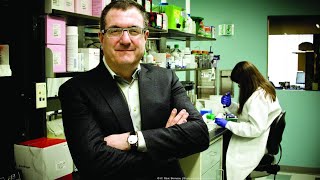
In a virtual breakfast fireside chat hosted by New York BIO, former Alnylam CEO John Maraganore recounts the founding of Alnylam, the early biotech venture environment, and the scientific and commercial hurdles of developing RNA interference (RNAi) therapeutics. He describes how a chance meeting with Phil Sharp introduced him to RNAi, his decision to leave Millennium for the nascent Alnylam despite a bearish market, and the difficulty of securing venture capital in the post‑genomics bubble. Maraganore explains the central delivery problem that stalled RNAi, the series of pharmaceutical alliances that failed to align with the technology, and the pivotal 5x15 strategy that refocused the company on a robust clinical pipeline, leading to two rounds of 20‑25% layoffs and the eventual launch of four approved drugs. He details the landmark 2014 deals with Sanofi/Genzyme (global partnership retaining US/EU5 rights) and the acquisition of Merck’s Cerna assets, highlighting the “divide and conquer” approach. The conversation shifts to his tenure as BIO chair (2017‑2021), where he advocated for policies such as PDUFA VI, the 21st Century Cures implementation, and opioid‑crisis response, emphasizing the need for a trusted FDA. He compares Boston and New York biotech ecosystems, noting shifting lab‑space dynamics and talent flow. Looking forward, Maraganore outlines his post‑Alnylam focus: mentoring emerging CEOs, advising venture firms (Arch, Atlas, RTW), serving on a few boards, and chairing the Enlorum Foundation’s advisory group to develop N‑of‑1 antisense therapies. He offers advice to biotech leaders on boldness, patient‑centricity, fair pricing, demonstrating value for reimbursement, and staying engaged in policy. The interview concludes with reflections on emerging modalities—RNA delivery, mRNA, gene editing, PROTACs, and a renewed interest in small‑molecule discovery powered by AlphaFold.
Chapters
Welcome to New York BIO's Virtual Breakfast Series, digital program started in 2020, bringing you fireside chats with leaders from across the healthcare spectrum. This week's episode features John Marignanori, former chair of BIO and founding CEO of Alnylam Pharmaceuticals.
All right, I have 9:01. Again, Jennifer Hawksbland, the CEO at New York BIO. We're thrilled you're here for another edition of our Virtual Breakfast Series. Special thanks to our sponsor for this month, the HCBI. And today we are going to talk the emergence of amazing biotech company Alnylam with John Marignanori, the founding CEO. And we're going to hear what he's up to lately, which sounds like from our preview conversation, a lot. So we're here to, to really delve in and let you all learn from his experience over the past 20+ years as he has helped to shape the development of our biotech community across the US. So with that, I— oh, always, sorry, I almost forget my housekeeping. Please ask your questions. We want to hear them either in the Q&A or the chat box, and Derek and I will get to them throughout the course of our conversation. With that, I'll turn it over to Derek to do a more full introduction, and then we'll get started with our conversation. Thanks.
All right, thanks, Jennifer. John, good morning. It is Awesome to have you here. And usually we kick these things off with an origin story, and when we have someone like you, it gets a little bit harder because you've run probably one of the most exciting companies in biotech for the last 20 years. So in thinking about how to kick things off today, I wondered if we could wind back all the way to the founding of Alnylam, right? I still remember 2007, 2008, seeing your presentation where You talked about the promise of RNAi in terms of drugging the undruggable. And I even remember the slide. There was a cube and you had the druggable universe here and like this, all over this was what RNAi could do. But I want to actually wind back all the way to as the company was founded. So you were still at Millennium. Phil Sharp and the founders had this coming out of the labs. What was the environment like then? How did you actually get into Alnylam?
Yeah, well, first of all, Derek and Jennifer, thank you for, thank you for having me. It's really great to have this conversation. So the origin story is really quite interesting, actually. And by the way, I, over the, over the Christmas holidays, the holiday season, I actually took pen to paper and wrote an Al Nihilum story that I'm aiming to get published. So stay tuned, because I think people will enjoy it. But the origin story is actually quite interesting. I was at Millennium, And at the time at Millennium, I was leading up the strategic product development group, which was responsible for the portfolio at Millennium. And I get a phone call from Phil, and Phil and I go back to back early days of Biogen. He was the founder of Biogen. I was at Biogen for a decade. And Phil calls me up and he says, John, you know, I've got some interesting new data around RNA interference, and I wondered if Millennium would be interested in interested in learning a little bit more. And, you know, I didn't know much about RNA interference at the time. And I had, you know, seen it, you know, in some of the, you know, some of the literature. And, but I generally thought RNA interference was sort of a worm phenomenon or a plant phenomenon. I had no idea that there was any relevance to, you know, humans, let alone therapies. But I said, Phil, sure, let's, let's get together. And so I invited Phil and Tom Tuschl, Dave Bartell, Phil Zamore to Millennium. And they gave a presentation basically around the seminal 2001 paper that Tom Tuschl published around short interfering RNA molecules and the structure of those molecules. And during the course of the meeting, my colleagues at Millennium were like, you know, stunned, right? Because we were, you know, in the throes of doing functional genomics and trying to figure out what all these genes that we were sequencing, what they actually did at the end of the day. And we were using very, very difficult techniques to basically figure out the function of these genes. And when we saw the ability of silencing an mRNA with these small interfering RNA molecules, it was a stunning observation. So meeting ends, about a week later I call Phil and say, Phil, we, we were blown away by the presentation. Very, very interesting. You know, Millennium would love to have an exclusive license to the IP for functional genomic applications, and we'd also be open to supporting a therapeutics company. You if you're interested, with an equity investment. So Millennium would basically help fund a therapeutics company. And Phil got back to me about a week later and said, you know, John, we think this is too important to give to one company for functional genomics. So we're going to give that away non-exclusively. And as it relates to therapeutics, we're just too— it's too early. We don't want to do anything right now. So that was 2001. And then come the early parts of 2002, I started hearing about the beginnings of L-Nylam. So I was still at Millennium, but I was hearing about the beginnings of L-Nylam. And specifically, Christoph Westphalen at Polaris and John Clark at Cardinal Partners had basically convinced Phil and the original founders to jump into the process of building a new company focused on therapeutics. They brought in Paul Schimmel, who is a scientist, well-known scientist at Scripps, to basically be part of the founding team. Phil brought Paul in because Paul is a very accomplished entrepreneur and Phil wanted to have somebody who knew more about startups than Phil did. Up until that time, by the way, Phil had only started one company and that was Biogen. So he wasn't hardly a well-known—
That's a shame.
So long and short of it is I got a phone call in the summer of 2002 from Jean-François Formella and Peter Barrett, who were at Atlas Ventures, who would become part of the syndicate along with Christophe and John Clark. The other syndicate member was Bob Nelson over at Arch Ventures. And they called me up over the summer and said, hey, would you be interested in doing this new company as CEO? And you should really talk to Phil and get up to date on the science. So I met with Phil over that summer and decided after a lot of back and forth and thinking about what to do to take the plunge and join the company. It was an interesting time because at the time I was also getting remarried again with my wife. You know, so I, it was a, it was a time of a lot of new beginnings. I, I, I actually got my offer letter to join Alnylam, um, sent to my honeymoon suite in Mauritius, which, um, that's hilarious. Not really a good thing to do for, um, you know, for personal longevity. Yeah, yeah, yeah. But it turned out just fine. Turned out just fine. And, uh, I joined, uh, Alnylam.
I have so many more questions that are not on this paper now, John.
Like, you're like, hmm, well, yes, welcome to our new marriage and I'll be I don't know if it'll work out, but hey.
But it was interesting at the time. You wanted to know a little bit about the time. At the time, it was really a disfavored time to do what I was doing. In fact, I mean, the genomics bubble had burst. So we're talking 2002, right? So the genomics bubble had burst. There were no IPOs going on in that period of time. It was basically a closed equity market from the standpoint of the public markets. All the venture investing that was going on at the time was focused on repurposing late-stage assets that had failed out of pharma. So there was no high-science, high-vision type companies being funded at the time. And so when I made the decision to go, you know, a lot of my colleagues at Millennium were like, John, you know, I mean, you're crazy. What are you doing this? It's so early. And how will you be able to raise the money you need? And, you know, it's going to take way too long. You're never going to make drugs out of this. And so there was a lot of skepticism, but I really thought, and I was right this time or that time, but I really thought that we might be able to make medicines from this science. And to some extent, it sort of felt like I was in the late '70s, early '80s, and somebody had come to me with this idea to build an antibody company. And there'd be intellectual property from Kohler and Milstein, which of course was never filed, but there'd be intellectual property from those two people that would be the foundation of it. And so How can you say no? I mean, for me, it was like, how can I say no? And I, I knew it as I was, you know, between that summer meeting with Phil and, and deciding to join, I knew that over the, over the course of that period, as I was driving to work in the morning, instead of thinking about my day at Millennium and what I needed to do at Millennium to get things going, I was thinking about this new company and all the range of different things that we could do with it. So it turned to be it. I really got the bug. I got the bug and I made the decision to do it and I'm glad I did.
Yeah. Well, I mean, so there's— I guess let's touch this one first. So you talked a little bit about between Christophe and Jean Formella. So what was the environment like from a venture standpoint in those days in terms of kind of getting people into companies? Because you hear— I guess it's lore at this point, right? People were either lineage Genzyme or lineage Millennium from the time. You actually look at the management trees and that's where so how many people were pulled from. What was it like to either be in Millennium or just be in Cambridge at that time? What was the general feel of either newcos or anything like that? And how did people get to be CEOs?
Yeah. Well, first of all, I mean, notwithstanding the public market environment, which was pretty bad, the venture organizations, the venture groups were able to raise a lot of capital during the bubble, actually. And so they were stoked. I mean, their coffers were stoked with cash. And they were looking for ideas. Now, as I said before, they were mostly looking for, you know, entrepreneurs to come in and take their single asset companies and, and, and, you know, develop drugs from the single asset companies. So this type of idea with Alnylam was very, very unique. But, but you're, you're, you're right. I mean, look, this is the wonderful thing about this environment that, that, that we were living in at the time. There were a series of entrepreneurs that were coming out of the Genzyme family, coming out of the Millennium family, a few out of Biogen, although not as many out of Biogen at that time. And these entrepreneurs were really sought after by the venture community to come in and run and lead companies. And look, I would get a lot of phone calls from time to time. I was very happy at Millennium. I was really I was excited to be working with Mark Levin and Kevin Starr and Steve Holtzman and other great people at Millennium and build Millennium as a great company. So I really wasn't looking, but the trick for me was just the uniqueness of this potential platform that we could build and the therapeutic applications that I thought could be really disruptive. And that's what, that's what got me to go. But at the time, there really was quite a bit of money in the venture community to be able to invest in companies.
Yeah, we're a little spoiled now from a modality perspective, right? You think now, you think about CAR-T, you think about mRNA and stuff, but you, you wind back to there, it was basically, you have small molecules, you have vaccines, and you got it, and you've got antibodies. And even then, you know, if you were a biotech company, you didn't do small molecules, you did protein. Right. So it was, this is now, it was, it was a very left field modality.
It totally was. And, and, and don't forget at the time, the related modalities like antisense oligos and what Ionis, or at the time ISIS, was doing was also very disfavored. I mean, they had a lot of up, they had a lot of, um, you know, challenges and it wasn't viewed as a very promising space overall.
Yeah.
So it, it, it took a, it took a leap. It definitely took a leap. Yeah, but that's okay.
Um, so let me ask you this. We have a question from the audience which I'm going to work in, but because New York has more— is thought of as more of an earlier stage ecosystem, right? We have a lot of, you know, preclinical companies here that are growing and developing. Talk to us about sort of recruiting, building, like how that was in Cambridge, and then given your given your— as our— as the question from Arthur Klausner says, you're a Boston guy. Give us your perspective on how you think the Boston biotech community views New York now. So beginning to kind of now.
Yeah. Well, I mean, look, I think that, I think that, you know, you've, you've got this, this longstanding history here in the Boston community of of many companies that have then generated people that have gone off into startups in the Boston community. And look, I mean, once you move someplace and you have a family and your kids are going to school, it's hard to move. It really is hard to move. I love New York. I love going down there all the time. Great city. But I think that once you get settled in an area and once an industry takes roots in an area, like it has in the Boston area, it does create some very deep roots that keep people here. But I think New York is beginning to do the same thing or has been doing the same thing. And I see more and more and more very promising efforts growing up in New York. And you do have some great examples like of very, very successful companies like Regeneron, really, to some extent, are, are, you know, part of the leading company groups. And Regeneron hasn't generated a lot of, you know, entrepreneurs that have gone off yet, in part because Len and George have done such a good job keeping their people. Yeah, you know, which is a credit to them, uh, really. But, um, you know, over time, I mean, that'll, that'll— there'll be more and more. I expect to see more and more people, a lot of Regeneron, you know, get attracted to come and run a company in New York, just like people out of Elmyla or Millennium and now Elmyla, but Millennium and other companies, Genzyme, uh, were being attracted to run companies in the Boston community. So I think it's, it's, um, I think what you're seeing in New York is better, is, is getting better and better and better over time, and I expect that to only continue.
Yeah, it's been interesting. I've been at New York Bio for, I guess, 3 and a half years, and when I got here, we were on the tail end of there's no space in New York for life sciences. And now we have plenty of space, particularly for startups. And so the conversation has now shifted to finding those entrepreneurs, almost this flywheel, right, of entrepreneurs that have done it, exit, and do it again, right? So I think you're right. I think we're on track.
The other thing, Jennifer, is, you know, there's almost no lab space in the Boston Cambridge area right now. Almost none. And so, you know, I would not be surprised to see some entrepreneurs say, I'm going to go to New York and do it there. Right. Number one. And number two, you know, with the dislocation that's occurred with the pandemic around virtual engagement and so forth, I can see a lot more happening independent of where people are living. And that could be an interesting dynamic as well.
Well, they're welcome here.
Yeah.
Put me in touch with anyone you know.
So to paraphrase what you just said, people shouldn't even bother looking to set up a company in Boston. They should look for places like New York where there's plenty of—
Excellent.
I think that's the pull quote. So it's funny. It's easy to look at Alnylam now, and you've put 4 drugs onto the market, you've gone through all of that stuff, but it's almost kind of lost the history that you had to go through an incredibly difficult trough to get there. I mean, I remember this a little bit because I had just met you and the team a little bit before this time, but between either clinical holds or partnerships that got put on hold, you really had to retrench and kind of pull the company back from the brink. It was, I think, 2010-ish or whatever. So can you talk a little bit about what that was like as a leader? Because I think there are— I think there's going to be a lot of companies that have to go through something similar. Everybody has kind of their own struggle. So what was that like? Why don't you set the stage for us a little bit and talk a little bit about really how you got through it?
Yeah, well, you know, Derek, the key technological hurdle for making drugs out of RNAi was delivery. How do you get these molecules inside the cell? Need to act. And not surprisingly, that took longer than people hoped it would. And so in the 2005 to 2009 period of the company's lifecycle, we formed a large number of pharmaceutical alliances. And what happened thereafter was that in these alliances, the science took longer than people had hoped. That was one issue. The other issue, which is really interesting, is the, the pharmaceutical companies that, that we were partnered with were all trying to fit RNAi into their specific therapeutic areas of interest, right? Yeah. As opposed to saying, let's just go where the technology takes us and make medicines where the technology takes us. And, and so it was like, you know, proverbially putting the round the round peg into the square hole. And they just couldn't get out of their way in trying to make RNAi work in cancer, where even to this day, there's just hardly any progress on that front. So regrettably, the pharma industry began to leave the RNAi space starting in 2010. And there's nothing like an area where there's a lot of excitement, a lot of enthusiasm, Then all of a sudden you start seeing the people running away from the space, the pharmaceutical industry running away from the space. Of course, the outside world looks at that and says, oh, something is really wrong. It's never going to make it. It's never going to work. I mean, people literally thought we were dead, but that we hadn't lied down yet. Okay, that, you know, we were just barely, you know, walking along. And it was interesting as a leader with many, many contacts and friends in the industry, I'd run into people in the street and they'd be like, John, how are you? Is everything okay? You know, are you gonna be all right? I mean, they were very empathic, which is great. I mean, it's wonderful. But at the same time, We were looking at data in-house around the science, and we finally had made progress on delivery. We were actually feeling pretty good. And, but it was a very, very difficult time. You know, we were trading under cash. So our stock price was like, you know, $6. And, you know, our cash position was, you know, at least $11, $12 of cash, maybe more.
Yeah.
You know, and so That's a very tough thing to do. It's tough for employees, but remarkably, it also was a 2x4 that hit us over the head. And it caused us to rethink our— or it caused us to shed our very romantic vision for RNAi about it being useful for everything. And it's, you know, that box you described earlier, you know. Yeah. So it caused us to focus on building a pipeline. And interestingly, at the time internally, I used to talk to people about the analogy to the story of the Polar Express. You may remember the story and the little kid with the jingle bell. He alone can hear the bell ringing and he believes in Santa Claus and his father and mother and sister all couldn't hear the bell ring. And I used to refer internally to the fact that we needed to have people listen to the bells or hear the bells ring around RNA interference. And what that meant was generating human clinical data. And so during that period of remarkable adversity where everybody thought we were gone and everybody thought we were never going to make it, we had those inklings of data that gave us encouragement, and we, and we focused on building clinical data from our pipeline. And that was where we birthed the strategy that we called Alnylam 5x15 that we announced publicly in early 2011. And that was all about generating a clinical pipeline between early 2011 and the end of 2015 with robust clinical data. And we did it. I mean, it was an incredible transition of the company between that time and by the end of 2015. And we actually did it. And interestingly, it became a rallying call internally within the company. It actually became a galvanizing, motivating force within the company, even though we had to do a layoff at the time as well. We had to do the very difficult, painful thing of, you know, reducing our cash burn so that we could, you know, use our balance sheet to live another day. So it was a—
Yeah, I was going to say, how much, how much staff did you have to cut?
We cut 25— 20% in 2011 and then another 25% in early 2012. So it was really very difficult, but we had to do it. We had no choice. We had a strong balance sheet. We needed to be able to generate the clinical data to basically get through the other side. Um, but we did it. We managed to survive, and we took care of all the employees that we had to let go. We We literally would go through a list of every single one of them and make sure that they all found a home at the end of the day.
Yeah, that's big. That's a really classy and really good thing to do. So I had listed this one and I think this is probably the time to talk about it. So I want to go to— so fast forward a little bit, 2013, because I remember being at JP Morgan in 2014, it's January 2014, and the announcement comes out that you guys had bought a company and then done a deal with Merck and with Genzyme and Sanofi. And effectively what it seemed like is you basically took most of the available RNAi assets out of the marketplace. You basically said, yes, we will take all of these things. And so If we could play inside baseball, how much of a strategy was it literally the thing where you heard the bell ringing and you said, no one else hears this bell, we can go buy these things, and then we will basically be left holding everything that we want?
Yeah, it was a little different. So I told you that we made this pivot, this 5x15 strategy was really a very important change. And we started seeing clinical data The first clinical data from this approach started emerging in late 2011, and there was more in 2012. So as our pipeline was progressing, as there were more human data points, starting in early 2013, we realized that we would need a lot more capital to basically be able to build our company. And we realized that to do that, we probably would need to go to the pharmaceutical market or pharmaceutical industry to basically find a large partnership. The capital markets were still soft at the time and felt to be a little bit difficult to raise all the capital through the equity markets. And we explicitly wanted to form a major partnership across the entirety of our pipeline where we would keep the US and the 5 largest countries in Europe. We call them the EU5. And we would partner the rest of the world with a major partner. And we started talking to our friends in the pharmaceutical industry and, you know, talked to many of them, had a few of them that were quite interested, but ultimately settled on Sanofi. As the partner of choice. We knew the Genzyme organization well. They had a commitment to rare disease. They were obviously a very outstanding organization. We knew them from the Henri Tremere days, but we also knew them from the post-Sanofi acquisition days. And over the summer of 2013, we started really baking that relationship with Sanofi, talking to David Meeker, who was the head of the Genzyme unit of Sanofi. But then very importantly, in September of that year, had a very important meeting with Chris Wiebacher in Genzyme Center in Cambridge. And that meeting, I'll never forget it, was really critical. Chris got it. He saw what we were building. He realized that we could— I mean, they had real pipeline issues in the rare disease portfolio at the time. So they needed to do something and they realized that what Almylam brought to the table could help them do it. And also the other thing too is that Chris appreciated the developing markets. He was not bothered. I mean, he would've liked to have the whole thing, but he was not bothered by Almylam retaining the US and EU5. He thought there was enough substance, you know, in his view, at least 50% of the value was attainable through the other markets around the world beyond what we would retain. So it was a perfect match between our pipeline, their willingness to do the type of deal that we needed to get done. So that partnership culminated at JPMorgan in 2014. At the exact same time, Roger Perlmutter became the head of R&D at Merck. And Roger decided that the work that was being done at Merck on RNAi through the acquisition of Cerna that they did back in 2006 was just not going to be very efficient to be done by Merck. So Roger made the decision, you know, after he took over from Peter Kim, to basically find a way to sell off the RNAi assets. And we realized that there was a lot of really good technology, but also intellectual property that was in that Merck-Serna asset. So I met with Roger in the fall of 2013, actually had dinner at Picciolini in New York, very nice bottle of burgundy, which I gladly pay for. And over that dinner, we brokered the deal that we would acquire the Cerna subsidiary. So we were able to get both deals done, both the Cerna acquisition from Merck as well as this relationship with Sanofi, and announced both events within 24 hours of each other at that 2014 JPMorgan, which was fun.
Yeah. No, that was a big week.
I'm sure your internal deal people didn't think it was quite so fun to be doing two of that size at once.
Yeah, so we had to divide it. You know, it's interesting, Jennifer, we had to divide and conquer because obviously it ruined our Christmas holiday, um, for sure. And, um, we ended up having two different teams. Barry Green led up the— led up the Cerna acquisition with Merck, and our head of business development at the time, Lawrence Reed, headed up the Sanofi deal, and we had to divide and conquer and have two teams, uh, do both deals.
Yeah, because alone— and did you already have a— because you, you retained US and EU5, did you already have a commercial organization set up, or were you in pro— you—
that was future, that was on the come, that was on the come. We at the time, we, we only began our first Phase 3 trial, only just began our first Phase 3 trial. So it was pretty— I mean, we were going to late stage and we knew that we had a line of sight towards commercial, but we were still years away. First approval was in 2018.
It's really funny. I remember this vividly, and I remember there was someone had asked you for a comment that something else happened in the RNAi space that week. And your comment was, it was either something along the lines of like, yeah, we looked at that. Gosh, I really hope they can do it in the liver because we're pretty sure it works there. I'm not really sure about anything else they're trying to do, but good luck to them. So to switch gears for a little bit, you had taken over as chair of BIO in 2017. And I think this is important now when you think about all of the things that our industry does, you think about the amazing stuff that we've done for the past few years. What was it like to step into that post and talk a little bit about kind of the necessary dialogue between really our industry and, you know, the government and the broader healthcare system?
Yeah, well, I mean, getting— stepping into that post is an interesting story in and of itself. It turns out I was slated to be the chair between 2019 and 2021 because Paul Hastings was going to be the chair between 2017 and 2019. But Paul needed to take some time off. So I ended up taking his spot after Ron Cohen was the chair. And so I was sort of this unexpected chair that came in during that time. But look, I had been very involved with BIO before that. I'd been involved by that point for at least a decade. With BIO as a member of the board and then on the executive committee. And, you know, I am passionate about what our industry does overall, and obviously to have a policy environment so that we can continue to innovate is critical for what we do as an industry. And, you know, and so getting active On the policy front with BIO, also we did the same with MassBio here locally, but, but with BIO was really something I'm so grateful that I jumped in and got involved and have been active still to this day. Still, still I'm on the board and will remain on the board. It's a really remarkable organization, and it's so important that leaders step up and get involved in advocating for the right policy environment. Because, you know, if we're not going to do it, who is? Nobody's going to do it right for us. And, you know, we live in a very precarious time where lawmakers who don't even really understand our industry can make law that can be very damaging. And to make sure that we get it right is is really, really important. During the time I was the chair, there were a number of very important things that were going on. We authorized PDUFA VI during that period of time, which was obviously critical. We were just in the tail end of 21st Century Cures getting authorized. So we obviously had a lot of work on the implementation side of it as well. And then it was during the time in which the opioid crisis was really at its at its peak from a policy level perspective. And we all needed to get involved in helping out. And it also was during the period of time of a very, what I would call, very unsure, unsettling administration, the first few years of the Trump administration, where frankly, exactly where it would go on any topic was— yeah, anybody's guess. So it, it, it was an interesting time to be chair. It also coincided with our first drug approval at the same time, which was not perfect timing from a personal perspective.
Yeah, I can imagine.
And we're— it's crazy to think now we're negotiating, finishing up the negotiations with the FDA for I know, right? So that'll— that's going to be on deck as a must-pass piece of legislation later, later this year. Um, what would you say to, um, to early sort of preclinical company CEOs who are thinking, you know, they, they hear from, let's say in this case New York Bio, about what we're doing in Albany and at the federal level? And like, does it, does it help you as a CEO when you're especially thinking about talking to payers and things like that to understand the the political landscape, how can that help them do their jobs?
Absolutely. I mean, you know, it's so important to be involved in the policy debate and in helping shape and frame the policy environment. I view it as my day job. I always viewed it as, you know, industry. I mean, just no gap between what I would do with regard to bio or mass bio and what I would do as CEO. And I think that is really how leaders of companies need to think about it. I mean, I know that there's some who say, oh, I can't be bothered by that and I'll just accept whatever policy environment there is and we'll adapt to it and so forth and so on. Well, that couldn't be further from the truth. You really have to get involved. And I also think to your point, Jennifer, when it comes down to thinking about working with payers and so forth, it really helps. To have the context of what's the political landscape that you have to deal with at the end of the day to really understand, you know, what's the right way to, to, to think about your business at the end. So I really encourage people to get as involved as they can, and, and it's a very, very important part of leading a company in my mind.
Yeah, especially if you think where we are now between cell therapies, gene therapies, you know, mRNA, we have these modalities now that are fundamentally different really in what kind of outcomes they can produce in how we deliver. They kind of change the game a little bit. So I imagine the level of communication that's needed, right? Especially if there's either new business models or anything around them, the first thing is, okay, this is what we do for patients, but you have to actually communicate how things are going to work because they're more or less creating the future in real time.
Absolutely. Totally agree. Totally agree, Derek.
Yeah, so let's see. Oh, and thank you, anonymous attendee, for a very topical question. They say, what do you think are the promising innovative RNA-related techs in delivery, chemistry modification, or novel editing approaches?
Wow, that's a loaded question. I mean, there's just so much going on right now. I mean, it really is one of, you know, getting to, you know, maybe getting to my new chapter and getting involved in helping start new companies and We're with entrepreneurs and helping mentor them and so forth. There's so much going on, and I do think the promise of RNA as a modality is amazing. You know, we were targeting RNA with, with Alnylam with siRNAs, and there is no doubt that there's a promising future with, with, you know, delivery of mRNA as a therapy. Look at the impact it's had on on vaccines, and I think it'll go beyond vaccines in the future. And then obviously, you know, editing, whether it's editing DNA or RNA, I think is extremely promising as well. And so these are all parts of the new frontiers of medicine that our industry, you know, is really pioneering. And it's going to be incredible to see how it all shapes the future of the treatment of human disease and how it changes medicine altogether. And we're there, we're doing it as an industry and it's exciting to see it happen.
Yeah. In many ways, I think if we don't have what you went through with RNAi, I don't know that we have the therapies that we have now. I don't know if people understand them. I don't know if the investors, you know, hop on for the ride. I don't know if without that clinical demonstration that you could do something like this, I don't know that that half of these companies exist. I don't think we get there.
Yeah. Well, Derek, that's very kind. I think that it's always great when you have positive examples in an industry because it does encourage investors to say, hey, there's a model here that we could put our money behind. Or it encourages entrepreneurs to say, hey, there's an example out there of somebody having done it before. And that's great. I'm glad that we've been able to add that to the mix of of how people think about, you know, taking risks and doing bold things.
That's what it takes.
Yeah. So we have, before we move on, because I want us to spend the last, you know, 20-ish minutes talking about what's next for John, we did have one question from the policy, you know, sort of area. It says, if you could summarize in a few bullet points, you can do it like you like. Um, what are some of the most fundamental sort of must-know policy areas that leaders, biotech professionals should know?
Well, I mean, I think on, um, access and reimbursement, um, I think, I think leaders, uh, of this industry need to have a very strong understanding of what is appropriate, what is fair, what is the right way to think about that in your company. I've been very much of the view that we have to be fair players in the system. We can't be greedy because it'll come back and bite us in a very, very significant manner. It has. Historically in many ways. Things like price increases, annual price increases, just because the calendar turns from December 31st to January 1st, I think are just unacceptable. And so we made a commitment to not do any price increases as a company and to grow through innovation, not through taking price at the end of the day. But even when you set launch price, you really need to be focused on the value proposition at the end of the day. And so what that means is even if you're years away from being commercial, you need to think a lot about how do you demonstrate value for your medicine? How do you generate the evidence of value delivered to the healthcare system from the work that you're doing? And that can be complicated in some cases. It's not always that straightforward. I understand that, but the more you can do there, the better. And it really, really is important. So that's access and reimbursement. The other side of it on the policy side really relates to the regulatory environment. How do we make sure that there's a strong FDA that, you know, is working, you know, in a trusted manner with the public? You know, we've seen evidence of how the public distrusts or may distrust science over the last, you know, couple of years, which is frightening to me. But, you know, obviously, it just, it just highlights how important an FDA that people trust is in our, in our overall ecosystem.
And didn't— it was Peggy Hamburg, right, on your board? So that's a good example. Yeah, she is, right? So looking at bringing in those with that sort of expertise to help guide the work that you all are doing on the regulatory front.
Absolutely. Yeah, yeah, absolutely. Wonderful, wonderful type of person to bring into a board who can bring that regulatory experience to the table.
And for those who don't know, she had a very long and distinguished career at the FDA as commissioner.
Indeed. Yes. So I suppose now we can talk, we can talk about the future, right? So, so why don't you talk a little bit about kind of how you decided to do what you're going to do next. Had you had in mind that you were going to step down from Alnylam for a long time? I think you handled this, the leadership team is in a great place, but talk a little bit about how you were thinking about the future and what you're going to do with your next steps.
Yeah. So it's interesting, Derek. I love what we did at Alnylam. And it's, you know, obviously probably going to be, you know, the greatest legacy I can ever build in my, in my time. And really am proud of the team, what the team did at Alnylam. It was just an amazing story. But over the course of the summer of 2021, and I think part of this comes into, you know, how the pandemic affected all of us, right? I mean, I think everybody spent a little bit of time at home and thought a little bit about life and so forth and so on, it just was clear to me that I'd set the company up in a remarkably good way. And it's almost, I hate to say this because it's never the case, but it almost is like on a bit of an autopilot situation right now. It's got a great product engine that's generating sustainable innovation. It's delivering new medicines. It's got a great team of people. And also, there's, there's another part of this too, which is, you know, a company gets bigger and has thousands of people around the world, and, you know, and, and there's just the stuff that you like to do around science and medicine and early, early aspect of it gets more diluted over time because there's that you have to do, uh, which are important things and, and very, very valuable, but that gets diluted over time. So over the summer, I, I spent a lot of time, you know, with my wife and talking about this and thinking about my next steps. And I also became excited about where the industry was going or is going, um, with so much incred— this explosion of science that's out there. Um, and I decided and ultimately talked to my board starting, you know, in, in, in, you know, late August and into the fall that maybe this is the right time for me to transition. And part of that, of course, was having a successor of Yvonne Greenstreet, who is just a remarkable leader and somebody who, you know, I felt very, very comfortable with leaving the baton with because she is incredible and will take Alnylam into its very, very bright future without a doubt. So all those things coming together led ultimately to my decision to say this is the right time for me to to transition, put the keys of the car in Yvonne's hands, which she will very, very aptly take forward, and then begin a new chapter of really helping future L-Nylons grow, helping foster not just one company like L-Nylon, but maybe a dozen, maybe 20, 30, whatever. And the way I'm doing that is really comprised of 3 buckets. The first is I'm working with a number of venture groups to help them start new companies. So I'm working with Arch, Atlas, and RTW Investments. I'm also an advisor for a hedge fund called M28, but I'm working with those groups on the investment side to basically help make sure that new companies that get started have a solid foundation, can obviously generate, you know, disruptive new medicines for the future. The second bucket is I'm getting involved with a few boards. Obviously, you need to be thoughtful about how many boards you can take on at any one time. I am involved with a few boards. I'm not going to do many, many boards. I'm going to add a pharma board to my list. I do want to— I think I can help a pharma company think about innovation and think about how to how to think about the biotech industry better. So I'm going to do that and hopefully, you know, do that sometime over the next year. And then the final bucket, which is really where I'm spending a lot of time, is to mentor, you know, new CEOs and then advise them in building their companies. And that's a non-fiduciary type role where I really want to help that next generation of leaders think about how to build their business and how to how to, how to be successful at the end of the day. You know, I, I personally have the view that we have an enormous amount of science right now, and we actually have an enormous amount of capital right now. Even with this macro environment, um, uh, noise, we still have a ton of capital out there. The rate-limiting step for getting new medicines to patients is people.
It's people. Yeah, it's leaders. If I can help there, that would be great. It's not dissimilar to what you had described before where the public markets have whatever disruption that they have, but if you think about it over the last few years, all of the venture funds raised new funds. So there's an incredible amount of private capital to be deployed. And I think even with uncertainty around IPOs and uncertainty around where SPACs are going to go, that isn't really limiting for how companies get started because people now may not remember this, but it used to take at least 5 years before a company even thought about going public. Now you raise an A round and 20 minutes later you're waiting for the bankers to call you for your IPO. So I don't know that it would be a terrible thing to have that time period start to become slightly more rational again.
Yeah, no, it'll be a good thing because I think, I think, you know, maybe there were too many IPOs over the last, you know, few years, um, and maybe we need to have companies mature a little bit privately before they go public. I think that's not a bad thing, um, and, and, uh, and I think that, you know, helping entrepreneurs, uh, remember the sort of the older ways of doing things is not a, is not a bad thing.
You mean how you had to walk uphill both ways getting to work?
I mean, I don't want to be one of those, one of those, uh, you know, parents that always say, oh, when I was young, you know, type of thing. But, but there is something to be said about, um, maturing the science in a company, um, you know, and, and getting to a point where you're really ready to, to think about your plan and communicate that more broadly in a public market versus, versus as a private company. There's no doubt about that.
Yeah, the communication— not only are the communication expectations different, the requirements are different because of legal requirements. And actually, we have a good question from one of the attendees. And I think this plays into your work with the VCs that you're doing now is what do you see as a promising area of life sciences that not enough people are paying attention to?
Oh, wow. Okay. Well, I still think there's some interesting opportunities. This is sort of retro in some ways. To look at novel chemistry approaches for small molecule discovery, novel classes of small molecule scaffolds that could be interesting. I say that in part because there's been this remarkable— I'm a protein chemist by background, and there's been this remarkable ability now to predict three-dimensional structures of proteins. In ways that, you know, this technology called AlphaFold predictive algorithm, and it's really disruptive. And so I do think there's gonna be some opportunities for changing the paradigm for small molecule drug discovery. The other things working on, I think might be more viewed as more favored these days. I mean, I'm involved with Chimera, which is a protac company, which is an exciting space. I'm involved with Beam, which is a gene editing company doing base editing. Those are hardly areas that people are not aware of. Those are areas that people are pretty aware of. But I think there could be a return to some interesting technologies for small molecule discovery that may have gone quiet for a while.
Yeah. ProTag is protein degrading, yes? That's correct. Okay. Yeah, it's funny with all of the, with the new modalities, I think there was a rush where everyone was either a cell or gene therapy company. And, you know, there are, there are some people that raise their hand over here saying small molecules are actually still an excellent modality to do several things that are useful from a therapeutic perspective.
They are, they are, they are. I mean, I'm generally more partial toward biologics and advanced medicines, and that's where I'm going to spend my time. I mean, I think that, um, you know, but there, I've I've seen some interesting technologies on the small molecule side, which I think are promising, and it's good.
Yeah. How do you— so there's another good question over here in the chat where this person asks, how do CEOs and mentoring programs contact you if you're interested in mentoring? But separately, how do you find or pick the folks that you mentor? Because there is, as you can imagine, there's the ability to spread yourself too thin, right? You can't mentor thousands.
People at once. Yeah, yeah, yeah. I mean, look, I, I, um, one thing I learned from, uh, Mark Levin when I was a millennium is to always be open to talking to people. And so I, I really, you know, am always open to talking to people. People can find me on LinkedIn if they want, and they can send a, send a message to me. Um, and so I'm— I, I, I enjoy it. I actually enjoy meeting people. And, you know, these days with the Zoom call for 30 minutes, you can, we can really get a sense of things. I mean, I love to mentor, you know, younger, you know, emerging entrepreneurs. I really try to focus on people that are trying to build exciting scientific endeavors. I mean, I, you know, I really don't think I have a lot to add to somebody who's doing something more incremental scientifically. I mean, it could be a really good business idea, but it may not be where I can add the most value. And I also am partial to trying to help a more diverse group of leaders for the future. You know, women, racially, ethnically diverse leaders. I view that as being an area of interest, and also immigrants. I am passionate about the wonderful thing that immigrants bring to the table. And so I do embrace that. And so those are some of the things that come into my calculus a little bit. It's not always the case. I mean, I've got a few white dudes I mentor as well, if I may use that word. But I do think there's something important about giving back and helping grow a little bit more of a diverse repertoire of future leaders for the industry.
And so I am passionate about that. And speaking of giving back, we did have a question to talk to us about your work with the Enlorum Foundation.
Yeah, yeah, thank you. That's a really exciting effort that is being led by Stan Crook, the former CEO of Ionis, and You know, it's an area that I was watching for a few years. There's a very, really remarkable story of a young girl with Batten's disease who was— who had a very unique mutation in her protein, and there was a need to generate an individualized therapy. And so Tim Yu at Boston Children's collaborated with Frank Bennett at Ionis, and they engineered an antisense oligo for this patient. Her name was Myla. And this individual, N-of-1 treatment got administered to this patient. And she, you know, apparently benefited from it for a period of time. Ultimately, unfortunately, she passed away. But the fact that a company was able and willing to develop a therapy for a single patient with a single mutation To me, I think is just amazing. And so, and Lorem is the company that's been formed on this, and I've joined as the chair of their advisory group. So the goal there is to really bring other leaders into the mix to basically help on that effort. And other companies, including Alnylam, have now joined and Lorem as a partner to basically bring other types of medicines forward. To treat single patient disease, which is really incredible. Amazing. No, obviously no commercial opportunity whatsoever, but it's all about giving back and helping, you know, patients in that type of circumstance if our technologies can help. Right.
I think that really hits on kind of the crux of why people are in our industry.
Right.
I mean, there's patients at the center of everything that we do. And, you know, a lot of things, if you think about the way that people tend to become CEOs is they start with the science or they start with the patients or whatever, and they end up as the CEOs of these organizations. But everyone tends to grow from that, where can I start with these patients? How can I help patients? And into something else. And I think one of the best things, and one of, I think I'm excited that you're doing this, is taking folks that are that patient-focused and then teaching them how to be better leaders. Kind of helping their ventures grow up, hopefully, so that we get more drugs to patients that need them.
Absolutely. I mean, patients are our north star and need to be. That's the lesson from Henri Tremere. You know, he really taught the industry that patients need to go right front and center of everything we do. And it's a gift for the industry that, you know, notwithstanding his way too short time on our earth is something which he will leave with us forever.
So what— so we have like 1.5 minutes, John. What do you want to leave our audience with today? What should they be thinking about as they go forward?
Well, I would just encourage all of you in building your companies or, you know, participating in your companies and building and bringing new innovation forward, just just be bold in what you're doing. I mean, you know, one of the lessons from Al Milam over the years was just the need to be bold and have courage. And even when the outside world is thinking, you know, it's not gonna happen or doubting you and so forth, you know, if you follow the science, if the science is there and you're not deluding yourself, I mean, check yourself on that, But be bold and courageous and keep persevering. I mean, this is also a journey for any entrepreneur that you need to think about that long-term marathon, not the sprint. And it does take decades to build one of these companies. That's what it takes. And a lot of money to do it. So I would just encourage these leaders on the phone here to basically just be brave and be courageous.
Well, we thank you for being brave and courageous throughout your career to be able to bring us stories like the ones you've had to share with us today. Thank you for your time. We appreciate it. Thank you everyone for tuning in to hear John have a conversation with us. Everybody have a great Tuesday and we'll see you next week.
Great.
Bye-bye.
Thanks so much, John. Have a good one now. Thank you for tuning in to New York Bio's Virtual Breakfast Series. Join us every Tuesday at 9 AM for more discussions with leaders from across the healthcare spectrum. For more information on New York Bio, please visit us at www.newyorkbio.org.
More from Joshua







Scientist Stories: Hans Waterham, The value of phenotypic assays in peroxisomal disorders




Scientist Stories: Joel Zlotogora, Genetic carrier screening programs for reproductive purposes