Founder Stories: John Maraganore, CEO of Alnylam Pharmaceuticals
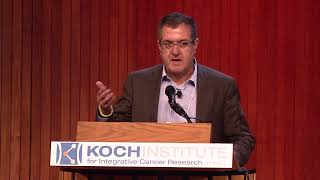
In this talk, John Maraganore, CEO of Alnylam Pharmaceuticals, outlines the evolution of RNA interference (RNAi) therapeutics over the past decade, focusing on the central challenge of delivering small interfering RNAs (siRNAs) to hepatocytes. He describes three delivery approaches: (1) lipid nanoparticle (LNP) systems that exploit an ApoE‑LDL‑receptor mediated pathway, (2) GalNAc‑conjugated siRNAs using the asialoglycoprotein receptor, and (3) an enhanced‑stabilization chemistry (ESC) variant of the GalNAc platform. Maraganore presents pre‑clinical and clinical data for three liver‑expressed targets—transthyretin (TTR) for hereditary amyloidosis, antithrombin for hemophilia, and PCSK9 for hypercholesterolemia—showing dose‑dependent knockdown, durable effects, and favorable safety profiles. He highlights how ESC chemistry dramatically improves metabolic stability, liver exposure, and in‑vivo potency (up to 50‑fold human potency gain) compared with earlier STC chemistry. The talk concludes with a discussion of the modular nature of the GalNAc‑ESC platform, its wide therapeutic index, and Alnylam’s strategic focus on rare diseases and early pharmacodynamic read‑outs in phase‑1 trials.
Chapters
So our next speaker is John Maraganore from Alnylam. I hope I said that right. He's— John did his master's and PhD work in biochemistry and molecular biology at the University of Chicago. He's currently the CEO of Alnylam. Over the years, he's spent time at Biogen, Millennium, and now Alnylam. And he also serves on the Bioindustries Organization Executive Committee, where he's the vice chair of the Emerging Company Section as well as the Regulatory Environment Committee. So I think he's helping the whole community think about how to move some of these technologies forward. So with that, we welcome John, and we get to hear about some of this exciting progress that's being made. Welcome.
Great. Thanks, Sangeeta. It's a real pleasure to be here. Beginning of 2010, January 2010, I had the audacity to suggest that perhaps this decade would be the RNA decade. And I think we're 4 years into it. And I think so far, so good. With all the explosion of biology and the pharmaceutical applications of all this, I think it really is an exciting time. And I'm going to focus on those pharmaceutical applications of it to give you a sense of some of the translational work that we've been doing over the years and some of the progress that's been made. So to that end, of course, I don't think this needs an introduction. We've already heard quite a bit of this this morning. RNA interference has been our focus from the beginning, and it's certainly been the thing that we've stayed committed to over the years and intend to do so in the future. But the challenge that we had to face and we had to address has also been mentioned in a couple of the talks just earlier. Really, the physical chemical properties of an siRNA do not lend themselves to be taken up into cells. And we essentially had to figure out an approach and a pathway that could be used robustly and reproducibly and, very importantly, safely for administration of siRNAs in human clinical studies. And so I'll come back to the science behind this. But what I can say at the get-go is that I think, for practical applications in clinical medicine, leading ultimately to commercialization of these types of medicines, I think that we've gone a long way to address the problem of delivery of siRNAs to the liver and specifically to hepatocytes. And to that end, there are essentially 3 distinct— 2 somewhat similar, but 3 distinct approaches that we've taken. And I'll go through each of them. One has been the use of lipid nanoparticles. Very nicely summarized by Dan. But I'll show you some of the clinical applications of that that we've been engaged in. Then I think perhaps more excitingly to our efforts right now, at least from our perspective, has been the work of conjugating siRNAs to a trinitenary GalNAc moiety for uptake by the asialoglycoprotein receptor in hepatocytes. And that work has really led to two different approaches based largely on chemical modifications of the backbone siRNA. One that we call STC chemistry, the other that we call ESC chemistry. And I'll get into that in just a minute. But what you can see in all three of these examples in primate studies is dose-dependent knockdown of liver-expressed genes, either transthyretin or antithrombin. And that segues me to introduce, for the purposes of this talk, the three target genes I'll be discussing. One is the protein transthyretin that Dan mentioned briefly. We're interested in this protein because it mediates an autosomal dominant inherited disease called transthyretin amyloidosis that afflicts about 50,000 people worldwide and is truly a progressive and debilitating and ultimately fatal disease for the people that are carriers of this mutation. And we have a program that is a lipid nanoparticle program that's called patisiran, currently in phase 3 clinical studies. And we've also advanced a subcutaneous version of the drug using our GalNAc platform. That's currently in phase 2. The second target gene I'll mention in my talk is a protein called antithrombin. Antithrombin is a key regulator of the blood coagulation cascade. We've been interested in knocking down antithrombin as a way of resetting the coagulation cascade and addressing the defects of hemophilia and other bleeding conditions. And then finally, a target gene of great interest across the industry and one of interest to us as as well, is a gene called PCSK9, which is involved in the regulation of the LDL receptor. And we have a very interesting effort to knock out PCSK9 using siRNAs. So these are the 3 target genes of interest to us in this talk and also the 3 different approaches that we're using from a delivery standpoint. So let's start with lipid nanoparticles. And let's talk a little bit about what we've learned. As Dan mentioned, these are multicomponent systems. That have carrier lipids and also cationic lipids as part of their overall architecture. They can be reproducibly produced and manufactured even at large scale, even under so-called good manufacturing practice type conditions. We do that actually here in Cambridge. And it's a system that is, in fact, highly efficient for delivery of siRNAs to liver. We've been interested in the years— our scientists have been interested over the years in understanding the mechanism. By which lipid nanoparticles affect delivery. And remarkably, it turns out that it's a receptor-mediated mechanism that essentially phenocopies the clearance in our bodies of chylomicrons by ApoE binding to the LDL receptor. And so what we've learned in a series of genetic studies, both in ApoE knockout mice and also in LDL receptor knockout mice, is that this is a compensatory mechanism at least for this category of lipid nanoparticles and their delivery to the liver. So we know that ApoE binds, essentially opsonizes these lipid nanoparticles. We know that they can penetrate through the fenestrated endothelium of the liver and come into contact with the LDL receptor located on the surface of hepatocytes. We know that upon endosomal incorporation in the cell, that the endosome is acidified and the cationic amine of the lipid, cationic lipid, becomes protonated. And we know that when that cationic amine becomes protonated, that the lipid becomes fusogenic. And upon the lipid nanoparticle becoming fusogenic and undergoing essentially a phase transition, we know that the SRNA can be deposited into the cytoplasm and taken up by the risk complex to affect RNAi. So beautiful mechanism, certainly consistent with the very nice effects you'll see in just a minute that we see with knocking down hepatocyte-expressed genes. So let's look at some of those data. And these were data— I'm not sure what that line is across there, but must be a Mac to PC transition. But these are the data that we presented and published last year looking at knockdown of the transthyretin gene. In human volunteers. And you can see a very nice dose-dependent, relatively steep dose response, but a dose-dependent knockdown of transthyretin in these studies, well over 90% in humans. And this is after a single dose of drug that was administered. Very importantly, at the doses that we're administering in these studies, the drug is, in fact, very well tolerated. We were interested to confirm that this was an RNAi-mediated effect. And we, over the years, have developed a technique at Alnylam for isolating circulating exosomes and then using 5' RACE, first introduced to us by Dave Bartell, to essentially identify cleavage products in samples. And we've been doing that for many years in animals. But it was great for the first time to be able to show out of human plasma samples in volunteers that received drug that when we isolated exosomes and did 5' RACE, that we were in fact able to confirm definitively the presence of the RNA interference mechanism in human beings. And to my knowledge, this is the first time that's been done with this level of rigor, which I think is always important in the advancement of new science. We've gone on with this approach to explore multi-dosing. We've done a phase 2 study. This is a study that was performed in patients with TTR amyloid, about 29 patients. In this clinical study. A 2-dose study, again, looking at the dose response for TTR knockdown, increasing doses giving us increasing levels of knockdown, well over up to 90% type levels. And then on the right-hand side, because of our, our siRNA design, which is targeting both mutant protein as well as wild-type protein, we can see the coordinated knockdown of both the wild-type protein and the mutant protein in patients. Now, more recently, we've taken patients from that phase 2 study and have given them the option to continue receiving dosing of drug. And 27 of those 29 patients in the phase 2 have elected to go on for continued dosing. And now, for the first time, we're seeing the benefits of long-term dosing in humans as it relates to TTR knockdown going out to about 6 months in this human treatment. These are values that are obtained prior to dosing, so they represent really the return of TTR levels. But you're seeing that we're achieving the 80% target level of TTR knockdown over multiple months in this human study. And also, quite importantly, the drug appears to be well-tolerated in these patients with very minimal adverse events reported whatsoever. So very encouraging along those lines. So where we're going right now with this lipid-based approach is we're currently in a phase 3 clinical study. This is the last stage of clinical testing, as you perhaps know. This is a randomized double-blind placebo-controlled study of roughly 200 patients randomized 2 to 1 to receive drug or placebo. And we're going to be looking at the impact of our drug treatment on the progression of neuropathy in these patients. These patients progress with their neurologic disease, and the neuropathy over years. And our goal here is to see if we can arrest the progression of neuropathy in these patients with an 18-month course of treatment in this clinical study. So obviously, we'll see how that result looks over the next few years. But we're encouraged by certainly the pharmacologic data that we have achieved to date. So let me now turn to some of the more recent advances that we've made on delivery. And again, this is using a GalNAc ligand that we chemically modify with the siRNA. And this is really an approach that is aimed at harnessing the acyl glycoprotein receptor, which is expressed at very high copy number on the surface of hepatocytes. This is a rapidly recycling receptor. It's been studied and known for many, many years. And of course, what we're aiming to do is essentially use that receptor as a way of internalizing the siRNA into the hepatocyte for ultimate incorporation within the RISC complex. I must say at the get-go that these are taken up by endosomes. And we don't know how they get out of endosomes. But we know that there's some important properties of the siRNA that are important to achieve robust uptake into RISC. So let's talk a little bit about some of the features of these chemically designed molecules as shown on this slide. The trintenary nature of the ligand that we append to the siRNA. Is consistent with the known receptor biology, which has been published in the past, where you get a higher affinity with the trientenary design as compared to either a mono or dientenary type of structure. And so the structure that you see on the upper right here is the chemical matter that we chemically link to the 5' end of our sRNA sense strand or the 3' end. We can go to either end, but we typically actually do the 3' end. And what we saw in our studies was that when we chemically modify these siRNAs and then we look at the ability of these siRNAs to transfect primary mouse hepatocytes, that without any transfection reagent, we get very nice uptake of the siRNA into primary hepatocytes, as shown in the middle bar. We also showed that we can compete away that uptake in primary hepatocytes by the use of a calcium chelator, because this is a calcium-dependent receptor binding interaction, but also by the use of excessive ligand in the supernatant of these cell culture assays. And so clearly, these studies, as well as some genetic data, which I won't go into, confirmed that this was an uptake mechanism that was driven by the acyl glycoprotein receptor. We were then interested in learning about the biodistribution of these molecules after we administered them by subcutaneous cutaneous injection, where we were able to show, again, consistent with the homing of these molecules to the liver, very nice distribution of the GalNAc-conjugated siRNA to hepatocytes, specifically to liver, and of course then to hepatocytes in contrast to other tissues in the body. The small amount of uptake we see in the kidney is really related to the filtration of this matter through through the kidney into the urine. Now, more recently, we've been very pleased to advance this platform into human clinical testing. And just last year, we were able to report on the initial clinical studies. This is done in a phase 1 design in human volunteers that got increasing doses of this GalNAc-conjugated siRNA. And what you can see is a very nice dose-dependent knockdown of well over 90% of of serum TTR in human volunteers in this clinical study. What's very impressive to us is the fact that during the course of dosing that we essentially clamp down the pathogenic protein levels during the course of subacute dose administration. And subacute injections are given only once a week in this study. What's also very impressive to us is the pretty remarkable durability that we see following the cessation of dosing, as you can see in this human study, the dosing interval goes out through about 30 or so days. And when we stop dosing, we see a very consistent and durable knockdown of TTR weeks after dosing is stopped. On the right-hand side is a very interesting observation, which is when we look at the knockdown of TTR from our non-human primate studies and compare them to the knockdown that we observe in humans, you can see a remarkable close correlation, almost a 1-to-1 correlation on a mg per kg basis. Now, this is the chemistry approach that uses our so-called STC chemistry. And I'll come back to how that's changed more recently. So let's, in fact, go to that, which is some of the advances we've been making with our chemistry conjugate platform and approach. And these changes have really been inspired by the recognition that— and through metabolic profiling of our drug after in vivo administration that RS RNA, when injected subcutaneously, encounters a large number of exonucleases and endonucleases on its ultimate journey to risk. And so these molecules can be degraded at multiple juncture points following their dose administration. And so clearly what was important for us as we thought about how we could optimize our GalNAc platform was recognizing the fact that these endonucleases and exonucleases could create liabilities in our drug and limit the ability of our drug to ultimately get to the RISC complex. And so to that end, what we've really engineered is a transition in chemical modification of our siRNAs from a relatively light level of chemical modification to one that's more robust with what we call an enhanced stabilization chemistry. And it's really been around protecting the 5' ends of these sRNAs from exonuclease degradation, typically with phosphorothiowate modifications. But of course, other chemistries can also be used to achieve the same effect. And what happens as a result of this increased stabilization is indicated on this slide. First, when we look at metabolic profiling of drug recovered from the liver after intravenous administration in mice, you can see that molecules like TTR sub-Q are pretty rapidly and significantly degraded across multiple different sites. In contrast, these more stabilized ESC-GalNAc conjugates show a much more robust and much more stable, metabolically stable profile in vivo studies. The consequence of that is a remarkably prolonged liver exposure. So if you look in the upper right-hand of this graph, you can see following a single dose administration of the of the STC gallbladder conjugate, a relatively rapid clearance of drug in the liver, in contrast to these more stabilized gallbladder conjugates, as shown on this curve, where we now have prolonged liver exposure over the course of days. And if you quantify the area under the curve between these two profiles, it's about a 30-fold— 15- to 30-fold increase exposure that we observe by virtue of the enhanced stabilization chemistry. So why is that important? Well, we then have taken these molecules and have gone into non-human primates. And in this case, we're looking at antithrombin knockdown. And as you see in the upper line, the knockdown of antithrombin after a single dose that is achieved, it's a relatively minor level of antithrombin knockdown. But that same siRNA, the identical sequence, when more rigorously and extendedly chemically modified, can achieve, in fact, a much more robust knockdown of antithrombin in the non-human primate after just a single dose. So significantly improved stability leads to significantly improved liver exposure, leads to significantly improved in vivo potency. These molecules, of course, lend themselves to subcu delivery over prolonged periods. With weekly injections. This is an experiment that I like to show. It's almost a year-long treatment of mice with our TTR. This is now an ESC-conjugated optimized TTR molecule. We're looking at knockdown over time. And again, I think what's remarkable here is just the consistency of the knockdown that we observe with weekly subcu injection over time. And I think it's also notable— if you look at those error bars, how consistent these results are between individual animals. We've also been interested in this durability opportunity. And I commented on that earlier, just the remarkable durability that we see with knockdown of target genes in animals and humans following siRNA delivery. And these are results from our PCSK9 program in the non-human primate. Where on the left-hand side, we're looking at just a single dose of drug administered in non-human primates. And we're looking at dose-dependent knockdown of PCSK9. And then on the right-hand side, we're looking at the corresponding reduction of LDL cholesterol in these animals. And what's pretty remarkable to us, at least, is the fact that with a single dose of drug, we're getting well over 60% reductions of LDL cholesterol in the non-human primate. And that's an effect that lasts for months. After a single injection. So we envisage the potential with this approach of having a treatment course for the treatment of hypercholesterolemia targeting PCSK9 that could be quarterly via subcutaneous injection. And so this could be a very competitive profile and a very attractive clinical profile for the treatment of severe hypercholesterolemia secondary to coronary artery disease. And then just further data on this point comes out of our antithrombin program, notably on the left-hand side. In this study where we're looking at non-human primates receiving drug over the course of around 6 months. And in the first phase of the study, we gave higher doses, approximately 1 mcg per kg injections. And you can see the dose-dependent knockdown of antithrombin all the way down to zero in these animals. We then gave the animals a holiday. Those that received no further drug treatment, antithrombin levels went right back to normal within overshoot or undershoot. It goes right back to where it should go. And then in animals that received a lower dose treatment period over several months, you can see the ability of titrating the knockdown effect in these primates over time at a 50% or 70% level in a dose-dependent fashion. On the right are the results of a study where we looked at the ability of correcting the defect in thrombin generation from hemophilia that's induced in these animals. And you can see that in a dose-dependent fashion and also in an antithrombin decrease-dependent fashion, we can effectively restore thrombin generations back to normal level. This is the therapeutic approach that we're advancing for the treatment of hemophilia. More recently, we've been very pleased to see very surprising results. So we've taken these ESC-GalNAc conjugates, notably our antithrombin program, into a phase 1 clinical study. And we started in volunteers and had designed the protocol in volunteers to achieve no more than a 40% decrease of antithrombin. And the reason for that is that while heterozygous antithrombin deficiency is described in humans and is associated with an increased lifelong risk of thrombosis, that level of knockdown in a short period of time is really not particularly risky. But of course, if you go to 100% thrombin knockdown, it's known to be fatal. So we wanted to be very careful in this study. And so in the starting dose that we chose of 0.03 mcg/kg as a single subcutaneous dose, we were frankly shocked and surprised, pleasantly I must say, to achieve about a 33%, 32% knockdown of antithrombin after just a single dose at a very, very low subcutaneous dose administration, as well as increases of thrombin generation. And these results were statistically significant. So with that achievement in hand, we've now advanced this program into the treatment of patients with hemophilia as part of that same Phase I study. But I want to comment on these results in this slide, which admittedly is a busy slide, but I'll try to make it a little bit easier for you to follow. These are the results with our GalNAc conjugate platform on top in humans, looking at either single-dose administration or multi-dose administration. In the middle, you see the results from our antithrombin program in the non-human primate, and then on the bottom are results with our antithrombin program in humans. And I'll take you through this stepwise. The first point, which I've made before, is that when we look at the standard template chemistry compared to this more enhanced stabilization chemistry, we do see about a 5 to 10-fold improvement from non-human primate— from one chemistry to the other chemistry, as you see here. However, when we then go— and this is true with our standard template chemistry— when we go from single-dose administration to multidose administration, we appreciate about a 10-fold improvement in potency by going weekly sub-q versus a single-dose administration. But I think most importantly, when we compare our results in the non-human primate to the human, we're seeing about another 5- to 10-fold increase in potency between these two species. And then when you compare our tTRC standard template chemistry approach to the enhanced stabilization chemistry, we're now appreciating about a 50-fold increase in human potency. So these more stabilized GalNAc-conjugated sRNAs are truly demonstrating a remarkable improvement in potency and a level of potency that has us very encouraged about the use of this approach for the knockdown of liver-expressed target genes in many clinical indications. So why is this happening? Answer for this improved potency between primate and human? Well, we don't totally know yet. But we do think it might be related to the fact that the human appears to have a more attenuated nucleus environment than the primate and also other rodent species. And so again, in metabolic profiling studies that we've done looking at human versus primate and also other species, you can compare in the middle the primate results with the human results. And what we do appear to see is a lower degree of metabolic degradation in human samples as compared to in primates and other species. And so this improvement of stability of these GalNAc-conjugated ESC platform molecules appears to be further driven in terms of potency by a difference in species around the overall nuclease environment and the more attenuated nucleus environment in humans. So finally, just one last slide in terms of another feature of these molecules. Of course, a very important one as we think about clinical applications is the role of oral safety. We've done extensive safety studies now with both forms of these GalNAc conjugate platforms. And we do see a remarkable and very wide therapeutic index. So we're achieving knockdown of target genes less than 1 mcg/kg. Of injection routinely, we're able to see no toxicities at doses well north of 100 mg per kg type dose levels. So a very wide therapeutic index, which I think really is unprecedented in terms of the advancement of these type of molecules. So I'll stop and conclude with really two slides. I'll first highlight the word you've heard a couple of times today about modular. Phil has inspired all of us to think of it this way. It's worked with us too. Clearly, the approach that we're taking with GalNAc-conjugated siRNAs is, in fact, a modular platform. We have a consistent ligand. We are simply changing the siRNA sequence to direct it toward different target genes in the liver. Clinically, at least what we're doing at Alnylam, is we're very much focused on clinical indications where we can read out the effects of our drugs in phase 1 clinical studies. That's very powerful because it allows you to have confidence that you're engaging pharmacology very early in clinical development. And of course, we're very focused also in the rare disease space because of the opportunity of being able to do clinical studies that are very focused in size and ultimately because of the very high unmet need in many of the rare orphan diseases that exist today. So in summary, we have been making significant advances in our RNA delivery. These advances have truly enabled the accelerated advancement of RNA therapeutics in human clinical studies. We're very encouraged about where this is going. We're most encouraged by these new ESC-GalNAc conjugates because we have achieved a potency level as well as a safety level that is rather remarkable and we think can be very promising for the delivery of siRNAs to target liver-expressed genes and involved in human disease. So I'll stop there, and thank you very much for your attention.
More from Joshua







Scientist Stories: Hans Waterham, The value of phenotypic assays in peroxisomal disorders




Scientist Stories: Joel Zlotogora, Genetic carrier screening programs for reproductive purposes